

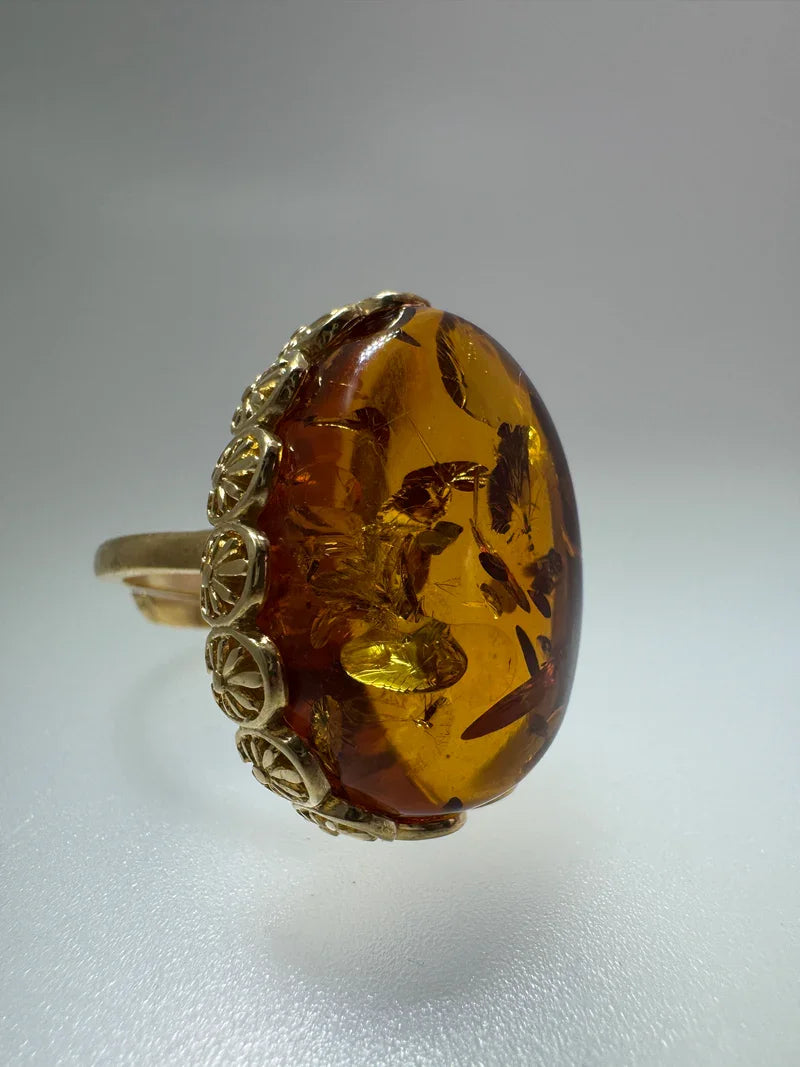
Why an Amber Engagement Ring Is Worth Considering in 2026

Quick answer: An amber engagement ring features a center stone made from genuine fossilized resin — not a mineral gemstone — giving it a warm, organic glow that no diamond or sapphire can replicate. Here's what sets it apart at a glance:
| Feature | Amber Engagement Ring | Diamond Ring |
|---|---|---|
| Material | Fossilized Baltic resin | Crystalline mineral |
| Hardness (Mohs) | 2.5 | 10 |
| Weight | Very lightweight | Heavier |
| Appearance | Warm honey, cognac, butterscotch tones | Colorless to near-colorless |
| Uniqueness | Every stone is one-of-a-kind | Standardized grading |
| Price range | ~$40 to $5,000+ | Typically $1,000+ |
| Best for | Romantic, nature-inspired, heritage-driven buyers | Traditional, durability-focused buyers |
More couples in 2026 are stepping away from the expected. Instead of a diamond solitaire, they're choosing something with a story — something formed over 45 million years ago in the forests of Northern Europe.
Genuine Baltic amber is not a stone. It's fossilized tree resin, often carrying traces of ancient plant life or even preserved insects inside. That means no two pieces are ever the same. The warmth, the color, the inclusions — all entirely natural.
But choosing an amber engagement ring is also a practical decision that deserves careful thought. Amber is soft. It requires thoughtful wear and proper care. And the market includes everything from exquisite handcrafted pieces by Polish and Lithuanian artisans to low-quality imitations that won't last a season.
This guide will help you tell the difference — and find the right ring with confidence.
I'm Gabriel Ciupek, President and owner of Midwest Amber, Inc., and I've spent years working directly with Baltic amber artisans and suppliers to bring genuinely handcrafted amber engagement rings to customers who value authenticity above all else. Everything in this guide is grounded in that hands-on experience, so you can shop with clarity and peace of mind.
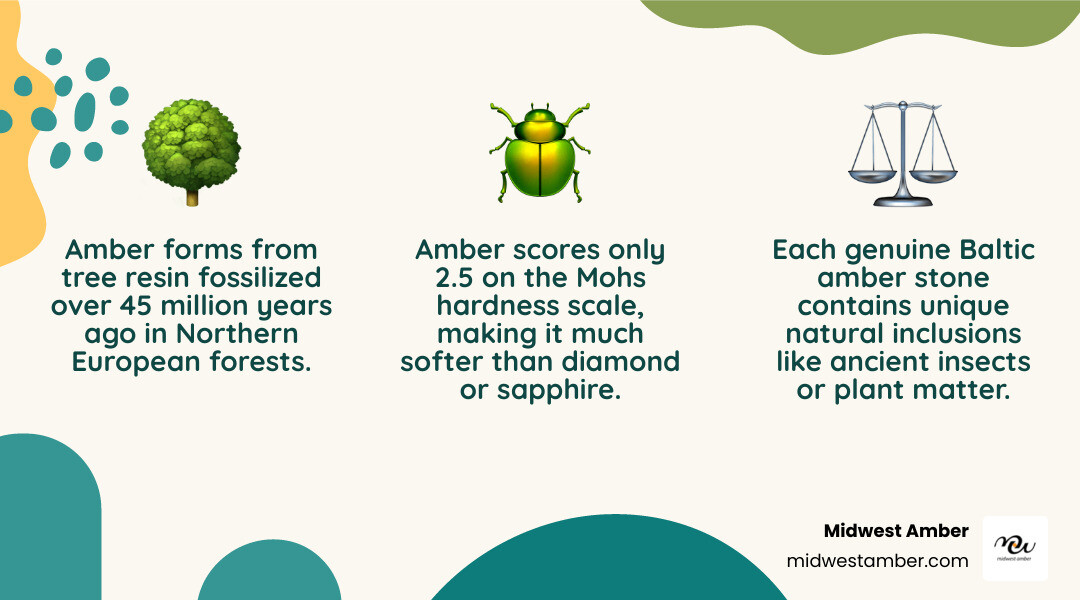
Quick look at amber engagement ring:
What Is an Amber Engagement Ring?
An amber engagement ring is a piece of fine jewelry where the focal point is a piece of genuine Baltic amber. Unlike traditional rings that feature minerals or crystals, amber is organic. It began as the sticky resin of ancient pine trees in Northern Europe over 45 million years ago. Over millennia, this resin fossilized, trapping the golden light of the sun and, occasionally, prehistoric plant matter or "bug inclusions."
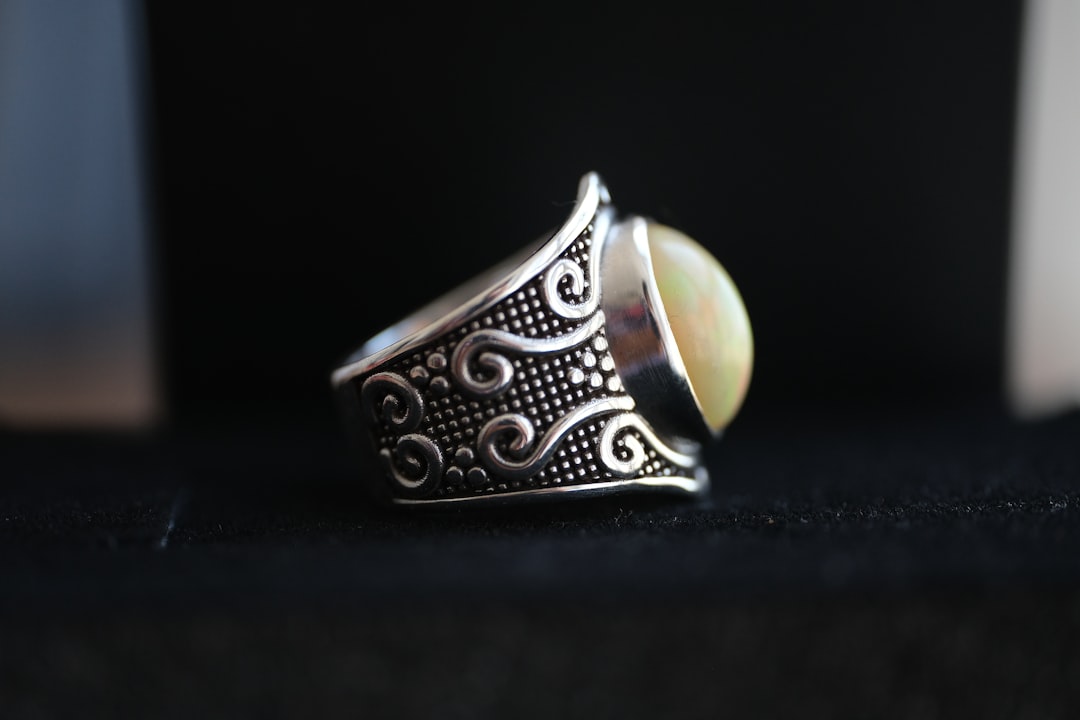
When we talk about an amber engagement ring, we are talking about a piece that carries an heirloom feel from the moment it’s created. These rings often showcase warm hues ranging from creamy "butterscotch" to deep "cognac" and vibrant "honey." Because of its organic nature, amber is frequently shaped into smooth cabochon cuts (rounded, polished tops) rather than the faceted angles you see in diamonds, though modern artisans are increasingly experimenting with brilliant-cut amber to catch more light.
How an amber engagement ring differs from diamond and gemstone rings
The most significant difference lies in the physical properties of the material. On the Mohs scale of mineral hardness, a diamond is a 10. Amber, by comparison, sits between 2.0 and 2.5. This means an amber engagement ring is significantly softer and more prone to scratching if not handled with care.
However, this softness comes with a major benefit: weight. Amber is incredibly lightweight and warm to the touch. While a large diamond or sapphire ring can feel heavy or cold on the finger, amber reaches skin temperature quickly and feels almost weightless. Furthermore, while diamonds are graded on "perfection" (lack of inclusions), amber is often valued for its "imperfections." The natural swirls, bubbles, and organic debris inside the resin provide a natural glow and a level of individuality that a standardized mineral stone simply cannot offer.
Why Baltic amber appeals to couples seeking something different
For many of our clients in the Chicago area and beyond, the appeal of Baltic amber is rooted in heritage and craftsmanship. We work closely with Polish and Lithuanian artisans who have spent generations perfecting the art of handcrafting amber jewelry.
Choosing an amber engagement ring is often a nod to nature-inspired design. It’s for the couple who prefers a forest walk to a gala, or who values the scientific history of a 40-million-year-old fossil over the industrial prestige of a mined mineral. It’s a symbol of protection and history that feels alive.
Styles and Settings to Know Before You Buy
The setting of your amber engagement ring is just as important as the stone itself, especially given amber’s delicate nature.
Most popular amber engagement ring styles
- Solitaire: A classic choice that lets the natural beauty of the amber take center stage. These often feature a simple 14k gold band and a secure bezel or prong setting.
- Vintage & Art Deco: Many buyers seek out an ornate head with milgrain detailing (tiny metal beads) or intricate engravings. These styles complement the "antique" soul of the amber.
- Nature-Inspired (Twig/Leaf): Given amber’s forest origins, settings that feature leaf motifs or bands that look like interlacing vines are incredibly popular.
- Cluster and Halo: For those who want more "sparkle," amber can be surrounded by a halo of small lab diamonds or moissanite to provide a brilliant contrast to the warm center stone.
Stone shapes, accent stones, and metal colors
While the round cabochon is traditional, modern amber engagement rings come in various shapes including radiant, oval, cushion, and even emerald cuts.
- Metals: Yellow gold is the most traditional pairing as it enhances the golden tones of the amber. However, rose gold offers a romantic, pinkish glow that works beautifully with cognac amber, while white gold or platinum provides a modern, high-contrast look.
- Accents: To elevate the piece, many designers add accent stones. Lab-grown diamonds or moissanite are excellent choices because they offer high brilliance and VS clarity without the ethical concerns of some mined stones.
How amber engagement rings pair with wedding bands
Stacking is a major trend for 2026. Because amber settings can sometimes be low-profile or have unique organic shapes, finding a matching band requires a bit of planning.
- Flush Stack: If the amber is set in a "high-profile" basket, a straight wedding band can sit flush against it.
- Contour Bands: For lower settings, a curved or "chevron" band wraps around the amber, creating a seamless look.
- Negative Space: Some couples prefer a "gap" between the rings to highlight the individual shapes of each.
When choosing a Baltic Amber Stackable Ring, keep in mind that wider bands may require you to go up about a half-size in your ring measurement to ensure a comfort fit.
Materials, Craftsmanship, and Quality Standards That Matter
When you are investing in an amber engagement ring, the quality of the metal and the authenticity of the resin are paramount.
What to look for in genuine Baltic amber and handcrafted construction
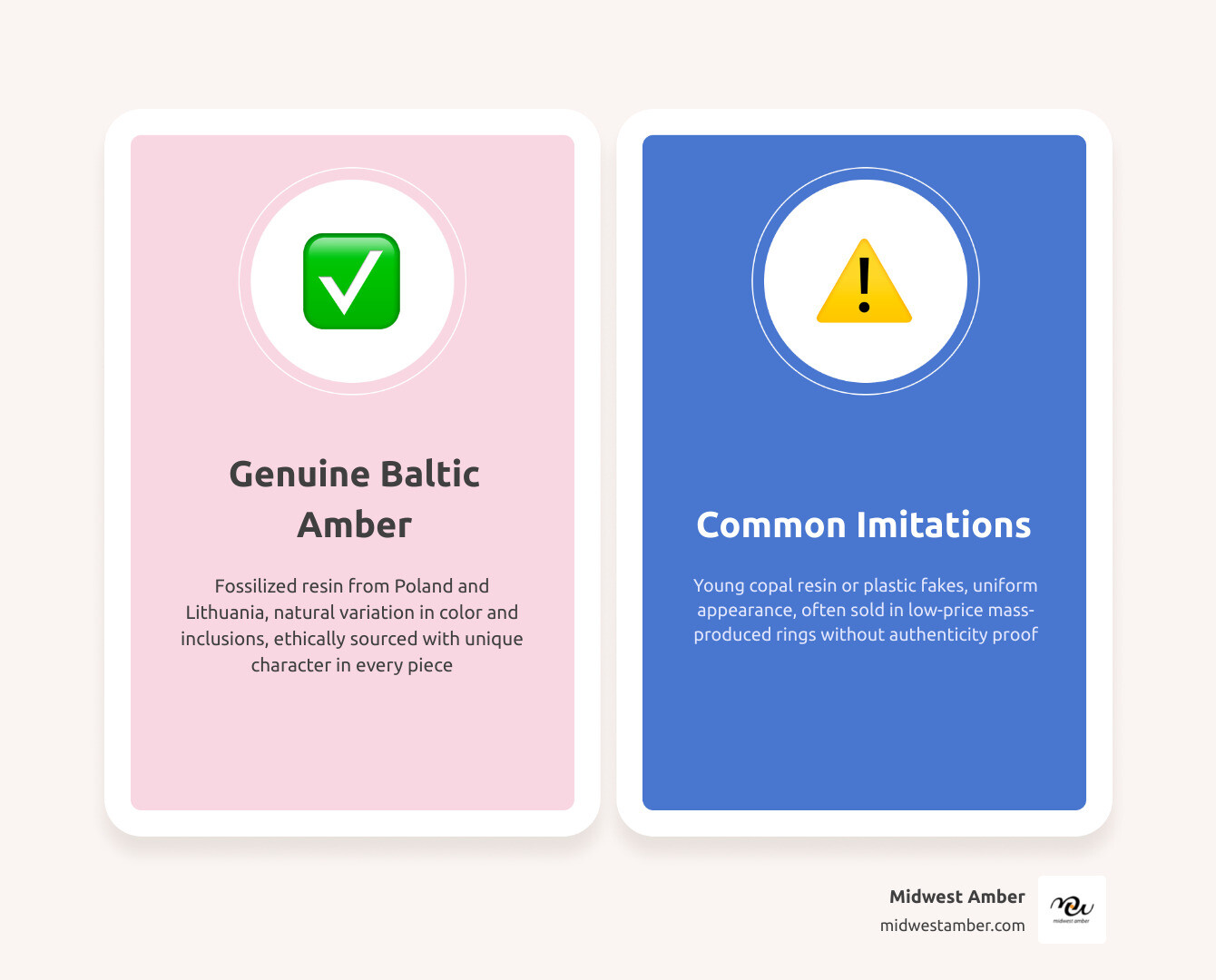
Genuine Baltic amber is the gold standard. It is sourced primarily from the Baltic Sea regions of Poland and Lithuania. At Midwest Amber, we emphasize that our jewelry is 100% natural and ethically sourced.
A handcrafted ring will show a level of detail that mass-produced pieces lack. Look for "hand-finished" descriptions, which indicate that an artisan has personally overseen the setting of the stone. Every piece of real amber has natural variation; if a seller has 500 rings that all look identical with the exact same internal "spangles," they may be selling "pressed" amber (small scraps melted together) rather than a solid natural piece. For more detail, see The Ultimate Guide to Buying Real Amber Jewelry: Rings, Earrings, and Beyond.
Accent stone quality, metal purity, and setting durability
For an engagement ring intended for daily wear, we recommend solid 14k or 18k gold. While sterling silver or gold vermeil (a thick layer of gold over silver) are beautiful and more affordable, solid gold provides the best long-term durability for a piece that will be worn for decades.
If your amber engagement ring includes accent stones, ensure they are high-quality. We often see lab diamonds with VS1 clarity and F+ color used in high-end amber settings. These stones provide a "fire" that contrasts beautifully with the soft glow of the amber.
Red flags that can signal low-quality or misleading listings
The market is unfortunately flooded with "copal" (young resin that isn't fully fossilized) or outright plastic imitations.
- Price: If a "solid gold" amber ring is priced at $20, it is likely gold-plated brass with a plastic stone.
- Vague Origins: If the seller cannot confirm the amber is from the Baltic region, be cautious.
- Perfect Uniformity: Real amber should have unique character.
- Missing Care Info: A reputable seller knows amber is delicate and will provide specific instructions on how to care for it.
Learn more about spotting fakes in our guide on how to Shop Authentic Amber Rings Online: Your Guide to Genuine Beauty.
Pricing, Customization, and Seller Policies in 2026
Buying an amber engagement ring in 2026 offers a wide range of price points, making it an accessible option for many budgets.
Typical price ranges from artisan shops and fine jewelers
- Silver & Vermeil Artisan Pieces: You can find beautiful, genuine Baltic amber rings set in sterling silver or gold vermeil for $100 to $400. These are often handcrafted by independent Polish artisans.
- Solid Gold Settings: A standard 14k gold amber engagement ring with a high-quality center stone typically starts around $800 to $1,500.
- Luxury & Bespoke: Rings featuring large, rare amber specimens (like "dragon skin" or rare insect inclusions) paired with significant diamond accents can reach $2,500 to $5,000+.
Custom options buyers can expect before ordering
One of the joys of choosing amber is the ability to customize. Many specialist boutiques offer:
- Stone Selection: You may be able to choose the specific piece of amber based on its internal inclusions.
- Engraving: Adding a personal date or message inside the band.
- Try-On Models: Some high-end jewelers offer 3D-printed versions of the ring so you can test the fit and style before the final gold casting.
Shipping, returns, warranties, and resizing policies
Because many amber engagement rings are made to order, expect a production timeline of 2 to 4 weeks.
- Shipping: Always ensure the item is shipped via insured, signature-required delivery.
- Returns: Be aware that custom-made rings or those with personal engravings are often non-returnable.
- Warranty: Look for a lifetime warranty on the craftsmanship of the setting. Because amber is soft, warranties rarely cover the stone itself if it is cracked due to impact.
Pros, Cons, and Care Tips for Long-Term Wear
Before committing to an amber engagement ring, it is vital to understand the lifestyle adjustments required to keep it beautiful.
Pros and cons of choosing an amber engagement ring
Pros:
- Unrivaled Uniqueness: Your ring will be a conversation piece with a 40-million-year history.
- Warmth & Comfort: It is lightweight and doesn't feel "icy" in the winter.
- Ethical Choice: Baltic amber is generally mined with much less environmental impact than diamonds or heavy metals.
Cons:
- Softness: It can be scratched by everyday objects like keys or even rough fabric.
- Sensitivity: Amber can be damaged by heat, hairspray, perfumes, and harsh cleaning chemicals.
How to clean, store, and wear amber safely
To maintain the glow of your amber engagement ring, follow these rules:
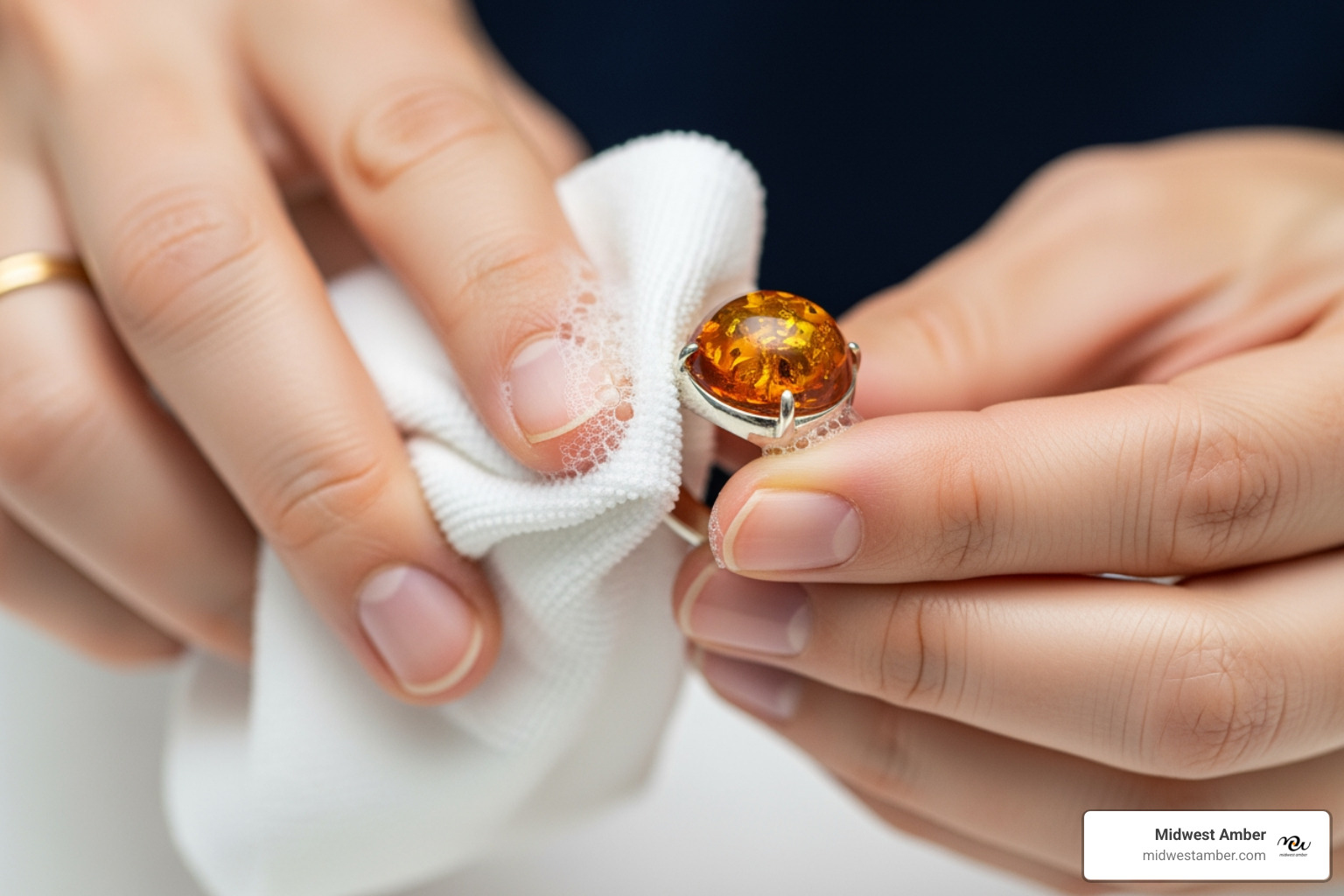
- Cleaning: Use only a soft cloth and lukewarm, mild soapy water. Never use ultrasonic cleaners or steam.
- Storage: Store your ring in a separate fabric pouch. If it rubs against a diamond ring in your jewelry box, the diamond will scratch the amber.
- Chemicals: Put your ring on after applying hairspray, perfume, or lotion.
- Activity: Remove the ring before gardening, swimming (chlorine is a no-no), or hitting the gym.
For more on the symbolic and protective history of these pieces, read Amber Rings: More Than Just Jewelry - A Symbol of Protection and History.
Who should choose amber over harder gemstones?
Amber is perfect for the romantic who loves vintage aesthetics and has a "gentle" lifestyle. If you work with your hands in a high-impact environment (like construction or healthcare), you might consider amber for a "special occasion" ring rather than an everyday engagement piece, or choose a very protective bezel setting.
Where to Find an Authentic Amber Engagement Ring
Transparency is the most important factor when shopping for amber. You want a jeweler who can tell you exactly where the resin was found and who carved it.
Best places to shop with confidence online and in person
When looking for an amber engagement ring, seek out Baltic specialists. At Midwest Amber, we pride ourselves on our direct connections to Polish and Lithuanian artisans. Whether you are shopping from our collection online or looking for a custom piece, we provide the certified authenticity that an engagement-level purchase requires.
Avoid general "big box" marketplaces unless the seller has a long history of specialized amber sales and clear, detailed specifications. A true specialist will be able to answer questions about the specific "yield" of the amber and the karat of the gold without hesitation.
Questions to ask before you place your order
Before you click "buy," ask the jeweler these four questions:
- "Is this 100% natural Baltic amber, or is it pressed/reconstituted?"
- "What is the origin of the amber, and do you have a certificate of authenticity?"
- "Is the gold solid 14k/18k, or is it plated?"
- "What are your policies for resizing if the fit isn't perfect?"
Frequently Asked Questions About Amber Engagement Rings
Is an amber engagement ring durable enough for daily wear?
Yes, but with caveats. It is durable enough if you are mindful. It won't shatter from a light tap, but it will scratch over time. Many owners find that the "patina" of fine scratches adds to the organic, antique look of the ring, while others prefer to have the stone professionally polished every few years.
How can I tell if Baltic amber is genuine?
Genuine Baltic amber is warm to the touch and will float in highly salty water (though we don't recommend throwing your gold ring in a salt bath!). The best way to be sure is to buy from a reputable dealer who provides a certificate of authenticity.
Should I size up if I plan to stack bands?
If you plan on wearing a wide wedding band alongside your amber engagement ring, we usually recommend going up a half-size. A wider stack of metal covers more of the finger's surface area, which can make your standard size feel uncomfortably tight.
Conclusion
An amber engagement ring is more than just a piece of jewelry; it is a fragment of ancient history that symbolizes a love intended to stand the test of time. By choosing genuine Baltic amber, you are supporting a tradition of Polish and Lithuanian craftsmanship that spans centuries.
At Midwest Amber, our mission is to provide you with handcrafted, certified-authentic pieces that you can wear with pride. Whether you are drawn to the deep mystery of cognac amber or the sunny brilliance of a honey-toned solitaire, we are here to help you find a ring that is as unique as your own story.
Explore our collection and Find Your Perfect Polish Amber Ring from Classic to Modern Black Amber today.

Leave a comment
This site is protected by hCaptcha and the hCaptcha Privacy Policy and Terms of Service apply.