

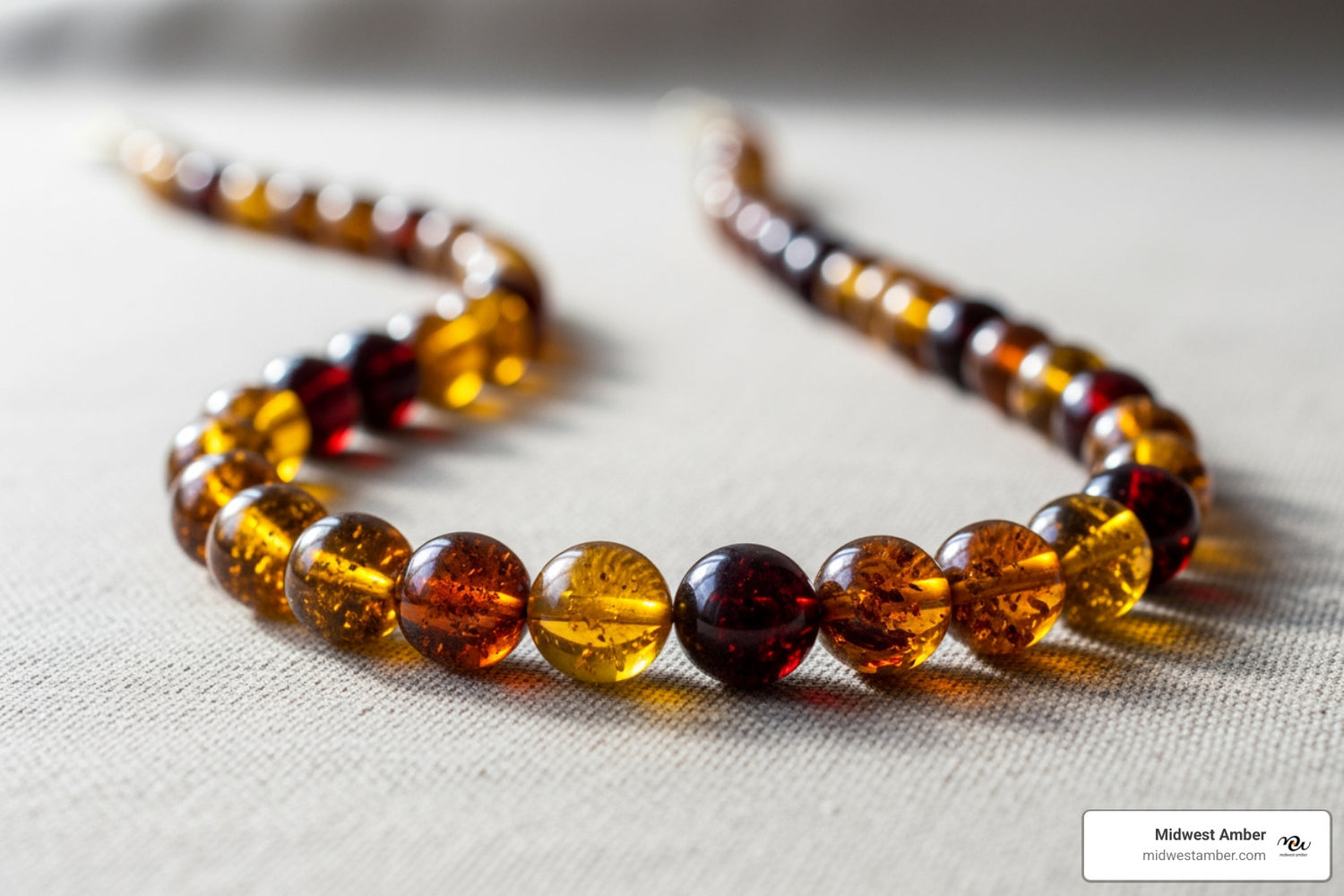
A Parent's Worst Nightmare: The Unseen Dangers of Teething Necklaces
Amber necklace for infants are marketed as natural teething remedies, but they pose serious, life-threatening risks that far outweigh any unproven benefits.
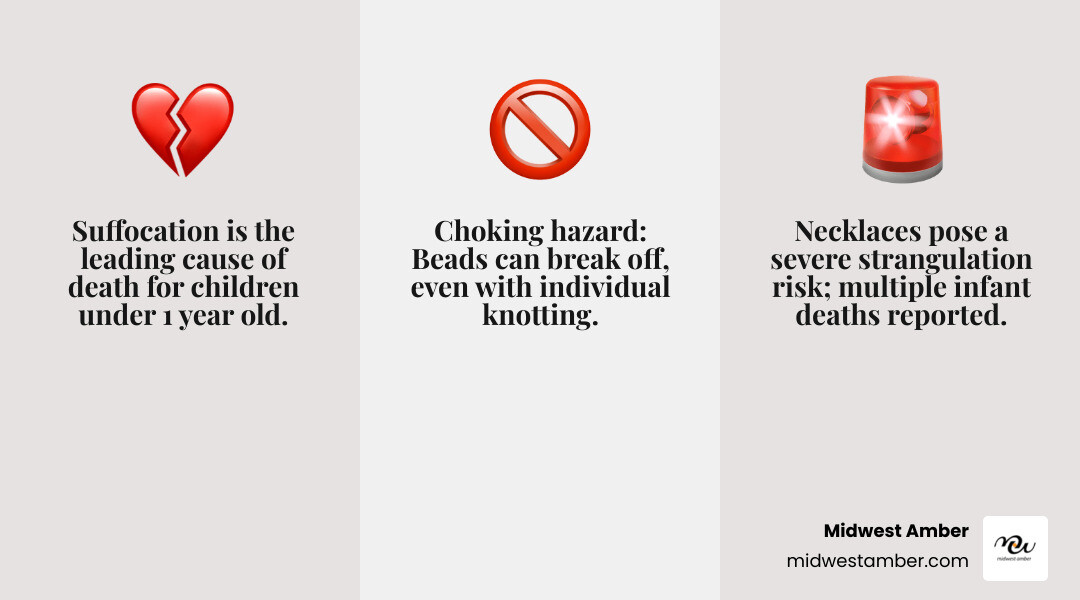
Critical Facts About Amber Teething Necklaces:
- Strangulation Risk: Multiple children have died from strangulation, including an 18-month-old who was strangled during a nap
- Choking Hazard: Beads can break off and become choking hazards, even with individual knotting between beads
- No Scientific Evidence: Claims about succinic acid pain relief are not supported by science—the substance only releases at temperatures near 200°C (392°F), not body temperature
- Expert Warnings: The American Academy of Pediatrics (AAP) does not recommend that infants wear any jewelry, and the FDA issued an official warning in December 2018
- Leading Cause of Death: Suffocation is the leading cause of death for children under one year old
At the park, at day care, in stores—amber teething necklaces have become increasingly common. Parents see their babies suffering through teething and desperately want relief. The marketing is compelling: a "natural" solution, centuries of traditional use, beautiful handcrafted jewelry. But the reality is far darker.
One evening, parents put their previously healthy 4-month-old boy to bed wearing an amber teething necklace for the first time. They found him the next morning with petechiae covering his face and neck—evidence of strangulation. This isn't an isolated incident. The Canadian Paediatric Surveillance Program documented 10 adverse events related to teething jewelry in a single year, including strangulation, choking on beads, swallowing clasp magnets, and contact dermatitis.
The statistics are sobering: In a survey of 130 Canadian families, 27% reported using an amber teething necklace. Seventy-seven percent of pediatricians across Canada have seen infants wearing these necklaces in their practices. Despite widespread awareness of the risks among medical professionals (91% of surveyed pediatricians knew about the dangers), only 8% routinely discuss these hazards with all families.
I'm Gabriel Ciupek, President and owner of Midwest Amber, Inc., where I've spent years working directly with Baltic amber jewelry and educating customers about both its genuine properties and its limitations—including the serious risks of amber necklace for infants as teething aids. While amber has legitimate uses for adults, the safety concerns for babies cannot be ignored, and I believe parents deserve honest, evidence-based information to make informed decisions.
The Allure of Amber: Why Parents Turn to Teething Necklaces
When your baby is crying from teething pain, you'd do almost anything to help. I've seen countless parents in our shop, exhausted and desperate for something—anything—that might bring relief. That's exactly why amber necklace for infants have become so popular. They promise a natural, gentle solution during one of parenting's most challenging phases.
The appeal is understandable. These necklaces are marketed as an ancient remedy, a piece of history that connects us to traditional European healing practices. There's something comforting about that idea—that generations before us found relief in something as simple and beautiful as amber.
Baltic amber truly is remarkable. It's fossilized tree resin that formed over 45 million years ago in ancient forests. At Midwest Amber, we work with this material every day, and I never stop being amazed by its journey through time. If you're curious about how this ancient gem came to be, we've written about it in Unearthing Natural Amber: What Makes This Ancient Gem So Special.
The marketing story behind amber necklace for infants is compelling: when warmed by your baby's body heat, the amber supposedly releases succinic acid, which then absorbs through the skin to act as a natural pain reliever. No medications, no side effects—just nature doing what it does best. Combined with the warm, honey-colored beauty of the beads, it's easy to see why so many parents are drawn to them.
What is Baltic Amber Claimed to Do?
The promises made about amber necklace for infants are extensive. Sellers claim that the succinic acid released from the amber can provide pain relief by acting as a natural analgesic, specifically targeting teething discomfort. They say it has anti-inflammatory properties that reduce swollen, painful gums. We've certainly seen interest in amber's potential anti-inflammatory effects for adults with arthritis, as we explored in The Golden Touch: Discovering Amber's Anti-Inflammatory Power for Arthritis.
Beyond pain management, proponents claim the necklaces create a soothing effect that helps babies stay calm and relaxed throughout the day. Some go even further, suggesting amber can boost the immune system and help the body fight inflammation naturally. There are even claims that it can reduce drooling by stimulating the thyroid gland.
For a parent watching their little one struggle through teething, these promises sound like a miracle. A simple necklace that solves multiple problems? It's no wonder they've become so widespread.
The Truth About Succinic Acid
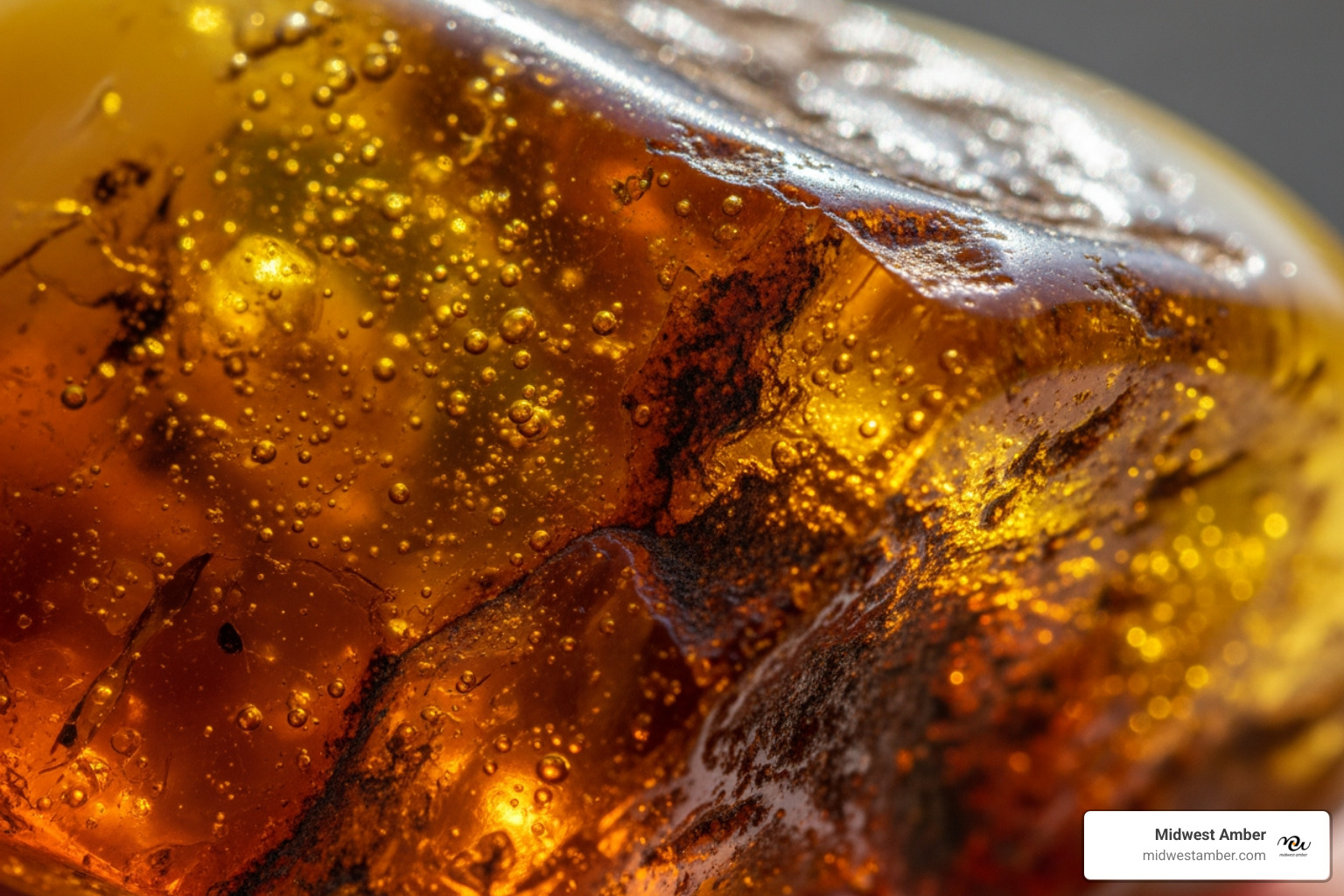
Here's where I need to be honest with you, even though it's not what many parents want to hear. As someone who works with genuine Baltic amber every day and understands its true properties, I can tell you that the science simply doesn't support these claims.
The entire theory rests on succinic acid being released at body temperature and absorbed through the skin. But here's the problem: succinic acid only releases from Baltic amber at extremely high temperatures—around 200 degrees Celsius or 392 degrees Fahrenheit. Your baby's body temperature is roughly 37 degrees Celsius (98.6 degrees Fahrenheit). That's not even close to hot enough.
Even if we imagine that somehow a tiny amount of succinic acid did release at body temperature, there's no scientific evidence that it would absorb through the skin in meaningful amounts. And there's no evidence that it would relieve pain, reduce inflammation, or affect the thyroid if it did absorb.
The claims about immune system benefits and reduced drooling? Also unsupported by any credible research.
What does this mean for parents who swear their baby felt better wearing an amber necklace? It's likely a placebo effect—but not in the way you might think. When you believe something is helping your baby, you might naturally provide more comfort, attention, and soothing touch. That extra care absolutely helps your baby feel better. The relief is real, but it's coming from you, not the amber.
I believe in being transparent about what amber can and can't do. As a company that's worked with genuine Baltic amber for over 20 years, we value its beauty and the legitimate uses it has for adults. But when it comes to amber necklace for infants as a teething remedy, the scientific evidence is clear: the purported mechanism simply doesn't work.
The Hidden Dangers: An Amber Necklace for Infants Poses Serious Risks
I wish I could tell you that the beautiful amber necklaces marketed for babies are harmless. But the truth is far more sobering, and as someone who has worked with amber jewelry for years, I feel a deep responsibility to share what the evidence actually shows.
An amber necklace for infants introduces real, documented dangers that have resulted in tragic outcomes. These aren't hypothetical risks dreamed up by overly cautious regulators—they're hazards that have taken children's lives and caused serious injuries.
The most devastating risk is strangulation. Baby Deacon's story, which we shared at the beginning, isn't unique. Any necklace worn by an infant can become caught on an object during sleep or play, or wrap too tightly around a tiny neck. Babies don't have the strength, coordination, or awareness to free themselves from such a predicament. The Canadian Paediatric Surveillance Program documented these real-world tragedies, identifying 10 adverse events related to teething jewelry in a single year. These included strangulation, choking on beads, swallowing clasp magnets, and contact dermatitis.
Beyond strangulation, there's the very real choking hazard. Even with individually knotted beads (which we'll discuss more in a moment), a single bead that breaks off is the perfect size to lodge in an infant's airway. Small, round objects are particularly dangerous for babies who are still developing their swallowing reflexes and exploring everything with their mouths.
Official Warnings You Can't Ignore
When major health organizations issue warnings, it's because they've reviewed the evidence and concluded the risks are too serious to ignore. Both the FDA and the American Academy of Pediatrics have taken strong positions against amber necklace for infants.
In December 2018, the FDA issued an official warning about teething jewelry after receiving multiple reports of children choking on beads. Most heartbreaking was the report of an 18-month-old child who died from strangulation during a nap while wearing an amber teething necklace. This wasn't a freak accident—it was a preventable tragedy. You can read the FDA's official warning on teething jewelry for the complete details.
The American Academy of Pediatrics is equally clear in their guidance. The AAP strongly warns parents against using amber teething necklaces, with a straightforward policy: infants should not wear any jewelry. Period. They remind parents that suffocation is the leading cause of death for children under a year old and remains among the top five causes of death for children ages one to four.
These aren't theoretical concerns or overly cautious recommendations. These are evidence-based warnings from organizations dedicated to protecting children's health.
Understanding the Mechanical Risks of an Amber Necklace for Infants
You might be thinking, "But what about those safety features I've heard about?" It's a fair question, and one that deserves an honest answer.
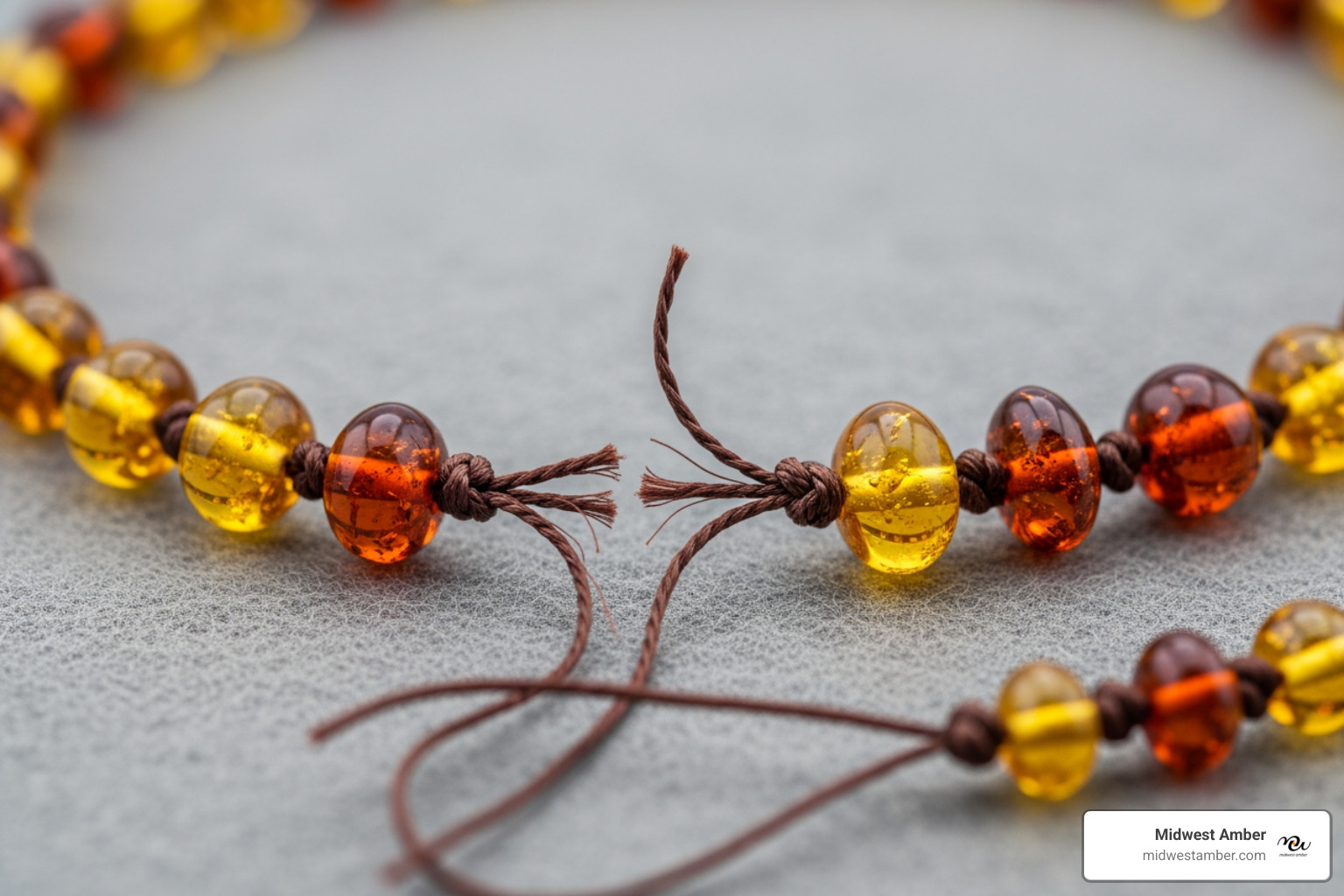
Many manufacturers of amber necklace for infants advertise individually knotted beads as a safety feature. The idea is that if the necklace breaks, the knots between each bead will prevent all the beads from scattering. While this sounds reassuring, it doesn't eliminate the danger. A single bead, even one, is still a choking hazard for an infant. The knots simply limit the number of beads that might come loose at once—they don't prevent the necklace from breaking in the first place.
Then there are the breakaway clasps, which are supposed to release under pressure to prevent strangulation. Unfortunately, research has shown these don't always work as intended. A study by Soudek and colleagues found that these clasps often fail to release easily, which means they can't be relied upon to prevent strangulation. In fact, the Canadian Paediatric Surveillance Program reported cases where children swallowed the clasp magnets themselves, creating yet another hazard.
The fundamental problem is that no amount of design modification can change the basic physics of the situation. A cord around an infant's neck is a strangulation risk. Small beads and clasps are choking hazards. Babies lack the motor control to remove jewelry that becomes dangerous. As we've detailed in our guide, Warning: What Every Parent Needs to Know About Amber Teething Necklaces, these mechanical risks are inherent to the product design itself.
I understand the appeal of wanting a natural solution for your baby's discomfort. But when the science shows no benefit and the risks are this serious, we have to listen to what the experts are telling us.
Soothing Teething Pain Safely: Expert-Backed Guidance for Parents
When our little ones are in pain, our instinct is to find relief, and fast. I understand that desperation—I've been there myself. The good news is that there are many safe, effective, and pediatrician-recommended methods for soothing teething discomfort that don't involve the serious risks associated with an amber necklace for infants. Let's explore what truly helps, backed by science and medical expertise.

Often, the simplest methods are the most effective. Gentle gum massage with a clean finger can provide immediate comfort. The pressure on the gums counteracts the uncomfortable sensations of emerging teeth. I've found that sometimes just this simple touch can turn tears into smiles within moments.
Beyond physical relief, never underestimate the power of comforting touch and parental soothing techniques. Holding your baby close, rocking them gently, or singing a familiar lullaby can work wonders in distracting them from pain and providing emotional security. Your presence and reassurance are often the best medicine. Sometimes our babies just need to know we're there with them through the discomfort.
It's always wise to consult with a pediatrician if you have concerns about your child's teething pain or if conventional methods aren't providing enough relief. They can offer personalized advice based on your baby's specific needs and ensure there are no underlying issues causing the distress.
Here are general comfort measures for teething that health professionals widely recommend:
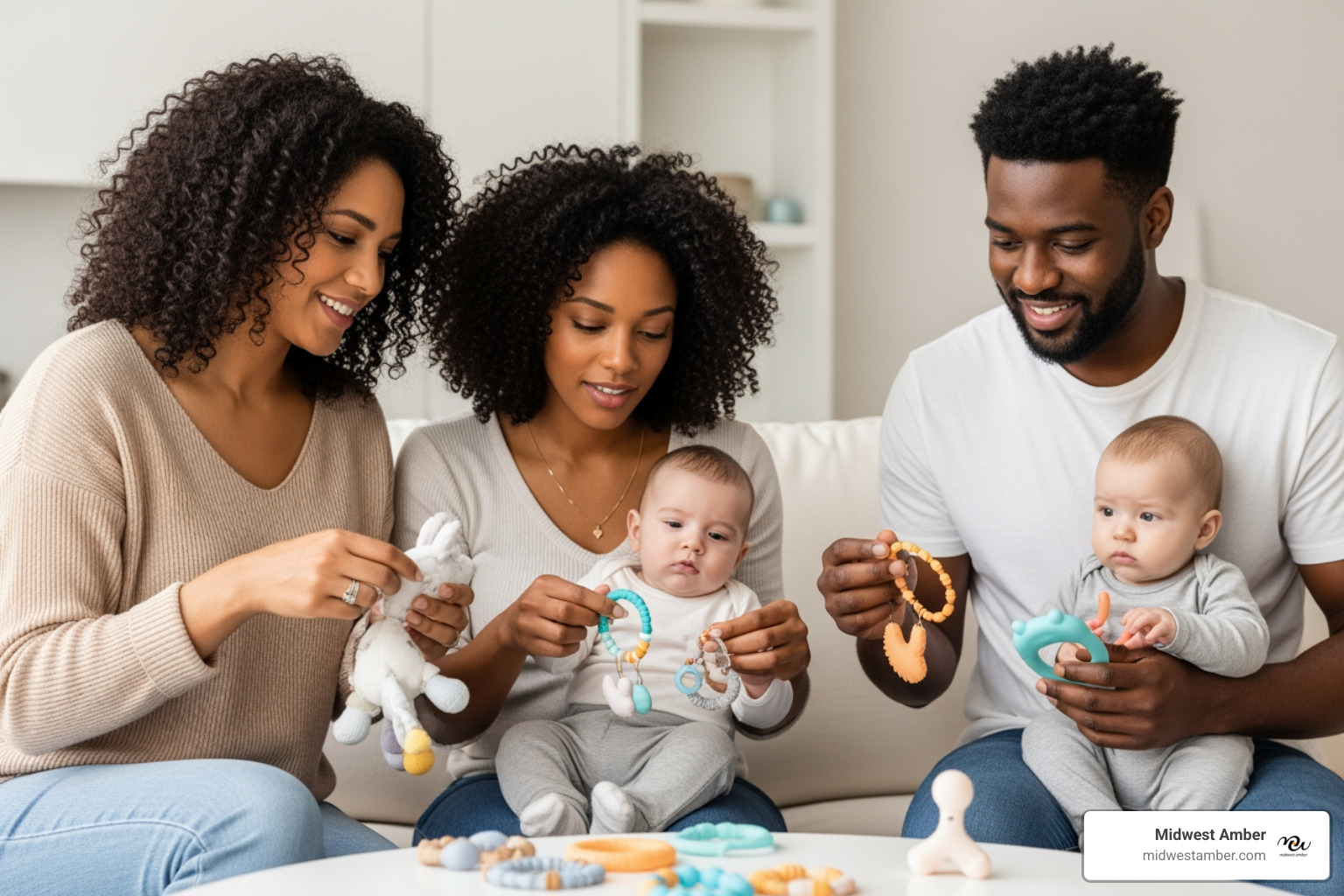
- Firm rubber teething rings or toys specifically designed for infants to chew on (make sure they're age-appropriate and free from small, detachable parts)
- Cold, damp washcloth (twisted and frozen) or a chilled teething ring to numb the gums and reduce inflammation
- Gum massage with a clean finger for a few minutes at a time
- Distraction through play, cuddles, or new sights and sounds to divert attention from discomfort
- Wiping drool regularly to prevent skin irritation on the chin
What Pediatricians Recommend for Teething
Pediatricians consistently recommend proven, low-risk approaches to managing teething pain. The Mayo Clinic offers excellent tips for soothing sore gums, which align with advice from the American Academy of Pediatrics and other health authorities.
Gentle rubbing with a clean finger over your baby's gums can be remarkably effective. The pressure helps alleviate some of the discomfort by providing a counter-sensation to the pain of emerging teeth. I've seen this simple technique calm fussy babies countless times.
Parental comfort is perhaps the most underrated remedy. Your soothing voice, gentle touch, and calm presence provide emotional security that helps your baby cope with physical discomfort. Sometimes all a baby needs is to feel safe and loved through this challenging phase.
Offering your baby a firm rubber teething ring or a clean, cool washcloth to chew on provides both relief and distraction. The coolness helps numb the area and reduce swelling, while the act of chewing applies helpful pressure to sore gums.
If your baby is particularly fussy and other methods aren't working, your pediatrician might suggest infant acetaminophen (Tylenol) in appropriate doses. Always consult your doctor before administering any medication—this isn't something to guess about.
The Mayo Clinic emphasizes that while teething can be uncomfortable, it's a natural process. The focus should be on providing comfort and managing symptoms safely. When to call your doctor: If your baby develops a fever or seems unusually unwell, it's crucial to reach out, as these symptoms typically aren't directly caused by teething and may indicate something else.
Why to Avoid Certain Teething "Remedies"
Just as we warn against the amber necklace for infants, there are other products marketed for teething that carry significant risks and should be avoided entirely.
One category to steer clear of is numbing gels or creams containing benzocaine. The FDA has issued a specific warning against these products for infants and young children, stating they can cause a rare but serious condition called methemoglobinemia, which reduces the amount of oxygen carried in the blood. The FDA explicitly advises, "Do Teething Babies Need Medicine on Their Gums? No." This warning applies to popular over-the-counter products that many parents might assume are safe.
Similarly, homeopathic teething tablets have faced serious scrutiny. The FDA has warned against these products due to inconsistent amounts of belladonna, a toxic substance, which led to serious adverse events in some children. The word "homeopathic" or "natural" doesn't automatically mean safe.
The most important takeaway is this: any jewelry on infants—including an amber necklace for infants, bracelets, or anklets—poses an unacceptable risk. The potential for choking, strangulation, or other adverse events far outweighs any unproven or scientifically debunked benefits. Always check with your pediatrician before using any remedy that isn't explicitly recommended by major health organizations.
Our priority, and I believe yours too, is the safety and well-being of our children. There are so many effective, safe ways to help your baby through teething without introducing unnecessary dangers.
Frequently Asked Questions about Amber Teething Jewelry
Parents often reach out to us with thoughtful questions about amber jewelry and infant safety. These conversations matter deeply to us, and we want to provide honest, clear answers that help you make the best decisions for your family.
Are amber bracelets or anklets safer than an amber necklace for infants?
It's natural to think that moving the jewelry away from the neck might solve the problem. After all, if strangulation is the main concern, wouldn't a bracelet or anklet be a safer alternative?
Unfortunately, the answer is no. While an amber necklace for infants worn as a bracelet or anklet does remove the direct risk of neck strangulation, it still poses a serious choking hazard. When these pieces break—and they can break—individual beads come loose. Babies explore everything with their mouths, and a small amber bead is exactly the type of object that can become lodged in a child's airway.
The American Academy of Pediatrics is clear on this point: they do not recommend that infants wear any jewelry at all, regardless of whether it's around the neck, wrist, or ankle. The risks remain present wherever you place it on a baby's body. So while you might eliminate one danger, you're still exposing your child to another equally serious one.
Do the necklaces work for adults?
This is where the conversation shifts considerably. Many adults do wear amber jewelry and find value in it, particularly for conditions like arthritis. At Midwest Amber, we craft beautiful, genuine Baltic amber jewelry specifically for adults, and our customers often share that they appreciate both its aesthetic appeal and the traditional properties associated with it.
Here's the crucial difference: adults don't face the same choking or strangulation risks that infants do. An adult can safely wear a necklace without the life-threatening concerns that come with putting one on a baby. For adults, wearing an amber necklace for infants is actually just wearing amber jewelry—it becomes a personal choice based on individual beliefs and preferences, without the severe safety concerns present for babies.
We focus on authenticity and quality in our adult jewelry, ensuring every piece is genuine Baltic amber sourced from Poland and Lithuania, backed by over 20 years of experience and certified authenticity. For adults, it's about beauty, tradition, and personal wellness choices made without the shadow of infant safety risks.
How can I tell if an amber necklace is real?
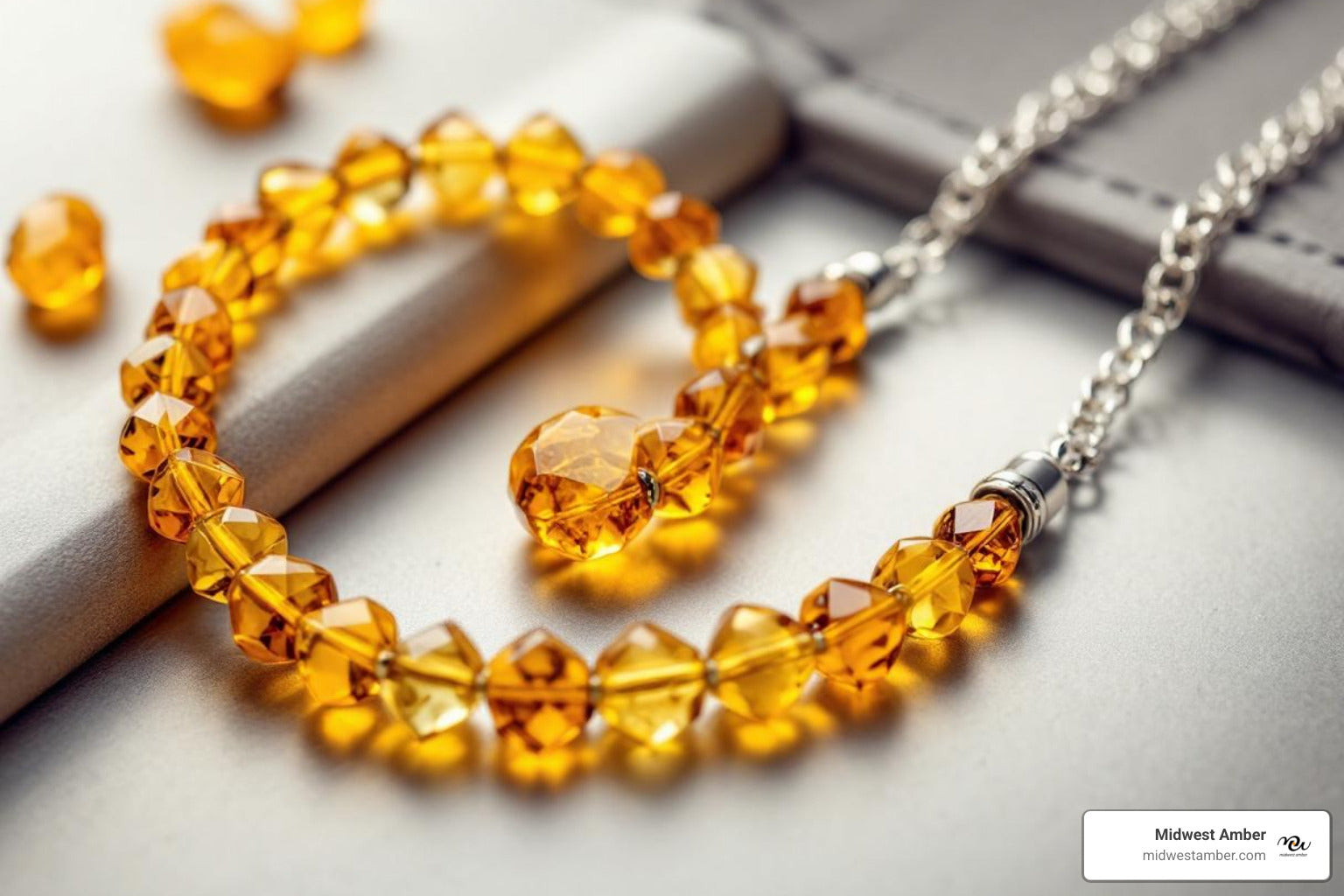
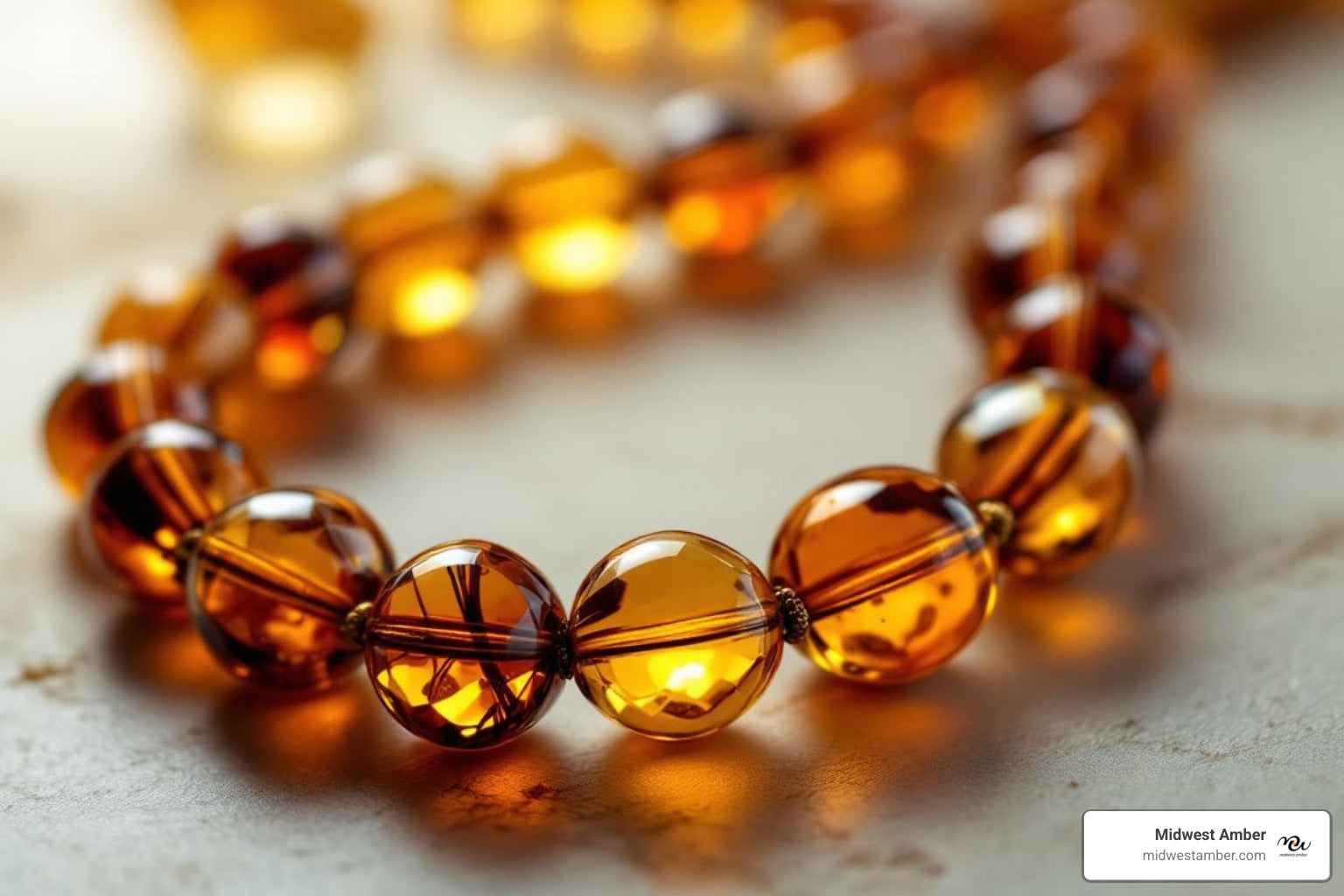
Identifying genuine Baltic amber requires some knowledge. Real amber has distinctive characteristics—it's warm to the touch, surprisingly lightweight, and often contains small imperfections or fascinating fossilized inclusions that tell the story of its ancient origins.
But here's what we want you to understand above all else: whether an amber necklace for infants is genuine or fake doesn't change the safety risks it poses to a baby. A real Baltic amber necklace and a plastic imitation both present the same choking and strangulation hazards when placed on an infant. Authenticity simply doesn't address the mechanical dangers we've discussed throughout this article.
If you're interested in understanding genuine amber for adult jewelry purposes, we've created a comprehensive resource: The Amber Truth: Unlocking the Secrets of Genuine Stones. This guide can help you discern authentic pieces and appreciate the unique qualities of real Baltic amber—for appropriate uses where safety isn't compromised.
A Responsible Path Forward for Parents
As parents, nothing matters more than keeping our children safe. I know how desperately we all want to help when we see our babies in pain, and that's exactly why companies market products like the amber necklace for infants. But after looking at the evidence—the scientific studies, the expert warnings, and most heartbreakingly, the real cases of children who have been harmed—the conclusion is unavoidable: these necklaces pose serious, life-threatening risks that no unproven benefit can justify.
The American Academy of Pediatrics (AAP) and the Food and Drug Administration (FDA) don't issue warnings to make our lives more difficult as parents. They do it because children have died. When the FDA specifically warns about strangulation deaths, when the AAP states clearly that infants should not wear any jewelry, we need to listen. These aren't theoretical concerns—they're based on tragic, preventable losses.
I understand the appeal of natural remedies. At Midwest Amber, we've spent over 20 years working with genuine Baltic amber, and we appreciate its beauty and the traditional beliefs surrounding it. But when it comes to infant safety, we cannot let wishful thinking override medical evidence. The good news is that there are proven, safe methods for soothing teething pain that actually work: gentle gum massage, chilled teething rings, and the irreplaceable comfort of a parent's loving touch.
If you're currently using an amber necklace for infants or are considering it despite these warnings, please at least follow these critical harm reduction steps: never leave your child unattended while wearing the jewelry, always remove it during sleep (this is when most strangulation incidents happen), ensure it's never used for chewing, and make certain it fits properly against the collarbone without reaching the chin. However, I want to be clear—these precautions reduce but do not eliminate the risk. The safest choice is simply not to use them at all.
Our commitment at Midwest Amber has always been to authenticity and education. We provide genuine Baltic amber jewelry for adults, where these safety concerns don't apply. We believe in being honest with our customers about what amber can and cannot do, and about who should and shouldn't wear it. When it comes to babies, the science and the medical community have spoken clearly.
Choosing safe practices means you can rest easier at night, knowing your baby is protected from avoidable dangers. Your pediatrician is your best resource for teething advice, and there are many evidence-based options that don't carry these frightening risks. If you're interested in learning about safe, adorable accessories for infants that aren't marketed as teething remedies, we've written about that in Beyond Teething: Adorable Necklaces for Infants.
Your baby's safety isn't worth the risk. Let's accept the methods that keep our little ones healthy and protected while they steer this challenging but temporary phase of growing up.

Leave a comment
This site is protected by hCaptcha and the hCaptcha Privacy Policy and Terms of Service apply.