

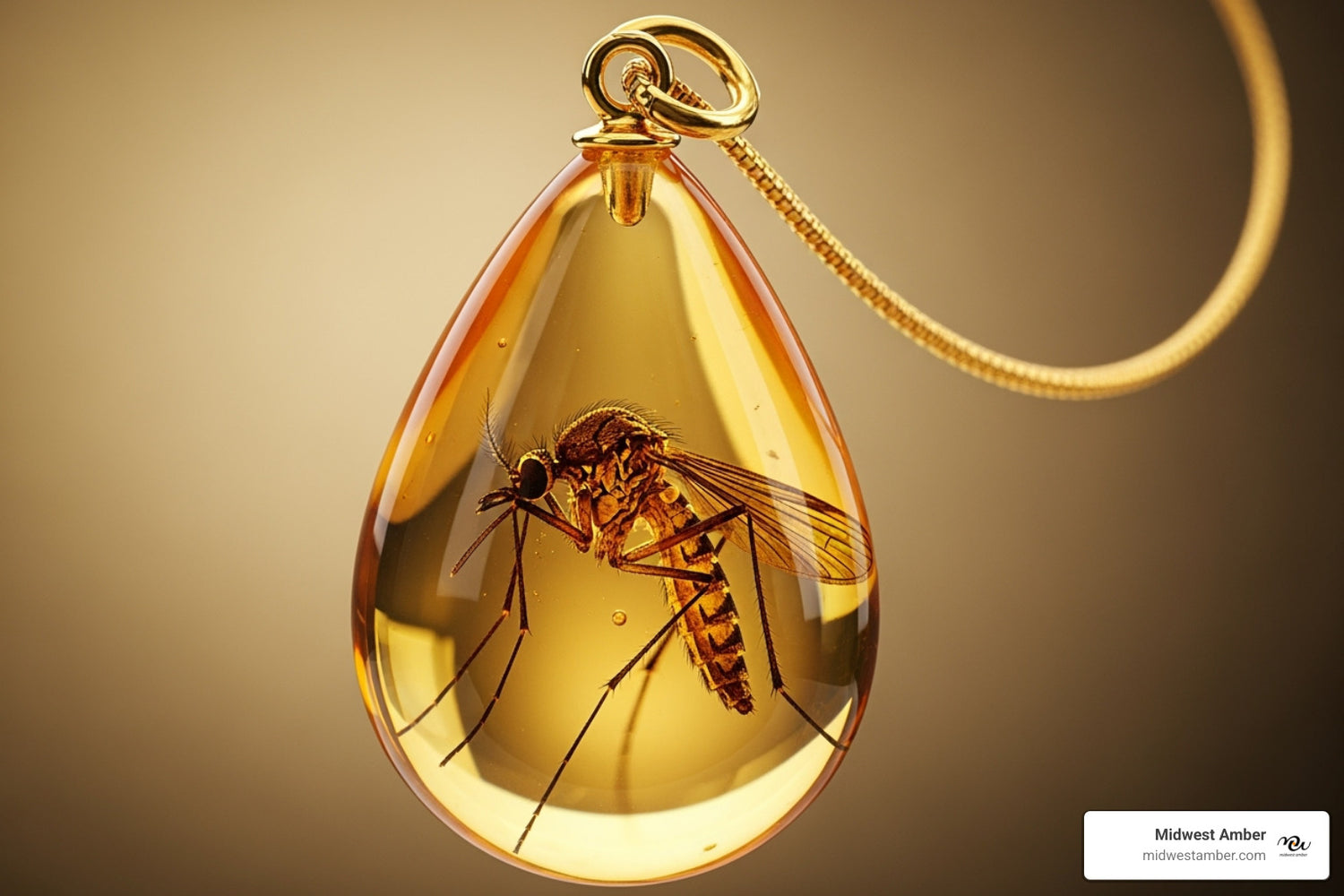
A Window to a Prehistoric World
A mosquito in amber necklace offers you the chance to wear a piece of natural history that's millions of years old. These stunning jewelry pieces feature genuine insects perfectly preserved in fossilized tree resin, creating wearable art that connects you to ancient ecosystems. When looking for an authentic piece, it's crucial to choose a reputable dealer like Midwest Amber, which provides certificates of authenticity for its ethically sourced Baltic amber.
The appeal of these prehistoric gems goes far beyond their beauty. As one amber expert noted, "Mosquitoes are exceedingly rare in amber. I find mosquitoes maybe 2 times a year." This rarity makes each piece truly exceptional. Unlike gnats, mosquitoes aren't attracted to the aromatic compounds in tree resin - they're drawn to carbon dioxide and heat from mammals instead.
When you wear a mosquito in amber necklace, you're displaying a natural time capsule. The insect became trapped in sticky resin 20 to 50 million years ago, then underwent fossilization through polymerization and oxidation. Today, you can observe every detail - from delicate wings to slender legs - perfectly preserved in golden amber.
I'm Gabriel Ciupek, President and owner of Midwest Amber, Inc., with decades of experience in Baltic amber jewelry and fossil inclusions. Through my work with mosquito in amber necklace pieces, I've seen how these ancient treasures captivate collectors and jewelry lovers alike.
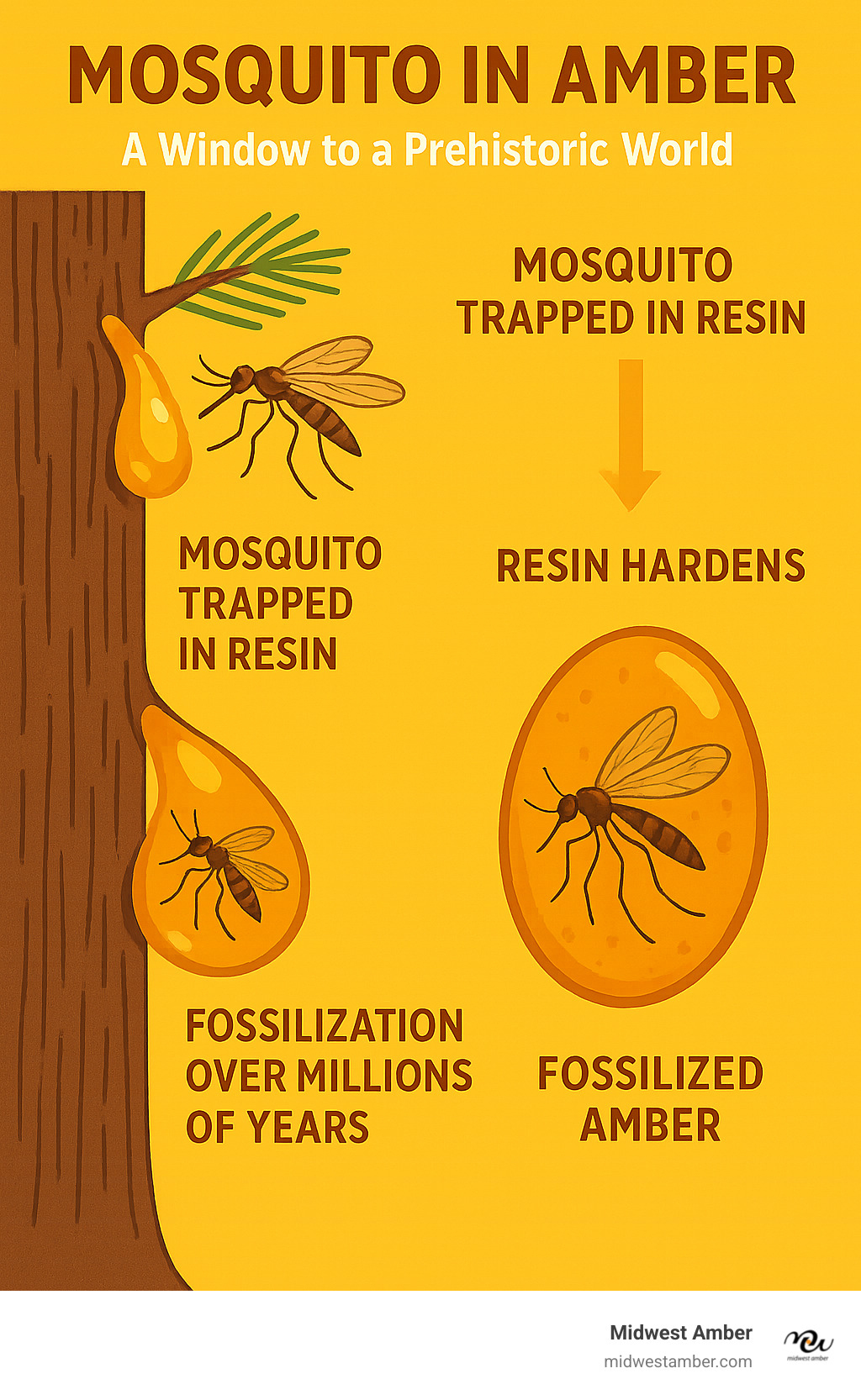
The Science and Story Behind Amber Inclusions
Your mosquito in amber necklace holds an incredible scientific story that began millions of years ago. Amber isn't just a pretty golden gem - it's actually fossilized tree resin that underwent an amazing change through time.
Picture ancient forests where sticky resin oozed from pine and other trees. Over millions of years, this resin hardened through a process called polymerization, eventually becoming the beautiful amber we treasure today. It's like nature's own time capsule, perfectly preserving whatever got stuck inside.
Paleontologists absolutely love amber because it captures ancient life in stunning detail. While other fossils might show just bone impressions, amber preserves everything - delicate wings, tiny hairs, even internal organs sometimes! Scientists have identified about 3,500 different fossil creatures in amber, and here's the amazing part: 10% to 15% of these ancient insects look almost identical to ones living today.
Now, about those mosquitoes in your necklace - they're incredibly rare finds. Most insects get trapped because they're attracted to the tree resin's smell, but mosquitoes are different. They're drawn to the carbon dioxide and warmth from mammals, not aromatic tree compounds. So any mosquito in amber likely got there by accident - maybe blown by wind into the sticky resin. That makes your mosquito in amber necklace truly special.
Baltic amber from Northern Europe is our specialty at Midwest Amber. This golden treasure formed about 45 million years ago and contains high levels of succinic acid, earning it the scientific name "succinite."
Amber's story goes beyond science into human culture. The ancient Amber Road connected Baltic shores to Mediterranean markets, making amber one of humanity's first luxury trades. Greeks called it "Electron," Chinese knew it as "Hupo" (Tiger's Soul), and Lithuanians still call it "Gintaras."
Throughout history, people believed amber had healing powers - boosting immunity, calming the mind, even bringing prosperity. While we can't prove these claims scientifically, there's something undeniably soothing about wearing a piece of ancient history around your neck.
The cultural significance of amber spans continents and centuries. From Viking traders to Roman nobles, people have treasured these golden gems. Today, when you wear amber jewelry, you're continuing a tradition that connects you to countless generations who also found beauty in these fossilized treasures.
Want to dive deeper into amber's fascinating journey? Check out our comprehensive guide: The Fascinating World of Amber.
Our Top Picks for a Mosquito in Amber Necklace
Finding the perfect mosquito in amber necklace is like finding your own piece of prehistoric treasure. Each amber inclusion tells its own story, and no two pieces are exactly alike. That's what makes these ancient gems so special - you're not just buying jewelry, you're becoming the curator of a 20 to 50 million year old time capsule.
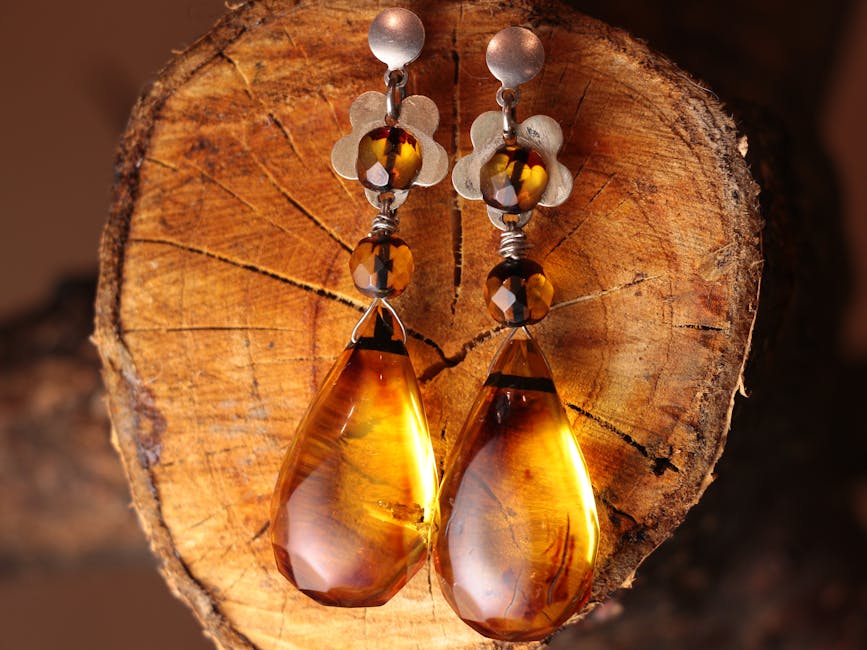
The beauty of these necklaces goes beyond the amber itself. The craftsmanship matters just as much. We love seeing these fossilized treasures set in sterling silver bezels that frame the amber perfectly, or paired with gold settings that complement amber's warm honey tones. Some pieces look stunning on simple leather cords that emphasize the natural, earthy feel of your prehistoric pendant.
Whether you prefer sleek modern designs or rustic, organic styles, there's a mosquito in amber necklace that matches your personality. Let's explore the most popular styles we see collectors and jewelry lovers gravitate toward.
The Classic Polished Pendant: A Timeless Mosquito in Amber Necklace
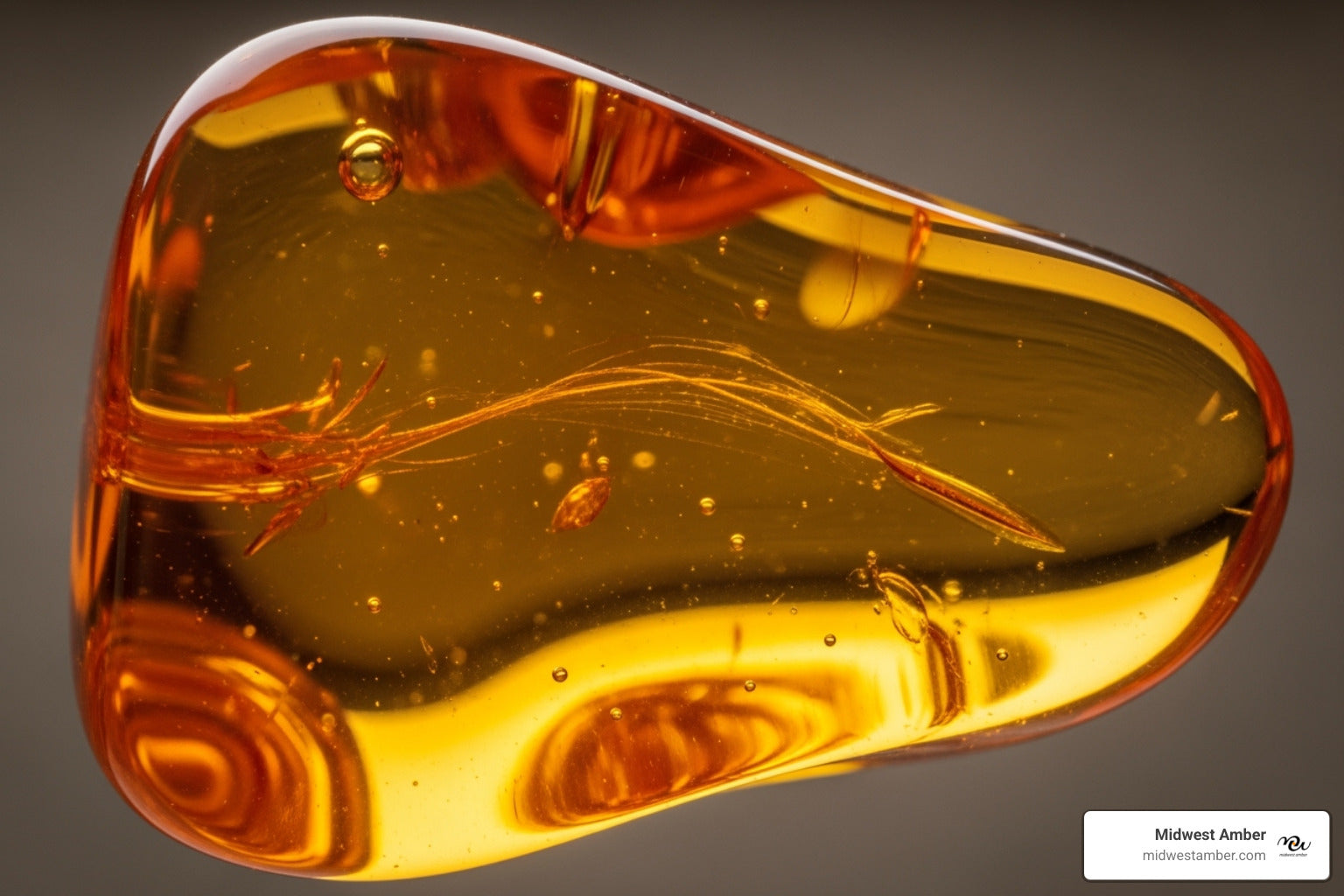
There's something magical about a beautifully polished amber pendant. The high clarity you get from expert polishing makes every detail of your ancient mosquito visible - from its delicate wings to its slender legs.
Baltic amber pieces often showcase that classic golden honey color, and some specimens can be exceptionally clear, almost like looking through a window into the past. The polishing process brings out amber's natural brilliance, creating a smooth, lustrous surface that catches light beautifully.
Most classic pendants feature a sterling silver setting - usually a simple bezel or bail that keeps the focus exactly where it should be: on your prehistoric guest. The mosquito is typically centered perfectly in the amber, creating a natural focal point that draws the eye immediately.
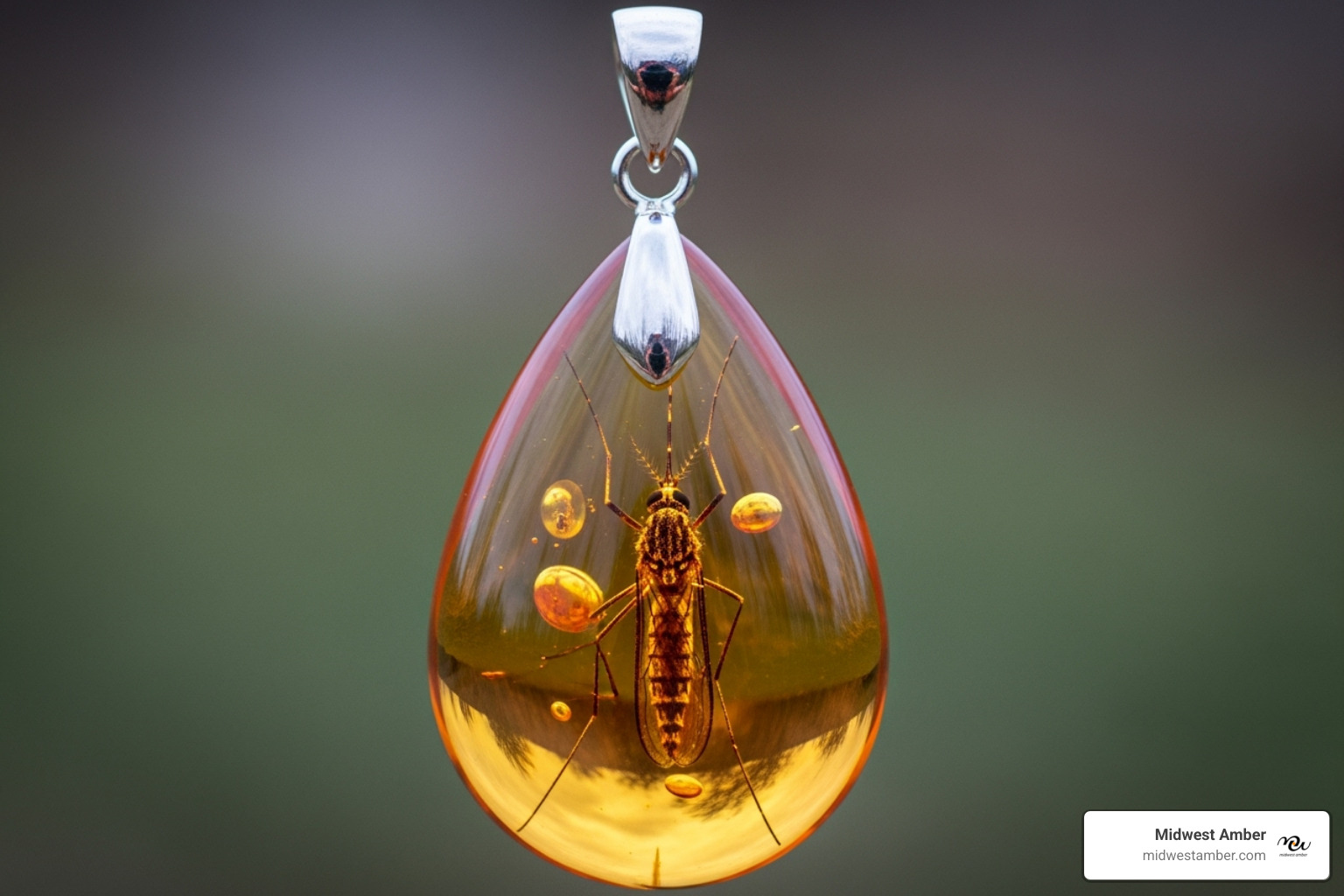
This timeless style works with everything from casual weekend wear to neat evening outfits. It's the kind of piece that starts conversations wherever you go - and trust me, people will ask about your tiny prehistoric companion.
The Raw and Rustic Look
If you love the idea of wearing amber exactly as nature created it, an unpolished amber necklace might steal your heart. These pieces celebrate amber's journey from sticky tree resin to fossilized gem, complete with the natural shape and organic texture it developed over millions of years.
Raw amber has a wonderful matte finish that feels warm and earthy against your skin. You'll often see natural irregularities and the original "skin" of the amber - these aren't flaws, they're proof of your amber's authentic prehistoric origins.
The earthy aesthetic of raw amber pairs beautifully with cotton or leather cord necklaces. This combination creates a more casual, bohemian look that connects you directly to nature. While the clarity might not be as crystal-clear as polished pieces, there's something deeply satisfying about wearing amber in its most natural state.
The Collector's Piece: A Rare Mosquito in Amber Necklace
Some mosquito in amber necklace pieces transcend everyday jewelry and become true collector's treasures. These exceptional pieces stand out because of their large amber size, exceptional clarity, or the presence of multiple inclusions that create an entire prehistoric scene.
Imagine owning a piece of amber that contains not just one mosquito, but also a tiny beetle, some plant fragments, or even air bubbles from an ancient forest. These high value specimens carry significant scientific importance - they're like wearing a miniature museum exhibit.
The rarity of finding a mosquito in amber (remember, experts find them maybe twice a year) makes these collector's pieces incredibly special. When you combine that rarity with exceptional preservation and artistic setting, you have a necklace that's truly one-of-a-kind.
These aren't just accessories - they're conversation pieces, investment pieces, and heirlooms all rolled into one beautiful pendant that connects you to Earth's ancient history.
Buyer's Guide: How to Choose and Care for Your Amber
Shopping for a mosquito in amber necklace should be an exciting trip, not a stressful guessing game. After decades in the amber business, I've learned that knowing what to look for makes all the difference between finding a genuine treasure and falling for a convincing fake.
The good news? Identifying genuine amber isn't as complicated as you might think. One of my favorite tests is the saltwater test - simply mix two parts water with one part salt, and watch what happens. Real amber is surprisingly lightweight and will float like a tiny golden boat, while most plastic imposters sink straight to the bottom.
Another reliable method is the UV light test. Shine an ultraviolet light on your amber, and genuine pieces will glow with a beautiful blue or greenish fluorescence. It's like amber's natural signature! You can also try the gentle smell test - warm the amber between your fingers, and authentic pieces will release a faint, pleasant pine scent that takes you right back to an ancient forest.
When it comes to price factors, several elements determine what you'll pay for your mosquito in amber necklace. The rarity of mosquito inclusions tops the list - remember, these little guys are found maybe twice a year by experts, making them incredibly special. Amber clarity plays a huge role too. The clearer the amber, the better you can see your prehistoric passenger, and the more valuable the piece becomes.
Amber size and craftsmanship quality also influence pricing. A larger piece with exceptional clarity set in sterling silver will cost more than a smaller specimen on a simple cord. But here's what matters most: authenticity certificates and ethical sourcing.
At Midwest Amber, we provide certificates of authenticity with every piece because your trust means everything to us. Our amber comes exclusively from the Baltic region - Poland and Lithuania - where we've built relationships with suppliers who practice sustainable mining. This ensures your beautiful jewelry supports both local communities and environmental responsibility.
For more insights into amber's enduring appeal, explore our guide: Amber Jewelry: A Timeless Treasure.
Best Practices for Amber Jewelry Care
Your mosquito in amber necklace deserves the same gentle care that nature provided for millions of years. Think of amber as a delicate time capsule - beautiful but requiring a soft touch to maintain its ancient magic.
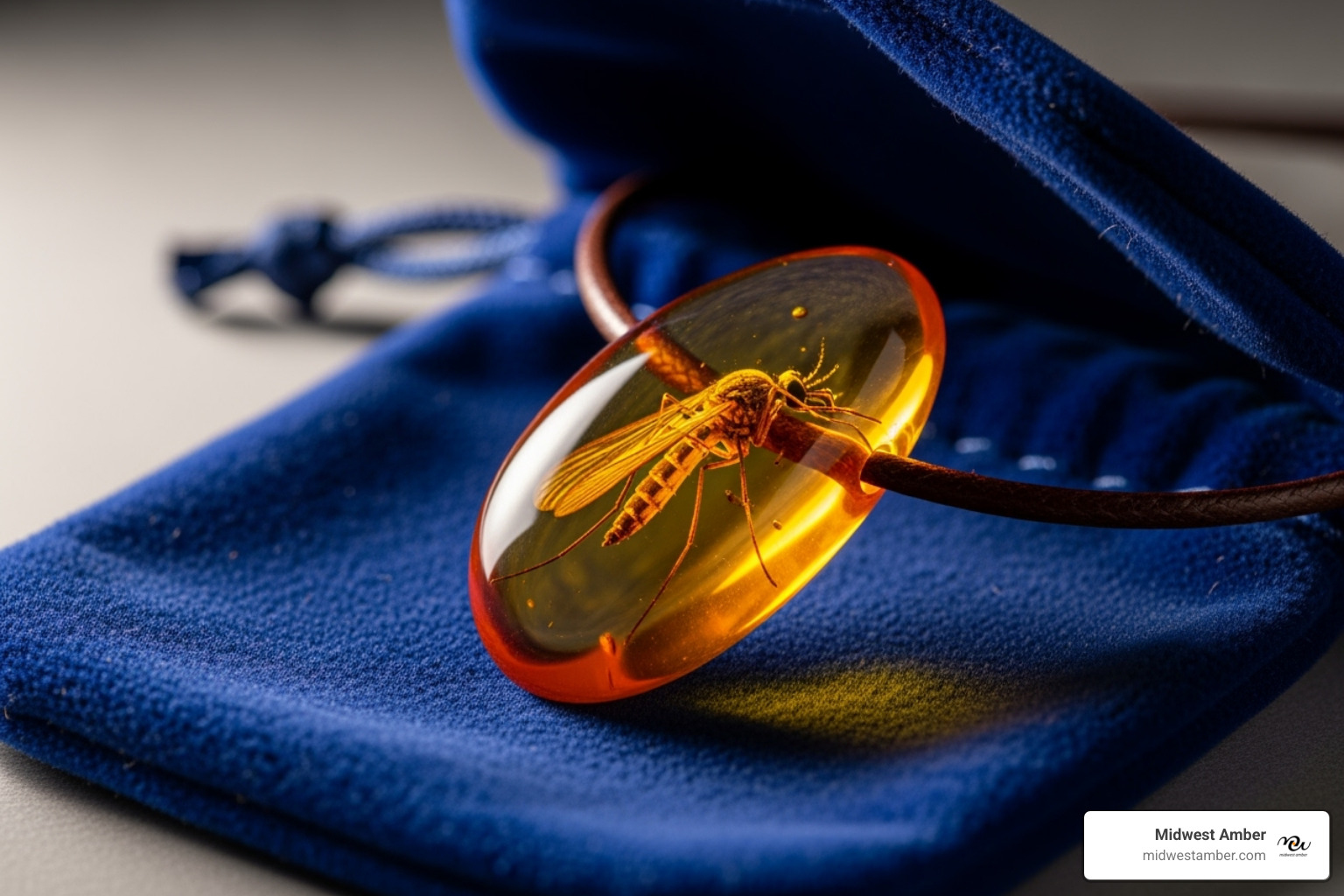
Cleaning amber couldn't be simpler. A soft cloth and gentle touch work wonders for regular maintenance. For deeper cleaning, use lukewarm water with a drop of mild soap - nothing harsh or abrasive. Rinse thoroughly and pat dry immediately. Never use ultrasonic cleaners or harsh chemicals, as these can dull amber's natural glow or even crack the surface.
Storing amber properly protects your investment. Keep your necklace in a soft pouch or separate jewelry box compartment, away from harder gems that might scratch its surface. I always tell customers to think of amber as the gentle soul of their jewelry collection - it plays well with others but needs its own space.
The golden rule for amber care is timing. Put your mosquito in amber necklace on after applying perfumes, lotions, or hairspray. Avoiding chemicals keeps amber looking its best, so remove it before swimming in chlorinated pools or cleaning house.
Extreme heat is amber's enemy. While it feels warm against your skin, sudden temperature changes or prolonged sun exposure can cause cracking or discoloration. Treat your amber with the same care you'd show any precious heirloom, and it will remain stunning for generations.
For complete care instructions, visit our detailed guide: Caring for Your Amber Jewelry.
Frequently Asked Questions about Amber Inclusions
When people find amber jewelry, especially pieces featuring ancient insects, their curiosity naturally leads to some fascinating questions. As someone who's spent decades working with Baltic amber, I love sharing what makes these prehistoric treasures so special.
The most common questions we hear revolve around authenticity, quality, and yes - whether we can really bring dinosaurs back to life like in the movies!
Are the mosquitoes in amber necklaces real?
This is hands down our most frequent question, and I'm always excited to answer: Yes, absolutely! When you purchase an authentic mosquito in amber necklace from a reputable source, that tiny insect suspended in golden amber is genuinely millions of years old.
These mosquitoes became trapped in sticky tree resin between 20 to 50 million years ago. Through the incredible process of fossilization, that resin hardened into the amber we know today, preserving every delicate detail of the insect - from its thread-like legs to its translucent wings.
However, buyer beware - the market does have its share of fakes and forgeries. Some sellers try to pass off modern insects embedded in synthetic resin or plastic as genuine amber. These imposters often look suspiciously perfect or come with prices that seem too good to be true.
Another common confusion involves copal versus amber. Copal is younger tree resin that hasn't fully fossilized yet. While it can contain insects, it's not true amber and lacks the durability and age that make amber so special. Think of copal as amber's younger sibling - related, but not quite the same thing.
What should I look for in amber with insect inclusions?
When choosing amber with an insect inclusion, the best choice is one that speaks to you personally. However, there are a few qualities to consider.
Baltic amber, which we specialize in at Midwest Amber, is a fantastic choice for inclusion jewelry. Formed about 45 million years ago in ancient European forests, it is renowned for its warm golden colors and high succinic acid content. While inclusions are rare, finding one in Baltic amber is a truly special event, connecting you to a piece of European prehistoric history.
Clarity is another factor. Some amber is crystal-clear, offering a perfect window to the past. Other pieces have a lovely natural cloudiness or internal fractures that add character and uniqueness. The best type of amber is the one you find most beautiful, whether it's perfectly transparent or filled with the mists of time.
Can you extract DNA from a mosquito in amber?
Ah, the Jurassic Park question! I can't tell you how many times customers have asked if we're secretly running a dinosaur cloning operation in the back room. While I love the enthusiasm, the scientific reality is quite different from Hollywood magic.
Here's the fascinating truth about DNA degradation: Even though amber provides incredible preservation, DNA has what scientists call a "half-life." This means it breaks down over time, no matter how perfect the preservation conditions seem.
After millions of years - remember, our amber inclusions are 20 to 50 million years old - any original DNA would be so fragmented and contaminated that it's essentially unusable. The impossibility with current technology isn't just a temporary setback; it's a fundamental limitation of how organic molecules behave over geological time.
But don't let this dampen your excitement! The scientific value remains enormous. These perfectly preserved mosquitoes give us incredible insights into ancient ecosystems, climate conditions, and evolutionary history. Your mosquito in amber necklace is still a genuine scientific specimen - just not one that's going to help us populate a dinosaur theme park anytime soon.
The real magic lies in holding a piece of jewelry that contains a creature that lived when the world was completely different, when continents were in different positions, and when the climate was unlike anything we know today. That's pretty amazing, even without the DNA.
Conclusion: Your Own Piece of Natural History
When you wear a mosquito in amber necklace, you're carrying something truly extraordinary - a piece of natural history that connects you directly to ancient worlds that existed millions of years before humans walked the earth. It's incredible to think that the tiny insect preserved in your jewelry was once buzzing around prehistoric forests, and through an amazing stroke of chance, became trapped in tree resin that would eventually become your beautiful amber pendant.
The appeal of these pieces goes far beyond their stunning golden beauty. Each mosquito in amber necklace tells a unique story of preservation, rarity, and scientific wonder. Mosquitoes are incredibly rare finds in amber - some experts only find them a couple times per year! This makes your necklace not just jewelry, but a genuine scientific treasure that museums would be proud to display.
What makes these pieces truly special is how they bridge the gap between ancient history and modern style. You're wearing wearable art that sparks conversations, inspires curiosity, and connects you to the natural world in a way that few other pieces of jewelry can match. Whether you're drawn to the scientific marvel of fossilization, the warm golden beauty of amber, or simply love owning something millions of years old, your mosquito in amber necklace becomes a timeless treasure that never goes out of style.
At Midwest Amber, we understand the magic of these ancient gems. With over 20 years of experience, we're passionate about bringing you handcrafted, genuine Baltic amber jewelry that tells these incredible stories. Every piece in our collection is 100% natural and ethically sourced from Poland and Lithuania, backed by our commitment to authenticity and quality craftsmanship.
We believe that everyone deserves to own their own piece of prehistoric wonder. When you choose Midwest Amber, you're not just buying jewelry - you're investing in a certified piece of natural history that connects you to ancient ecosystems and the incredible journey of amber from sticky resin to fossilized gem.
Ready to find your perfect piece of ancient history? Explore our collection of what is amber jewelry and find the mosquito in amber necklace that speaks to you.

Leave a comment
This site is protected by hCaptcha and the hCaptcha Privacy Policy and Terms of Service apply.