

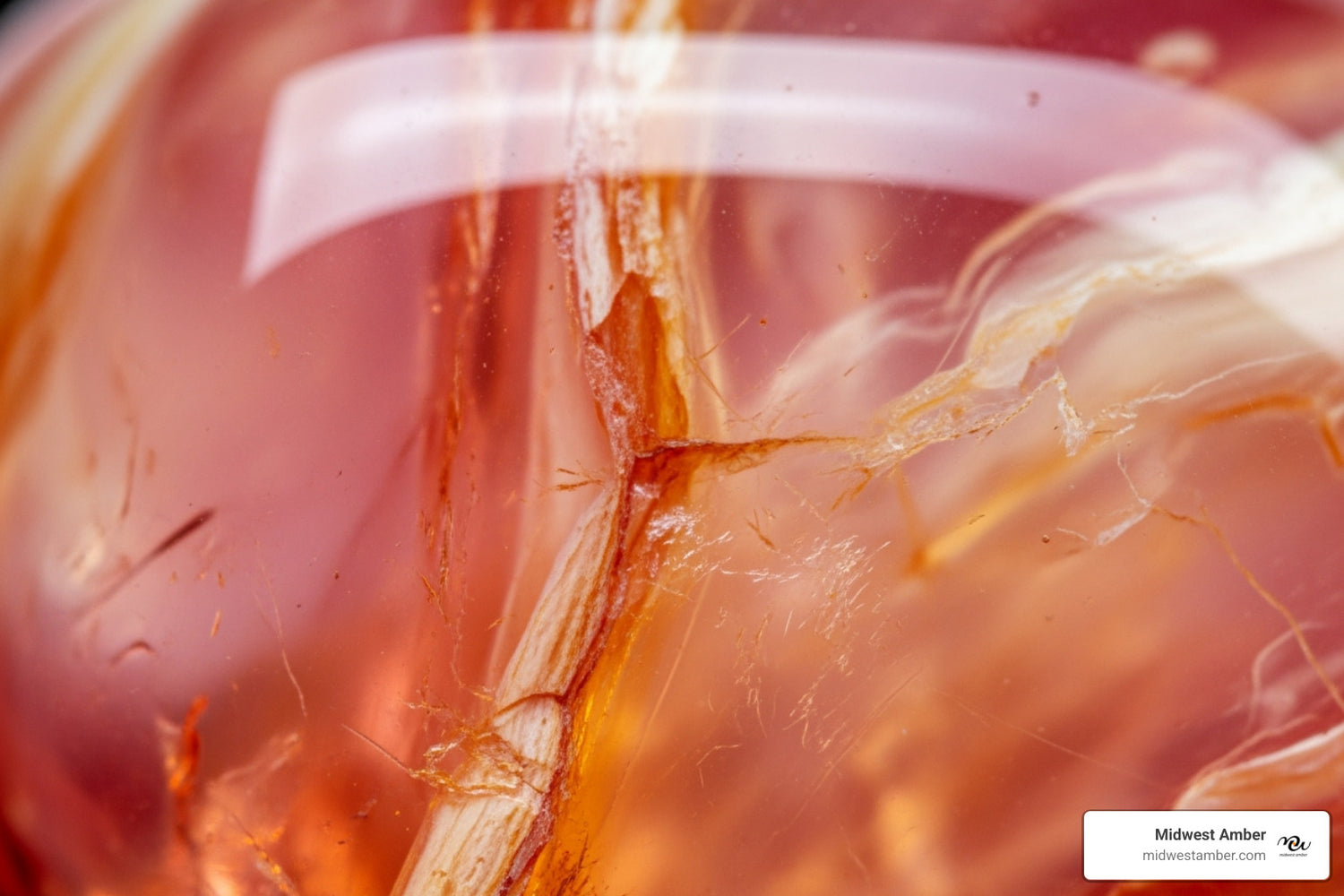
Why Pink Amber Stone Captivates Collectors Worldwide
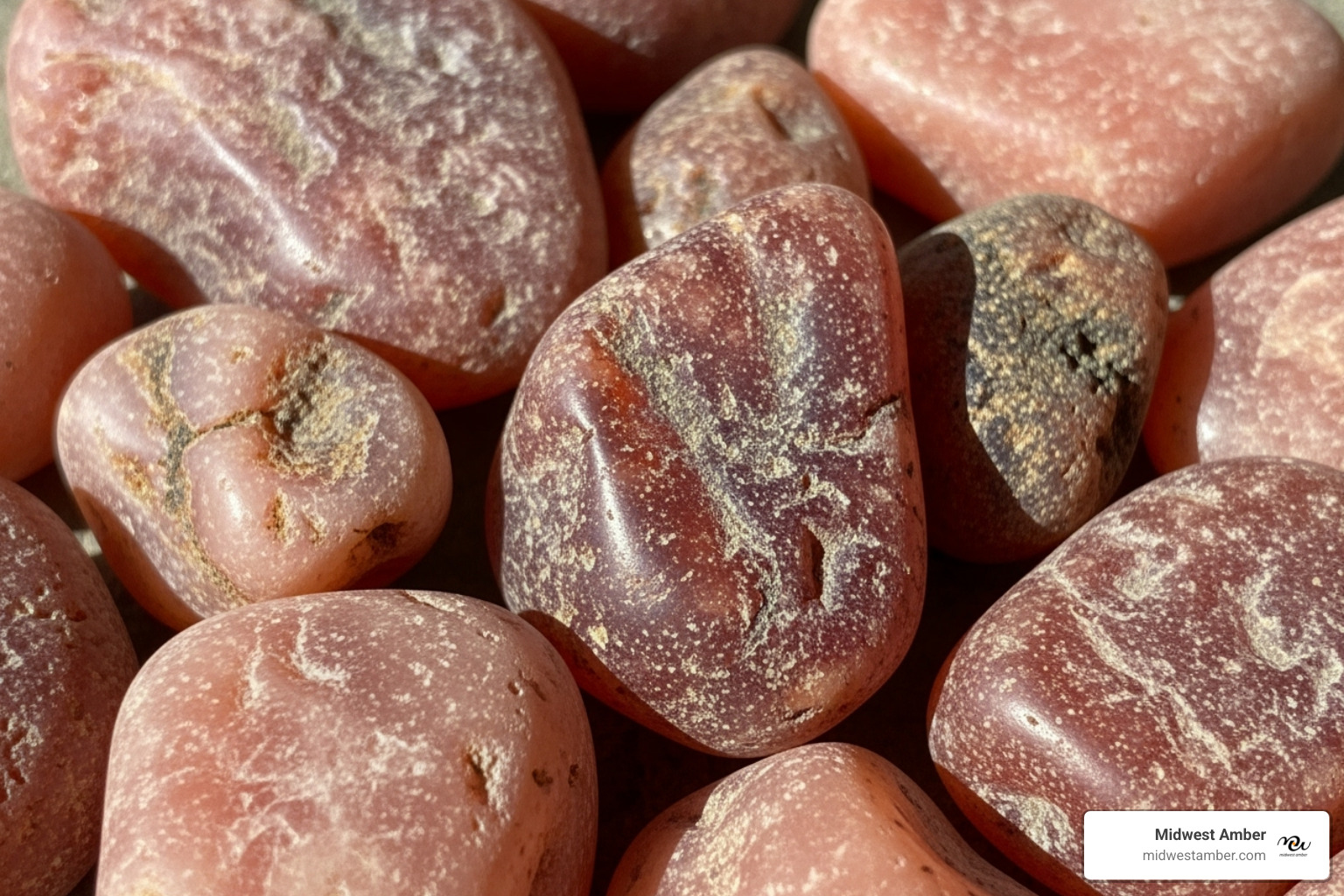
Pink amber stone is a rare and captivating variety of fossilized tree resin that displays beautiful rosy, peachy, and creamy pink hues. While amber is most commonly known for its warm yellow and orange tones, pink amber represents one of nature's most enchanting surprises from ancient forests.
Quick Facts About Pink Amber Stone:
- Origin: Primarily from Russia (also called Russian Amber)
- Age: 40-60 million years old fossilized tree resin
- Rarity: Much rarer than common yellow/orange amber
- Formation: Created through oxidation and mineral interaction during fossilization
- Hardness: 2-2.5 on the Mohs scale
- Unique trait: Light enough to float in salt water
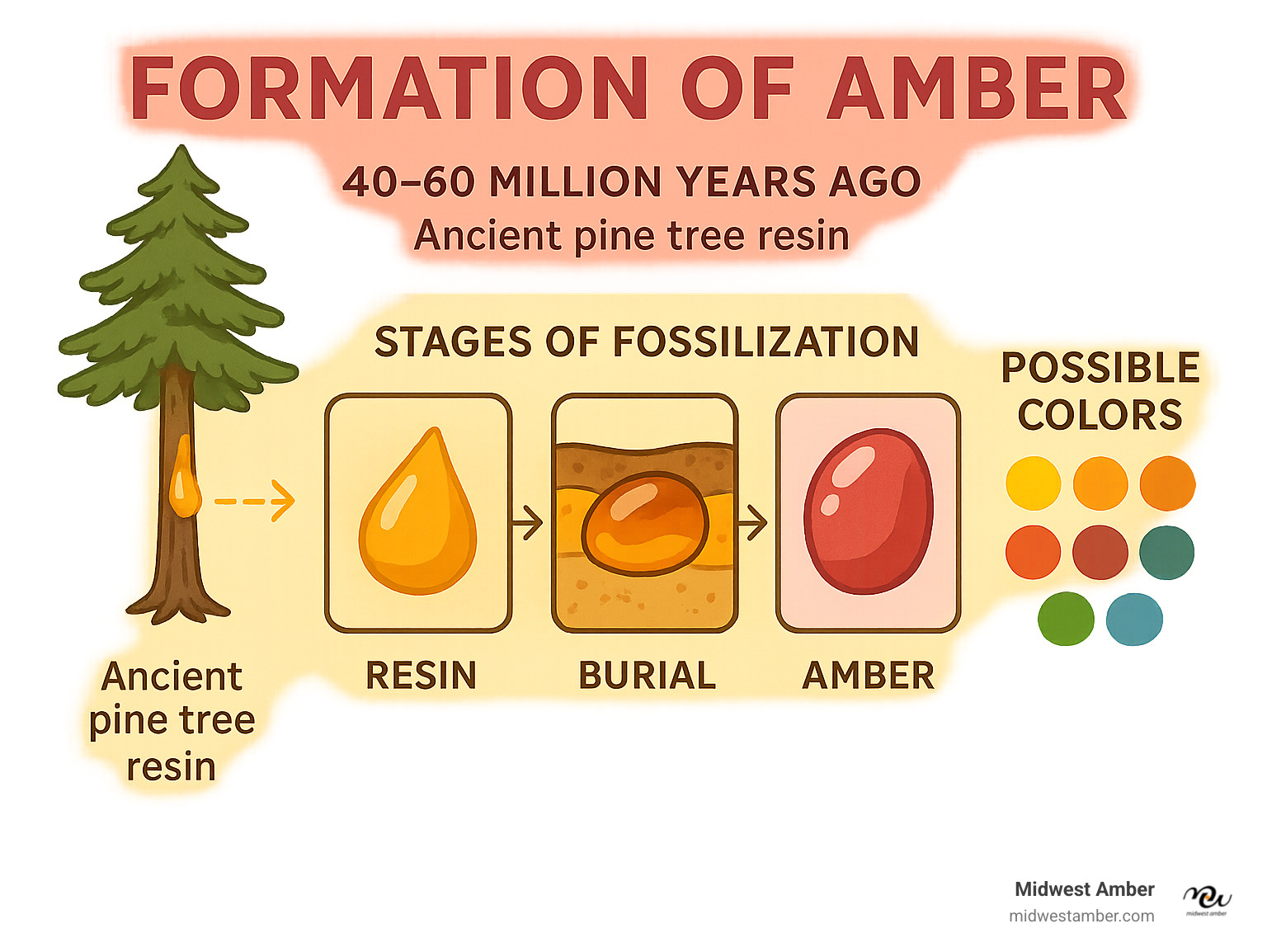
Pink amber forms when ancient tree resin undergoes specific geological processes over millions of years. The rosy coloration results from oxidation and exposure to particular minerals during the fossilization process. This makes each piece truly one-of-a-kind.
The largest deposits of natural amber are found along the coasts of Poland, Germany, and Russia, with pink varieties being especially associated with Russian sources. Only 15% of all mined amber is suitable for jewelry, making genuine pink specimens particularly precious for collectors and jewelry enthusiasts.
I'm Gabriel Ciupek, President and owner of Midwest Amber, Inc., where I've spent years working directly with Baltic amber suppliers and helping customers find authentic pink amber stone pieces for their collections. My experience in amber sourcing and quality verification has given me deep insights into what makes pink amber so special and sought-after.
Showing Pink Amber: Origins and Rarity
Picture yourself walking along an ancient forest floor 50 million years ago. Towering pine trees stretch toward the sky, their sticky resin slowly dripping and hardening in the prehistoric sunlight. Fast forward through countless millennia, and that same resin has transformed into something magical - pink amber stone.
Unlike the common golden amber most people know, pink amber tells a much rarer story. This isn't just any fossilized tree resin. It's a geological treasure that formed under very specific conditions, creating those soft blush and peachy tones that make collectors' hearts skip a beat.
The journey of pink amber stone begins in the Baltic region, where massive amber deposits stretch along the coasts of Poland, Germany, and Russia. While we call most of this Baltic Amber, the pink varieties are especially linked to Russian sources - which is why you'll sometimes hear it called "Russian Amber."
Here's what makes this gem so special: of all the amber mined today, only 15% is good enough for jewelry. Now imagine how tiny that percentage becomes when you're looking specifically for pink hues. It's like finding a needle in a haystack - if the haystack were already pretty small to begin with.
The Science Behind the Rosy Hue
So what exactly turns ancient tree resin into those gorgeous rosy shades? It's all about what happened during those 40 to 60 million years underground.
The pink coloration comes from a fascinating process involving oxidation and mineral interactions during fossilization. As the original resin lay buried, it was exposed to different levels of oxygen and various elements in the surrounding soil. This slow, natural chemical dance gradually transformed the resin's color from its original golden tone.
Think of it like a very, very slow cooking process. The peachy-creamy shades we see today developed as the resin absorbed certain minerals and organic compounds over millions of years. Some pieces show cloudy variations where tiny gas bubbles got trapped, creating an almost dreamlike appearance.
What makes pink amber stone so much rarer than common amber is that this color change required just the right combination of geological conditions. It's nature's way of creating something truly one-of-a-kind. Each piece carries its own unique story written in those soft pink tones.
If you're curious about the broader world of amber formation, you can learn more at What is Baltic Amber?
Global Sources and Market Availability
When it comes to finding authentic pink amber stone, Russia takes center stage, particularly the Kaliningrad region near the Baltic Sea. While Poland and Germany also have significant amber deposits, the pink varieties almost always trace back to Russian sources.
The scarcity of pink amber makes it a true collector's item. Unlike the more common golden or honey-colored amber, consistently pink pieces are incredibly hard to find. During my years of sourcing amber directly from the Baltic region, I can tell you that finding genuine pink specimens is always exciting - and rare.
This rarity drives both demand and value in the jewelry market. When you hold a piece of pink amber stone, you're not just holding a pretty gem. You're holding millions of years of geological history that very few people will ever own. It's this combination of beauty, rarity, and ancient origins that makes pink amber so captivating to collectors worldwide.
The Unique Properties of the Pink Amber Stone
Beyond its captivating color and ancient origins, pink amber stone possesses a fascinating array of unique properties that set it apart. From its surprising lightness to its historical and cultural significance, this fossilized resin is far more than just a pretty face. It's a testament to nature's enduring power and a bridge to the distant past.
Unique Characteristics and Physical Traits
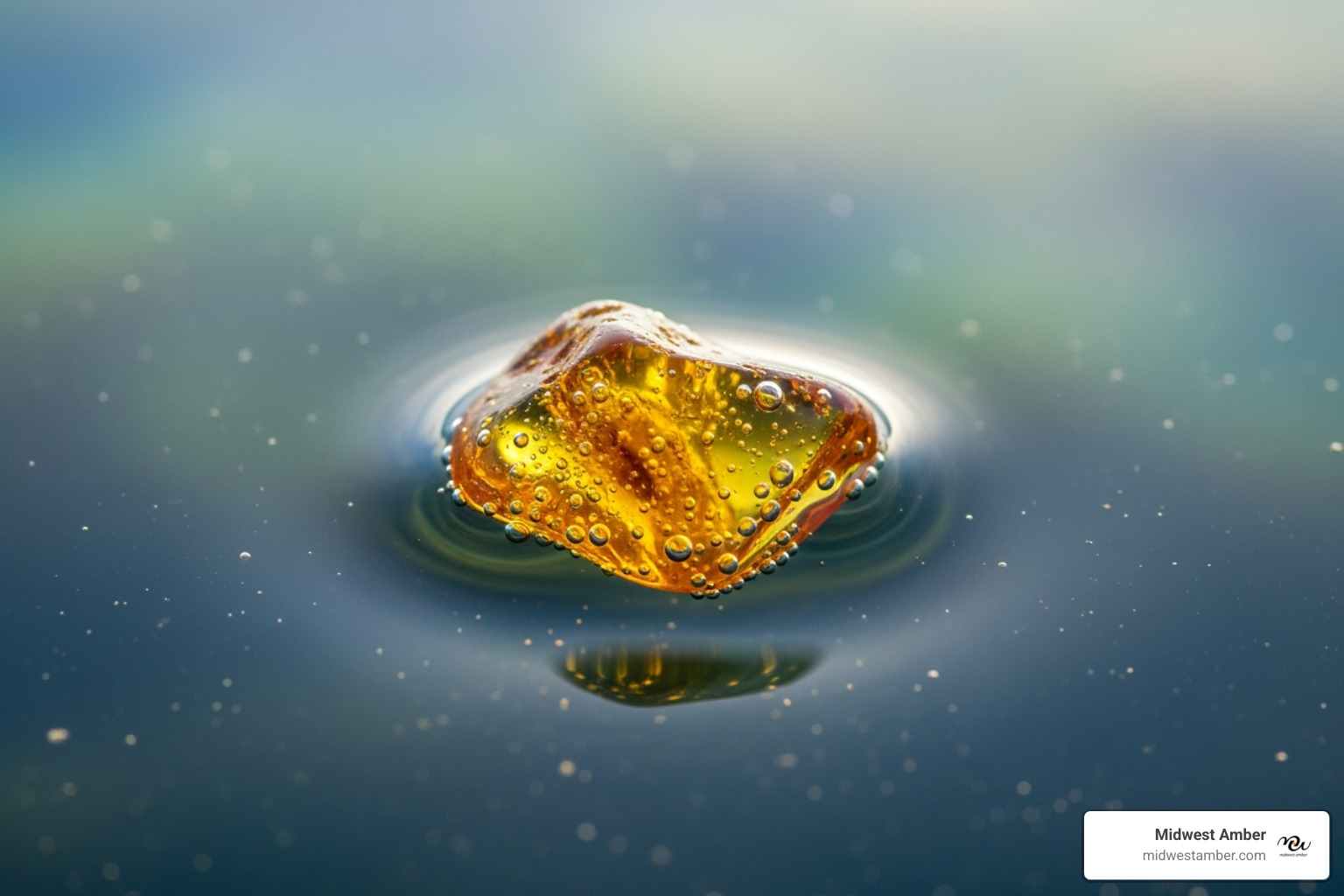
One of the most surprising characteristics of pink amber stone (and all genuine amber) is its remarkable lightness. Unlike most gemstones, which are dense and heavy, amber is so light that it can actually float on saltwater. This unique property is a key indicator of its authenticity and a fun fact we often share with our customers. Try it sometime! Amber registers a mere 2 to 2½ on the Mohs scale of hardness, making it relatively soft compared to minerals like diamonds (which are a 10). This softness means it can be susceptible to scratches, so gentle care is always recommended.
Another intriguing characteristic of amber, known since ancient times, is its ability to generate an electrostatic charge when rubbed. The ancient Greeks even named it "elektron," from which our word "electricity" is derived, after observing this phenomenon. It's truly a marvel to hold a piece of history that literally sparked scientific findy! Furthermore, amber is unique among "stones" in that it feels warm to the touch. This is because, unlike minerals, it's an organic substance that quickly adapts to body temperature. This warmth, combined with its lightness, makes pink amber stone incredibly comfortable to wear, especially in jewelry. For example, our Find Your Perfect Multicolor Amber Bracelet showcases how beautifully this lightweight and warm material can be crafted into wearable art.
Legends and Folklore Through History
The allure of amber, including pink amber stone, extends far beyond its physical properties; it's deeply woven into the mix of human history, mythology, and folklore. Our ancestors were captivated by its mysterious origins and unique characteristics, attributing to it magical powers and spiritual significance.
One of the earliest records of human interest in amber dates back to the Paleolithic Age, where it was used for ornaments and amulets. Imagine our ancient ancestors, finding these luminous pieces washed ashore, believing them to be solidified sunlight or tears of the gods.
In Greek mythology, amber was believed to be the tears of the Heliades, the daughters of the sun god Apollo, who wept incessantly after their brother Phaeton was struck down by Zeus. Their tears, falling into the river Eridanus, solidified into gleaming amber. Similarly, Viking mythology tells us that amber represents the tears of Freyja, the goddess of love, beauty, and fertility, shed for her lost husband. These "Freyja's Tears" were said to wash up on the shores, carrying her sorrow and beauty.
Throughout history, amber has been viewed as a powerful talisman. Roman gladiators wore amber as an amulet for courage and protection in battle. In the Far East, it was sometimes referred to as "dragon's blood," believed to possess the essence of these mythical creatures. Chinese folklore even suggested that amber held the souls of tigers and suns, imbued with their strength and warmth.
These legends highlight amber's enduring symbolism: a connection to the sun, a source of protection, a symbol of endurance, and a link between the earthly and divine. Whether worn for its beauty or its perceived magical properties, pink amber stone carries with it millennia of human stories and beliefs. For a deeper dive into these ancient tales, explore The Magic of Rocks and Stones.
Pink Amber in Jewelry: Identification and Care
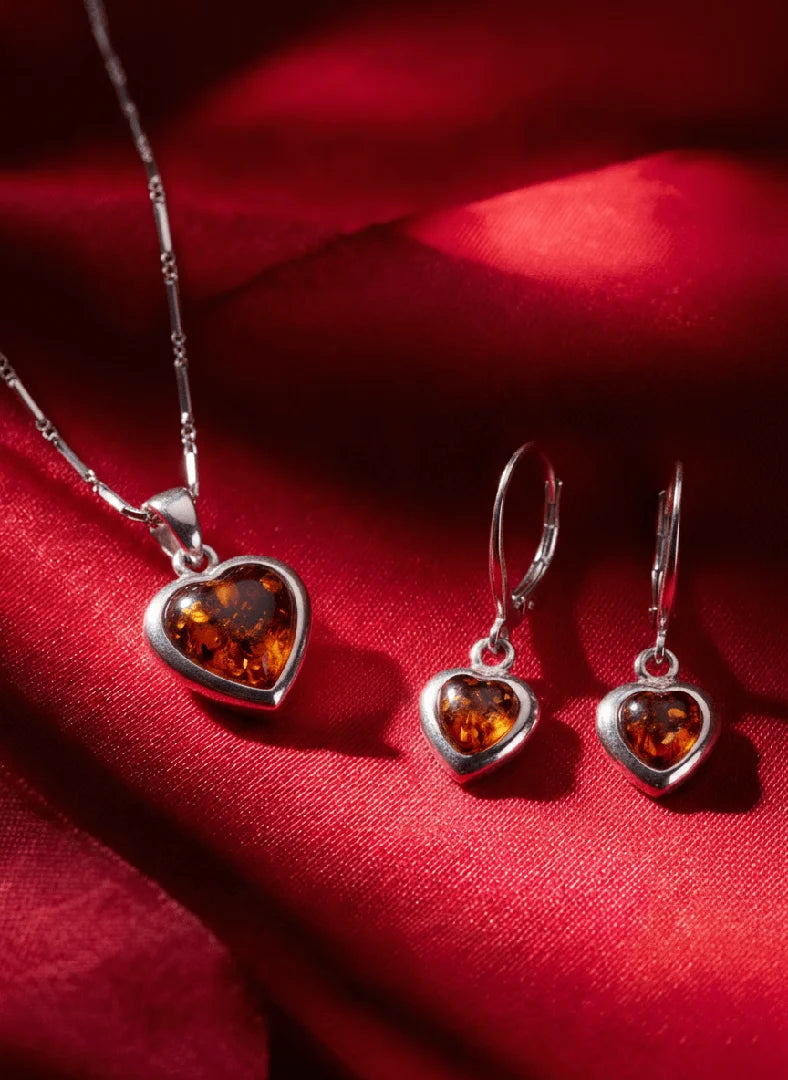
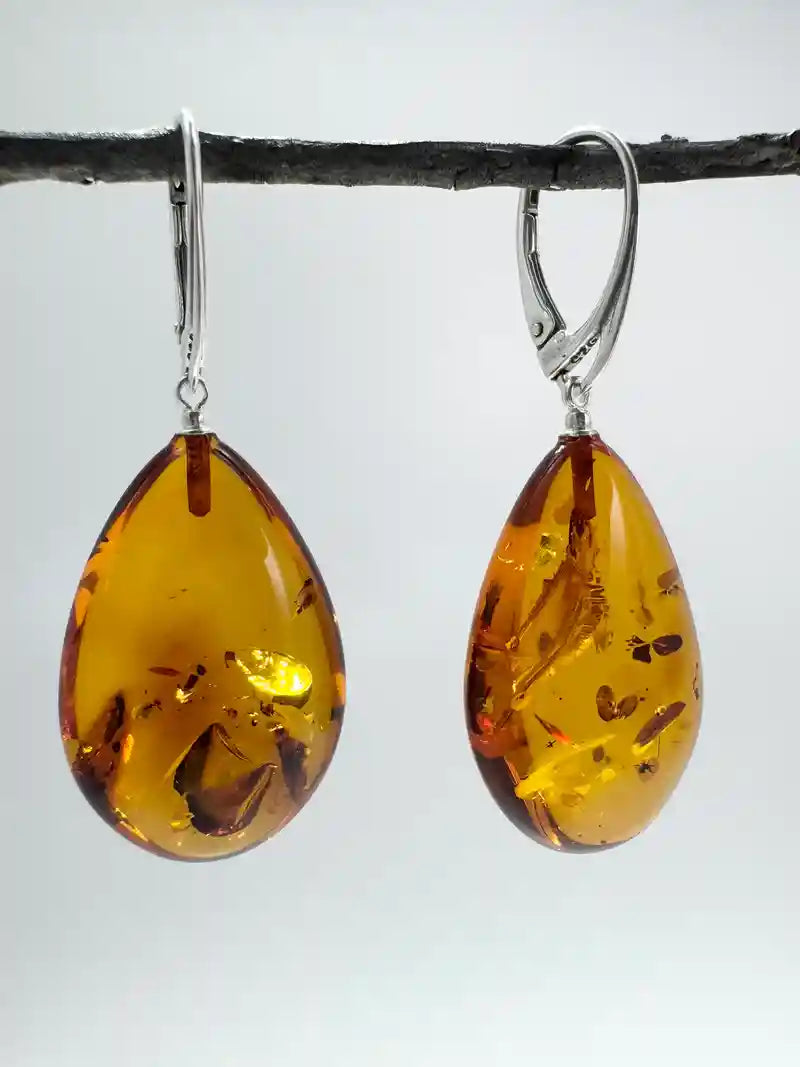
The exquisite beauty of pink amber stone makes it a highly desirable material for jewelry, ranging from delicate pendants to statement rings. Our artisans at Midwest Amber specialize in changing these unique pieces of fossilized resin into handcrafted, genuine Baltic Amber jewelry. We often set our beautiful pink amber in sterling silver, creating pieces that blend ancient charm with modern elegance.
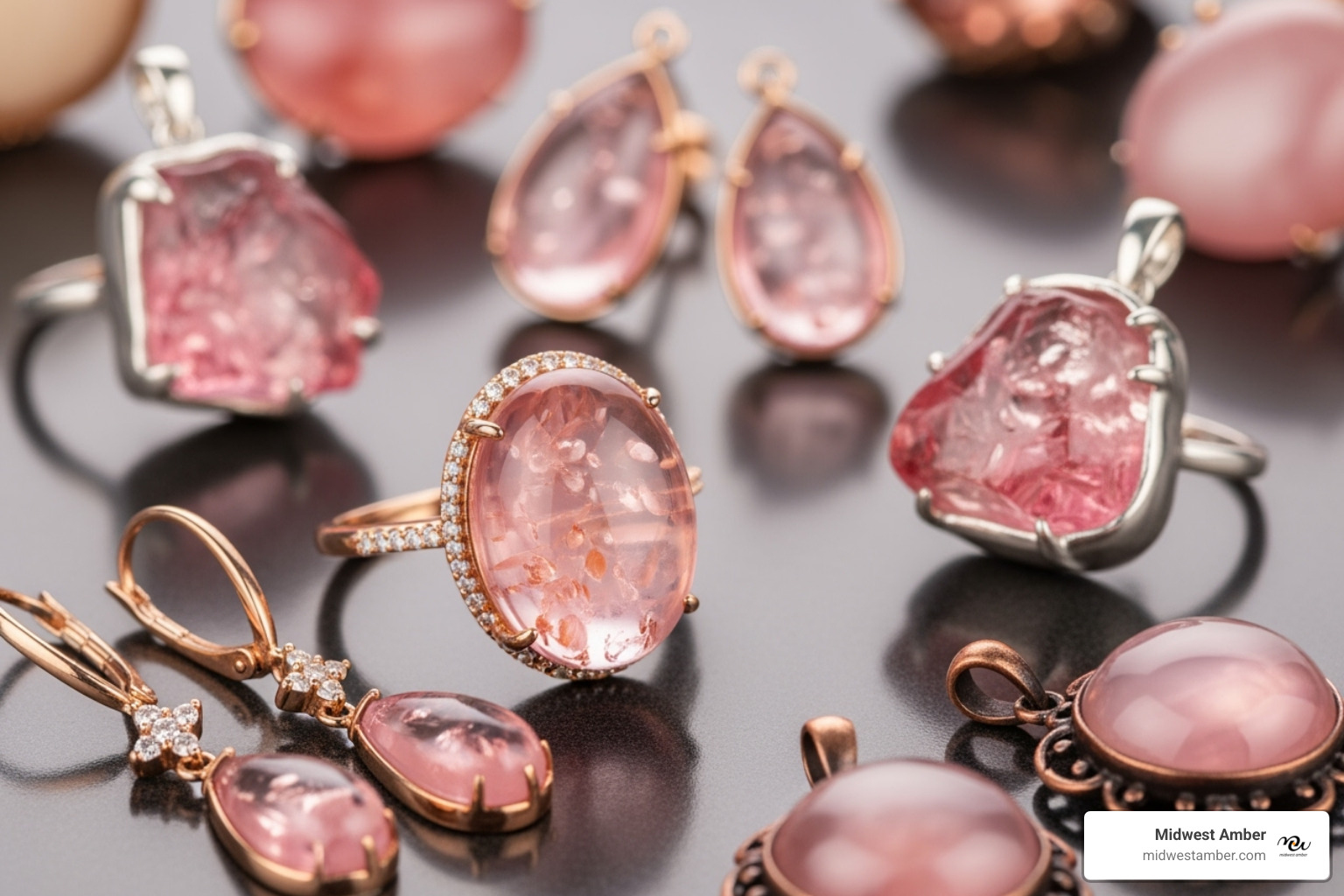
However, its popularity also means that the market can be flooded with imitations. Knowing how to identify genuine pink amber stone and how to care for your cherished pieces is crucial for any enthusiast.
Identifying Genuine vs. Synthetic pink amber stone
Distinguishing genuine pink amber stone from fakes or treated amber requires a keen eye and some simple tests. As a company with over 20 years of experience and certified authenticity, we've seen it all. Here's what we look for and what you can do at home.
Natural pink amber stone is fossilized tree resin - an organic gem, not a mineral. This means it has unique characteristics that synthetic materials simply can't replicate perfectly. The most telling signs are the natural inclusions you'll find inside genuine pieces. These might be tiny air bubbles, specks of ancient dust, bits of bark, or even small insects that got trapped millions of years ago. Each piece tells its own prehistoric story through these imperfections.
One of the easiest tests you can do at home is the saltwater test. Mix 2-3 tablespoons of salt into a cup of warm water and gently place your amber in it. Natural amber is light enough to float, while most synthetic materials and plastic imitations will sink to the bottom. It's quite magical to watch genuine amber bob on the surface!
The hot needle test can also reveal fakes, though you'll want to be careful with this one. Heat a needle tip until it's red hot, then touch it to a hidden spot on the amber. Genuine amber will emit a pleasant, pine-like scent and leave a small, clean mark. Plastic fakes will smell terrible - like burning plastic - and may melt or deform. Always test in an inconspicuous area first.
For those with access to acetone (nail polish remover), a small drop on natural amber won't make it sticky, though it might dull the surface slightly. On plastic fakes, it often makes the surface tacky or actually dissolves it.
Under UV light, natural amber typically glows with a beautiful blue, yellow, or greenish fluorescence. Synthetic materials either don't react or fluoresce in unnatural ways.
Watch out for ambroid - reconstructed amber made from smaller amber pieces that have been heated and pressed together. While it's still real amber, it's not naturally formed. You can often spot it by looking for swirling patterns or distinct lines where the pieces were joined together.
The key is remembering that nature isn't perfect. If your pink amber stone looks too uniform or flawless, it might be too good to be true.
Caring for Your pink amber stone Jewelry
Because of its relative softness on the Mohs scale (just 2-2½), pink amber stone needs gentle care to maintain its gorgeous luster. Think of it as caring for a delicate flower rather than a tough rock. With proper attention, your amber jewelry can last for generations, becoming a treasured family heirloom.
Cleaning your pink amber stone is refreshingly simple. Use mild dish soap and lukewarm water - never hot, as heat can damage the amber. Gently wipe with a soft cloth, avoiding anything abrasive that could scratch the surface. After washing, rinse thoroughly with room temperature water and dry completely with another clean, soft cloth. It's almost meditative how simple and peaceful this process can be.
The biggest enemies of amber are harsh chemicals. This includes perfumes, hairsprays, lotions, and household cleaning products. The golden rule? Always apply these products before putting on your amber jewelry. Swimming pools are particularly dangerous because chlorine can seriously damage your pink amber stone, so remember to remove your jewelry before taking that refreshing dip.
Heat is another major concern. Since amber is fossilized resin rather than a mineral, extreme temperatures can cause it to crack, discolor, or even melt. Never use steamers, hot water, or ultrasonic cleaners on your precious pieces. Room temperature is your friend here.
When it comes to storage, treat your pink amber stone jewelry like the special treasure it is. Store pieces separately from harder gemstones or metals that could scratch the surface. A soft pouch or fabric-lined jewelry box works perfectly. Keep it away from direct sunlight and very dry environments, which can make amber brittle over time.
While amber is certainly durable enough for daily wear, be mindful during activities where it might get knocked around. Your pink amber stone will thank you for removing it before gardening, exercising, or doing household repairs.
Following these simple care steps ensures your pink amber stone jewelry will continue radiating its unique, warm beauty for years to come. For more insights on caring for your precious amber pieces, you might find this article helpful: Ring in the Past: Finding the Best Amber Mosquito Rings.
The Deeper Meaning: Healing, Value, and Ethics
Beyond its captivating beauty and rich history, pink amber stone holds a special place in the hearts of those who believe in the deeper connections between gemstones and well-being. For thousands of years, people have turned to amber not just for its stunning appearance, but for the comfort and positive energy it's believed to bring into their lives.
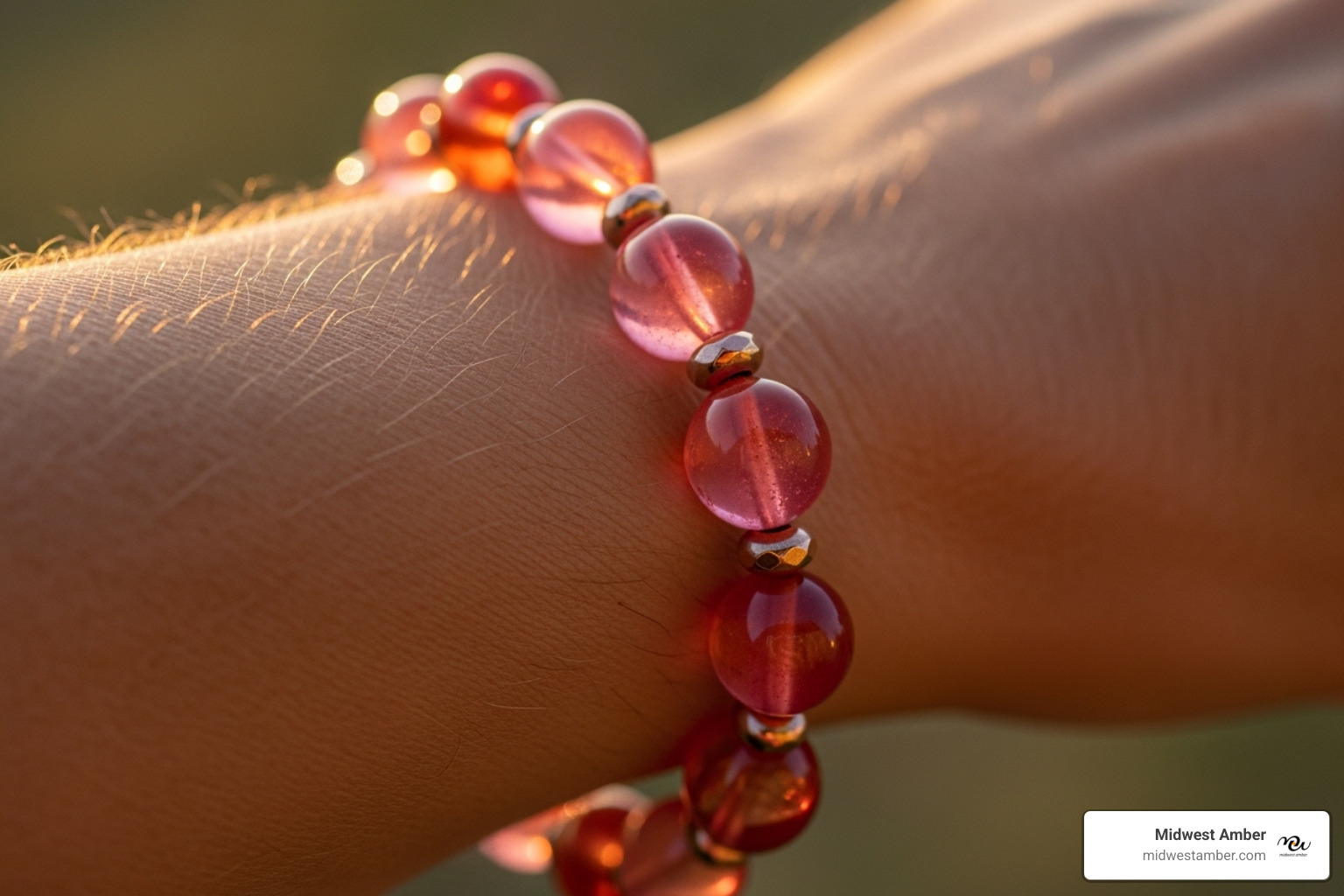
Metaphysical and Healing Properties
When you hold a piece of pink amber stone, you're connecting with something that carries the wisdom of ancient forests. Many people find that amber has a uniquely warm and welcoming energy that seems to brighten even the gloomiest days.
The most celebrated quality of amber is its ability to promote joy and optimism. There's something about its sunny disposition that naturally lifts spirits and helps chase away the blues. If you're going through a tough time, wearing pink amber stone might feel like carrying a little pocket of sunshine with you wherever you go.
Amber has long been treasured as a protective stone. Our ancestors believed it created an invisible shield around the wearer, keeping negative energy at bay. This protective quality makes it especially popular with parents who want to keep their children safe and calm. Many folks find that amber helps them feel more grounded and secure in challenging situations.
One of amber's most valued gifts is its talent for releasing negativity. Think of it as nature's stress ball – many people find that simply holding or rubbing their amber jewelry helps them let go of worries and find their center again. This gentle cleansing action is believed to promote emotional balance, helping to smooth out mood swings and create a more stable emotional foundation.
From a physical perspective, Baltic amber contains natural succinic acid, which has been used traditionally for its anti-inflammatory properties. While amber should never replace proper medical care, many people have found comfort using it for minor aches and pains, especially joint discomfort.
In energy work, pink amber stone is often connected to the Sacral Chakra, the energy center that governs creativity, passion, and emotional well-being. Its warm energy is thought to help activate this chakra, encouraging both creative expression and healthy emotional flow.
For those interested in exploring these healing properties further, Amber Stone Balances Emotions & Releases Negativity offers additional insights into amber's traditional uses.
Market Value and Ethical Sourcing
The value of pink amber stone reflects both its natural rarity and its exceptional beauty. Several factors influence what makes one piece more valuable than another.
Color saturation plays a huge role in determining worth. A piece with deep, vibrant pink tones will naturally command a higher price than one with subtle or uneven coloring. The intensity and consistency of that rosy hue is what collectors and jewelry lovers prize most.
Clarity also matters significantly. While some pink amber stone has an appealing cloudy appearance that adds to its charm, transparent pieces with crystal-clear pink tones are particularly sought after. The way light dances through a clear piece of pink amber is truly magical.
Size becomes increasingly important with rare colors like pink. Finding a large, well-formed piece of pink amber stone is like finding a natural treasure. Bigger pieces are exponentially rarer, which is reflected in their market value.
When it comes to inclusions, amber follows different rules than other gemstones. While tiny air bubbles and dust particles are perfectly normal and expected, well-preserved insects or plant matter can dramatically increase a piece's value. These inclusions offer genuine glimpses into prehistoric life, making each piece a tiny museum.
At Midwest Amber, we take ethical sourcing very seriously. Over our 20-plus years in business, we've built strong, trusted relationships with suppliers in Poland and Lithuania who share our commitment to responsible practices. We believe that the beauty of pink amber stone should never come at the expense of environmental damage or unfair labor practices.
Every piece of amber we offer comes with authenticity certificates, so you can be confident you're investing in genuine Baltic amber. Our direct relationships with Baltic suppliers mean we can trace each piece back to its source, ensuring that your pink amber stone jewelry represents both natural beauty and ethical integrity.
When you choose pink amber stone from Midwest Amber, you're not just buying jewelry – you're supporting sustainable practices and getting a piece of natural history that was millions of years in the making.
Conclusion
What a journey we've taken through the enchanting world of pink amber stone! This remarkable gem truly is something special – a beautiful blend of ancient history, fascinating natural properties, and deep cultural meaning that spans thousands of years.
Think about it: each piece of pink amber stone started as sticky tree resin in prehistoric forests 40 to 60 million years ago. Through incredible geological processes in the Baltic region, especially Russia, that ancient resin transformed into the captivating rosy, peachy, and creamy hues we treasure today. It's like holding a piece of time itself in your hands.
We've finded so many amazing things about pink amber stone together. Its surprising lightness that lets it float in saltwater, its ability to create static electricity (the ancient Greeks were onto something!), and how wonderfully warm it feels against your skin. These unique traits have fascinated people throughout history, from Paleolithic cave dwellers to Viking warriors who believed it was the tears of their goddess Freyja.
The practical side matters too. Knowing how to spot genuine pink amber stone using simple tests like the saltwater float or checking for natural inclusions helps protect you from fakes. And remember – gentle care with mild soap and soft cloths will keep your amber jewelry looking beautiful for generations.
But pink amber stone offers so much more than just physical beauty. Many people find comfort in its believed ability to bring joy, balance emotions, and create a sense of protection. Whether you're drawn to these metaphysical aspects or simply love its rare, natural beauty, there's something deeply satisfying about wearing a piece of fossilized history.
The rarity of pink amber stone makes it truly special. With only 15% of all amber suitable for jewelry, and pink varieties being even more scarce, you're choosing something genuinely unique. At Midwest Amber, we're proud to offer handcrafted, authentic Baltic Amber jewelry that's ethically sourced from our trusted suppliers in Poland and Lithuania. Our 20+ years of experience and certified authenticity mean you can trust that your pink amber stone is the real deal.
When you choose pink amber stone, you're not just buying jewelry – you're connecting with ancient forests, carrying forward timeless stories, and expressing your unique style with one of nature's most extraordinary creations. Its rosy glow and gentle energy make it perfect for anyone who appreciates both beauty and meaning in their jewelry.
Ready to find your perfect piece? We'd love to help you find the magic of pink amber stone for yourself.
The Ultimate Collection: Find Your Perfect Baltic Amber Piece

Leave a comment
This site is protected by hCaptcha and the hCaptcha Privacy Policy and Terms of Service apply.