

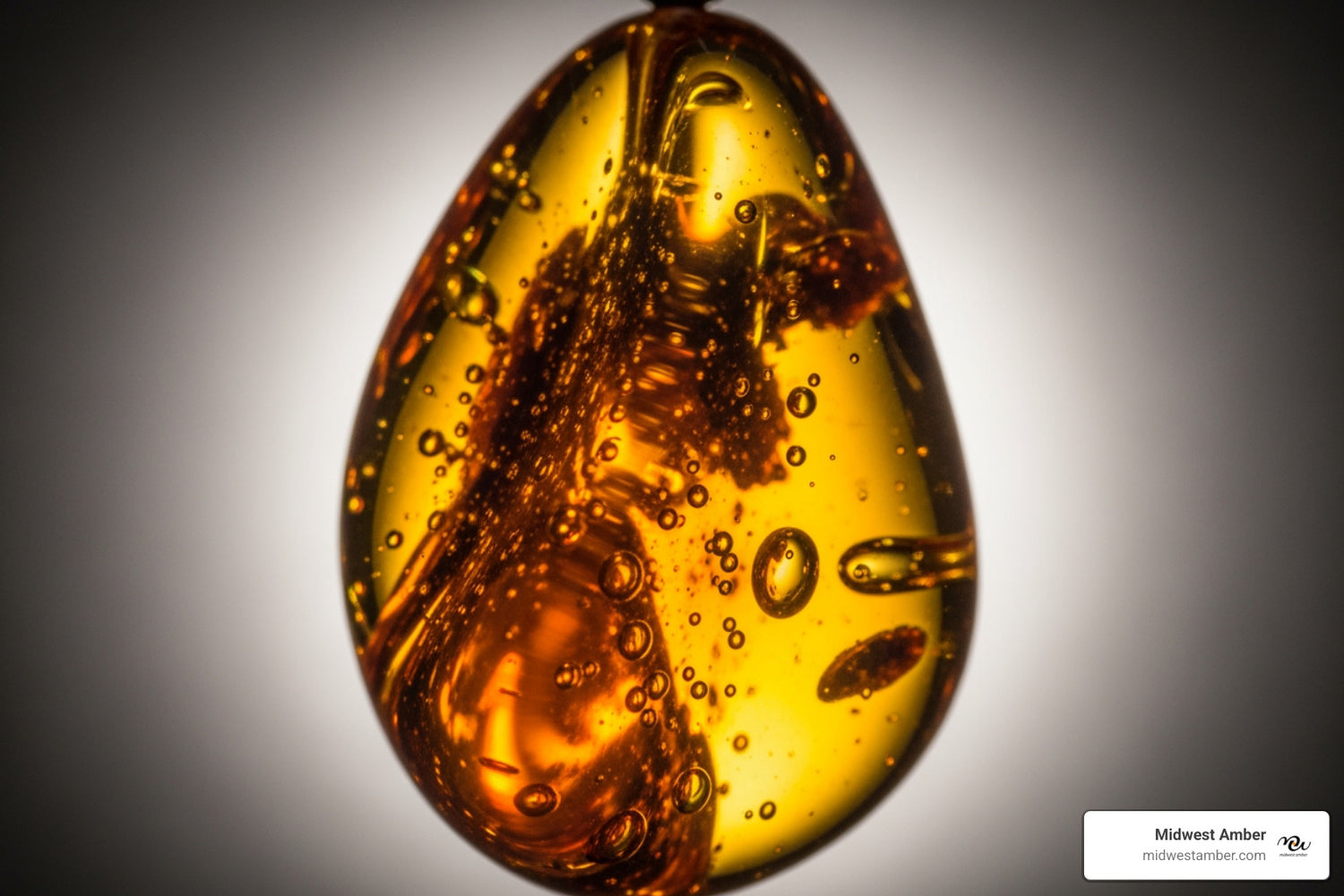
Why People Are Turning to Amber for Natural Pain Relief
Amber for pain has captured the attention of wellness seekers and jewelry enthusiasts for centuries. If you're wondering whether this ancient fossilized resin can genuinely help with discomfort, here's what you need to know:
Quick Answer: Does Amber Actually Relieve Pain?
- The Claim: Baltic amber contains succinic acid (3-8%), believed to release into the skin and reduce inflammation
- The Science: Research shows succinic acid cannot feasibly be released from intact amber beads or absorbed through skin
- The Reality: No scientific evidence supports amber's pain-relieving properties
- The Risk: Amber necklaces pose serious choking and strangulation hazards, especially for infants
- The Appeal: Many people report anecdotal benefits and value amber for its beauty and historical significance
Baltic amber is a fossilized tree resin, over 45 million years old, originating from ancient pine forests near the Baltic Sea. It's been used throughout history--from ancient Rome to medieval Europe--as a traditional remedy for ailments ranging from throat pain to arthritis. The warm, golden gemstone has also been treasured in Traditional Chinese Medicine (known as Hu Po) and mentioned in the medicinal formulas of figures like Nicolaus Copernicus.
Today, amber jewelry remains popular among those seeking natural wellness alternatives. People wear amber necklaces, bracelets, and pendants hoping for relief from chronic pain conditions like arthritis, fibromyalgia, and joint discomfort. The theory centers on succinic acid--a compound found in amber--which supporters believe can be absorbed through the skin to fight inflammation.
However, the scientific community tells a different story. Research published in peer-reviewed journals shows that succinic acid is covalently bonded within amber's structure and cannot be released from intact beads at body temperature. Even if it could be released, studies found no anti-inflammatory effects at safe concentrations. Meanwhile, regulatory bodies like the FDA and American Academy of Pediatrics have issued strong warnings about safety risks, particularly for infants.
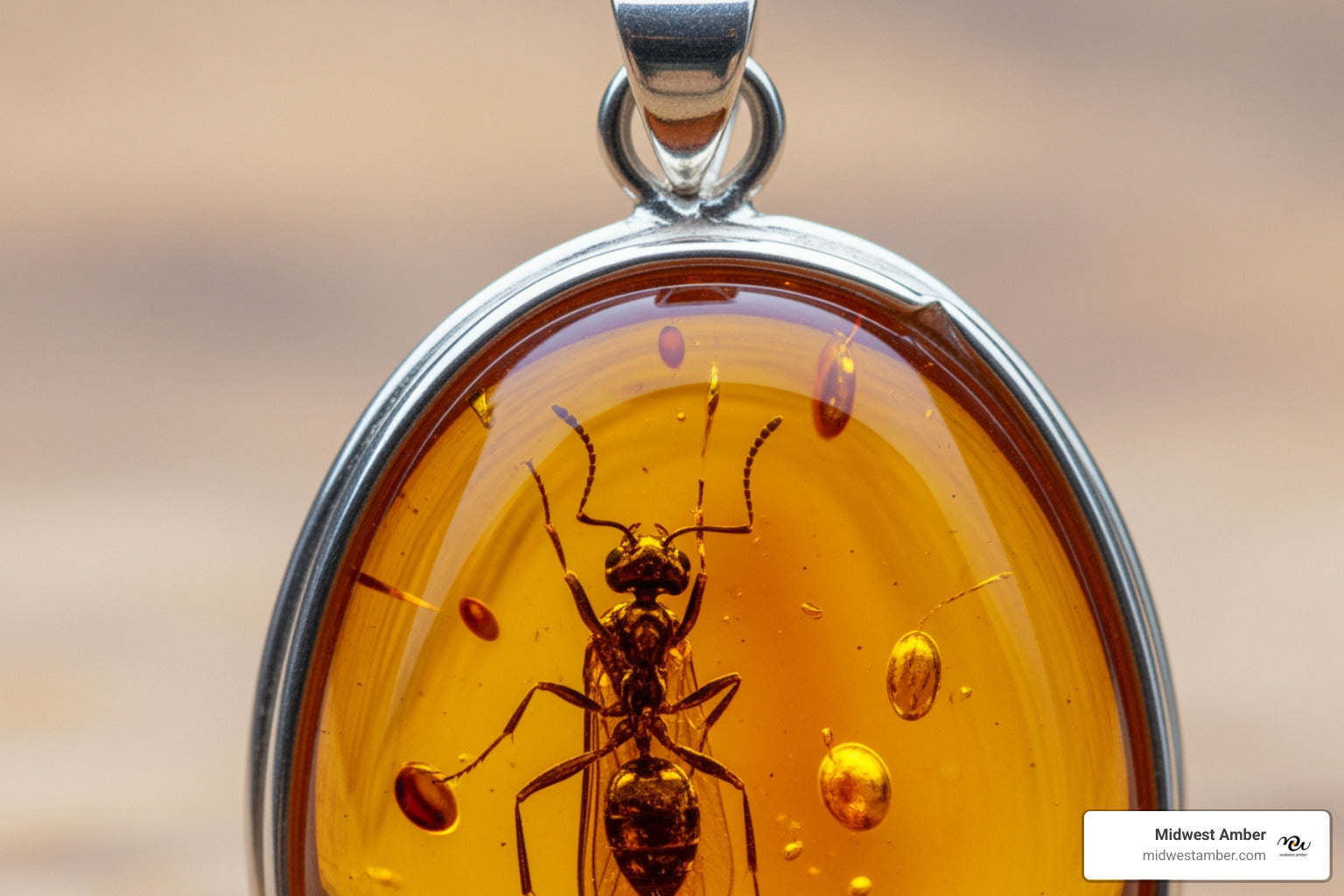
Despite the lack of scientific validation, amber's appeal endures. Many value it for its unique beauty, rich history, and the sense of connection to ancient natural traditions. Each piece of authentic Baltic amber is truly one-of-a-kind, with colors ranging from honey gold to deep cognac, sometimes containing fascinating inclusions of ancient plant matter or insects.
I'm Gabriel Ciupek, President and owner of Midwest Amber, Inc., where I've spent years helping customers find genuine Baltic amber jewelry while educating them about Amber for pain claims and the importance of authenticity and safety. My goal is to provide you with honest, research-backed information so you can make informed decisions about amber--whether you're drawn to its beauty, its heritage, or its traditional associations with wellness.
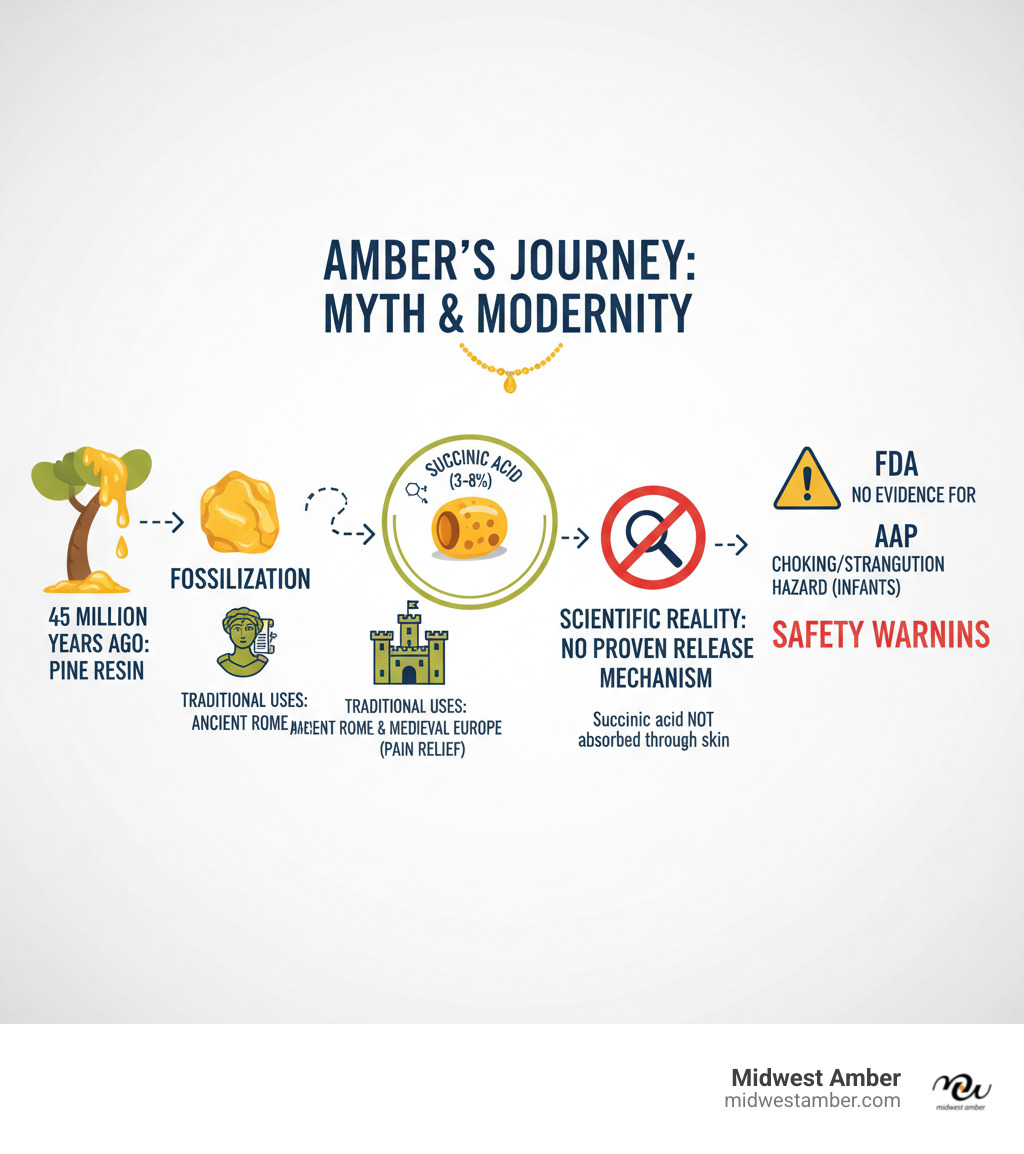
What is Amber and Why is Baltic Amber Special?
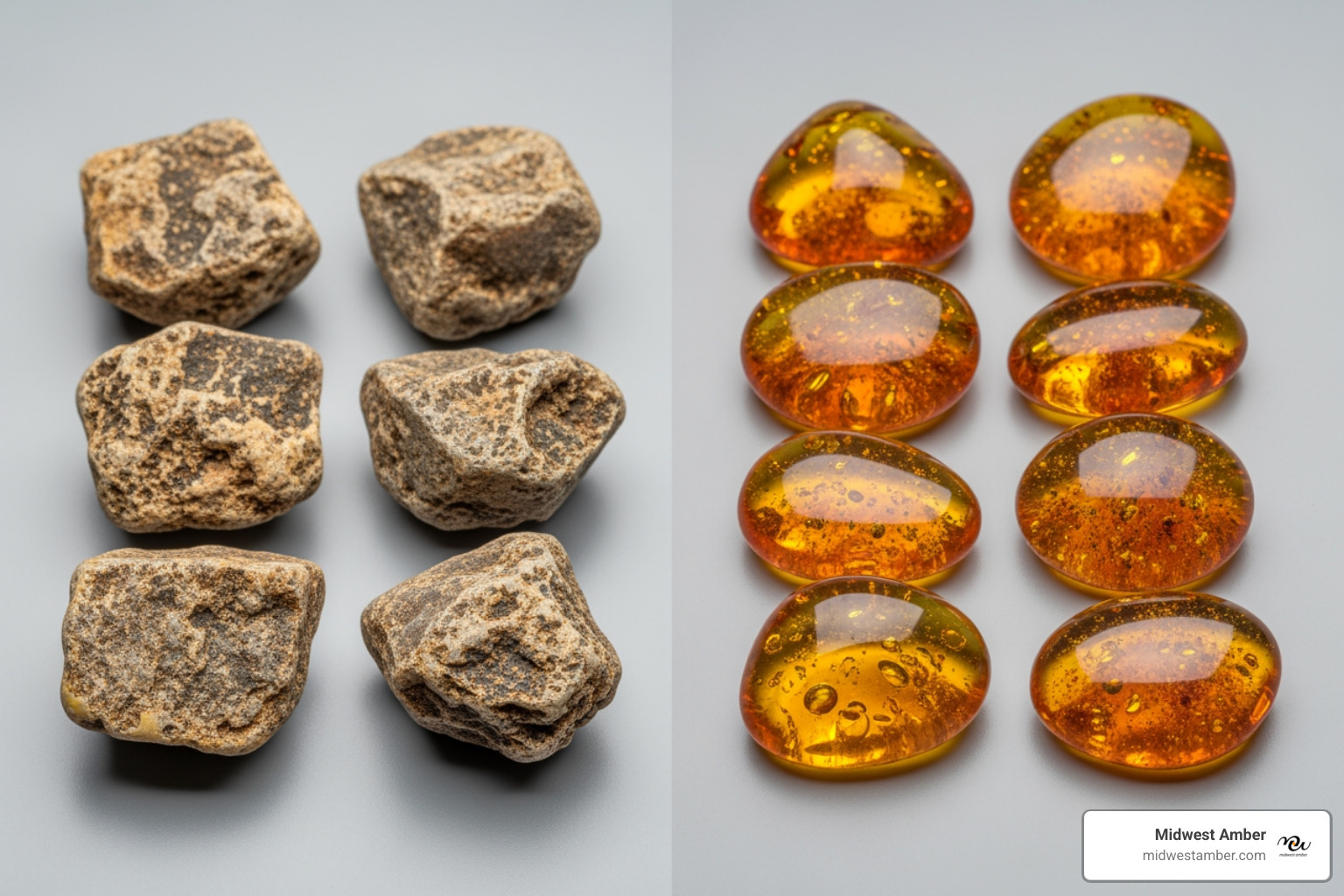
When you hold a piece of amber in your hand, you're not just touching a pretty gemstone--you're holding a piece of ancient history. Amber isn't a stone at all. It's fossilized tree resin, preserved over millions of years from ancient pine forests that once covered what is now Northern Europe. We're talking about 45 million years old!
Imagine sticky sap dripping from a tree during the Eocene epoch, trapping tiny insects, plant fragments, or air bubbles as it hardened. Over time, heat, pressure, and chemical changes transformed that resin into the warm, golden treasure we recognize today. It's essentially nature's time capsule, and sometimes you can even see those ancient inclusions frozen inside--a mosquito, a leaf, a reminder of a world that existed long before humans walked the Earth.
People have treasured amber for far more than just its beauty. Throughout history, cultures around the world believed in amber's healing powers. In ancient Rome, physicians documented its use for everything from throat and stomach ailments to ear and eye problems. Pliny the Younger wrote about Roman peasant women wearing amber medallions to soothe swollen glands and sore throats. Even the famous astronomer Nicolaus Copernicus included amber in his medicinal formulas!
In Traditional Chinese Medicine, amber is known as Hu Po. Practitioners consider it sweet and neutral, believing it calms the mind, improves blood circulation, and supports urinary health. It's typically ground into a fine powder and taken in small doses of 1.5-3 grams. TCM practitioners use it for everything from anxiety and restlessness to addressing stagnant blood and urinary issues.
Medieval Europeans had their own amber traditions too. People wore amber beads hoping to treat jaundice, believing the golden stone could absorb "unhealthy yellowness" from the body. Lithuanian tribes burned amber as incense to ward off evil spirits and even fumigated newborns and newlyweds with its smoke for protection. Nannies in Lithuania and tsarist Russia wore amber beads not just as jewelry, but as a shield against disease for themselves and the babies they cared for.
The Uniqueness of Baltic Amber
Not all amber is created equal. While you can find amber deposits around the world, Baltic amber from the Baltic Sea region stands out for one key reason: it contains the highest concentration of succinic acid of any amber on Earth, typically ranging from 3-8% by weight.
This organic gemstone has other distinctive qualities too. It's warm to the touch--unlike cold minerals--and surprisingly lightweight, making it comfortable to wear all day. These unique characteristics are part of why Baltic amber has maintained its reputation as something special, something potentially beneficial beyond mere decoration.
Historical and Anecdotal Accounts of Amber's Use
The stories surrounding amber for pain relief stretch back centuries and span continents. Beyond the Roman and medieval uses, amber appeared in folk remedies for protecting against illness and bringing comfort to those suffering from various ailments.
Many people who wear amber jewelry today describe feeling a calming and grounding sensation. They talk about amber radiating warm, positive energy that helps them feel more centered and less stressed. Some describe it as changing negative feelings into something lighter, more manageable. We hear these stories regularly from our customers throughout Illinois--from Arlington Heights to Barrington to Crystal Lake--who share how wearing amber seems to bring a greater sense of peace to their busy lives.
Of course, these are anecdotal experiences--personal stories rather than scientific proof. But they reflect a long tradition of people finding comfort in amber, whether that's due to the stone itself, the ritual of wearing meaningful jewelry, or simply the beauty of connecting with something so ancient and natural.
If you're curious about amber's historical connection to joint discomfort specifically, our article on The Golden Touch: Discovering Amber's Anti-Inflammatory Power for Arthritis explores those traditional beliefs in more depth.
The Science of Amber for Pain: How Does It Supposedly Work?
If you've heard about amber for pain relief, you've probably come across the theory that wearing amber jewelry can naturally ease your discomfort. The idea sounds wonderfully simple: you wear a beautiful amber bracelet or necklace, your body warmth gently heats the ancient resin, and somehow, this triggers a natural healing process. But how exactly is this supposed to work? And more importantly, does science back up these claims?
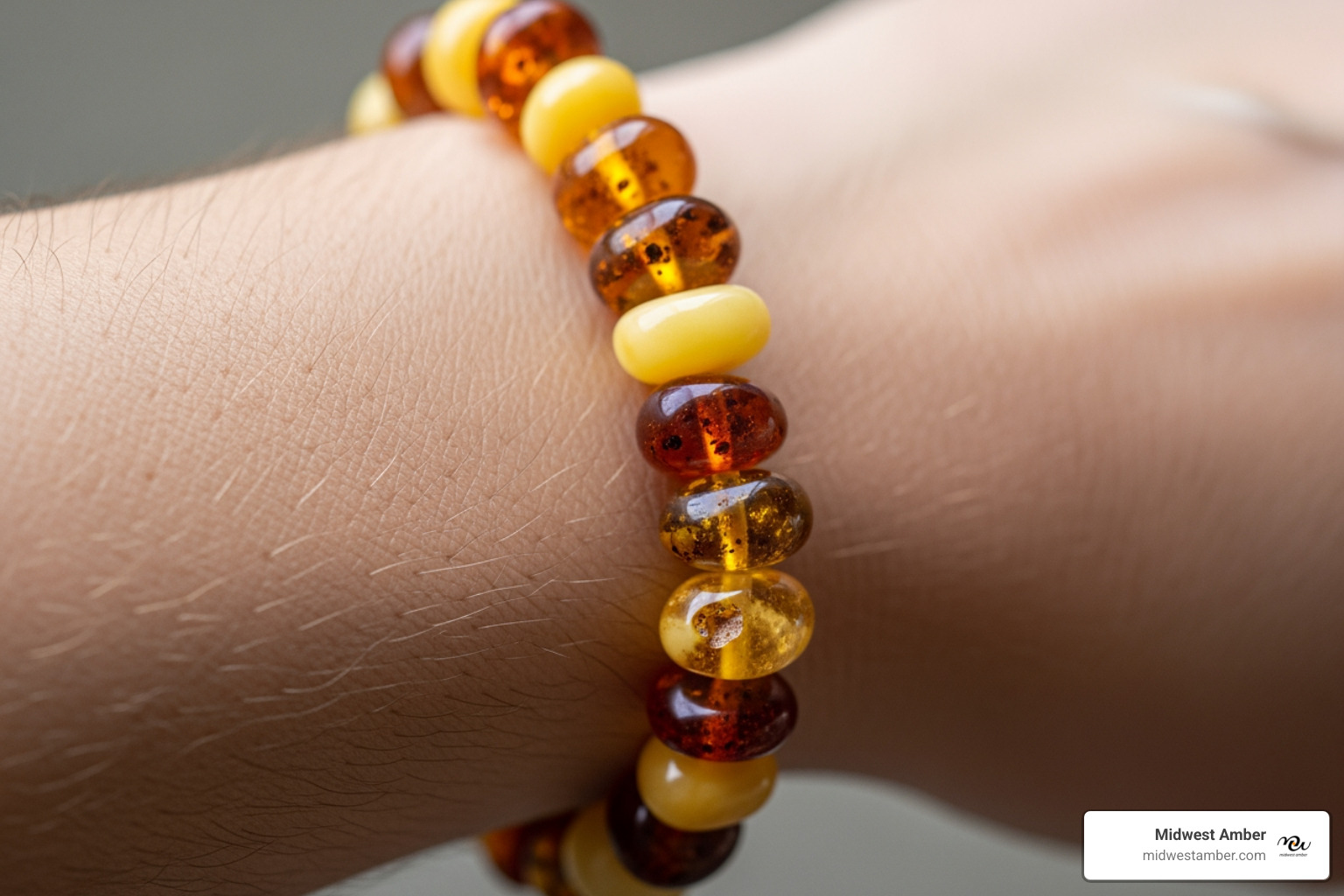
Many people in our communities--from Chicago to Arlington Heights, Schaumburg, and beyond--wear amber jewelry hoping to experience relief from various aches and pains. They might slip an amber bracelet onto a wrist that's been bothering them or wear a necklace for persistent neck and shoulder tension. These choices are often based on traditional wisdom, family recommendations, or personal experiences shared among friends. The belief is that amber acts as a natural analgesic and anti-inflammatory agent, working quietly against your skin to bring comfort.
The Succinic Acid Theory: The Claimed Mechanism of Amber for Pain
The heart of the amber for pain theory revolves around a compound called succinic acid. As we mentioned earlier, Baltic amber contains a relatively high concentration of this substance--typically between 3-8% by weight. Supporters of amber's healing properties believe that when you wear amber jewelry, your body heat causes tiny amounts of succinic acid to be released from the beads. This succinic acid is then supposedly absorbed through your skin and enters your bloodstream, where it gets to work.
Once in your system, the theory goes, succinic acid acts as a natural anti-inflammatory agent. It's said to reduce swelling, block pain signals traveling through your body, and even support your immune system and thyroid function. Some claims extend to helping with drooling in infants and providing overall wellness benefits. It's an appealing idea--a natural, ancient remedy working silently beneath your jewelry to ease your discomfort.
What Scientific Research Reveals
Here's where we need to have an honest conversation. While the succinic acid theory sounds plausible and has been passed down through generations, scientific research paints a very different picture. Researchers have carefully investigated whether succinic acid can actually be released from amber beads and absorbed through skin, and the findings are quite clear.
The problem is that succinic acid is covalently bonded within amber's molecular structure. Think of it as being locked tightly inside the amber itself, not sitting on the surface waiting to escape. A scientific study on succinic acid release examined Baltic amber beads under conditions that mimicked wearing them against skin. The researchers found no measurable succinic acid release from intact amber beads at body temperature, even when submerged in solutions designed to simulate skin conditions. Only when light-colored beads actually broke apart in testing did they release a tiny amount--and that's obviously not how you wear amber jewelry.
But the study went even further. Even if succinic acid could somehow be absorbed through your skin, the researchers tested whether it would actually reduce inflammation. The results were disappointing. At concentrations that would be safe for your body, succinic acid showed no anti-inflammatory effects through the biological pathways tested. In some cases, it actually increased inflammatory markers. At extremely high concentrations, there were effects--but these were toxic levels that caused cell damage rather than healing.
This means the proposed mechanism for how amber for pain would work simply doesn't hold up under scientific scrutiny. The succinic acid isn't being released, it's not being absorbed, and even if it were, it wouldn't provide the anti-inflammatory benefits claimed.
Despite this scientific reality, many people continue to use amber jewelry for various conditions. They report anecdotal experiences with arthritis, fibromyalgia, carpal tunnel syndrome, headaches, back pain, knee pain, neck and shoulder discomfort, sprained muscles, and even anxiety-related tension. Some wear it hoping for better sleep, which can certainly affect how we experience pain.
It's crucial to understand the difference between personal experience and scientific validation, especially when making decisions about managing pain or other health conditions. While someone's genuine feeling of relief is real to them, it doesn't necessarily mean the amber itself is causing that relief through the claimed mechanism. Placebo effects, the comfort of wearing something beautiful, improved mood, or simply the passage of time can all contribute to feeling better.
Safety First: What Medical Experts and Regulators Say
Let's talk about something that matters deeply to all of us: keeping our loved ones safe. While the beauty and history of amber for pain relief are genuinely fascinating, we need to address some serious concerns that medical professionals and safety regulators have raised--especially when it comes to babies and young children.
I understand the appeal. As a parent or grandparent, you want to do everything possible to ease your child's discomfort naturally. But when it comes to amber teething necklaces and infant jewelry, the risks are real and, frankly, heartbreaking.
The biggest dangers are choking and strangulation. Even when amber necklaces are carefully crafted with individually knotted beads (which we always recommend if someone insists on wearing them), they can still break. Those tiny beads then become choking hazards for curious little ones who explore the world by putting things in their mouths. Even more concerning is the strangulation risk--any necklace worn around a baby's neck, especially during naptime or sleep, can become caught on something or twisted, creating a life-threatening situation.
Warnings for Infants and Teething Necklaces
The medical community has spoken clearly on this issue, and their message is one we take very seriously. The American Academy of Pediatrics (AAP) has stated unequivocally that there is no scientific evidence supporting the claims that amber teething necklaces provide relief. More importantly, they advise against infants wearing any jewelry at all because of the inherent safety risks. You can read their full guidance here: American Academy of Pediatrics (AAP) statement.
The warnings get even more serious. In December 2018, the FDA issued a safety alert after receiving reports of children choking on beads that had broken off from teething necklaces. Tragically, they also documented the death of an 18-month-old who strangled on an amber necklace during a nap. These aren't just theoretical risks--they're real incidents that have devastated families. The FDA's warning can be found here: FDA warning on safety risks.
This isn't just an American concern, either. Canada's public health department issued warnings about amber teething necklaces back in 2010. Ireland's Health Service Executive went even further in 2015, calling these products "inherently unsafe." Pediatricians across the board--including Dr. Dina DiMaggio, a spokesperson for the AAP, and Dr. Alexis Phillips-Walker--consistently advise parents to avoid these products entirely.
We've written extensively about this topic because it's so important. If you're considering an amber teething necklace for your baby, please read our detailed guide: Warning: What Every Parent Needs to Know About Amber Teething Necklaces. Your child's safety is worth far more than any unproven remedy.
General Safety and Authenticity
For adults who choose to wear amber jewelry, safety concerns are much less serious, but it's still important to know what you're getting. Authentic Baltic amber has unique characteristics that set it apart from imitations, and understanding these can help you make informed choices.
Real amber feels warm and surprisingly light when you hold it--quite different from glass or plastic fakes. One reliable way to test authenticity at home is the saltwater float test: dissolve about 1/4 cup of salt in 2 cups of warm water, and genuine amber will float while most imitations sink. Real amber also generates static electricity when rubbed vigorously, allowing it to attract small pieces of paper or hair. At Midwest Amber, we provide certified authenticity with every piece, so you can be confident you're receiving 100% natural, ethically sourced Baltic amber from Poland and Lithuania.
Taking care of your amber jewelry is straightforward. Clean it gently with a soft cloth and warm water--that's really all it needs. Harsh chemicals, perfumes, and extreme temperatures can damage the resin over time, so it's best to apply perfume or lotion before putting on your amber, not after. While some people believe wearing amber in the shower might improve absorption (due to warmth and moisture), we generally recommend removing it to preserve its beauty and longevity.
For adults wearing amber bracelets or necklaces, make sure they're not too tight and check periodically for signs of wear that might cause breakage. If you notice fraying, loose beads, or weakened clasps, it's time for a repair or replacement. We've put together a comprehensive guide with more detailed safety tips: Unraveling the Risks: A Guide to Amber Bracelet Safety.
The bottom line? Amber jewelry can be a beautiful, meaningful accessory for adults who appreciate its history and natural origins. But when it comes to babies and young children, the safety risks far outweigh any unproven benefits. We're here to help you make informed decisions that keep your family safe while still enjoying the timeless beauty of genuine Baltic amber.
Exploring Your Options: Amber Jewelry and Pain Relief
Despite the scientific community's stance on the efficacy of amber for pain relief, many individuals continue to find comfort and perceived benefits from wearing amber jewelry. For us at Midwest Amber, we understand that wellness journeys are deeply personal, and a holistic approach often involves more than just conventional medicine. While we always emphasize the importance of consulting a medical professional for persistent or severe pain, we also recognize the value people place on natural remedies and traditional practices.
Our customers in Chicago, Glenview, Palatine, and other Illinois locations often share their personal experiences, describing how wearing amber jewelry contributes to their overall sense of well-being. It's about finding what resonates with you and incorporating it thoughtfully into your lifestyle.
Amber Jewelry as a Traditional Remedy
The practice of wearing amber jewelry for its perceived natural soothing properties is steeped in cultural and historical context. Many believe that wearing amber close to the skin allows for the subtle transfer of its beneficial qualities. For instance, a customer might choose an amber necklace for perceived relief from neck or shoulder discomfort, or a bracelet for issues in the wrist or hand. The idea is that the constant, gentle contact between the amber and the skin facilitates its traditional comforting effects.
We've heard countless positive testimonials from those who choose our handcrafted Baltic amber jewelry. Customers have expressed delight with the beauty of their purchases and often describe how their amber pieces bring a sense of calm or ease. One customer, thrilled with a faceted necklace, shared how much they loved its natural feel. Another mentioned that anklets they bought as gifts seemed to help with certain symptoms, and a third described a Rainbow Dainty Bracelet as "beautiful, perfectly polished, and comfortable," even ordering more due to satisfaction with its perceived healing properties and our guaranteed authenticity. These personal stories, while anecdotal, highlight the enduring appeal and belief in amber's role as a traditional remedy.
Lifestyle and Wellness Practices
While exploring the potential traditional benefits of amber, it's also valuable to consider a broader spectrum of lifestyle and wellness practices that can contribute to pain management and overall well-being. For those seeking alternatives or complementary approaches to amber for pain, a variety of methods can be explored:
- Gentle Massage and Movement: Targeted massage can help relax tense muscles and improve circulation, while gentle exercises or physical therapy can improve flexibility and strength.
- Relaxation Techniques and Mindfulness: Practices like meditation, deep breathing exercises, and yoga can reduce stress, which often exacerbates pain. Mindfulness helps individuals become more aware of their body and pain, potentially changing their relationship with it.
- Heat and Cold Therapy: Applying heat (like a warm compress or bath) can soothe stiff joints and muscles, while cold packs can reduce inflammation and numb painful areas.
- Adequate Sleep: Ensuring sufficient, restful sleep is fundamental, as chronic pain can disrupt sleep, and lack of sleep can heighten pain sensitivity.
- Balanced Nutrition and Hydration: A diet rich in anti-inflammatory foods and proper hydration supports overall bodily functions and can contribute to reduced inflammation.
- Consulting Professionals: For any persistent or severe pain, consulting with medical professionals, such as doctors, physical therapists, or chiropractors in our local Illinois communities, is crucial for an accurate diagnosis and an effective treatment plan.
Incorporating amber jewelry into a comprehensive wellness routine, alongside these proven lifestyle practices, can be a personal choice for those who value its traditional significance and find comfort in its presence.
Conclusion
As we wrap up our exploration of amber for pain, it's clear that this beautiful fossilized resin holds a special place in human history--and in many hearts today. For over 45 million years, amber has been forming from ancient tree resin, and for centuries, cultures around the world have treasured it. From Roman women wearing amber medallions for throat ailments to its revered place in Traditional Chinese Medicine as Hu Po, amber has been woven into the fabric of traditional healing practices across continents and generations.
The allure of amber for pain relief is easy to understand. Many people who wear amber jewelry genuinely report feeling better--experiencing a sense of calm, finding comfort during stressful times, or noticing relief from chronic discomfort. These personal experiences are real to those who live them, and we've been honored to hear countless stories from our customers throughout Illinois, from Chicago to Barrington to Crystal Lake, who find meaning and comfort in their amber pieces.
However, honesty and transparency matter deeply to us. The scientific evidence tells us that amber's purported pain-relieving mechanism--the release and absorption of succinic acid through the skin--simply doesn't hold up under scrutiny. Research published in peer-reviewed journals has consistently shown that succinic acid remains tightly bonded within amber's structure and cannot be released from intact beads at body temperature. Even if it could be released, studies found no anti-inflammatory effects at safe concentrations. While we respect the traditional beliefs and personal experiences surrounding amber, we cannot in good conscience claim that it provides proven medical benefits for pain relief.
What we must emphasize even more strongly are the serious safety concerns, particularly for infants and young children. The warnings from the American Academy of Pediatrics and the FDA about amber teething necklaces are not cautionary tales to be taken lightly--they're based on real reports of injury and tragic deaths from choking and strangulation. No perceived benefit, no matter how strongly believed, is worth risking a child's life. If you're considering amber for a baby or young child, we urge you to prioritize their safety above all else and heed these expert warnings. For more information, please read our detailed article: Warning: What Every Parent Needs to Know About Amber Teething Necklaces.
At Midwest Amber, our commitment has always been to authenticity--in our products and in our information. We've spent over 20 years carefully sourcing genuine Baltic amber from Poland and Lithuania, ensuring every piece is 100% natural and ethically obtained. We offer certified authenticity because we believe you deserve to know exactly what you're getting. Our amber jewelry is beautiful, unique, and connects you to millions of years of natural history. Whether you're drawn to its warm golden glow, its fascinating inclusions of ancient life, or its cultural heritage, amber has intrinsic value that goes far beyond any health claims.
If you love amber for what it truly is--a stunning organic gemstone with a rich story--we'd be honored to help you find a piece that speaks to you. For our neighbors here in the Chicago area, including Elmhurst, Schaumburg, and beyond, we invite you to explore the local amber community and find the beauty of this ancient treasure: Discover local Chicago amber gems and jewelers.
We want you to make informed choices about your wellness journey. Amber can be a beautiful addition to your jewelry collection and a meaningful connection to tradition and history. Just remember that for any persistent or serious pain, your best resource is always a qualified healthcare professional who can provide evidence-based treatment custom to your specific needs.

Leave a comment
This site is protected by hCaptcha and the hCaptcha Privacy Policy and Terms of Service apply.