

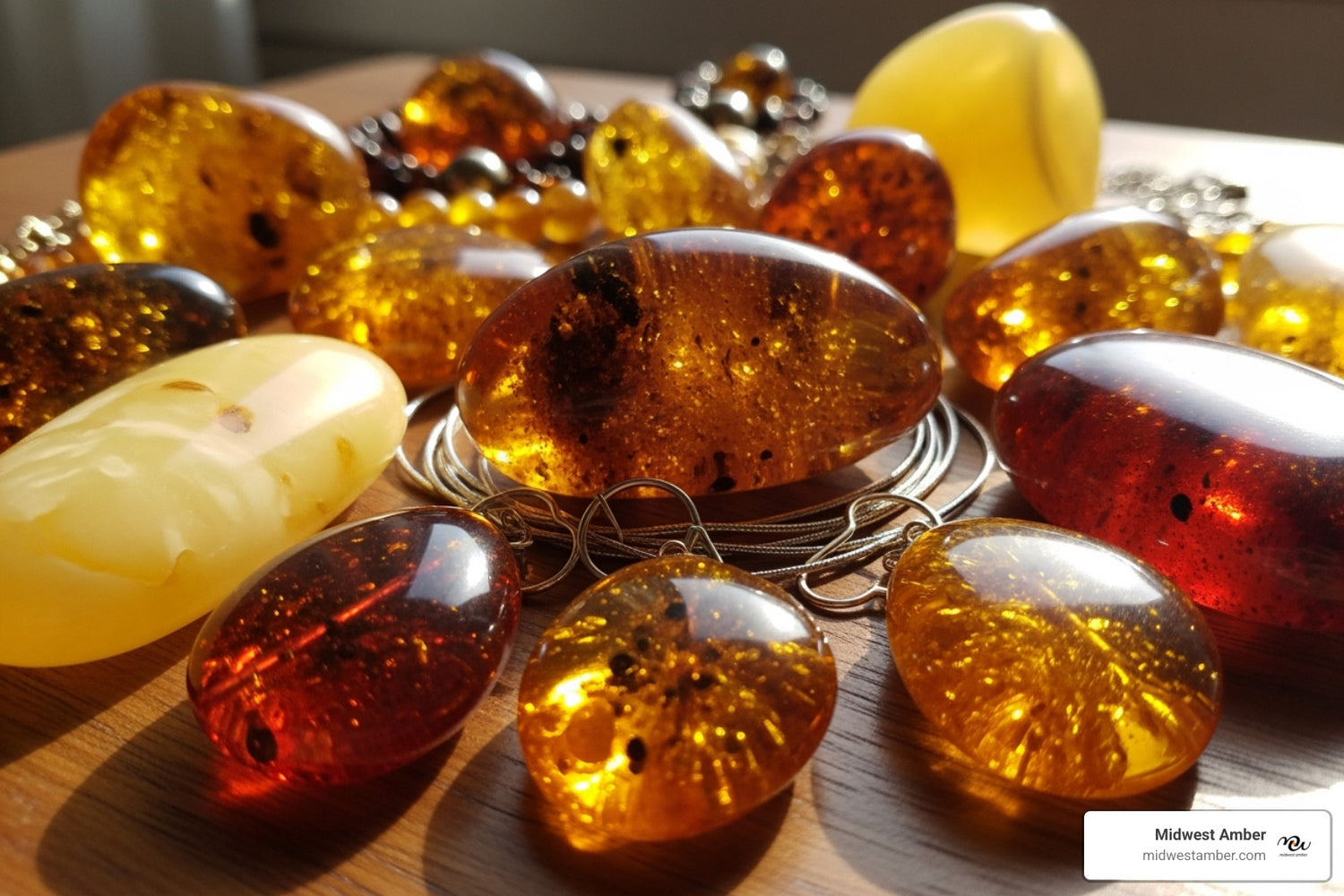
Why Amber Jewelry Captivates Hearts Across Generations
Amber Jewelry is one of nature's most fascinating treasures—fossilized tree resin transformed over millions of years into stunning gemstones. This organic material ensures no two pieces are ever identical, making each item as unique as the person wearing it.
Quick Facts About Amber Jewelry:
- Age: 30-60 million years old fossilized pine tree resin
- Origin: Primarily from the Baltic Sea region (Poland, Lithuania, Russia)
- Colors: Butterscotch, cognac, cherry, lemon, green (over 200 subtle shades)
- Hardness: 2-2.5 on Mohs scale (softer than most gems)
- Value: Highest prices for pieces with clear insect inclusions and light colors
- Care: Clean with warm water and soft cloth, avoid chemicals and scratches
Treasured for over 10,000 years, amber has journeyed from ancient trade routes to modern jewelry collections. The Baltic region remains the primary source, with artisans crafting everything from simple beaded necklaces to elaborate pendants.
Amber's ability to preserve ancient life—insects, plants, and air bubbles—creates windows into prehistoric worlds. These inclusions, popularized by films like Jurassic Park, make certain pieces extremely valuable to collectors.
Unlike mineral-based gemstones, amber is fossilized resin that feels warm to the touch and can generate static electricity when rubbed.
I'm Gabriel Ciupek, President and owner of Midwest Amber, Inc. I've spent years helping customers find the timeless beauty of genuine Amber Jewelry. Each handcrafted piece is a tiny treasure from the sea, connecting us to ancient natural history.
Amber Jewelry vocab explained:
- amber crystal
- how to tell real amber jewelry
- mosquito in amber necklace
What is Amber? From Ancient Forests to Treasured Gem
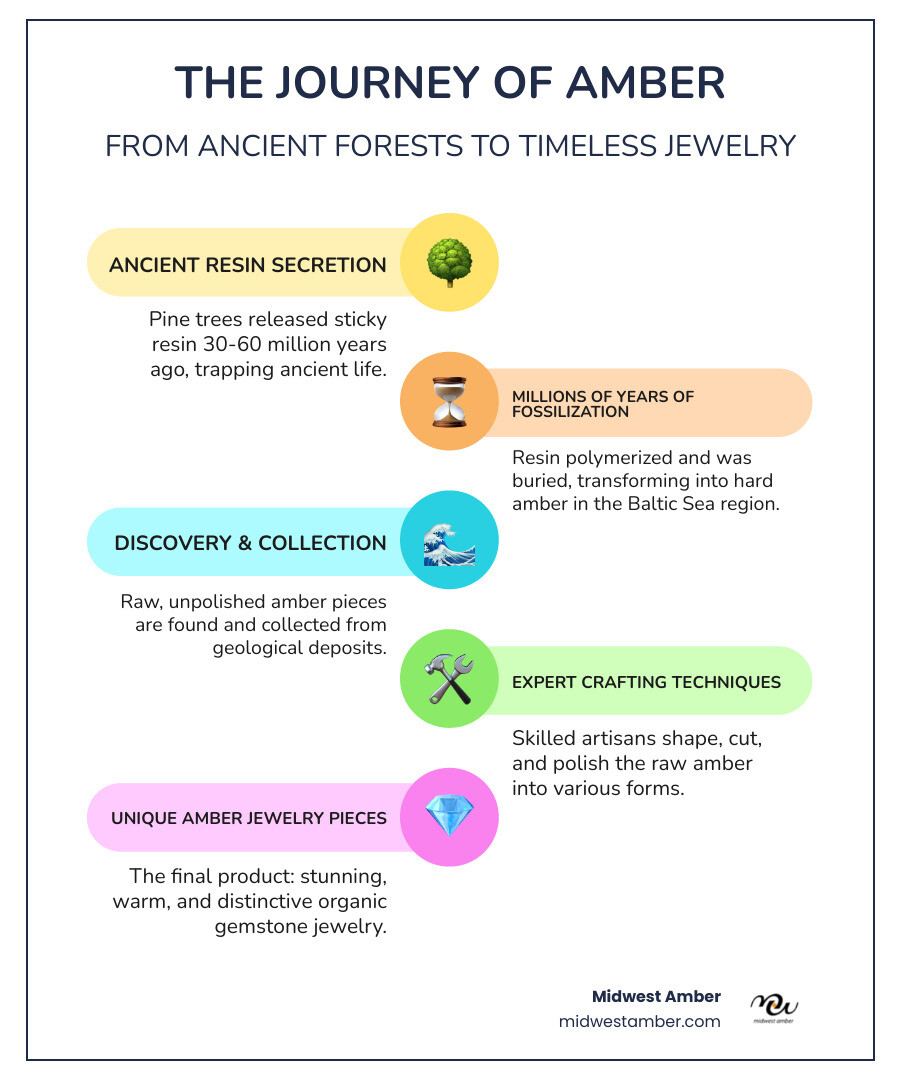
Millions of years ago, vast pine forests grew where the Baltic Sea now sits. Injured trees produced a sticky, golden resin that, over eons, would become one of nature's most beautiful treasures.
Amber Jewelry is not a traditional gemstone; it's fossilized tree resin transformed over time. Through a natural process called polymerization, the ancient sap hardened and changed its chemical structure, becoming the durable, glowing amber we treasure today.
Most amber used in jewelry is 30 to 60 million years old, meaning every piece is a tangible piece of prehistoric Earth. It's nature's time capsule from an era when dinosaurs roamed.
The Baltic Sea region—including Poland, Lithuania, and parts of Russia—produces most of the world's finest amber. This area was once covered by those ancient forests, and geological forces carried the fossilized resin to its current location. This is why Baltic amber is the gold standard for quality.
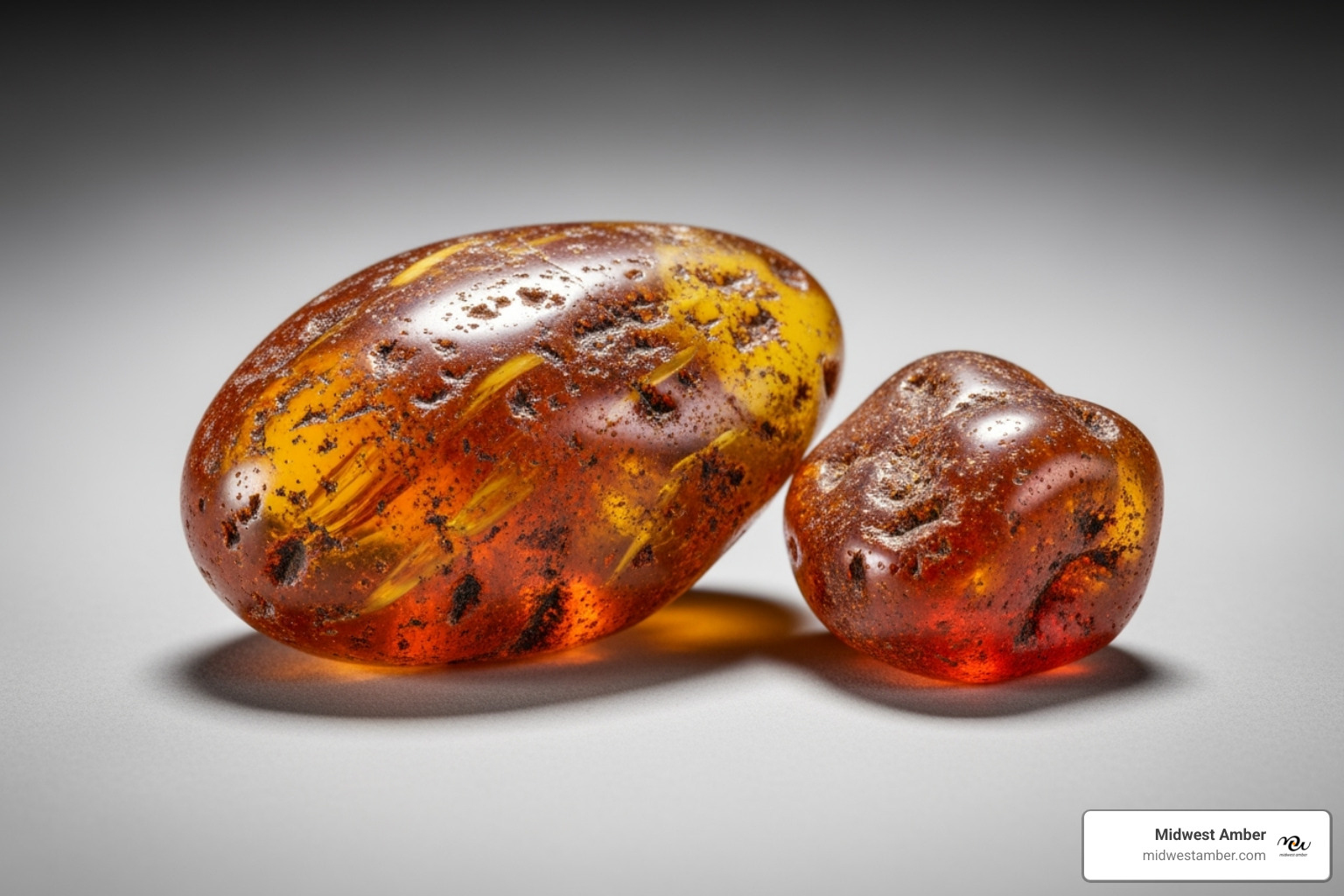
The Science Behind Amber's Golden Glow
Unlike crystals with organized patterns, amber has an amorphous structure, a natural mix of hydrocarbons, resins, oils, and succinic acid. This unique composition gives amber amazing qualities.
It feels warm to the touch, unlike cold gemstones, due to its organic makeup. Amber is also surprisingly light, with a specific gravity of about 1.08, allowing it to float in salt water—a key authenticity test.
However, at only 2 to 2.5 on the Mohs hardness scale, amber is quite soft and can be easily scratched. This softness means amber jewelry, especially rings, requires extra care.
Amber vs. Copal: Telling Apart the Old from the New
Copal is often mistaken for amber, but the key difference is age. Copal is fossilized tree resin that is younger than 30 million years. Geologically, it's a baby that hasn't had enough time to fully polymerize.
This makes copal softer and more brittle than true amber, lacking its durability. A reliable way to differentiate them is the acetone test: a drop of nail polish remover will make copal's surface sticky, while genuine amber remains unaffected.
This distinction is crucial, as some sellers misrepresent copal as amber. While beautiful, copal lacks the strength and longevity desired in treasured jewelry.
Understanding these differences helps you appreciate why genuine amber jewelry is so special. You're not just wearing an accessory; you're carrying a piece of Earth's ancient, transformed history.
A Rainbow of Amber: Types, Colors, and Inclusions
Amber Jewelry comes in a surprising rainbow of over 200 shades, far beyond the classic honey-gold. The most common colors have descriptive names: Butterscotch amber is creamy white and pale yellow, Lemon amber is bright and sunny, Cognac amber offers warm oranges and browns, and Cherry amber displays deep, wine-like reds.
Some colors are incredibly rare. Green amber is uncommon and sought after by collectors, while the rarest of all is blue amber, which has an almost magical appearance.
These colors tell the story of each piece's formation, influenced by minerals, air bubbles, or the type of tree that produced the resin. In terms of value, lighter and clearer pieces typically command higher prices, especially with inclusions. However, rarity can change this rule; a piece of genuine blue amber may be worth far more than a clear butterscotch piece due to its scarcity.
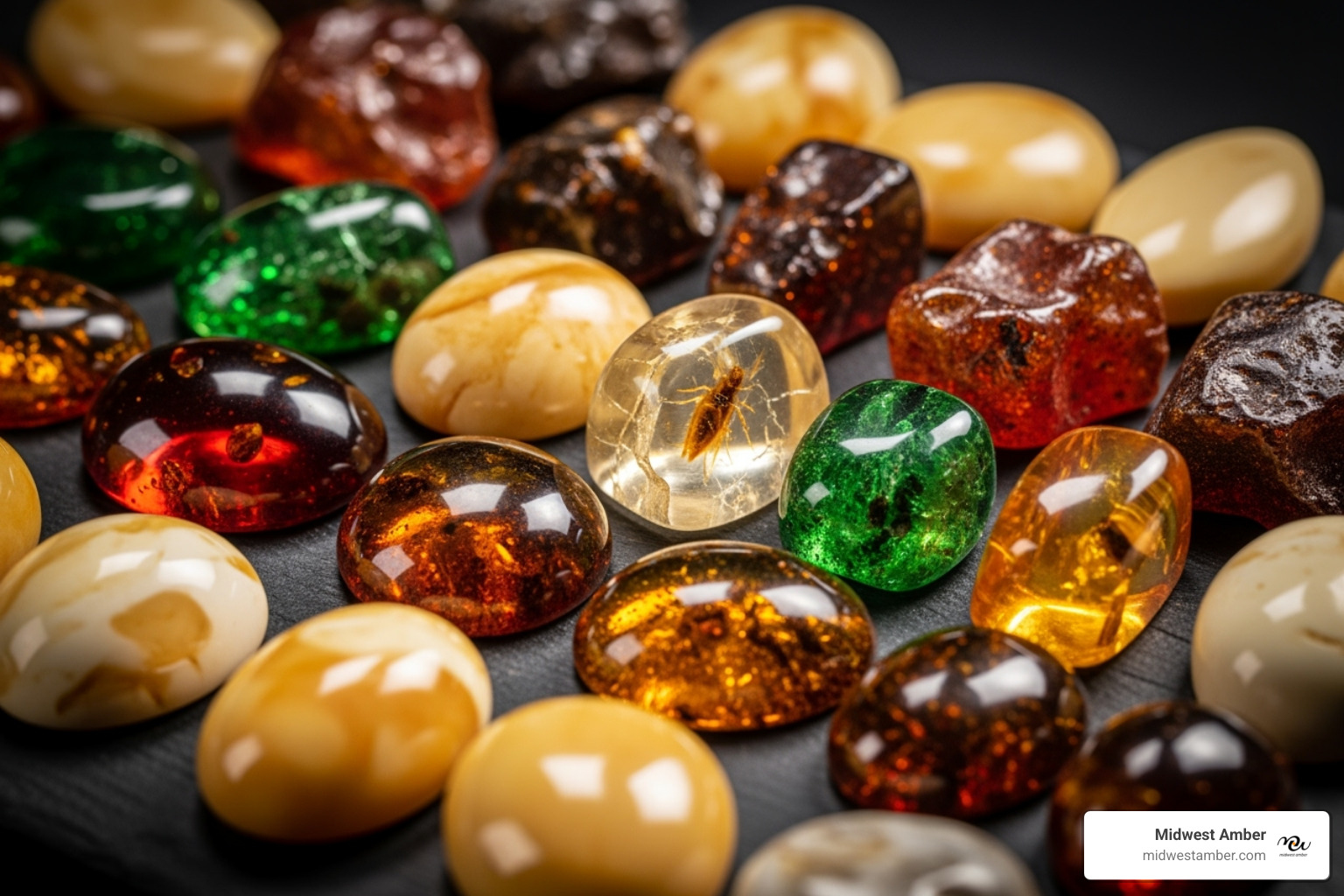
The Most Prized Types of Amber Jewelry
Three types of amber stand out in jewelry making.
Baltic Amber, or "Nordic Gold," comes from the Baltic Sea region and constitutes most of the amber jewelry available today. It's prized for its high levels of succinic acid, excellent quality, and beautiful colors. At Midwest Amber, we focus on ethically sourced Baltic amber from Poland and Lithuania for its superior quality, ensuring our Amber Jewelry lasts for generations.
Dominican Amber is treasured by collectors for its breathtaking clarity, which reveals inclusions in incredible detail. This is also the source of the magical blue amber. Under natural light, it exhibits a blue glow due to fluorescence caused by tiny particles scattering UV light. Renowned gemologist Joel E. Arem has documented stunning examples of Dominican amber with perfect insect inclusions.
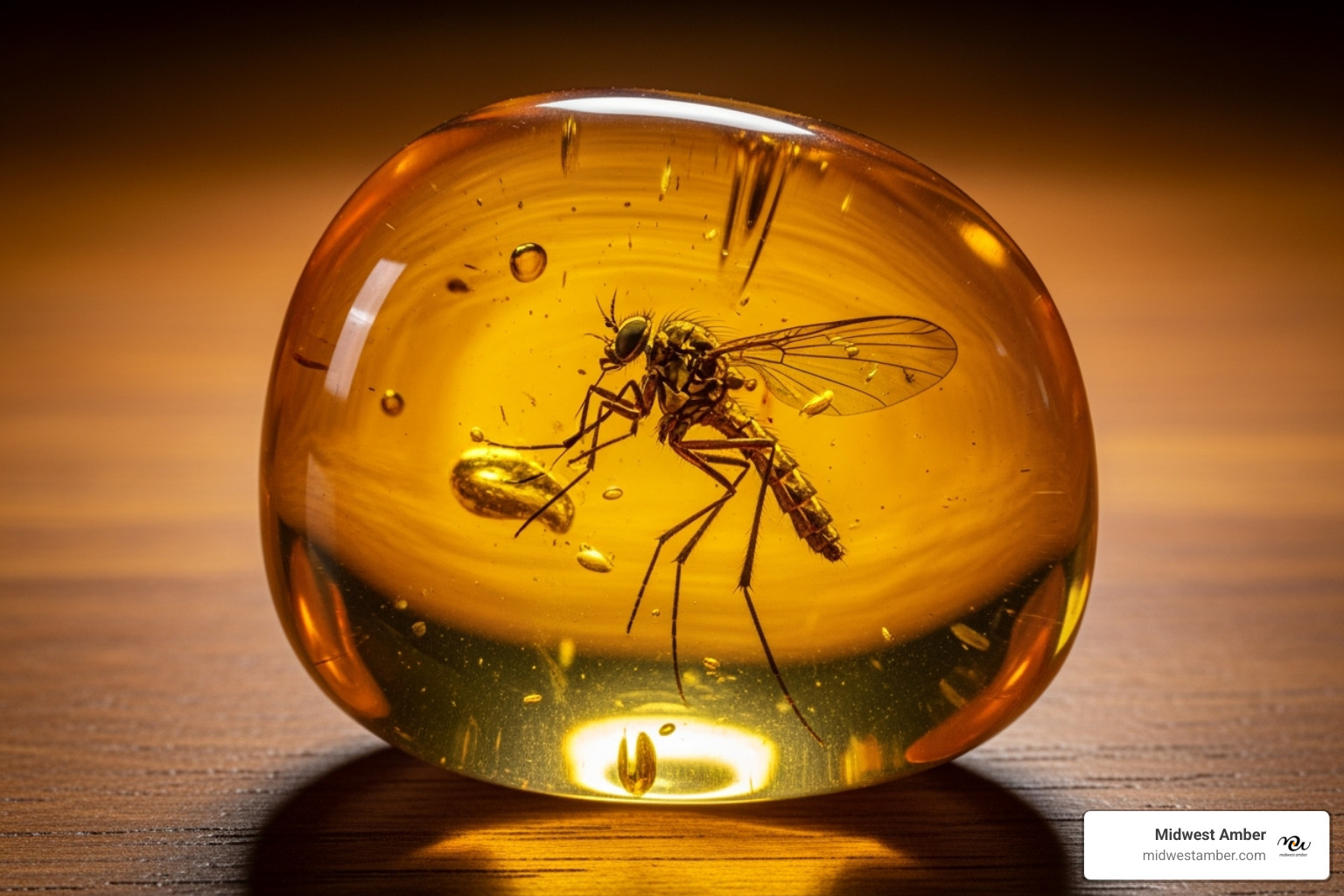
Mexican Amber completes the trio, often displaying gorgeous yellows, oranges, and reds, frequently with captivating inclusions that make each piece unique.
Understanding Inclusions and Their Impact on Value
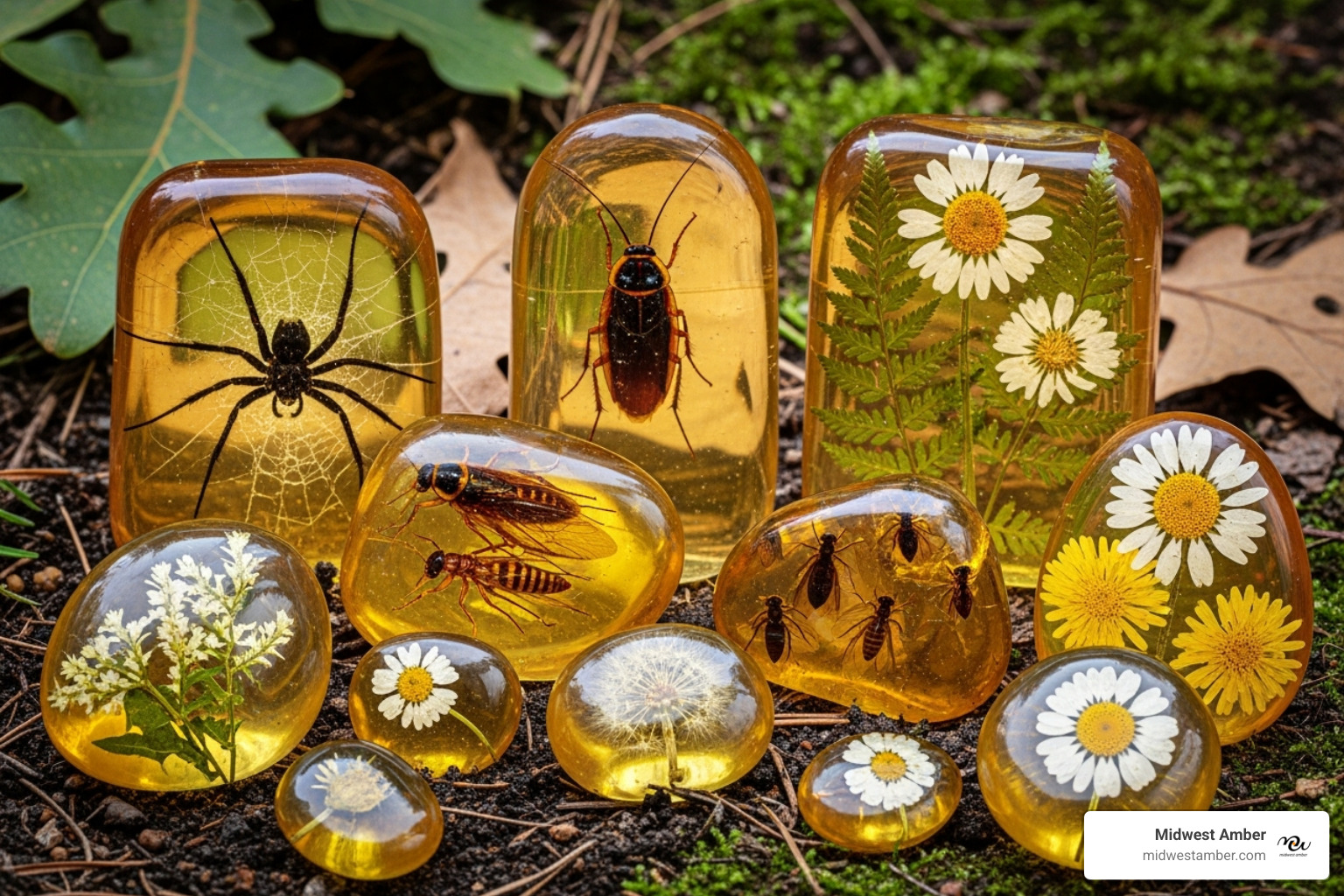
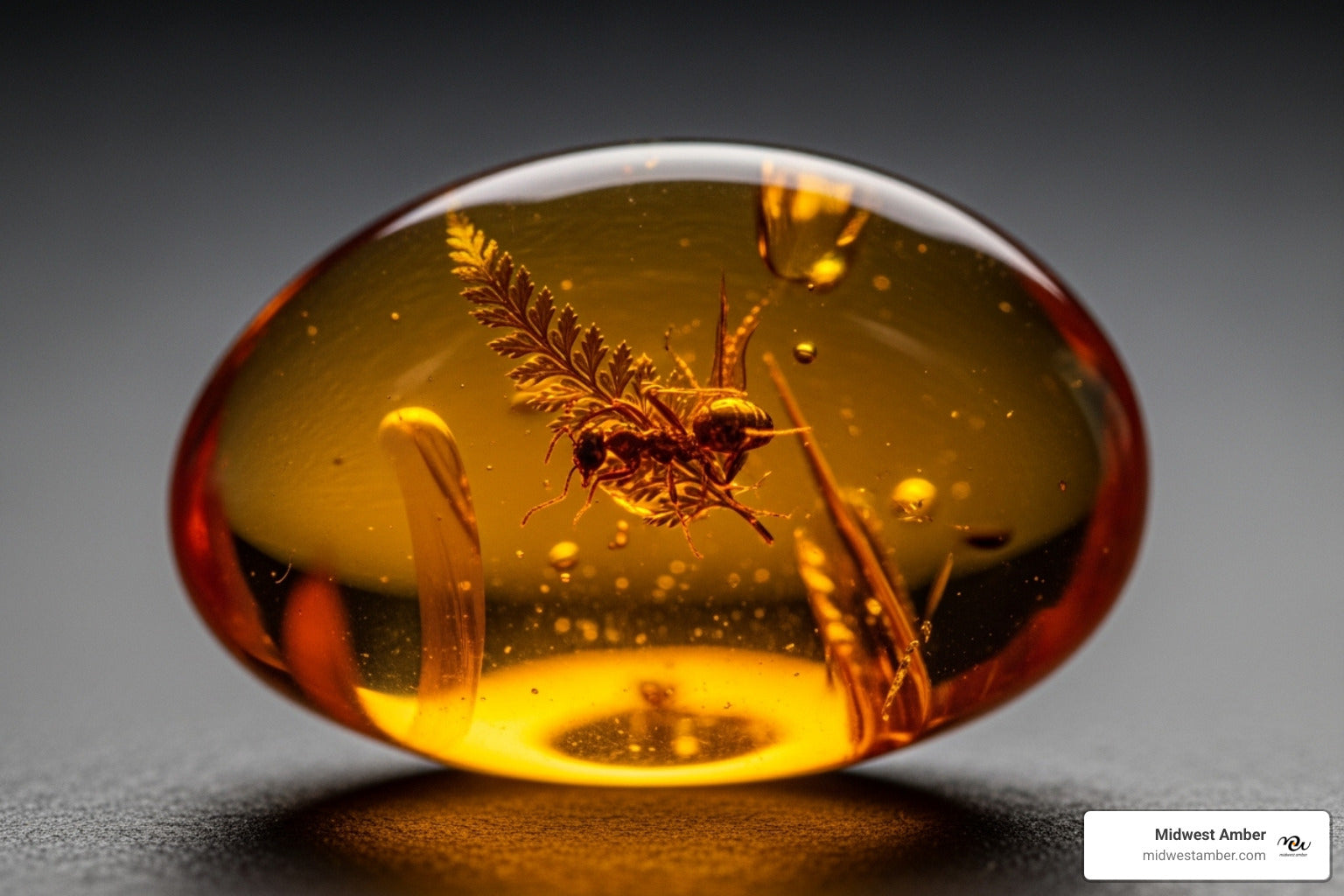
Amber's magic lies in its ability to preserve ancient life. As sticky resin flowed down trees millions of years ago, it trapped insects, plant bits, air bubbles, and water droplets. These inclusions make each piece of Amber Jewelry completely unique.
While extracting dinosaur DNA from mosquitoes in amber (as in "Jurassic Park") isn't possible, these perfectly preserved creatures are fascinating. A piece with a clear, well-preserved insect is like a tiny museum exhibit.
Insect and plant inclusions are the most valuable. A complete, visible ancient fly, ant, or mosquito can make a piece worth many times more than one without inclusions. Other common inclusions are air bubbles, which can create a cloudy or popular butterscotch effect, and water droplets. "Star spangles" are disc-like stress fractures that create a glittery effect; many are created by heating amber in oil and are generally less valuable than natural inclusions.
The clarity of the amber around an inclusion significantly impacts value. A crystal-clear view of the trapped item is highly prized. The most valuable Amber Jewelry combines light colors, excellent clarity, and distinctive, well-preserved inclusions.
The Rich History and Enduring Allure of Amber Jewelry
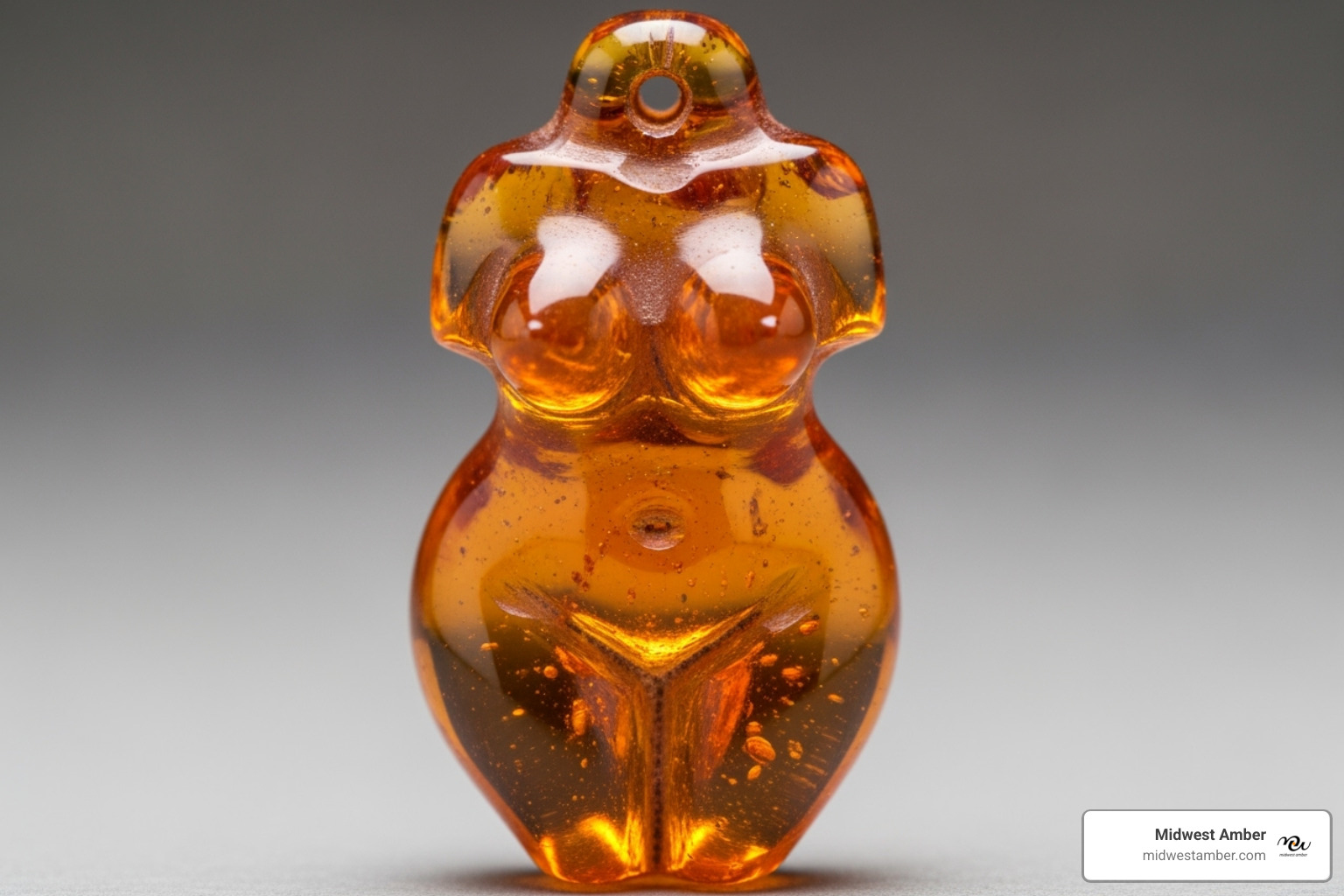
Humans have treasured amber jewelry for over 10,000 years. Archaeological evidence suggests amber was one of the first gemstone materials used by our ancestors, dating to the Neolithic period. Ancient people found these warm, glowing pieces on seashores and believed them to be magical.
They crafted amber into talismans and amulets to ward off evil and bring good fortune. The demand for amber grew so intense it created the famous "Amber Road," a trade network stretching from the Baltic Sea to the Mediterranean. In some societies, amber was so precious it was used as currency.
A stunning example of amber's historical importance is The celebrated Amber Room, an 18th-century chamber near St. Petersburg, Russia, with walls made of amber panels backed by gold leaf. Though the original was lost during World War II, its reconstruction is a breathtaking testament to amber's royal status.

Amber in Ancient Cultures and Folklore
Ancient cultures had their own stories about amber. The Greeks believed amber came from the hardened tears of the Heliades, who mourned their dead brother Phaeton. Roman gladiators wore it for protection and good luck in battle. The Vikings treasured amber as a symbol of the sun, incorporating it into their jewelry as a divine connection.
These stories show how deeply amber resonated with people across different cultures and eras.
Modern Beliefs and Metaphysical Properties
Today, amber jewelry is still cherished for more than its appearance. Many believe it carries a soothing energy that calms the mind and relieves stress. Its natural warmth feels comforting.
Amber is often described as a natural purifier that can draw out negative energy and promote emotional healing. In chakra work, it's connected to the solar plexus chakra, believed to boost confidence and creativity.
One of the most widespread modern beliefs involves amber teething necklaces. Parents believe that when amber touches the skin, body heat releases trace amounts of succinic acid, a compound in Baltic amber thought to have pain-relieving properties. While these claims are not scientifically proven, countless people find comfort in wearing amber jewelry, which has been a consistent belief for thousands of years.
A Buyer's Guide to Authentic Amber
When investing in amber jewelry, you're acquiring a piece of ancient history. Understanding how to spot genuine amber, assess its value, and choose ethically sourced pieces will help you make a confident purchase.
How to Identify Genuine Amber Jewelry
Identifying genuine amber is easier once you know its unique properties, which differ from copal (younger resin) and plastic imitations. Here are some reliable tests:
| Test | Genuine Amber | Copal | Plastic/Glass Imitations |
|---|---|---|---|
| Scent (Hot Needle) | When a heated needle touches an inconspicuous spot, it emits a distinctive, pleasant pine or incense-like scent. | A weaker, more resinous smell, sometimes chemical. | Emits a strong, unpleasant chemical or burning plastic smell. |
| Saltwater Float | Floats in a saturated saltwater solution (approx. 1.13 SG). | May sink or barely float. | Sinks in saltwater. |
| Static Charge | When rubbed vigorously on wool, it generates static electricity strong enough to pick up small pieces of paper or ash. | Generates less static charge. | Also generates static charge, can be deceptive. |
| Acetone Test | Remains unaffected; surface won't become sticky or damaged. | Surface becomes sticky, dull, or slightly damaged. | Surface may dissolve or become sticky. |
| UV Fluorescence | Baltic amber often glows blue or greenish under UV light. | Less or different fluorescence. | Varies, some plastics may fluoresce. |
| Visual/Microscope | May show ancient inclusions, natural flow lines, or age-related cracks. Ambroid (pressed amber) shows distinct swirling flow lines or "stretched" bubbles. | Clearer, more uniform, often with modern inclusions. | Uniform color, perfect bubbles, mold lines. |
The hot needle test is definitive but destructive, so use it cautiously. The saltwater float test is a gentler alternative. Also, note that genuine amber feels warm to the touch, while glass or plastic feels cold.
Be aware of ambroid (pressed amber), made by fusing small amber pieces. While technically real amber, its structure is altered, showing unnatural swirling flow lines or stretched bubbles under magnification.
Factors That Determine Amber's Value
Like diamonds, amber's value can be assessed using a version of "The 4 Cs":
Color: Lighter, clearer shades like butterscotch and lemon are prized, but rare colors like green or blue can command even higher prices due to their scarcity.
Clarity: Crystal-clear pieces that glow from within are generally more valuable than cloudy ones.
Cut and craftsmanship: Since amber is soft, faceted pieces are rare and valuable. Most amber is polished into smooth cabochons or beads, where the quality of the polish is key.
Content and inclusions: This is where amber truly shines. A piece with a clear, well-preserved insect can be worth exponentially more than a similar piece without one.
Origin also adds value. Baltic amber from Poland and Lithuania carries a premium for its age, quality, and craft tradition. The metal setting (sterling silver vs. solid gold) also affects the price. Always look for authenticity certificates from reputable dealers.
Ethical Sourcing and Sustainability
Choosing your amber jewelry is a statement. At Midwest Amber, we have spent over 20 years building relationships with trusted, responsible sources in Poland and Lithuania. These partnerships ensure our amber is authentic and sustainable.
Ethical sourcing means knowing your amber's story. Requesting certification protects you from fakes and supports responsible practices that respect the environment and the artisans. A genuine certificate supports the entire ethical chain, from the source to your jewelry box. When you choose certified, ethically sourced amber jewelry, you help preserve this ancient craft for future generations.
Best Practices for Amber Care and Cleaning
Your amber jewelry is a precious, soft gemstone that requires gentle care. With a Mohs hardness of just 2-2.5, it is vulnerable to scratches and damage.
Caring for amber is simple. To clean, use lukewarm water and a soft cloth to gently wipe away dirt. For tougher grime, use a single drop of mild soap, then rinse thoroughly and pat dry immediately with a lint-free cloth. The key is to be gentle.
Avoid harsh chemicals at all costs. Solvents like acetone or alcohol, jewelry cleaners, and harsh detergents can damage the surface, making it cloudy or cracked. Ultrasonic and steam cleaners are also damaging, as the vibrations and heat can cause internal fractures.
Protect your amber from heat. Remove your amber jewelry before showering, swimming in chlorinated pools, or using hot tubs. Avoid prolonged exposure to direct sunlight.
Store your amber properly. Keep pieces separate from harder gemstones and metals to prevent scratches. A soft pouch or a lined jewelry box is ideal. For amber rings, consider protective settings to shield the stone from daily wear.
To restore shine, gently polish your amber with a tiny amount of olive oil on a soft cloth, then buff dry. This simple step moisturizes the amber and brings back its gorgeous, warm glow.
Popular Styles and Designs
Amber Jewelry beautifully balances ancient wonder with contemporary style. Its warm glow and natural softness make it perfect for smooth, rounded shapes that feel wonderful against the skin.
Beaded necklaces are a timeless and beloved style, available with delicate, uniform beads for everyday wear or bold, baroque shapes for a stunning statement.
Pendants are a fantastic way to showcase a single, unique piece of amber, especially one with a fascinating inclusion or beautiful color variation, often set in sterling silver or gold.
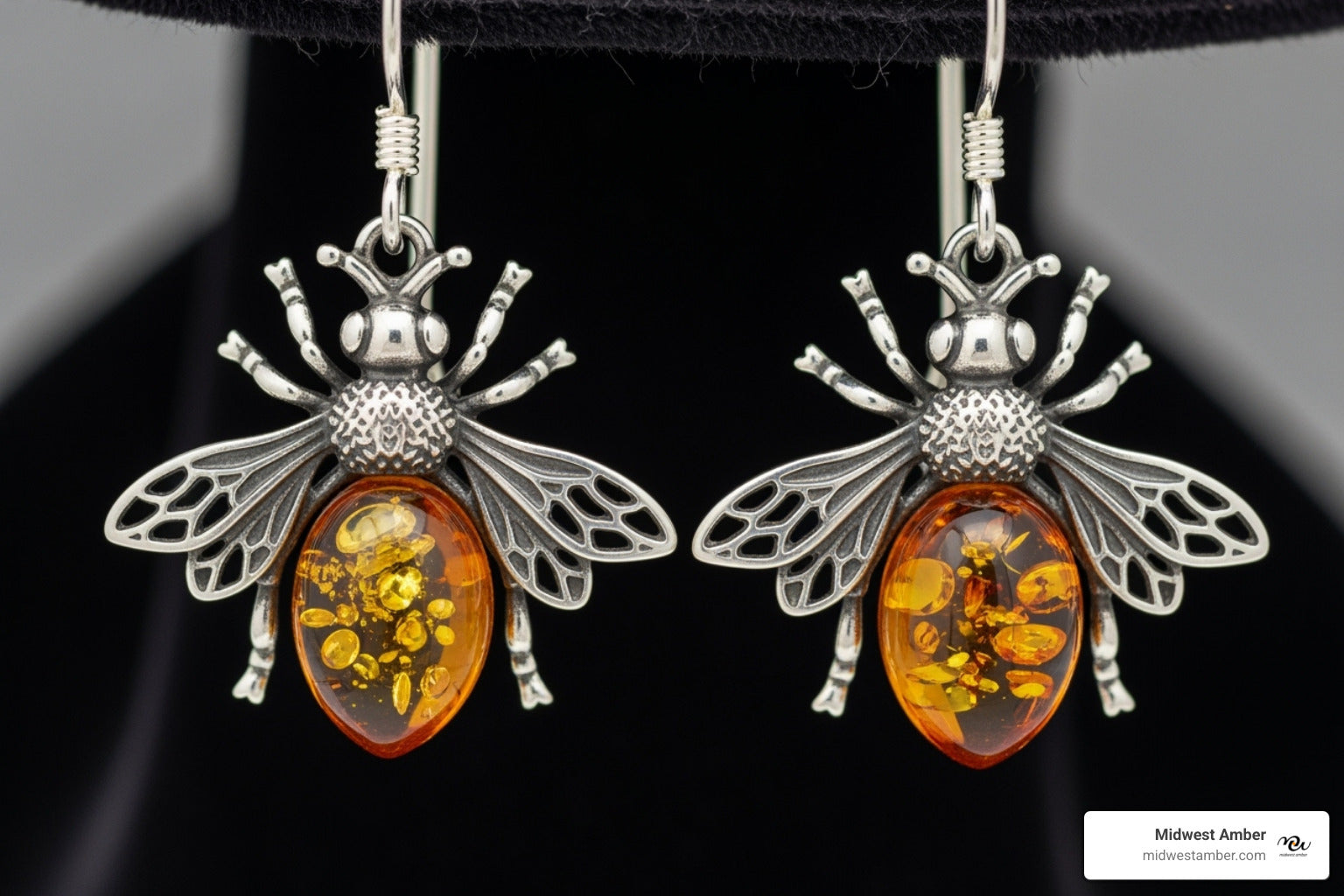
Amber's lightness makes it ideal for both dangle and stud earrings. Dangle styles catch the light, while studs add a subtle touch of warmth to any look without feeling heavy.
Bracelets made from amber beads or cabochons bring that same gentle warmth to the wrist, working well with both casual and formal attire.
Rings require thoughtful design due to amber's softness. The best styles feature protective settings, like bezels, to keep the stone safe from bumps and scratches.
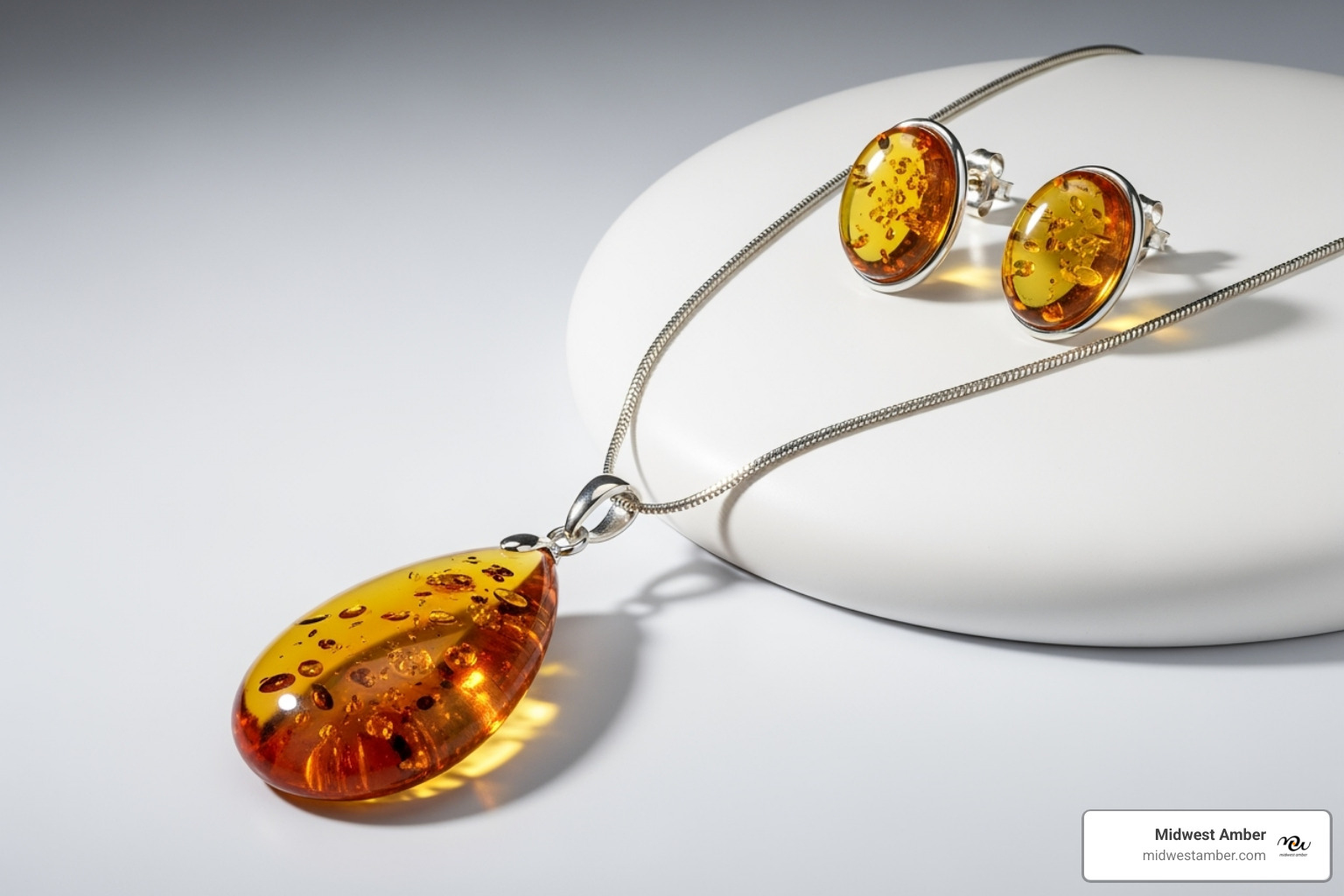
While most amber is polished, rare faceted pieces and intricate carvings showcase the incredible artistry possible with this ancient material. Because no two pieces are exactly alike, your Amber Jewelry is as unique as you are, connecting you to millions of years of natural history.
Frequently Asked Questions about Amber
After more than 20 years at Midwest Amber, I've answered many questions about this ancient treasure. Here are some of the most common ones.
Is Baltic amber better than other types?
There is no single "best" type of amber; it depends on personal preference. Baltic amber is the most common and is prized for its history, classic colors, and high succinic acid content. However, Dominican amber is valued for its exceptional clarity and rare blue fluorescence, while Mexican amber offers stunning reds and yellows. The "better" choice is the one that speaks to you.
Can amber jewelry get wet?
A little water from cleaning is fine, but you should remove your amber jewelry before showering or swimming. Chemicals like chlorine, as well as soaps and shampoos, can dull amber's surface over time. Hot water from showers or hot tubs can also stress the material. A quick rinse won't cause harm, but avoiding prolonged exposure to water and chemicals will keep your jewelry glowing for years.
Why does my amber have cracks or spangles inside?
Those sparkly, disc-like patterns are called "star spangles" or "sun spangles." While some tiny stress fractures can occur naturally over millions of years, most prominent spangles are created by gently heating clear amber in oil. This process creates beautiful, shimmering fractures that catch the light.
While these spangles add a lovely visual effect to amber jewelry, they are different from natural inclusions like insects or plants. From a collector's standpoint, prehistoric inclusions are generally more valuable because they are authentic windows into ancient ecosystems. However, many people love the magical, glittering quality that spangles provide.
Conclusion
Amber jewelry is more than a gemstone; it's nature's time capsule, preserving moments from ancient forests that existed 30 to 60 million years ago. When you wear amber, you carry a piece of Earth's deep history.
Its natural warmth, lightweight feel, and organic origins create jewelry that feels alive and connected to the natural world. From ancient trade routes to modern collections, amber's appeal is timeless. The fact that no two pieces are identical means your amber jewelry is as unique as you are.
For those ready to add this treasure to their collection, choosing authentic, ethically sourced pieces is crucial. At Midwest Amber, we have over 20 years of experience providing genuine Baltic amber with certified authenticity. Our relationships with trusted sources in Poland and Lithuania ensure our amber jewelry is sourced responsibly, respecting both the environment and artisan communities.
Amber jewelry represents the perfect marriage of ancient wonder and timeless beauty. It's an organic gem that connects us to our planet's past while adding natural elegance to our present. Learn more about what makes amber special and find a prehistoric treasure to become part of your story.

Leave a comment
This site is protected by hCaptcha and the hCaptcha Privacy Policy and Terms of Service apply.