


Why Natural Amber Gemstone Captivates Collectors Worldwide
Natural amber gemstone stands apart from traditional minerals. It is nature's own time capsule—a fossilized tree resin that has preserved ancient life for millions of years. Here's what makes amber so special:
Key Properties of Natural Amber:
- Origin: Fossilized pine tree resin, 40-60 million years old
- Hardness: 2-2.5 on Mohs scale (softer than most gemstones)
- Weight: Surprisingly lightweight and warm to the touch
- Colors: Honey, cognac, cherry red, green, blue, white, and black
- Unique Features: Often contains prehistoric insects, plants, or air bubbles
- Electrostatic: Generates a static charge when rubbed (the ancient Greeks called it "elektron")
Unlike diamonds or sapphires, amber began as sticky resin from ancient pine trees in Scandinavian forests. Over millions of years, this resin hardened and fossilized, sometimes trapping insects or plant matter and creating what researchers call "windows to the past."
The most prized amber comes from the Baltic Sea region, where 70-90 percent of today's amber originates. Baltic amber contains high levels of succinic acid, giving it unique properties that have fascinated humans since Neolithic times.
I'm Gabriel Ciupek, President and owner of Midwest Amber, Inc. I've spent years sourcing and crafting authentic Baltic amber jewelry, ensuring each natural amber gemstone meets the highest standards. My experience confirms that no two amber pieces are alike, making each one a unique treasure from an ancient forest.
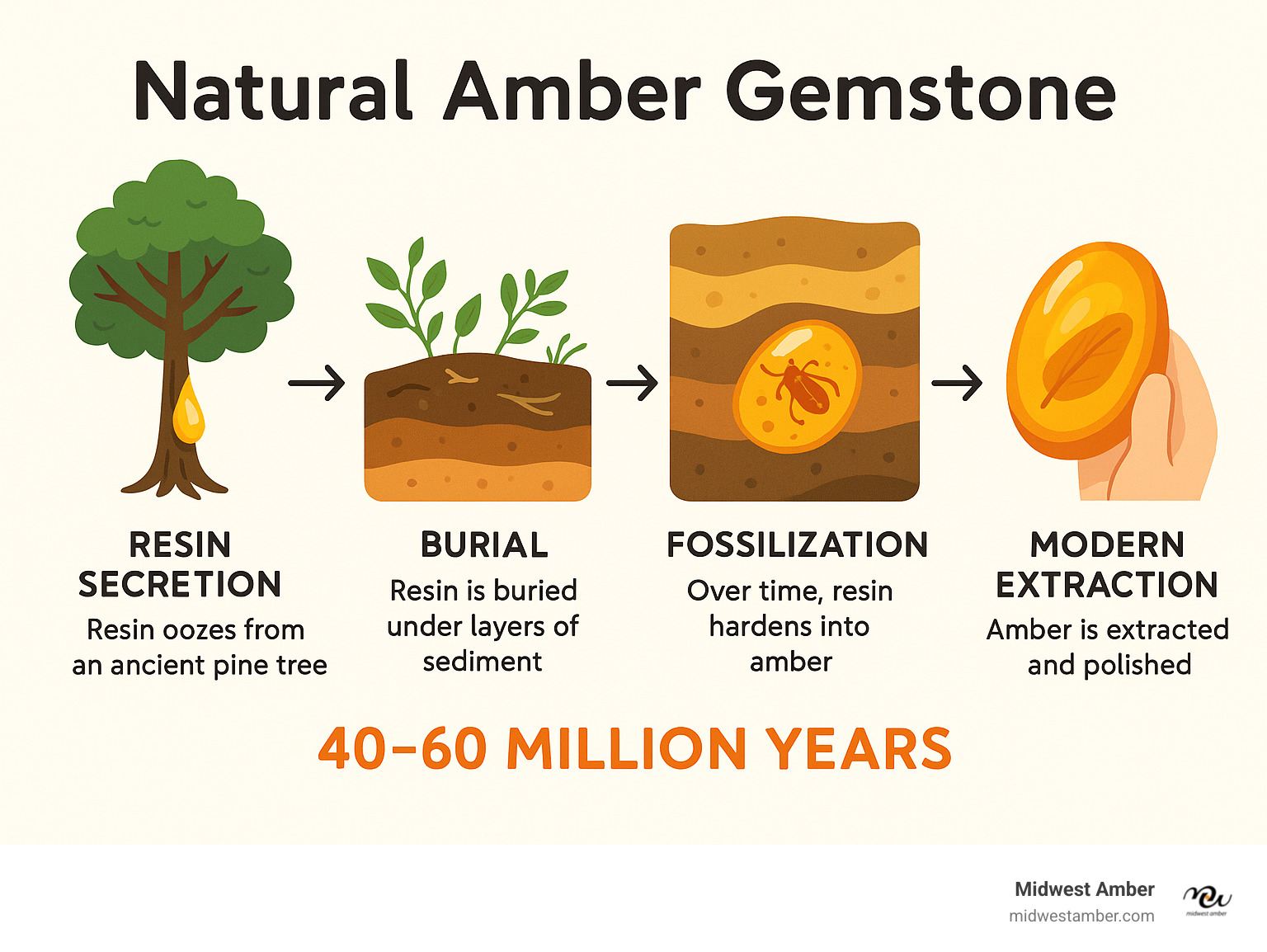
Natural amber gemstone definitions:
What is Natural Amber and How is it Formed?
Millions of years ago, ancient pine forests in Scandinavia oozed sticky resin to heal their wounds. Little did they know they were creating one of nature's most fascinating treasures.
Natural amber gemstone begins as this organic tree resin. Unlike minerals formed deep underground, amber is a piece of an ancient forest, preserved for millions of years. The change from resin to gemstone happens through polymerization. During the Eocene Epoch, 40 to 60 million years ago, layers of sediment buried this resin. Over millennia, heat, pressure, and time hardened it into the durable amorphous structure we see today. Unlike crystals with rigid, repeating patterns, amber has a more free-flowing internal structure.
What makes amber special is how it feels. It is remarkably lightweight and warm to the touch. Its low density is so pronounced that it floats in salt water! This property fascinated the ancient Greeks, who also finded that rubbing amber with a cloth creates an electrostatic charge. They named amber "elektron," the origin of our word "electricity."
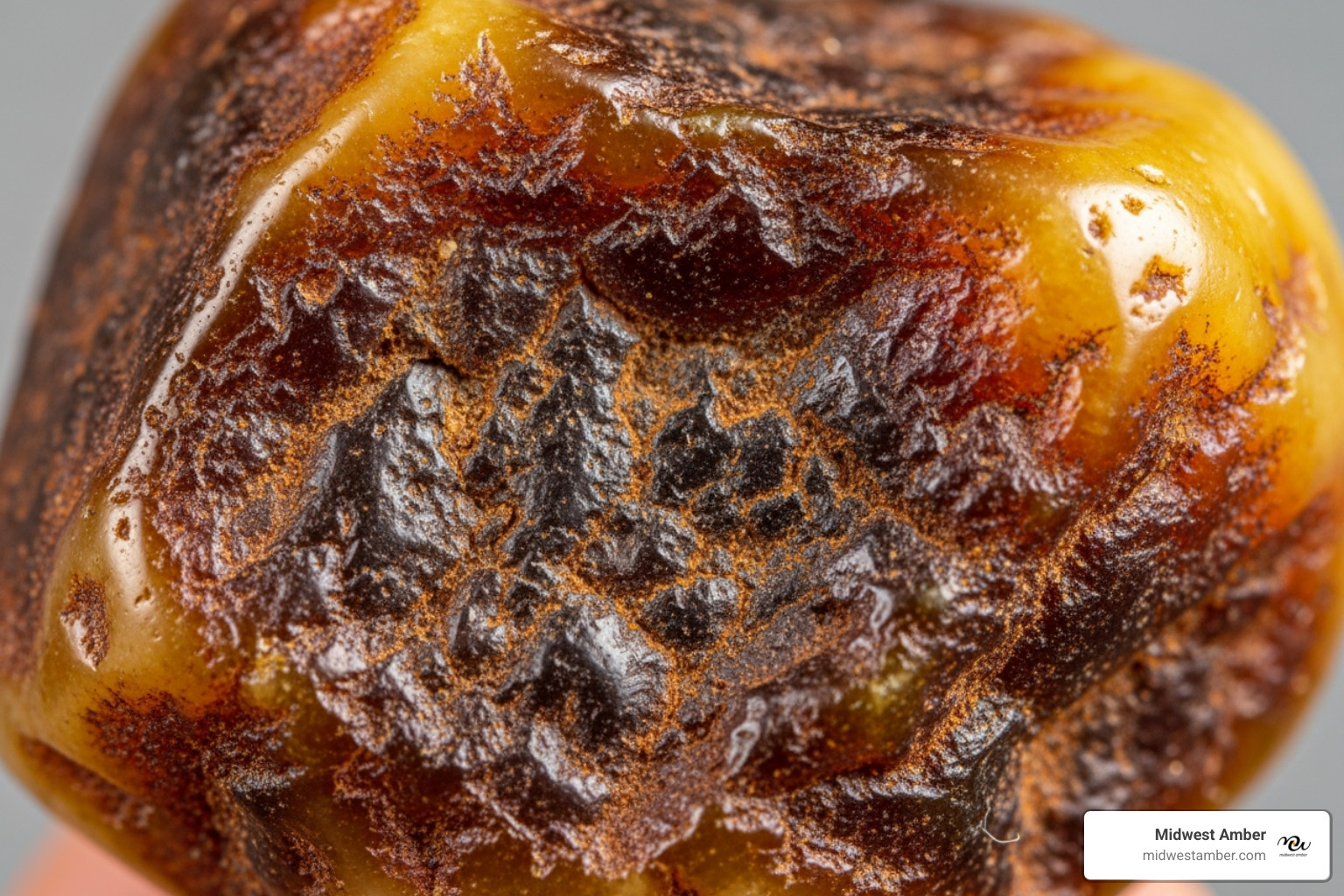
The Unique Properties of Amber
Amber's organic origin gives it properties you won't find in traditional gems.
On the Mohs hardness scale, amber ranks between 2 and 2.5, making it softer than diamonds (10) or sapphires (9). This softness makes amber comfortable to wear, without the cold, hard sensation of some gemstones.
Its low density creates its signature buoyancy, a classic test to identify genuine amber.
When gently warmed, amber releases a subtle pine-like scent, connecting you directly to the ancient forests from which it came.
From Ancient Forests to Modern Gems
The journey from Scandinavian forests to modern jewelry is remarkable. After the resin hardened, geological forces moved this fossilized treasure. Much of the world's finest amber found its way to the Baltic Sea region, where storms still wash pieces ashore today.
The richest mining locations for Baltic amber include the coastal regions of Poland, Lithuania, and Kaliningrad, Russia. These deposits, formed 40 to 60 million years ago, produce the world's most prized amber.
Baltic amber is special because it contains higher levels of succinic acid than amber from other regions, like the Dominican Republic, Myanmar, or Mexico. This makes it the gold standard for amber jewelry. At Midwest Amber, we work directly with trusted sources in Poland and Lithuania, ensuring every piece is authentic. To learn more, explore our guide Beyond the Shine: Exploring the Essence of Natural Baltic Amber.
The Many Faces of Amber: Types, Colors, and Inclusions
While many picture the warm honey color, the beauty of natural amber gemstone spans a wide palette. The world of amber includes several distinct types, each with its own personality. Baltic Amber is the most cherished, but other notable types include Dominican Amber, known for its clarity; Burmese Amber (Burmite); and Mexican Amber.
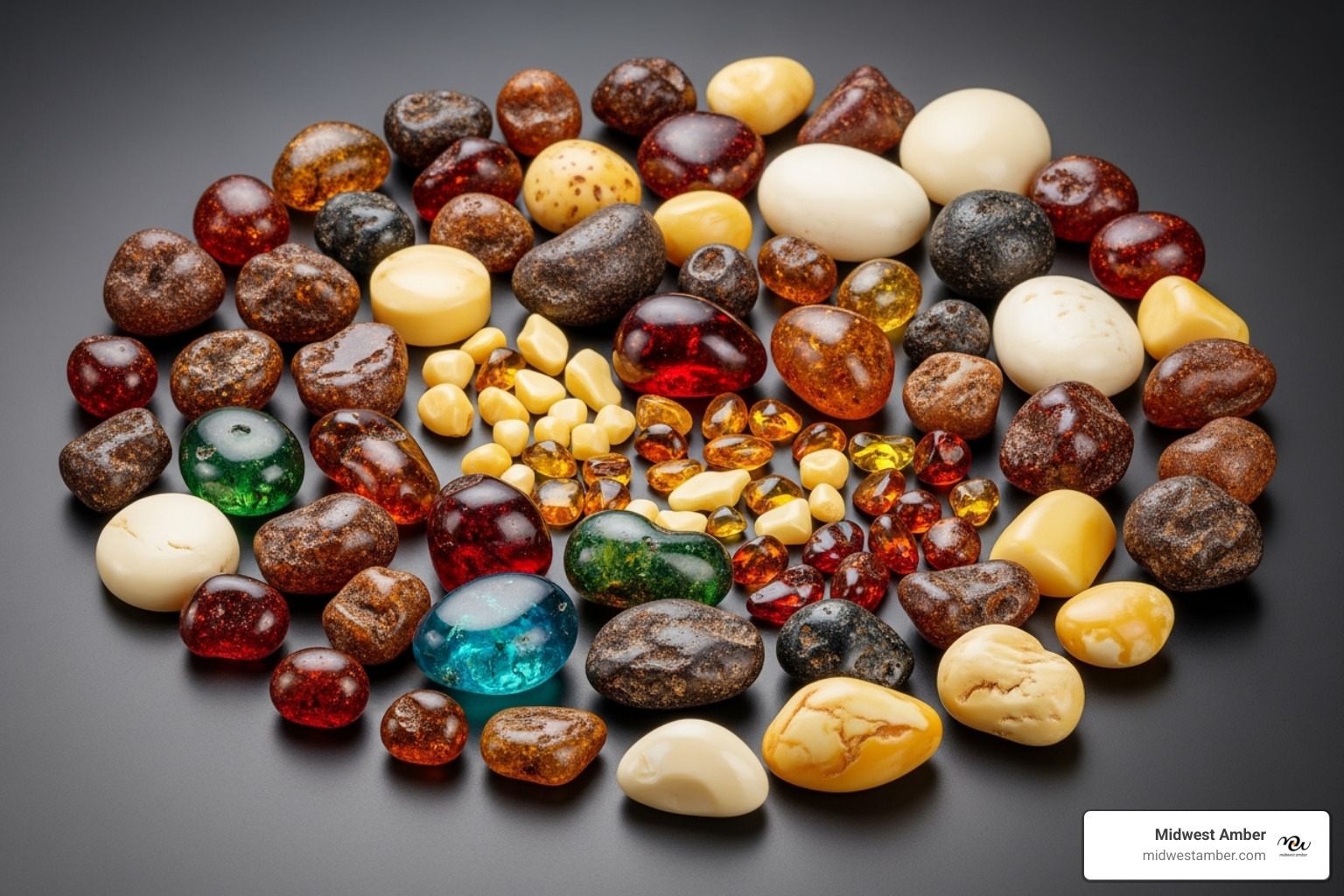
A Spectrum of Colors
The color range in natural amber gemstone is amazing. The classic warm tones—beautiful honey, rich cognac, and creamy egg yolk—are the most common, making up about 70% of all amber.
However, rare colors are what excite collectors. Cherry red amber, found in only about 0.5% of amber, has a deep, wine-like hue. Green amber is also uncommon, appearing in about 2% of specimens with soft, mystical tones. The rarest is blue amber, primarily from the Dominican Republic, which glows with an otherworldly blue fluorescence in sunlight. White amber offers a creamy, opaque beauty, while black amber is typically dark brown or red amber filled with ancient plant debris.
To explore this color spectrum, our guide From Raw to Red: A Shopper's Guide to Every Type of Amber Jewelry covers everything you need to know.
Nature's Time Capsules: Amber Inclusions
The inclusions in natural amber gemstone are where it becomes truly magical. When the ancient resin was sticky, it trapped whatever wandered into it, giving us a peek into prehistoric worlds.
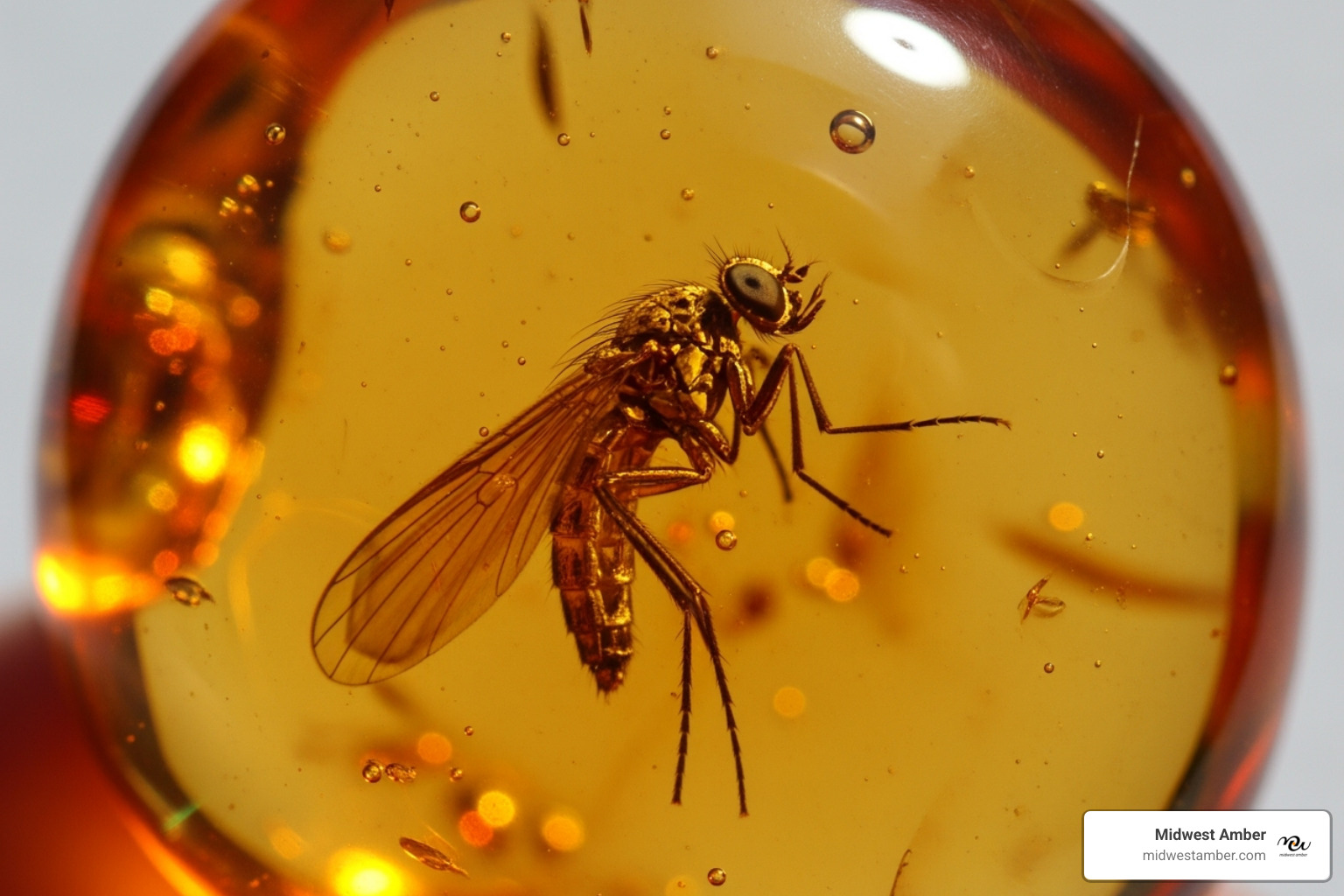
Prehistoric insects are the stars. Tiny mosquitoes, delicate spiders, and busy ants are preserved in their amber tombs. Scientists have identified over 1,000 extinct insect species from amber specimens alone.
Plant matter tells another part of the story, with delicate flowers, leaves, and seeds preserved in perfect detail. Even pollen grains survive, giving clues about the ancient world.
Air bubbles can create a cloudy or dreamy quality, while sun spangles—disc-shaped internal fractures—catch the light and create tiny rainbows.
The presence and quality of these inclusions can turn a simple piece of amber into a priceless scientific treasure, making each piece completely unique. If you're fascinated by these ancient time capsules, don't miss our guide: Jurassic Gems: Where to Find Mosquito in Amber Necklaces.
The Value and Significance of the Natural Amber Gemstone
The natural amber gemstone has captured human imagination for over 10,000 years, weaving itself into civilizations across the globe.
Historical and Cultural Significance
Amber's story began in the Neolithic period, when it was crafted into talismans for protection and healing. The ancient Romans were obsessed with it, creating dishware and using it as incense. During Emperor Nero's reign, a small amber figurine could cost more than a healthy slave.
The Amber Road, an ancient trade network, connected the Baltic Sea to the Mediterranean, spreading not just amber but also culture and ideas across Europe. Throughout history, amber was used in medicinal practices, from purifying air to improving eyesight. The most spectacular example of its cultural importance is The celebrated Amber Room, an 18th-century masterpiece made of amber panels and gold leaf. Known as the "Eighth Wonder of the World," it vanished during WWII, though a stunning reconstruction now exists.
What Determines Amber's Value?
The value of a natural amber gemstone is determined by the 4 Cs of Amber: Color, Clarity, Cut, and Carat Weight.
- Color: While honey and cognac tones are popular, rarer colors like cherry red (0.5% of finds), green (2%), and the fluorescent blue amber command higher prices.
- Clarity: Transparent amber is typically favored, though opaque "butterscotch" and "egg yolk" varieties have a dedicated following.
- Cut: Due to its softness (2-2.5 on the Mohs scale), amber is usually shaped into smooth cabochons, free-form pieces, or beads rather than faceted. Its lightweight nature makes even large pieces comfortable to wear.
- Carat Weight: As with other gems, larger, high-quality pieces generally cost more.
Amber has a fifth, crucial value factor: inclusions. A perfectly preserved prehistoric insect or flower can transform a gemstone into a museum-worthy specimen. Pieces with rare inclusions like lizards or scorpions can reach extraordinary values, sometimes $15-$40 per carat or more for exceptional items.
Modern Uses of the natural amber gemstone
Today, natural amber gemstone blends ancient tradition with contemporary style. Jewelry remains its primary use, as its warmth, variety of colors, and light weight make it perfect for everything from delicate earrings to bold statement pieces. Our collections of amber stone necklaces, beautiful amber bracelets, and unique amber rings showcase its versatility.
Beyond jewelry, amber is used for decorative carvings, figurines, and inlays in furniture. The perfume industry also references amber's warm, resinous scent profile, keeping its aromatic legacy alive.
Identifying and Caring for Your Amber Treasures
With so many imitations on the market, knowing how to spot genuine natural amber gemstone is essential. While a lab certificate is best for expensive pieces, these simple tests can help you identify fakes.
How to Identify Genuine Amber
- Visual Inspection: Real amber is rarely "perfect." Look for tiny irregularities, natural flow lines, and small internal cracks. Inclusions should look ancient, not pristine.
- Saltwater Test: Genuine amber has a low density and floats in a solution of salt and water. Most plastic imitations will sink.
- Hot Needle Test: Touch a heated needle to an inconspicuous spot. Real amber releases a distinct pine-like, resinous scent. Plastic smells like burning plastic, and copal (a younger resin) has a sweeter, more chemical smell.
- Acetone Test: A drop of acetone on copal will make the surface sticky. Genuine amber shows little to no reaction.
- Static Electricity: When rubbed with a wool cloth, genuine amber generates enough static to pick up small pieces of paper.
- UV Light: Many amber pieces fluoresce blue, green, or yellow under UV light, though not all do.
| Test | Genuine Amber | Copal | Plastic/Glass |
|---|---|---|---|
| Saltwater | Floats (Specific Gravity 1.08) | Floats (similar to amber) | Sinks (denser materials) |
| Hot Needle | Pleasant pine-like, resinous scent | Chemical or sweet resin smell, melts easily | Acrid chemical or plastic smell |
| Acetone | Little to no surface change | Surface becomes sticky or dissolves slightly | No change (glass) or may soften (some plastics) |
| Visual | Natural irregularities, ancient inclusions, flow lines | Often too clear, modern-looking inclusions | Uniform appearance, mold lines, no natural inclusions |
| UV Light | Often fluoresces blue, green, or yellow | May fluoresce milky white or light blue | No fluorescence or unnatural colors |
Also, watch out for "ambroid" or reconstructed amber, which consists of real amber pieces fused together. It is less valuable than solid natural amber.
For more details, see our guide: Real or Resin? How to Tell if Your Amber Jewelry is Genuine. For absolute certainty, learn about The Definitive Guide to Certified Baltic Amber.
Caring for Your natural amber gemstone
Amber is ancient but needs gentle care. With a Mohs hardness of 2-2.5, it's softer than most gemstones.
- Cleaning: Use a soft, damp cloth with lukewarm water. If needed, use a very mild soap. Never use ultrasonic or steam cleaners.
- Avoid Chemicals: Apply perfume, hairspray, and lotions before putting on your amber jewelry, as chemicals can dull its polish. Keep it away from household cleaners and acids.
- Avoid Heat: Keep your natural amber gemstone away from prolonged direct sunlight and heat sources, which can cause darkening or cracking.
- Protective Settings: For rings, choose settings that shield the amber from impacts, and avoid wearing them during heavy activities.
- Storage: Store amber separately in a soft pouch or fabric-lined box to prevent scratches from harder stones.
Following these simple steps will keep your amber beautiful for generations.
Frequently Asked Questions about Amber
As an amber specialist, I love answering the questions that come up most often about natural amber gemstone.
What are the healing properties of amber?
For thousands of years, natural amber gemstone, especially Baltic amber, has been treasured for supposed healing powers. Many believe it carries a soothing energy that can absorb negative feelings and physical discomfort.
The key ingredient is succinic acid. Baltic amber contains 3-8% of this compound. When warmed by body heat, the amber is thought to release tiny amounts of oil containing succinic acid, which some believe acts as a natural anti-inflammatory. This is the basis for the popularity of amber teething necklaces.
While the scientific community debates these claims, the tradition runs deep. Spiritually, amber is considered a grounding stone that transforms negative energy into positive. It's linked to the Solar Plexus Chakra and is the traditional stone for Leos. Learn more about how to Find the Magic of Amber Crystal.
Is Baltic amber worth more than other types?
Yes, Baltic amber typically commands higher prices. There are several reasons for this:
- Age: At 40 to 60 million years old, Baltic amber is significantly older and more durable than many other varieties.
- Succinic Acid: It contains the highest levels of succinic acid, making it the top choice for those seeking its wellness benefits.
- Historical Value: The famous Amber Road established a strong market preference and cultural significance for Baltic amber thousands of years ago.
While Dominican amber is prized for its clarity and rare blue variety, Baltic amber's combination of age, quality, and succinic acid content generally gives it a higher market value.
Can amber change color over time?
Absolutely. Natural amber gemstone is a living material that evolves. Through a natural process called oxidation, exposure to air and light will gradually darken the amber's surface. A honey-colored piece might develop richer, deeper tones over time. Many enthusiasts prefer this oxidized look, as it adds character and an antique appeal. This darkening is a good sign of genuine amber.
Conclusion
From ancient Scandinavian forests to modern jewelry, natural amber gemstone tells a story spanning millions of years. It's not just a beautiful stone; it's a piece of history you can hold. When you wear amber, you carry fossilized resin that captured moments in time—complete with air bubbles and prehistoric insects from a world long past.
Amber is unique in the gemstone world: it's lightweight, warm to the touch, and organic. Its ability to generate static electricity, float in saltwater, and release a pine scent when warmed has captivated humans for over 10,000 years. From common honey hues to rare cherry reds, each piece is a one-of-a-kind artifact.
At Midwest Amber, we have spent over 20 years sourcing and sharing this incredible material. Every piece of our 100% natural, ethically sourced Baltic amber is certified for authenticity and carries a special connection to our planet's ancient past.
Whether you are drawn to its stunning beauty, rich history, or traditional healing properties, you are joining a tradition that stretches back to our earliest ancestors.
Ready to find your own piece of ancient wonder? Explore our ultimate collection of genuine Baltic Amber pieces and find the timeless elegance that only natural amber gemstone can provide.


Leave a comment
This site is protected by hCaptcha and the hCaptcha Privacy Policy and Terms of Service apply.