

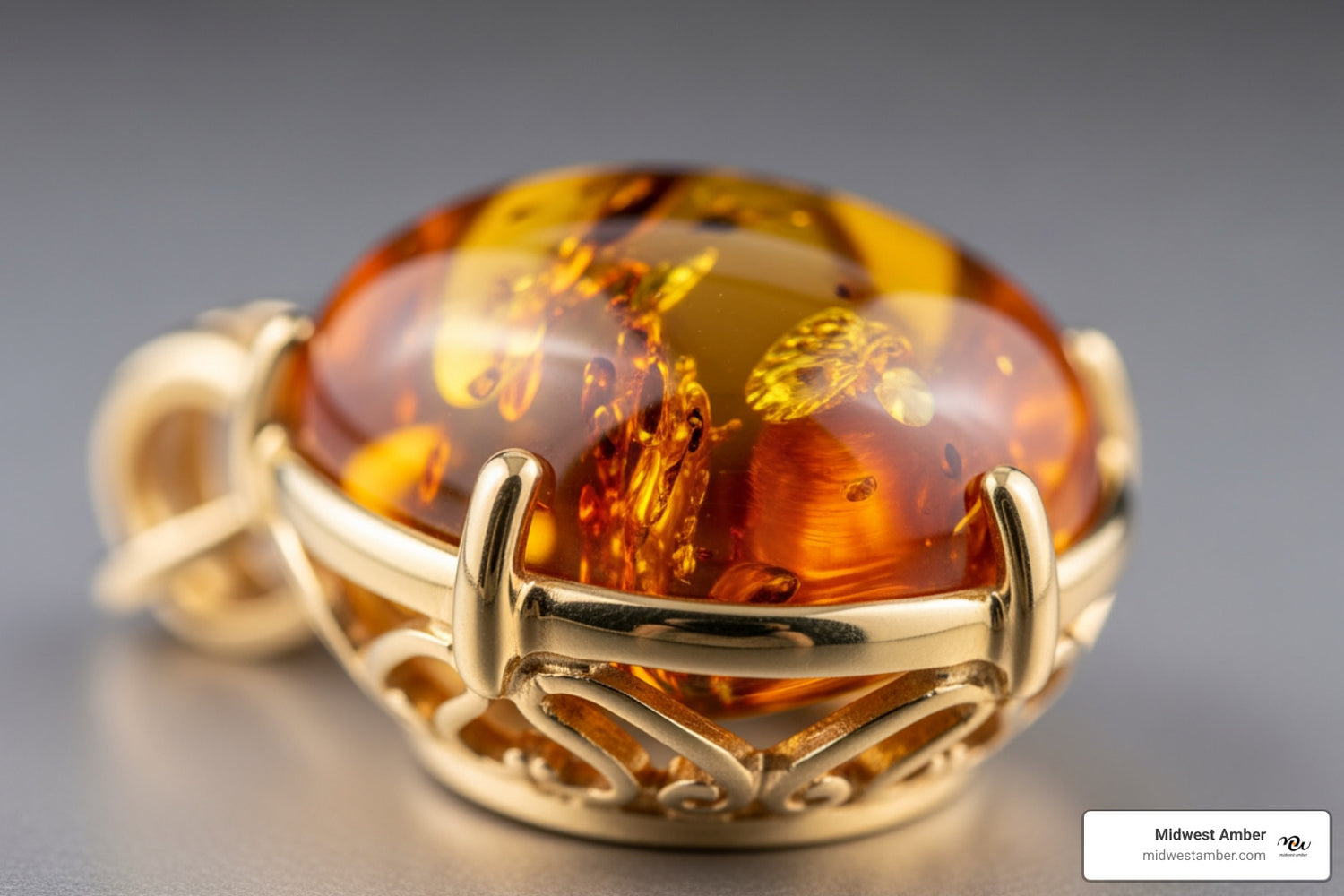
Why Amber in Gold Captures Hearts and History
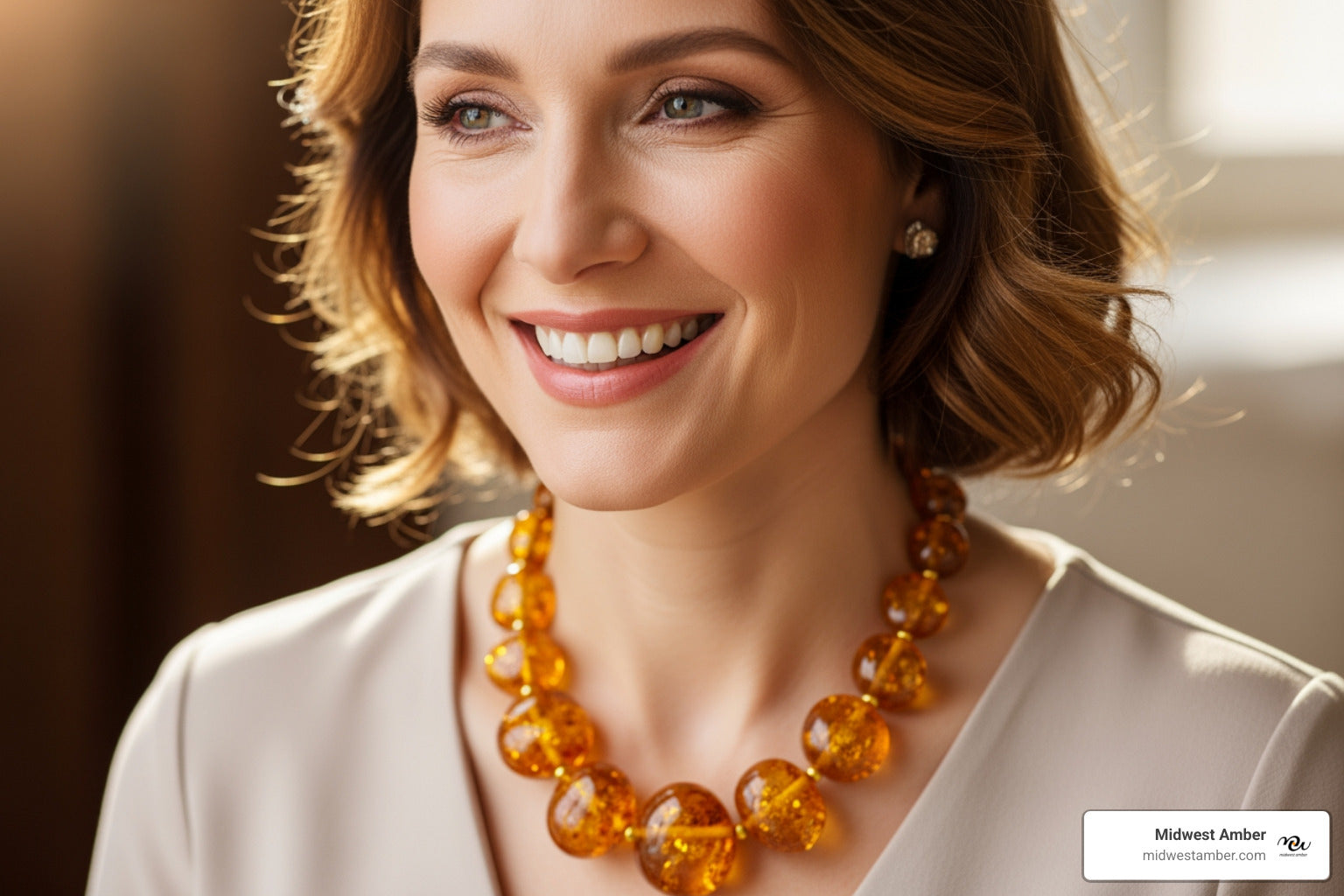
Amber in gold is more than just a beautiful jewelry combination—it's the marriage of ancient organic treasure with timeless metallic elegance. This pairing brings together the warm, golden glow of fossilized tree resin with the enduring luster of gold, creating pieces that feel both natural and luxurious.
Quick Answer: What is Amber in Gold?
- Amber: Fossilized tree resin, 40-120 million years old, primarily from the Baltic region.
- Gold Settings: Typically 14k-18k gold, gold plated, or gold vermeil on sterling silver.
- The Combination: Warm amber gemstones set in gold create jewelry that captures "earth's warmth meets gold luxury."
- Why It's Special: Each piece is unique, lightweight, and connects ancient natural history with modern craftsmanship.
The ancient world called amber the "gold of the North," prizing it as much as precious metals. For thousands of years, this fossilized resin traveled from the Baltic shores to royal graves in Greece. When you hold a piece of amber jewelry today, you're touching the same material that Bronze Age traders carried across Europe, now transformed into a polished gem cradled in gold.
What makes this combination so captivating? The golden hues of both materials complement each other naturally, while the metal's strength protects the softer amber stone (which rates only 2-2.5 on the Mohs hardness scale).
I'm Gabriel Ciupek, and as President and owner of Midwest Amber, Inc., I've spent years sourcing genuine Baltic amber and working with artisans to create Amber in gold pieces that honor both the material's ancient origins and modern design sensibilities. Each handcrafted piece we offer tells a story millions of years in the making.
The Sunstone's Legacy: A Journey Through Amber's History
From the moment it was finded, amber has captivated humanity. Often referred to as "sunstone" due to its warm, golden glow, this organic gem has a rich history interwoven with culture, myth, and trade. For centuries, especially in Northern Europe, amber was considered as precious as gold, earning it the moniker "the gold of the North."
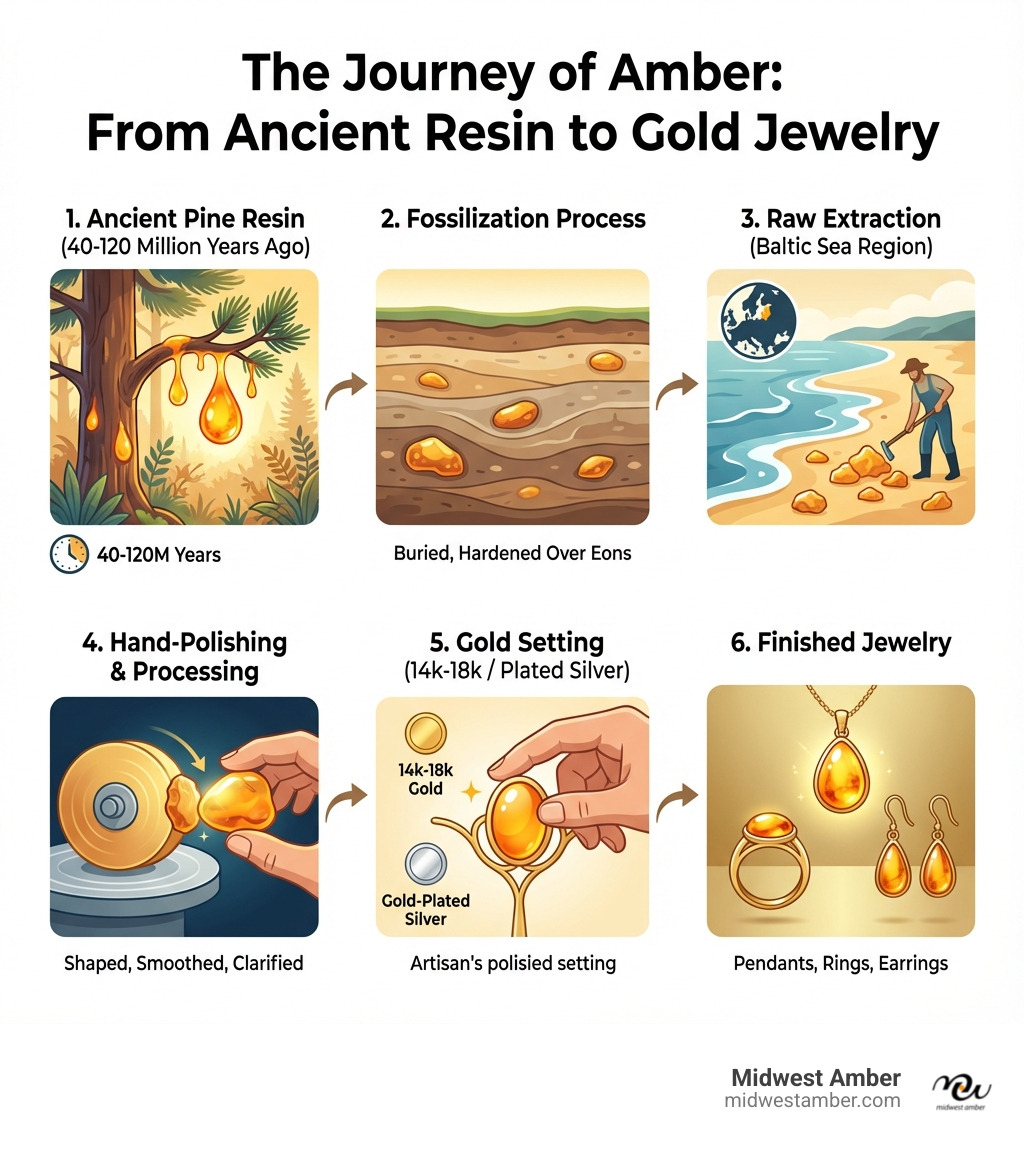
Its journey began millions of years ago as tree resin, slowly hardening and changing over eons. By the Bronze Age, around 1600 BCE, amber from the Baltic region was already a highly sought-after commodity, traveling extensive trade routes across Europe. Finds of amber jewelry in royal graves at Mycenae and Pylos in ancient Greece attest to its value and status, signifying wealth and the highest social standing. Imagine, a piece of this ancient resin, worn by royalty, now gracing a modern collection!
Culturally, amber has always held deep symbolic meaning. It represents a profound connection between light, nature, and tradition. Its brilliant, often fiery colors evoked images of the sun and fire, linking it to life, marriage, and even death in ancient belief systems. The choice of amber for jewelry or art often indicated a divine or heroic subject, reflecting its perceived connection to the luminosity of gods and the brilliance of heroes. Perhaps the most extravagant example of amber's historical significance is the legendary Amber Room, an 18th-century chamber decorated with panels made from amber and backed with gold leaf, once considered the "Eighth Wonder of The World."
From Ancient Resin to Polished Gem
The story of amber begins not in a mine, but in ancient forests. We're talking about trees that existed 40 to 120 million years ago, long before dinosaurs roamed the Earth. Amber is essentially fossilized tree resin, a botanical material filled with hydrocarbons. Over millions of years, this soft, sticky resin undergoes a chemical change under pressure and heat, hardening into the beautiful gem we know today. Technically, it's not a mineral like diamonds or sapphires, but an organic gemstone—a natural plastic, if you will!

The vast majority of the world's amber, including the high-quality material we use, originates from the Baltic region of Europe, primarily Poland and Lithuania. Our amber is 100% natural and ethically sourced from these areas, ensuring both its authenticity and sustainability. It's often found by waves ripping fragments from the seafloor and casting them onto the shoreline, a natural treasure hunt that has continued for millennia.
Once sourced, the raw amber undergoes a meticulous process to prepare it for jewelry making. Each piece is carefully hand-polished, a process that brings out its inherent warmth and luster. This hand-polishing is essential to reveal the gem's true beauty and prepare it for its eventual setting in gold. We believe in honoring the natural origin of each piece, ensuring that its journey from ancient resin to polished gem is treated with the utmost care and respect.
The Mystique and Meaning of Amber
Beyond its historical value and natural beauty, amber has long been imbued with mystical properties. Across various cultures, it has been considered a "magic stone" believed to ward off evil, bring creativity, luck, and peace to its wearer. This belief dates back to the Neolithic era, with amber used in amulets and trinkets for healing and protection.
In ancient and modern Chinese medicine, amber is thought to possess a wealth of healing properties, treating ailments from epilepsy to blood disorders. Some even believe it can be ground into a powder and ingested for its medicinal benefits. While we focus on the aesthetic and historical value of amber, its reputation as a stone that radiates "powerful medicine" and connects us to ancient energies adds another layer of intrigue.
We often hear of amber's connection to well-being, sometimes attributed to succinic acid, one of its organic compounds. More broadly, amber resonates with the solar plexus and sacral chakra systems, believed to improve intuition, emotional expression, and personal growth. Wearing Amber in gold jewelry, for us, is about more than just adornment; it's about carrying a piece of ancient Earth's life-force vitality, fostering a connection to nature and a sense of inner peace. It's a constant reminder of the world's enduring beauty and the quiet strength found in natural materials.
The Perfect Union: Properties of Amber and Gold
The combination of amber and gold is a match made in jewelry heaven. The warmth of amber, with its spectrum of golden hues, finds its perfect complement in the enduring luster of gold. This union creates a sense of luxury and sophistication that is both timeless and deeply appealing.
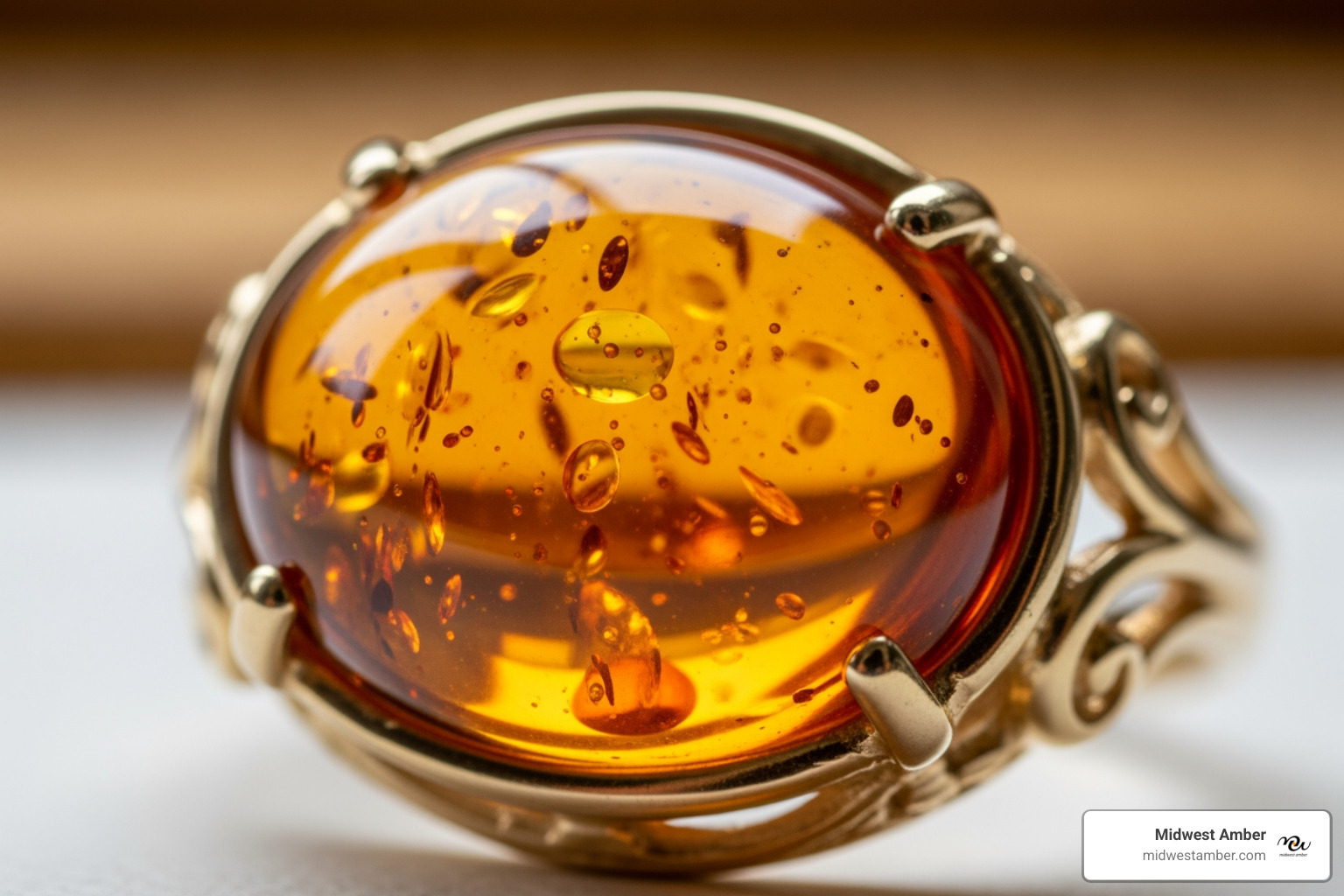
Imagine the rich, earthy tones of amber contrasting with the bright gleam of gold – it's a visual symphony. The gold acts as a radiant frame, enhancing amber's natural glow and drawing the eye to its unique characteristics. It’s truly where "earth’s warmth meets gold luxury."
Unique Properties of Amber
Amber is truly one-of-a-kind among gemstones. Unlike traditional minerals, it’s remarkably lightweight. This low density means even large pieces of amber feel comfortable to wear, allowing for bold and substantial jewelry designs without excessive weight. It's also warm to the touch, a unique characteristic that sets it apart from cool, hard stones.
One of amber's most fascinating features is its natural inclusions. These can be anything from tiny gas bubbles that create its characteristic cloudy appearance, to perfectly preserved insect fossils and plant matter from millions of years ago. These inclusions offer a tangible link to prehistoric life, making each piece a miniature time capsule. While clear amber is generally more valuable, pieces with easily seen or complete insect or plant specimens can fetch significantly higher prices, offering a remarkable window into the past.
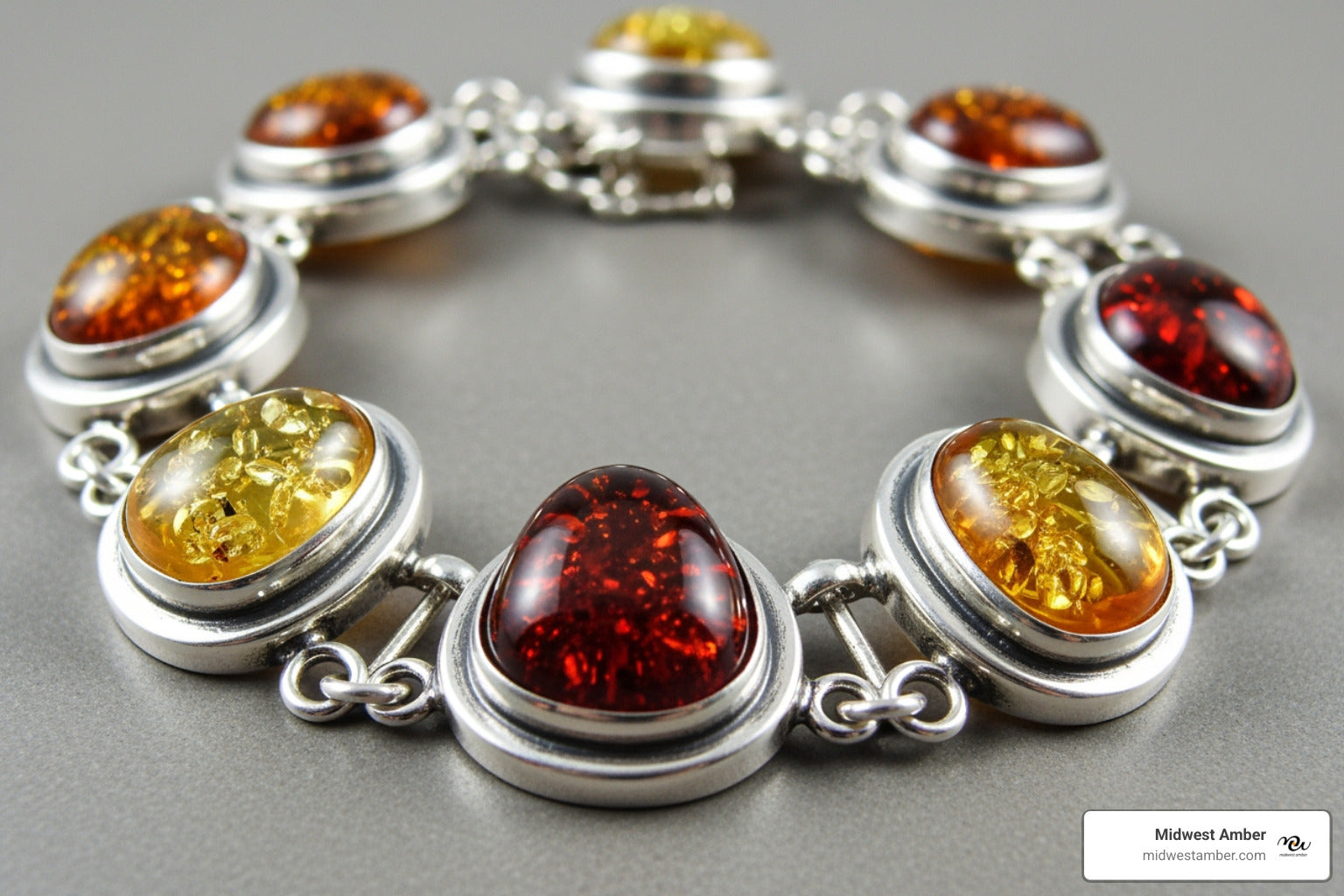
Amber boasts a stunning array of colors, though it's most famous for its warm, golden shades. Our Baltic amber, in particular, showcases a magnificent spectrum:
- Yellow/Honey: The most common and recognizable, often characterized by thousands of tiny gas bubbles that refract light.
- Red: Rare and highly prized, formed when amber undergoes a long oxidation process (50-70 years) from prolonged exposure to air and sunlight.
- Green: Less common, often formed when resin reacts with chlorophyll from plants.
- Blue: Extremely rare and valuable, typically formed when resin interacts with pyrites (FeS2) in the soil.
- White: Accounting for about two percent of the world's supply, formed by intensive evaporation creating a foamy texture with micro-bubbles.
- Black: Around fifteen percent of amber is black, formed when resin mixes thoroughly with bark and leaf litter.
These variations, sometimes even within a single piece, make each amber gem a unique work of art.
Understanding the Gold in Your Jewelry
When we talk about Amber in gold jewelry, it’s important to understand the different types of gold used in settings. Gold isn't just gold; its purity and how it's applied significantly impact the look, durability, and value of your piece.
Here’s a breakdown of the common types we use or that you'll encounter in amber jewelry:
| Type of Gold | Durability | Cost | Composition to the Gold Platin and Gold Vermeil and Solid Gold (14k/18k) based on durability, cost, and composition; 14k gold plated; 18k gold; 925 sterling silver base; Karat purity; Enduring elegance. | Type of Gold | Durability TBD ```
Why Amber in Gold Captures Hearts and History
Amber in gold is more than just a beautiful jewelry combination—it's the marriage of ancient organic treasure with timeless metallic elegance. This pairing brings together the warm, golden glow of fossilized tree resin (amber) with the enduring luster of gold settings, creating pieces that feel both natural and luxurious.
Quick Answer: What is Amber in Gold?
- Amber: Fossilized tree resin, 40-120 million years old, primarily from Baltic region
- Gold Settings: Typically 14k-18k gold, gold plated, or gold vermeil on sterling silver
- The Combination: Warm amber gemstones set in gold create jewelry that captures "earth's warmth meets gold luxury"
- Why It's Special: Each piece is unique, lightweight, and connects ancient natural history with modern craftsmanship
The ancient world called amber the "gold of the North" for good reason. For thousands of years, this fossilized resin traveled from the Baltic shores to royal graves in Greece, prized as much as precious metals. When you hold a piece of amber jewelry today, you're touching the same material that Bronze Age traders carried across Europe—except now it's been transformed into a polished gem and cradled in gold.
What makes this combination so captivating? Amber is the only gemstone that's both shining and fragrant, and when paired with gold, it creates a visual harmony that's hard to match. The golden hues of both materials complement each other naturally, while the metal's strength protects the softer amber stone (which rates only 2-2.5 on the Mohs hardness scale).
I'm Gabriel Ciupek, and as President and owner of Midwest Amber, Inc., I've spent years sourcing genuine Baltic amber and working directly with artisans to create Amber in gold pieces that honor both the material's ancient origins and modern design sensibilities. Each handcrafted piece we offer tells a story millions of years in the making.
The Sunstone's Legacy: A Journey Through Amber's History
From the moment it was found, amber has captivated humanity. Often called the "sunstone" for its warm, golden glow, this organic gem has a rich history. For centuries, it was considered as precious as gold, earning it the moniker "the gold of the North."
Its journey began millions of years ago as tree resin, slowly hardening over eons. This ancient resin, dating back 40 to 120 million years, is a tangible link to a world long past. By the Bronze Age, amber from the Baltic region was a highly sought-after commodity, traveling extensive trade routes across Europe. Finds of amber jewelry in ancient Greek royal graves attest to its value and status.
Culturally, amber represents a connection between light, nature, and tradition. Its brilliant colors evoked images of the sun, linking it to life and vitality. The most extravagant example of its historical significance is the legendary Amber Room, an 18th-century chamber decorated with amber panels and gold leaf, once considered the "Eighth Wonder of The World."
From Ancient Resin to Polished Gem
The story of amber begins in ancient forests. It is the fossilized resin of trees that lived 40 to 120 million years ago. Over millions of years, this soft resin hardened into the beautiful gem we know today. Technically, it's not a mineral like diamonds but an organic gemstone. You can learn more about its fascinating properties on Wikipedia.
The vast majority of the world's amber, including the high-quality material we use, originates from the Baltic region. Our amber is 100% natural and ethically sourced, often found washed ashore after being dislodged from the seafloor by waves.
Once sourced, the raw amber is carefully hand-polished to reveal its inherent warmth and luster. This process prepares the gem for its eventual setting in gold, honoring its natural origin with careful craftsmanship.
The Mystique and Meaning of Amber
Beyond its beauty, amber has long been imbued with mystical properties. It has been considered a "magic stone" believed to bring luck, peace, and protection. This belief dates back to the Neolithic era, with amber used in amulets for healing.
In some traditions, amber is thought to possess healing properties, sometimes attributed to its succinic acid content. It is also associated with the solar plexus and sacral chakras, believed to improve intuition and emotional balance. Wearing Amber in gold jewelry is more than adornment; it's about carrying a piece of ancient Earth's energy, fostering a connection to nature and a sense of inner peace.
The Perfect Union: Properties of Amber and Gold
The combination of amber and gold is a match made in jewelry heaven. The warmth of amber, with its spectrum of golden hues, finds its perfect complement in the enduring luster of gold. This union creates a sense of timeless luxury and sophistication.
The gold acts as a radiant frame, enhancing amber's natural glow and drawing the eye to its unique characteristics. It’s truly where "earth’s warmth meets gold luxury," a phrase that perfectly encapsulates the aesthetic of our Amber in gold collection.
Unique Properties of Amber
Amber is one-of-a-kind among gemstones. It’s remarkably lightweight, making even large pieces comfortable to wear. It's also warm to the touch, a unique characteristic that sets it apart from cool, hard stones.
One of amber's most fascinating features is its natural inclusions. These can be anything from tiny gas bubbles to perfectly preserved insect fossils and plant matter from millions of years ago, making each piece a miniature time capsule. While clear amber is valuable, pieces with visible inclusions are highly sought after by collectors.
Amber boasts a stunning array of colors, though it's most famous for its warm, golden shades. Our Baltic amber showcases a magnificent spectrum:
- Yellow/Honey: The most common color, with tiny gas bubbles that refract light.
- Red: Rare and prized, formed by a long oxidation process.
- Green: Less common, formed when resin reacts with plant matter.
- Blue: Extremely rare and valuable, with a unique blueish tone in reflected light.
- White: A rare, foamy-textured amber with millions of micro-bubbles.
- Black: Formed when resin mixes with bark and leaf litter.
These variations, sometimes within a single piece, make each amber gem a unique work of art.
Understanding the Gold in Your Jewelry
When we talk about Amber in gold jewelry, it’s important to understand the different types of gold used. The purity and application of gold significantly impact the look, durability, and value of your piece.
Here’s a breakdown of the common types:
| Type of Gold | Durability | Cost | Composition |
|---|---|---|---|
| Gold Plated | Thinnest layer, least durable; can wear off. | Most affordable. | A thin layer of gold over a base metal, like sterling silver. |
| Gold Vermeil | Thicker gold layer than plating, more durable. | Mid-range. | A thick layer of gold (at least 10k) over sterling silver. |
| 14k Gold | Very durable, good for everyday wear. | Higher cost. | 58.3% pure gold mixed with other metals. |
| 18k Gold | Highly durable, richer color. | Highest cost. | 75% pure gold mixed with other metals. |
We often craft our Amber in gold jewelry with 14k gold plated on 925 sterling silver, offering a luxurious look with the strength of sterling silver. Solid 14k and 18k gold are also popular choices for ultimate elegance and value.
The Allure of Amber in Gold Jewelry
The allure of Amber in gold jewelry lies in its unique fusion of ancient history with contemporary style. Each piece is a wearable treasure, capturing the earth's warmth and the essence of sunlight. The radiant glow of amber is beautifully amplified by the lustrous accent of gold, creating pieces with timeless appeal.
Whether it's a delicate pendant or a statement ring, the combination of amber and gold exudes a natural sophistication. We offer a diverse collection of handcrafted jewelry, ensuring there's a piece for every taste and occasion.
Common Styles of Amber in Gold Jewelry
The variety of Amber in gold jewelry is as diverse as the gem itself. Here are some of the most popular styles:
- Rings: From simple solitaires to bold cocktail rings, amber is often set in protective gold settings.
- Necklaces & Pendants: These are popular for showcasing the amber's unique colors and inclusions, like our 'Aurora Baltica' pendant.
- Earrings: Amber drop, stud, and dangle earrings in gold are lightweight and neat.
- Bracelets & Bangles: Amber beads or cabochons set in gold create stunning, light-catching bracelets.
- Brooches: Intricate amber and gold brooches add a touch of classic sophistication.
These styles range from modern minimalist to ornate, vintage-inspired pieces, showing the versatility of Amber in gold.
Spotlight on the 'Aurora Baltica' Pendant
One of our most cherished creations is the 'Aurora Baltica' pendant. Named "Baltic Dawn" in Latin, this handcrafted piece is made from natural Baltic amber, celebrating the gem's unique heritage. The pendant features a minimalist, modern design, crafted in 14k gold plated on 925 sterling silver for both beauty and quality. It symbolizes the connection between light, nature, and tradition, making it a wearable piece of art that honors the magic of the Baltic region.
A Buyer's Guide to Authentic Amber and Gold
Investing in Amber in gold jewelry is acquiring a piece of natural history. To ensure you're making a wise purchase, it's helpful to know how to authenticate amber and assess the gold setting. With over 20 years of experience sourcing genuine Baltic amber, we guarantee the authenticity of our pieces, but this guide will empower you as a buyer.
How to Authenticate Genuine Baltic Amber
Identifying genuine amber from imitations is key. Here are some reliable tests:
- Certificate of Authenticity: Always ask for a certificate. All our jewelry includes one, guaranteeing its Baltic origin.
- Saltwater Test: Genuine amber is light enough to float in a saturated saltwater solution (2 tsp salt per cup of water). Most fakes will sink.
- Static Test: Rub the amber on wool or silk. Genuine amber will generate enough static electricity to pick up small pieces of paper.
- Scent Test: When warmed by rubbing, real amber releases a faint, pleasant pine scent. Plastic will smell of chemicals.
- Hot Point Test (Caution!): This is a destructive test. A heated needle on real amber produces white, pine-scented smoke. Plastic will melt and smell acrid.
- Visual Inspection: Look for natural imperfections and unique inclusions. Perfect uniformity can be a sign of a fake.
What Influences the Price of Amber in Gold?
The price of Amber in gold jewelry can vary, from under $50 to over $250, depending on several factors:
- Amber Quality: Rare colors (blue, green, red), high clarity, and large size increase the value.
- Inclusions: Amber with well-preserved insect or plant fossils is highly valuable, with price depending on the inclusion's visibility and rarity.
- Type of Gold: Solid 14k or 18k gold settings are more expensive than gold-plated or gold vermeil options.
- Craftsmanship: The complexity of the design and the artisan's skill affect the final price. Handcrafted pieces reflect the time and expertise invested.
- Brand Reputation: Reputable jewelers who provide certification and practice ethical sourcing often reflect that quality in their pricing.
Frequently Asked Questions about Amber and Gold Jewelry
We often get asked about the practicalities of owning and caring for Amber in gold jewelry. Here are answers to some common questions:
Is amber in gold jewelry durable enough for everyday wear?
Amber is a relatively soft gemstone, rating 2 to 2.5 on the Mohs hardness scale, so it can scratch. We recommend caution for everyday wear, especially for rings. Protective gold settings help safeguard the stone. Necklaces and earrings are generally safer for daily use as they are less prone to impact. With proper care, your Amber in gold jewelry will last for many years.
How do I care for my amber and gold jewelry?
Caring for your Amber in gold jewelry is simple:
- Cleaning: Use a soft, damp cloth with a mild soap. Avoid harsh chemicals and ultrasonic cleaners.
- Avoid Chemicals: Keep your jewelry away from perfumes, hairsprays, and household cleaners.
- Storage: Store amber separately in a soft pouch or lined box to prevent scratching.
- Heat & Sunlight: Avoid prolonged exposure to direct sunlight or extreme heat, which can cause damage.
- Impact: Handle with care to avoid dropping or bumping your jewelry.
Is Baltic amber better than other types of amber?
Baltic amber is the most famous and historically significant type, known for its rich color spectrum and potential for inclusions. However, other types, like Dominican amber, are prized for different qualities, such as a higher frequency of insect fossils. We specialize in Baltic amber from Poland and Lithuania for its unique heritage, beauty, and our ability to ensure ethical sourcing. The "best" amber depends on individual characteristics like color, clarity, and inclusions, not just its origin.
Conclusion
Amber in gold jewelry is a unique fusion of ancient wonder and timeless elegance. From its origins as fossilized tree resin to its status as the "gold of the North," amber's journey is as captivating as its warm, natural beauty. When set in lustrous gold, it becomes a wearable piece of history.
At Midwest Amber, we are proud to offer handcrafted, genuine Baltic amber jewelry, ethically sourced from Poland and Lithuania. With over 20 years of experience, we ensure every piece is a certified authentic connection to Earth's ancient past. It’s more than just a shade; it’s a timeless statement and a wearable treasure.
To dig deeper into the fascinating world of this organic gem, we invite you to explore our comprehensive guide: The Ultimate Guide to Amber Jewelry.

Leave a comment
This site is protected by hCaptcha and the hCaptcha Privacy Policy and Terms of Service apply.