

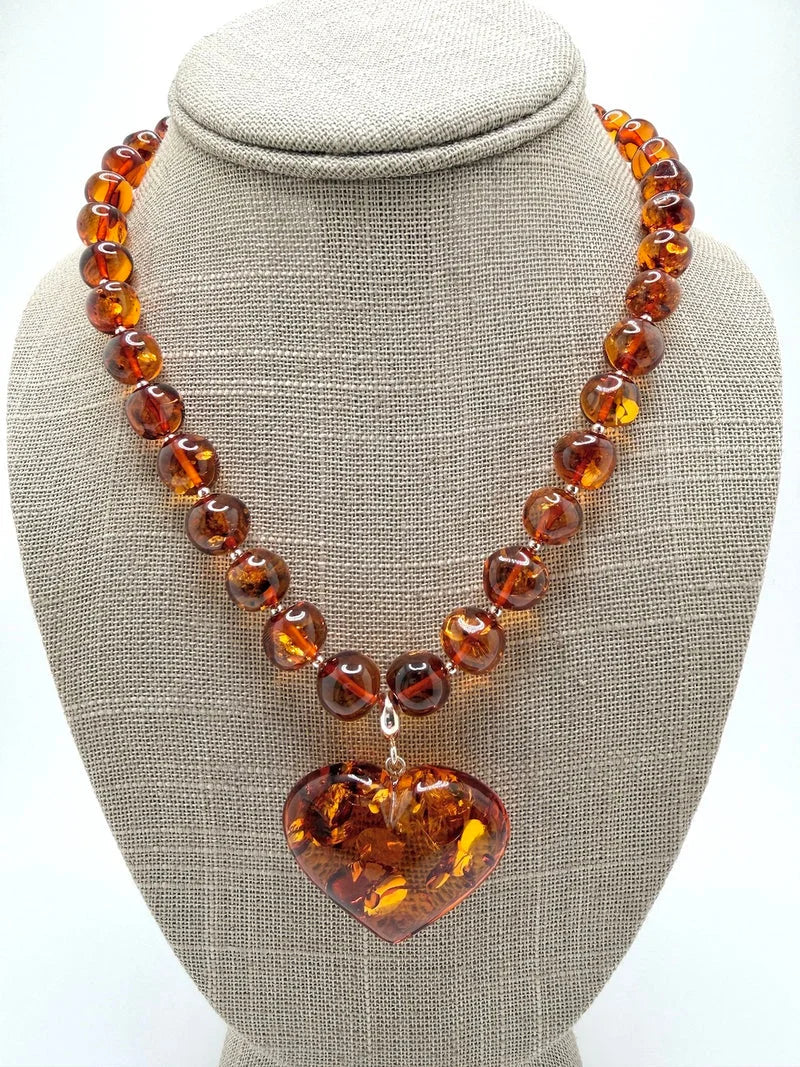
How Much Does an Amber Necklace Cost? A Quick Guide
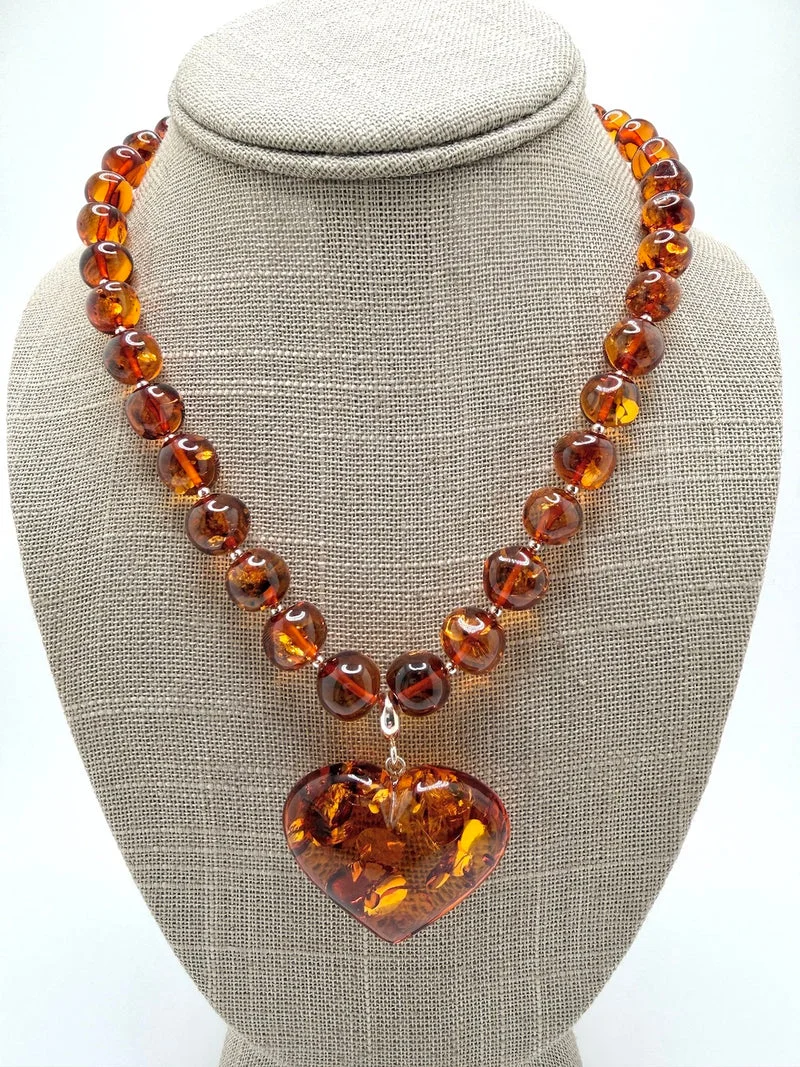
Amber necklace price ranges vary widely depending on quality, size, and what's inside the stone. Here's a quick snapshot:
| Amber Necklace Type | Typical Price Range |
|---|---|
| Simple Baltic amber bead necklace | $20 – $80 |
| Polished cabochon pendant, sterling silver | $50 – $200 |
| High-clarity, large amber beads | $100 – $500+ |
| Verified insect inclusion pendant | $200 – $1,000+ |
| Rare mosquito or large insect inclusion | $1,000 – $5,000+ |
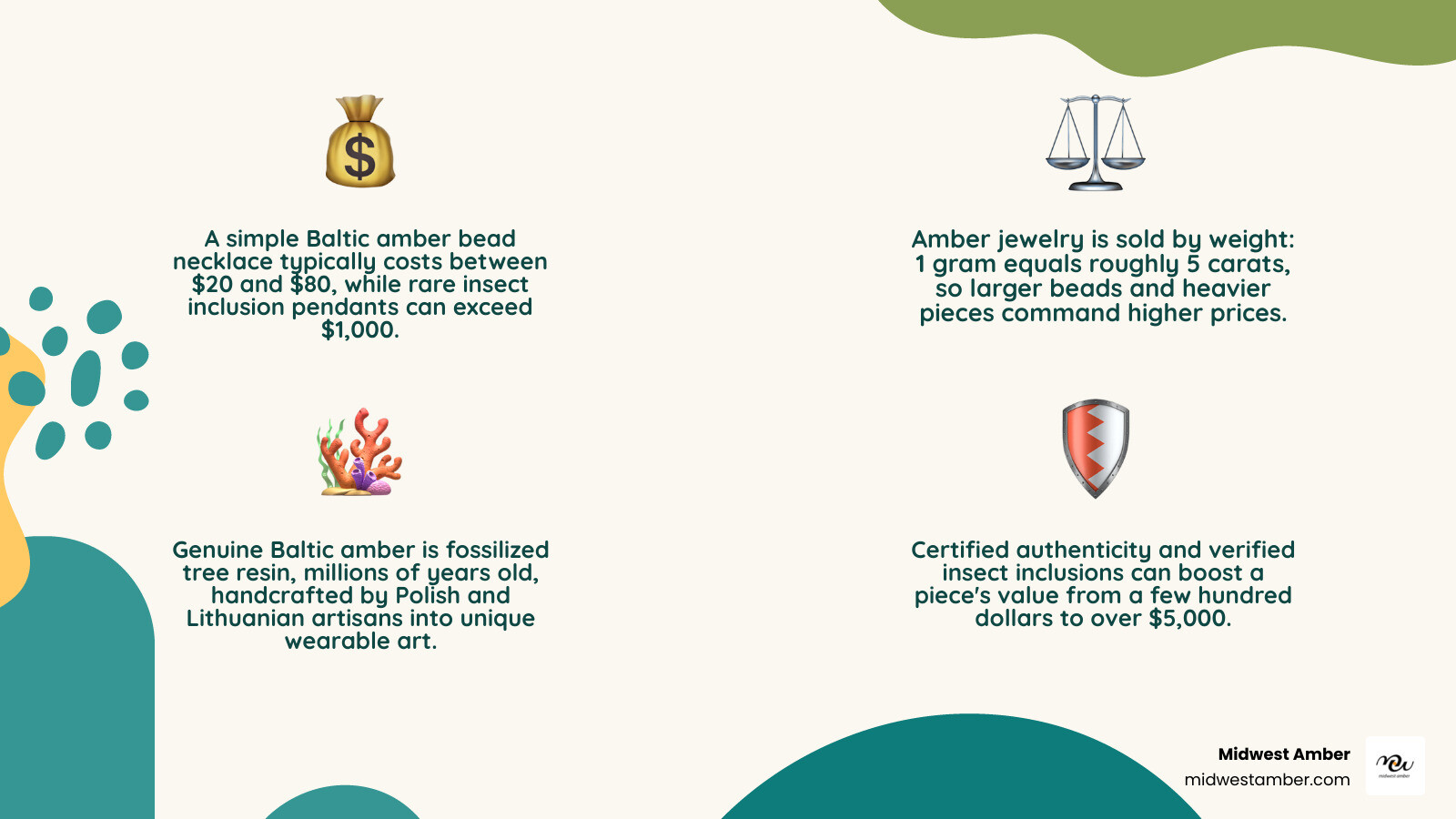
Prices reflect genuine Baltic amber as of July 2026. Pieces sold by weight — 1 gram equals roughly 5 carats.
People have been wearing amber jewelry for over 10,000 years — and for good reason. Genuine Baltic amber is more than a pretty stone. It's a piece of fossilized tree resin, millions of years old, handcrafted by skilled Polish and Lithuanian artisans into something you can actually wear. No two pieces are ever alike.
That rarity is exactly what makes pricing so confusing for buyers. A simple amber bead necklace and a rare insect-inclusion pendant can look similar on the surface but carry very different values. Understanding why prices differ helps you shop smarter and avoid paying too much — or too little — for what you're getting.
I'm Gabriel Ciupek, President and owner of Midwest Amber, Inc., where I've spent years setting pricing structures based on market analytics and working directly with vendors and artisans to ensure every amber necklace meets the highest standards of authenticity and quality. That hands-on experience gives me a grounded perspective on what drives amber necklace price in today's market.
Related content about Amber necklace price:
What Factors Determine the Amber Necklace Price?
When you begin shopping for Baltic amber, you will quickly notice that two necklaces of similar length can have vastly different price tags. To understand why, we have to look at the unique physical and geological nature of this material.
First and foremost, amber is an amorphous mixture of organic compounds, not a crystalline mineral. Unlike diamonds or sapphires, which are defined by rigid atomic lattices, amber is a organic polymer formed from the fossilized resin of ancient pine trees (specifically Pinus succinifera) that grew tens of millions of years ago. Because it is not a traditional mineral, its evaluation relies heavily on organic characteristics, color, clarity, and the skill of the artisan who shaped it.
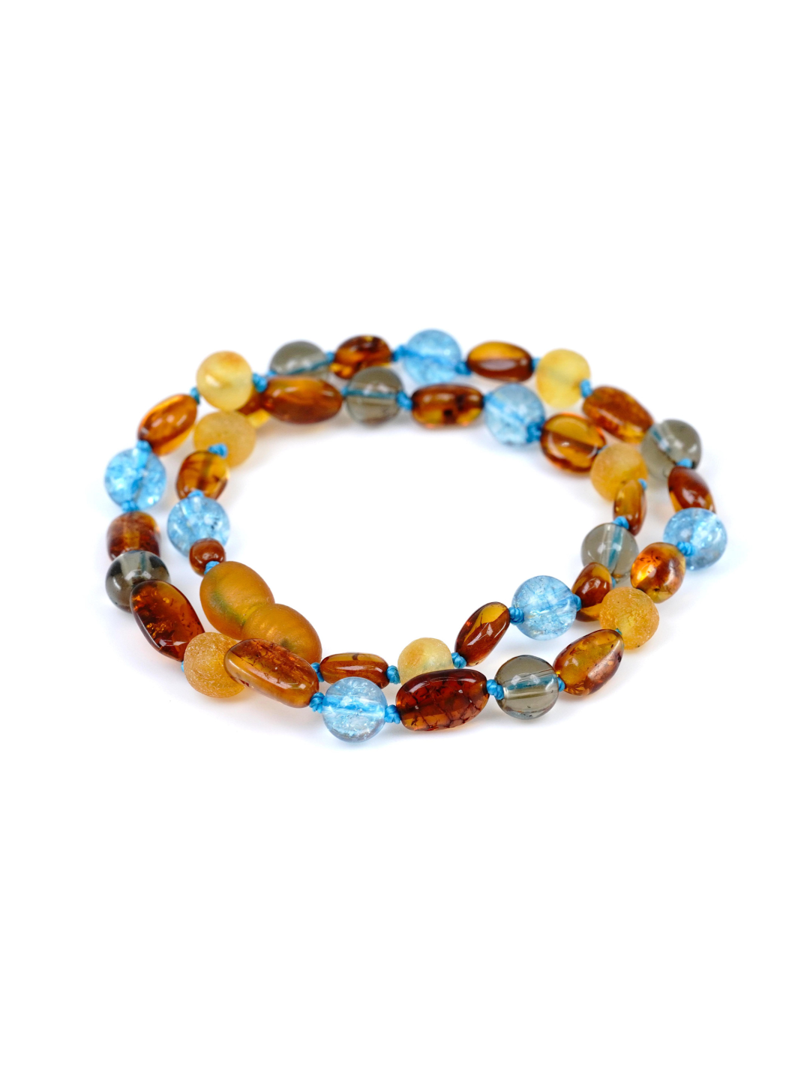
The journey from raw geological material to a finished jewelry piece is highly demanding. Amber is notoriously soft and delicate, registering a hardness of only 2 to 2.5 on the Mohs scale. This means it can easily scratch, crack, or shatter under careless hands.
Artisans in Poland and Lithuania, drawing on generations of heritage, must carefully cut, shape, and polish each raw node. The craftsmanship required to preserve the natural beauty of a fragile organic gemstone while turning it into durable beads directly influences the final amber necklace price.
How Weight and Bead Size Impact Your Amber Necklace Price
In the gemological world, weight is everything—but amber is unique. While traditional gemstones are priced by the carat, amber is commonly sold and priced by the gram. For reference:
- 1 gram = 5 carats
Because amber is incredibly lightweight (it actually floats in highly saturated salt water), a 10-gram amber necklace will feel remarkably comfortable around your neck compared to a heavy stone or glass alternative.
However, weight scaling is not linear. Most raw amber fragments harvested from the earth or sea weigh less than half a pound. Large, high-quality pieces are exceptionally rare. While pieces weighing several pounds occasionally appear in the market, they are kept as museum-grade specimens or sold to elite collectors for astronomical sums.
Because of this scarcity, the price per gram increases exponentially as the size of the individual beads grows.
- A necklace made of thirty tiny 1-gram beads requires less raw material than a necklace made of three large 10-gram beads, even though the total weight is the same.
- Large, perfectly spherical beads require cutting away a significant portion of a large raw amber block, which wastes precious material.
- Consequently, a necklace featuring large, uniform beads of 15mm or more will command a massive premium compared to a necklace made of small, organic chips.
How Inclusions and Clarity Affect the Final Amber Necklace Price
In traditional gemology, inclusions are often viewed as flaws that lower a stone's value. In amber, the exact opposite is frequently true.
Inclusions in amber are prehistoric time capsules. Millions of years ago, sticky resin oozed down the bark of ancient trees, trapping insects, leaves, water droplets, and air bubbles. Over millions of years, this resin polymerized, preserving these organic moments in stunning, lifelike detail.
The presence of inclusions can dramatically alter the amber necklace price:
- Insect Inclusions: These are highly valued because they provide a rare, well-preserved window into prehistoric life from millions of years ago. Since the release of the movie Jurassic Park, amber pieces containing mosquito inclusions have gained tremendous popularity among collectors, sending prices soaring. The more complete, visible, and rare the insect (such as ancient spiders, beetles, or mosquitoes), the higher the value.
- Plant Material Inclusions: While scientifically significant for reconstructing ancient ecosystems, plant material inclusions (such as oak leaf fragments or pine needles) add minimal commercial value to jewelry. This is primarily because they are typically too small or dark for casual observation, often appearing as tiny specks of dirt to the untrained eye.
- Clarity and Color: The highest-value jewelry pieces feature a combination of clearly visible insect inclusions, light body colors (which offer high contrast), and exceptional clarity. If the amber is cloudy or filled with millions of tiny microscopic bubbles, the inclusion becomes hard to see, which lowers its commercial value.
The Premium Value of Baltic Sea Region Amber
While amber can be found in various pockets around the globe—including the Dominican Republic, Mexico, Myanmar, and Sicily—Baltic amber remains the undisputed gold standard for jewelry collectors.
The Baltic Sea region, particularly areas around Poland, Lithuania, and the Kaliningrad Oblast, produces the vast majority of the world's high-grade Baltic amber supply. What makes Baltic amber so special is its unique geological history and its high concentration of succinic acid (between 3% and 8%), which is why it is scientifically classified as succinite.
The artisans of Poland and Lithuania have spent centuries perfecting the art of working with this regional treasure. This deep cultural heritage, combined with the superior structural integrity of Baltic amber compared to younger resins, makes it highly sought after.
To help you understand how different visual grades of genuine Baltic amber compare in the market, we have outlined the primary varieties below:
| Amber Variety | Visual Description | Rarity | Relative Price |
|---|---|---|---|
| Cognac / Honey | Warm, transparent golden-orange to deep brown; highly reflective. | Common to Moderate | Standard |
| Butterscotch / Yellow | Opaque, creamy pastel yellow; resembles rich butter. | Rare | Premium |
| Royal White | Milky white, completely opaque; often features beautiful swirling patterns. | Very Rare | High Premium |
| Green Amber | Warm olive to deep forest green; often enhanced with dark backing. | Rare (Natural) | Premium |
| Insect-Bearing Amber | Clear, light-colored transparent amber containing prehistoric fauna. | Extremely Rare | Collector's Grade |
Verifying the Authenticity of Your Baltic Amber
Because genuine Baltic amber is so highly valued, the market has unfortunately been flooded with clever imitations. These range from cheap plastics and glass to copal (a much younger, semi-fossilized tree resin) and pressed amber (known as ambroid, made by fusing tiny leftover scraps of amber together under extreme heat and pressure).
If you are investing your hard-earned money into a beautiful necklace, verifying its authenticity is critical.
Fortunately, you do not need a fully equipped laboratory to perform basic identification. Because of amber's unique physical properties, you can easily conduct several tests at home:
- The Specific Gravity (Saltwater) Test: Amber is incredibly light, with a specific gravity of 1.05 to 1.096 (usually averaging 1.08). This means it is only slightly denser than fresh water. To perform this test, dissolve enough salt into boiling water to reach a density of approximately 1.13 (about 7 to 8 tablespoons of salt per cup of water). Once the water cools, drop your necklace in. Genuine, unmounted amber will float effortlessly, while most plastics, glass, and heavy synthetics will sink directly to the bottom.
- The Static Electricity Test: Amber is an excellent electrical insulator. Vigorous rubbing on wool or silk generates enough static electricity in genuine amber to lift small pieces of paper, dust, or ash. Plastics rarely exhibit this property to the same degree.
- The Acetone Test: To distinguish genuine amber from copal (which is often sold as "young amber"), apply a single drop of acetone (nail polish remover) to an inconspicuous area for three seconds. Copal will quickly become sticky and soften as the solvent dissolves the young resins. Genuine, fully polymerized Baltic amber will remain completely unaffected and dry.
- The Hot Point Test: As a last resort on unfinished or hidden areas of a piece, touch a hot needle to the amber. Genuine amber will release a pleasant, aromatic pine-incense smell. Synthetic plastics will release a harsh, acrid chemical odor.
For those who want to dive deeper into the scientific properties of this organic gemstone, you can read the detailed Scientific research on amber identification published by the Gemological Institute of America (GIA).
Best Care Practices to Protect Your Amber Investment
Once you have acquired a genuine Baltic amber necklace, proper care is essential to preserve both its physical beauty and its financial value over time. Because amber is an organic polymer rather than a mineral, it requires vastly different care than traditional jewelry.
- Keep It Away from Chemicals: Never expose your amber necklace to harsh household cleaners, hairsprays, perfumes, or nail polish removers. These chemicals can permanently dull the polished surface of the stone, causing it to turn white or develop micro-cracks.
- Avoid Mechanical Cleaning Systems: Never, under any circumstances, place your amber jewelry into an ultrasonic or steam cleaner. The intense vibrations and high temperatures can easily shatter the soft gemstone.
- Clean Gently: The best way to clean your amber is to wipe it gently with a soft, damp cloth using a mild, warm-water detergent solution. Afterward, dry it thoroughly with a microfiber cloth.
- Store Safely: Because amber has a Mohs hardness of only 2 to 2.5, it can easily be scratched by harder jewelry pieces like silver, gold, or diamonds. Store your amber necklace in a soft cloth pouch or a separate compartment of your jewelry box.
- Choose Secure Settings: When buying amber jewelry, necklaces, pendants, and earrings are generally the safest options. Because these pieces sit against your collarbone or ears, they are naturally shielded from the daily bumps, scratches, and impacts that rings or bracelets routinely endure.
Frequently Asked Questions About Amber Jewelry
Is Baltic amber the best quality?
Yes, Baltic amber is widely considered the premier choice for jewelry. Its high concentration of succinic acid makes it more durable and structurally stable than younger resins like copal, allowing Polish and Lithuanian artisans to carve and polish it into exquisite, long-lasting designs.
Why are insect inclusions in amber so expensive?
Insect inclusions are incredibly rare. They represent a flawless, three-dimensional snapshot of prehistoric life from up to 40 million years ago. Because they are highly sought after by evolutionary biologists, museums, and private collectors alike, their limited supply drives prices up significantly.
How does the color of Baltic amber affect its price?
While classic translucent honey and cognac tones are highly popular and widely available, opaque varieties like butterscotch and royal white are much rarer in nature. Because these rare colors require specific environmental conditions to form, they command a premium price in the global market.
Conclusion
At Midwest Amber, we are proud to carry on the rich traditions of our Polish and Lithuanian heritage. Based in the Chicagoland area, we specialize in providing 100% natural, ethically sourced Baltic amber jewelry handcrafted by true European artisans. With over 20 years of experience, we back every single piece we sell with certified authenticity, ensuring you receive a genuine piece of natural history.
Whether you are looking for a simple, elegant everyday pendant or a striking statement piece, we invite you to Explore our collection of handcrafted Baltic amber necklaces and find the perfect match for your style and budget.


Leave a comment
This site is protected by hCaptcha and the hCaptcha Privacy Policy and Terms of Service apply.