

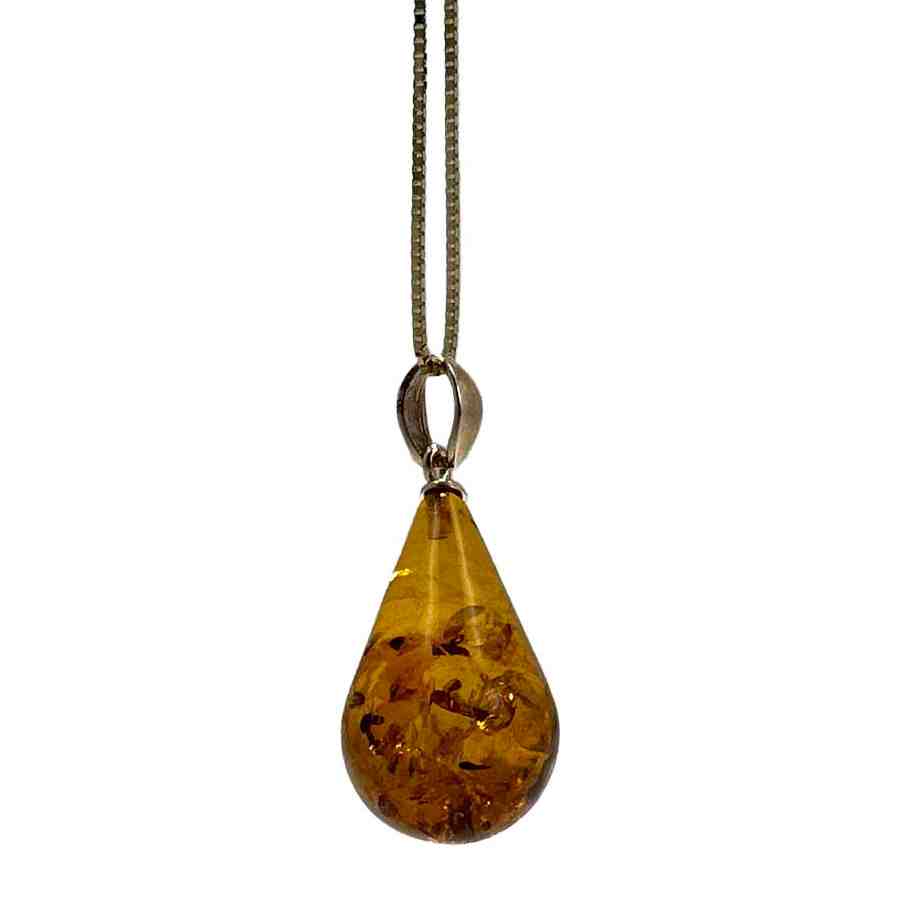
Amber Necklace Benefits: What You Need to Know Before You Buy

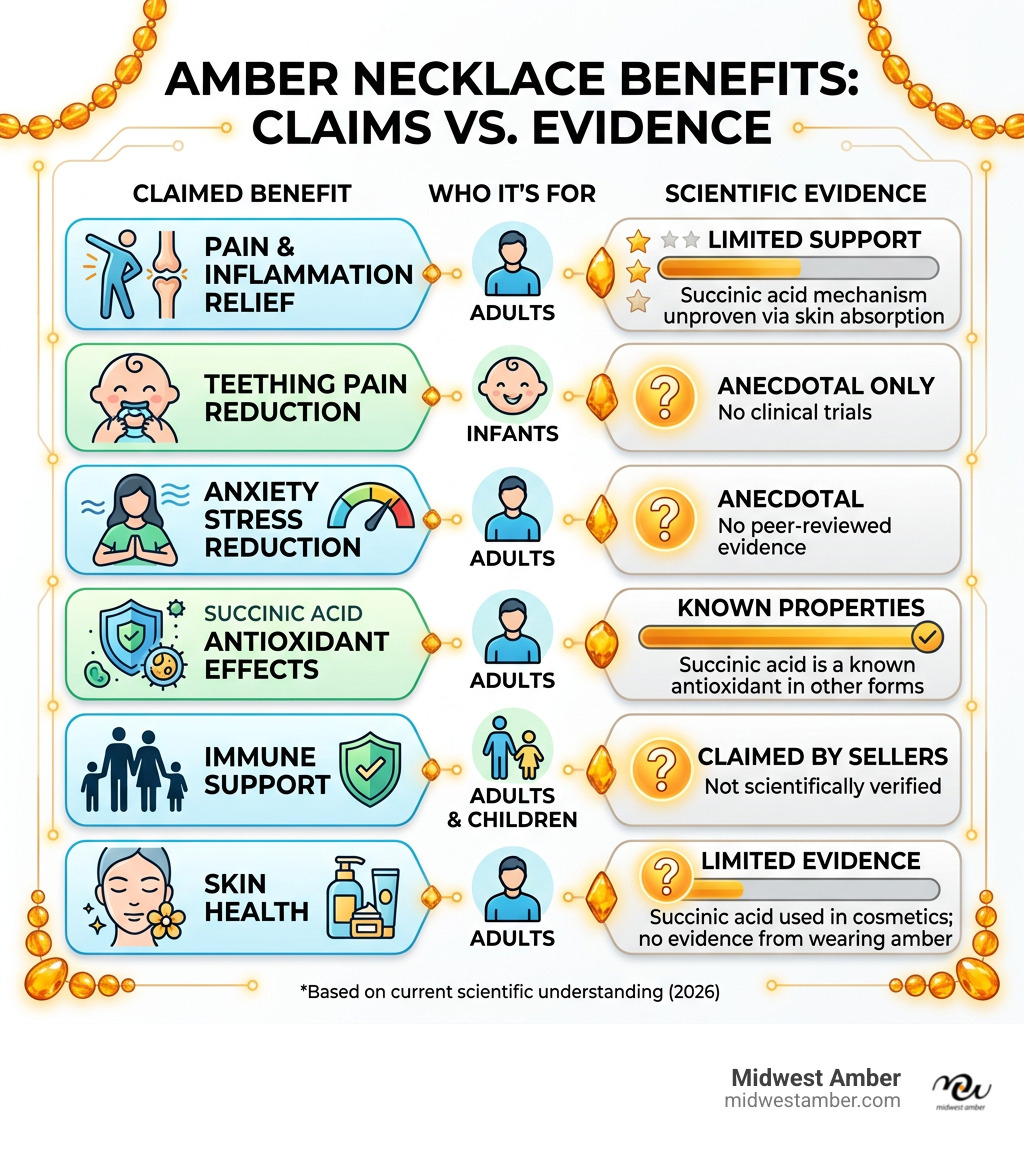
Amber necklace benefits have been talked about for centuries — and today, they're more popular than ever. Here's a quick overview of what wearers commonly report and what science actually says:
| Claimed Benefit | Who It's For | Scientific Support |
|---|---|---|
| Pain and inflammation relief | Adults | Limited; succinic acid mechanism unproven via skin absorption |
| Teething pain reduction | Infants | Anecdotal only; no clinical trials |
| Anxiety and stress reduction | Adults | Anecdotal; no peer-reviewed evidence |
| Antioxidant effects | Adults | Succinic acid has known antioxidant properties in other forms |
| Immune support | Adults and children | Claimed by sellers; not scientifically verified |
| Skin health | Adults | Succinic acid used in cosmetics; no evidence from wearing amber |
The honest picture? Many of these benefits come from tradition and personal experience, not clinical trials. That doesn't mean amber jewelry has no value — it's a genuinely ancient, beautiful, natural material with a fascinating story. But it's worth understanding what the evidence does and doesn't show before you buy.
Amber has been worn as a remedy and adornment since the Neolithic period. It's fossilized tree resin from the Baltic region of Europe, and it contains a naturally occurring compound called succinic acid — the source of most health claims. Whether that compound actually transfers to your body through skin contact is, as we'll explore, a more complicated question than most sellers let on.
I'm Gabriel Ciupek, president and owner of Midwest Amber, Inc., where I've spent years sourcing and selling genuine Baltic amber jewelry and helping customers understand the real amber necklace benefits beyond the marketing noise. In that time, I've seen what authentic amber can offer — and I believe informed buyers make the happiest customers.
Amber necklace benefits further reading:
What is Baltic Amber and How is it Formed?
To understand the appeal of amber, we have to travel back about 45 to 50 million years to the Eocene epoch. Unlike diamonds or sapphires, Baltic amber isn't a stone or a mineral; it is fossilized resin from ancient coniferous trees. When these prehistoric trees were damaged, they secreted a thick, sticky resin to seal the "wound" and protect themselves from fungi and insects.
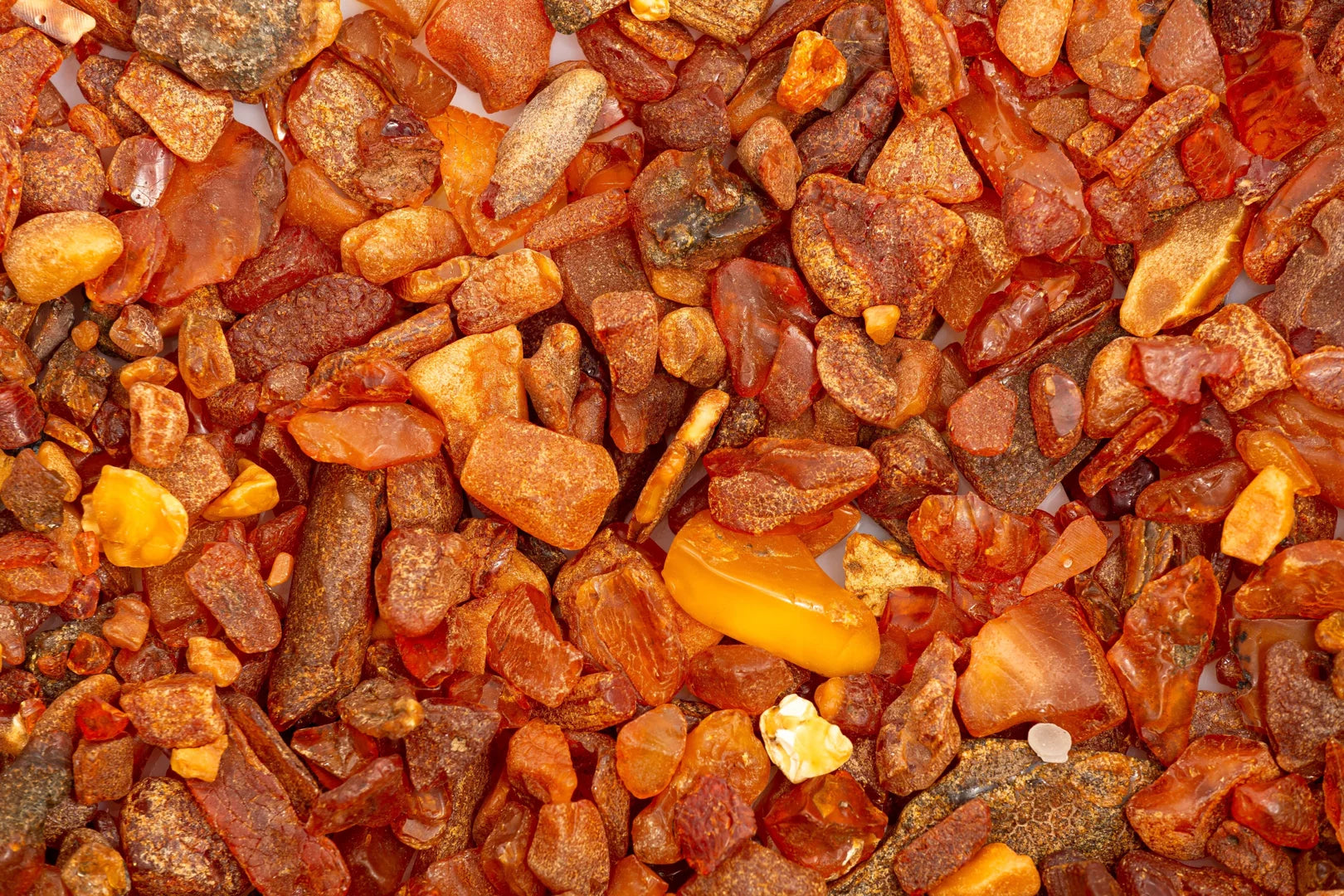
Over millions of years, this resin underwent a process called polymerization. Buried under layers of sediment and subjected to intense pressure and heat, the organic compounds transformed into the hard, warm-to-the-touch material we know as succinite. Most of the world’s supply comes from the Baltic Sea region, where shifting glaciers and currents eventually washed these "tears of the sun" onto the shores of Poland and Lithuania.
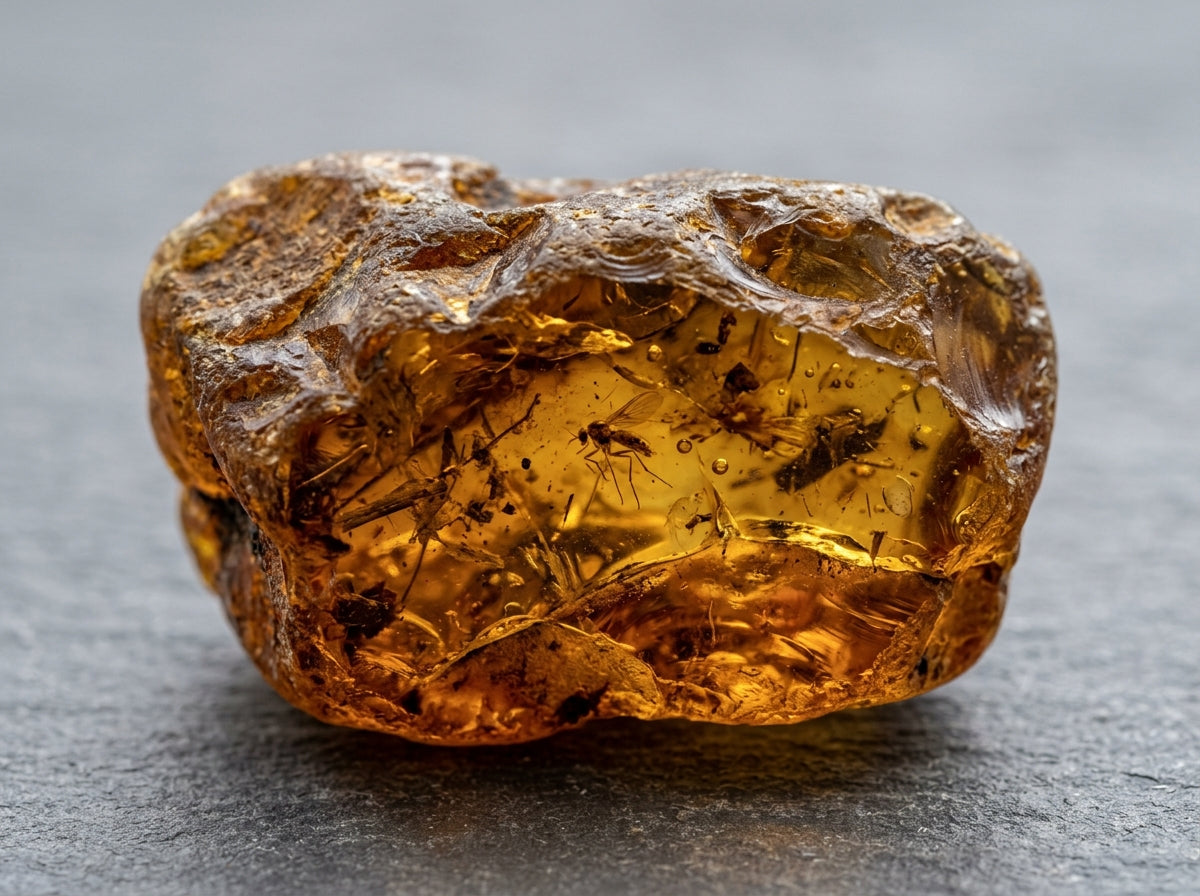
What makes Baltic amber unique is its high concentration of succinic acid. While many fossil resins exist globally, Baltic amber is the gold standard for those seeking wellness benefits. Sometimes, this resin even trapped tiny pieces of history—ancient gnats, flower petals, or air bubbles—freezing them in time. When you wear a piece from our collection, you aren't just wearing jewelry; you're wearing a prehistoric time capsule. You can learn more about finding the right piece in our guide on discovering the best amber stone necklaces.
Exploring the Science Behind Amber necklace benefits
The central pillar of amber necklace benefits is succinic acid. This naturally occurring substance makes up between 3% and 8% of Baltic amber's weight. In natural healing, the theory is that when you wear amber against your skin, your body heat causes the amber to release trace amounts of oil containing this acid. This oil is then supposedly absorbed into the bloodstream to provide anti-inflammatory and analgesic effects.
However, it is important to look at what the lab results say. A scientific study on succinic acid leaching used High-Performance Liquid Chromatography (HPLC) to see if this acid actually leaves the bead under skin-like conditions. The researchers found that succinic acid is mostly "covalently bound"—essentially locked inside the amber's molecular structure—and did not release from intact beads even after weeks of testing at body temperature.
Despite these clinical findings, the anecdotal evidence from our customers in the Chicagoland area and beyond remains strong. Many people report a noticeable difference in their well-being. This has led to ongoing discussions about amber’s anti-inflammatory and pain-relieving secrets and its specific application for arthritis power.
Claimed Amber necklace benefits for Adults
For adults, the primary draw of amber is often chronic pain management. We frequently hear from customers in Arlington Heights and Palatine who use amber bracelets for wellness to help manage the discomfort of carpal tunnel or repetitive strain injuries.
- Inflammation: Many wearers believe that consistent contact with the skin helps reduce swelling in joints.
- Anxiety: Succinic acid is sometimes described as a "soothing agent" that can help calm the nervous system.
- Sleep: Because of its purported calming effect, some people wonder: do amber bracelets help sleep? While there is no clinical proof, the psychological comfort of a natural remedy often helps people relax.
- Thyroid Support: A traditional belief suggests that wearing amber close to the throat can boost thyroid function, though this should never replace medical treatment.
Traditional Amber necklace benefits for Teething Babies
The most famous use for these necklaces is for teething infants. Parents often look for a drug-free way to handle the drooling, fussiness, and gum inflammation that comes with new teeth.
The idea is that the necklace acts as a local analgesic. While many moms swear by them, it’s vital to remember that the necklace is for wearing, not chewing. We’ve explored why every mom is talking about amber necklaces and how specific varieties like pink amber are often chosen for their aesthetic and traditional soothing properties.
Safety First: Risks and Regulatory Warnings
At Midwest Amber, safety is our absolute priority. While we love the history and beauty of amber, we want our neighbors from Schaumburg to Evanston to use these products responsibly. Regulatory bodies like the FDA have issued warnings regarding amber teething necklaces due to two main risks: strangulation and choking.
To mitigate these risks, quality amber jewelry must include specific safety features:
- Individual Knotting: Every single bead should be knotted by hand. If the necklace breaks, only one bead will fall off, rather than the whole string.
- Safety Clasps: Many necklaces use a "pop" or screw clasp designed to break away or open under specific tension.
- Correct Sizing: A necklace that is too long can snag; one that is too short can be uncomfortable.
| Safety Feature | Purpose |
|---|---|
| Hand-knotted beads | Prevents choking hazard if the string breaks |
| Screw/Pop Clasp | Designed to release under tension to prevent strangulation |
| Short Length | Minimizes the risk of snagging on objects |
Supervision Rules:
- Never leave a child unattended while wearing jewelry.
- Remove the necklace during naps and nighttime sleep.
- Check the beads regularly for any cracks or damage.
- Consider an amber teething necklace and anklet set as an alternative; anklets can sometimes be tucked under clothing more securely.
How to Identify Authentic Baltic Amber vs. Fakes
Because Baltic amber is valuable, the market is unfortunately flooded with fakes made of plastic, glass, or "copal" (a much younger resin that hasn't fully fossilized). Authentic amber has a few physical properties you can test at home:
- The Saltwater Test: Mix one part salt with two parts water. Real amber is incredibly buoyant and will float, while most plastics and glass will sink like a stone.
- The Scent Test: If you rub the amber vigorously with a cloth until it gets warm, it should emit a faint, pleasant smell of pine resin. Plastic will smell like chemicals or nothing at all.
- Static Charge: Amber is triboelectric. If you rub it against a cloth for 20 seconds, it should be able to pick up tiny bits of paper or dust.
- The "Baltic Shoulder": In a lab setting, scientists use infrared spectroscopy. Real Baltic amber shows a specific "shoulder" on the graph between 1160 and 1260 cm⁻¹.
When looking for quality, you might search for a specific look, such as an egg yolk amber necklace or a more intricate Celtic knot design. Always buy from a reputable US-based specialist who can certify their source.
Frequently Asked Questions about Amber Jewelry
Does succinic acid actually leach from the beads?
As mentioned in the study on succinic acid leaching, clinical testing did not show succinic acid releasing from whole, intact beads at 37°C (human body temperature). The acid is largely locked within the fossilized structure. While this challenges the "absorption" theory, many people still find relief. Some suggest that the way amber bracelets work might involve other trace compounds or even the placebo effect—which, if it helps you feel better, still has value!
Can I wear an amber necklace while pregnant?
Yes! Many women find that wearing amber provides a sense of natural comfort and stress relief during a time when they want to avoid over-the-counter medications. It’s a beautiful way to stay connected to nature during the journey of pregnancy. You can find more about these experiences in stories like How I Survived Pregnancy Using an Amber Teething Necklace or by exploring a full amber necklace set.
How do I clean and care for my amber?
Amber is an organic material and can be quite delicate. To keep it looking its best:
- Use lukewarm water: A gentle rinse is all it needs.
- Soft cloth only: Pat it dry; never use abrasive scrubbers.
- Avoid chemicals: Soap, perfume, hairspray, and household cleaners can dull the polish of the amber or even cause it to crack over time.
- Store carefully: Keep it in a soft pouch so it doesn't get scratched by harder gemstones like diamonds.
This care applies to everything from a sterling silver amber necklace to more rugged amber necklaces for men.
Conclusion
Whether you are drawn to amber necklace benefits for their traditional healing properties or you simply love the idea of wearing 50-million-year-old history, there is no denying the unique charm of Baltic amber. At Midwest Amber, we are proud to be a US-based company providing handcrafted, genuine pieces sourced directly from artisans in Poland and Lithuania.
With over 20 years of experience, we ensure that every piece we sell—from Arlington Heights to Lake Zurich—is 100% natural and ethically sourced. If you're ready to add a touch of ancient resin to your collection, explore our best amber necklaces for every style and find the piece that speaks to you. Stay warm, stay informed, and enjoy the golden glow of the Baltic.

Leave a comment
This site is protected by hCaptcha and the hCaptcha Privacy Policy and Terms of Service apply.