

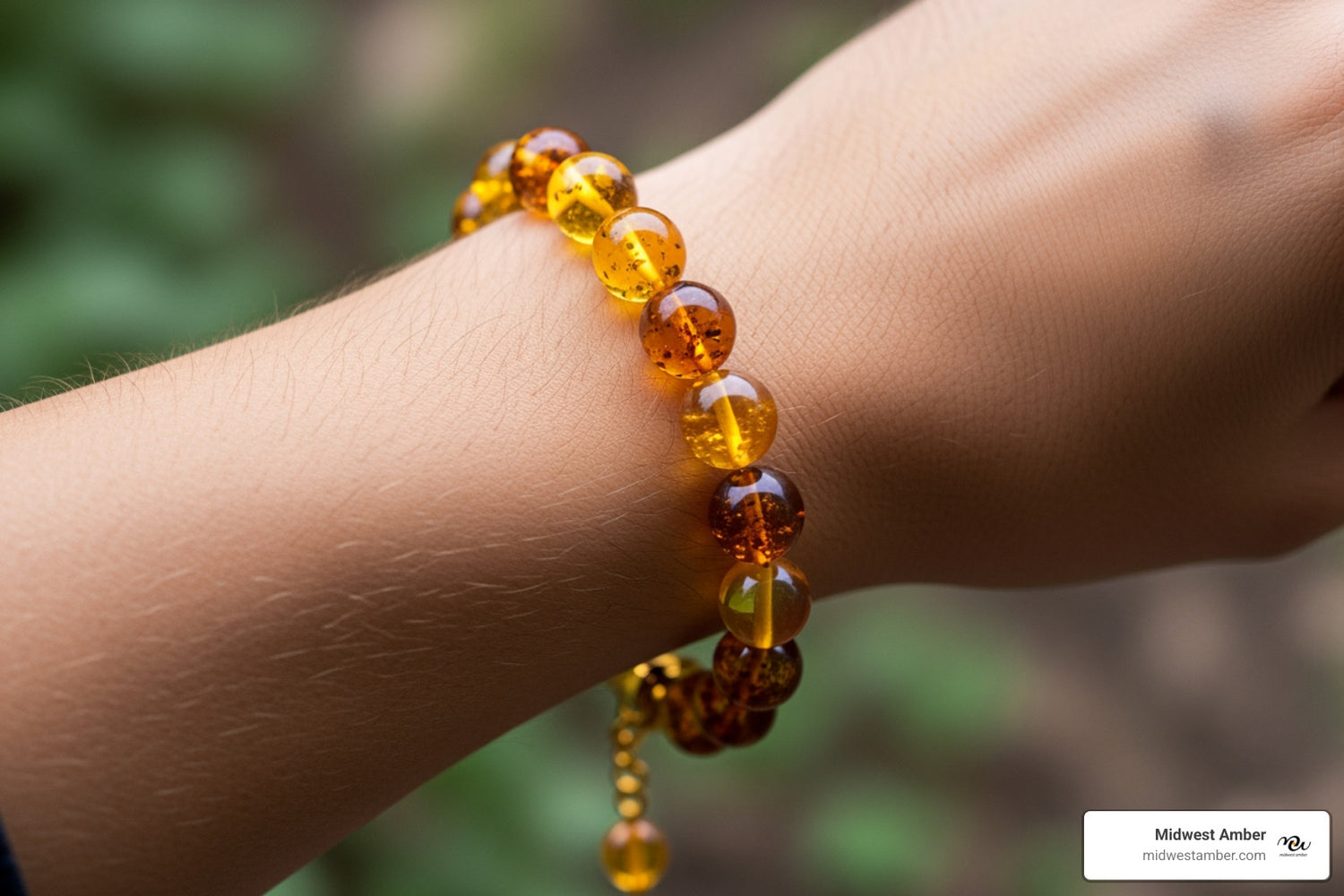
Why Amber Bracelets Spark Curiosity and Debate
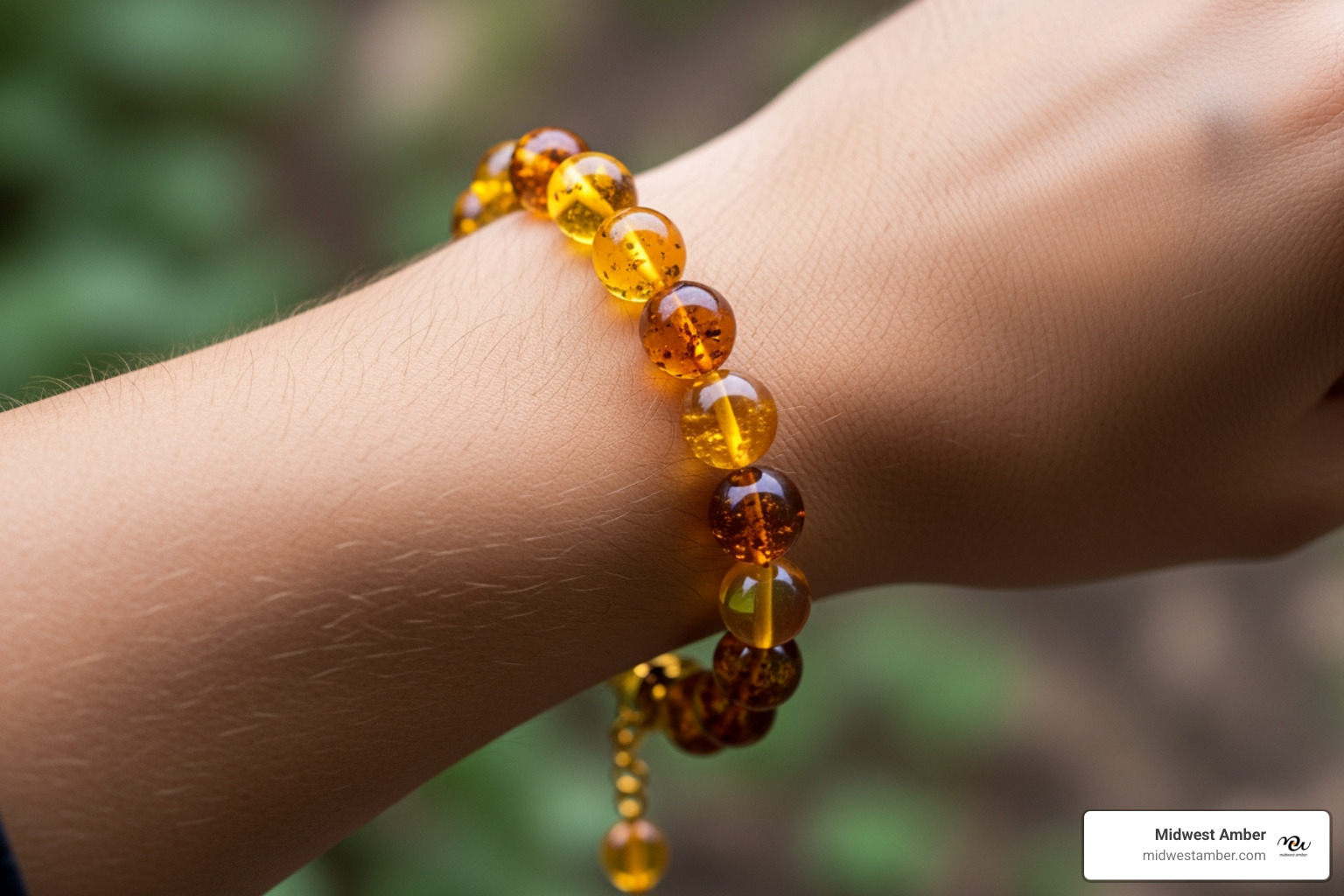
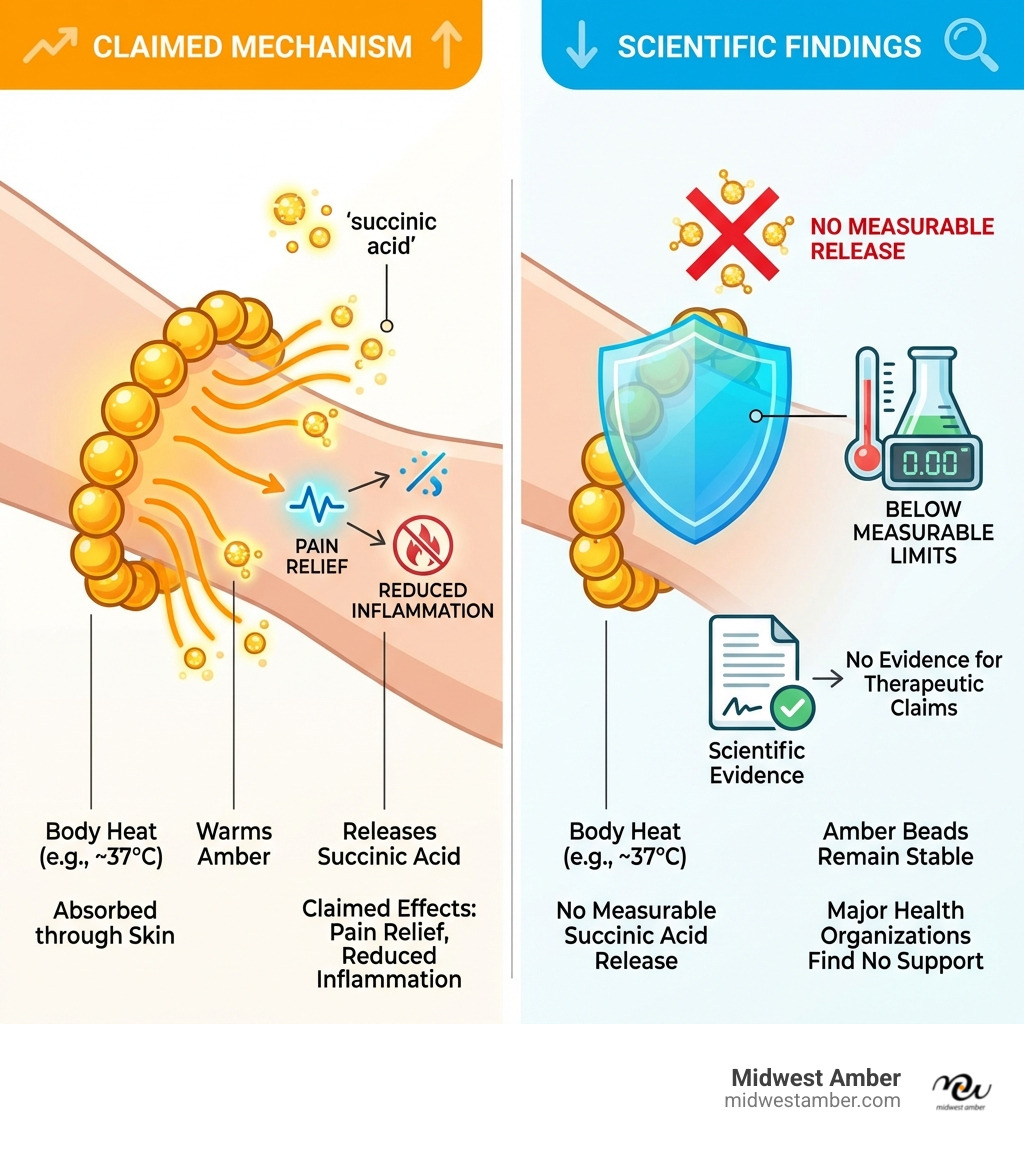
How do amber bracelets work is a question that has intrigued both believers in natural remedies and skeptics alike. According to proponents, amber bracelets release succinic acid when warmed by body heat, which is then absorbed through the skin to provide pain relief and reduce inflammation. However, scientific studies have found no measurable succinic acid release from amber beads onto human skin, and major health organizations like the FDA and American Academy of Pediatrics emphasize there is no evidence supporting these therapeutic claims.
Amber bracelets have surged in popularity, especially within wellness communities and among parents seeking natural alternatives for teething discomfort. These beautiful pieces of fossilized tree resin have been treasured for thousands of years, worn as jewelry and used in traditional European folk medicine. The warm, golden glow of Baltic amber makes it naturally appealing, but the modern wellness trend has added layers of therapeutic claims that deserve careful examination.
The central question remains: beyond their undeniable beauty, do amber bracelets actually deliver the health benefits that many sellers and believers claim? The answer is more complex—and often more cautionary—than marketing materials suggest.
I'm Gabriel Ciupek, President and owner of Midwest Amber, Inc., where I've spent years ensuring customers receive genuine, certified Baltic amber jewelry while educating them about realistic expectations for how do amber bracelets work. My experience in the amber industry has shown me the importance of separating timeless beauty from unproven health claims.
Key terms for how do amber bracelets work:
What is Baltic Amber? The Gemstone of Ancient Forests
When we talk about amber, especially in the context of wellness, we're almost always referring to Baltic amber. It's truly a marvel of nature, a window into a prehistoric world. But what exactly is it?
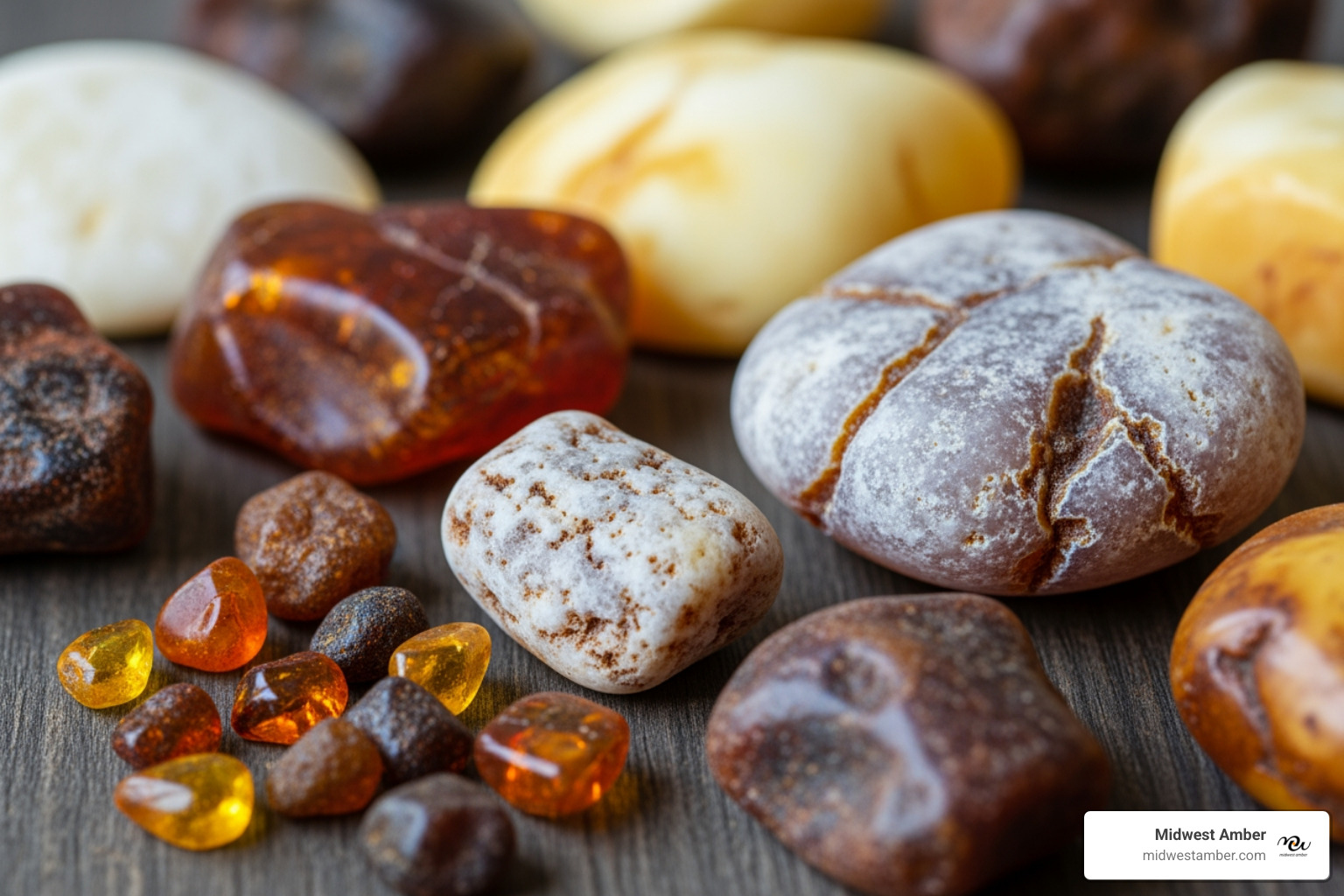
Baltic amber isn't a true gemstone in the traditional sense, like diamonds or rubies. Instead, it's fossilized tree resin, formed over millions of years from the sap of ancient pine trees that once grew in the Baltic region. Most of the Baltic amber we encounter today is between 40 to 50 million years old, a testament to its incredible endurance. Imagine, these pieces of resin existed long before humans walked the Earth, capturing insects and plant matter that provide scientists with invaluable insights into ancient ecosystems.
Our Baltic amber, sourced from the rich deposits of Poland and Lithuania, carries this ancient energy. Unlike cold stones, amber feels warm to the touch, a characteristic that many find comforting and appealing. For centuries, it has been cherished not just for its beauty but also for its perceived therapeutic properties in traditional European folk medicine, where it was often used for various ailments, though without the scientific understanding we seek today.
The Allure of Amber Through History
Amber's fascination isn't new; it dates back to Neolithic times. The Ancient Greeks called amber "ēlektron," a name that beautifully captures one of its unique properties. The word "electric" and "electricity" actually derive from this Greek term, because amber, when rubbed, can generate static electricity. Pretty shocking, right?
Throughout history, amber has been a prized material for jewelry and trade. Ancient trade routes, famously known as the Amber Road, connected the Baltic Sea with the Mediterranean, facilitating the exchange of this precious resin across continents. In folklore, amber often symbolized warmth, protection, and healing. For instance, some myths tell of Phaëton's mourning sisters, who were transformed into poplar trees, their tears solidifying into amber. Pliny the Elder, a Roman naturalist, even described amber's ability to attract light objects, a phenomenon that puzzled people for centuries.
Our own collection of amber jewelry at Midwest Amber continues this rich tradition, offering pieces that connect you to this remarkable history. To learn more about its journey from ancient forests to modern adornment, explore our comprehensive guide: The Ultimate Guide to Amber Jewelry.
The Core Claim: How Do Amber Bracelets Work According to Proponents?
When people ask how do amber bracelets work, they are often referring to a specific set of claims rooted in traditional beliefs. The central theory revolves around succinic acid, a natural compound found within Baltic amber.
Proponents suggest that when amber, in the form of a bracelet, is worn against the skin, our body's natural warmth causes the amber to release minute amounts of oils. These oils, they claim, contain succinic acid, which is then absorbed transdermally – meaning, through the skin – into the bloodstream. Once absorbed, this succinic acid is believed to act as a natural analgesic (pain reliever) and an anti-inflammatory agent, providing relief from various discomforts.
This theory forms the basis for why many people turn to amber jewelry for conditions ranging from teething pain in infants to arthritis in adults. The idea is that it's a gentle, continuous release of a beneficial substance directly into the body. For a deeper dive into these purported benefits, you can read more here: The Healing Glow Exploring Ambers Anti-Inflammatory and Pain-Relieving Secrets.
The Role of Succinic Acid in Amber's Healing Lore
Succinic acid isn't just a mysterious compound; it's a natural substance found in almost all living organisms, from plants to animals. In our own bodies, succinic acid is a key component of the Krebs cycle, a fundamental metabolic process that converts nutrients into energy. So, it's certainly a beneficial compound within biological systems.
The healing lore surrounding amber often attributes several benefits to this succinic acid. Beyond pain relief and anti-inflammatory effects, some proponents claim that absorbed succinic acid can boost the immune system, helping the body fight off infections. There's also a theory that amber beads can stimulate the thyroid gland, which in turn might help control excessive drooling often associated with teething, and generally improve the immune system's ability to reduce inflammation. Nobel-prize winner Robert Koch, a pioneer in modern bacteriology, even examined succinic acid in 1886, though his work didn't specifically validate its transdermal absorption from amber for therapeutic purposes.
How do amber bracelets work for soothing discomfort?
Beyond the chemical claims, many users report a general soothing and calming effect from wearing amber bracelets. This often contributes to the belief that how do amber bracelets work extends to a more holistic sense of well-being. Parents of teething infants, for example, frequently share anecdotal stories of their babies being calmer and less irritable while wearing amber. We’ve certainly heard many testimonials from customers in Illinois who swear by the calming effects.
This perception of relief is often amplified by positive experiences shared on social media platforms, where personal anecdotes can quickly spread and influence others. While these experiences are genuine for the individuals having them, it's important to differentiate between subjective feelings of comfort and scientifically proven therapeutic action. The power of belief and the psychological comfort of trying a natural remedy can be significant factors in how people perceive the effectiveness of amber bracelets.
The Scientific Verdict: Examining the Evidence
While the historical appeal and anecdotal accounts of amber bracelets are compelling, we must also look at what modern science has to say about how do amber bracelets work. This is where the narrative shifts from ancient lore to empirical data.

The overwhelming consensus from the scientific and medical communities is that there is a distinct lack of scientific evidence to support the therapeutic claims made for amber jewelry. Many of the perceived benefits, while real for the individual experiencing them, are often attributed to the powerful placebo effect. This doesn't mean the relief isn't real, but rather that it stems from the expectation of improvement, not necessarily from a specific chemical action of the amber itself.
A critical review of the scientific literature reveals a significant gap between popular belief and verifiable proof regarding amber's purported healing properties. For a detailed look at the scientific scrutiny, consider this research: Baltic amber teething necklaces: Could succinic acid leaching from beads provide anti-inflammatory effects?.
Do Amber Beads Actually Release Succinic Acid?
This is the linchpin of the "how it works" theory, and unfortunately, it's where the scientific evidence falls short. Studies designed to measure succinic acid release from amber beads have consistently found that amber does not release measurable amounts of succinic acid onto the skin.
One study noted that "All amber stones submerged in saline buffered with pH 5.5 octanol phosphate did not release measurable succinic acid, except for light-colored spheres, which were divided into small fragments." This suggests that intact amber beads, even when submerged in conditions mimicking body fluids, do not readily release succinic acid. Furthermore, the human body temperature (around 98.6°F or 37°C) is simply not high enough to cause the amber to "melt" or soften sufficiently to release succinic acid in any therapeutically meaningful quantity. Amber's melting point is much higher, typically between 250-300°C. Therefore, the idea of transdermal absorption of succinic acid from an amber bracelet worn on the wrist is not supported by scientific findings.
What Do Health Organizations Say?
Given the lack of scientific evidence for efficacy and, more importantly, the documented safety risks, major health organizations have issued strong warnings against the use of amber teething necklaces and bracelets, especially for infants and young children.
The American Academy of Pediatrics (AAP) advises against infants wearing any jewelry, including amber. The U.S. Food and Drug Administration (FDA) has been particularly vocal, issuing a warning in December 2018 about the safety risks of teething necklaces, bracelets, and other jewelry marketed for pain relief or sensory stimulation. This warning cited reports of children choking on beads that broke off and, tragically, the death of a toddler from strangulation by a necklace while sleeping. This is a serious concern for us at Midwest Amber, and we prioritize safety above all else. You can read the FDA's full warning here: FDA warns about safety risks of teething jewelry.
Similar cautionary guidance has been issued by health authorities in other countries. The Canadian federal public health department released warnings as early as 2010, and Ireland's Health Service Executive went further in 2015, referring to amber teething necklaces as "inherently unsafe." These warnings emphasize the very real dangers of choking and strangulation, which far outweigh any unproven benefits.
A Smart Consumer's Guide to Amber Jewelry
Understanding the science behind amber allows us to be smarter consumers. While we may not be able to definitively explain how do amber bracelets work in a scientific, therapeutic sense, we can certainly appreciate their beauty and ensure we're making informed choices about authenticity and safety.
At Midwest Amber, we believe in transparency and providing genuine Baltic amber jewelry. For customers across Illinois, from Arlington Heights to Schaumburg, we're dedicated to offering authentic pieces. But how can you, as a consumer, identify genuine amber and avoid fakes?
How do amber bracelets work to be identified as genuine?
The market is unfortunately flooded with imitations, but there are some simple tests you can do at home to help verify if your amber bracelet is genuine:
- The Saltwater Test: This is one of the most reliable methods. Mix about 1/4 cup of salt into 2 cups of warm water until dissolved. Place your amber piece in the solution. Genuine amber should float, while most plastic fakes will sink. Copal, another natural resin sometimes used as a fake, might also float but typically with less buoyancy. Remember to rinse your amber thoroughly with fresh water afterward!
- The UV Light Test: If you have a UV lamp (like a black light), genuine amber often fluoresces, emitting a slight blue or greenish glow. Many plastics won't react this way.
- The Friction/Static Test: Rub your amber piece vigorously on a soft cloth for 30-60 seconds. Genuine amber, being fossilized resin, will become charged with static electricity and should be able to pick up small pieces of paper or hair. It might also emit a faint, resinous fragrance. Copal, a younger resin, might feel sticky and soften slightly, while plastic won't generate static as effectively or smell like resin.
- Visual Inspection: Look for imperfections. Genuine amber often has natural inclusions, small air bubbles, or slight variations in color and clarity. Fakes often look too perfect or uniform. Polyester, a common fake, might even have circular cracks (spangles) that look manufactured.
These tests can help you discern genuine Baltic amber from common fakes like plastic, glass, or copal.
Raw vs. Polished Amber: Does It Affect Effectiveness?
You'll often see amber jewelry sold as either "raw" (unpolished) or "polished." The theory behind raw amber's potential superiority is that the highest concentration of succinic acid is found in the amber's outer layer, or cortex. Therefore, proponents suggest that raw amber, with its untouched surface, might release more succinic acid than polished amber, where this outer layer has been buffed away.
However, just like the overall claims about succinic acid release, there is no scientific evidence to support a difference in effectiveness between raw and polished amber. The scientific studies that show no measurable succinic acid release from amber apply to both forms. The choice between raw and polished amber is largely an aesthetic one. Some prefer the rustic, natural look of raw amber, while others are drawn to the smooth, lustrous finish of polished pieces. We offer both at Midwest Amber, understanding that beauty is in the eye of the beholder!
Safety Precautions and Responsible Use
While we celebrate the beauty and rich history of amber, we also emphasize the importance of safety and responsible use, especially concerning young children.
Here are our key safety tips for wearing amber jewelry:
- Adults Only: Amber bracelets and necklaces are beautiful accessories for adults. We offer a stunning range of handcrafted, certified genuine Baltic amber pieces for our adult customers throughout Illinois and beyond.
- No Infant Use: Following the strong warnings from the FDA, AAP, and other health organizations, we strongly advise against using amber jewelry for infants and young children. The risks of choking and strangulation are very real and severe.
- Choking Hazard: The small beads, even if individually knotted, pose a significant choking hazard if a bracelet breaks. A child could ingest a bead, leading to airway obstruction.
- Strangulation Risk: Any jewelry worn around the neck or wrist by an infant presents a strangulation risk, especially during sleep or unsupervised play. Reports, including one of a toddler's death, underscore this danger.
- Bacterial Colonization: Studies have shown that amber necklaces can become highly colonized with bacteria. For instance, one study found 32 different bacterial species on analyzed amber necklaces, with coagulase-negative staphylococci being the most frequent. This poses another potential health concern, particularly for infants.
- Proper Sizing (for adult wear): If you are an adult wearing an amber bracelet, ensure it fits comfortably but isn't so loose that it could snag on objects.
- Supervision (for adult wear): Even for adults, if you're engaging in activities where jewelry could get caught, it's wise to remove it.
We understand the desire for natural remedies, but when it comes to the safety of our little ones, the risks associated with amber teething jewelry are simply too high to ignore. For more detailed safety information, please read: Unraveling the Risks A Guide to Amber Bracelet Safety.
Frequently Asked Questions about Amber Bracelets
We often get questions from our customers in the Chicago metropolitan area and surrounding suburbs about their amber jewelry. Here are some of the most common ones:
How should I care for my amber bracelet?
Caring for your amber bracelet is quite simple, and proper care will ensure its beauty lasts for generations. We recommend cleaning your amber jewelry with a soft, damp cloth. A little warm water is usually all you need. Avoid using harsh chemicals, abrasive cleaners, or strong soaps, as these can dull the amber's natural luster or even damage its surface. When not wearing it, store your amber bracelet separately from other jewelry to prevent scratching. A soft pouch or a lined jewelry box is ideal.
Can amber bracelets get wet?
Brief contact with water, such as washing your hands, is generally fine for your amber bracelet. However, we advise against prolonged soaking in water, especially in chlorinated pools or hot tubs. The chemicals in treated water can potentially dull the amber's finish over time. While some proponents suggest that getting amber wet in a bath or shower might increase absorption of its oils, there's no scientific backing for this claim, and repeated exposure to chemicals in water can be detrimental to the amber itself. It's best to remove your amber bracelet before swimming or showering.
Do amber bracelets work for adults with discomfort?
The question of how do amber bracelets work for adults, particularly for conditions like arthritis or carpal tunnel syndrome, is a common one. Many adults report anecdotal relief from wearing amber bracelets for various discomforts, including joint pain, muscle aches, and even anxiety. We've heard many personal stories from our customers about how their amber bracelets have seemingly helped with issues like arthritis, fibromyalgia, and repetitive strain injuries.
For instance, some individuals with arthritis firmly believe that amber bracelets alleviate their pain. While these personal experiences are valuable and demonstrate the power of individual perception, it's important to note that, similar to infant teething, there is a lack of rigorous clinical trials scientifically proving amber's efficacy for adult pain relief. The perceived benefits might, in many cases, be attributable to the placebo effect, where the belief in a treatment leads to actual improvement in symptoms. However, since amber bracelets pose no known risks for adults, many choose to wear them for their potential benefits and aesthetic appeal. If you're curious about the claims for arthritis relief, you can explore more here: The Golden Touch Discovering Ambers Anti-Inflammatory Power for Arthritis.
Conclusion: Beauty, Belief, and Buyer Awareness
In exploring how do amber bracelets work, we've journeyed from ancient forests to modern scientific labs, and from historical folklore to contemporary wellness trends. What we've found is a beautiful and historically rich material with a complex story.
Amber, particularly genuine Baltic amber, is undeniably beautiful. Its warmth, unique colors, and ancient origins make it a captivating choice for jewelry. For centuries, it has been cherished and believed to possess various therapeutic properties, and we acknowledge the deeply held beliefs of many who find comfort and relief from wearing it.
However, as responsible purveyors of fine Baltic amber jewelry, we must also emphasize the scientific reality: there is no conclusive scientific proof that amber bracelets release succinic acid in therapeutically effective amounts or provide measurable health benefits through transdermal absorption. Furthermore, for infants and young children, health organizations universally warn against the use of amber teething necklaces and bracelets due to significant choking and strangulation hazards.
At Midwest Amber, we are committed to providing you with 100% natural, ethically sourced, and certified genuine Baltic amber jewelry. We pride ourselves on our over 20 years of experience and ensure that every piece we offer meets the highest standards of authenticity. While we celebrate the beauty and unique character of amber for adult wear, we strongly caution against its use for infants. We believe in empowering our customers in Illinois and beyond with both exquisite jewelry and accurate information.
Whether you're drawn to amber for its stunning natural beauty, its rich history, or simply its unique warmth, we invite you to explore our collection. Find your perfect amber piece and wear it responsibly, appreciating its sparkle with full awareness. Find more about finding your ideal amber piece here: Bracelet Bliss Finding Your Perfect Amber Piece.


Leave a comment
This site is protected by hCaptcha and the hCaptcha Privacy Policy and Terms of Service apply.