

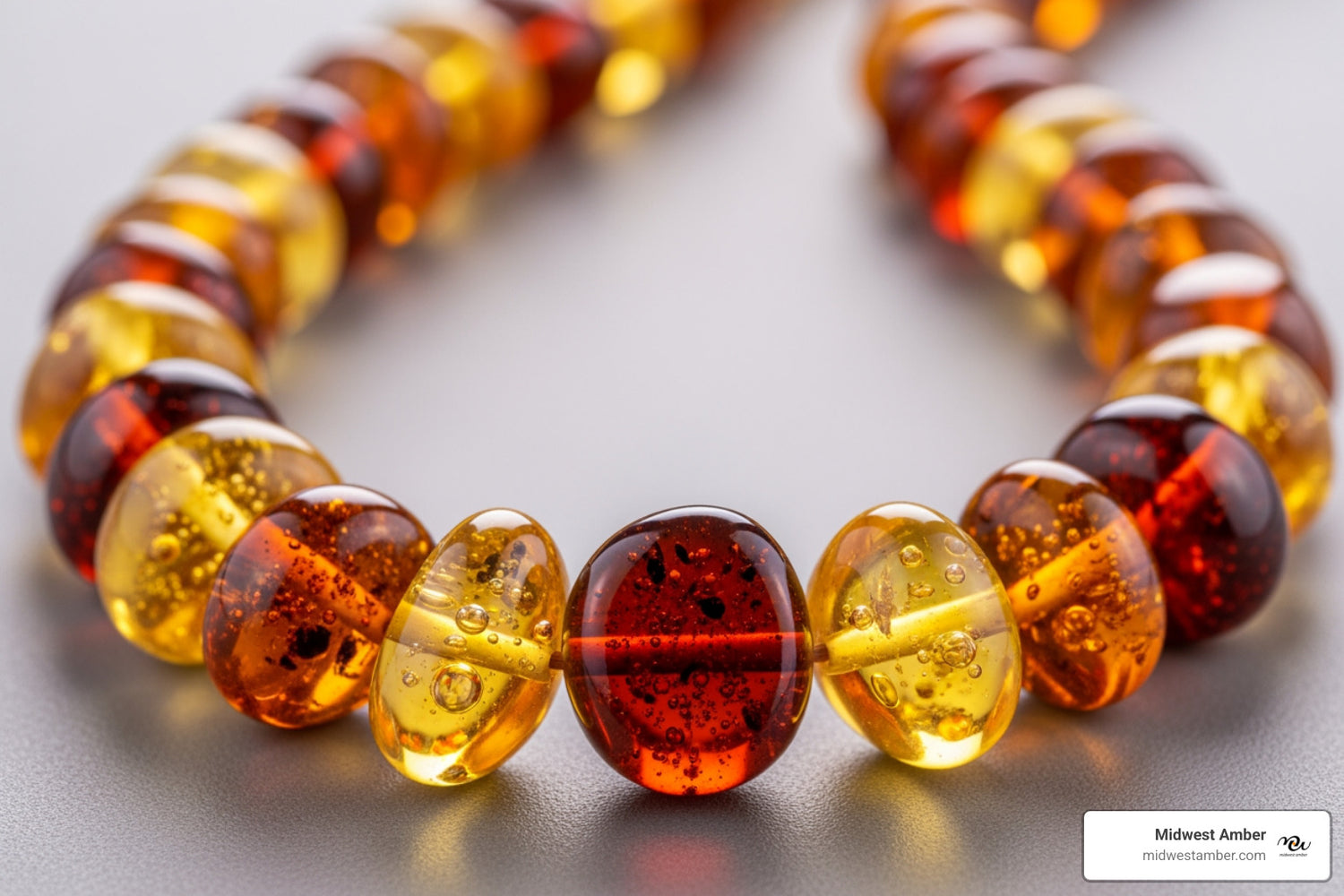
Why Baltic Sea Amber Jewelry Captivates Collectors and Gift-Givers Alike
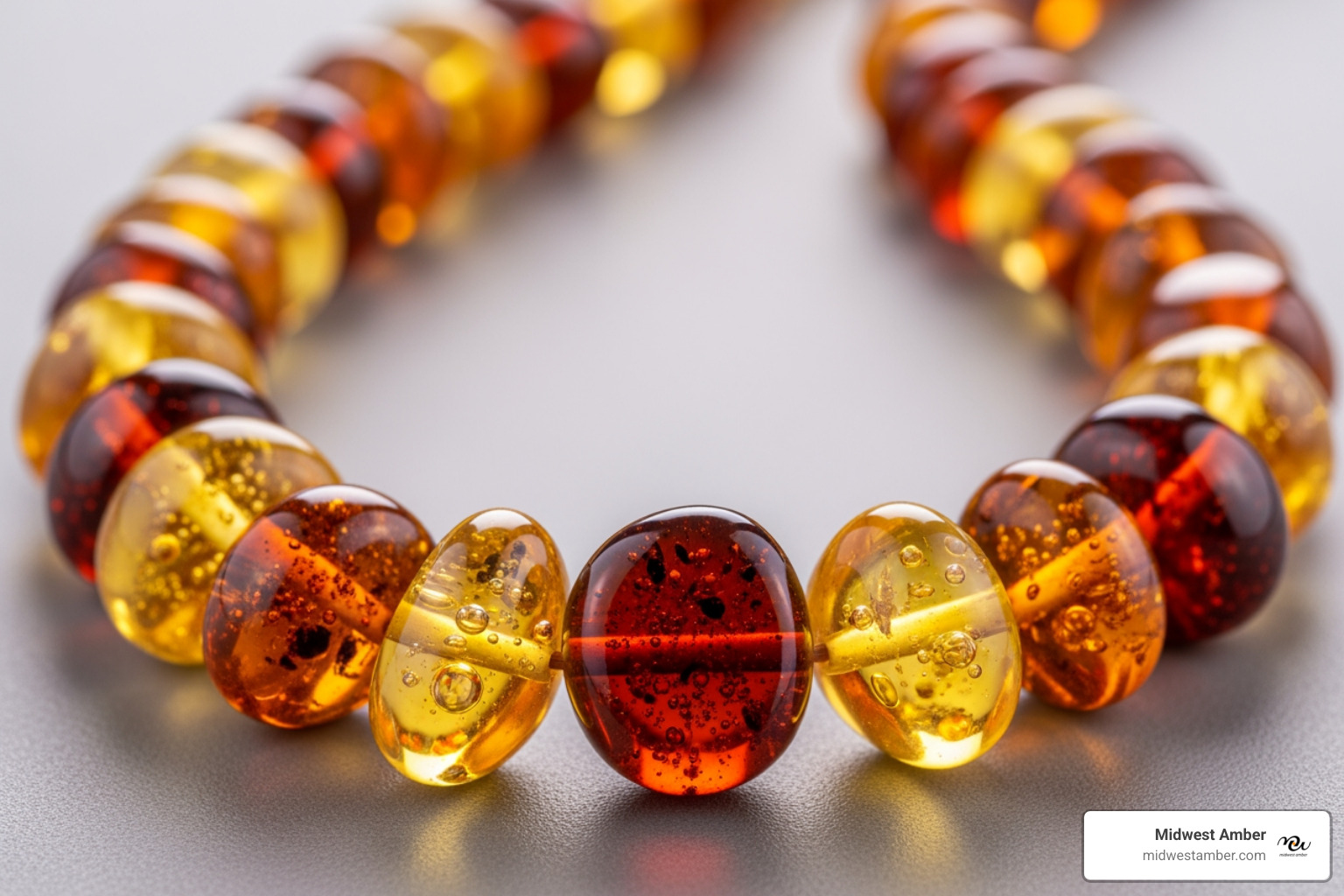
Amber baltic sea jewelry offers more than just natural beauty—it's a piece of history you can wear. This fossilized tree resin, formed 30-50 million years ago, creates truly unique jewelry where no two pieces are ever alike.
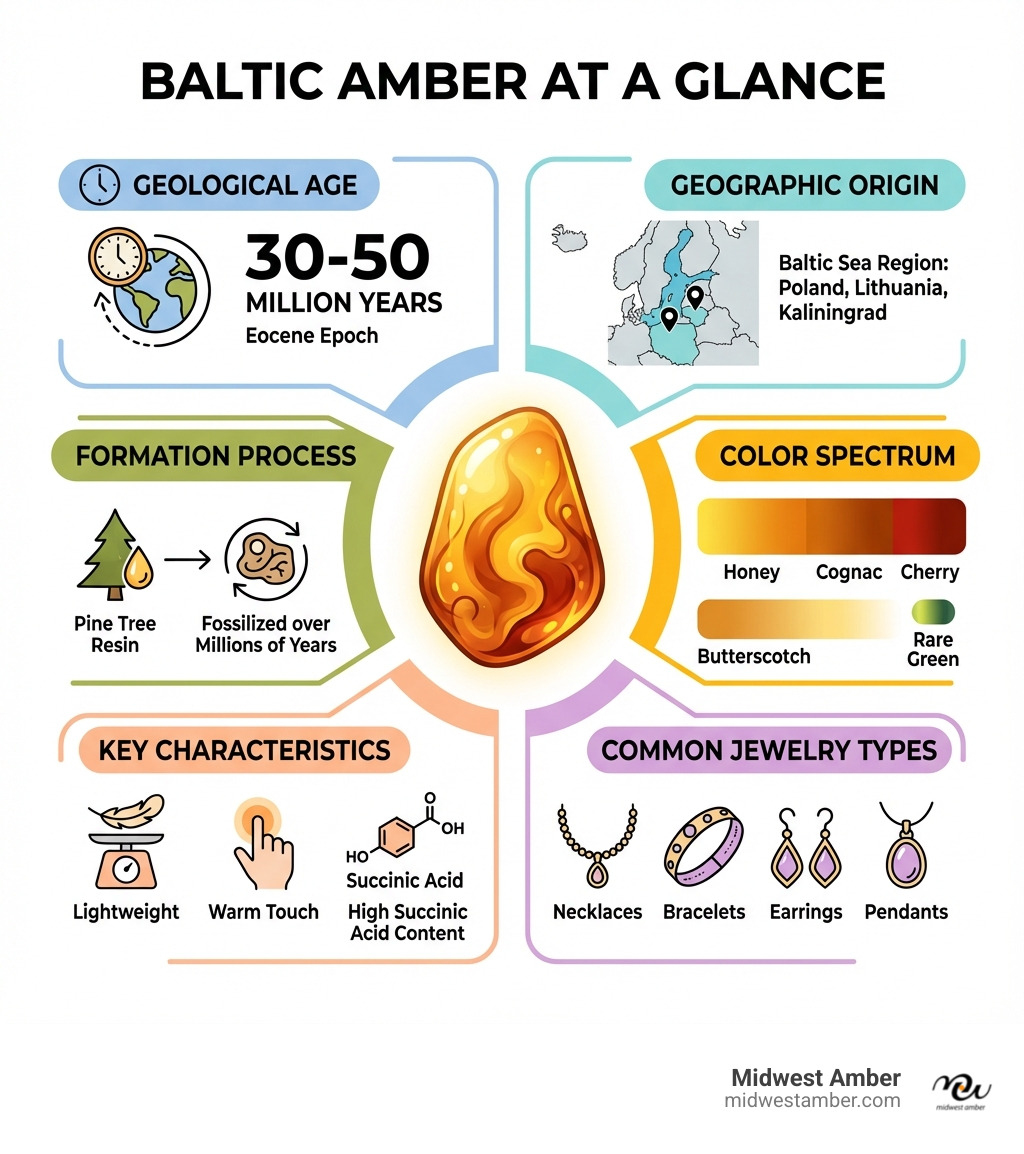
Quick Guide to Baltic Amber Jewelry:
- What it is: Fossilized pine tree resin from the Baltic Sea region, aged 30-50 million years
- Where it comes from: Primarily Poland, Lithuania, and the Kaliningrad region
- Types available: Necklaces, bracelets, earrings, pendants, rings, and brooches
- Color range: Honey, cognac, cherry, butterscotch, and rare green or white varieties
- Key features: Lightweight, warm to touch, often contains natural inclusions (insects, air bubbles, plant matter)
- Price factors: Color rarity, size, clarity, inclusion quality, and artisan craftsmanship
- Authenticity matters: Always purchase from reputable sellers with certificates of authenticity
Baltic amber has been treasured for millennia, once traded along the famous Amber Road connecting northern Europe to the Mediterranean. Today, Lithuanian and Polish artisans continue generations-old traditions, handcrafting each piece to reveal amber's natural glow and ancient warmth.
The appeal goes beyond aesthetics. Many wearers are drawn to amber's purported therapeutic properties—particularly its natural succinic acid content—while others simply appreciate owning a genuine piece of prehistoric nature. Whether you're seeking a meaningful gift or adding to your own collection, authentic Baltic amber jewelry offers both timeless elegance and fascinating geological history.
The key challenge? Ensuring authenticity. With plastic and glass imitations flooding the market, knowing how to identify genuine Baltic amber protects your investment and ensures you're getting the real fossilized treasure.
I'm Gabriel Ciupek, President and owner of Midwest Amber, Inc., where I've spent years working directly with Baltic region suppliers and training teams on the unique properties and authenticity markers of amber baltic sea jewelry. My hands-on experience ensures every piece we offer meets rigorous quality standards while connecting customers to this ancient natural wonder.
Simple amber baltic sea jewelry glossary:
The Story of Baltic Amber: From Ancient Resin to Timeless Gem
Imagine a time millions of years ago, when vast forests of pine trees covered northern Europe. As these ancient trees grew, they exuded a sticky, aromatic resin, a natural defense against insects and disease. Over countless millennia, this resin hardened, fossilized, and transformed into the beautiful material we know today as amber. It's a journey spanning 30-50 million years, placing its origins firmly in the Eocene epoch. This incredible geological timeline is what makes Baltic amber so profoundly special – each piece is a tangible link to our planet's distant past.
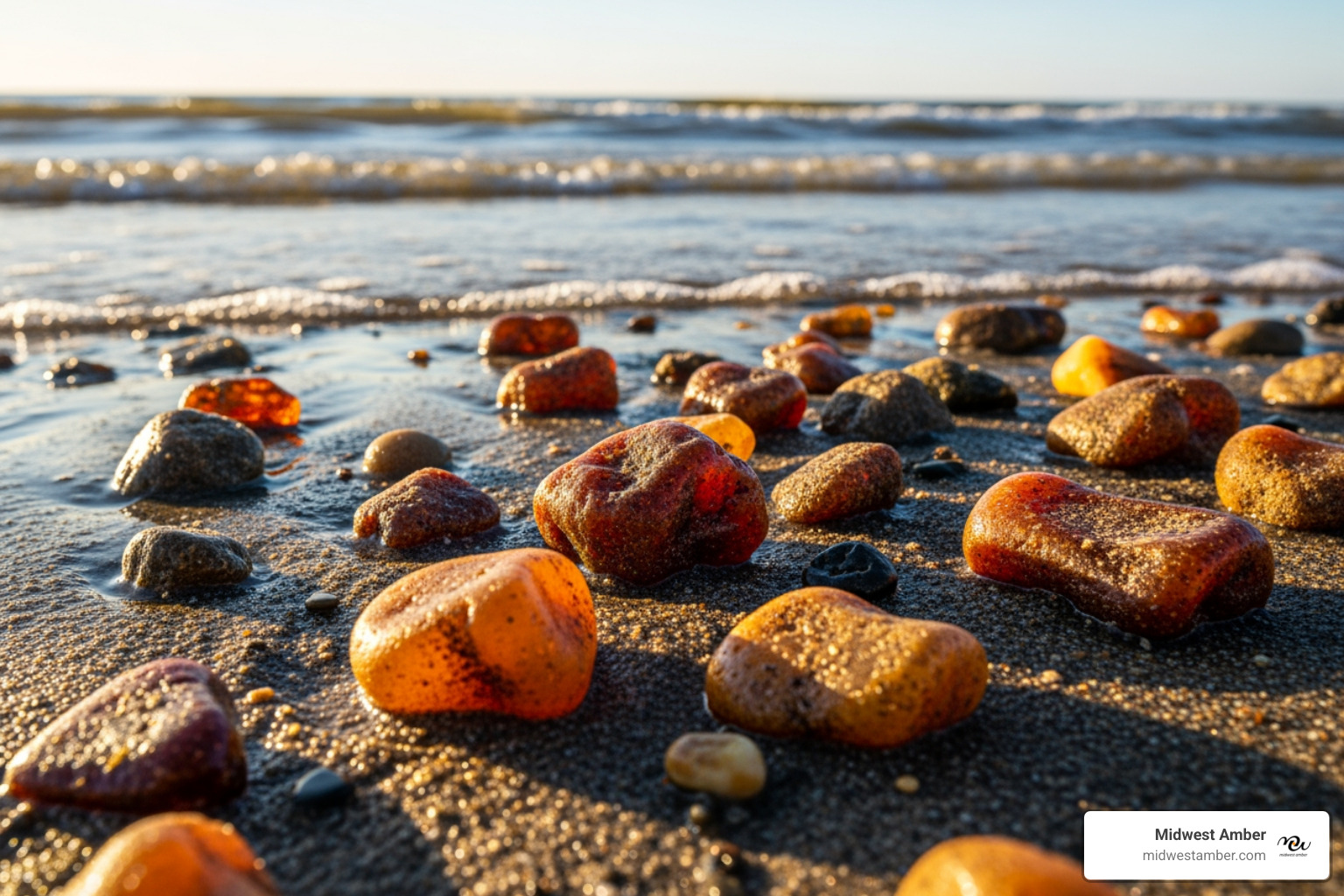
The historical and cultural significance of amber baltic sea jewelry is as rich and complex as its formation. For thousands of years, amber was considered "Nordic Gold," a precious commodity traded across continents. The legendary Amber Road, an ancient trade route, facilitated the exchange of this golden treasure from the Baltic Sea region to the Mediterranean, linking diverse cultures and economies. This long history has imbued Baltic amber with a deep cultural value, often associated with protection, healing, and even magic. From ancient Roman emperors to Viking warriors, many have coveted its unique beauty and perceived powers. Its presence in museums and archaeological sites around the world speaks volumes about its enduring appeal and importance.
We invite you to dig deeper into its origins with us: Unearthing Natural Amber: What Makes This Ancient Gem So Special.
What Makes Baltic Amber Unique?
What sets Baltic amber apart from other resins or even other types of amber found globally? Several key characteristics contribute to its uniqueness:
- Genuine Fossilization: Unlike copal, which is much younger and hasn't fully fossilized, Baltic amber is true fossilized resin, aged between 30 and 50 million years. This extensive aging process gives it a distinct hardness and stability.
- High Succinic Acid Content: Baltic amber is renowned for its high concentration of succinic acid, typically ranging from 3% to 8% by weight. This compound is believed to be responsible for many of the perceived therapeutic benefits associated with wearing amber, which we'll explore further.
- Lightweight and Warm to the Touch: Despite its ancient age, genuine Baltic amber is surprisingly lightweight. When you hold a piece, it feels warm against your skin, unlike glass or plastic imitations which tend to feel cold. This is a simple yet effective indicator of authenticity.
- Electrostatic Properties: Amber has a fascinating property: when rubbed, it can generate an electrostatic charge, attracting small pieces of paper or hair. This characteristic was even noted by ancient Greeks, who called it "elektron," giving us the root of the word "electricity."
- Unique Inclusions: Often, Baltic amber contains captivating inclusions – tiny insects, plant fragments, or air bubbles trapped within the resin millions of years ago. These "windows to the past" not only add to the beauty and individuality of each piece but also significantly increase its rarity and value.
Understanding these unique properties helps us appreciate the depth and wonder of each piece of amber baltic sea jewelry. Curious about its journey to us? Where Does Baltic Amber Come From? A Journey to the Eocene Epoch.
The Main Sources of Baltic Amber
When we talk about Baltic amber, we're referring to amber primarily found in the Baltic Sea region. The vast majority of the world's highest quality amber, including the amber we use, originates from this specific geographical area. The main countries renowned for producing and sourcing this ancient gem are Poland, Lithuania, and the Kaliningrad Oblast (a Russian exclave).
These regions boast rich deposits, often found in the ground or washed ashore from the Baltic Sea after storms. The traditional methods of harvesting and processing amber have been passed down through generations of artisans in these areas, many of whom have specialized in handcrafted amber baltic sea jewelry for decades. Their dedication to the craft ensures that each piece is not just jewelry, but a work of art.
At Midwest Amber, we are proud to specialize in 100% natural, ethically sourced amber directly from Poland and Lithuania. Our strong relationships with these artisans, built over 20 years, ensure that every piece of jewelry we offer is not only genuine but also crafted with respect for the material and the tradition. We believe that amber has a soul, and treating it with respect is a necessity of the craft.
We invite you to explore the beauty created by these skilled hands and Join the community of amber lovers.
The Ultimate Buyer's Guide to Amber Baltic Sea Jewelry
Investing in amber baltic sea jewelry is a decision to own a piece of natural history. To ensure you're making a wise and satisfying purchase, understand what to look for, how to identify genuine amber, and what influences its price. Our guide aims to empower you with this knowledge, helping you select a piece that you'll cherish for years to come.
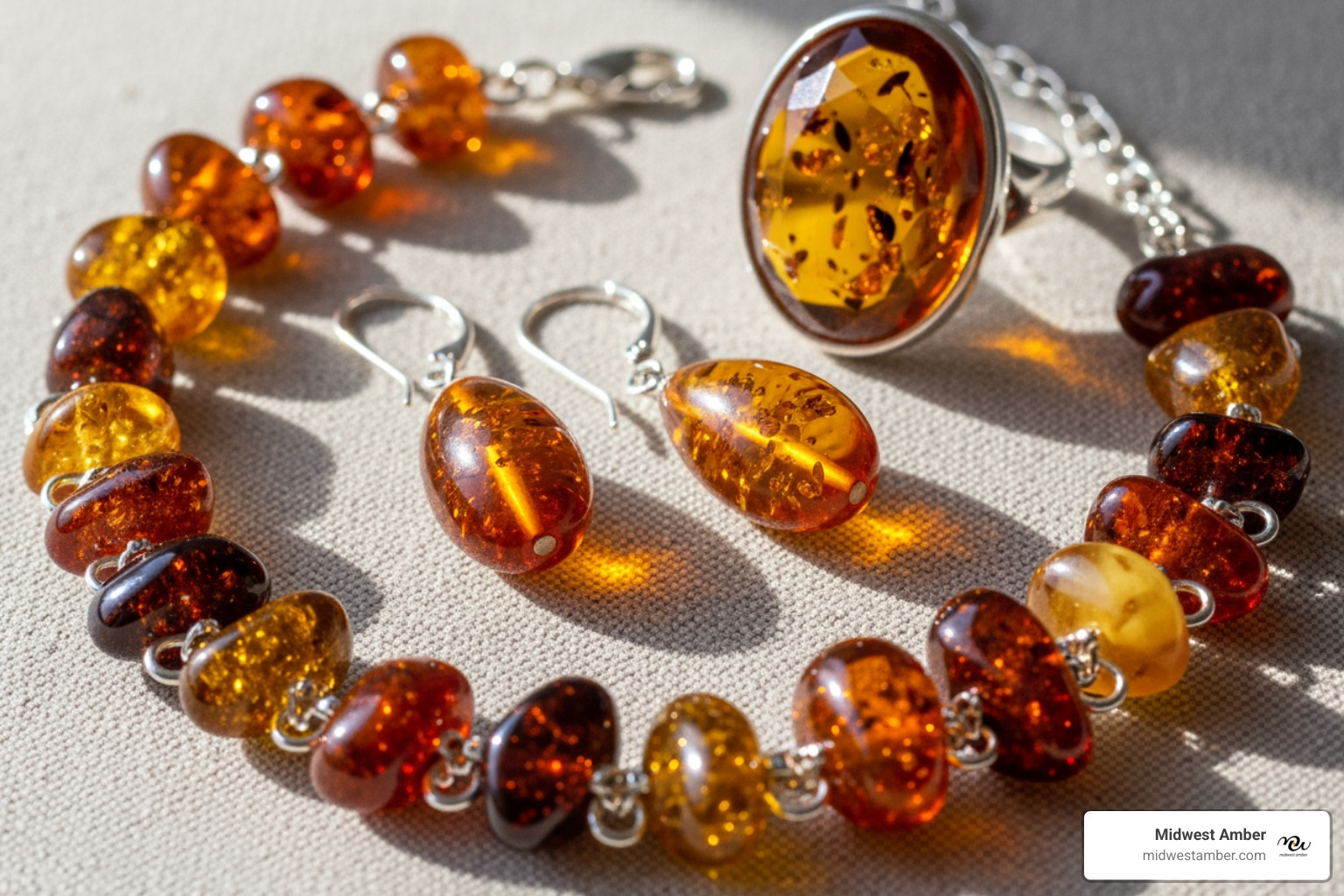
From necklaces that drape neatly to bracelets that adorn the wrist, earrings that catch the light, and intricate pendants or rings, the variety of amber baltic sea jewelry is vast. Whether you're looking for a statement piece or a subtle accent, there's a design for every taste and occasion. To learn more about selecting the perfect piece, check out The Ultimate Guide to Buying Real Amber Jewelry: Rings, Earrings, and Beyond.
How to Identify Genuine Amber and Avoid Fakes
The market, unfortunately, is rife with imitations. Identifying genuine Baltic amber is crucial to avoid disappointment. Here’s how we recommend you can discern the real deal from common fakes:
| Test | Genuine Amber | Copal (younger resin) | Glass | Plastic (Celluloid/Phenolic Resin) |
|---|---|---|---|---|
| Saltwater Test | Floats in saturated saltwater | Sinks or struggles to float | Sinks | Sinks |
| Hot Needle Test | Emits a pine-like, resinous smell; doesn't melt easily | Emits a sweet, chemical smell; melts quickly | No smell; needle doesn't penetrate | Emits a chemical, burning plastic smell; melts |
| Scent Test | Rub vigorously: subtle piney or resinous scent | Often little to no scent, or a chemical odor | No scent | Chemical, burning smell |
| Appearance | Unique imperfections, natural inclusions, often opaque or cloudy | Clearer, fewer natural imperfections, sometimes uniform bubbles | Smooth, often flawless, cold to touch, visible bubbles | Uniform color, cold to touch, sometimes visible mold lines |
| UV Light Test | Fluoresces blue or green (strong reaction) | Weak or no fluorescence | No fluorescence | Weak or no fluorescence |
| Touch | Warm, lightweight | Slightly warmer, lightweight | Cold, heavy | Cold, lightweight to moderate weight |
The saltwater test is one of the easiest to perform at home: dissolve 7-8 teaspoons of salt in a glass of water. Genuine amber should float, while most fakes will sink. Another indicator is the "hot needle test" (use caution!): carefully heat a needle and gently press it into an inconspicuous spot. Genuine amber will emit a faint, pine-like scent and resist penetration, whereas plastic will smell distinctly of burning plastic and melt easily. We always advise purchasing from reputable sellers who provide a certificate of authenticity, like us at Midwest Amber. This offers peace of mind and guarantees you're getting a true piece of amber baltic sea jewelry.
For a more in-depth look at this vital topic, consult our guide: Real or Resin: How to Tell If Your Amber Jewelry Is Genuine. And don't forget, we stand by our products: Don't Get Fooled: The Definitive Guide to Certified Baltic Amber.
Key Characteristics to Look For
When selecting your amber baltic sea jewelry, several characteristics contribute to its beauty, uniqueness, and value:
- Color: Amber comes in an astonishing array of colors, from the most common honey and cognac shades to rarer butterscotch, cherry, green, and even white. The color is influenced by the original tree resin, the amount of air bubbles, and natural contaminants trapped inside over millions of years. Each hue has its own charm, and personal preference often dictates choice.
- Clarity: Amber can range from perfectly transparent, allowing you to gaze into its ancient depths, to completely opaque, like the creamy butterscotch varieties. Transparent pieces often showcase inclusions beautifully, while opaque pieces possess a soft, milky luster.
- Inclusions: These are the tiny treasures within amber – ancient insects, delicate plant fragments, or captivating air bubbles. Inclusions make each piece truly one-of-a-kind and can significantly increase its value and desirability. A perfectly preserved insect from 30 million years ago is a marvel!
- Setting Materials: The quality of the metal setting complements the amber itself. Many of our pieces are set in sterling silver, known for its luster and durability, but amber can also be found set with gold. Some artisans even incorporate cold enamel or zirconia for added design flair.
- Craftsmanship: The skill of the artisan profoundly impacts the final piece. Handcrafted amber baltic sea jewelry from experienced artisans in Poland and Lithuania, such as those we work with, showcases meticulous attention to detail, from the shaping and polishing of the amber to the secure setting. This expertise ensures both beauty and longevity.
Understanding these elements helps you appreciate the essence of each piece. Beyond the Shine: Exploring the Essence of Natural Baltic Amber.
Understanding the Price of amber baltic sea jewelry
The price of amber baltic sea jewelry can vary widely, from a few dollars for smaller, simpler pieces to thousands for rare, museum-quality items. Several factors influence this cost:
- Rarity of Color: Certain colors, like natural green, white, or deep cherry, are much rarer than the common honey or cognac shades and thus command higher prices.
- Size and Weight: Larger, heavier pieces of amber naturally require more raw material and are therefore more expensive.
- Clarity and Quality of Inclusions: Transparent amber with distinct, well-preserved inclusions (especially insects or rare plant matter) is highly prized and significantly more valuable. Opaque pieces also have their own market, with uniform, creamy butterscotch often being more sought after than mottled, less consistent opaque pieces.
- Artisan Craftsmanship: The skill and time invested by the artisan play a crucial role. Handcrafted pieces with intricate designs, unique settings, or specialized polishing techniques will naturally be more expensive than mass-produced items.
- Setting Materials: Whether the amber is set in sterling silver, gold, or features additional gemstones like zirconia, this will impact the overall price.
- Origin and Authenticity: Genuine Baltic amber from reputable sources, often accompanied by a certificate of authenticity, will generally be priced higher than questionable pieces from unknown origins.
At Midwest Amber, we focus on providing genuine, high-quality amber baltic sea jewelry that reflects fair value for its ancient origin and skilled craftsmanship. For example, a simple pendant might range from $30-$100, while an intricate necklace with larger, rarer stones could be several hundred dollars or more. It's an investment in a piece of geological art. Take a look at a genuine amber pendant to see an example of the quality we offer.
Beyond the Shine: Modern Trends and Perceived Benefits
Amber baltic sea jewelry is more than just a beautiful adornment; it carries a legacy of perceived therapeutic properties and continues to evolve with contemporary fashion trends. It's a natural remedy for some, a unique gift for others, and a timeless fashion statement for all.
Perceived Therapeutic Properties of Amber
For centuries, Baltic amber has been revered not only for its beauty but also for its purported health and therapeutic benefits. While scientific research on these claims is ongoing, many wearers attest to their effectiveness. The key to these perceived benefits is believed to be succinic acid, a natural compound present in Baltic amber. When amber comes into contact with the warmth of the skin, it's thought that tiny amounts of this acid are absorbed.
Here are some of the commonly attributed therapeutic properties:
- Teething Pain Relief for Babies: Perhaps the most widely known use, Baltic amber necklaces and anklets for babies are believed to help relieve colic and teething pain. Parents often report a reduction in inflammation, drooling, and fussiness, allowing for better sleep. However, it's crucial to remember that these necklaces are for wearing, not chewing, and babies should always be supervised.
- Anti-inflammatory Claims: Beyond teething, the succinic acid is believed to act as a natural anti-inflammatory agent, potentially easing discomfort from conditions like arthritis or muscle aches.
- Immune System Support: Some proponents suggest that wearing amber can help boost the immune system, particularly in children, by promoting overall well-being.
- Headache and Stress Relief for Adults: Many adults wear amber baltic sea jewelry to alleviate headaches, reduce insomnia, and improve mood. Testimonials from users often describe feeling calmer, experiencing fewer migraines, and recovering more quickly from ailments.
- Repelling Ticks and Fleas in Pets: Interestingly, Baltic amber collars are also marketed for pets, with claims that they can help repel ticks and fleas through electrostatic properties and the release of aromatic compounds.
While these benefits are largely anecdotal, the long history of amber's use in traditional remedies speaks to its enduring appeal. For those seeking a deeper understanding of these claims, we offer further insights: The Amber Truth: Unlocking the Secrets of Genuine Stones.
Current Trends in amber baltic sea jewelry
While Baltic amber itself is ancient, its appeal in the jewelry world is changing. Modern designers are constantly finding new ways to incorporate this timeless gem into contemporary styles, ensuring that amber baltic sea jewelry remains a relevant and fashionable choice.
- Minimalist Designs: Clean lines and simple settings allow the natural beauty of the amber to take center stage. Think delicate pendants on fine chains or understated studs that highlight the stone's unique color and inclusions.
- Raw, Unpolished Amber: Moving away from highly polished pieces, there's a growing trend towards raw or minimally polished amber. These pieces showcase the stone's organic texture and natural form, offering an earthy, bohemian aesthetic.
- Mixed-Media Jewelry: Designers are increasingly combining amber with other materials. Sterling silver remains a popular choice, but we also see amber paired with leather, wood, or even rough-cut gemstones, creating unique and eclectic pieces.
- Classic vs. Modern Styles: While classic designs, often featuring polished cognac amber in ornate silver settings, remain popular, modern interpretations offer bolder shapes, asymmetrical designs, and innovative uses of color.
- Statement Pieces: Large, striking pieces of amber, often showcasing rare inclusions or unique color variations, are being acceptd as focal points for necklaces and rings, making a powerful fashion statement.
- Men's Amber Jewelry: The market for men's amber baltic sea jewelry is expanding, with designs incorporating amber into cufflinks, rugged bracelets, and bold pendants, often in darker hues or raw finishes.
Whether you prefer the traditional elegance or a cutting-edge design, the versatility of Baltic amber ensures there's a piece to suit every style.
Preserving Your Treasure: How to Care for Amber Jewelry
To ensure your amber baltic sea jewelry retains its ancient glow and beauty for generations, proper care is essential. Amber is an organic gem, softer than many traditional gemstones, and requires a gentle touch.
Here are our best practices for caring for your Baltic amber:
- Avoid Chemicals: This is paramount. Amber is sensitive to chemicals found in perfumes, hairsprays, lotions, and cleaning products. Always apply these products before putting on your amber jewelry, and remove your jewelry before using household cleaners.
- Clean with Lukewarm Water and Mild Soap: For cleaning, use only lukewarm water and a very mild, non-abrasive soap (like baby soap). Gently wipe the amber with a soft cloth. Avoid harsh brushes or abrasive materials that could scratch the surface.
- Polish with a Soft Cloth: After cleaning, dry your amber thoroughly with a soft, lint-free cloth. You can gently polish it to restore its natural luster.
- Store Separately: To prevent scratches from harder jewelry, store your amber pieces separately in a soft pouch or a fabric-lined jewelry box. Keep it away from direct sunlight and extreme temperatures.
- Avoid Extreme Temperatures: Sudden changes in temperature or prolonged exposure to heat can cause amber to crack or dry out. Never leave your amber jewelry in direct sun, near a heat source, or in a very cold environment.
- Remove Before Activities: Always remove your amber baltic sea jewelry before swimming (chlorine is harmful), showering, exercising, or doing any strenuous activities that could expose it to impact or chemicals.
By following these simple care instructions, you'll help preserve the timeless beauty and integrity of your ancient treasure.
Frequently Asked Questions about Baltic Amber
We often receive questions about amber baltic sea jewelry, and we're always happy to share our expertise. Here are some of the most common inquiries:
Is Baltic amber jewelry safe for babies?
Baltic amber necklaces for babies have gained popularity for their purported ability to relieve teething pain and colic. It's believed that when warmed by the baby's skin, the amber releases succinic acid, which is then absorbed. However, it's critical to understand that these necklaces are designed for wearing, not for chewing. For safety, always choose a necklace where each bead is individually knotted to prevent scattering if the string breaks. Most importantly, a baby wearing any jewelry, including amber, should always be under adult supervision. Never allow a baby to sleep with an amber necklace on, and consider placing it around an ankle under clothing during sleep or naps. Safety first is always our motto. Learn more about amber necklaces.
How can I be sure my amber is authentic?
Ensuring authenticity is key to enjoying genuine amber baltic sea jewelry. As specialists with over 20 years of experience, we emphasize purchasing from reputable sellers who provide a certificate of authenticity. This certificate guarantees the origin and natural quality of the amber. Beyond that, you can perform simple home tests, like the saltwater float test (genuine amber floats in saturated saltwater). Genuine amber is also noticeably lightweight and feels warm to the touch, unlike heavier, colder imitations like glass. It often has natural imperfections, tiny cracks, or air bubbles that add to its character. If a piece looks too perfect or feels unusually heavy or cold, it might be a fake. We pride ourselves on offering certified genuine Baltic amber, giving you complete confidence in your purchase. For a detailed guide, see Don't Get Fooled: The Definitive Guide to Certified Baltic Amber.
Why does amber come in so many different colors?
The incredible range of colors in Baltic amber is one of its most captivating features, making each piece truly unique. The color of amber is primarily determined by several factors present during its formation millions of years ago:
- Original Tree Resin: The specific type of ancient pine tree resin played a role.
- Air Bubbles: The presence and density of microscopic air bubbles trapped within the resin are major contributors. For instance, a high concentration of tiny air bubbles can make amber appear opaque and creamy, leading to "butterscotch" or "royal" amber. Fewer air bubbles allow light to pass through, resulting in transparent honey or cognac shades.
- Natural Contaminants: Over millions of years, natural contaminants or organic matter absorbed into the resin can influence its hue. Iron oxides, for example, can contribute to reddish or cherry tones.
- Oxidation: Exposure to oxygen and light over vast periods can also alter amber's surface color, often deepening it.
This complex interplay creates a spectrum from light yellow, gold, and honey, to rich cognac, dark cherry, and even rare green, white, or black varieties. Each color tells a part of its ancient story.
Find Your Perfect Piece of History
We hope this extensive guide has illuminated the enchanting world of amber baltic sea jewelry. From its ancient origins 30-50 million years ago as fossilized pine resin, to its enduring cultural significance and its perceived therapeutic properties, Baltic amber truly is a natural wonder. Its timeless beauty, combined with the artisan craftsmanship from regions like Poland and Lithuania, makes it a unique and cherished addition to any collection.
At Midwest Amber, we are passionate about connecting you with these genuine pieces of history. With over two decades of experience and a commitment to 100% natural, ethically sourced amber, we ensure certified authenticity in every handcrafted item. Whether you're drawn to its vibrant colors, intriguing inclusions, or simply its warm, ancient glow, we believe there's a perfect piece of amber baltic sea jewelry waiting for you.
We invite you to experience the allure for yourself. Explore our ultimate collection of Baltic Amber jewelry and find your own treasure from the Baltic Sea.


Leave a comment
This site is protected by hCaptcha and the hCaptcha Privacy Policy and Terms of Service apply.