

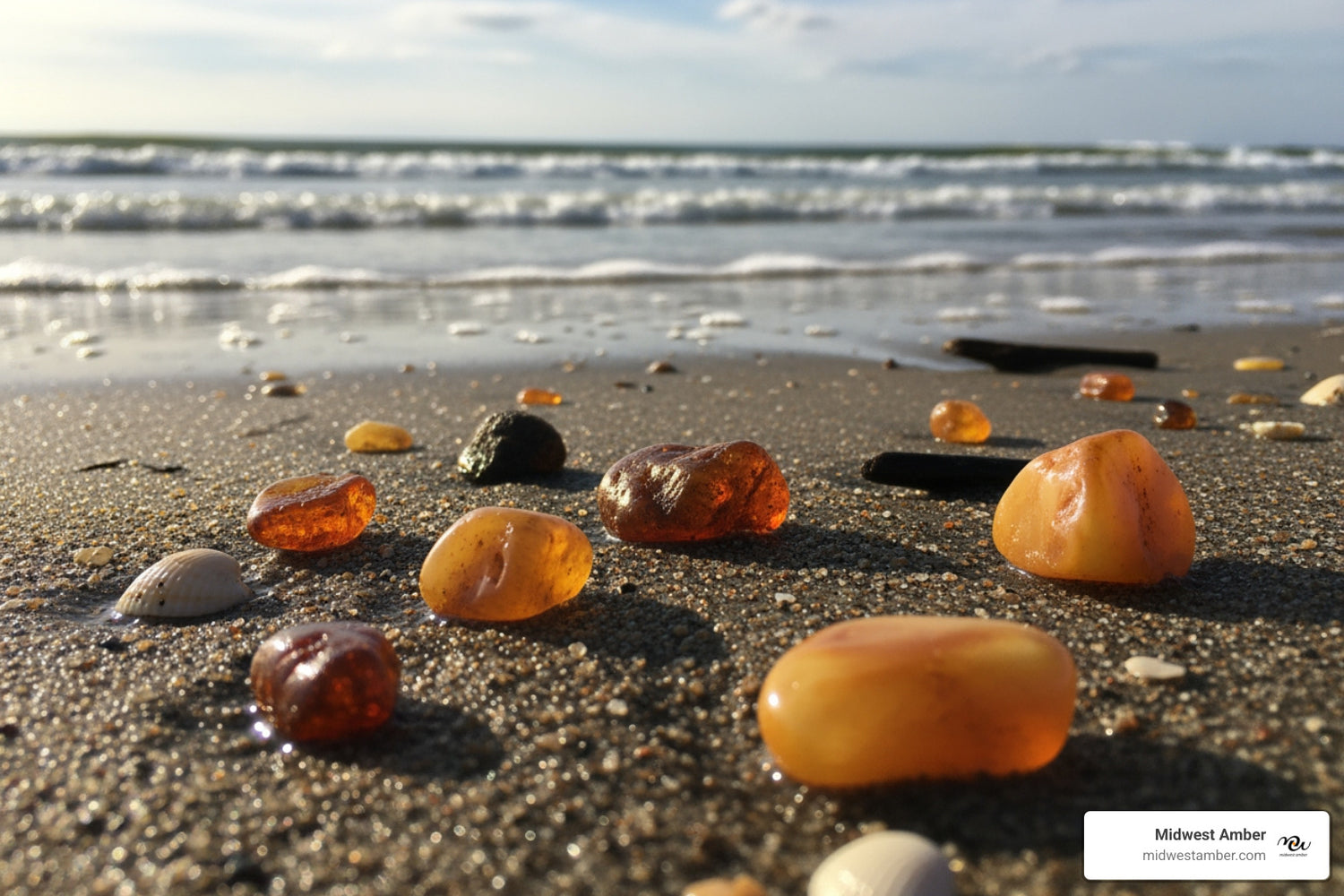
The Golden Treasure of Northern Europe
Amber in baltic sea is fossilized tree resin that formed 34-54 million years ago in ancient forests that once covered Northern Europe. Today, the Baltic Sea region holds 80-90% of the world's amber, with pieces washing ashore along the coasts of Poland, Russia, Lithuania, and Latvia.
Quick Facts About Amber in Baltic Sea:
- Age: 34-54 million years old (Eocene epoch)
- Origin: Fossilized resin from ancient subtropical conifer trees
- Primary Location: Kaliningrad Oblast (80% of world reserves), Poland, Lithuania, Latvia
- Unique Feature: Contains 3-8% succinic acid (highest among all amber types)
- How It's Found: Washed ashore after storms, or mined from "blue earth" deposits 25-40 meters underground
- Why It's Special: Often contains perfectly preserved prehistoric insects, plants, and other inclusions
This ancient gemstone began as sticky resin that trapped everything from tiny ants to delicate flowers. Over millions of years, geological forces buried and fossilized the resin, changing it into the glowing golden gem we treasure today. Ancient rivers and glaciers carried it across Northern Europe, with much of it settling on the floor of the Baltic Sea, where storms still wash it ashore.
Valued by ancient Greeks and Romans, Baltic amber is more than just beautifulit's a natural time capsule connecting us to a vanished world.
I'm Gabriel Ciupek, president of Midwest Amber, Inc. While our home is in the American Midwest, our passion and expertise are rooted in the Baltic region. I've spent years building direct relationships with suppliers and artisans in Poland and Lithuania to bring genuine amber in baltic sea to our customers. We bridge the distance, ensuring that the remarkable story and authenticity of this European treasure can be appreciated right here in the US.
If you are in the Chicagoland suburbsfrom Arlington Heights, Schaumburg, and Palatine to Northbrook, Glenview, Skokie, and beyondMidwest Amber is your local connection to this distant coastline. We specialize in helping customers throughout communities like Chicago, Des Plaines, Elk Grove Village, Crystal Lake, Lake Zurich, Barrington, and many more find authentic Baltic amber without ever leaving Illinois. Understanding its journey makes each piece we offer even more meaningful.
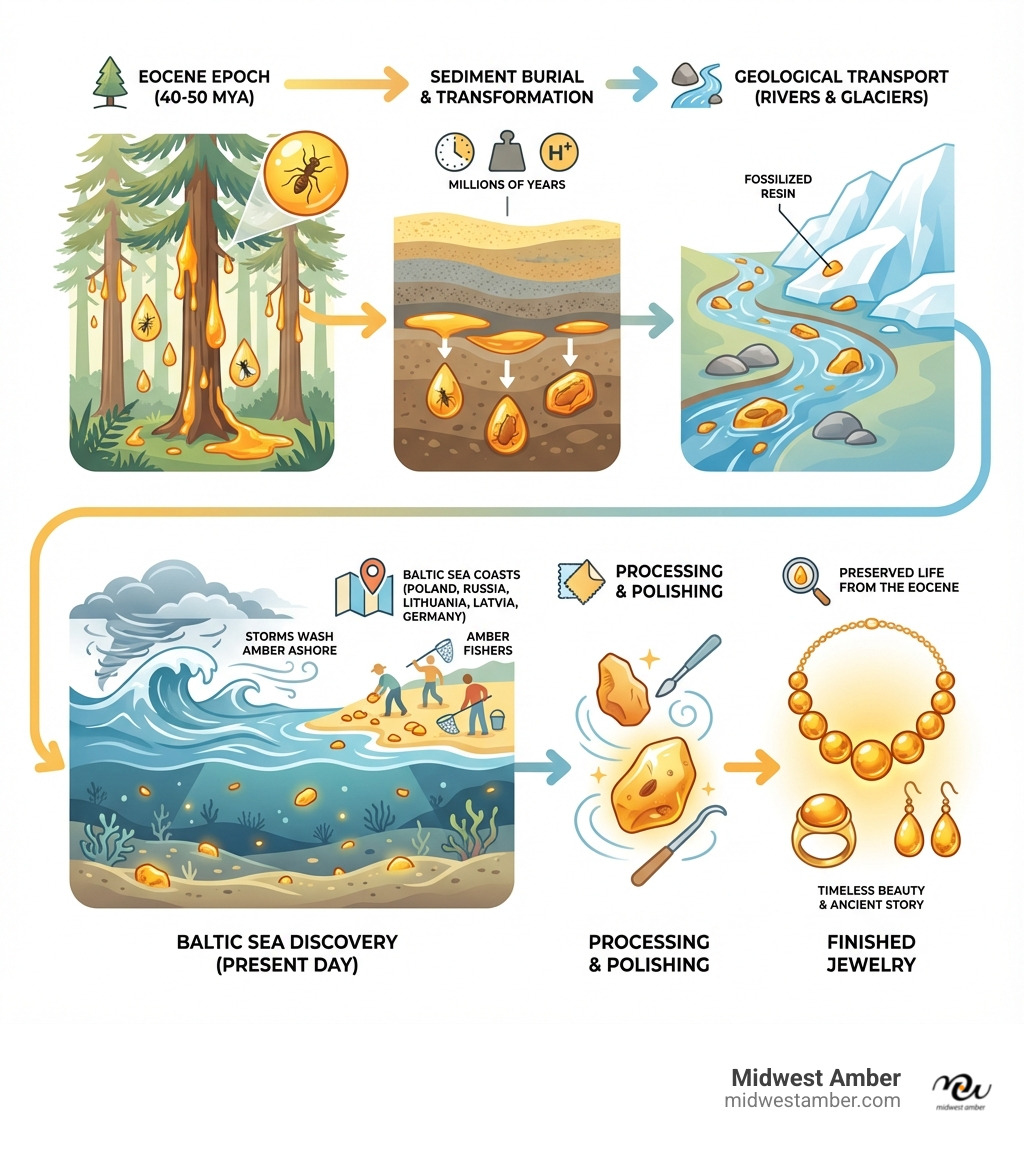
Amber in baltic sea terms at a glance:
The Ancient Origins: How Baltic Amber Formed 40 Million Years Ago
Our journey to understand amber in baltic sea begins in the Eocene epoch, 34 to 54 million years ago. During this period of global warmth, lush, subtropical forests covered Northern Europe. The resin that would become Baltic amber flowed from trees in massive quantities, dripping onto the forest floor and trapping insects and plant fragments. Over millions of years, these resin deposits were buried under layers of sediment and fossilized under immense pressure, hardening into the stable material we recognize as amber.
The primary geological deposits are found in a distinct layer known as "blue earth," a glauconite-rich sediment that helped preserve the resin. The sheer volume produced was staggering, with estimates suggesting over 100,000 tons of amber originated in this ancient forested region.
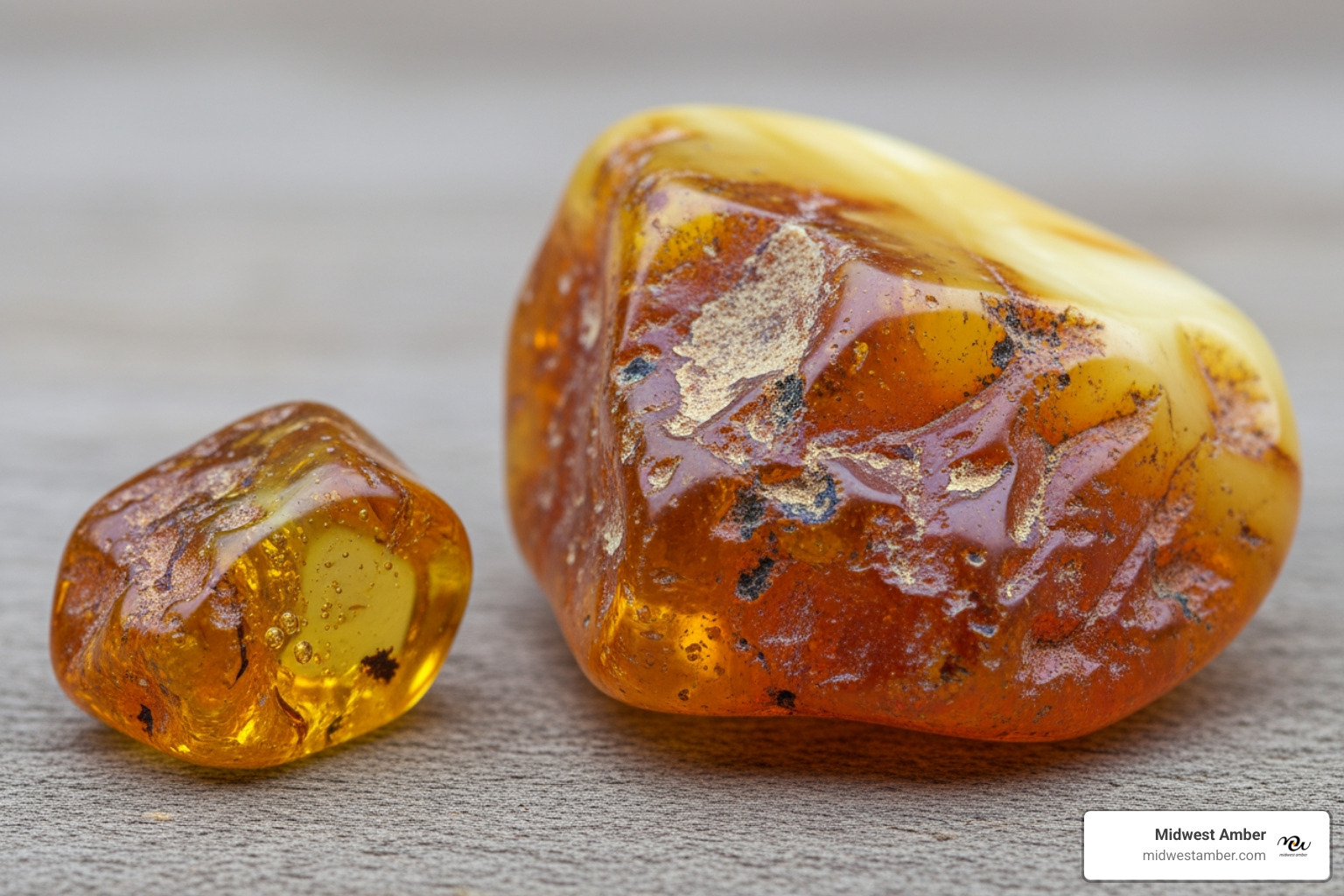
The "Amber Forest" and Its Trees
While once attributed to an extinct pine, Pinites succinifer, modern research suggests the resin came from conifers of the Sciadopityaceae family, similar to the modern Japanese umbrella pine. As detailed in studies like "A new proposal concerning the botanical origin of Baltic amber", these trees thrived in the subtropical Eocene climate. Their immense resin overproduction was likely a response to environmental stress, setting the stage for the world's most significant amber deposits.
From Sticky Resin to Hardened Gemstone
The change from soft resin to hard amber is a gradual process of polymerization. Over millions of years, volatile compounds in the resin evaporated while the remaining organic molecules cross-linked, forming a stable macromolecular structure. A key component of Baltic amber is its high succinic acid content (3-8%), which distinguishes it as 'succinite'. This unique chemical signature is a definitive marker for genuine Baltic amber, setting it apart from other fossil resins. The Samland Peninsula in the Kaliningrad region became the richest known source where these resin-rich sediments accumulated.
Understanding this intricate process helps us appreciate the true journey of each piece of amber. For more on this fascinating change, explore our insights on Beyond the Shine: Exploring the Essence of Natural Baltic Amber.
From Eocene Forest to Seafloor: The Journey of Amber in Baltic Sea
Once hardened, the amber's journey was far from over. Over millions of years, geological forces reshaped the landscape. Ancient rivers and massive glaciers transported the amber-bearing sediments across northern Europe. This extensive geological transport distributed amber in baltic sea deposits widely, with many pieces eventually settling in marine sediments on the seafloor.
Today, the southern shores of the Baltic Sea are the primary location for these ancient deposits. The Kaliningrad Oblast of Russia is particularly renowned, holding over 80% of the world's amber reserves. Significant deposits are also found along the coasts of Poland, Lithuania, and Latvia.

Why is amber found on Baltic beaches?
The promise of finding ancient amber washed ashore is part of the Baltic Sea's allure. Powerful storms stir the sea, dislodging pieces of amber from the seabed. Because amber's density is comparable to that of saltwater, it is buoyant enough to be carried by waves toward the shore. This phenomenon is especially noticeable after severe weather, as highlighted in a BBC report, "Russia: Amber covers beach after storm." These events allow collectors, or "amber fishers," to gather pieces that have completed their millions-year journey.
The Primary Deposits of amber in Baltic Sea
While amber washes ashore on many Baltic coasts, the vast majority of the world's supply comes from specific deposits. The Kaliningrad region of Russia is the undisputed capital of amber in baltic sea, accounting for over 90% of global production. This area's immense reserves are found in the "blue earth" layer, 25 to 40 meters below the surface. Beyond Kaliningrad, Poland, Lithuania, and Latvia also have significant amber deposits and a rich history of collection, solidifying the Baltic Sea area as the global heartland of amber.
The Science and Soul of Succinite: Properties and Significance
The allure of amber in baltic sea goes beyond its ancient origins; it's rooted in its unique scientific properties and profound cultural significance. Often called "succinite" due to its high succinic acid content, this gem has captivated humanity for millennia. To truly appreciate this stone, we must explore both its chemical structure and its storied past. Our exploration of Unearthing Natural Amber: What Makes This Ancient Gem So Special digs deeper into these aspects.
Chemical Makeup and Physical Properties
Baltic amber's chemical composition sets it apart, containing 3% to 8% succinic acid. This is not only a key identifier but is also linked to the stone's perceived therapeutic properties. Physically, amber is unique. It has a low hardness of 2 to 2.5 on the Mohs scale, making it soft and requiring careful handling. Its density is comparable to seawater, which is why it feels warm to the touch, unlike cold glass imitations. Perhaps its most intriguing property is its electrostatic nature: when rubbed, amber acquires a negative charge and can attract small particles, a phenomenon that gave us the term "electricity" (from "electron," the Greek word for amber).
The Colors of Baltic Amber
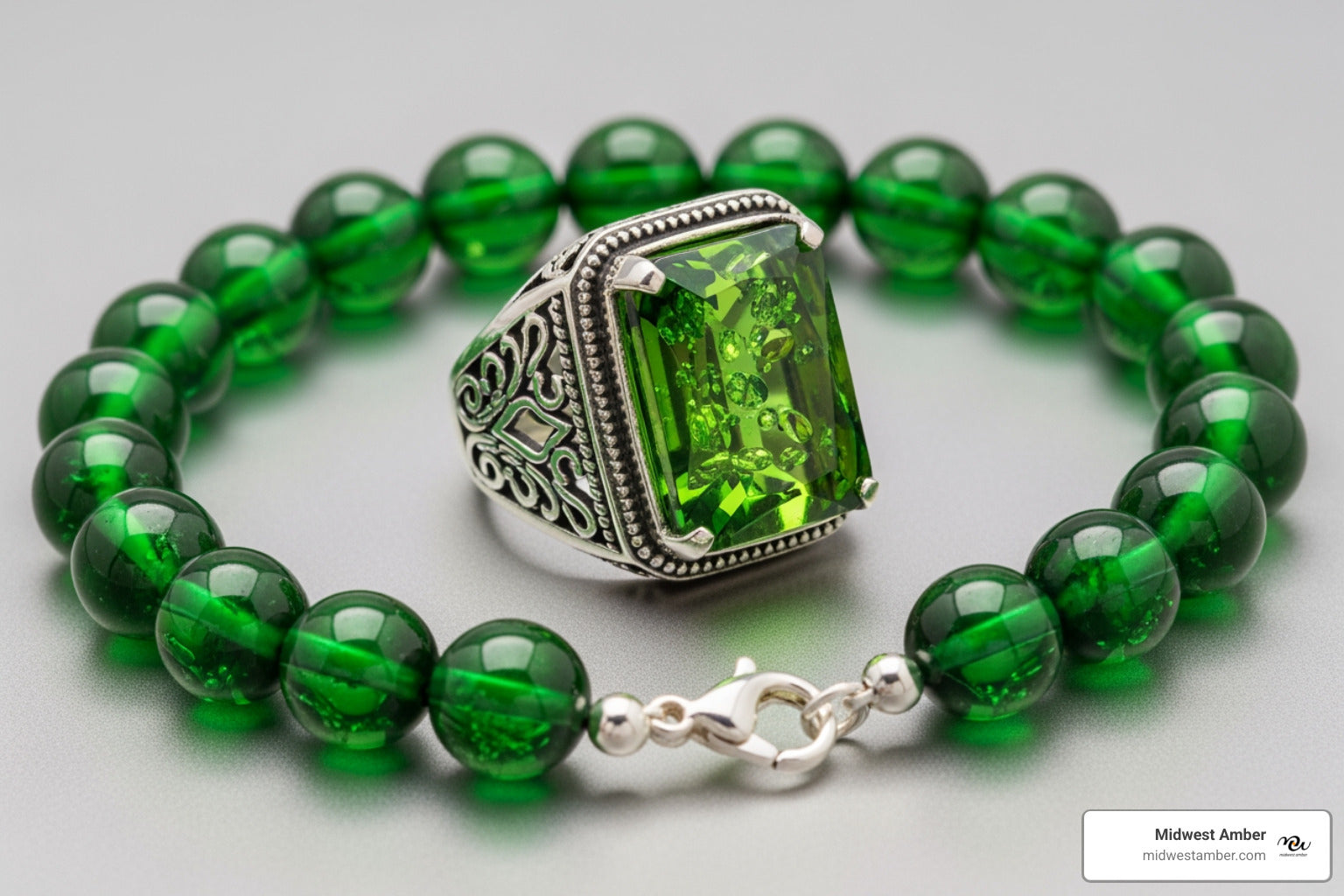
One of the most enchanting aspects of amber in baltic sea is its incredible color diversity. While many associate amber with a golden-yellow hue, it occurs in over 300 variations, from honey and cognac to rare milky white, green, cherry red, and even blue. These colors are primarily caused by microscopic air bubbles that scatter light, creating a cloudy or milky appearance. Other factors include impurities from the ancient forest, such as plant debris or soil, and oxidation over millions of years. Each color tells a unique story of the conditions under which that piece of amber was formed. Explore the full spectrum in our guide, From Raw to Red: A Shopper's Guide to Every Type of Amber Jewelry.
Myths, Legends, and Cultural History
Beyond science, amber in baltic sea is steeped in rich cultural history. It has been traded since the Neolithic period, with evidence of Baltic amber found as far as Spain, as documented in "The earliest Baltic amber in Western Europe". This ancient "Amber Road" connected the Baltic with civilizations across Europe, making amber a prized commodity.
In many cultures, amber was revered for its perceived magical and healing properties, used as a talisman to ward off evil and bring good fortune. Perhaps the most poignant legend is the Lithuanian tale of Jurate, the goddess of the sea. She fell in love with a mortal fisherman, incurring the wrath of the thunder god, who shattered her amber palace at the bottom of the Baltic. To this day, tear-shaped pieces of amber that wash ashore are said to be Jurate's eternal sorrow for her lost love. These stories make each piece not just a gem, but a fragment of ancient lore.
A Prehistoric Time Capsule: Flora and Fauna in Baltic Amber
One of the most extraordinary aspects of amber in baltic sea is its ability to preserve life from millions of years ago. Each piece acts as a natural time capsule, offering a three-dimensional window into the Eocene ecosystem. Unlike other fossils, amber captures delicate organisms in exquisite detail, making it an invaluable resource for paleontology.
Animals Trapped in Time
The diversity of animal inclusions in Baltic amber is astounding, with insects making up over 98% of all specimens. Scientists have identified thousands of species, many now extinct, providing crucial insights into prehistoric life. Other arthropods like spiders, mites, and pseudoscorpions are also frequently found.
Notable examples of animal inclusions include:
- Ants: Over 56 genera and 145 species identified, offering data on ancient ant communities.
- Beetles: A wide variety, including weevils and rove beetles.
- Flies and Mosquitoes: Delicate dipterans with perfectly preserved fine hairs and wing structures.
- Spiders: Including primitive mygalomorph spiders and pseudoscorpions.
- Lizards: Rare but significant finds, offering clues about the ancestry of modern lacertids.
- Mammal Fur: Fragments hinting at the larger creatures that roamed the amber forests.
These inclusions provide invaluable data on the biodiversity, climate, and ecological interactions of the Eocene world.
The Ancient Amber Forest Flora
It wasn't just animals that were preserved in the sticky resin. The flora of the ancient amber forest is also beautifully captured, offering a glimpse into Eocene vegetation. Plant fragments, from pollen grains to bark and leaves, are common inclusions.
Scientists have identified over 200 plant species, including:
- Oak Flowers and Leaves: Remnants of flowering plants from the forest understory.
- Mosses and Liverworts: Delicately preserved moss communities, as noted in studies like "An in situ preserved moss community in Eocene Baltic amber".
- Fungi: Spores and hyphae revealing their role in the forest ecosystem.
- Conifer Needles and Cones: Direct evidence from the resin-producing trees.
These botanical inclusions help scientists reconstruct the subtropical climate and environment of the Eocene.
From Shore to Store: Sourcing and Identifying Genuine Baltic Amber
The journey of amber in baltic sea continues into the hands of those who appreciate its history. At Midwest Amber, we are committed to bringing you 100% natural, ethically sourced Baltic amber. But how does this treasure get from the Baltic coasts to your jewelry box, and how can you be sure it's genuine? For a comprehensive guide, refer to Don't Get Fooled: The Definitive Guide to Certified Baltic Amber.
How is amber in Baltic Sea sourced today?
Sourcing methods for amber in baltic sea have evolved, combining traditional and modern techniques:
- Surface Collection ("Amber Picking"): The most traditional method. After storms, collectors walk the beaches of Poland, Lithuania, and Kaliningrad to gather amber washed ashore.
- Open-Pit Mining: The largest quantities are extracted via open-pit mining, mainly in Kaliningrad. Excavators remove overburden to reach the "blue earth" layer, 25 to 40 meters deep, where the richest deposits are found. Learn more about these practices in "Amber mining practices".
- Dredging: In some areas, specialized ships extract amber-bearing sediments from riverbeds and shallow coastal waters.
Our commitment to ethical sourcing means we work with suppliers who adhere to responsible practices.
How to Tell Real Amber from Fakes
With amber's popularity, imitations are common. Distinguishing genuine amber in baltic sea from fakes like copal, glass, or plastic is essential. Here are several reliable tests:
| Test | Genuine Baltic Amber | Fake (Plastic, Glass, Copal) |
|---|---|---|
| Visual Inspection | Imperfections, natural inclusions, varied color. Warm to touch. | Too perfect, uniform color, fake inclusions, cold to touch (glass). |
| Saltwater Test | Floats in a solution of 8 tbsp salt in 1 cup water. | Sinks (plastic, glass) or floats unreliably (copal). |
| Hot Needle Test | Emits a distinct piney, resinous smell when touched by a heated needle. | Melts, emits a plastic smell (plastic), no smell (glass), or sweet smell (copal). |
| UV Light Test | Glows with a pale blue, green, or yellowish fluorescence. | No glow or an unnatural glow. |
| Scent Test | Rubbing vigorously can release a subtle piney scent. | No scent or a chemical scent. |
| Electrostatic Test | Rubbed on fabric, it will attract small pieces of paper. | May not attract paper, or does so inconsistently. |
For more details, check out Real or Resin: How to Tell if Your Amber Jewelry is Genuine.
Caring for Your Amber Jewelry
Baltic amber is a soft organic gem and requires proper care. To maintain its luster, follow these tips:
- Avoid Chemicals: Keep amber away from perfumes, hairsprays, and harsh cleaners.
- Protect from Heat: Store it away from direct sunlight and extreme heat to prevent cracking.
- Gentle Cleaning: Use a soft, damp cloth with mild soap. Never use ultrasonic cleaners.
- Proper Storage: Store amber separately in a soft pouch to prevent scratches from harder gems or metals.
By following these simple instructions, your amber in baltic sea jewelry will radiate its ancient beauty for years. For more advice, refer to The Ultimate Guide to Amber Jewelry.
Frequently Asked Questions about Baltic Amber
What is Baltic amber?
Baltic amber, or succinite, is a specific type of fossilized tree resin that originated in the Baltic region of Northern Europe. It is approximately 34-54 million years old and is highly prized for its beauty, high concentration of succinic acid, and the prehistoric inclusions it often contains. It's not a mineral due to its organic origin but is classified as an organic gemstone.
How old is Baltic amber?
Baltic amber dates back to the Eocene epoch, making it between 34 and 54 million years old. This immense age contributes to its hardness and stability compared to younger resins like copal, which is only thousands or a few million years old. The specific Lutetian stage of the Middle Eocene is often cited as its primary formation period.
Why is Baltic amber so special?
Baltic amber is special for several reasons: its ancient origin provides a direct link to a prehistoric world, it often contains perfectly preserved flora and fauna offering invaluable scientific insights, it has a rich cultural history as the "gold of the north" with legends and extensive trade routes, and it contains a high level of succinic acid (3-8%), which is valued in holistic traditions for its perceived healing properties. Its unique combination of beauty, history, and scientific significance makes it truly exceptional.
Conclusion
Our journey through amber in baltic sea has taken us from the lush Eocene forests to the modern day. We've seen how sticky resin transformed into a hardened gem, traveled across continents, and captivated humanity with its unique properties and rich history.
From the microscopic bubbles that create its colors to the prehistoric insects trapped within, each piece of Baltic amber tells an incredible story. It is a testament to nature's power and the passage of timea timeless beauty connecting us to an ancient world.
At Midwest Amber, we are honored to bridge the gap between the Baltic shores and your home. Whether you are in Chicago, Arlington Heights, Schaumburg, Palatine, Northbrook, Glenview, Crystal Lake, Lake Zurich, Barrington, or any of the surrounding suburbs we proudly serve, you do not have to travel to Europe to experience authentic amber in baltic sea. Each piece of our handcrafted, genuine Baltic amber jewelry is a fragment of history, ready to become part of your own story.
The Ultimate Collection: Find Your Perfect Baltic Amber Piece

Leave a comment
This site is protected by hCaptcha and the hCaptcha Privacy Policy and Terms of Service apply.