

Why Certified Amber Matters Before You Buy
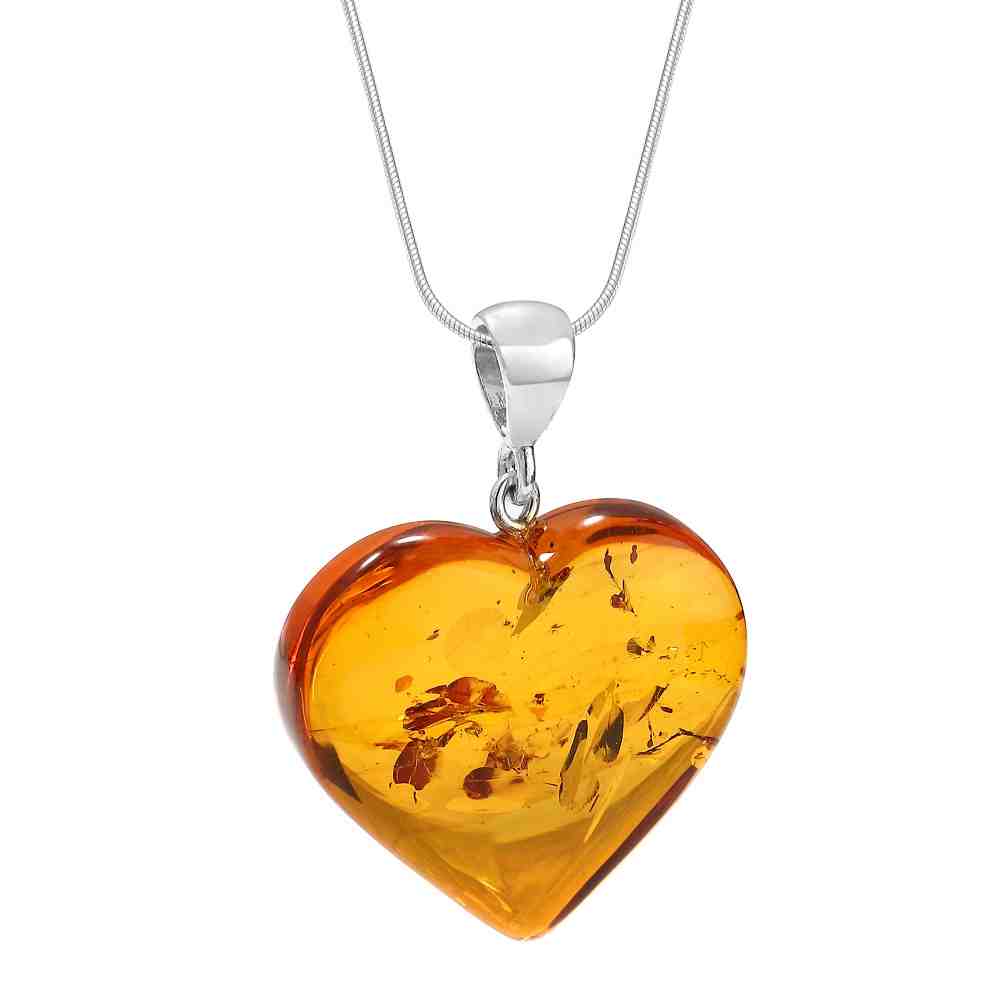
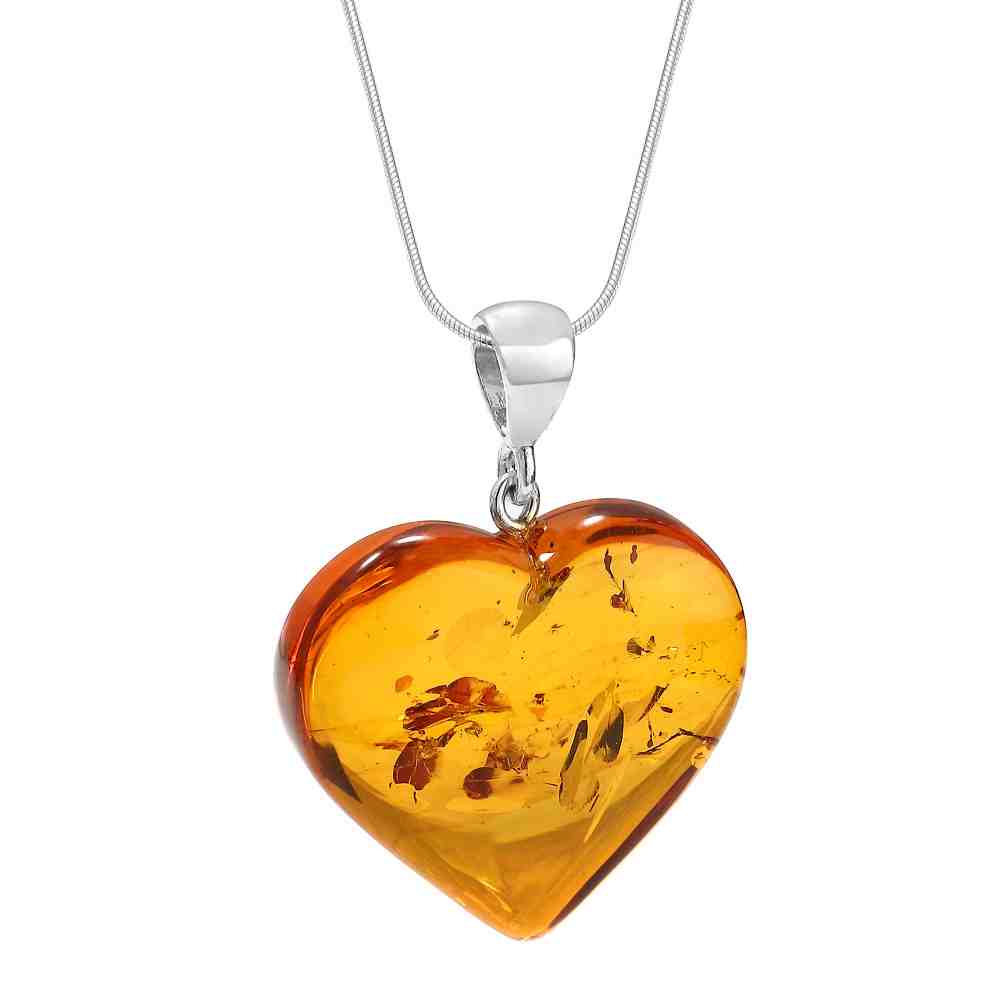
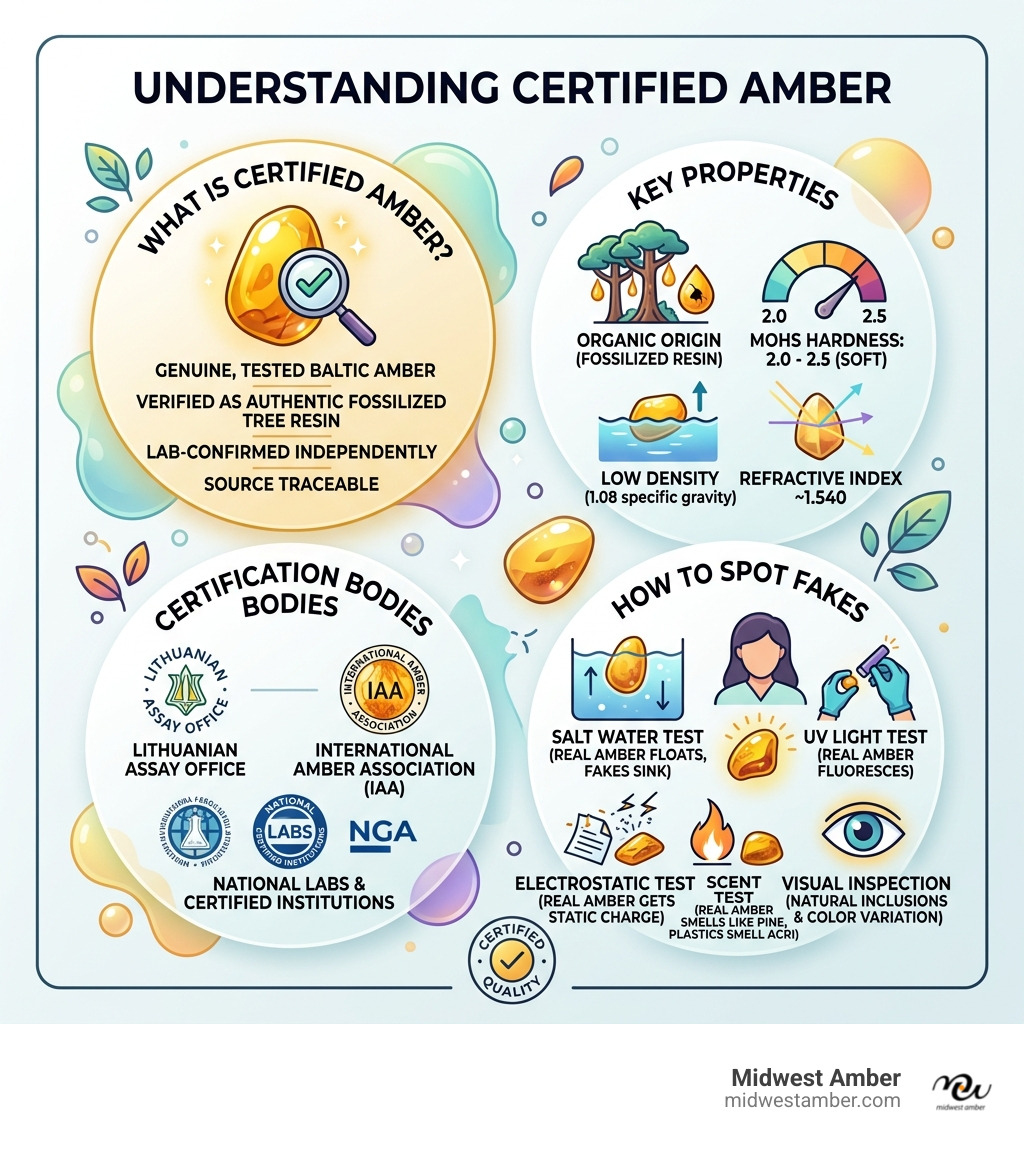
Certified amber is genuine, tested Baltic amber that has been verified as authentic fossilized tree resin — not plastic, glass, or immature resin (copal) — typically confirmed through independent laboratory analysis or a recognized certification system.
What makes amber "certified" at a glance:
- Verified origin — sourced from the Baltic Sea region, where roughly 90% of the world's amber supply comes from
- Lab-tested authenticity — confirmed by institutions such as the Lithuanian Assay Office or the International Amber Association
- Not an imitation — distinguished from common fakes like copal, plastic resin, glass, or pressed amber
- Traceable — often carries a serial number or certificate you can verify with the issuing body
Here's why this matters: the amber market is flooded with imitations. Plastics, copal, and glass are routinely sold as real Baltic amber, and without proper certification, it can be nearly impossible to tell the difference just by looking.
Amber is not a mineral — it's fossilized tree resin, up to 44 million years old, and one of nature's most extraordinary organic gemstones. Yet that same organic nature makes it easy to fake.
I'm Gabriel Ciupek, President and owner of Midwest Amber, Inc., with years of hands-on experience sourcing, pricing, and authenticating certified amber jewelry for retailers and collectors across the market. In this guide, I'll walk you through everything you need to know to buy with confidence.
The Science and Origins of Certified Amber
To understand why certified amber is so highly valued, we have to look back millions of years. Amber is often called "nature’s time capsule" because it is a biological graveyard, preserving prehistoric ecosystems in stunning three-dimensional detail. Unlike minerals like diamonds or sapphires that form deep in the earth’s crust, amber began as sticky resin flowing from ancient coniferous trees.
Chemically, amber is represented by the formula C10H16O. It is an organic substance, not a stone, which explains its unique physical properties. On the Mohs scale of hardness, amber is quite soft, ranking between 2.0 and 2.5—about the same as a fingernail. It has a refractive index of 1.540 and a specific gravity of approximately 1.08. This low density is a key characteristic; it is only slightly denser than water, which plays a huge role in how we verify its authenticity today.
The history of amber spans eras. While the oldest amber specimens date back to the Upper Carboniferous period (about 320 million years ago), the most famous deposits—those from the Baltic region—formed during the Eocene Epoch, roughly 44 million years ago. During this time, vast "amber forests" in Northern Europe produced massive amounts of resin that eventually became buried, pressurized, and fossilized.
Because the market is increasingly flooded with high-quality fakes, systems like the Amber Standard - Baltic Amber Certification System have been established to protect consumers. For a deeper dive into these standards, check out the definitive guide to certified Baltic amber.
Why Baltic Amber is the Gold Standard
While amber can be found in places like Myanmar, Indonesia, and Mexico, Baltic amber remains the most sought-after variety in the world. Why? It all comes down to a specific organic compound: succinic acid.
Baltic amber contains high concentrations of succinic acid (between 3% and 8%), a substance that has been used in European folk medicine for centuries. This variety is primarily sourced from the Baltic Sea coastline, including Poland and Lithuania. At Midwest Amber, we take great pride in our Polish and Lithuanian heritage, sourcing our certified amber directly from these regions to ensure our jewelry meets the highest standards of purity.
Organizations like the AGbA™ Amber Certification - Baltic Amber provide traceable serial numbers and strict guidelines for manufacturers, ensuring that the "Gold of the North" remains untainted by modern plastics or glass imitations.
Inclusions: Prehistoric Life Trapped in Time
One of the most magical aspects of certified amber is the presence of inclusions. As resin flowed down tree trunks millions of years ago, it acted as a sticky trap for anything in its path.
Scientists have identified over 1,000 extinct animal species within amber specimens. From tiny gnats and mosquitoes to fossilized moss and ancient plant matter, these inclusions offer a window into a world that existed long before humans. Because only about 1 in every 1,000 pieces of Baltic amber contains a visible insect, these pieces are incredibly valuable to both collectors and researchers. To learn more about how these "glitches in time" affect the value of your jewelry, read our article on uncovering truly authentic amber jewelry.

How to Distinguish Genuine Baltic Amber from Fakes
If you are shopping for certified amber in the Chicago area—from Arlington Heights to Schaumburg—you need to know how to spot a fake. Because amber's polymerization process mimics certain plastics, counterfeiters have become very good at creating "amber" out of resin or glass.
One of the most reliable (and famous) home tests is the saltwater buoyancy test. Because amber has a specific gravity of 1.08, it will sink in fresh water but float in a saturated saltwater solution (about 1 part salt to 2 parts water). Most plastics and glass will sink immediately in both.
Other signs of authenticity include:
- Static Charge: When rubbed vigorously against a natural cloth (like wool or silk), genuine amber becomes negatively charged and will pick up small bits of paper.
- The Scent: If you rub amber in your palm until it warms up, it should release a faint, pleasant smell of pine resins.
- UV Fluorescence: Under a UV light, authentic Baltic amber usually glows with a pale blue or yellowish light.
For more detailed testing methods, see our guide on real or resin: how to tell if your amber jewelry is genuine.
Spotting Fakes: Copal vs. Plastic Resin
The most difficult imitation to catch is "copal." Copal is essentially "immature" amber. It is also tree resin, but it is only thousands or a few million years old, rather than the 44 million years required for full polymerization. Copal is softer, melts at a lower temperature (below 150°C), and will often become sticky if a drop of alcohol or acetone is applied—true certified amber will remain unaffected.
Another common trick is the "hot needle test." If you touch an inconspicuous spot with a heated needle, real amber will crack and emit a white smoke that smells like pine. Plastic will simply melt, stick to the needle, and smell like burnt chemicals. However, we don't recommend doing this to your favorite pendant! Instead, refer to a buyer's guide to authentic stone jewelry for non-destructive ways to verify your pieces.
Understanding Certified Amber Lab Reports
For high-value pieces, especially those with rare inclusions, a home test isn't enough. Professional laboratories, such as the Lithuanian Assay Office or the International Amber Association, use advanced technology like IR-spectroscopy.
This scientific method identifies the "Baltic amber shoulder"—a specific peak in the infrared spectrum that is unique to genuine Baltic amber. When you buy certified amber, you are looking for this level of scientific backing. These reports ensure that the piece isn't "ambroid" (pressed amber made from scraps) or a clever plastic imitation. You can learn more about the technical side of verification in our post on unlocking the secrets of genuine stones.
Determining the Value of Amber Jewelry
Not all amber is created equal. The value of certified amber depends on several factors, including color, clarity, size, and the presence of inclusions. While many people think of amber as only being "honey-colored," it actually comes in over 250 natural shades.
| Amber Color | Rarity | Description |
|---|---|---|
| Cognac | Common | The most popular and classic transparent reddish-brown. |
| Honey/Yellow | Common | Warm, sunny tones; often contains tiny gas bubbles. |
| Butterscotch/White | Rare | Opaque and creamy; contains up to 1 million micro-bubbles per sq mm. |
| Cherry/Red | Rare | Formed through natural oxidation over 50-70 years. |
| Green | Very Rare | Created when resin interacts with chlorophyll from ancient plants. |
| Blue | Ultra Rare | Results from resin interacting with pyrites in the soil. |
If you are looking for the perfect piece, check out our recommendations on where to buy certified Baltic amber jewelry.
Popular Jewelry Types and Pricing Factors
At Midwest Amber, we specialize in a variety of handcrafted jewelry types. Pricing is determined by the weight (carats), the rarity of the color, and the complexity of the craftsmanship.
- Necklaces: From raw, unpolished "baroque" beads to highly polished spheres.
- Bracelets: Often featuring large, free-form cabochons or uniform beads.
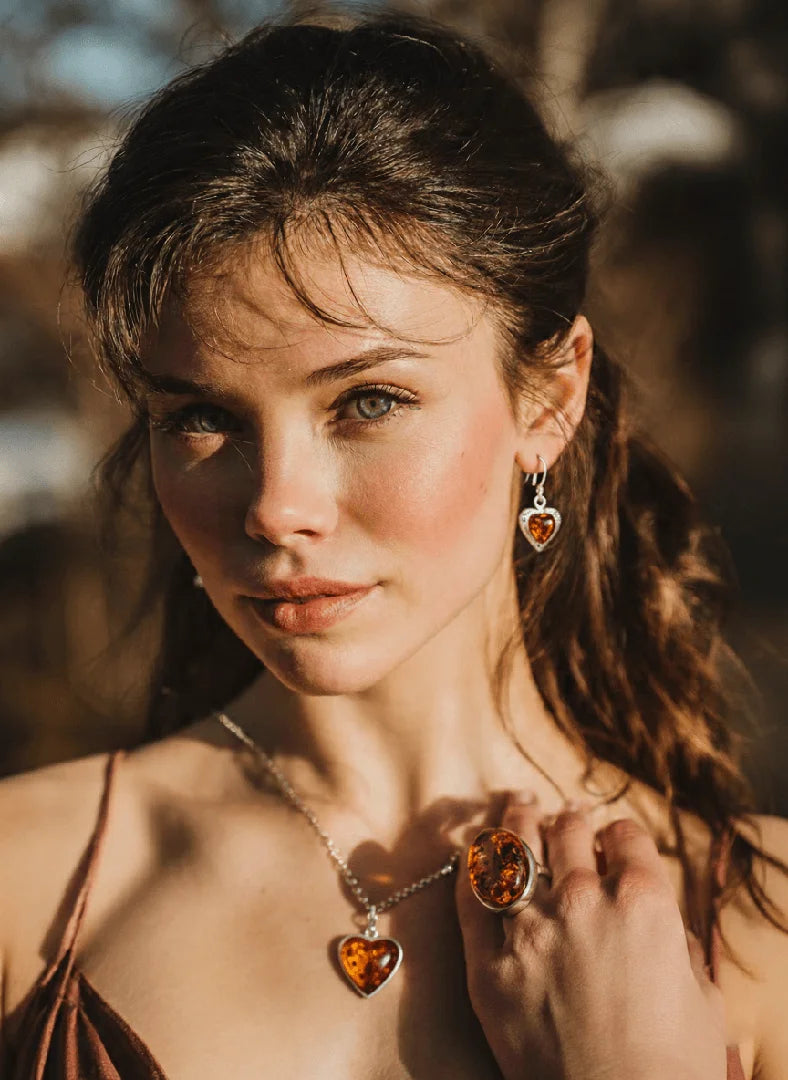
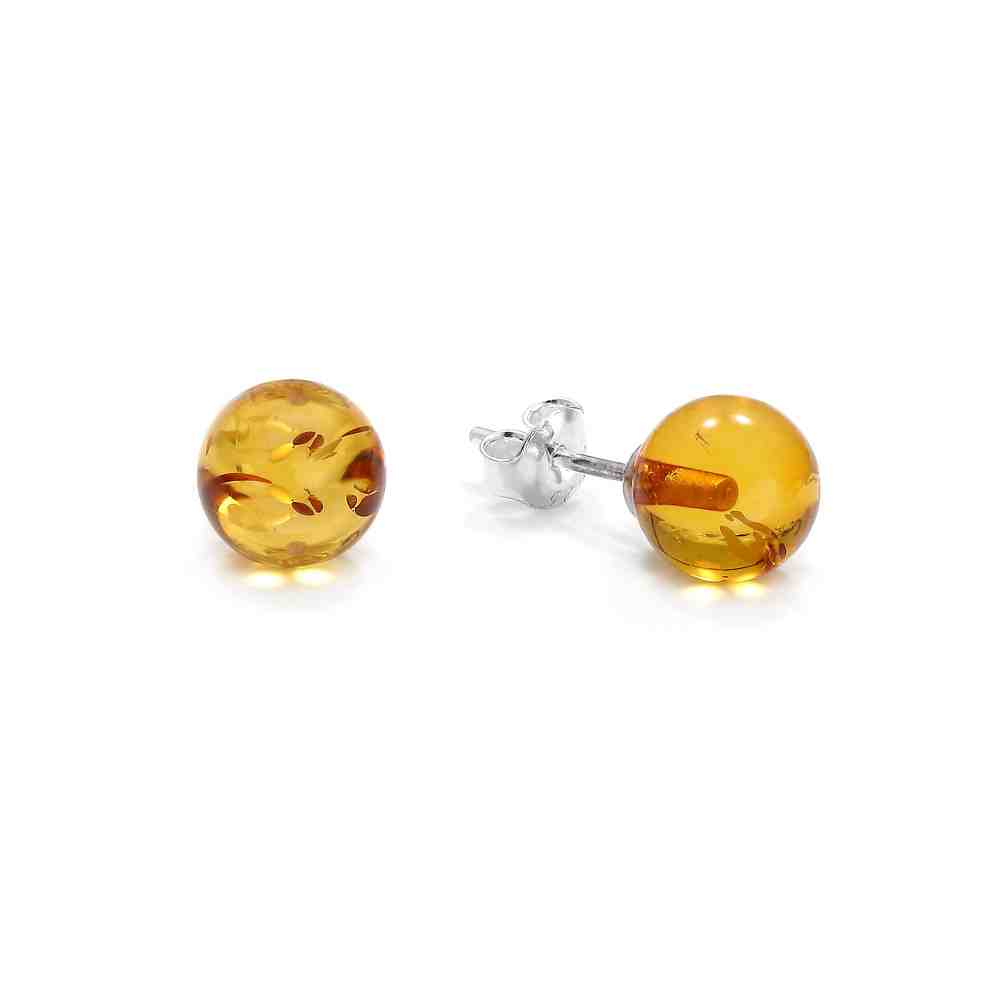
- Earrings and Pendants: Frequently set in 925 sterling silver to highlight the amber's warmth.
Generally, the larger the single piece of amber, the higher the price. A massive, clear pendant with a perfectly preserved insect can fetch thousands of dollars, whereas a simple beaded bracelet is an affordable luxury for everyday wear.
Maintaining Your Certified Amber Collection
Amber is an organic gem, which means it requires a little more "TLC" than a diamond. Because of its low Mohs hardness, it can be scratched easily by other jewelry.
- Cleaning: Use only warm water and a tiny drop of mild detergent. Wipe it down with a soft, lint-free cloth.
- Avoid Chemicals: Never let your amber come into contact with hairspray, perfume, or household cleaners. These can dull the polish permanently.
- Heat Sensitivity: Do not leave your amber in direct sunlight (like on a car dashboard) or near a heater. Extreme heat can cause the resin to become brittle or crack.
- Storage: Store your certified amber in a soft pouch, separate from other jewelry.
Frequently Asked Questions about Certified Amber
Does amber really have health benefits?
The use of amber for health is a tradition that dates back to Hippocrates. The theory centers on succinic acid. When worn against the skin, the body's warmth is said to release tiny amounts of succinic acid oils, which are then absorbed into the bloodstream. In European folk medicine, it is often used for its claimed analgesic (pain-relieving) and anti-inflammatory properties, particularly for teething babies or adults with arthritis. While we celebrate this rich homeopathic heritage, we always recommend amber as a beautiful supplement to, not a replacement for, modern medical care.
Is all Baltic amber the same age?
While the pieces we sell at Midwest Amber are all roughly 44 million years old (from the Eocene Epoch), the "age" of amber can vary slightly depending on the specific geological layer where it was found. However, for a piece to be considered "geologically stable" and true Baltic amber, it must have undergone millions of years of polymerization and oxidation.
Why does some amber float in saltwater?
This is due to its specific gravity. Amber's density is very close to that of saltwater. In fact, after heavy storms on the Baltic Sea, amber is often washed up on the beaches of Poland and Lithuania because it is buoyant enough to be carried by the waves. This is why it was historically known as "Sea Stone."
Conclusion
Choosing the right piece of jewelry is about more than just aesthetics—it's about connecting with history. At Midwest Amber, we are dedicated to preserving the legacy of Baltic amber through ethical sourcing and expert craftsmanship. Whether you are in Barrington, Lake Zurich, or downtown Chicago, our 20 years of experience ensure that every piece you buy is 100% natural and backed by our guarantee of authenticity.
Don't settle for plastic imitations. Embrace the magic and mystery of a gemstone that was 44 million years in the making. Shop the definitive guide to certified Baltic amber today and find a piece of prehistoric history to call your own.

Leave a comment
This site is protected by hCaptcha and the hCaptcha Privacy Policy and Terms of Service apply.