


Why Amber Jewelry Ethical Sourcing Matters More Than Ever

Amber jewelry ethical sourcing is one of the most important things to understand before you buy — because not all amber is created equal, and the story behind each piece matters as much as its radiant beauty. At Midwest Amber, we believe that a piece of jewelry should carry the soul of the ancient forests it came from, not the weight of ethical compromise.
Quick answer: What makes amber jewelry ethically sourced?
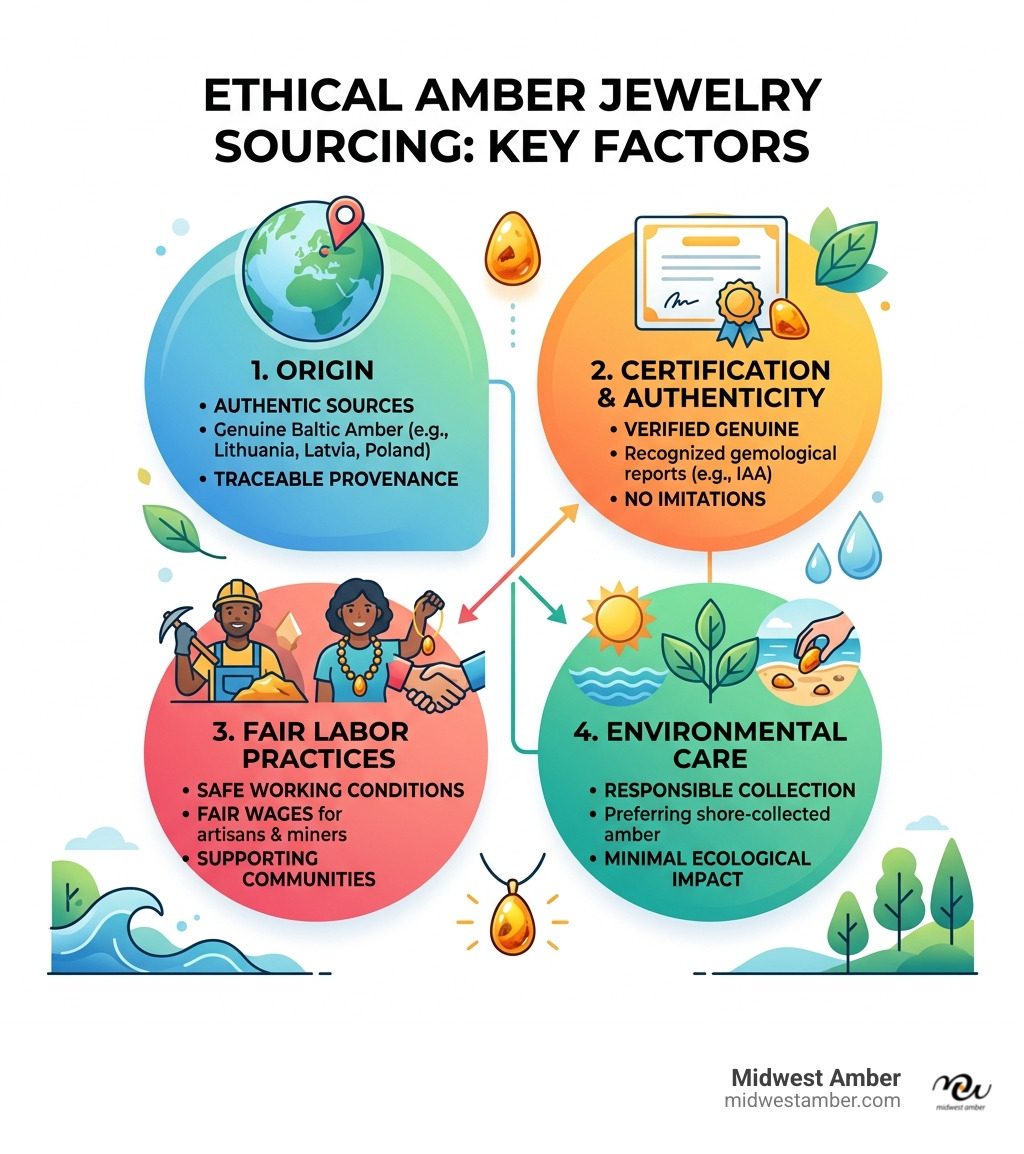
- Origin: Genuine Baltic amber from Lithuania, Latvia, or Poland — collected from shorelines or responsibly mined
- Authenticity: Verified by recognized bodies such as the Gemological Institute of America (GIA) or the International Amber Association
- No conflict funding: Avoiding amber from regions like Myanmar's Kachin province, where mining revenue has funded armed conflict
- Fair labor: Supporting artisans and miners paid fairly, working in safe conditions
- Environmental care: Preferring beach-collected amber over deep-pit mining where possible
- Transparency: Sellers who clearly disclose where and how their amber was sourced
The global amber jewelry market is growing fast — around 8% per year through 2026. But that growth comes with a shadow: over 60% of amber jewelry sold online has been found to be imitation. Beyond fakes, there are deeper questions about where real amber comes from and who benefits from its sale.
Some amber — particularly from Myanmar — has been linked to over a billion dollars in revenue that has helped fund a brutal civil war, with more than 5,000 people forcibly displaced from mining areas in 2017 alone. Meanwhile, Baltic amber collected by hand from the shorelines of Lithuania and Poland represents a very different story — one rooted in centuries of Polish and Lithuanian heritage, artisanal craft, and a deep respect for the Baltic Sea.
Knowing the difference can make your purchase something you feel genuinely good about.
I'm Gabriel Ciupek, President and owner of Midwest Amber, Inc., with decades of hands-on experience in sourcing, pricing, and selling genuine Baltic amber jewelry — making amber jewelry ethical sourcing a core part of everything we do. In this guide, I'll walk you through everything you need to know to buy with confidence.
Understanding the Origins and Types of Natural Amber
To appreciate the importance of amber jewelry ethical sourcing, we first have to understand what this "gemstone" actually is. Unlike diamonds or sapphires, amber is organic. It isn't a mineral; it is fossilized tree resin.
Millions of years ago, ancient forests-primarily in Northern Europe-exuded thick resin to heal bark wounds or protect against insects. Over eons, this resin was buried under layers of sediment, subjected to intense pressure and heat, and eventually transformed into the warm, glowing material we cherish today.
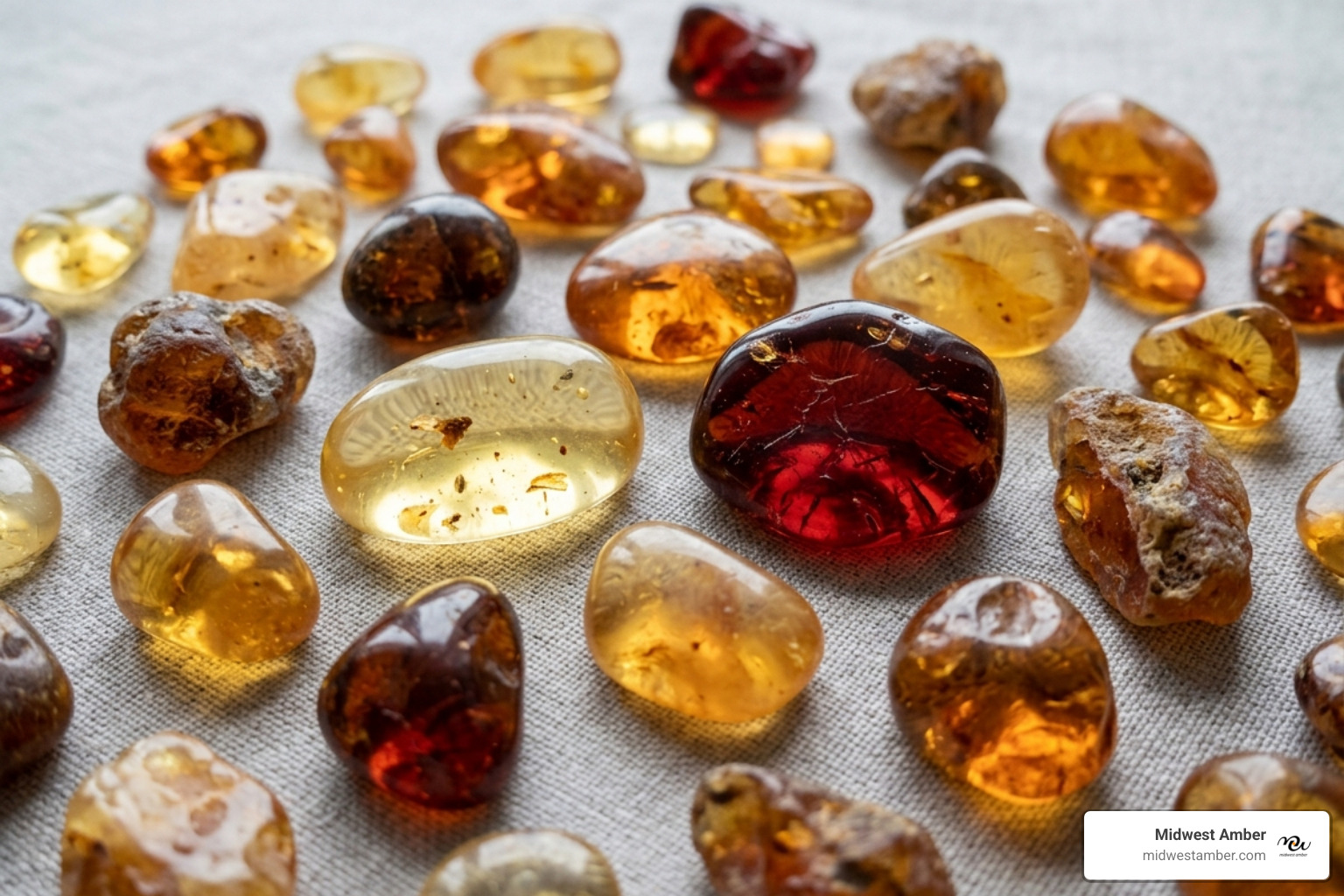
While the Baltic region is the most famous source, amber is found globally. However, each region has a different "ethical profile."
- Baltic Amber (Succinite): Found around the Baltic Sea (Poland, Lithuania, Latvia). It is the "gold standard" for jewelry and contains high levels of succinic acid.
- Dominican Amber: Known for its clarity and rare blue hues, though it is younger than Baltic amber.
- Mexican Amber: Sourced from the Sierra Madre Mountains, often hand-mined by local communities in Southern Mexico.
- Myanmar Amber (Burmite): One of the oldest deposits (approx. 100 million years old), but currently the most ethically "radioactive" due to political conflict.
For a deeper dive into what makes these stones unique, check out our guide on unearthing natural amber: what makes this ancient gem so special and our specific look at Lithuanian amber. For a broad scientific overview, the Encyclopaedia Britannica entry on amber is also a helpful external reference.
The Geological Journey of Baltic Amber
The journey of Baltic amber began roughly 44 million years ago during the Eocene epoch. Imagine a world where Northern Europe was covered in dense, "amber forests" of prehistoric pines. When these trees fell or secreted resin, the material eventually washed into the sea.
Over millions of years, the resin fossilized into succinite. Today, we find these treasures along the coastlines or buried in "blue earth" layers. You can learn more about this prehistoric timeline in our article where does Baltic amber come from: a journey to the Eocene epoch.
Regional Variations and Rarity
Not all amber looks the same. Baltic amber is famous for its "inclusions"-trapped bits of plant matter, air bubbles, or even ancient insects that provide a literal window into the past. Because it is hand-selected and often handcrafted by local artisans, each piece is one-of-a-kind. For those interested in the specific heritage of the region, our amber from Lithuania: complete guide offers a comprehensive look at these regional treasures.
Critical Ethical Concerns in Amber Jewelry Sourcing
When we talk about amber jewelry ethical sourcing, we are looking at three main pillars: human rights, conflict funding, and environmental impact.
Avoiding Conflict Materials and Myanmar Amber
The most pressing ethical crisis in the amber world involves Myanmar (Burma). In the last decade, legal revenue from Myanmar amber has exceeded one billion dollars. Unfortunately, much of this wealth has funded the military and ethnic civil wars in the Kachin region.
In 2017, thousands of residents were forced from their homes to make way for mining operations. For scientists and jewelry lovers alike, this creates a massive moral dilemma: is the beauty of a 100-million-year-old stone worth funding a war? At Midwest Amber, we believe the answer is a firm no. We strictly avoid Myanmar amber to ensure our customers aren't inadvertently supporting violence.
Labor Rights and Fair Trade Practices
Ethics isn't just about avoiding war; it's about supporting people. In some regions, miners are exploited by wholesalers who take advantage of a lack of market knowledge. Ethical sourcing means working with suppliers who prioritize worker welfare, safe conditions, and fair wages.
By supporting traditional artisans in Poland and Lithuania, we help maintain a "slow fashion" ecosystem that respects the person behind the jewelry. For more on the human element of the industry, read beyond the shine: uncovering truly authentic amber jewelry.
How to Verify Authenticity and Ethical Origins
With over 60% of online amber being fake, knowing how to spot the "real deal" is the first step in ethical shopping. If it's plastic or glass, it certainly isn't supporting the traditional communities it claims to represent.
Practical Tests for Amber Jewelry Ethical Sourcing
We always recommend buying from reputable sources that provide certificates of authenticity from recognized bodies like the International Amber Association, but if you're curious about a piece you already own, here are a few "home" tests:
- The Saltwater Test: Mix about 7-8 teaspoons of salt into a cup of water. Genuine amber will float, while most plastic or glass fakes will sink like a stone.
- The UV Test: Real Baltic amber often exhibits a pale blue or greenish fluorescence under UV light.
- The Scent Test: If you rub genuine amber vigorously with a cloth, it should emit a faint, pleasant smell of pine resin. Plastic will smell like... well, plastic.
- Static Charge: Real amber is remarkably good at holding a static charge. Rub it on a cloth and see if it can pick up tiny bits of paper!
For a more detailed breakdown, see our guide on the amber truth: unlocking the secrets of genuine stones and real or resin: how to tell if your amber jewelry is genuine.
Identifying Imitations and Pressed Amber
Be wary of "pressed" amber (ambroid). This is made by heating small scraps of amber and pressing them together into a larger block. While it technically contains amber, it lacks the structural integrity and natural beauty of a single, solid stone.
You should also look out for Copal, which is "young" resin that hasn't fully fossilized. It's much softer and less durable than true Baltic amber. Our don't get fooled: a buyer's guide to authentic stone jewelry and don't get fooled: the definitive guide to certified Baltic amber are essential reading for any serious collector.
Sustainable Harvesting: Beach Collection vs. Traditional Mining
The most environmentally friendly way to source amber is through beach collection.
After heavy storms on the Baltic Sea, waves churn up the seabed, releasing amber that has been trapped for millions of years. Dedicated "amber hunters" wade into the cold water with nets, catching the seaweed and debris that carries the "Baltic Gold." This method has zero impact on the landscape—it's simply gathering what the ocean provides.
Supporting Artisans and Amber Jewelry Ethical Sourcing
When you buy Baltic amber, you are often supporting a lineage of craftsmanship. In Poland and Lithuania, jewelry making is a deeply respected tradition. These artisans use mechanical shaping (cutting, grinding, and polishing) rather than harsh chemical treatments to bring out the stone's natural glow.
We take great pride in our Baltic amber jewelry Poland connections, ensuring that the pieces we sell at Midwest Amber support these local communities.
Environmental Mitigation and Carbon Neutrality
While beach collection is the gold standard, some amber must be mined. Ethical mining involves restoring the land after the "blue earth" layers have been reached and ensuring that local ecosystems aren't permanently damaged.
Furthermore, sustainability extends to the shipping process. We focus on responsible practices, from our sourcing in Poland and Lithuania all the way to our customers in the Chicagoland area and beyond. Choosing a certified authentic amber pendant from a transparent seller ensures that your jewelry doesn't come at the cost of the planet.
Frequently Asked Questions about Ethical Amber
Is beach-collected amber more ethical than mined amber?
Generally, yes. Beach collection relies on natural erosion and has a near-zero environmental footprint. However, responsibly managed mining that includes land restoration and fair labor practices can also be ethical. The key is transparency from the seller.
How can I tell if my amber jewelry supports conflict?
Check the origin. If the amber is labeled as "Burmite" or sourced from Myanmar, there is a high risk it has funded conflict. Stick to Baltic amber from reputable sellers who can trace their supply chain to Poland or Lithuania.
What certifications should I look for when buying amber?
Look for authenticity cards or certificates from recognized bodies like the International Amber Association (IAA) or the GIA. These documents confirm that the stone is natural, untreated, and sourced from a legitimate region.
Conclusion: Making a Conscious Choice for Your Collection
Choosing amber jewelry ethical sourcing isn't just about being a "good consumer"—it's about honoring the millions of years of history trapped inside each stone. When you wear a piece of genuine Baltic amber, you're wearing a fragment of an ancient forest, brought to you by the hands of skilled Polish and Lithuanian artisans who respect the earth and their ancestral traditions.
At Midwest Amber, we draw on over 20 years of experience to bring you 100% natural, ethically sourced jewelry. Whether you are in Arlington Heights, Glenview, or anywhere else in the greater Chicago area, you can trust that our passion for authenticity and heritage shines through in every handcrafted piece.
Ready to find a piece that aligns with your values? Shop our collection of ethically sourced Baltic amber jewelry and discover the timeless beauty of the "Gold of the North."

Leave a comment
This site is protected by hCaptcha and the hCaptcha Privacy Policy and Terms of Service apply.