

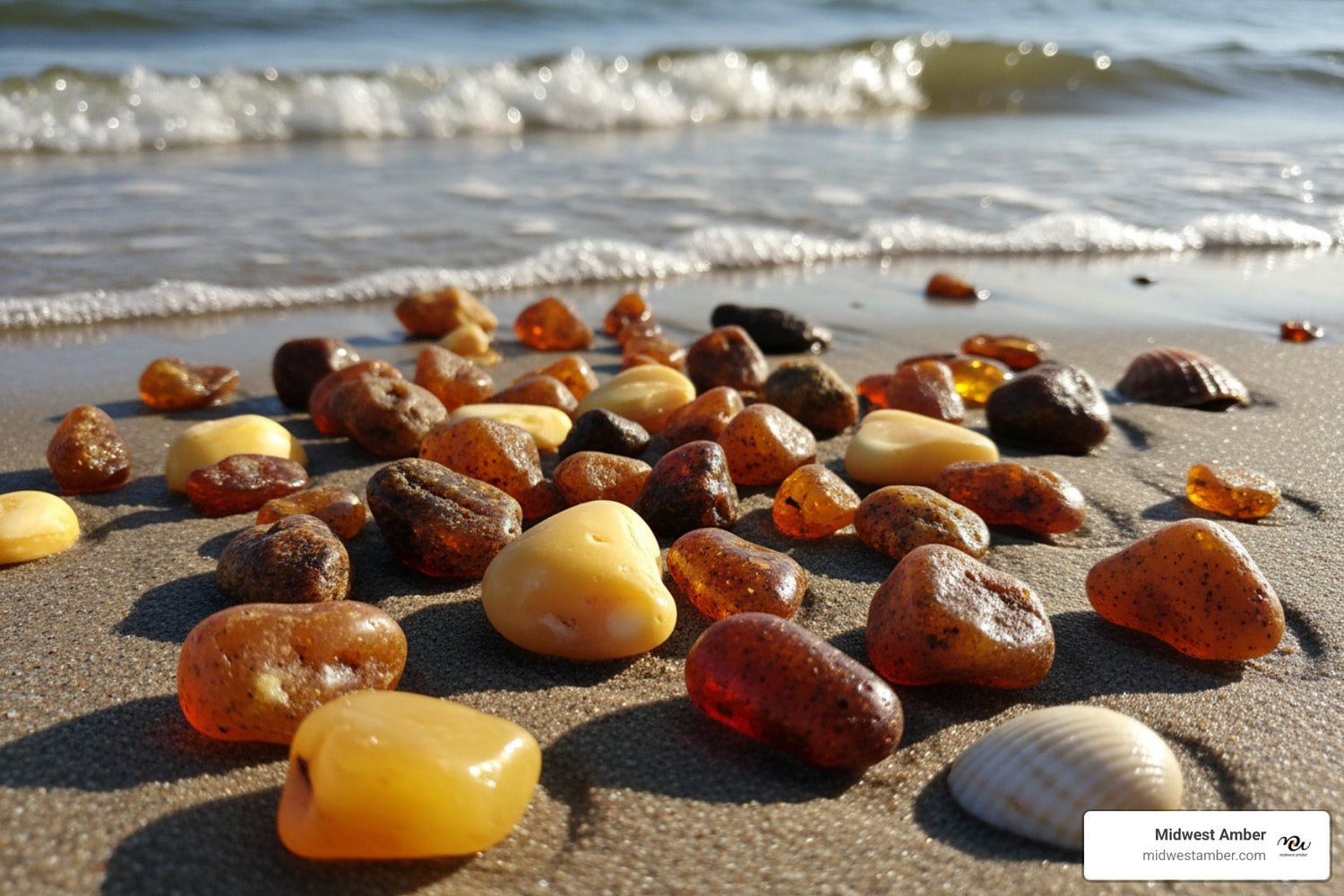
The Geological History of Amber from Lithuania
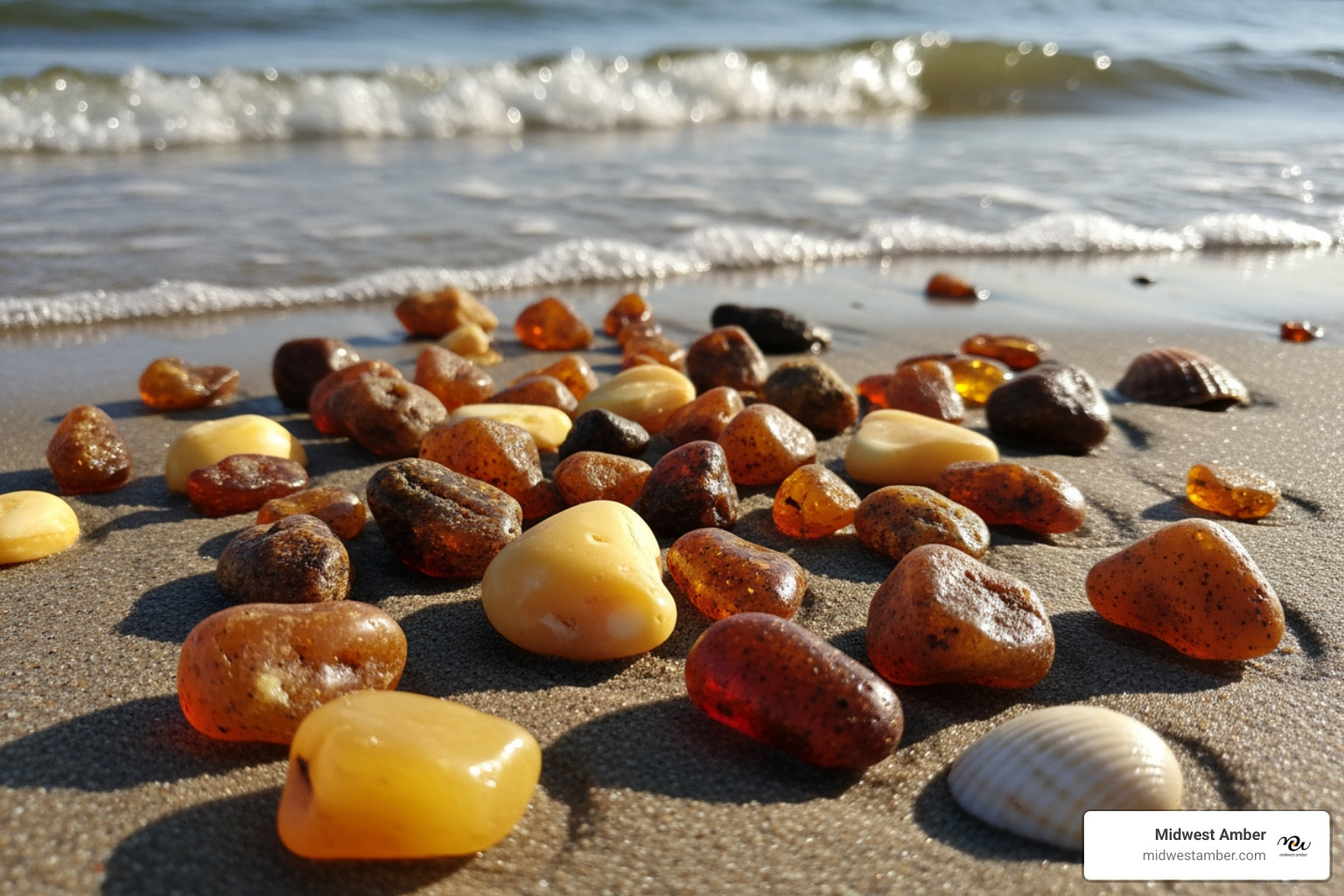
Amber from Lithuania — often called Gintaras or "Lithuanian Gold" — is some of the most prized fossilized resin on Earth, with a history stretching back thousands of years.
Here's what you need to know at a glance:
- What it is: Fossilized tree resin, 40–50 million years old, formed during the Eocene epoch
- Where it comes from: The Baltic Sea region, with Lithuania at the heart of the ancient amber trade
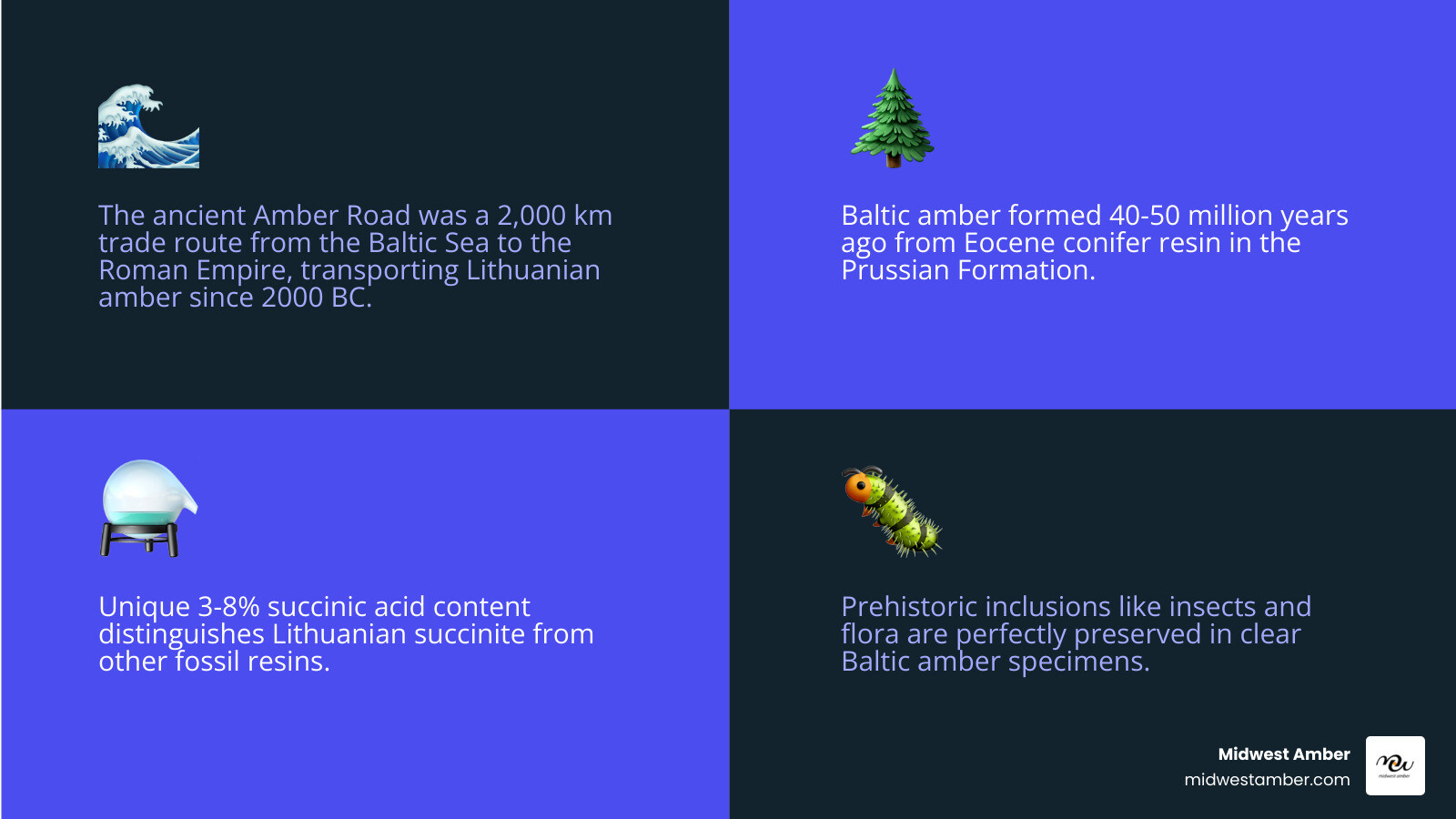
- Why it's special: Contains 3–8% succinic acid (unique to Baltic amber), comes in a rich color spectrum, and often holds prehistoric inclusions like insects
- How it's used: Fine jewelry, traditional folk art, therapeutic products, and collectibles
- How to buy genuine pieces: Look for certificates of authenticity and buy from reputable, established sources
Lithuania has been gathering, trading, and crafting amber since at least 2000–1800 BC. Baltic tribes used it for jewelry, healing, and religious rituals long before the famous Amber Road carried it south to Roman markets. Today, Lithuania remains one of the world's leading centers for amber craftsmanship — blending centuries of tradition with modern jewelry design.
I'm Gabriel Ciupek, President and owner of Midwest Amber, Inc., with years of hands-on experience sourcing and selling genuine Amber from Lithuania to customers across North America. In this guide, I'll walk you through everything you need to know — from how amber forms underground to how to spot a fake.
Amber from Lithuania terms to learn:
To understand why Amber from Lithuania is so special, we have to travel back in time—way back. Imagine the Earth about 45 to 50 million years ago, during the Eocene epoch. The region we now call the Baltic was not a sea at all, but a vast, lush subtropical forest.
The Ancient "Amber Forest"
The resin that eventually became amber didn't come from just any tree. For a long time, scientists debated the exact species, but Scientific research on the botanical origin of Baltic amber suggests that these ancient forests were dominated by conifers, specifically from the Sciadopityaceae family. These trees produced massive amounts of sticky resin, perhaps as a defense mechanism against pests or to heal wounds in their bark.
As this resin dripped to the forest floor, it began a million-year journey of polymerization. It wasn't just "drying out"—it was undergoing a chemical transformation under intense pressure and specific geological conditions.
The "Blue Earth" and the Prussian Formation
Over millions of years, the climate changed, and the forests were submerged. The amber became trapped in sedimentary layers. In the Baltic region, the most famous of these is the "Blue Earth" (or Palmnicken formation). This is a layer of dark, greenish-blue sediment rich in a mineral called glauconite.
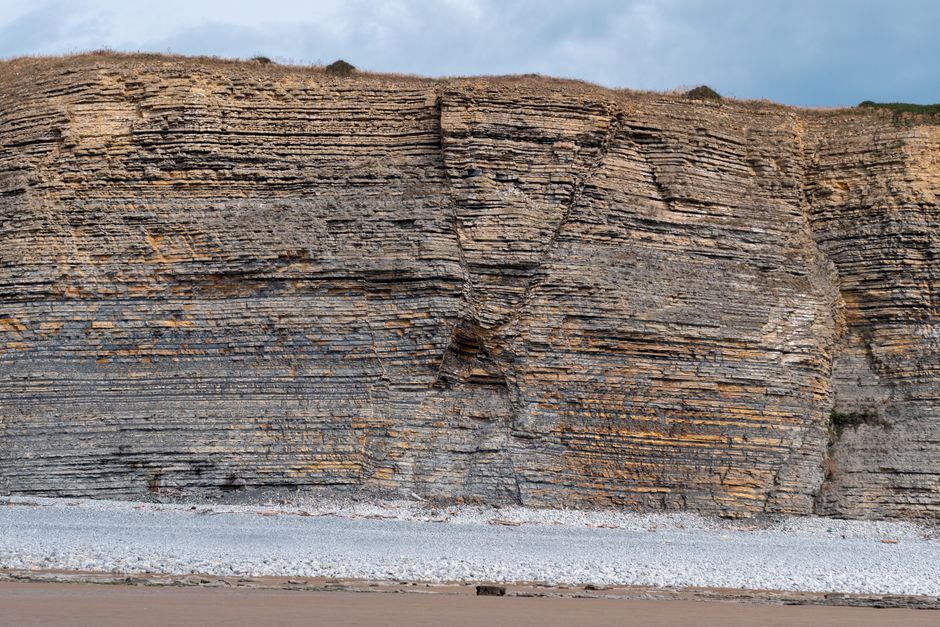
Today, most of the world's Baltic amber is found in the Prussian Formation. While a significant portion of the global supply is extracted in the Kaliningrad region (which borders Lithuania), the tides and glacial movements have distributed this "gold" all along the Lithuanian coast, particularly near Klaipeda and Palanga.
Baltic Amber vs. Copal: What’s the Difference?
It is very common for people to confuse true Baltic amber (succinite) with "Copal." While they might look similar to the untrained eye, they are worlds apart in terms of age, value, and durability.
| Feature | Baltic Amber (Succinite) | Copal |
|---|---|---|
| Age | 34–56 Million Years | 1,000 to 1 Million Years |
| Succinic Acid | 3–8% (High) | Negligible |
| Hardness | 2.0–2.5 on Mohs scale | Much softer; melts easily |
| Origin | Ancient extinct conifers | Modern trees (often tropical) |
| Solubility | Resistant to most solvents | Sticky when touched with alcohol |
Unique Characteristics and Varieties of Baltic Succinite
One of the reasons we love working with Amber from Lithuania is its incredible diversity. No two pieces are exactly alike. This variety comes from the resin's original chemical composition and the specific environment where it fossilized.
The Power of Succinic Acid
Chemically, Baltic amber is known as "succinite" because of its high succinic acid content (typically 3–8%). This is the "secret sauce" that distinguishes it from amber found in the Dominican Republic, Mexico, or Asia. Succinic acid is a natural constituent of plant and animal tissues, and in traditional medicine, it is believed to have various therapeutic properties.
A Rainbow of Fossilized Resin
When most people think of amber, they picture a warm, honey-colored stone. But Amber from Lithuania comes in a surprising spectrum of colors:
- Butterscotch/Royal White: Opaque and creamy, this variety was once the most prized by royalty. It gets its color from millions of tiny air bubbles trapped inside.
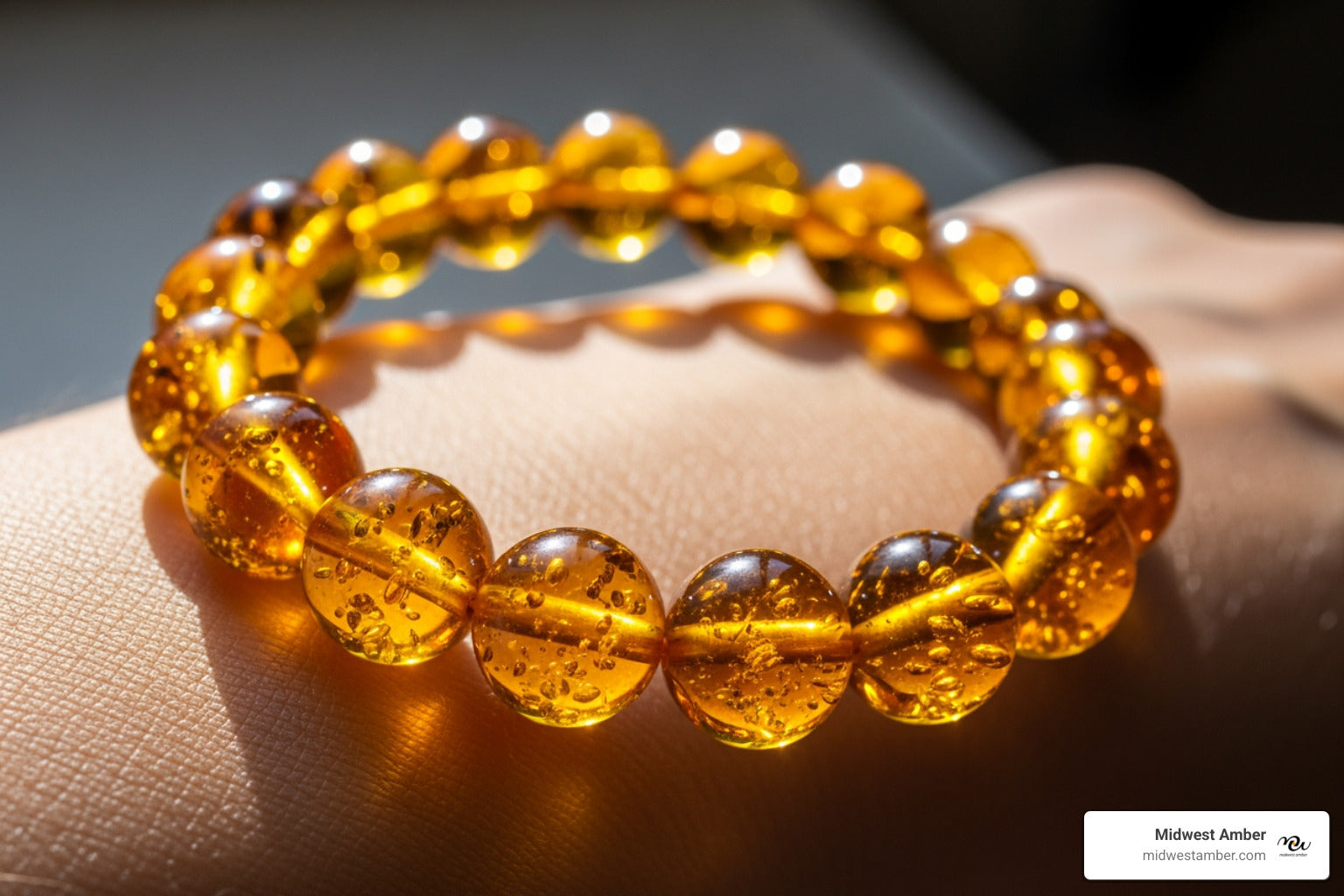
- Honey/Cognac: The classic transparent varieties that glow when they catch the light.
- Cherry: A deep, dark red that looks almost like a fine wine.
- Green: Often found with organic plant matter trapped inside, giving it an earthy hue.
- Black: This is actually very dark resin mixed with soil or bark, appearing black until held up to a strong light.
Windows into the Past: Inclusions
Perhaps the most fascinating aspect of amber is its ability to act as a prehistoric time capsule. Because the resin was sticky, it frequently trapped ancient life forms. Research on ancient beetles and inclusions in Baltic amber has identified hundreds of extinct species, from tiny gnats to complex spiders and even small lizards.
About 98% of inclusions are insects, but you can also find bits of moss, pine needles, and even mammal fur. For collectors, a clear piece of amber with a perfectly preserved 40-million-year-old inhabitant is the ultimate prize.
Popular Varieties of Amber from Lithuania
In the local markets of Vilnius and Klaipeda, you’ll find that "Lemon" and "Honey" varieties are incredibly popular for everyday wear because of their bright, cheerful energy. Meanwhile, "Royal White" is often reserved for more formal, heirloom-quality pieces.
How to Identify Genuine Amber from Lithuania
Because amber is so valuable, fakes abound—usually made of plastic, glass, or pressed resin. Here at Midwest Amber, we ensure all our pieces are authentic, but you can perform these simple tests at home:
- The Saltwater Test: Mix 1 part salt with 3 parts water. Real amber will float, while most plastics and glass will sink.
- Static Electricity: Rub the amber vigorously with a soft cloth for 20–60 seconds. Genuine amber will become electrostatically charged and pick up small bits of paper or hair.
- The Scent Test: If you rub amber until it gets warm, it should emit a faint, pleasant smell of pine resins.
- UV Light: Under a UV lamp, natural Baltic amber will usually fluoresce with a pale blue or greenish glow.
For more peace of mind, you can find more info about authentic Lithuanian amber on our blog, where we dive deeper into the certification process.
Cultural Significance and the Legend of the Baltic Sea
In Lithuania, amber is more than just a gemstone; it is a part of the national soul. It has been used as a medium for artistic expression since the Neolithic period, with archaeologists finding amber amulets dating back to 3000 BC.
The Legend of Jūratė and Kastytis
If you walk along the beaches of Palanga after a storm, you might see locals scouring the sand for small pieces of amber. According to Lithuanian folklore, these are the tears of the sea goddess Jūratė.
The legend says Jūratė lived in an amber palace at the bottom of the Baltic Sea. She fell in love with a mortal fisherman named Kastytis. This angered Perkūnas, the god of thunder, who struck the amber palace with lightning, shattering it into millions of pieces and killing Kastytis. Now, whenever the sea gets rough, it washes the fragments of Jūratė’s broken palace and her "tears" (small amber pebbles) onto the shore.
The "Gintaras" Connection
The Lithuanian word for amber is Gintaras. It is a popular name for boys in Lithuania, and it stems from the root "ginti," which means "to protect." For centuries, Baltic tribes believed that wearing amber would protect them from evil spirits and disease.
Modern Craftsmanship and the Global Amber Industry
While the history of Amber from Lithuania is ancient, the industry today is a sophisticated blend of tradition and technology. Lithuania has developed a world-class infrastructure for processing raw resin into fine jewelry.
From Raw Stone to Polished Gem
Mining amber is a delicate process. Much of it is extracted through hydraulic mining, where high-pressure water jets are used to wash the "Blue Earth" sediment into processing stations. Once the raw stones are collected, they are sent to workshops in cities like Klaipeda and Vilnius.
The processing involves:
- Sorting: Experts grade the stones by size, color, and clarity.
- Grinding and Shaping: Using artisanal techniques, the outer "crust" of the amber is removed to reveal the beauty within.
- Polishing: This is often done manually to ensure the stone doesn't overheat, which could cause it to crack.
You can learn more info about amber jewelry from Lithuania and the specific techniques used by Baltic masters on our dedicated news page.
Popular Styles of Amber from Lithuania Jewelry
Modern Lithuanian designers are moving away from the "clunky" styles of the past and embracing minimalist, contemporary aesthetics.
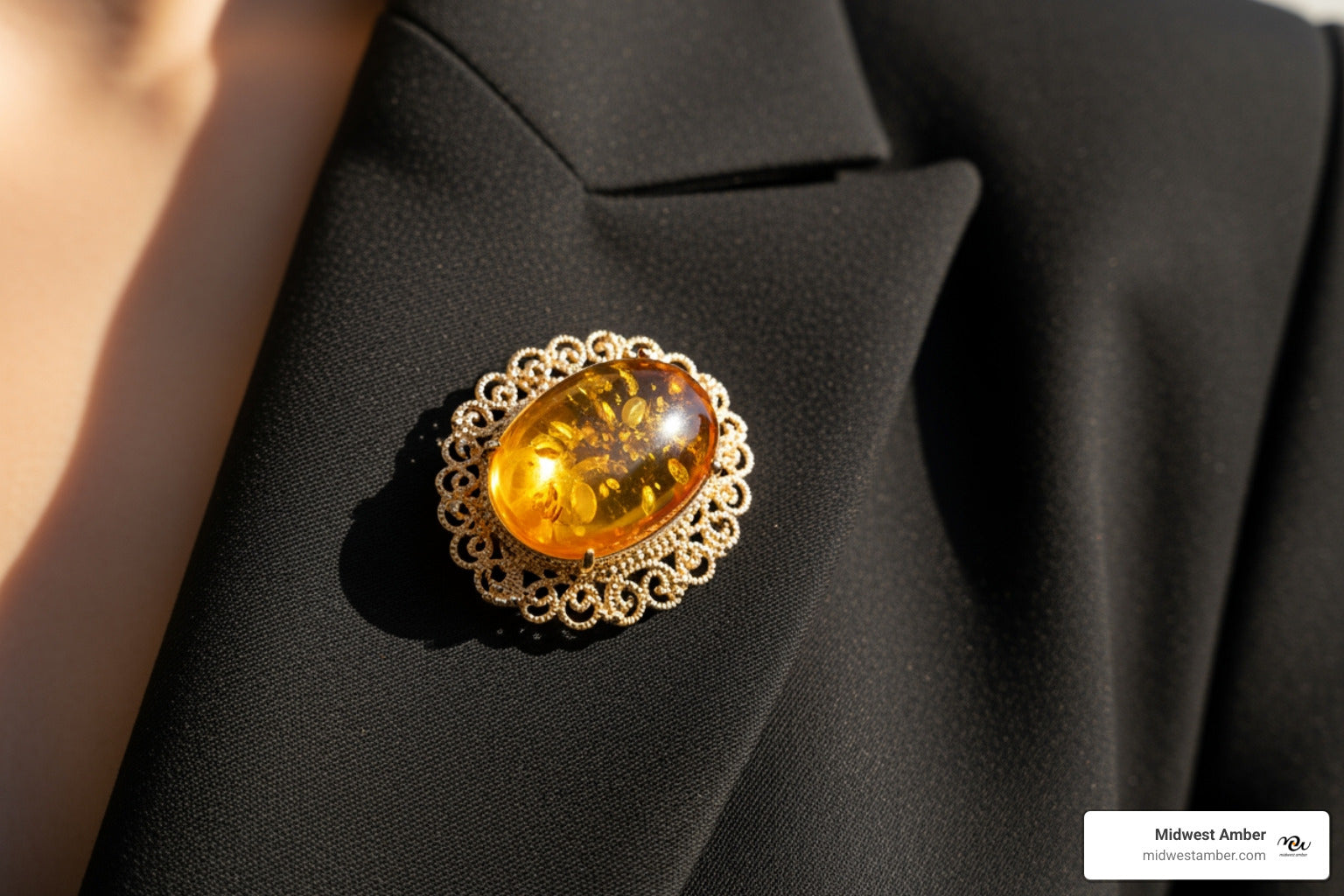
- Sterling Silver Settings: The cool tone of silver provides a beautiful contrast to the warm glow of amber.
- 14k Gold: For luxury pieces, gold settings are used to highlight the "Royal White" or "Cherry" varieties.
- Beaded Bracelets: These are popular for both their look and the belief that having the stone against the skin allows for the absorption of succinic acid.
- Teething Necklaces: A traditional staple in European households, though we always recommend using them with adult supervision.
Frequently Asked Questions about Lithuanian Amber
What are the health benefits of wearing Baltic amber?
In many European cultures, it is believed that when amber is worn against the skin, the body's warmth releases tiny amounts of succinic acid. This is traditionally used for its anti-inflammatory properties, particularly for teething babies or adults with arthritis. While modern science continues to study these claims, the tradition remains a cornerstone of Baltic wellness.
Where can tourists visit amber museums in Lithuania?
If you ever find yourself in Lithuania, the Palanga Amber Museum is a must-visit. It is housed in a stunning 19th-century palace and contains one of the largest collections of inclusions in the world. You can also visit the Mizgiris Amber Museum in Vilnius or take factory tours in Klaipeda to see how the jewelry is made firsthand.
Why is Lithuanian amber considered the best in the world?
It comes down to three things: Succinic acid content, Age, and Craftsmanship. Baltic amber is significantly older and harder than the resins found in other parts of the world, making it much more durable for jewelry. Additionally, the centuries of tradition in Lithuania mean that the local craftsmen have an intuitive understanding of the stone that you won't find anywhere else.
Conclusion
At Midwest Amber, we have spent over 20 years bringing the magic of the Baltic Sea to the United States. From our base in the Chicago area—serving communities from Arlington Heights to Skokie and beyond—we pride ourselves on offering only 100% natural, ethically sourced Amber from Lithuania.
Whether you are looking for a unique gift, a piece of prehistoric history, or a beautiful new addition to your jewelry box, Lithuanian amber offers a timeless elegance that never goes out of style. We invite you to explore our collection and discover why this "Gold of the North" has captivated the world for millennia.
Ready to find your own piece of Lithuanian history? Discover local amber gems and expert jewelers and let us help you find a treasure that will last a lifetime.

Leave a comment
This site is protected by hCaptcha and the hCaptcha Privacy Policy and Terms of Service apply.