

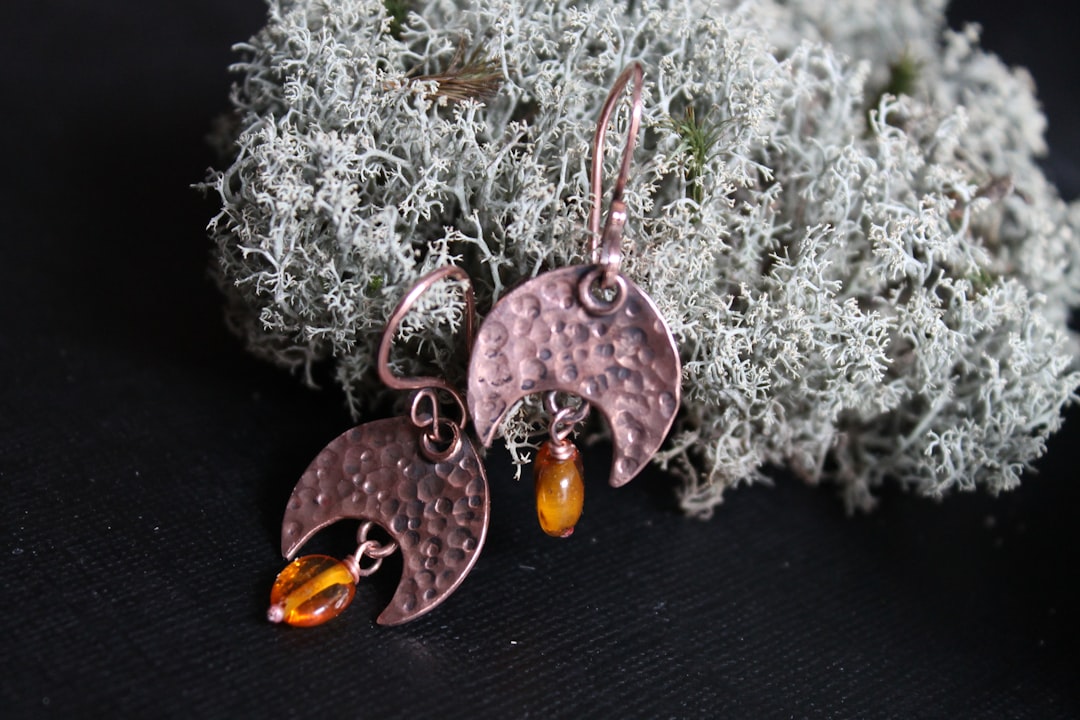
Why Amber Captures Hearts and Collectors Alike
Amber for sale represents more than a simple purchase—it's acquiring a piece of ancient history. Whether you're searching for a unique gift, a statement piece of jewelry, or a raw specimen, understanding what makes amber special will help you find what you're looking for.
Quick Guide to Buying Amber:
- Baltic Amber: The most prized variety, sourced from Poland, Lithuania, and Russia, known for rich honey and cognac tones.
- Raw/Rough Amber: Natural, unpolished stones perfect for lapidary work or collectors (prices range from $18-$655 for certified pieces).
- Jewelry: Necklaces, earrings, bracelets, rings, and pendants in polished or natural finishes.
- Specimens with Inclusions: Rare pieces containing preserved insects or plant matter.
- Price Range: From $19 for small polished pieces to $2,499 for museum-quality specimens.
- Key Quality Factors: Color richness, clarity, size, authenticity, and ethical sourcing.
Amber is fossilized tree resin, an organic gemstone hardened over millions of years. Its value is driven by color richness, clarity, size, and especially rare inclusions like perfectly preserved insects. While 90% of the world's supply is Baltic amber, other unique varieties include blue amber from the Dominican Republic and Burmite from Myanmar. You'll find it in polished forms that showcase its glow, or as raw amber that retains its natural, unprocessed beauty.
I'm Gabriel Ciupek, President and owner of Midwest Amber, Inc., where I've spent years securing authentic Baltic Amber for sale, training teams on quality standards, and ensuring every piece meets rigorous authenticity requirements. My experience includes direct relationships with Baltic region suppliers and a commitment to offering only genuine, ethically sourced amber jewelry and specimens.
What is Amber? More Than Just a Pretty Stone
Amber begins as sticky resin from ancient trees, 30 to 50 million years ago. If a tiny insect landed on it, it became trapped, sealed by more resin. Millions of years later, that resin transformed into something extraordinary.
Amber isn't a mineral or a crystal. It's an organic gemstone, formed from fossilized tree resin. Over immense stretches of time, buried beneath layers of earth and subjected to heat and pressure, the resin undergoes a fascinating change. The volatile compounds slowly evaporate, the material hardens, and through a process called polymerization, it becomes the warm, glowing substance we recognize today.
Think of amber as nature's time capsule. That trapped insect is now perfectly preserved, down to the delicate veins in its wings. Sometimes entire ancient ecosystems—tiny flowers, leaves, even air bubbles—are frozen in time. This remarkable preservation ability makes amber for sale fascinating to scientists and collectors who appreciate holding a piece of prehistory.
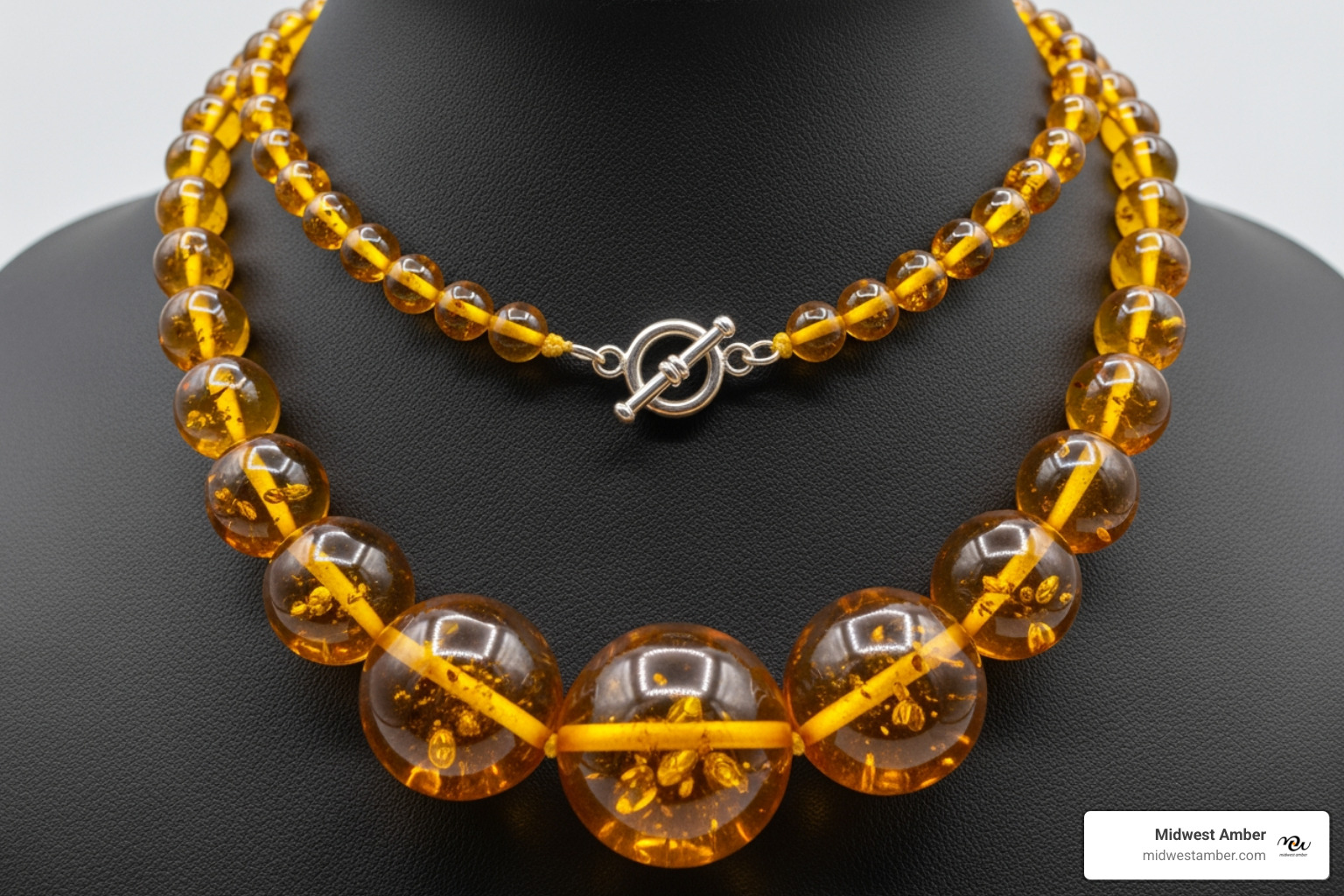
Where does this ancient treasure come from? While amber deposits exist worldwide, the Baltic Sea region produces about 90 percent of the world's supply. Countries like Poland, Lithuania, and parts of Russia are home to rich deposits of what's called Baltic amber or succinite—named for its high succinic acid content.
The Baltic region's amber formed from prehistoric pine trees that once covered Northern Europe. When these forests were submerged, the resin was preserved in marine sediments. Today, storms still wash amber onto Baltic shores, where it's been collected for thousands of years.
The change from sticky resin to hard gemstone is a process called polymerization. Buried under layers of sediment and subjected to immense heat and pressure over millions of years, the resin's volatile compounds evaporate. The molecules link together, forming a stable, durable organic polymer—the beautiful, warm amber we know today.
At Midwest Amber, every piece of amber for sale in our collection comes from these very Baltic regions. We work directly with ethical suppliers in Poland and Lithuania who hand-mine these treasures, ensuring you receive genuine fossilized resin that's been millions of years in the making.
A World of Amber: Exploring the Different Types
Not all amber is created equal. While we at Midwest Amber specialize in Baltic amber, this fossilized resin is wonderfully diverse. Each type tells its own geological story, shaped by the ancient trees that produced it and the conditions under which it fossilized.
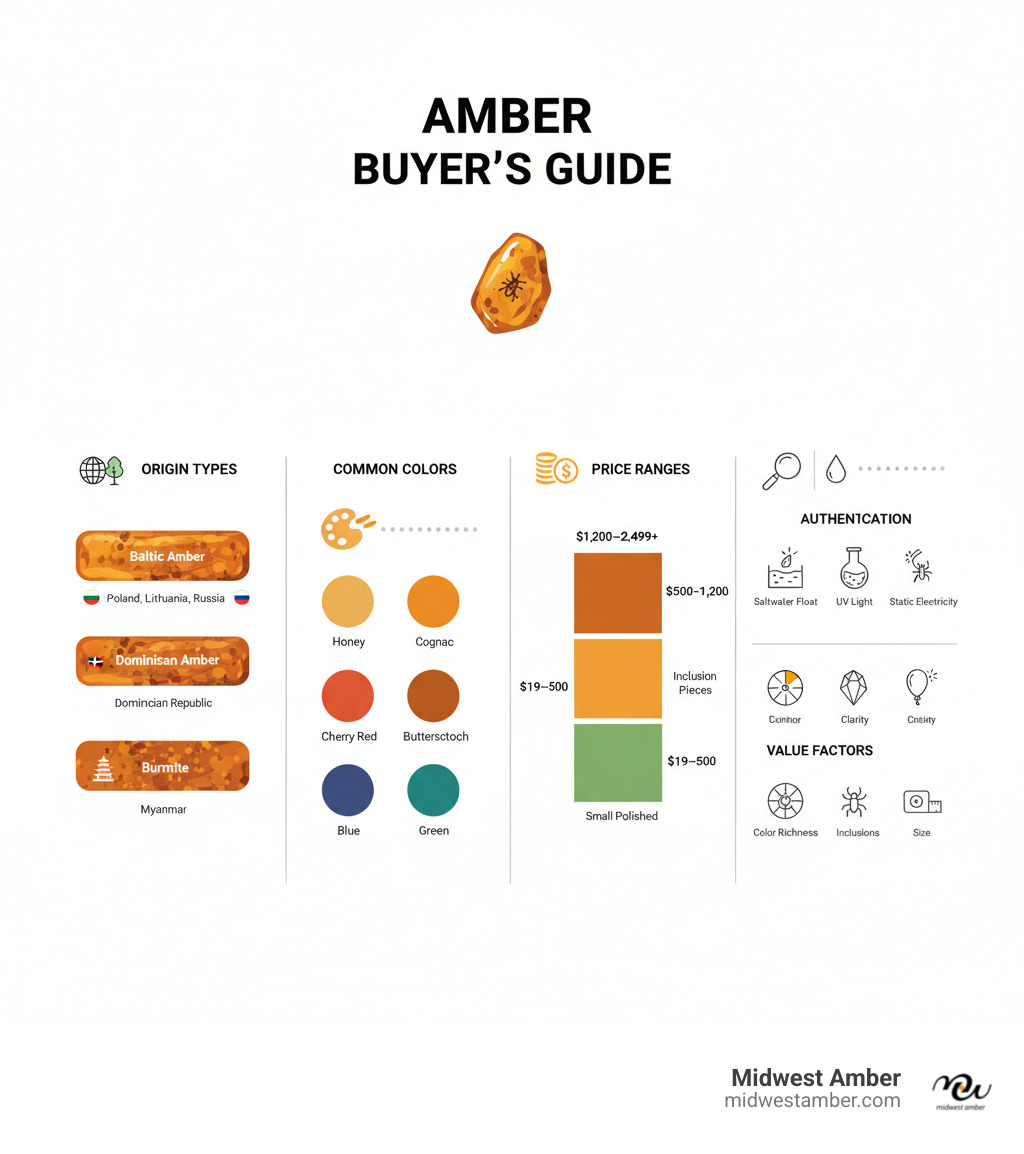
Baltic amber, or succinite, holds a special place due to its high succinic acid content and incredible spectrum of colors. Formed 35 to 50 million years ago, it ranges from pale honey to deep cherry red. Other notable types include Dominican amber, famous for its blue and green varieties; Burmite from Myanmar, which dates back 90-100 million years to the age of dinosaurs; and Mexican amber, which offers beautiful golden and red tones.
| Amber Type | Age (Approx.) | Common Colors | Common Inclusions | Hardness (Mohs) |
|---|---|---|---|---|
| Baltic Amber (Succinite) | 35-50 million years | Honey, Cognac, Cherry Red, Butterscotch, Egg Yolk, Milky, Green, Black | Insects (rarely), plant matter, air bubbles | 2.0-2.5 |
| Dominican Amber | 20-30 million years | Yellow, Gold, Blue, Green | Insects, plant matter, small vertebrates (more common than Baltic) | 2.0-2.5 |
| Burmite (Myanmar Amber) | 90-100 million years | Deep Red, Brown, Yellow | Numerous insects, often well-preserved | 2.0-2.5 |
| Mexican Amber (Chiapas) | 20-30 million years | Yellow, Orange, Red, Transparent | Insects, plant matter | 2.0-2.5 |
When you browse amber for sale, you'll see pieces described by their color:
- Honey Amber: Classic golden tones like captured sunlight.
- Cognac Amber: Darker and richer, like the fine spirit.
- Cherry Red Amber: Rare and dramatic, with deep crimson hues.
- Butterscotch Amber: A creamy, opaque yellow, also called "egg yolk."
- Multicolor Amber: Blends several shades in one unique piece.
The real showstoppers are pieces with inclusions. Finding an ancient insect, a delicate leaf, or a tiny feather preserved in perfect detail transforms amber from beautiful to mesmerizing. These natural time capsules are rare treasures that connect us to ecosystems that vanished millions of years ago and are significantly more valuable.
Want to dive deeper into what makes these ancient gems so remarkable? Check out our guide on Unearthing Natural Amber: What Makes This Ancient Gem So Special?
A Curated List of Popular Amber for Sale
Amber's warm glow has captivated jewelry makers for centuries, but its versatility extends to decorative items and collector specimens. At Midwest Amber, we focus on bringing you handcrafted, genuine Baltic amber for sale that's ethically sourced from Poland and Lithuania. Every piece is backed by our commitment to authenticity and quality.
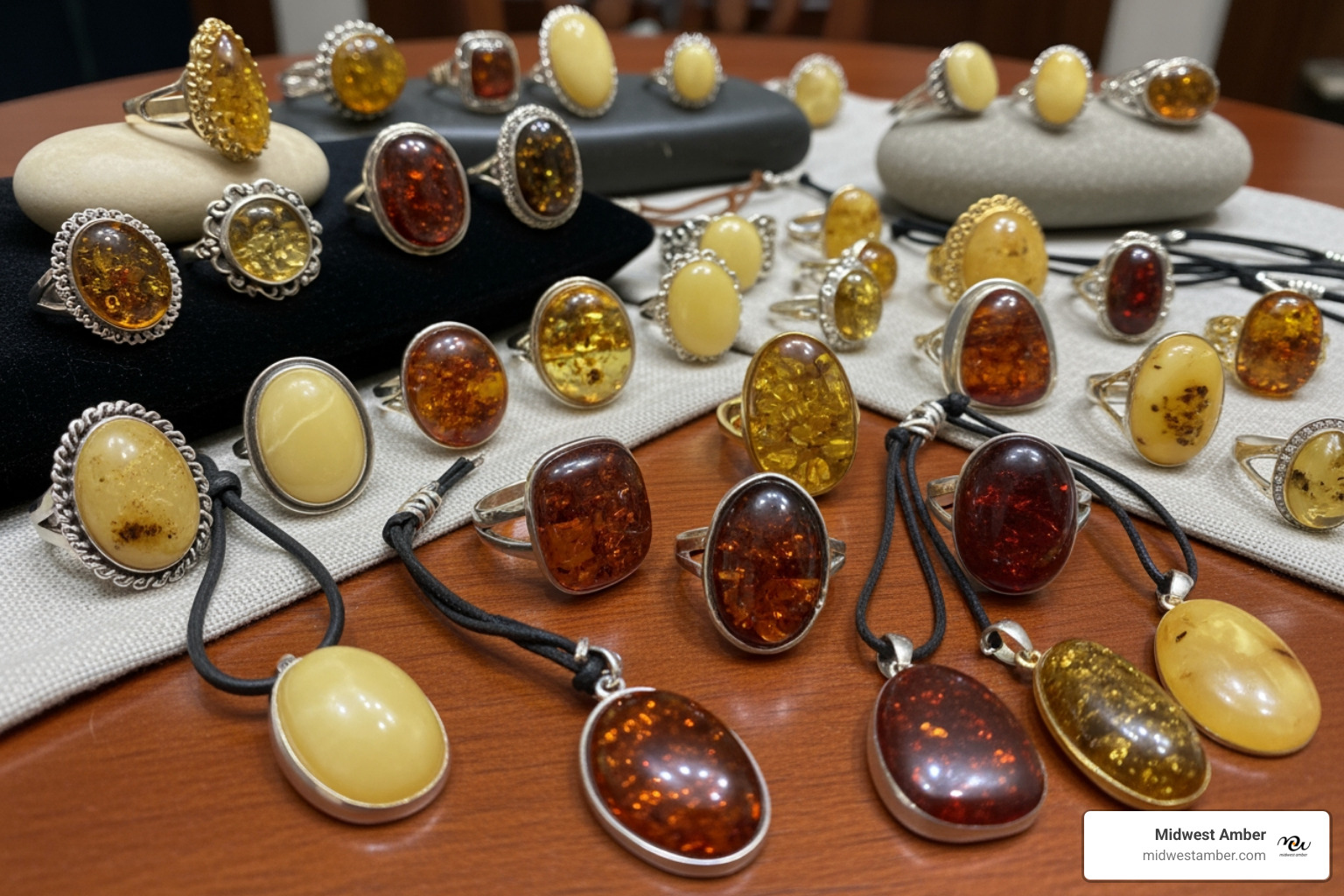
If you're curious about the full range of possibilities amber offers, we've put together The Ultimate Guide to Amber Jewelry to help you explore.
Timeless Amber Necklaces and Pendants
Our necklaces and pendants range from simple, single-stone designs to intricate beaded pieces. We offer delicate women's styles for everyday wear and statement pieces for special events, as well as robust, masculine designs that bring character to any outfit.
For fans of creamy, opaque amber, Find Your Perfect Egg Yolk Amber Necklace helps you steer this distinctive style. For something with more edge, Unlock Your Style with Men's Amber Pendants showcases pieces blending ancient beauty with modern masculinity. To see the full spectrum of choices, see Dangle and Delight: The Best Amber Necklaces for Every Style.
Neat Amber Earrings and Brooches
Amber earrings flatter every skin tone with a gentle, warm glow. Our collection includes popular drop earrings, subtle classic stud earrings, and whimsical bee-shaped earrings. For visual interest, our multicolor designs combine different shades of amber in a single pair.
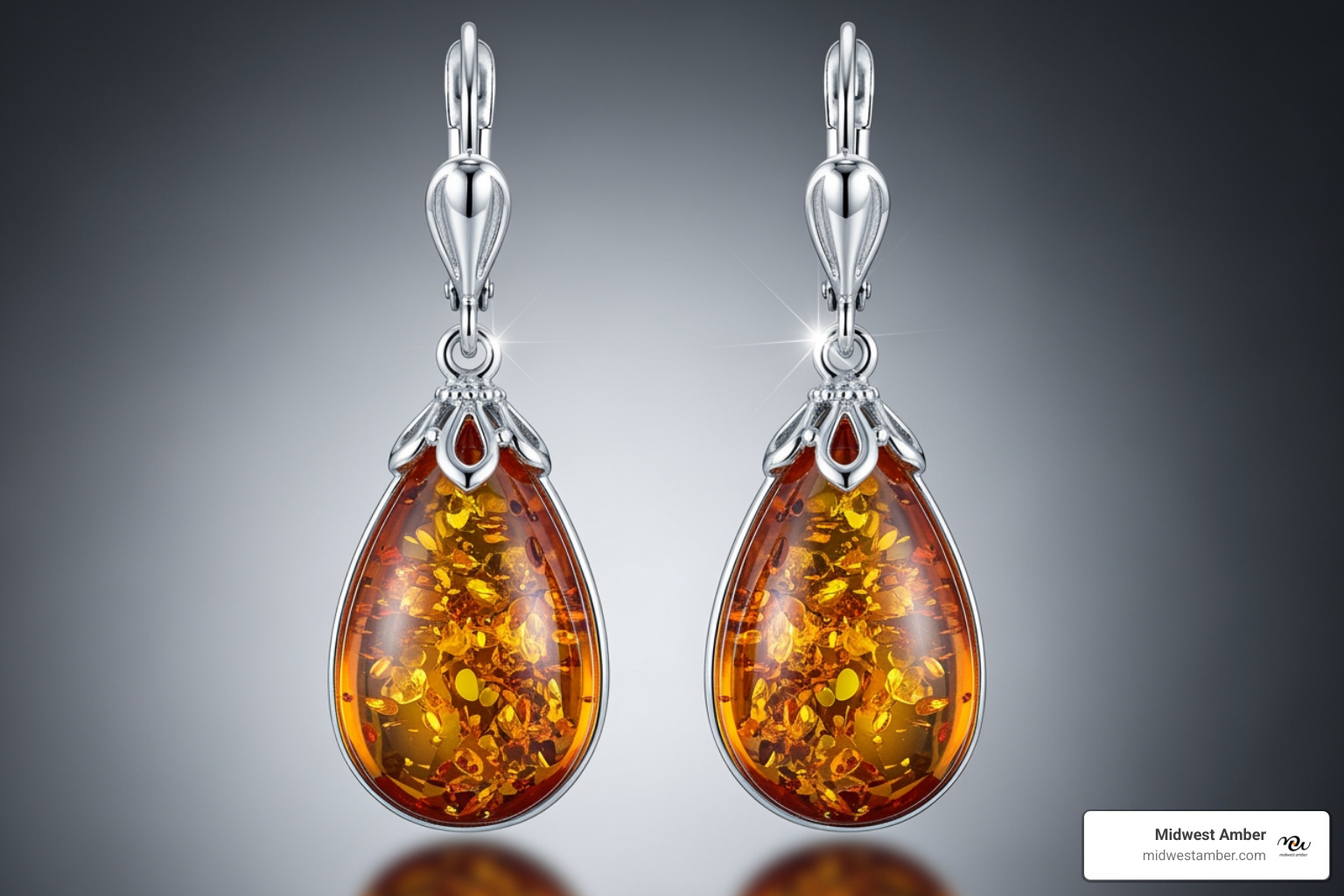
Don't overlook brooches and pins. These versatile pieces add a touch of ancient elegance to jackets, scarves, or hats. They are conversation starters and heirlooms in the making.
Dive deeper into earring styles with Amber Drop Earrings: A Dazzling Dive into Style, or find out why nature lovers adore our Find Your Perfect Pair of Amber Bee Earrings. For vintage charm, explore All About Amber Brooches.
Stylish Amber Bracelets and Rings
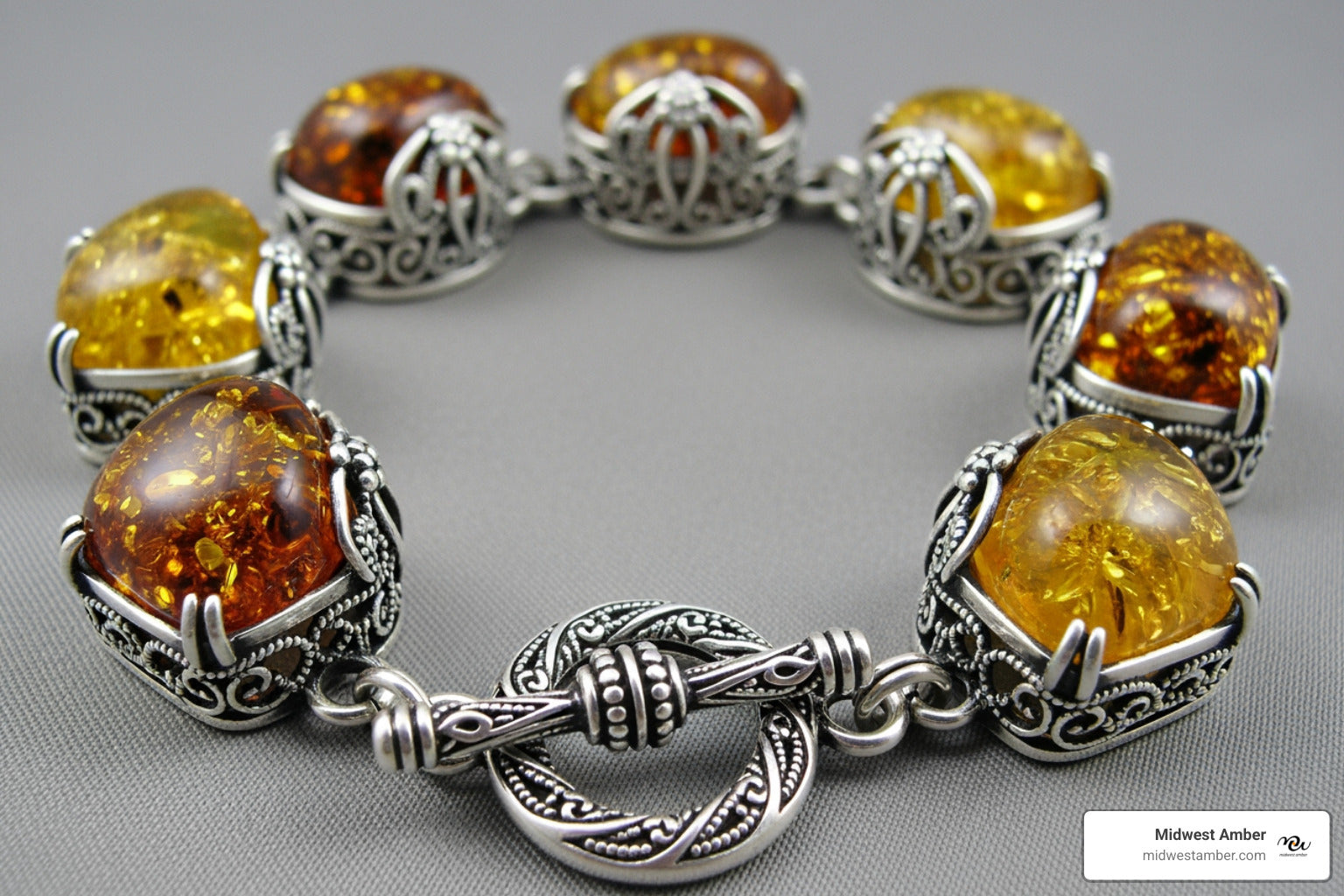
Our bracelets come in styles for both men and women, from delicate chains to bold statement pieces. Multicolor bracelets are particularly striking, showcasing the incredible range of hues that Baltic amber naturally displays.
Amber rings are also a special choice, some featuring clean, polished stones and others containing rare insect inclusions—a literal window into prehistoric life. Wearing a ring with a preserved ancient insect is like carrying a tiny museum with you.
Explore feminine styles in Find Your Perfect Match: Baltic Amber Bracelets for Every Woman or find the symbolism behind Amber Rings: More Than Just Jewelry, a Symbol of Protection and History. For more on inclusions, see Jurassic Gems: Where to Find Insect in Amber Necklaces.
Where to Find Raw and Rough Amber for Sale
For lapidary artists, collectors, and decorators, raw and rough amber offers unprocessed beauty. It's amber in its most honest form, with a rough or frosted surface that tells the story of its formation.
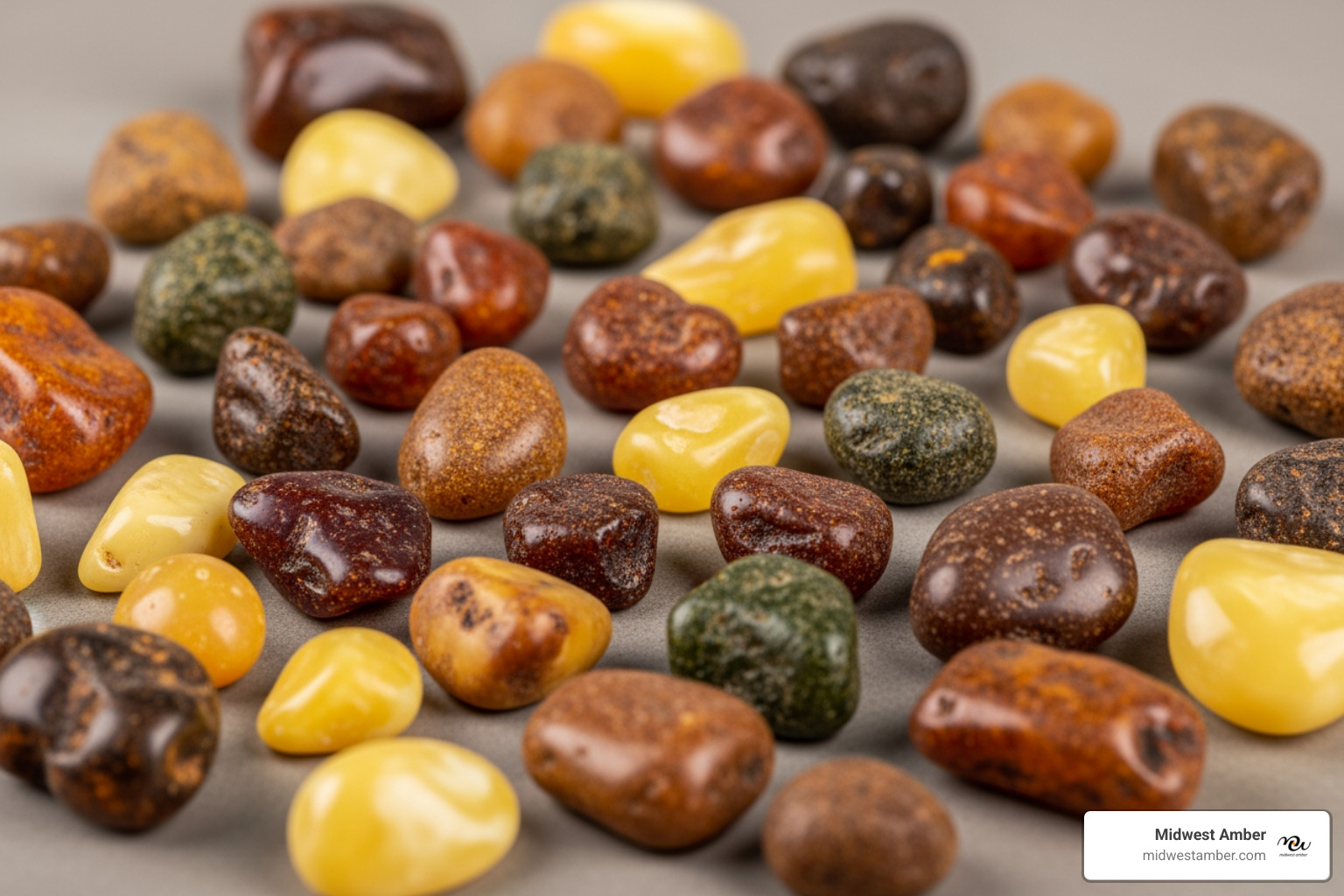
The market for raw amber for sale is robust. You'll find pieces ranging from small, affordable stones perfect for beginners to massive chunks for serious collections. A certified piece weighing 500 carats might go for around $26, while a substantial butterscotch egg yolk piece of 37 grams could be near $90. Truly massive specimens over 4 kilograms have been listed for more than $650.
Whether you're planning a project or building a collection, raw amber offers incredible value. To explore the journey from rough stone to finished jewelry, check out From Raw to Red: A Shopper's Guide to Every Type of Amber Jewelry.
The Smart Shopper's Guide to Buying Amber
Shopping for amber for sale should be exciting. Knowing what makes amber valuable helps you choose pieces you'll treasure. While personal preference is key, understanding the basics of value ensures you get what you pay for.
- Color richness: The intensity of amber's hue varies dramatically. Deep honey, rich cognac, vibrant cherry red, and creamy butterscotch are particularly sought after.
- Clarity: This refers to transparency. Crystal-clear pieces create a warm glow, while others prefer the mysterious depth of cloudy or milky amber.
- Size: Larger pieces with excellent color and clarity command higher prices, but smaller specimens can be just as stunning and more affordable.
- Inclusions: These bits of ancient life can dramatically increase value. While air bubbles are common, pieces with well-preserved insects or leaves are rare scientific treasures. Finding an identifiable insect in Baltic amber is remarkably rare—about 1 in 1,000 pieces—making them highly sought after. These inclusions offer windows into ancient ecosystems, with some specimens even preserving fossil evidence of ancient spider moms caring for their young.
Ethical considerations also matter. Our Baltic amber comes from Poland and Lithuania, where much of the mining is done by hand. This traditional approach protects delicate inclusions and ensures sustainable practices. Choosing ethically sourced amber supports responsible mining for future generations.
To learn more about what makes amber genuine, explore Beyond the Shine: Uncovering Truly Authentic Amber Jewelry.
How to Spot a Fake: Identifying Authentic Amber
The market for amber for sale unfortunately includes fakes like plastic, glass, or young copal resin. Be wary of pieces with unusually large or perfectly centered insects, as these are often fabricated. The good news? You can perform several simple tests at home.
- Saltwater Test: Mix 2 tablespoons of salt into a glass of water. Genuine amber will float, while most fakes (plastic, glass) will sink.
- Static Electricity Test: Rub the amber vigorously on a soft cloth for 30 seconds. Real amber generates static and will pick up small pieces of paper or hair.
- Hot Needle Test (Use Caution): Briefly touch a red-hot needle to an inconspicuous spot. Authentic amber emits a faint pine scent. Plastic smells burnt, and copal produces a sweeter, resinous smell.
- UV Light Test: Under a UV light in a dark room, genuine amber typically fluoresces with a bluish or yellowish-green glow. Most fakes won't react.
For a comprehensive walkthrough, check out Real or Resin? How to Tell if Your Amber Jewelry is Genuine.
Tips for Finding Quality Amber for Sale Online
Buying amber for sale online requires care. Here’s what separates trustworthy sellers from questionable ones.
- Seller Reputation: Look for established businesses with positive reviews and clear contact information. Our 20+ years specializing in genuine Baltic amber speaks to our focus and longevity.
- Return Policy: A fair return policy is non-negotiable. Reputable sellers stand behind their products with clear terms.
- Product Descriptions: Quality listings provide specifics: origin (Baltic Sea region, etc.), weight, dimensions, and color. Vague descriptions are a red flag.
- High-Quality Photos: Look for multiple, clear images from different angles in natural light that show the amber's true color and texture.
- Certification: For significant purchases, ask about certification. Legitimate sellers provide documentation, often from labs approved by organizations like the International Amber Association.
At Midwest Amber, we are committed to transparency. Every piece is 100% natural, ethically sourced, and backed by certified authenticity. To understand why certification matters, read Don't Get Fooled: The Definitive Guide to Certified Baltic Amber.
Frequently Asked Questions about Amber
When people find amber for sale, curiosity follows. Here are answers to some of the most common questions we've received over two decades.
Can DNA be extracted from insects in amber?
It's a captivating idea from the movies, but reality is different. While amber preserves the physical structure of insects in stunning detail, DNA itself degrades over time. Scientists have found that DNA has a half-life of about 521 years, meaning all usable DNA is gone after roughly 6.8 million years. Since Baltic amber is 35-50 million years old, cloning extinct creatures remains science fiction.
However, these inclusions are priceless to science. They allow paleontologists to study the morphology and behavior of extinct species, offering a 3D snapshot of life from millions of years ago.
What is the difference between amber and copal?
This is a crucial distinction when shopping for amber for sale. Both are tree resin, but copal is much younger—only thousands to a few million years old. It hasn't fully fossilized, making it softer and less stable than true amber, which is typically over 20 million years old.
Because it's less durable, copal is less valuable. Unfortunately, it is sometimes artificially treated and sold as genuine amber. When considering a purchase, always ask about the age and origin to protect your investment.
Does amber have healing properties?
Throughout history, amber has been treasured for supposed healing powers, particularly in Baltic folklore. Its high concentration of succinic acid is believed by many to have anti-inflammatory properties, leading people to wear it to ease arthritis or other ailments.
In metaphysical circles, amber is sometimes called the 'Stone of Renewal,' associated with emotional healing, mental clarity, and positive energy. While scientific evidence for these claims is limited, the cultural significance of amber as a healing stone is undeniable and spans thousands of years.
Whether you're drawn to amber for its potential therapeutic properties or its timeless beauty, what matters is finding a piece that resonates with you. Explore the traditional beliefs in The Golden Touch: Discovering Amber's Anti-Inflammatory Power for Arthritis.
Conclusion
Holding a piece of amber for sale is like holding a tangible connection to a world that existed millions of years ago. Its journey from tree resin to treasured gemstone is extraordinary. The warm glow and rare inclusions containing glimpses of prehistoric life give amber a wonder that goes far beyond aesthetics. Whether you're captivated by its beauty, fascinated by its history, or drawn to its traditional associations with healing, owning authentic amber means owning a fragment of Earth's ancient story.
With all the fakes on the market, authenticity matters. That's why we're passionate about what we do at Midwest Amber. For over 20 years, we've specialized in handcrafted, genuine Baltic amber jewelry, ethically sourced directly from Poland and Lithuania. Every piece we offer comes with certified authenticity, so you can trust that you're getting the real deal—not plastic, not glass, and not young copal masquerading as the ancient gem.
We invite you to explore our diverse collections, from neat necklaces and sparkling earrings to distinctive bracelets and meaningful rings. Whether you're treating yourself or searching for a truly special gift, there's a piece of amber waiting to tell its story to you. Explore the ultimate guide to amber jewelry to find your perfect piece and start your own connection to this remarkable ancient treasure.

Leave a comment
This site is protected by hCaptcha and the hCaptcha Privacy Policy and Terms of Service apply.