

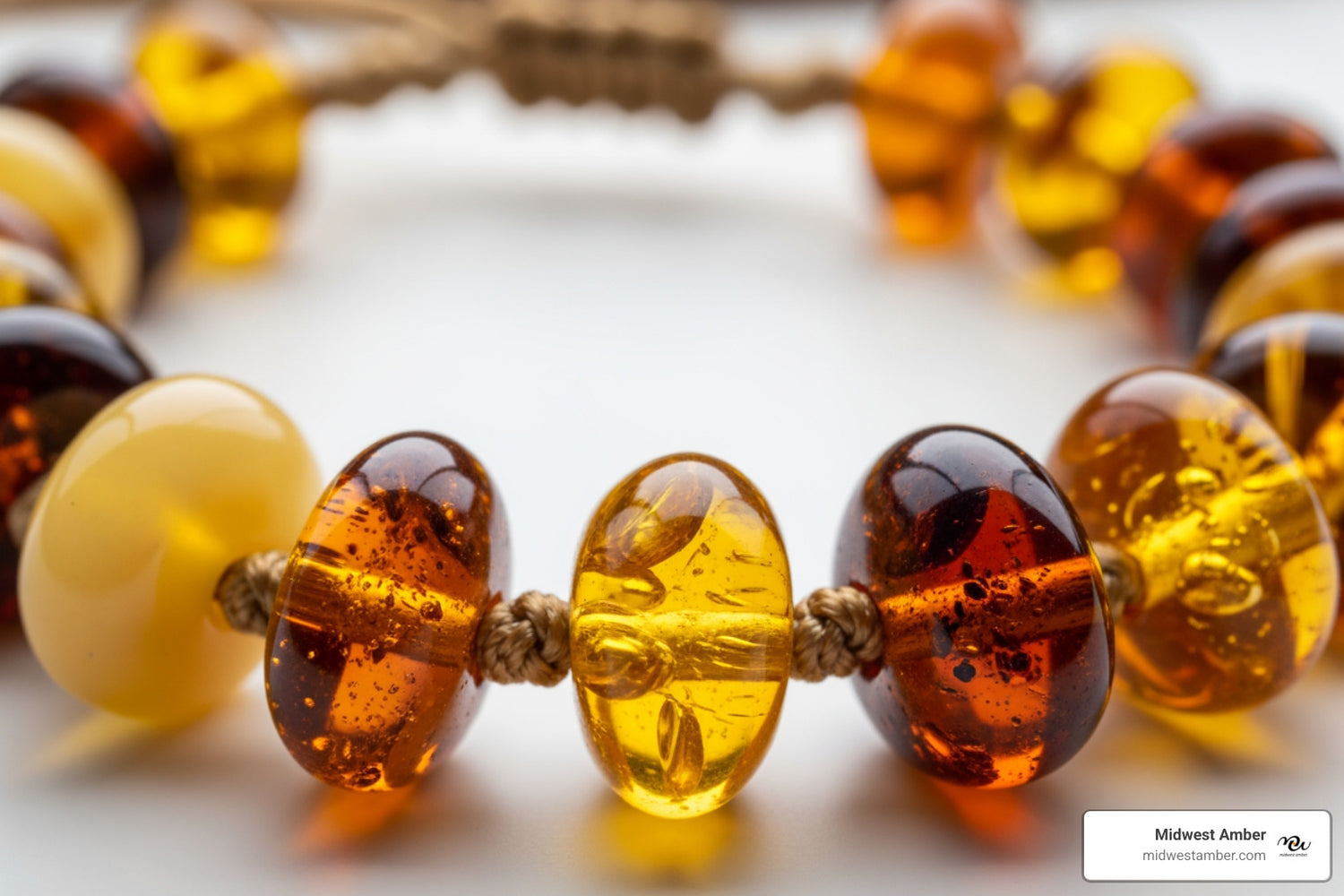
Why Understanding the Truth About Amber for Babies Could Save a Life
Amber for babies is marketed as a natural teething remedy, but major health organizations like the FDA and American Academy of Pediatrics strongly warn against it due to life-threatening risks.
Key Dangers vs. Claims:
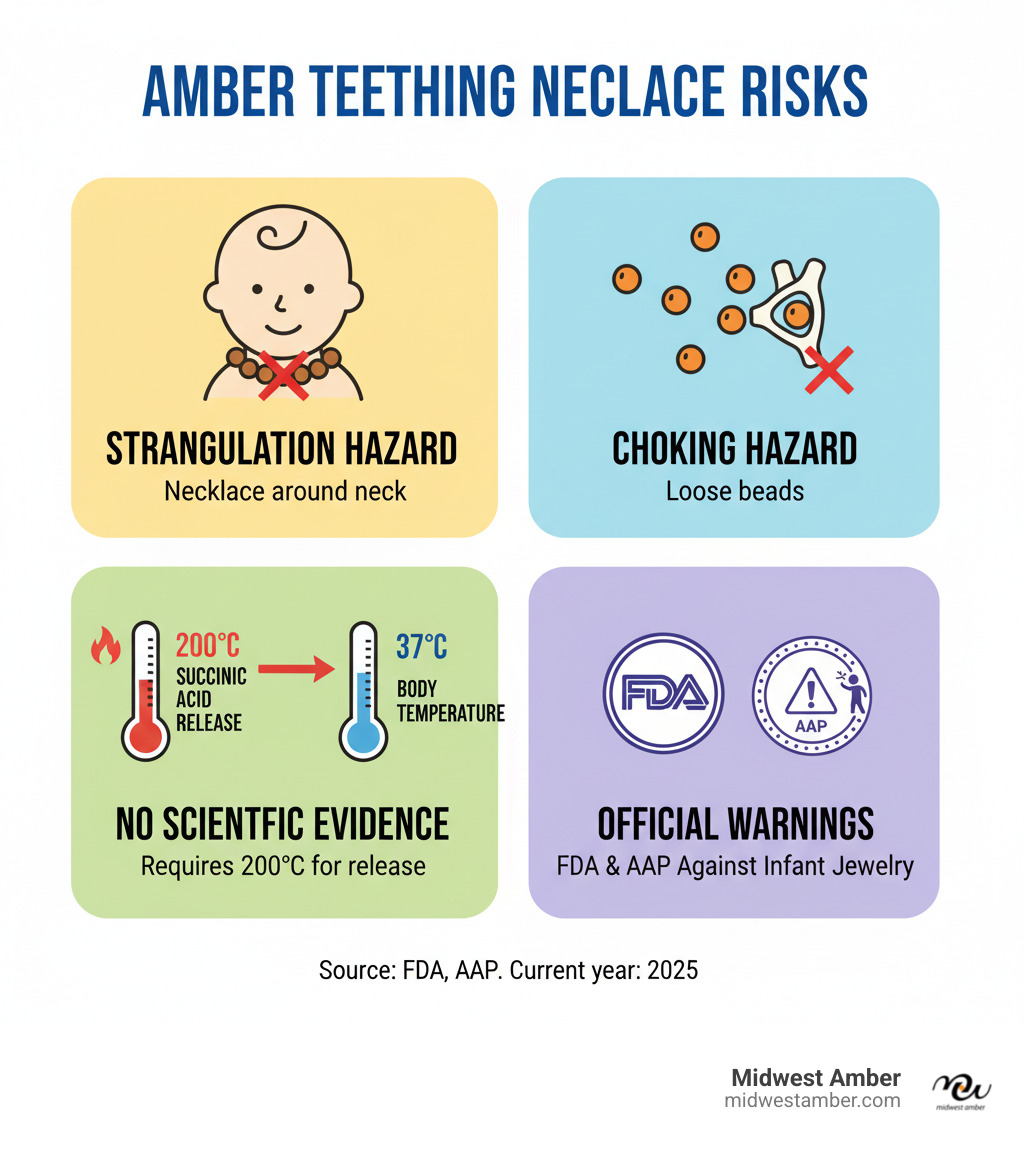
- Strangulation Risk: Necklaces can tighten around a baby's neck, especially during sleep. An 18-month-old died from strangulation by an amber necklace during a nap (FDA, 2018).
- Choking Hazard: Beads can break off and block a child's airway. Suffocation is the leading cause of death for children under one.
- No Scientific Proof: Claims of pain relief are unproven. The active compound, succinic acid, only releases at 200°C (392°F), a temperature far above a baby's body heat.
Despite these dangers, it's common to see babies wearing amber necklaces. Parents, desperate to soothe a teething child, are drawn to marketing that claims Baltic amber releases succinic acid to reduce pain and inflammation. However, these claims are not supported by science, creating a dangerous gap between hope and medical reality.
The FDA issued an official warning after reports of children choking and the tragic death of a toddler. Meanwhile, studies show that 72.3% of families using these necklaces were never warned about the risks. The American Academy of Pediatrics (AAP) is unequivocal, recommending no jewelry of any kind on infants.
I'm Gabriel Ciupek, President of Midwest Amber. While I've spent years working with genuine Baltic amber for adult jewelry, I believe parents must know the truth about the risks amber for babies poses. My goal is to help you make an informed decision that prioritizes your child's safety.
The Allure of Amber: Why Parents Are Turning to Teething Necklaces
As parents, watching a baby struggle with teething is heartbreaking. When a beautiful, "natural" solution like an amber teething necklace is suggested, it's easy to be interested. The marketing is appealing, positioning these beads as ancient healing tools that soothe discomfort without medication.
The claims sound magical: Baltic amber contains succinic acid, which is supposedly released by body heat and absorbed to provide natural pain relief. Some sellers even claim the beads can control drooling and boost the immune system. For exhausted parents, this narrative is powerful.
Many parents believe they see results. Research shows 83.2% of families found the necklaces beneficial, turning to amber for babies to address restlessness (71.3%), increased saliva (57.4%), and gum itching (55.4%).
What Are Amber Teething Necklaces?
Dina DiMaggio, MD, explains that amber isn't a gemstone but fossilized tree resin. Teething necklaces are typically made from Baltic amber, featuring small raw or polished beads. They are often strung with knots between each bead, marketed as a safety feature to prevent scattering if the necklace breaks.
Why Do Parents Believe They Work?
Belief in amber's power comes almost entirely from testimonials. Online, you'll find countless stories from parents who swear the necklaces reduced fussiness and improved sleep. In one study, 34.7% of parents rated them as "very effective."
Dr. Alexis Phillips-Walker explains the belief that succinic acid is absorbed to soothe swollen gums. It's a compelling story for parents preferring natural solutions.
However, as we discuss in our article, Warning: What Every Parent Needs to Know About Amber Teething Necklaces, this perceived benefit stands in stark contrast to scientific evidence and the urgent warnings from health authorities.

The Grave Risks: Official Warnings on Amber for Babies
The appeal of a natural remedy is strong, but with amber for babies, the documented dangers are too serious to ignore. Health organizations worldwide have issued urgent warnings backed by heartbreaking incidents.
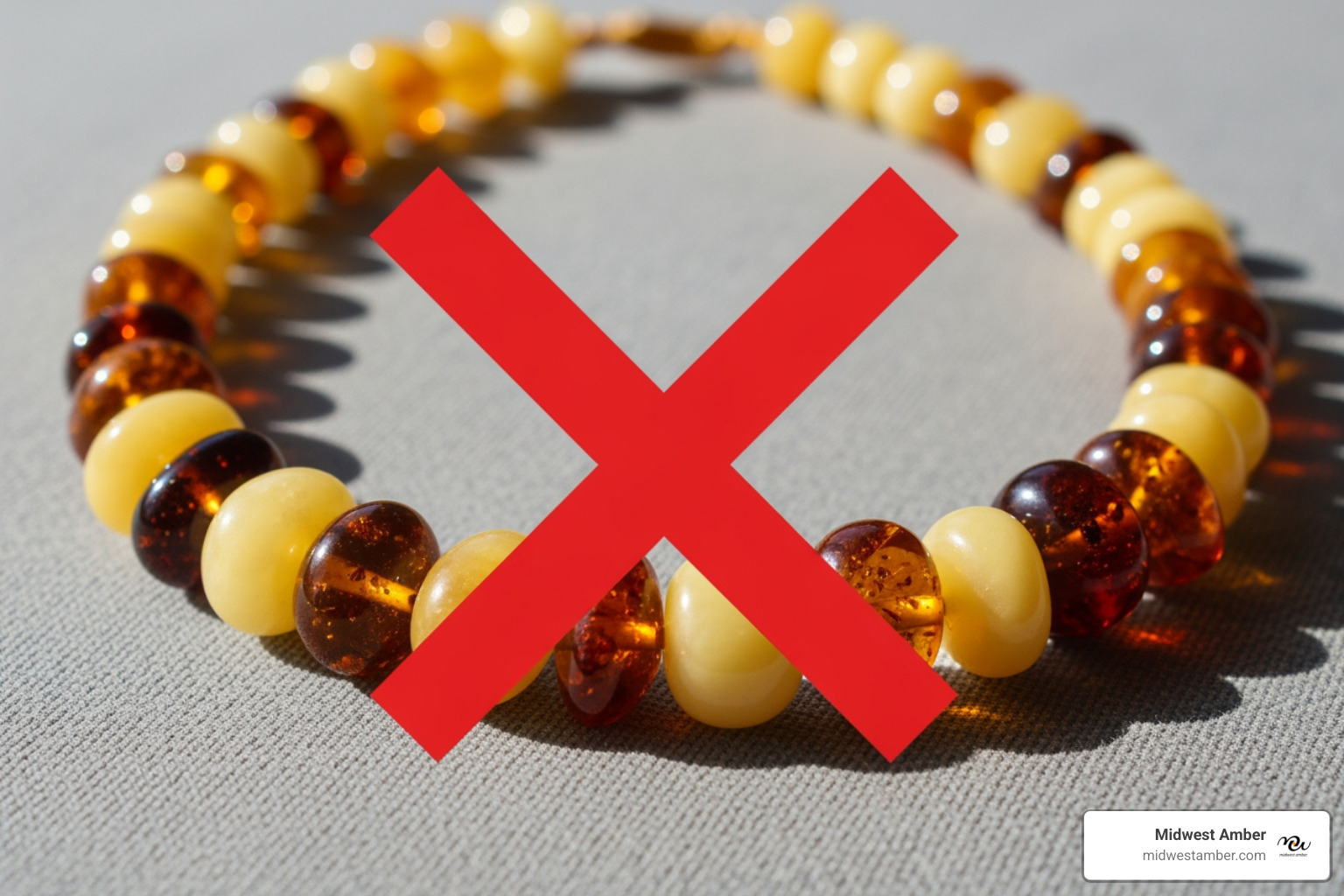
The two biggest dangers are choking and strangulation. In December 2018, the FDA released an official warning after reports of children choking on broken beads. Tragically, they also documented the death of an 18-month-old child who was strangled by an amber necklace during a nap.
Suffocation is the leading cause of death for children under one. Necklaces pose an inherent strangulation risk by catching on crib slats, playground equipment, or even tightening as a baby moves in their sleep. Young children lack the ability to free themselves. Even with individually knotted strings, broken beads become choking hazards. Research shows 2% of babies wearing them faced suffocation risk, and another 2% had issues with beads dispersing.
Alarmingly, one study found that 72.3% of families using these necklaces were never warned about the risks. You can read the official FDA warning against teething jewelry directly from their website.
The Stance of Major Health Organizations
The medical community speaks with one voice: these products are dangerous and should not be used on infants. The American Academy of Pediatrics (AAP) recommendation is simple: no jewelry of any kind on infants. On the AAP's specific guidance on amber necklaces, they state the necklaces are neither safe nor effective.
This consensus is global. Canada's public health department issued warnings in 2010, and Ireland's Health Service Executive called them "inherently unsafe" in 2015. This isn't alarmism; it's a worldwide recognition of real danger, as we explore in Beyond the Hype: Unpacking the Risks of Amber Teething Necklaces.
If You Still Choose to Use Amber for Babies: Harm Reduction Tips
We understand the desperation parents feel. If you still choose to use amber for babies, please know these strategies reduce risk but do not eliminate it. The only way to be completely safe is to not use them.
- Never leave your baby unattended while wearing the jewelry, even for a moment.
- Always remove the necklace or bracelet for naps and bedtime. The risk of strangulation is highest when a child is sleeping and unsupervised.
- Consider using it on a wrist or ankle instead of the neck. This removes the direct strangulation risk, but the choking hazard from broken beads remains.
- Inspect the jewelry daily for loose beads, frayed string, or a weak clasp. Marketed safety features can and do fail.
For more on managing these risks, see our guide Unraveling the Risks: A Guide to Amber Bracelet Safety. These precautions help, but they do not make amber necklaces safe.
The Science vs. The Hype: Is There Any Proof?
When you're desperate for a solution to your baby's teething pain, testimonials can be persuasive. But the science on amber for babies is clear: the claims don't hold up.
The entire theory rests on succinic acid being released by body heat, absorbed through the skin, and acting as a pain reliever. This theory crumbles under scrutiny.
First, succinic acid only releases from amber at nearly 200°C (392°F). Your baby's skin temperature is around 37°C (98.6°F)—nowhere near hot enough. Second, there is no credible evidence that succinic acid can be absorbed through the skin in therapeutic amounts. Finally, there are zero peer-reviewed clinical trials demonstrating that these necklaces are effective for pain relief in infants.
So why do 83.2% of families report benefits? The answer is likely the placebo effect. When parents believe a treatment will work, they are more likely to perceive improvement. Teething pain also comes and goes, so any relief might simply be coincidental. Furthermore, research has found bacterial colonization rates of 88.9% on these necklaces, presenting another potential health issue.
For accurate information on amber's real properties, our guide Beyond the Bite: Finding the Perfect Teething Necklace for Your Little One offers context based on facts, not marketing.
Debunking the Claims About Amber for Babies
Let's quickly address the most common marketing claims:
- The succinic acid theory: As established, this is scientifically implausible. The temperature required for release is far too high, and there is no proof of skin absorption or analgesic effect.
- Thyroid stimulation: Claims that amber can stimulate the thyroid gland to control drooling are pure fiction. There is no physiological mechanism for this to occur. The thyroid is an internal organ unaffected by external jewelry.
- Immune system improvement: These claims are equally baseless. Amber has never been shown to affect a baby's immune response or inflammation levels. These ideas stem from a misrepresentation of how the immune system works.
Medical experts, like Dr. Dina DiMaggio of the AAP, state there is no scientific proof that amber for babies has any therapeutic value. The claims persist due to effective marketing, not evidence. At Midwest Amber, we value amber's real properties, which you can learn about in The Ultimate Guide to Amber Jewelry.
Safe & Soothing: Tips for Teething Babies
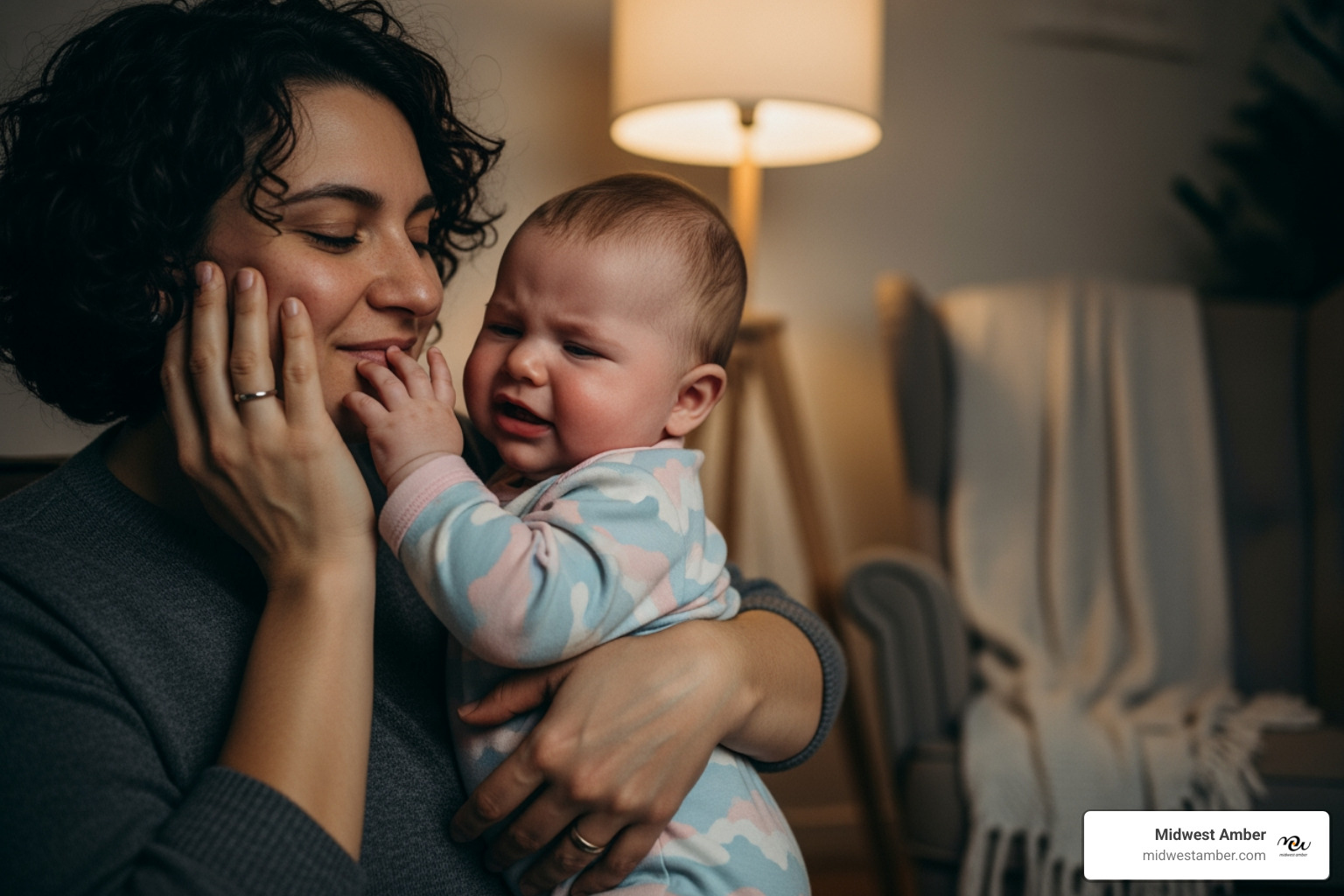
Watching your baby struggle with teething is heartbreaking, but there are many safe, effective, and pediatrician-recommended ways to soothe their pain without the risks of amber for babies.
- Gentle Gum Massage: Use a clean finger to gently rub your baby's sore gums. The counter-pressure can provide immediate comfort.
- Cool Objects: A clean, damp washcloth chilled in the refrigerator (not freezer) gives your baby something safe to gnaw on. You can also chill solid rubber or silicone teething rings.
- Safe Teethers: Offer solid teething toys designed for babies. Ensure they are made from non-toxic materials and have no small parts that could break off. Always supervise your child.
- Cuddles and Comfort: Never underestimate the power of extra snuggles, gentle rocking, or simply being held. Your presence is a powerful soother.
If your baby is in significant pain, always consult your pediatrician. They can offer personalized advice and, if necessary, recommend the correct dosage of an over-the-counter pain reliever like acetaminophen.
It's also crucial to know what to avoid. Steer clear of teething gels with benzocaine, homeopathic teething tablets, and any unsafe jewelry, including amber necklaces. By focusing on these proven methods, you can comfort your baby safely.
Frequently Asked Questions about Amber Teething Necklaces
With so much conflicting information about amber for babies, it's natural to have questions. Here are answers to the most common concerns.
Do amber teething necklaces actually work for pain?
No. There is no scientific evidence to support this claim. The theory that succinic acid is released and absorbed through the skin is scientifically implausible. The required temperature is nearly 200°C (392°F), far hotter than a baby's body. As Dr. Phillips-Walker explains, this belief has been popularized despite lacking scientific backing. Any perceived benefits are likely due to the placebo effect or the natural waxing and waning of teething symptoms.
What are the biggest dangers of amber teething necklaces?
The two primary dangers are strangulation and choking. A necklace can tighten around a baby's neck during sleep or play, and infants cannot free themselves. The FDA issued a warning after the death of an 18-month-old who was strangled by one during a nap. If the necklace breaks, the small beads become a severe choking hazard. For these reasons, both the FDA and American Academy of Pediatrics strongly warn against their use, with the AAP recommending no jewelry of any kind for babies.
Are bracelets or anklets a safer alternative?
While a bracelet or anklet removes the direct strangulation risk, the choking hazard remains. If the jewelry breaks, the small beads are still dangerous. Babies can easily bring their feet and hands to their mouths. The American Academy of Pediatrics' recommendation is clear: no jewelry on infants, period. There is no truly safe way to use amber for babies when the product offers no proven benefit but carries documented, life-threatening risks.
Conclusion: Prioritizing Your Baby's Safety

When it comes to our children, safety is paramount. The journey through teething is tough, and the marketing around amber for babies is compelling because it promises a natural solution when parents feel most vulnerable.
However, the science doesn't support the claims, and the risks are heartbreakingly real. The FDA and the American Academy of Pediatrics issue warnings based on actual tragedies: children who have choked and an 18-month-old who died from strangulation. The theory about succinic acid is scientifically unfounded.
Safe, effective alternatives exist. A gentle gum massage, a cool washcloth, a safe teether, and extra cuddles will soothe your baby without risk. These methods are backed by evidence and, most importantly, they are safe.
At Midwest Amber, I've spent over 20 years working with genuine Baltic amber. I appreciate its beauty and authenticity for adult jewelry. We are proud to offer handcrafted, certified authentic amber jewelry to customers across Arlington Heights, Crystal Lake, Chicago, Northbrook, and throughout Illinois.
We believe in being honest about what amber is and isn't. It is beautiful jewelry for adults. It is not medicine, it is not a teething remedy, and it should never be placed on an infant. Your baby will get through teething safely with your love and the proven methods pediatricians recommend. That is worth more than any marketing claim.
If you're interested in learning more about genuine amber for adult jewelry, we invite you to find more about genuine amber from trusted local jewelers.

Leave a comment
This site is protected by hCaptcha and the hCaptcha Privacy Policy and Terms of Service apply.