

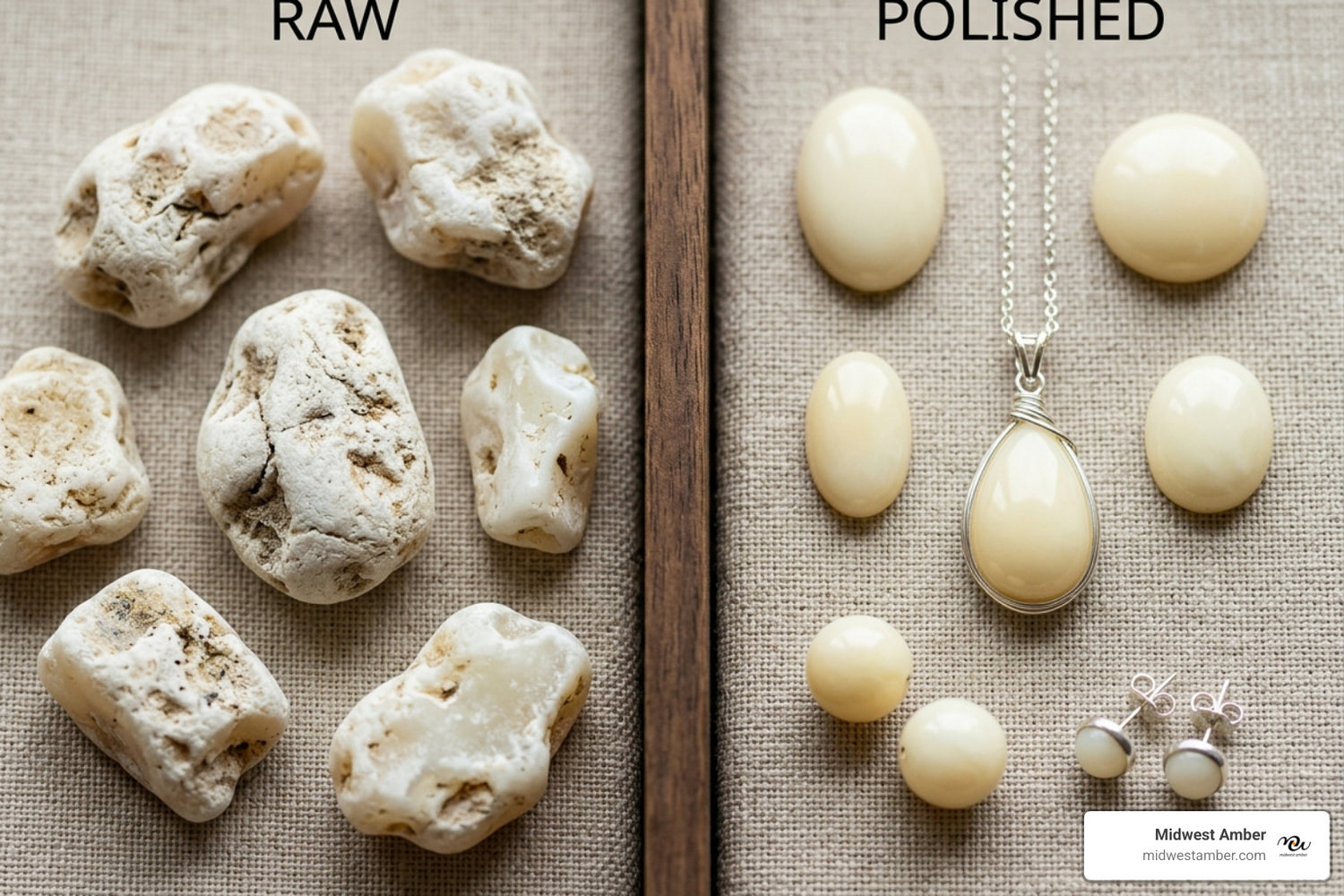
What Are white amber stones and Why Are They So Rare?
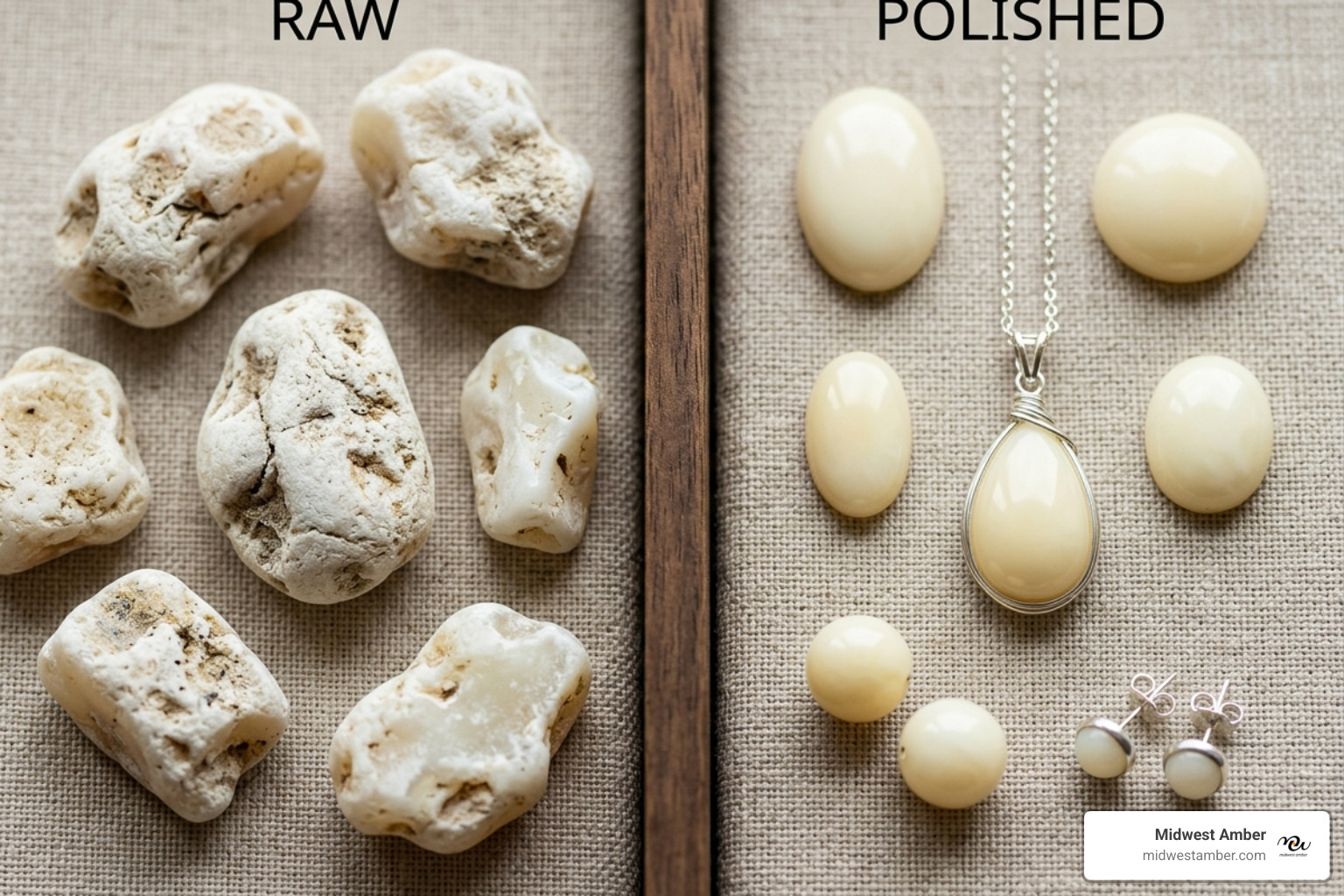
When you hold a piece of white amber, you aren't just holding fossilized resin; you’re holding a structural marvel of nature. While most amber is transparent, white amber stones are famous for their milky, opaque appearance. This isn't due to a different chemical makeup, but rather a fascinating physical phenomenon.
Inside every piece of white amber are millions of microscopic air bubbles. When light hits the stone, it doesn't pass through as it would with a "cognac" or "honey" variety. Instead, the light scatters off these tiny bubbles, creating a "bony" or "creamy" visual effect. This is similar to how whipped cream looks white even though it's made of translucent fats and liquids—the air changes everything.
In the industry, we often refer to these as "Royal White" or "Bone White" amber. In the raw amber market of April 2026, these stones continue to command a premium. Why? Because they represent only about 1% to 2% of the total amber yield from the Baltic region. Because of this extreme rarity, the market value for high-quality white amber is significantly higher than common orange varieties, often fetching around $10 per carat or more depending on the unique swirls of gray, blue, or honey-colored "tiger" patterns found within the stone.
The Baltic Origin and Physical Properties of White Amber
At Midwest Amber, we focus exclusively on the "Gold of the North." About 90% of the world's extractable amber is located in the Kaliningrad Oblast, an area historically known as the heart of the Baltic amber trade, stretching across the coasts of Poland and Lithuania.
What sets Baltic white amber stones apart from "amber" found in places like the Dominican Republic is the presence of succinic acid. Baltic amber is technically classified as succinite. White varieties actually contain the highest concentrations of this acid—anywhere from 3% to 8%.
Physically, white amber is a lightweight organic gemstone. It isn't a mineral, which means it feels warm to the touch and isn't heavy like glass or quartz. On the Mohs scale of mineral hardness, it sits between 2 and 2.5. This makes it easy for our artisans in Poland and Lithuania to hand-carve into intricate designs, but it also means it requires gentle care.
| Property | White (Royal) Amber | Cognac Amber | Cherry (Red) Amber |
|---|---|---|---|
| Opacity | Fully Opaque | Transparent | Translucent/Opaque |
| Rarity | Extremely Rare (1-2%) | Very Common (70%+) | Rarest (0.5%) |
| Succinic Acid | High (Up to 8%) | Moderate (3-4%) | Moderate |
| Visual Texture | Swirled/Bony | Clear/Sparkling | Deep/Dark |
Identifying Authentic white amber stones vs. Imitations
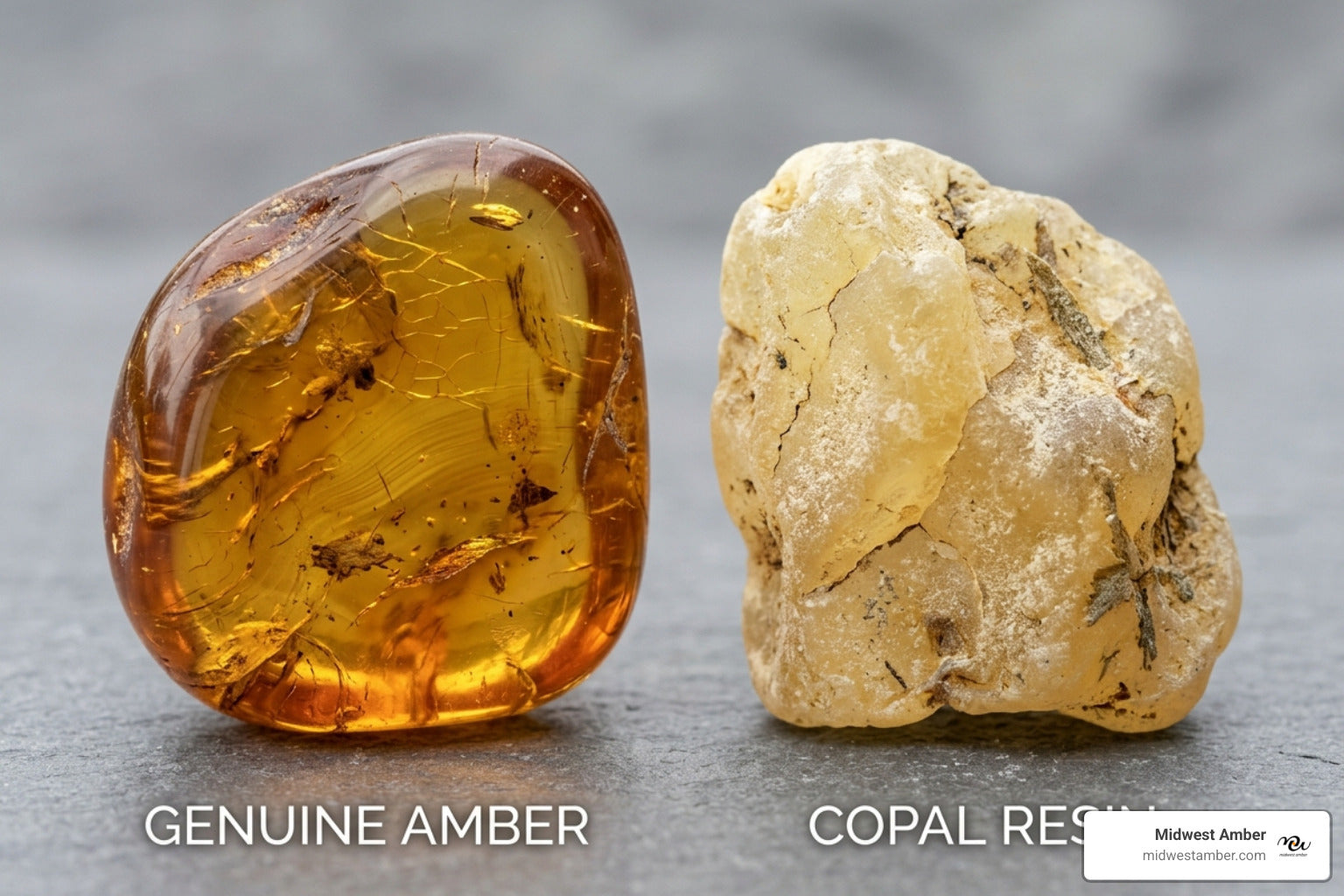
As white amber grows in popularity, so do the imitations. You might see "white amber" sold at suspiciously low prices, but often these are made of plastic, copal (young resin), or even glass. At Midwest Amber, we provide certificates of authenticity because we know how important it is to own the real thing.
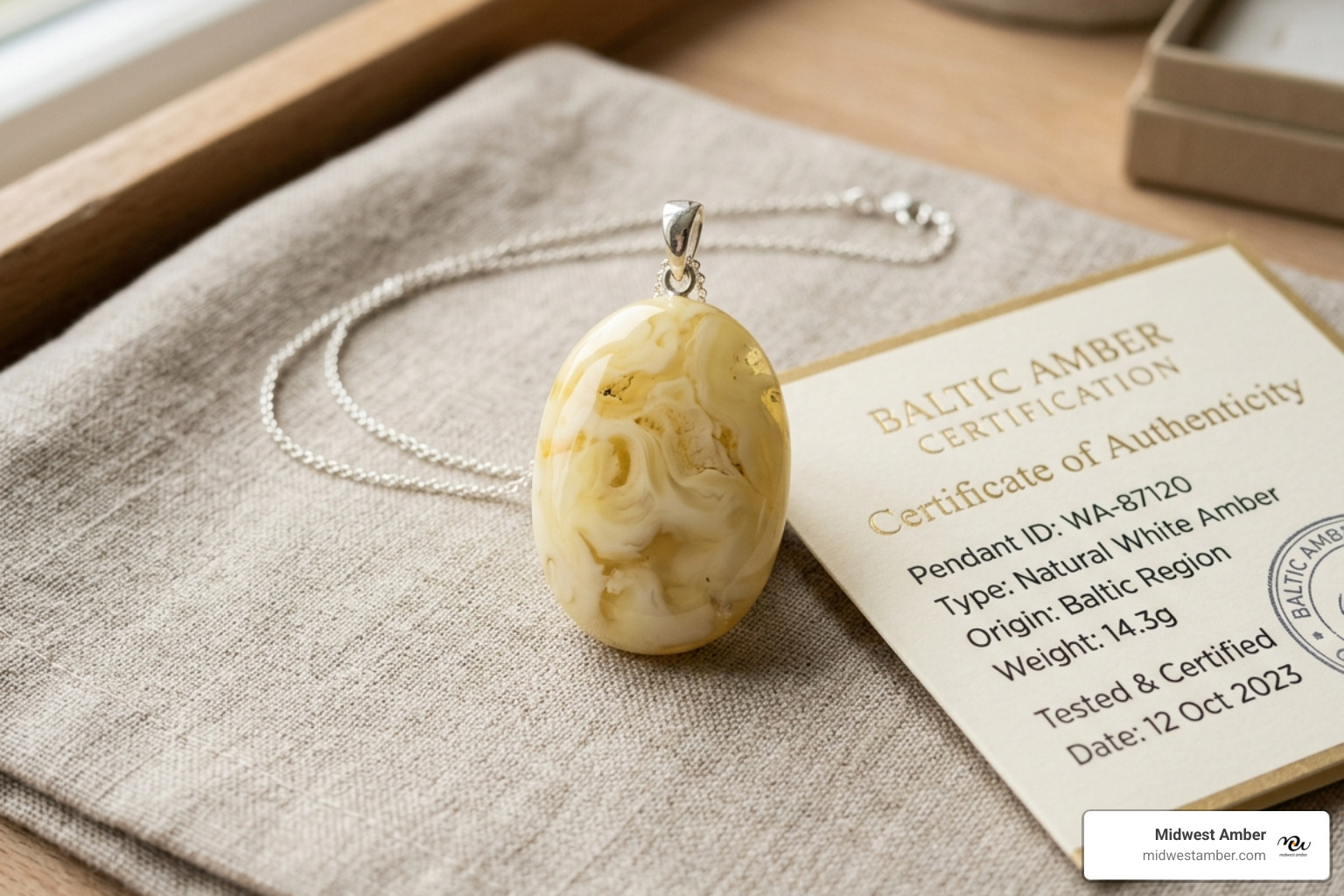
One of the most reliable ways to check for authenticity is the Scent Test. When genuine Baltic amber is rubbed vigorously or heated slightly, it releases a faint, pleasant smell of ancient pine needles. Plastic imitations will smell like chemicals or burnt rubber.
Another classic is the Static Electricity Test. Because of its organic nature, rubbing a piece of white amber against a natural cloth (like wool) will create a static charge, allowing it to pick up tiny bits of paper. This is why the ancient Greeks called amber elektron—the root of our word for electricity!
For a deeper dive into the spiritual and historical context of these stones, you can explore the White Amber Meaning.
Spotting Real white amber stones in Jewelry
When looking at finished jewelry, pay attention to the "swirls." Because white amber stones formed from flowing resin, they should have natural, organic flow lines. If the color looks too "flat" or perfectly uniform, it might be a synthetic. Also, real white amber is never treated with high heat to change its color; its beauty is entirely natural.
Distinguishing White Amber from White Agate
It is common for shoppers to confuse white amber with white agate. However, they couldn't be more different. White agate is a mineral (cryptocrystalline quartz); it is much heavier, cold to the touch, and significantly harder. White amber is an organic gemstone; it is lightweight, warm to the touch, and has a distinct waxy luster that agate lacks. If you drop a piece of amber into a glass of heavily salted water, it will float. Agate will sink like a stone.
Cultural Significance and Metaphysical Benefits
The history of white amber is steeped in legend. In ancient Rome, amber was considered a powerful "anti-demonic" amulet. It was believed to protect the wearer from evil spells and the "evil eye." Many cultures even hid a small piece of white amber in a baby’s clothes to ward off malicious forces.
In the modern metaphysical community, white amber stones are highly prized for their connection to the Solar Plexus Chakra, the center of our personal power and self-esteem.
The Healing Power of white amber stones
Beyond the Solar Plexus, white amber is uniquely associated with the Throat Chakra. This makes it a favorite for those seeking to improve their communication, creative expression, and even telepathic intuition. Because of the high succinic acid content, many people wear white amber close to the skin, believing it supports the immune system and helps manage anxiety and stress. While we appreciate these traditional beliefs, we primarily value white amber for its incredible natural history and the skill of the artisans who shape it.
Caring for Your Handcrafted White Amber Jewelry
Because white amber is an organic material, it "breathes" and changes over time. One of the most beautiful things about white amber stones is the aging process. Over decades, a milky white stone will slowly mature, developing a light golden or "antique" patina. This is a sign of a genuine, high-quality stone.
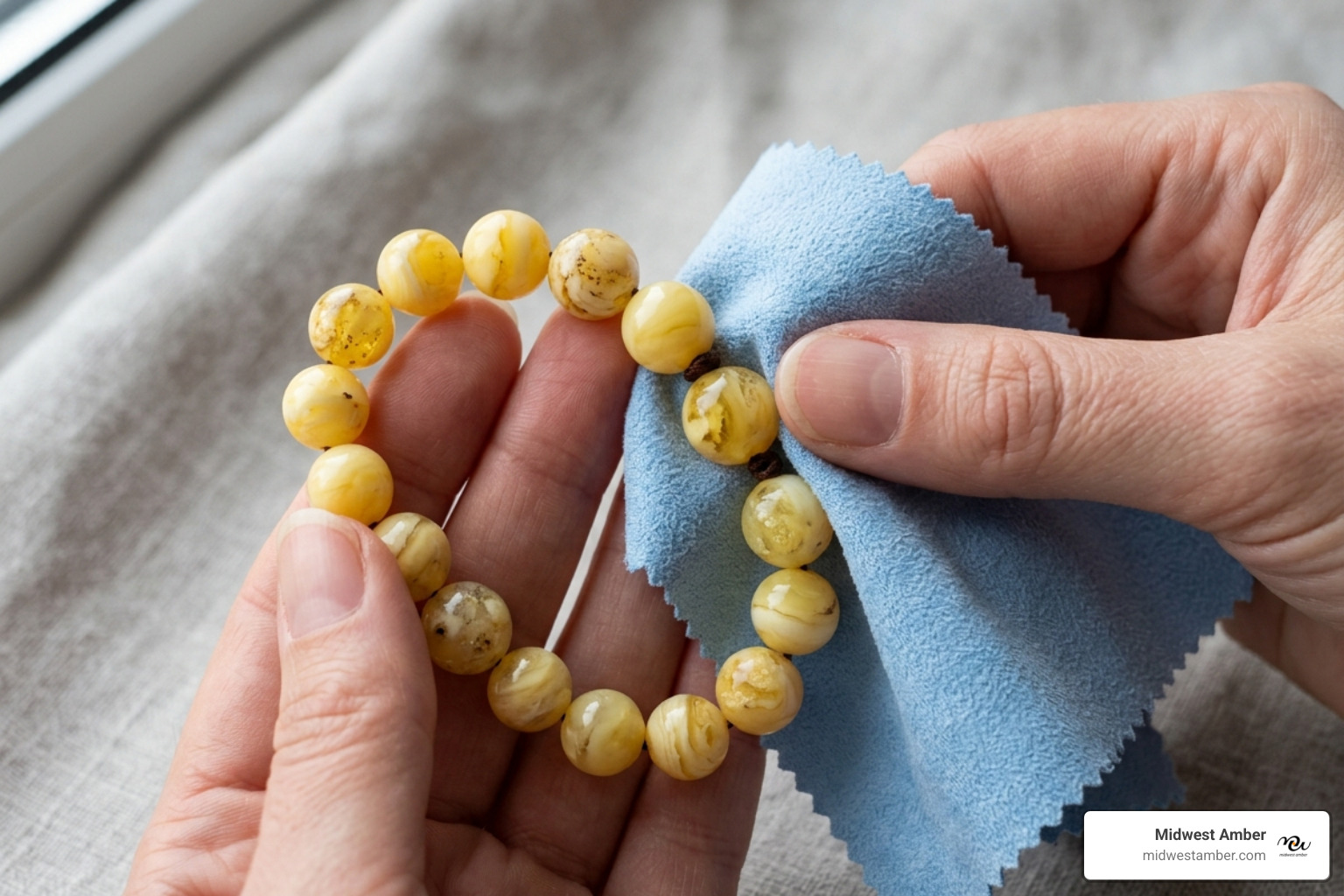
To keep your jewelry looking its best, follow these simple steps:
- Avoid Chemicals: Never wear your white amber while applying hairspray, perfume, or using household cleaners. Alcohols and acids can dull the waxy luster.
- Clean Gently: Use a soft flannel cloth dipped in lukewarm water with a drop of mild soap. Wipe it dry immediately.
- The Olive Oil Trick: If your stone starts to look a bit dull, you can apply a tiny drop of high-quality olive oil, buff it with a soft cloth, and wipe away the excess. This restores the natural shine.
- Store Separately: Because amber is soft (Mohs 2-2.5), store it in a separate pouch so harder gemstones like diamonds or sapphires don't scratch the surface.
Frequently Asked Questions about White Amber
Why does white amber change color over time?
This is a natural process called oxidation. As the amber is exposed to oxygen and light over many years, the exterior layer matures. It doesn't mean the stone is "dirty"—it means the stone is "living." A piece that starts as bone-white may become a beautiful butterscotch yellow after twenty or thirty years.
Is white amber more valuable than common amber?
Yes. Because it makes up only about 1% of the world's Baltic amber supply, it is much harder to source. Collectors and jewelry enthusiasts often seek out "Royal White" pieces specifically for their rarity and the unique "tiger" patterns that appear in the stone.
How can I tell if my white amber is real?
The most reliable home tests are the saltwater buoyancy test (it floats in salt water), the scent test (it smells like pine when rubbed), and the static electricity test. However, the best way to be sure is to buy from a reputable source like Midwest Amber, where every piece is verified by experts with decades of experience.
Conclusion
At Midwest Amber, we believe that jewelry should be as unique as the person wearing it. Our white amber stones are ethically sourced from the Baltic coasts and handcrafted by skilled Polish and Lithuanian artisans who have spent generations perfecting their craft. Whether you are looking for a statement ring or a delicate pair of earrings, white amber offers a rare, sophisticated alternative to traditional gemstones.
With over 20 years of experience, we are proud to bring the "Gold of the North" to our neighbors in Arlington Heights, Chicago, and throughout the surrounding suburbs. We invite you to explore the beauty and history of these ancient treasures.


Leave a comment
This site is protected by hCaptcha and the hCaptcha Privacy Policy and Terms of Service apply.