


Why Proper Amber Jewelry Care Keeps Your Piece Alive for Generations

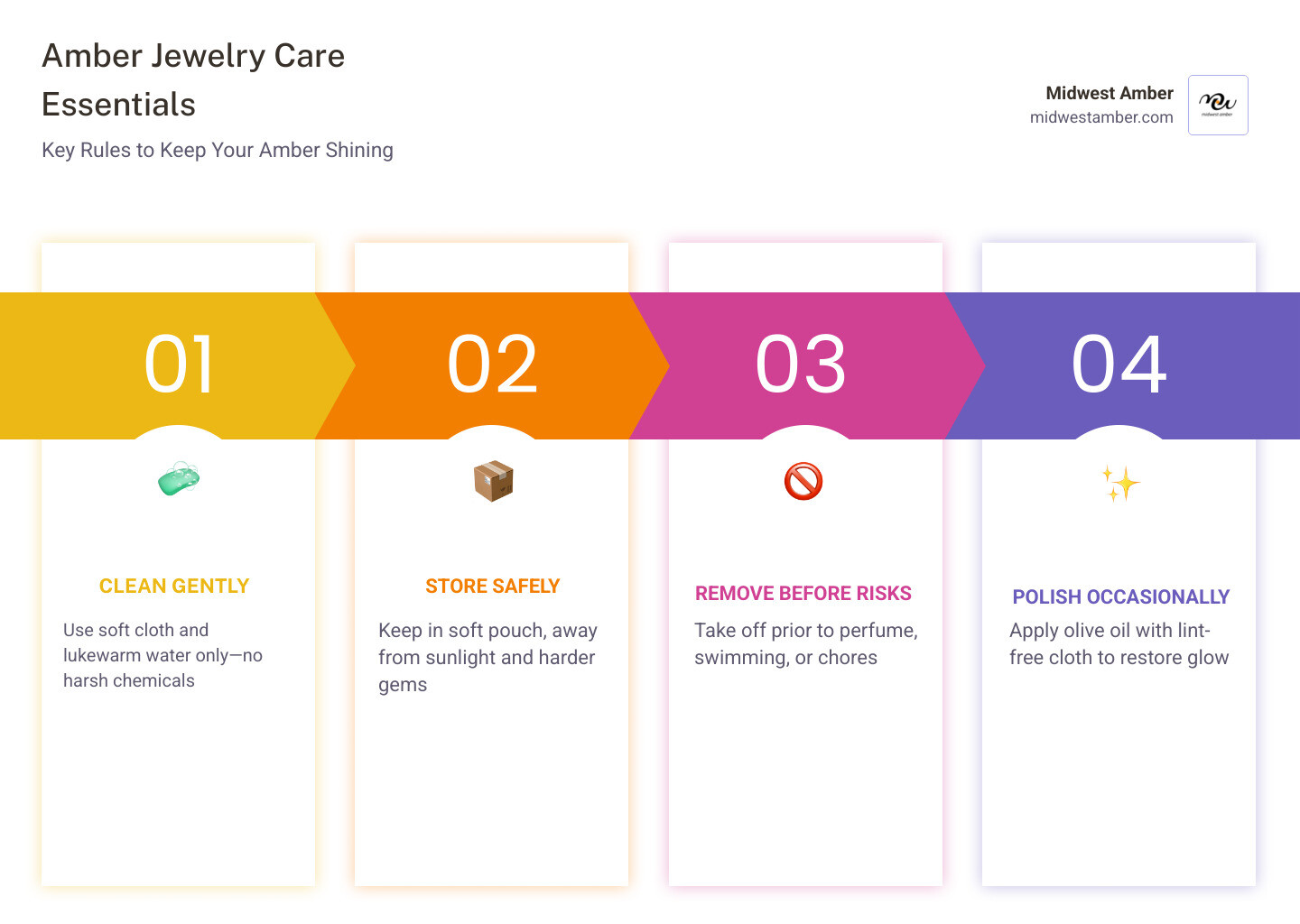
Amber jewelry care starts with understanding one simple truth: amber is not like other gemstones. Here's what you need to know right away:
- Clean with a soft cloth and lukewarm water — no harsh chemicals
- Store in a soft pouch, away from harder stones and direct sunlight
- Remove your amber before applying perfume, swimming, or doing chores
- Polish occasionally with a small amount of olive oil to restore shine
- Avoid ultrasonic cleaners, toothpaste, alcohol, and steam
Baltic amber has survived roughly 40 to 50 million years as fossilized tree resin. Yet despite that ancient resilience, a bottle of hairspray or an afternoon in direct sunlight can dull or crack it in no time. That contrast — ancient origins, modern fragility — is exactly why knowing how to care for it matters.
Amber is soft (just 2 to 2.5 on the Mohs scale), porous, and sensitive to heat, chemicals, and physical impact. Genuine Baltic amber, especially pieces handcrafted by Polish and Lithuanian artisans, deserves the same mindful attention you'd give any irreplaceable heirloom.
I'm Gabriel Ciupek, President and owner of Midwest Amber, Inc., where I've spent years working directly with genuine Baltic amber and the skilled artisans who craft it — making amber jewelry care a subject I'm deeply familiar with. This guide pulls from that hands-on experience to give you practical, trustworthy advice you can use today.
Understanding the Science of Amber Jewelry Care
To truly master amber jewelry care, we have to look at what amber actually is. Unlike diamonds or sapphires, which are minerals formed deep within the earth under intense pressure, amber is organic. It began as sticky resin flowing from ancient coniferous forests in the Baltic region nearly 50 million years ago. This organic origin dictates everything about how we handle it today.
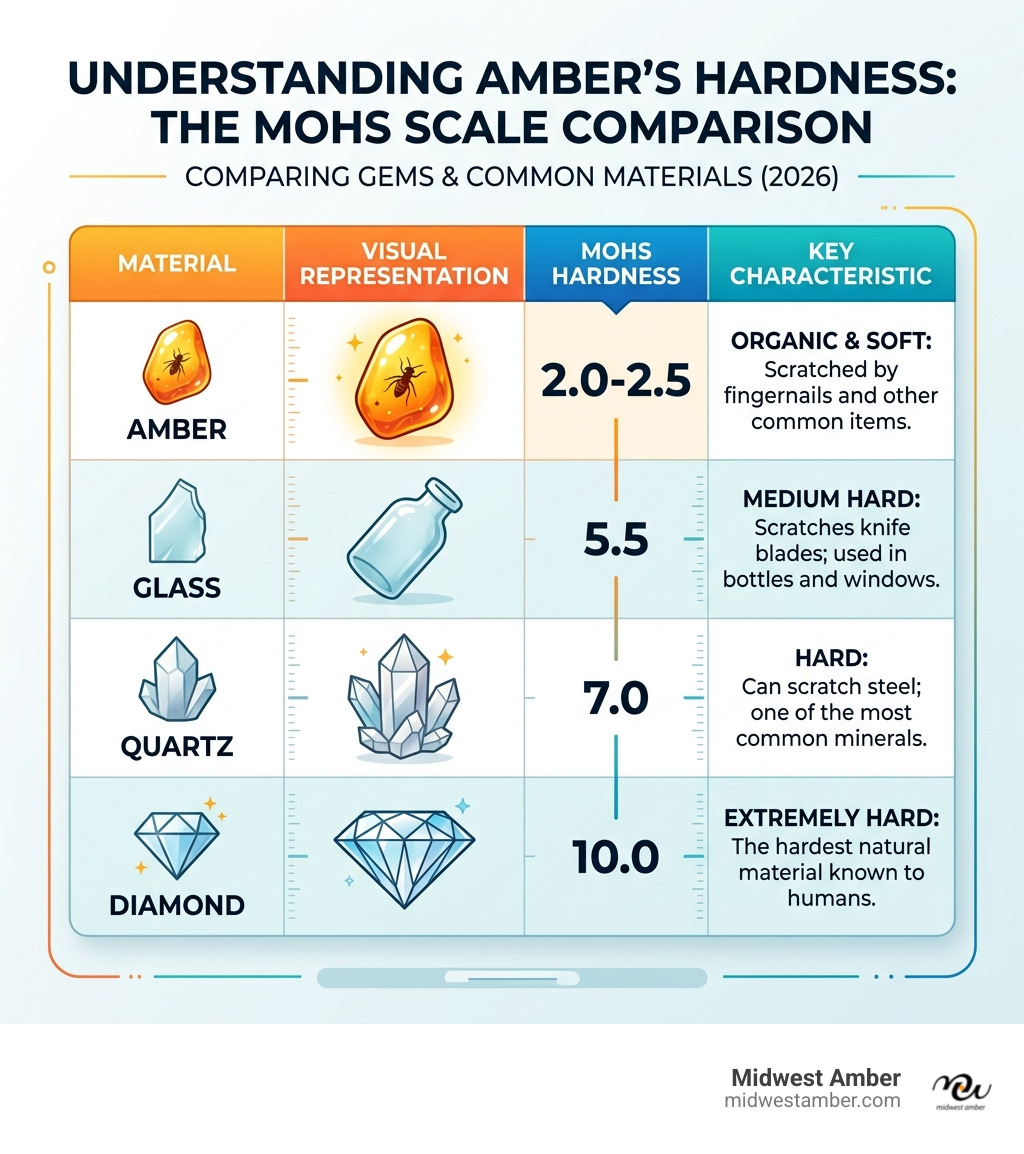
On the Mohs scale of mineral hardness, amber ranks between a 2 and 2.5. To put that into perspective, your own fingernail has a hardness of about 2.5. This means that almost anything in your jewelry box—from a silver chain to a glass bead—is hard enough to scratch the surface of your amber.
Because amber is a fossilized resin, it is also thermally sensitive. It can burn at relatively low temperatures and may become brittle or develop tiny surface cracks (known as "crazing") if exposed to sudden temperature shifts or intense heat. For more technical details on these properties, the Amber Care and Cleaning Guide - GIA provides excellent gemological insights.
The Vulnerability of Baltic Amber
The very things that make Baltic amber beautiful—its warmth, its lightweight feel, and its ability to hold prehistoric inclusions—also make it vulnerable. Because it is porous, it can absorb chemicals from the environment. This is why perfumes, lotions, and even heavy perspiration can seep into the stone over time, causing it to turn cloudy or change color.
Furthermore, amber is prone to oxidation. When exposed to oxygen and light over many decades, it naturally darkens. While many collectors love this "antique" look, improper care can accelerate this process in a way that makes the stone look dull rather than rich. Understanding The Amber Truth Unlocking The Secrets Of Genuine Stones helps us appreciate that while amber is ancient, it is far from indestructible.
Identifying Genuine Materials
Proper care starts with knowing you have the real deal. At Midwest Amber, we specialize in 100% natural, ethically sourced amber from Poland and Lithuania. Genuine Baltic amber often contains natural inclusions—tiny air bubbles, ancient plant matter, or even prehistoric insects—that tell a story 50 million years in the making.
Imitation "amber" made of plastic or pressed resins won't react to care methods the same way. In fact, many cleaning tips for real amber could actually damage cheap plastics. Before you begin a deep cleaning routine, ensure your piece is authentic by reviewing our guide on Real Or Resin How To Tell If Your Your Amber Jewelry Is Genuine.
Step-by-Step Guide to Cleaning Amber Jewelry at Home
Cleaning your amber doesn't require expensive kits or high-tech machinery. In fact, the simpler the better.
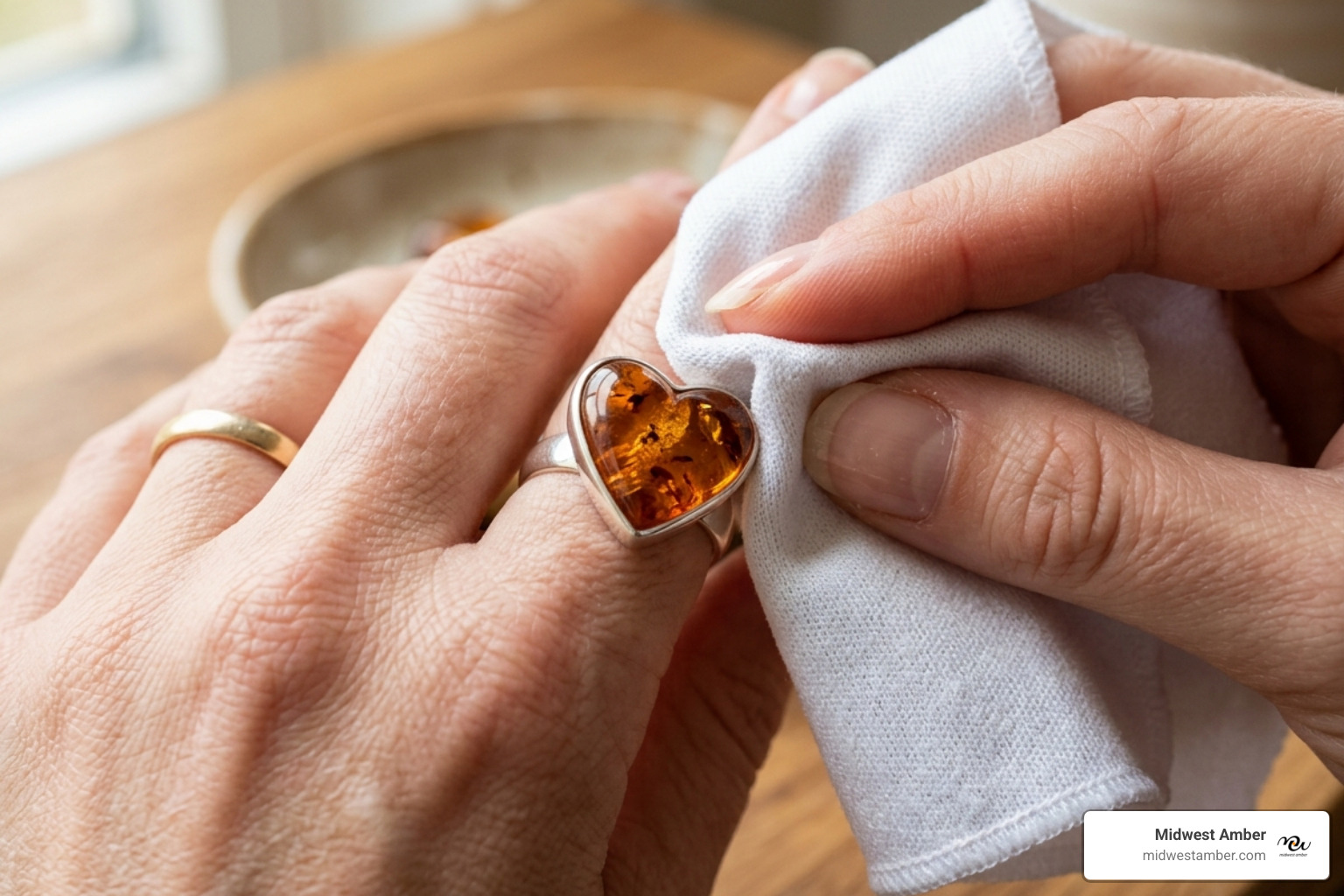
- The Dry Wipe: After every wear, use a soft, lint-free cloth (like a flannel or microfiber cloth) to wipe away skin oils and dust.
- The Lukewarm Solution: If the piece is visibly dirty, prepare a bowl of lukewarm water. Add a single drop of extremely mild soap, such as baby shampoo. Avoid "extra strength" dish soaps or anything with heavy fragrances.
- The Gentle Clean: Dip the cloth into the soapy water and wring it out so it is just damp. Gently wipe the amber beads or stones. Never soak your amber; prolonged immersion can weaken the resin or damage the stringing material in necklaces.
- The Rinse: Use a second cloth dampened with plain lukewarm water to "rinse" away any soap residue.
- The Immediate Dry: This is the most important step. Use a fresh, dry cloth to pat the jewelry dry immediately. Never let amber air-dry, as this can lead to water spots or cloudiness.
For official guidance on safe cleaning temperatures and soap types, refer to the Amber Care and Cleaning Guide.
Restoring the Glow: Polishing Amber Jewelry Care
If your amber has lost its "inner fire" and looks a bit matte, you can restore its luster at home. Think of this as "lip balm for your gemstone."
Take a tiny drop of high-quality olive oil or almond oil on a soft microfiber cloth. Rub the oil into the amber using gentle, circular motions. You don't need much—just enough to give it a faint sheen. After applying, use a clean section of the cloth to buff the piece until all excess oil is gone. This process helps replenish the resins and prevents the stone from becoming brittle. If you're working with a specific piece like a ring, our Sparkle And Shine Diy Amber Crystal Ring Tutorial offers great tips on handling delicate settings during the process.
What to Avoid During Your Amber Jewelry Care Routine
In our 20 years of experience at Midwest Amber, we’ve seen many pieces ruined by "common sense" cleaning methods that are actually disastrous for amber.
- Ultrasonic Cleaners: The high-frequency vibrations can shatter the delicate internal structure of amber or cause inclusions to expand and crack the stone.
- Steam Cleaning: The intense heat and pressure will almost certainly damage the surface and color of Baltic amber.
- Toothpaste: It contains abrasives that will leave thousands of tiny scratches on your amber, making it look permanently foggy.
- Chemicals: Avoid alcohol, acetone (nail polish remover), and window cleaners. These can literally melt the surface of the resin.
The Amber Care and Cleaning Guide - GIA confirms that warm soapy water is the only universally safe method for this organic gem.
Daily Habits and Storage for Long-Term Preservation
The best way to handle amber jewelry care is to prevent damage before it happens. We recommend the "Last On, First Off" rule. Your amber should be the very last thing you put on in the morning (after your perfume, hairspray, and lotions have completely dried) and the first thing you take off when you get home.
Safe Storage Solutions
When you aren't wearing your treasures, where they rest matters. Because amber is so soft, it should never be tossed into a tangled pile with gold chains or diamond rings.
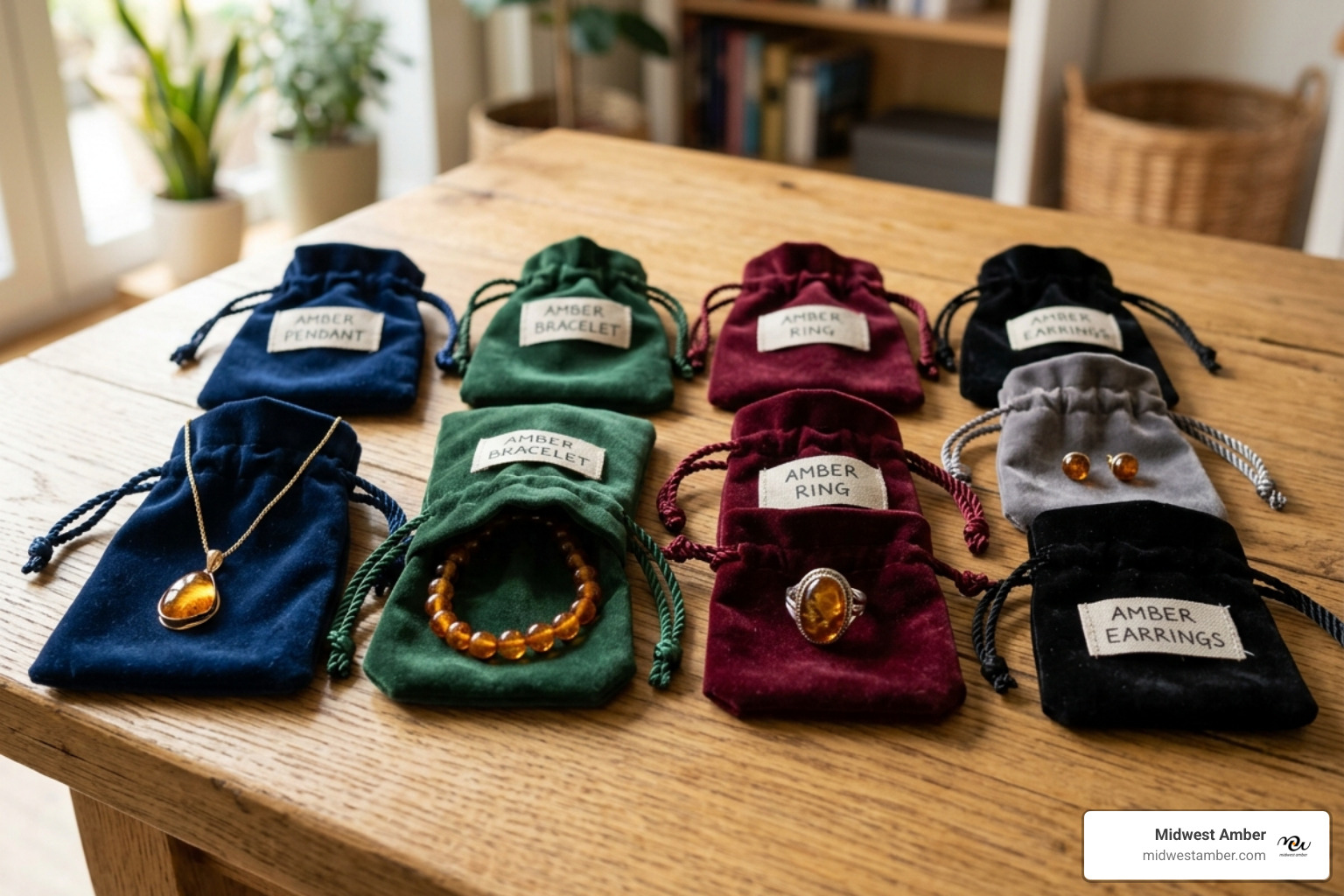
- Individual Pouches: Store each piece in its own soft cloth pouch—velvet, flannel, or silk work best.
- Climate Control: Keep your jewelry box in a cool, dry place. Avoid storing it on a sunny windowsill or near a heating vent, as extreme temperature fluctuations can cause the amber to crack.
- Darkness is Key: Prolonged exposure to direct sunlight can fade the vibrant yellows and oranges of Baltic amber and may even cause dyed amber (like some green or red varieties) to lose its color entirely.
Whether you are storing finished pieces or Amber Beads For Jewelry Making, physical separation is your best defense against scratches.
Activity Restrictions
We often tell our customers: if you're going to break a sweat or get your hands dirty, leave the amber in its pouch.
- Gardening and Chores: The grit in soil and the chemicals in household cleaners are amber's enemies.
- The Gym: Sweat is acidic and can dull the polish of your amber over time.
- Cooking: High heat from an oven or steam from a boiling pot can stress the stone.
- Swimming: Chlorine in pools and salt in the ocean can be incredibly drying and damaging to the organic structure of the resin.
For those who enjoy crafting their own pieces, our Amber For Jewelry Making Guide goes deeper into how to handle stones during various activities.
Protecting Your Settings: Silver and Gold Maintenance
Most of our handcrafted pieces at Midwest Amber are set in high-quality 925 Sterling Silver or Gold. Amber jewelry care also involves maintaining these metals.
Silver naturally tarnishes when exposed to air. To keep it bright, use a specialized silver polishing cloth, but be careful not to rub the amber stone itself with the chemically-treated cloth. For gold settings, a simple wipe with a soft cloth is usually enough.
Regularly inspect your jewelry's "furniture." Check the prongs or bezel settings to ensure the amber is secure. If you notice a loose stone, take it to a professional. If you're curious about how these pieces are constructed, you can see the artistry involved in our post on From Rough To Radiant How To Bezel Set Amber In A Sterling Silver Bracelet.
Care for Specific Jewelry Types
- Amber Rings: These take the most abuse. Be extra diligent about removing them before washing hands or applying sanitizer.
- Necklaces and Bracelets: Pay attention to the stringing. If the silk or nylon cord becomes frayed or dirty, it may need professional restringing to prevent the loss of beads.
- Earrings: These are generally the safest from physical impact, but they are the most likely to be sprayed with hairspray. Always cover your ears or put them on after styling your hair.
Every piece is a unique work of art, and you can explore the variety of these forms in our Amber Jewelry Design gallery.
Frequently Asked Questions about Amber Maintenance
Why is my amber jewelry turning cloudy?
Cloudiness is usually caused by one of two things: a buildup of surface residue (like soap, lotion, or hairspray) or "micro-scratching" from rubbing against clothing or other jewelry. A gentle cleaning with lukewarm water followed by a light olive oil polish often restores the clarity. If the cloudiness is internal, it may be a natural feature of the stone's aging process.
Can I wear my amber necklace in the shower or pool?
We strongly advise against it. Showering introduces soaps and hard water minerals that can leave a film on the stone. Swimming pools contain chlorine, which is a harsh chemical that can dry out the amber and cause it to become brittle or lose its color.
How do I fix a scratched amber stone?
For very light surface scratches, a soft cloth and a bit of linseed oil or olive oil can often mask the damage. However, for deep scratches or chips, you should seek professional help. If you are in the Chicago area, specifically near Elk Grove Village or Palatine, there are excellent local specialists who understand organic gems. You can find highly-rated experts by checking THE BEST 10 JEWELRY REPAIR near ELK GROVE VILLAGE, IL ... .
Conclusion
Caring for amber is an act of preservation. When you hold a piece of Midwest Amber jewelry, you aren't just holding an accessory; you're holding a 50-million-year-old story from the ancient forests of Poland and Lithuania. By following these simple amber jewelry care steps, you ensure that this piece of "ancient sunshine" remains as radiant for the next generation as it is today.
Our commitment to quality means every piece we sell is backed by over 20 years of experience and certified authenticity. Don't let your beautiful investment become a "fossil" of neglect. Treat it with the gentleness it deserves, and it will reward you with a lifetime of warmth and glow.
For more tips on identifying authentic stones and exploring Baltic amber, visit our full blog archive or check out Dont Get Fooled The Definitive Guide To Certified Baltic Amber.


Leave a comment
This site is protected by hCaptcha and the hCaptcha Privacy Policy and Terms of Service apply.