

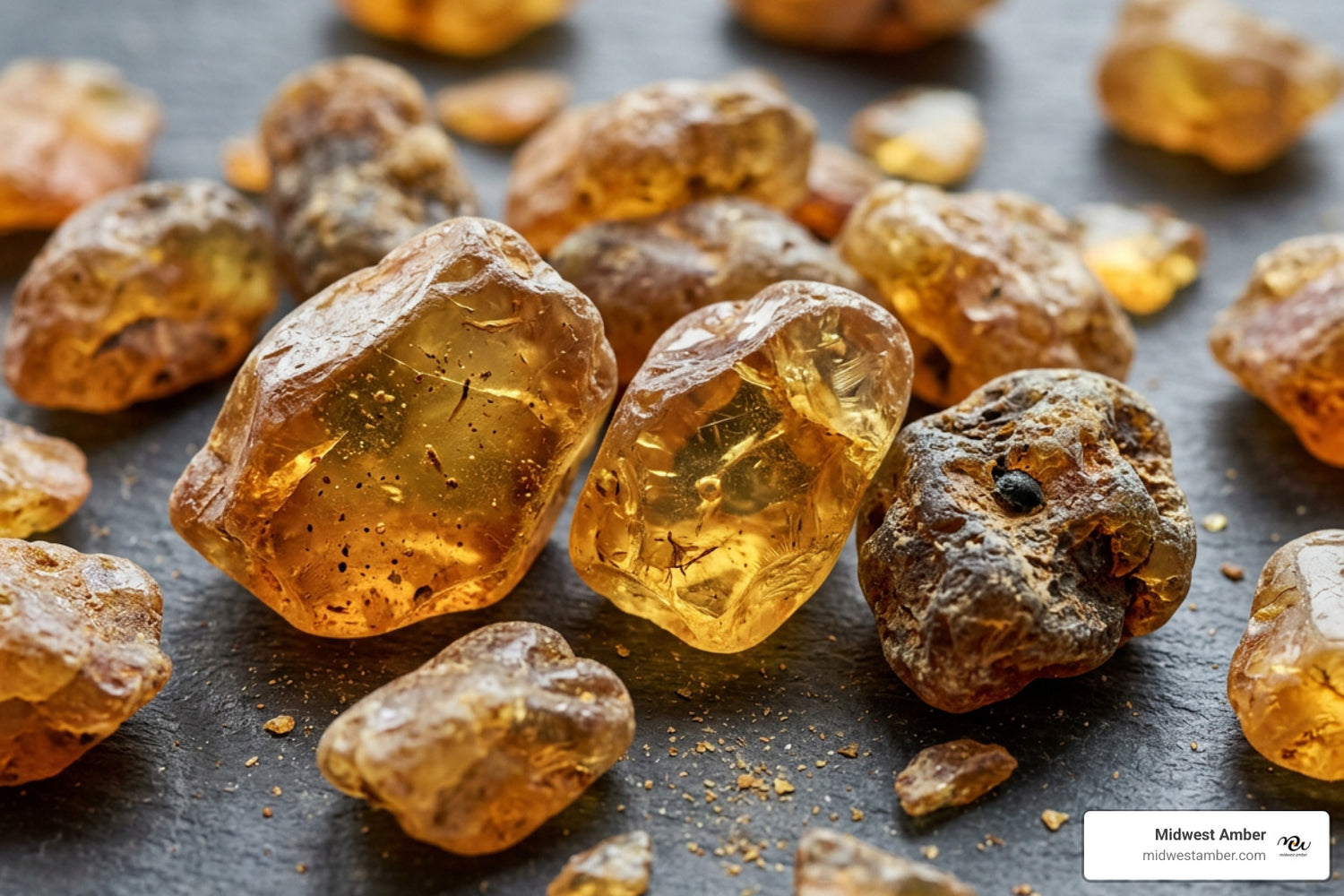
Why Raw Baltic Amber Has Captured Human Attention for 50 Million Years
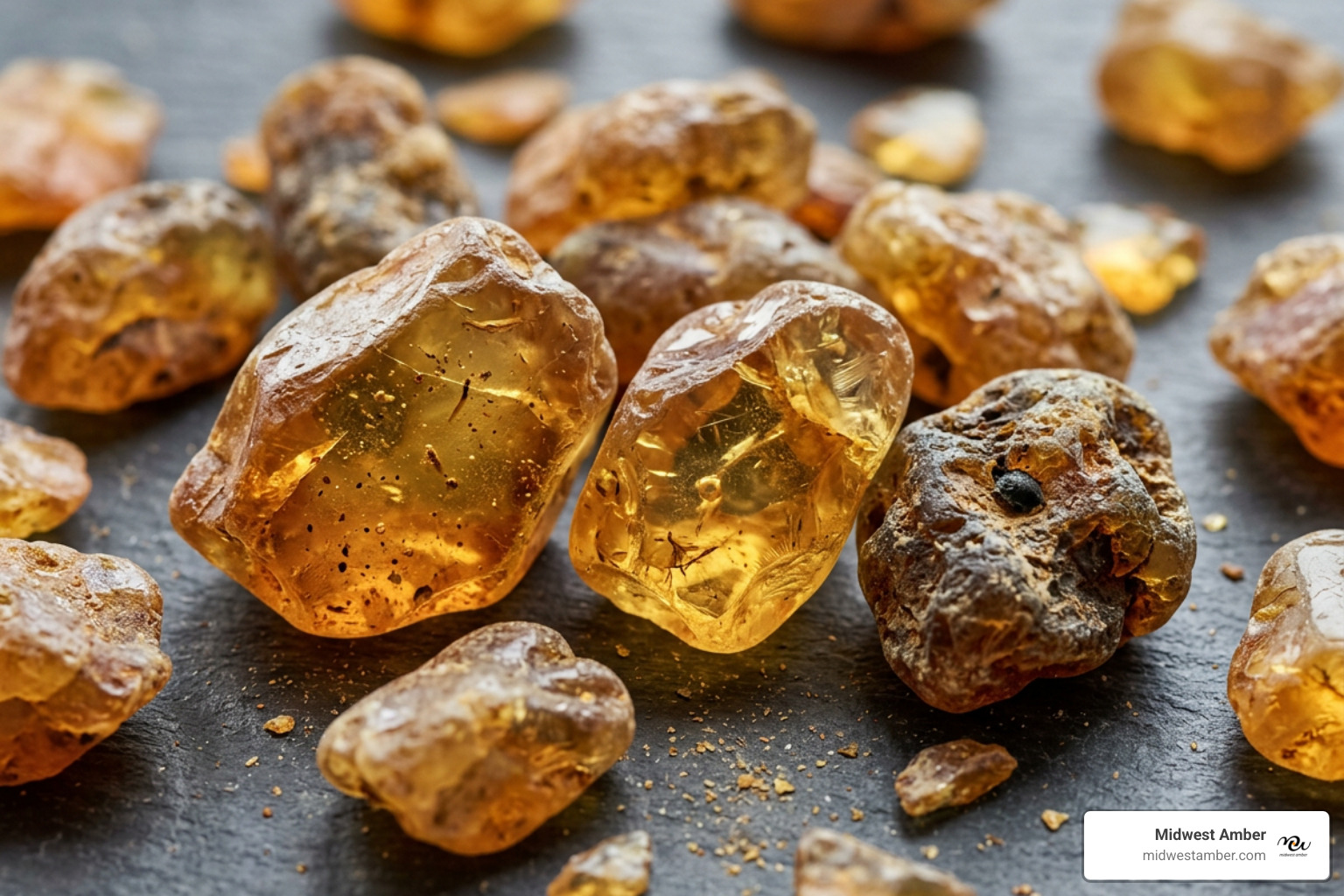
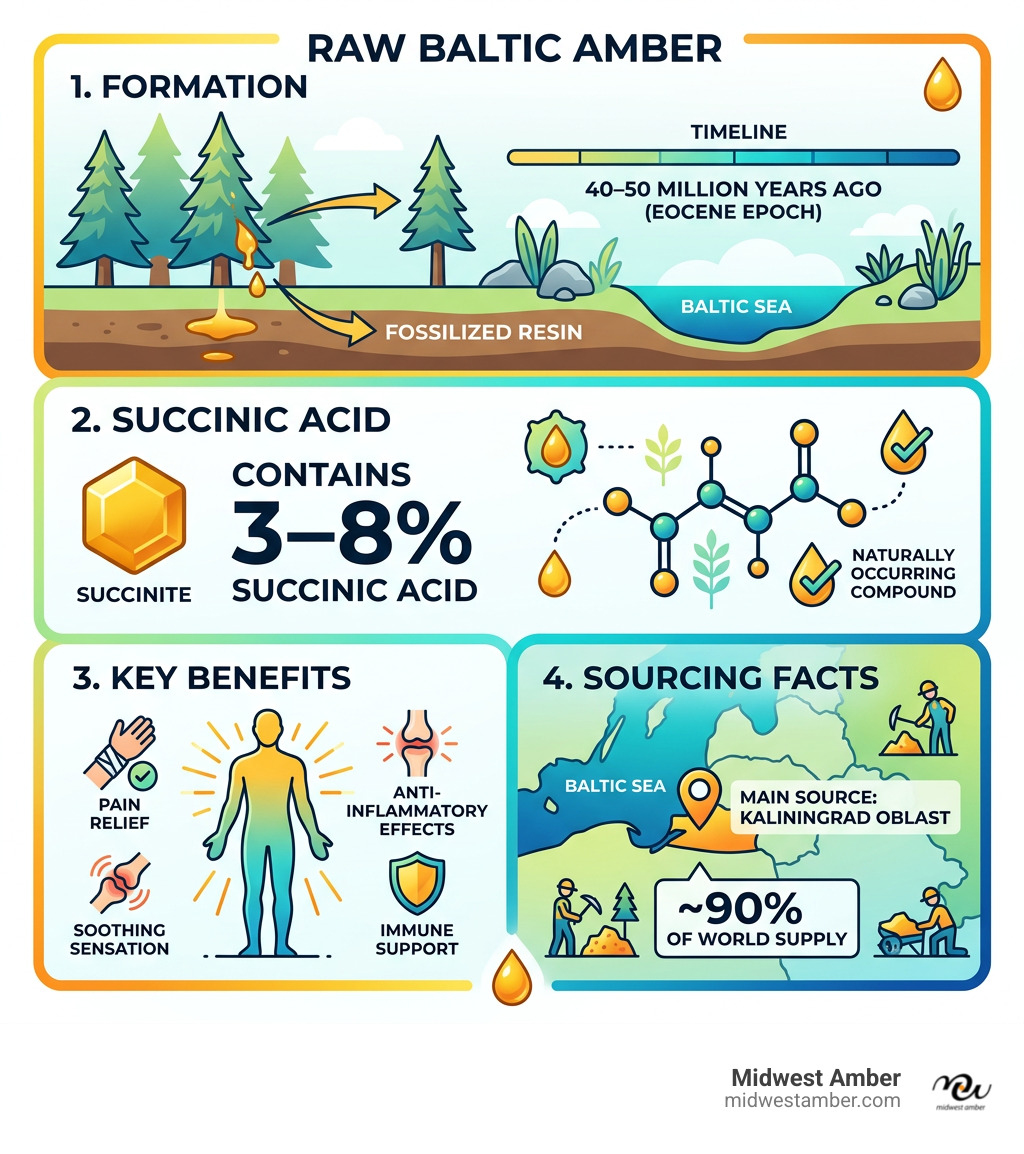
Raw Baltic amber is fossilized tree resin from ancient conifer forests that grew around the Baltic Sea over 40–50 million years ago. It contains 3–8% succinic acid — a naturally occurring compound linked to pain relief and anti-inflammatory effects. Here's what you need to know at a glance:
| Feature | Detail |
|---|---|
| What it is | Fossilized conifer resin (not a mineral or gemstone) |
| Age | 40–50 million years old (Eocene epoch) |
| Key compound | Succinic acid (3–8%), also called succinite |
| Main source | Kaliningrad Oblast, Russia (~90% of world supply) |
| Claimed benefits | Pain relief, anti-inflammatory, immune support |
| Common uses | Jewelry, teething aids, collecting, crafting |
| "Raw" vs. polished | Raw = rough, unprocessed; most jewelry uses semi-polish |
People have prized this ancient resin since the Neolithic period — trade goods have been found dating as far back as 3634–3363 BC in Spain. Today, interest in raw Baltic amber continues to grow, driven by its natural beauty, rich history, and purported wellness benefits.
I'm Gabriel Ciupek, President and owner of Midwest Amber, Inc., with years of hands-on experience sourcing, pricing, and marketing authentic raw Baltic amber jewelry. I've worked directly with suppliers and end users to ensure every piece meets the highest standards of quality and genuineness. Let's dig into everything you need to know before you buy.
Quick raw Baltic amber terms:
What is Raw Baltic Amber? Understanding the Natural State
When we talk about raw Baltic amber, we are describing an organic gemstone in its most fundamental form. Unlike diamonds or rubies, which are minerals formed deep within the earth, amber is a biological product. It began as sticky resin exuded by prehistoric conifer trees during the Eocene epoch. Over tens of millions of years, this resin underwent a process of polymerization and oxidation, eventually hardening into the stable fossil we find today.
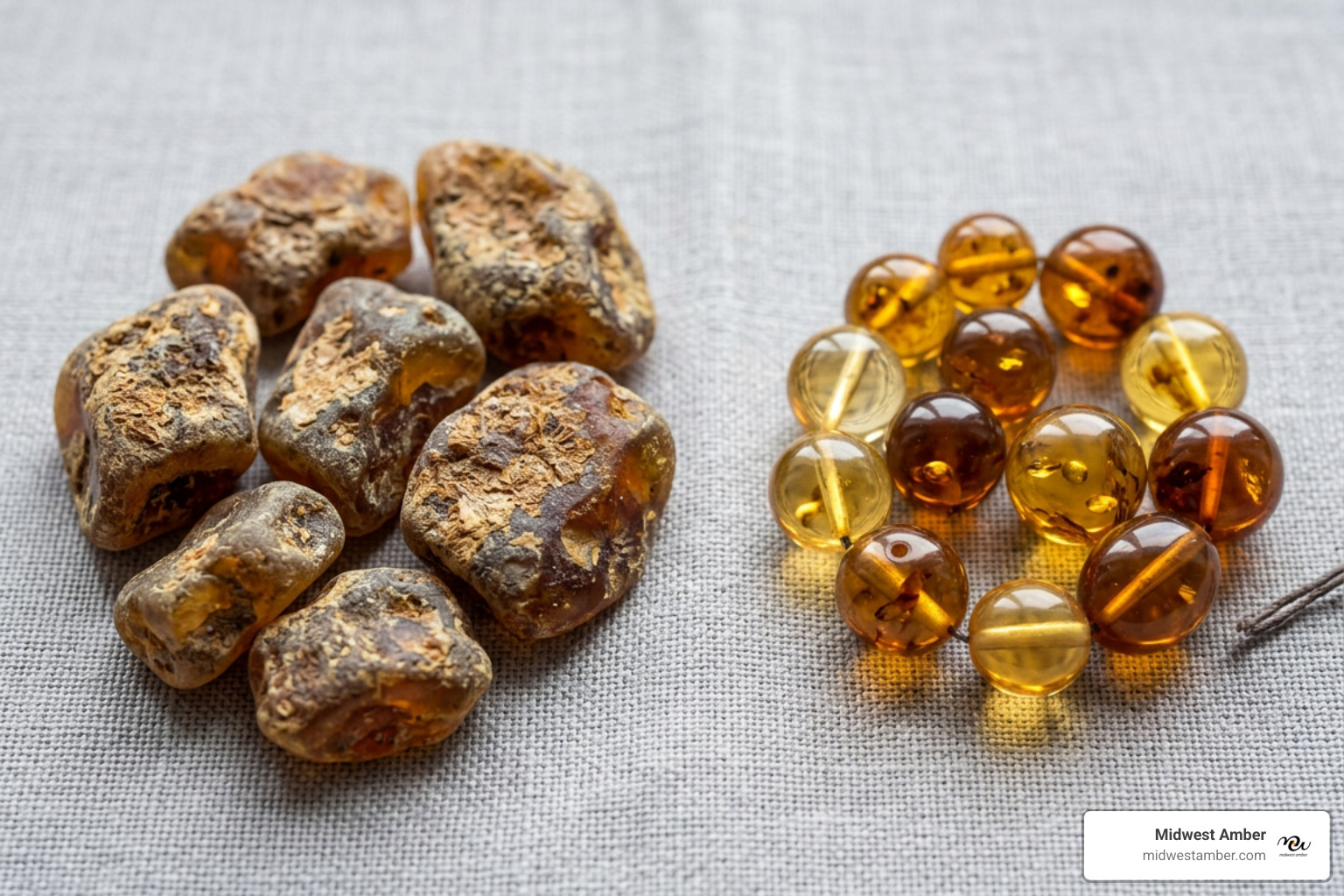
In its truly raw state, Baltic amber (often scientifically called succinite) features a rough, uneven texture. It is frequently covered by a "cortex"—a weathered outer layer that can look like dark crust or dried bark. This layer protects the inner amber but can be quite sharp or brittle. Because of these sharp edges, 100% untouched raw amber is rarely used for jewelry that touches the skin. Instead, what most consumers call "raw" in the jewelry world is actually "semi-polished."
To help you navigate the market, we’ve broken down the three main finishes you’ll encounter:
Comparison of Amber Finishes
| Finish Type | Appearance | Processing Level | Common Use |
|---|---|---|---|
| True Raw | Rough, dark outer crust, sharp edges | None (straight from the earth) | Collectors, specimen study, crafts |
| Semi-Polish | Matte, "frosted glass" look, smooth edges | Light tumbling (one machine step) | Therapeutic jewelry, teething beads |
| Full-Polish | Shiny, clear, glassy, transparent | Multi-step hand polishing | Fine jewelry, high-end pendants |
Exploring the essence of natural Baltic amber reveals that the less processing a stone undergoes, the closer it remains to its prehistoric origins. This "matte" or unpolished finish is highly sought after by those who believe that keeping the outer layers intact preserves the stone's natural energies and chemical potency.
The Science of Succinic Acid and Therapeutic Benefits
The primary reason raw Baltic amber is famous in folk medicine is its high concentration of succinic acid. While many types of fossil resins exist globally, Baltic amber is unique because it contains between 3% and 8% of this specific acid. In the scientific community, this high acid content is why Baltic amber is specifically classified as "succinite."
How It Works: Skin Absorption
The theory behind wearing amber for wellness is based on body heat. Amber is warm to the touch (unlike cold minerals). When worn against the skin, the warmth of the human body is thought to trigger the release of microscopic amounts of succinic acid. This acid is then absorbed through the skin and enters the bloodstream.
According to various historical and homeopathic traditions, succinic acid provides several benefits:
- Natural Pain Relief: Acting as a natural analgesic, it is used to soothe joint pain, arthritis, and backaches.
- Anti-Inflammatory: It is frequently used to reduce the swelling associated with teething in infants or sports injuries in adults.
- Immune Support: Traditionally, it was believed to fortify the body's natural defenses, a practice documented as far back as the ancient Greeks and Hippocrates.
- Thyroid Stimulation: Some wearers use amber necklaces to help balance thyroid function and reduce drooling in children.
While modern allopathic medicine often views these effects as anecdotal, the succinic acid content in Baltic amber remains a factual chemical reality. Furthermore, scientific research on the botanical origin of Baltic amber suggests that the specific resin-producing trees of the Eocene created a chemical signature that hasn't been replicated by any other fossil resin in the world. For those interested in masculine styles, raw yellow honey amber for men offers a rugged, natural way to incorporate these potential benefits into a daily routine.
How to Identify Authentic Raw Baltic Amber
Because the price of raw Baltic amber has risen significantly over the last two decades, the market has unfortunately seen an influx of fakes. These substitutes are often made of plastic, glass, or "copal"—a much younger tree resin that hasn't fully fossilized. To ensure you are getting the "real deal," you need to know how to test your pieces.
At Midwest Amber, we recommend several at-home tests to verify authenticity:
- The Saltwater Test: This is the most reliable non-destructive test. Mix 1/4 cup of salt into 2 cups of warm water and stir until dissolved. Genuine Baltic amber will float, while most plastics and glass will sink. (Note: Copal may also float, so combine this with other tests).
- The Static Charge Test: Amber is a natural insulator. If you rub a piece of raw Baltic amber vigorously with a wool cloth for 20-60 seconds, it should become statically charged and be able to pick up small bits of paper or dust.
- The Scent Test: When heated (by friction or a hot needle in an inconspicuous spot), real amber smells like pine resin. Plastics will smell like chemicals, and copal will smell sweet but will also become sticky.
- Appearance: Real raw amber is rarely "perfect." Look for natural inclusions, tiny air bubbles (up to 900,000 per square millimeter in white amber!), and organic imperfections.
For total peace of mind, look for the Amber Standard Certification System. We pride ourselves on providing a definitive guide to certified Baltic amber to help our customers avoid being misled. Learning how to tell if your amber is genuine is the first step in ensuring you receive the therapeutic benefits you're looking for.
Sourcing, Safety, and the History of the "Gold of the North"
The history of Baltic amber is as deep as the sea it comes from. Often called the "Gold of the North," it has been a major trade commodity for millennia. The "Amber Road" was an ancient trade route that moved this precious resin from the Baltic coast down to the Mediterranean, where it was used by Egyptian pharaohs and Roman nobles.
Sourcing from the "Blue Earth"
Most of the world's supply—about 90%—comes from the Kaliningrad Oblast in Russia, specifically from a 7-8 meter thick layer of soil known as "Blue Earth." However, high-quality raw Baltic amber is also ethically sourced from the shores of Lithuania and Poland. At Midwest Amber, we specialize in ethically sourced amber from these regions, drawing on over 20 years of experience to select only the finest specimens.
Safety First
When using amber for children or infants, safety is our absolute priority. Whether you are in Chicago, IL, or Arlington Heights, IL, the same safety standards apply:
- Safety Knots: Every bead on a high-quality necklace should be individually knotted. If the string breaks, only one bead will fall off, preventing a choking hazard.
- Screw Clasps: We use plastic screw clasps designed to break away under tension, ensuring the necklace cannot cause strangulation.
- Supervision: Amber jewelry is meant to be worn, never chewed. Children should always be supervised while wearing jewelry and it should be removed during sleep.
A journey to the Eocene epoch shows us that while the material is ancient, our modern safety standards make it accessible for families today. Unearthing what makes natural amber special involves respecting both its geological history and its practical use in the modern home.
Caring for Your Raw Baltic Amber Jewelry
Because raw Baltic amber is an organic substance, it requires different care than a diamond or a gold ring. It is relatively soft (2.0–2.5 on the Mohs scale) and can be damaged by harsh chemicals or extreme temperatures.
Best Practices for Longevity
- Cleaning: Use only warm water and a soft flannel cloth. If the beads are particularly dirty, a tiny drop of mild, additive-free soap can be used, but always rinse thoroughly.
- Avoid Chemicals: Never expose your amber to hairspray, perfume, or household cleaners. These can create a permanent cloudy film on the surface of the resin.
- The "Recharging" Myth: You may hear that amber needs to be "recharged" in the sun. This is a myth. While the sun warms the amber—which temporarily increases the release of succinic acid—prolonged exposure to direct sunlight can actually make the amber brittle and cause it to crack over time.
- Skin Oils: Interestingly, the natural oils from your skin actually help keep the amber from drying out. Wearing it regularly is one of the best ways to maintain its luster!
For more detailed tips, check out our resource on natural amber stone care and facts. Understanding the nature of the material will help you enjoy your real amber jewelry for a lifetime.
Frequently Asked Questions about Raw Baltic Amber
Is raw Baltic amber safe for babies and children?
Yes, when used correctly. Baltic amber teething necklaces are a traditional European remedy. They are non-toxic and intended for skin contact, not for chewing. Always ensure the necklace has safety knots between each bead and a breakaway screw clasp. Never leave a child unattended with jewelry, and remove it during naps or nighttime. If you're looking for the best quality, we can show you where to buy certified Baltic amber jewelry that meets these rigorous safety standards.
Does the color of raw Baltic amber affect its healing strength?
This is a common debate. All genuine Baltic amber contains succinic acid, regardless of whether it is honey, lemon, or cherry colored. However, some believe that "milky" or white amber is slightly more potent because it contains millions of microscopic air bubbles that increase the surface area of the amber. Scientifically, the record of inclusions in Baltic amber shows that the resin's chemical makeup is consistent across color variations. The best color is ultimately the one you feel most drawn to!
Can I wear raw amber in the shower or pool?
We generally recommend removing amber before swimming or showering. While plain warm water is fine, the chlorine in pools and the detergents in shampoos can degrade the amber over time and weaken the silk or nylon thread. If you do wear it in the shower occasionally, simply rinse it with fresh water afterward to remove any soap residue.
Conclusion
At Midwest Amber, we are passionate about bringing the ancient "Gold of the North" to our local communities, from Crystal Lake to Skokie and beyond. Our 20 years of experience allow us to offer handcrafted, 100% natural, and ethically sourced pieces that you can trust. Whether you are looking for a therapeutic teething necklace or a unique statement piece, our certified authenticity ensures you are getting the real deal.
Ready to experience the warmth and history of this 50-million-year-old treasure? Find your perfect amber piece today and embrace the natural power of raw Baltic amber.

Leave a comment
This site is protected by hCaptcha and the hCaptcha Privacy Policy and Terms of Service apply.