

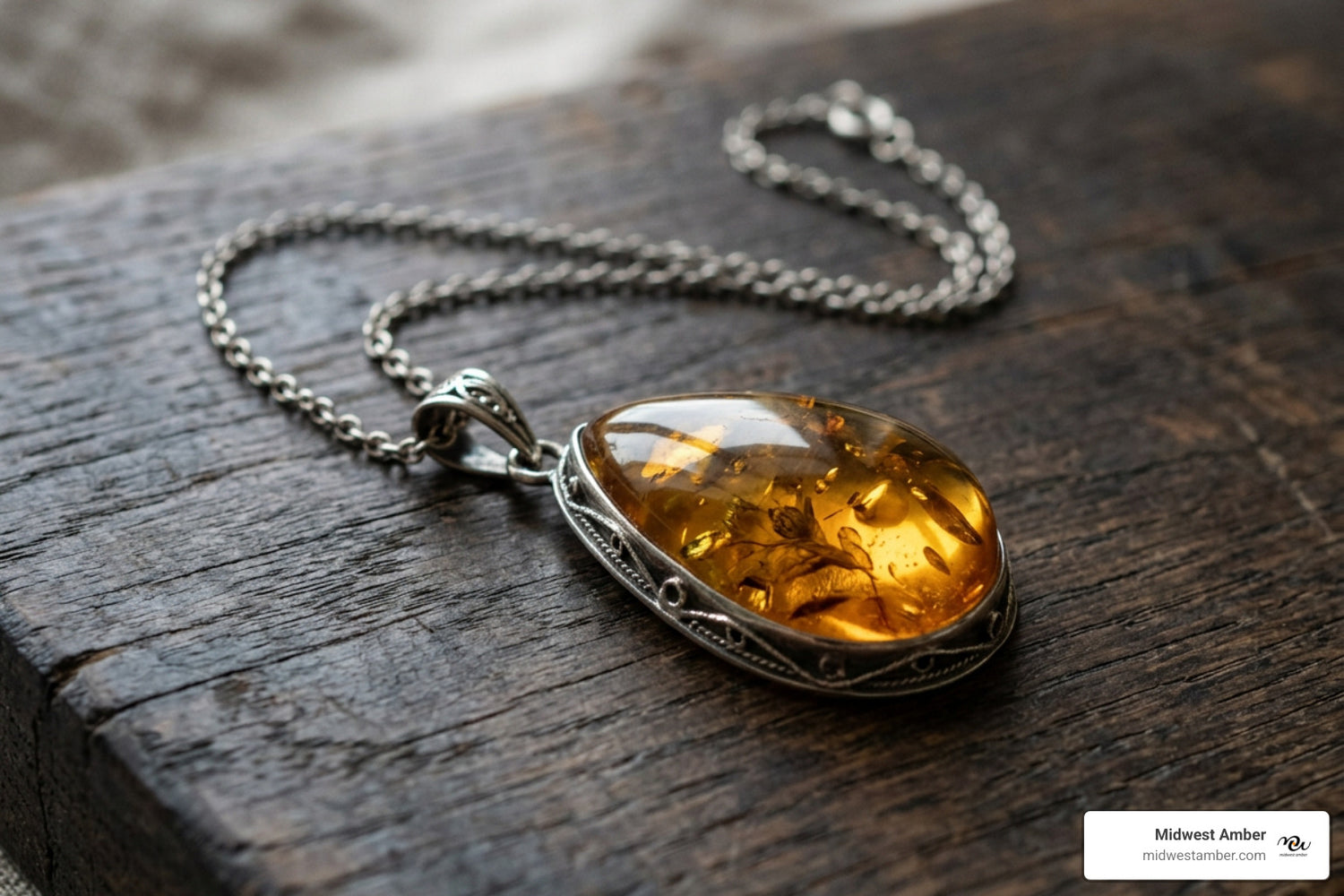
Why a Vintage Amber Silver Necklace Is Worth Knowing About
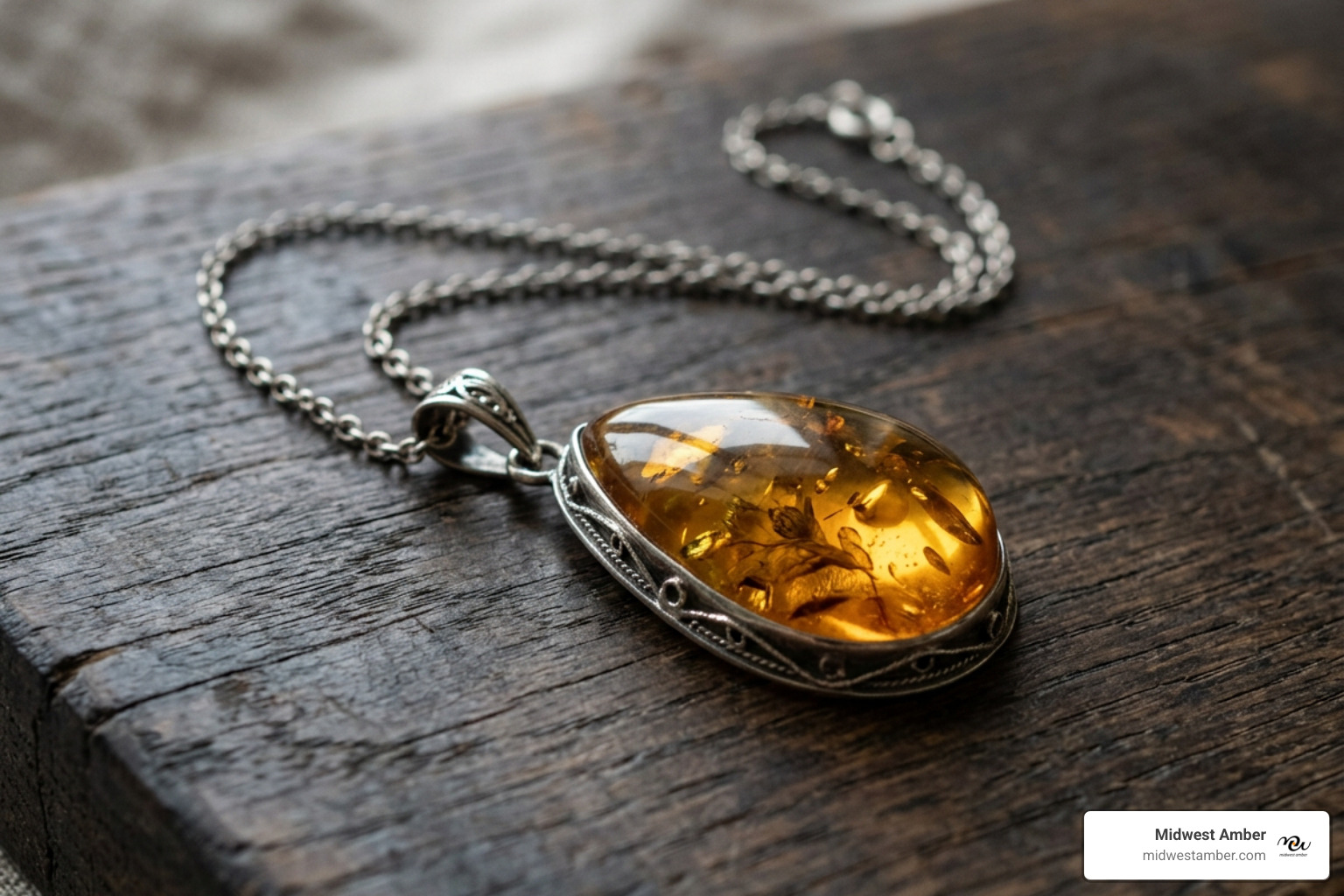
A vintage amber silver necklace is one of the most distinctive pieces you can own — warm, organic, and steeped in history that stretches back millions of years.
Here is a quick snapshot of what defines one:
| Feature | What to Look For |
|---|---|
| Material | Sterling silver (925) or continental silver (800) |
| Amber type | Genuine Baltic amber — butterscotch, cognac, honey, or milky |
| Era | Victorian, Art Nouveau, Art Deco, 1970s Artisan |
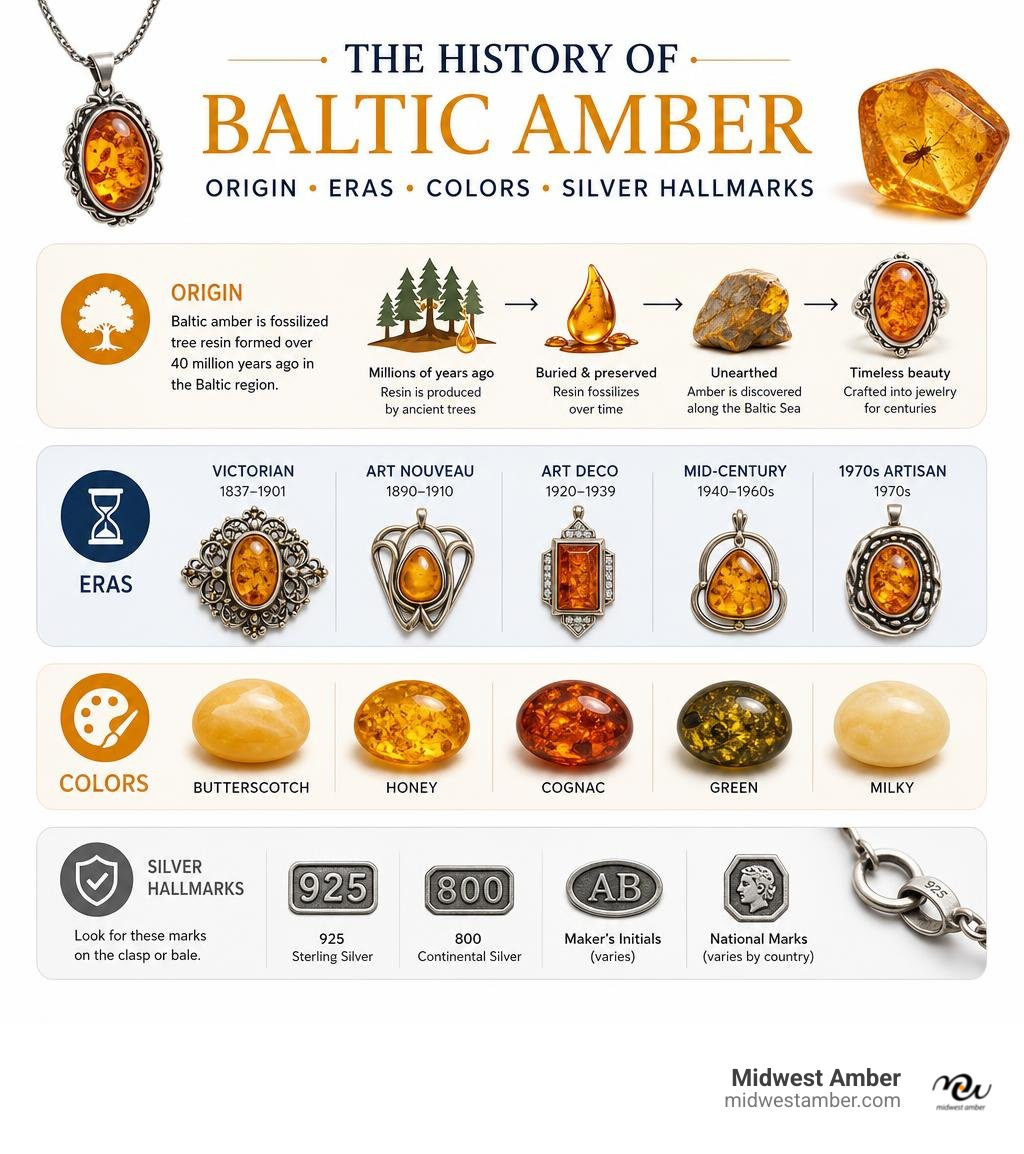
| Hallmarks | 925, 800, or maker's initials stamped on clasp or bale |
| Amber clues | Natural inclusions, warm inner glow, slight surface variation |
Baltic amber is not a stone. It is fossilized tree resin formed over 40 million years ago — making every piece a literal fragment of prehistoric history. Paired with silver, it has been crafted into jewelry across many centuries and design movements, from the geometric elegance of the 1920s Art Deco era to the bold, chunky artisan pieces of the 1970s.
Whether you are a collector, a gift-buyer, or simply drawn to jewelry with a real story behind it, understanding what makes these necklaces authentic — and valuable — matters.
I'm Gabriel Ciupek, President and owner of Midwest Amber, Inc., with decades of experience sourcing and selling genuine vintage amber silver necklaces handcrafted by Polish and Lithuanian artisans. My background in market analytics, supplier verification, and Baltic amber authenticity means everything I share here is grounded in real-world expertise.
Quick vintage amber silver necklace terms:
What Defines a Vintage Amber Silver Necklace?
To understand a true vintage amber silver necklace, we have to look closely at both the organic gem itself and the metal that frames it. Unlike modern manufactured jewelry, vintage pieces carry a unique patina of time, distinct manufacturing marks, and stylistic clues that reveal their era.
At its core, a vintage amber necklace consists of genuine Baltic amber paired with silver. Historically, the metal used was either standard sterling silver (marked with a "925" stamp) or continental silver (often marked with an "800" stamp). Continental silver, which contains 80% pure silver, was highly popular in mid-century European jewelry, especially in Poland and Germany.
When you explore Antique and Vintage Amber Jewelry , you will notice that the metalwork is rarely perfectly uniform. Hand-carved bezels, hand-soldered links, and natural oxidation in the deep recesses of the metal are hallmarks of vintage production. This oxidation is often left intentionally to highlight the intricate scrollwork or geometric designs of the setting.
Identifying these pieces requires looking at the construction. Vintage necklaces often feature heavy, secure bezels rather than flimsy glue settings. If you want a deeper dive into how these settings protect the stone, check out our An Essential Guide to Sterling Silver Amber Necklaces.
Furthermore, genuine vintage amber is famous for its natural imperfections. Under magnification, you may spot tiny surface pits, micro-crazing (fine lines from aging), and organic inclusions like ancient plant matter or tiny prehistoric air bubbles. These characteristics are proof of the amber’s organic journey from prehistoric forests to the modern day.
Popular Eras and Styles of Vintage Amber Jewelry
Throughout the 19th and 20th centuries, amber was a highly coveted medium for jewelry designers. The warm, golden hues of the fossilized resin offered an incredible contrast to the cool, reflective sheen of polished or oxidized silver. As design movements evolved, so did the ways artisans framed this "gold of the north."

To help you identify different eras of a vintage amber silver necklace, we have mapped out the primary design movements:
| Era / Style | Primary Characteristics | Common Metal Purity | Popular Amber Varieties |
|---|---|---|---|
| Victorian (Late 19th C.) | Romantic, deep-toned, naturalistic motifs, often featuring deep red or cherry amber. | Sterling Silver or Gold | Cherry Red, Deep Cognac |
| Art Nouveau (Early 20th C.) | Asymmetrical, flowing organic lines, leaves, vines, and whimsical floral settings. | Sterling (925) or 800 Silver | Honey, Translucent Cognac |
| Art Deco (1920s–1930s) | Geometric shapes, faceted metal links, clean lines, and highly graduated bead patterns. | Sterling (925) | Butterscotch, Egg-Yolk Yellow |
| Brutalist / Mid-Century | Chunky, textured, abstract metalwork, freeform raw or polished amber shapes. | 800 Continental Silver | Butterscotch, Milky, Cognac |
| 1970s Artisan | Large statement pieces, reticulated silver beads, grape/leaf motifs, heavy weights. | 800 or 925 Silver | Rich Cognac, Honey |
From high-end directory listings like Antique Amber Necklaces - 199 For Sale at 1stDibs , we see that 20th-century vintage pieces dominate the collector market. Among hundreds of listed antique amber necklaces, silver and sterling silver remain the most popular metal pairings next to gold, highlighting the enduring charm of this classic combination.
Identifying an Art Deco Vintage Amber Silver Necklace
If you come across a vintage amber silver necklace from the 1920s, you are likely looking at a masterpiece of Art Deco design. This era abandoned the flowing, asymmetrical lines of the Art Nouveau movement in favor of bold geometry, symmetry, and structural elegance.
Art Deco amber necklaces frequently feature beautiful graduated beads where the largest, most eye-catching bead sits at the very center. Rather than simple chains, high-quality Art Deco necklaces often utilized diamond-faceted silver links to connect the beads, adding an extra layer of sparkle and sophisticated craftsmanship.
A classic example from the 1920s is a sterling silver and butterscotch amber necklace weighing around 84.8g, featuring large, graduated beads measuring up to 25mm x 35mm. These substantial pieces were designed to make a statement, reflecting the liberating fashion trends of the Flapper era. To learn more about how these historic designs continue to inspire modern fashion, explore our guide on how to Discover the Timeless Elegance of a Baltic Amber Necklace.
The Bold Appeal of a 1970s Vintage Amber Silver Necklace
The 1970s sparked a major global resurgence in handcrafted, artisan-made jewelry. This era was all about celebrating nature, which made organic materials like Baltic amber incredibly popular. Polish workshops, particularly in the historic amber hub of Gdańsk, became world-famous for producing massive, sculptural silver and amber masterpieces.
A 1970s vintage amber silver necklace is instantly recognizable by its weight and bold presence. It is not uncommon for these artisan statement pieces to weigh between 80 and 120 grams! They often feature large, freeform cognac or butterscotch amber stones held in place by heavy, handmade .800 silver frames decorated with naturalistic motifs like grapevines, leaves, or abstract brutalist textures.
These necklaces were built to last and designed to stand out. If you love the idea of wearing a bold, hand-sculpted piece of history, you will appreciate our detailed look at Polish Amber on Sterling Silver Necklace.
Types of Amber and How Origin Affects Value
When evaluating a vintage amber silver necklace, the specific type and color of the amber play a massive role in determining its value, rarity, and collectibility. While amber is found in a few regions worldwide, Baltic amber remains the absolute gold standard for collectors.
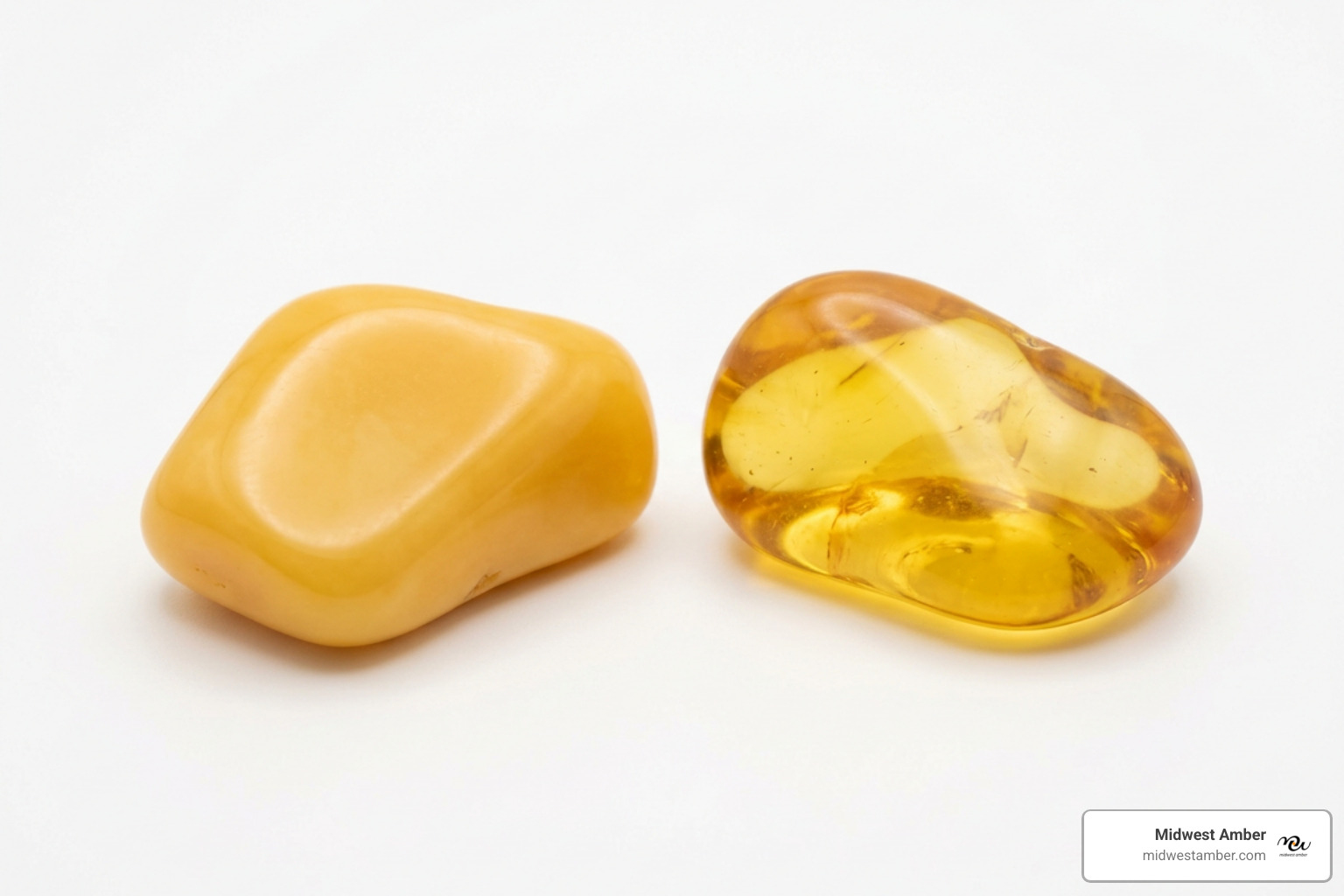
Here are the primary types of amber you will encounter in vintage jewelry:
- Butterscotch Amber: Also known as "egg-yolk" amber, this variety is completely opaque and ranges from a creamy yellow to a warm, rich custard color. It is highly coveted by collectors due to its rarity and its popularity during the Art Deco era.
- Cognac Amber: This is the classic, warm, reddish-orange translucent amber that many people picture when they think of the gem. It has an unmistakable inner "sunshine" glow and often contains beautiful natural inclusions.
- Honey Amber: A lighter, highly translucent variety with a bright, golden-yellow hue. It beautifully catches the light, making it a favorite for delicate, everyday pendants.
- Milky Amber: A stunning, cloud-like opaque variety that features creamy white swirls mixed with yellow. Because of its unique, marbled appearance, milky amber is often used in minimalist or modern vintage-style designs.
While you can find other varieties like Chiapas amber from Mexico or Dominican amber, Baltic amber from Poland and Lithuania holds a special place in jewelry history. Baltic amber contains a high concentration of succinic acid (between 3% and 8%), which contributes to its unique preservation qualities and historical lore.
Because Baltic amber is over 40 million years old, its structural integrity and rich color profiles make it far more valuable and durable than younger resins like copal. For a complete breakdown of how different amber cuts and colors affect collectibility, check out our Amber Pendant Complete Guide.
How to Care for and Clean Your Vintage Amber Silver Necklace
Because amber is an organic material rather than a mineral gemstone, it requires gentle, specialized care to preserve its beauty. Amber is relatively soft (ranking only 2 to 2.5 on the Mohs hardness scale), meaning it can scratch easily if stored or cleaned incorrectly.
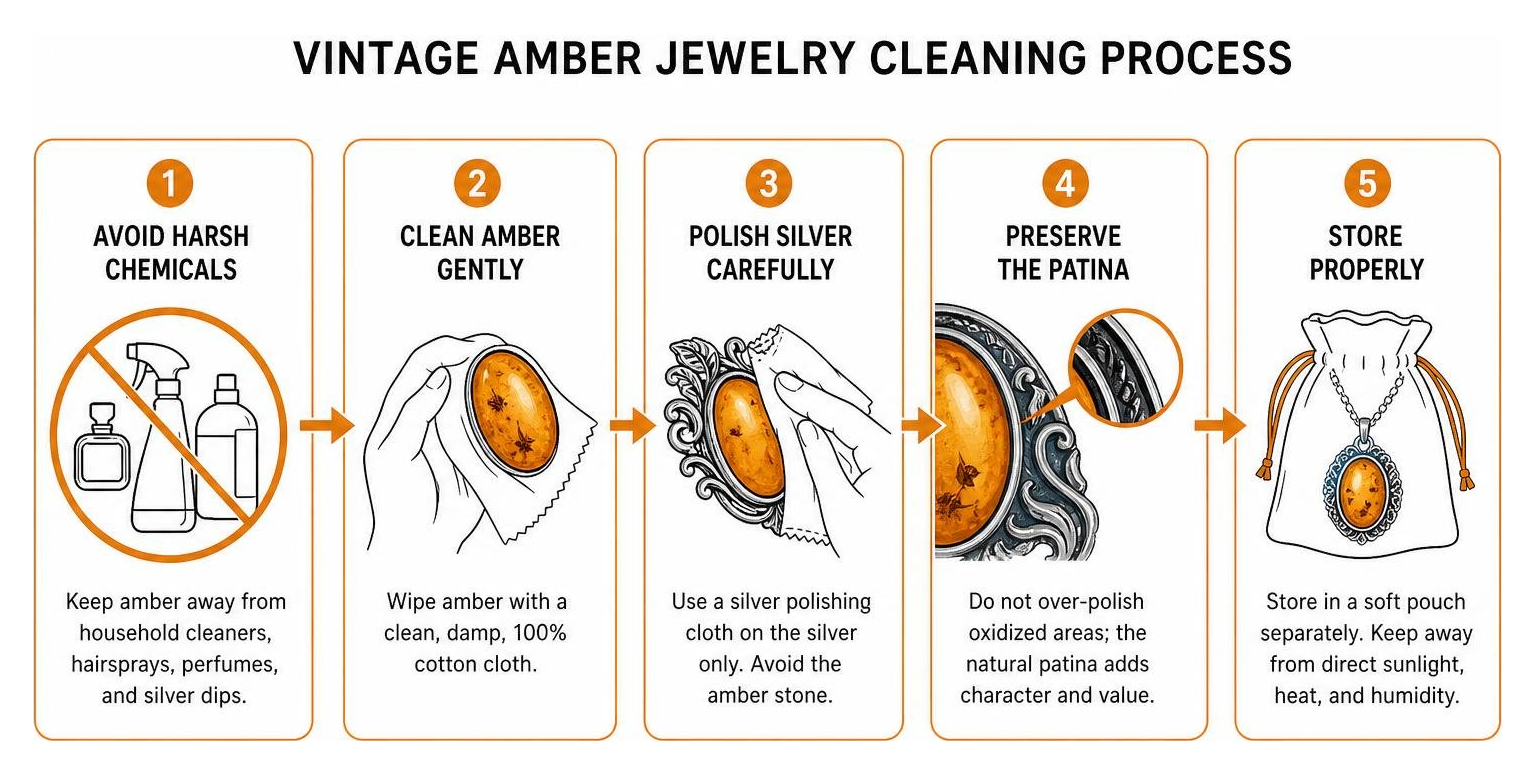
To keep your vintage sterling silver and amber looking spectacular for generations, follow these simple care guidelines:
- Avoid Harsh Chemicals: Never expose your amber to household cleaners, hairsprays, perfumes, or commercial silver dips. The chemicals in these products can permanently dull the polished surface of the amber and strip away intentional vintage oxidation on the silver.
- Clean with a Soft Cloth: To clean the amber, simply wipe it gently with a clean, damp, 100% cotton cloth. For the silver setting, use a specialized silver polishing cloth to restore its luster, making sure to avoid rubbing the amber stone itself.
- Preserve the Patina: Vintage silver often features beautiful, dark oxidation in the deep crevices of the metalwork. Avoid over-polishing these areas, as this natural contrast is a key part of the piece's vintage character and value.
- Store Safely: Store your necklace in a cool, dry place away from direct sunlight, which can dry out the amber over time. Keep it in an individual soft cloth pouch or a velvet-lined jewelry box to prevent it from scratching against harder metals or gemstones.
For a comprehensive checklist on maintaining your precious collection, read our updated Amber Jewelry Care Guide 2026.
Frequently Asked Questions about Vintage Amber Necklaces
Buying and collecting vintage jewelry is an exciting journey, but it often comes with plenty of questions. Here are some of the most common questions collectors ask when identifying a vintage amber silver necklace.
How can I distinguish genuine Baltic amber from imitations?
Because amber is highly valuable, the market has seen many imitations over the decades, ranging from early plastics like Bakelite to younger, natural copal resins. Fortunately, there are a few reliable ways to test your jewelry at home:
- The Static Test: Gently rub the amber stone against a piece of wool or silk for 10 to 15 seconds. Genuine amber will become electrostatically charged and will easily attract tiny pieces of paper or dust. Plastics and copal will not do this.
- The Saltwater Test: Mix a solution of one part salt to two parts warm water. Genuine, untreated amber is incredibly lightweight and will float in saltwater, whereas most plastics and glass imitations will sink immediately. (Note: Only perform this test if the silver setting can be easily dried and won't be damaged by the salt).
- The Touch Test: Amber is a natural thermal insulator. When you hold it in your hand, it should feel warm to the touch almost immediately. Glass or stone imitations will feel cold and take much longer to warm up to your body temperature.
For a detailed, step-by-step guide on spotting counterfeits, see our resource on Real vs Fake Amber.
What silver purity marks should I look for on vintage pieces?
When examining the metal setting of a vintage amber necklace, look closely at the bail, clasp, or the back of the pendant for hallmarks.
In British and American vintage jewelry, you will commonly find the "925" mark, indicating sterling silver (92.5% pure silver). However, if you are looking at mid-century European or Polish artisan jewelry, you will frequently spot the "800" mark. This indicates continental or coin silver (80% purity), which was preferred by European metalsmiths for its durability and beautiful, deep tarnishing qualities that highlight intricate engraving. You may also find maker's marks or artist initials, which greatly aid in verifying the piece's origin.
What determines the value and collectibility of vintage amber necklaces?
Several key factors influence the price and collectibility of a vintage amber necklace:
- Weight: Heavy statement pieces are highly prized. While a delicate vintage pendant might weigh only a few grams, massive artisan necklaces weighing 80g to over 110g can command premium prices.
- Amber Color and Clarity: Opaque butterscotch and milky amber are generally the most expensive due to their rarity. Translucent cognac and honey amber with unique, clear organic inclusions are also highly collectible.
- Artisan Signatures: Pieces hand-signed by recognized Polish or Lithuanian artists from the mid-20th century carry a significant premium.
- Condition: While natural surface wear and minor oxidation are expected, major cracks in the amber or broken silver solder joints will lower the value.
Conclusion
A vintage amber silver necklace is far more than a simple accessory — it is a wearable piece of history, combining the ancient, organic beauty of 40-million-year-old Baltic forests with the incredible skill of historic European metalsmiths.
At Midwest Amber, we are deeply passionate about preserving this rich heritage. Based in the Chicagoland area, we proudly serve collectors and jewelry lovers across our local communities — from Barrington and Schaumburg to Glenview, Palatine, and Chicago. With over 20 years of experience, we specialize in sourcing 100% genuine, ethically sourced Baltic amber jewelry handcrafted by certified Polish and Lithuanian artisans.
Whether you are looking to start your collection, find a meaningful gift, or simply learn more about the fascinating world of organic gemstones, we invite you to explore our curated selection of authentic pieces.
Ready to find your own timeless treasure? Discover the Best Amber Stone Necklaces in our online store today!


Leave a comment
This site is protected by hCaptcha and the hCaptcha Privacy Policy and Terms of Service apply.