

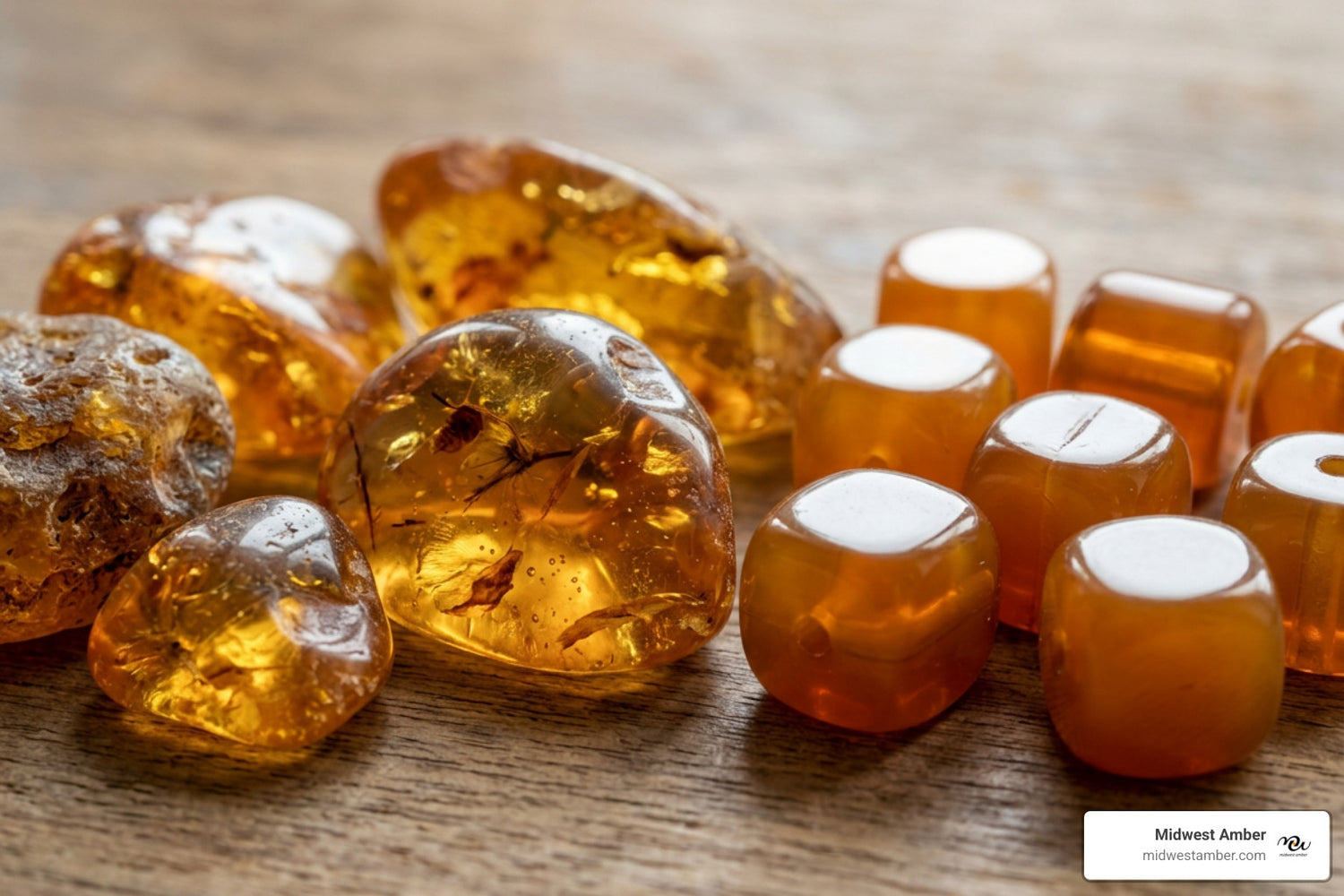
Why Telling Real vs Fake Amber Apart Matters Before You Buy
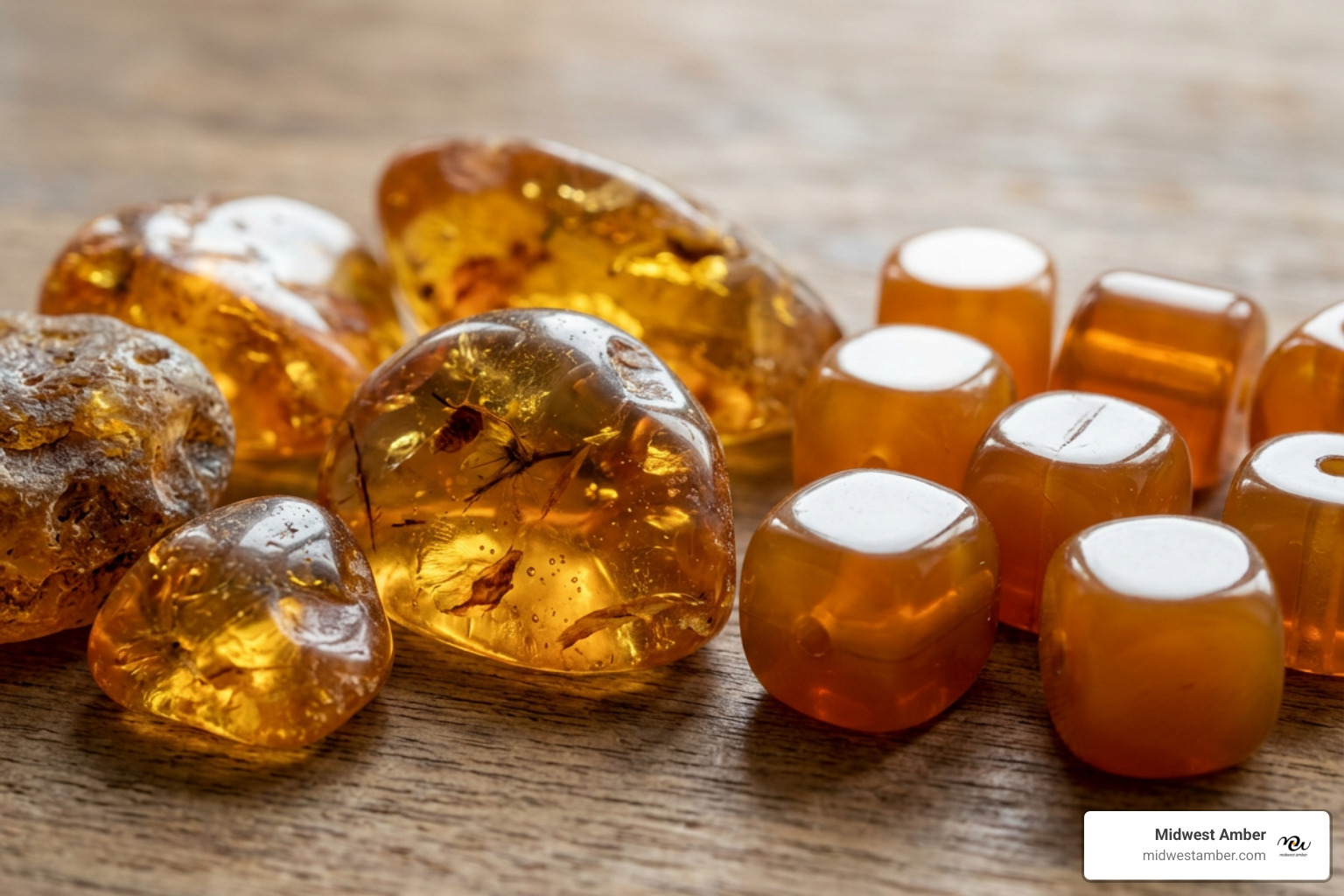
Knowing the difference between real vs fake amber can save you from paying genuine prices for plastic or resin. Here is a quick answer:
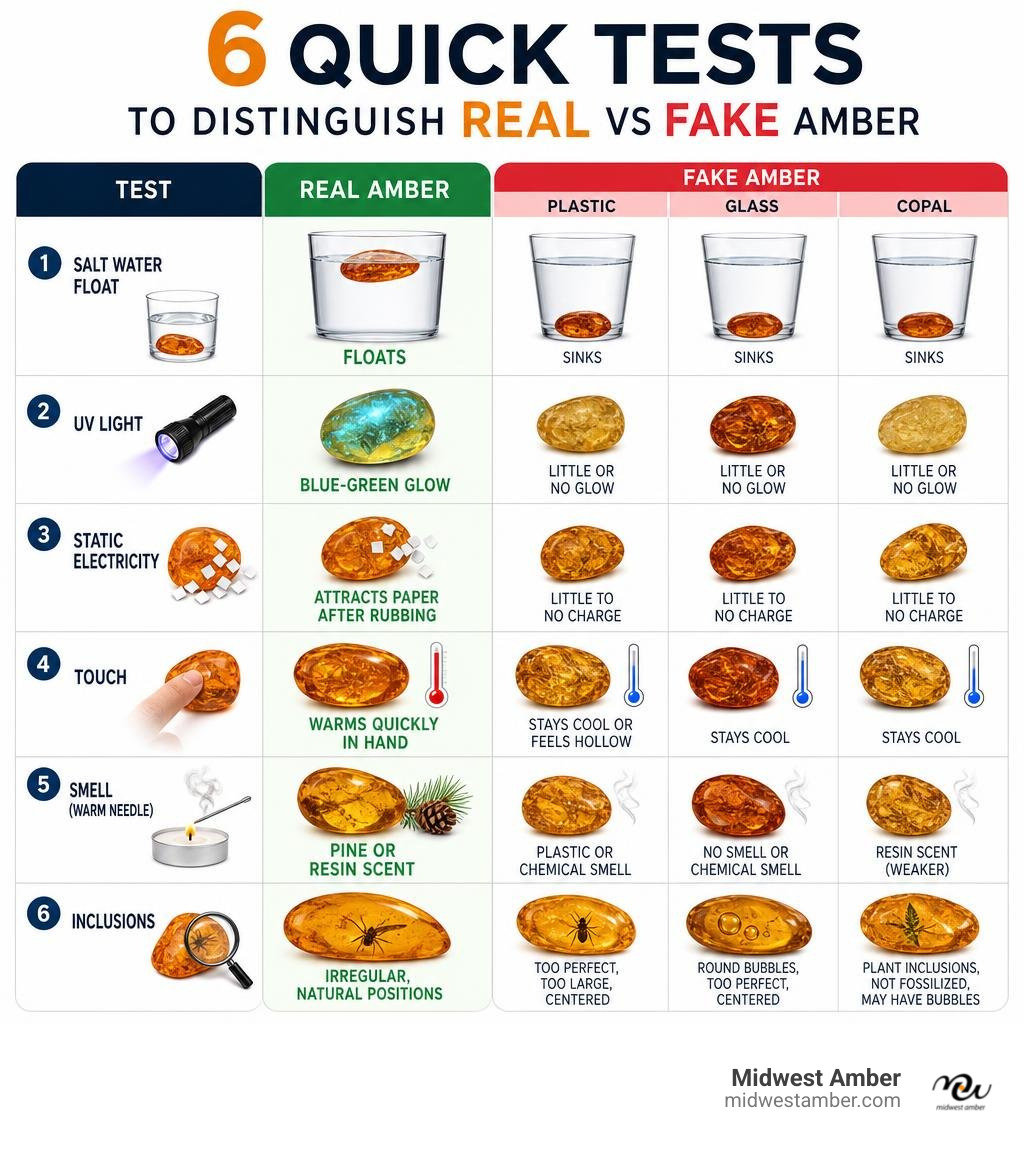
How to tell real amber from fake — at a glance:
| Test | Real Amber | Fake (Plastic, Glass, Copal) |
|---|---|---|
| Salt water float | Floats | Sinks (glass, most plastic) |
| UV light | Blue-green glow | Little or no glow |
| Static electricity | Attracts paper after rubbing | Little to no charge |
| Touch | Warms quickly in hand | Stays cool or feels hollow |
| Smell (warm needle) | Pine or resin scent | Plastic or chemical smell |
| Inclusions | Irregular, natural positions | Too perfect, too large, centered |
Amber has been treasured for thousands of years — and today, the market is flooded with imitations that are nearly impossible to spot at a glance. Copal (young, un-fossilized resin), dyed glass, and various plastics can all look convincingly like the real thing. A strand of "amber" beads bought at a tourist market for $15 is almost certainly not genuine.
Baltic amber alone makes up roughly 80% of the world's commercially available supply — which also makes it the most commonly faked. Whether you inherited a piece, found something at a flea market, or are shopping online, it pays to know what you are actually holding.
I'm Gabriel Ciupek, President and owner of Midwest Amber, Inc., with years of hands-on experience sourcing, pricing, and authenticating genuine Baltic amber jewelry — and I've seen how difficult it can be to separate real vs fake amber without the right knowledge. In the sections below, I'll walk you through every reliable test you can use at home, plus when to call in a professional.
Real vs fake amber basics:
What is Real Amber and How Does It Form?
To understand how to spot a fake, we first have to understand what makes real amber so unique. Amber is not a mineral or a traditional stone; it is fossilized tree resin. Millions of years ago, ancient prehistoric forests — particularly coniferous trees in the Baltic region — exuded sticky resin to protect themselves from disease, pests, and physical damage. Over geological epochs, this resin underwent a complex process of polymerization and fossilization under high pressure and temperature, transforming into the warm, lightweight organic gemstone we admire today.
The oldest amber specimens date back roughly 320 million years, but most jewelry-grade Baltic amber is between 30 and 90 million years old. Because of its organic origins, amber is incredibly lightweight and warm to the touch. In ancient Greece, it was called elektron (the root of our modern word "electricity") due to its natural electrostatic properties. It is also affectionately known as the "sun stone" because of its rich, golden hues that seem to capture prehistoric sunlight.
To dive deeper into the fascinating geological history of these ancient treasures, check out our guides on Unearthing Natural Amber: What Makes This Ancient Gem So Special and learn more about the raw material itself in our article on Natural Amber Stone.
One of the most remarkable features of genuine Baltic amber is that it contains up to 8% succinic acid by weight. This natural compound is historically associated with the stone's comforting, holistic qualities. Depending on the conditions of its formation, natural Baltic amber can present several distinct colors:
- Yellow/Butterscotch: The most common variety, representing about 70% of all amber.
- Black: Comprising roughly 15% of the yield, colored by ancient soil and plant matter.
- Transparent/Cognac: Around 10% of natural amber, highly prized for its clarity.
- White: Often called "bone" or "royal" amber, making up just 1% to 2%.
- Green: A rare and beautiful variety, accounting for about 2%.
- Red: Highly coveted "cherry" amber, sitting at a mere 0.5%.
- Blue: The rarest shade of all, representing less than 0.2% of the world's supply, primarily sourced from the Dominican Republic and showing its unique coloration under specific light.
Real vs Fake Amber: Common Imitations in the Market
Because genuine amber is relatively scarce and commands a premium, the market has seen an influx of clever imitations. Unscrupulous manufacturers use everything from younger tree resins to industrial plastics and tinted glass to replicate the look of genuine Baltic amber.
To protect your collection, it is essential to understand what these materials are and how they behave. For a comprehensive overview of how to safeguard your jewelry purchases, read Don't Get Fooled: A Buyer's Guide to Authentic Stone Jewelry.
Spotting Copal vs Real Amber
Copal is the most common and convincing organic imitation of amber. It is also fossilized tree resin, but it is much younger — typically ranging from a few thousand to under 10 million years old. Because it has not fully fossilized, copal lacks the chemical stability and hardness of real amber.
You can read our detailed breakdown on Amber vs Copal to understand the scientific differences, but the primary indicators of copal are its physical properties:
- Softness: Copal is significantly softer than real amber and scratches very easily.
- Stickiness: When exposed to mild heat or solvents, copal immediately becomes tacky or sticky.
- Melting Point: Copal melts at temperatures below 150°C, releasing a sweet, fresh resin smell rather than the deep, pungent pine scent of ancient amber.
Identifying Plastic and Glass in the Real vs Fake Amber Debate
In addition to copal, synthetic materials are widely used to fabricate fake amber. These range from vintage plastics to modern acrylics:
- Bakelite and Phenolic Resins: Popular in the early 20th century, these materials are dense, heavy, and often exhibit uniform, artificial colors.
- Celluloid: An early plastic that can look like amber but is highly flammable and chemically unstable.
- Modern Plastics and Acrylics: Often used to cast cheap souvenir jewelry, sometimes with modern insects artificially placed perfectly in the center.
- Glass: Used to create heavy, cold imitations.
Unlike organic amber, glass is extremely heavy, cold to the touch, and cannot be scratched by a copper needle or fingernail. It also sinks instantly in fresh or salt water.
Safe, Non-Destructive Home Tests for Amber Authenticity
If you want to test your jewelry without causing damage, we highly recommend starting with non-destructive home tests. You don't need a high-tech laboratory to separate the treasures from the tricks; a few household items will do the trick.
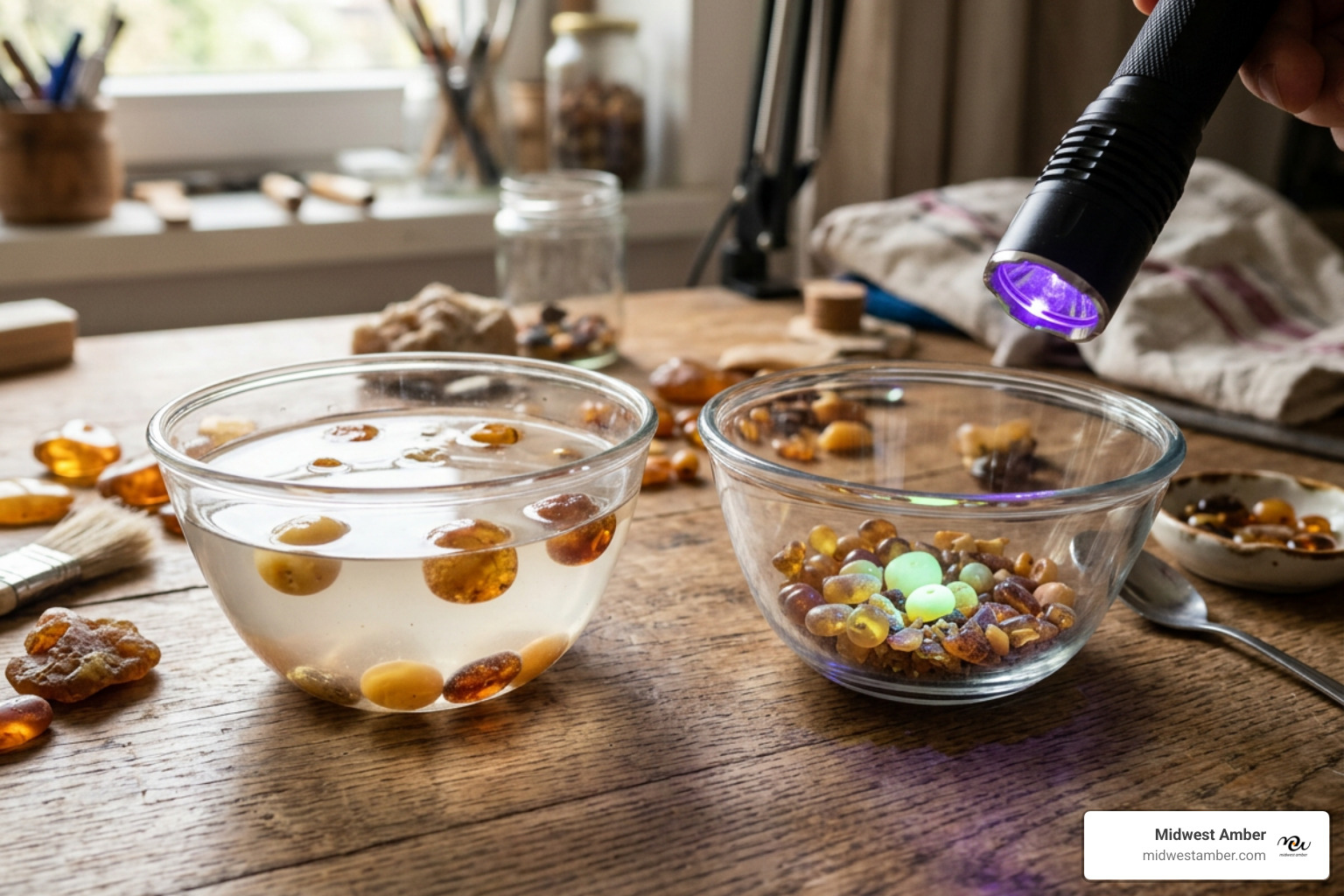
To see some of these tests demonstrated by paleontological experts, you can watch How to tell if amber is genuine – with Dr Ricardo Pérez-de la Fuente for an excellent visual guide.
The Salt Water Float Test
This is the classic, most reliable home test for loose amber stones and beads. Real amber has a very low density — between 1.05 and 1.10 grams per cubic centimeter. This means it is only slightly denser than fresh water, but lighter than salt water.
To perform the test:
- Dissolve 7 to 8 tablespoons (about 50 grams) of ordinary table salt into 1 cup (300 ml) of warm water. Stir thoroughly until the salt is completely dissolved.
- Gently drop your amber piece into the solution.
- The Result: Genuine amber will float gracefully near the surface. Glass, most modern plastics, and copal will sink heavily to the bottom.
Note: This test works beautifully for loose beads and stones, but it is not suitable for fully mounted jewelry with heavy metal clasps, silver settings, or steel wires, as the weight of the metal will drag the entire piece down. For a deeper dive into this method, check out Real or Resin: How to Tell If Your Amber Jewelry Is Genuine.
The Static Electricity Test
Because real amber is a natural dielectric, it can hold a static charge. This property was so famous in antiquity that it gave us the word "electricity."
To perform the test:
- Wrap your amber piece in a soft wool or silk cloth.
- Rub the stone vigorously in one direction for 20 to 60 seconds.
- Hold the rubbed stone close to tiny, lightweight pieces of paper, dust, or a strand of hair.
- The Result: Genuine amber will build up an electrostatic charge and physically attract the paper or hair. Copal will often become warm and sticky instead of holding a charge, while glass will show no reaction whatsoever.
The UV Light Test for Real vs Fake Amber
Using ultraviolet light is one of the most effective non-destructive ways to verify amber. Under a UV light (specifically a 365nm wavelength flashlight), genuine amber exhibits a distinct, vibrant fluorescence.
To perform the test:
- Take your amber piece into a completely dark room.
- Shine a 365nm UV light directly onto the stone.
- The Result: Genuine Baltic amber will fluoresce with a beautiful, milky blue-green, yellowish, or bright blue glow. Copal and pressed amber may glow with a weaker, white or yellowish hue, while most synthetic plastics will not glow at all or will show a dull, purple light.
To learn more about what to look for under blacklight, read our specialized article on Fake Amber Under UV Light.
The Acetone and Rubbing Alcohol Test
This test takes advantage of the chemical durability of fully fossilized amber. Because real amber has spent millions of years polymerizing, it is completely impervious to mild chemical solvents.
To perform the test:
- Locate an inconspicuous spot on your amber piece (such as the back of a pendant or near a drill hole).
- Apply a single drop of acetone (or high-concentration rubbing alcohol) to a cotton swab and gently dab the spot.
- The Result: On real amber, the solvent will evaporate quickly, leaving the surface completely dry, shiny, and unchanged. On copal, plastic, or resin fakes, the surface will immediately soften, become tacky, or lose its polish, leaving a sticky fingerprint or dull patch.
Visual and Tactile Clues: Inclusions, Texture, and Weight
Sometimes, your own senses are your best tools. By training your eyes and hands, you can spot the subtle nuances that factory machines and chemical labs simply cannot replicate.
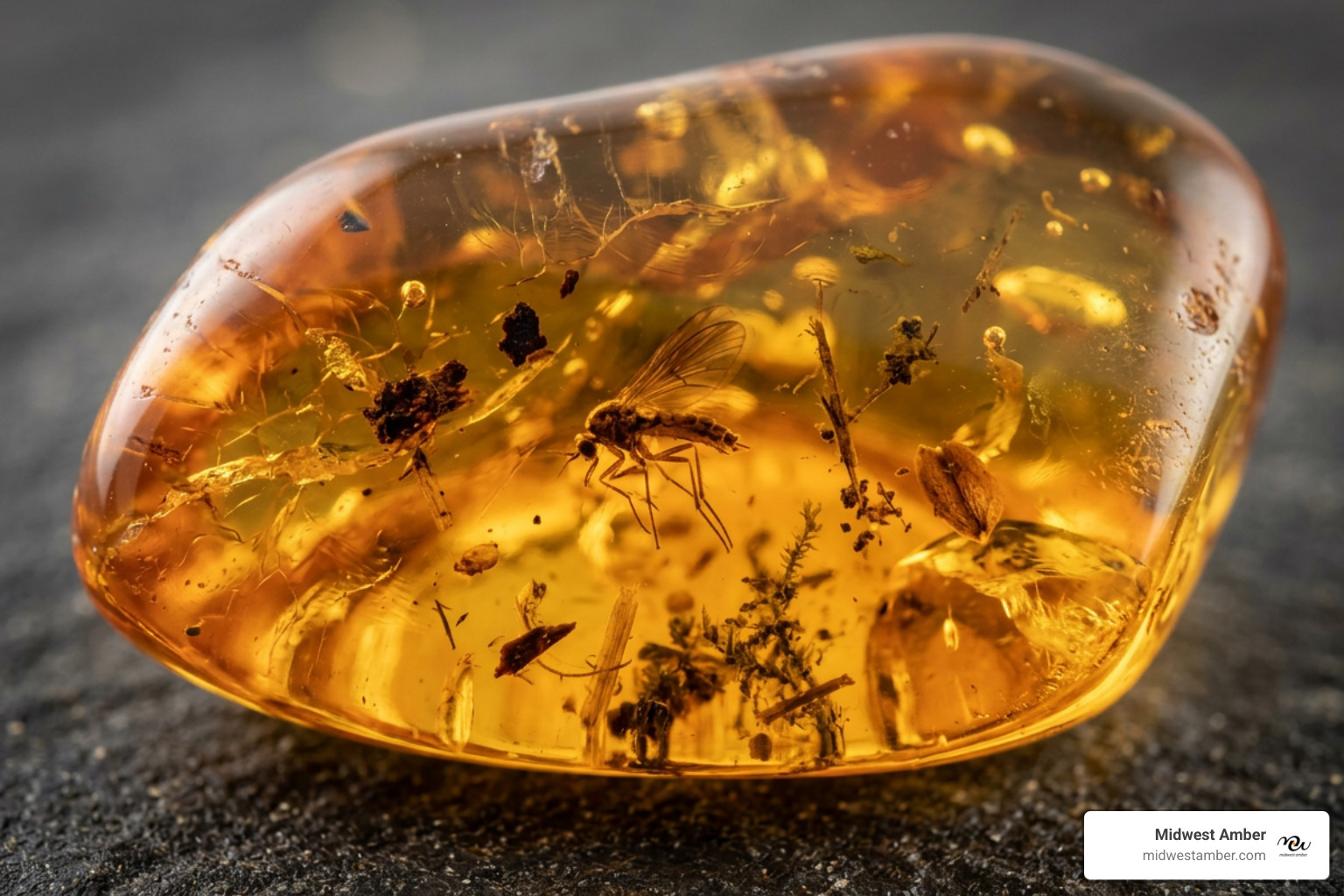
Natural Inclusions vs Fake Inclusions
Inclusions — ancient insects, plant matter, and air bubbles trapped in the resin millions of years ago — are highly prized by collectors. However, they are also a major target for counterfeiters.
To help you distinguish between genuine and artificial inclusions, keep these factors in mind:
- The Struggle: In natural amber, insects did not die peacefully. They fell into sticky resin while alive and fought to escape. Under a jeweler's loupe, you will see natural "struggle marks" — folded wings, bent legs, or tiny air bubbles exhaled by the insect in its final moments. Fake inclusions (often modern ants, flies, or even scorpions cast in plastic) look perfectly preserved, lifelike, and relaxed, with their wings neatly spread.
- Size: Natural insect inclusions are typically very small (usually under 10 mm). If you see a perfectly centered, massive scorpion or prehistoric spider in a cheap piece of amber, it is almost certainly a modern resin fake.
- Flow Lines: Real amber forms in layers as resin drips down the bark of prehistoric trees. This creates organic flow lines and microscopic variations in clarity. Fakes made of poured plastic or glass are often completely uniform and lack these natural internal structures.
For more expert secrets on reading the internal landscape of your gemstones, read The Amber Truth: Unlocking the Secrets of Genuine Stones.
The Touch and Temperature Test
Because amber is an organic material rather than a mineral, it interacts with your body heat in a very specific way.
- Warmth: When you pick up a piece of real amber, it will feel warm to the touch and quickly adapt to your body temperature. Glass, on the other hand, feels cold and takes a long time to warm up in your hand.
- Texture: Real amber has a slight "grip" or organic resistance when you slide your finger across it. Plastics often feel slick, greasy, or artificially smooth.
- Weight: Because of its low density, real amber feels surprisingly light. If a large necklace feels heavy or clunky against your collarbone, it may be made of glass or heavy synthetic resin.
To build your sensory skills and learn what raw, unpolished specimens should feel like, refer to our detailed guide: How to Identify Raw Amber.
Destructive Tests: Risks and When to Avoid Them
When researching how to identify Baltic amber, you will often run across "destructive tests" like the hot needle test or the burn test. We strongly advise using extreme caution with these methods, as they can permanently damage or ruin a beautiful piece of jewelry.
If you must perform a hot needle test, follow these safety guidelines:
- Heat the tip of a sewing needle over a flame until it glows red.
- Press the hot tip very gently against an inconspicuous spot on the stone (such as inside a drill hole).
- The Result: Genuine amber will resist melting, but it will release a tiny puff of white smoke with a distinct, pleasant smell of pine, rosin, or church incense. Copal will melt rapidly and smell sweet, while plastics will melt, drip, and emit a harsh, chemical, or burning-hair smell.
Because of the risk of cracking, scarring, or devaluing your precious jewelry, these tests should only be used as a last resort on raw, unpolished, or already damaged pieces. For a comprehensive guide on the risks and procedures of these physical tests, you can consult How to Spot Fake Amber: Tests — SageStone.
Professional Certification and Smart Buying Practices
While home tests are excellent for peace of mind, the only way to be 100% certain of your amber's authenticity is through professional testing and certification.
In professional laboratories, gemologists use advanced scientific equipment to verify the molecular structure of the material:
- FTIR Spectroscopy (Fourier-Transform Infrared Spectroscopy): This is the gold standard for amber testing. It analyzes how the material absorbs infrared light, identifying the unique "Baltic amber shoulder" spectrum that only genuine fossil resins display.
- Gas Chromatography: Used to measure the exact succinic acid content, confirming its Baltic origin.
To ensure your jewelry is investment-grade and ethically sourced, we recommend reading Amber Jewelry Certification and familiarizing yourself with the Baltic Amber Certificate of Authenticity.
Why Seller Reputation and Price Matter
The simplest way to avoid fakes is to buy from reputable, established specialists. Genuine Baltic amber is an ancient, limited natural resource that must be carefully mined, exported, and handcrafted by skilled artisans.
If a deal seems too good to be true — such as a massive, flawless amber pendant with a perfect insect inside selling for $10 at a tourist stall — it is almost certainly a fake. To learn how to navigate the market safely, check out Don't Get Fooled: The Definitive Guide to Certified Baltic Amber and find out where to shop with confidence in our buyer's guide: Real Deal Amber: Where to Buy Certified Baltic Amber Jewelry.
Frequently Asked Questions about Amber Authenticity
Does real amber have bubbles?
Yes, but they are very specific. Natural amber often contains tiny, microscopic air bubbles trapped during the fossilization process. Under magnification, these bubbles are almost always perfectly spherical. If you see large, elongated, or distorted air bubbles, it is a sign that the material was pressed, heated, or manufactured synthetically.
Will testing damage my amber jewelry?
Non-destructive tests like the salt water float test, the static electricity test, and the UV light test are completely safe and will not harm your jewelry. However, chemical tests (like acetone) and thermal tests (like the hot needle or burn test) can permanently damage copal or plastic fakes, and may leave minor scars on genuine amber if not done carefully.
What is the difference between amber and copal?
The primary difference is geological age. Real amber is fully fossilized and ranges from 30 to over 300 million years old, making it chemically stable and hard. Copal is a "young" resin (usually under 10 million years old) that has not completed the fossilization process, making it softer, chemically sensitive, and prone to melting.
Conclusion
Distinguishing real vs fake amber doesn't have to be a guessing game. By combining simple, non-destructive home tests like the salt water float and UV light tests with an eye for natural inclusions, you can shop for these ancient treasures with absolute confidence.
At Midwest Amber, we are deeply passionate about the rich heritage and natural beauty of genuine Baltic amber. Based right here in the United States, we bring over 20 years of experience to sourcing and handcrafting 100% natural, ethically sourced Baltic amber jewelry. Working directly with certified Polish and Lithuanian artisans, we ensure that every ring, necklace, and bracelet we offer is an authentic, handcrafted piece of history.
Whether you are in Chicago, IL, Arlington Heights, IL, Schaumburg, IL, or any of our neighboring communities, we invite you to explore our verified collection. Ready to find a genuine piece of the sun for yourself or a loved one? Discover your next treasure in our guide to Bracelet Bliss: Finding Your Perfect Amber Piece.

Leave a comment
This site is protected by hCaptcha and the hCaptcha Privacy Policy and Terms of Service apply.