

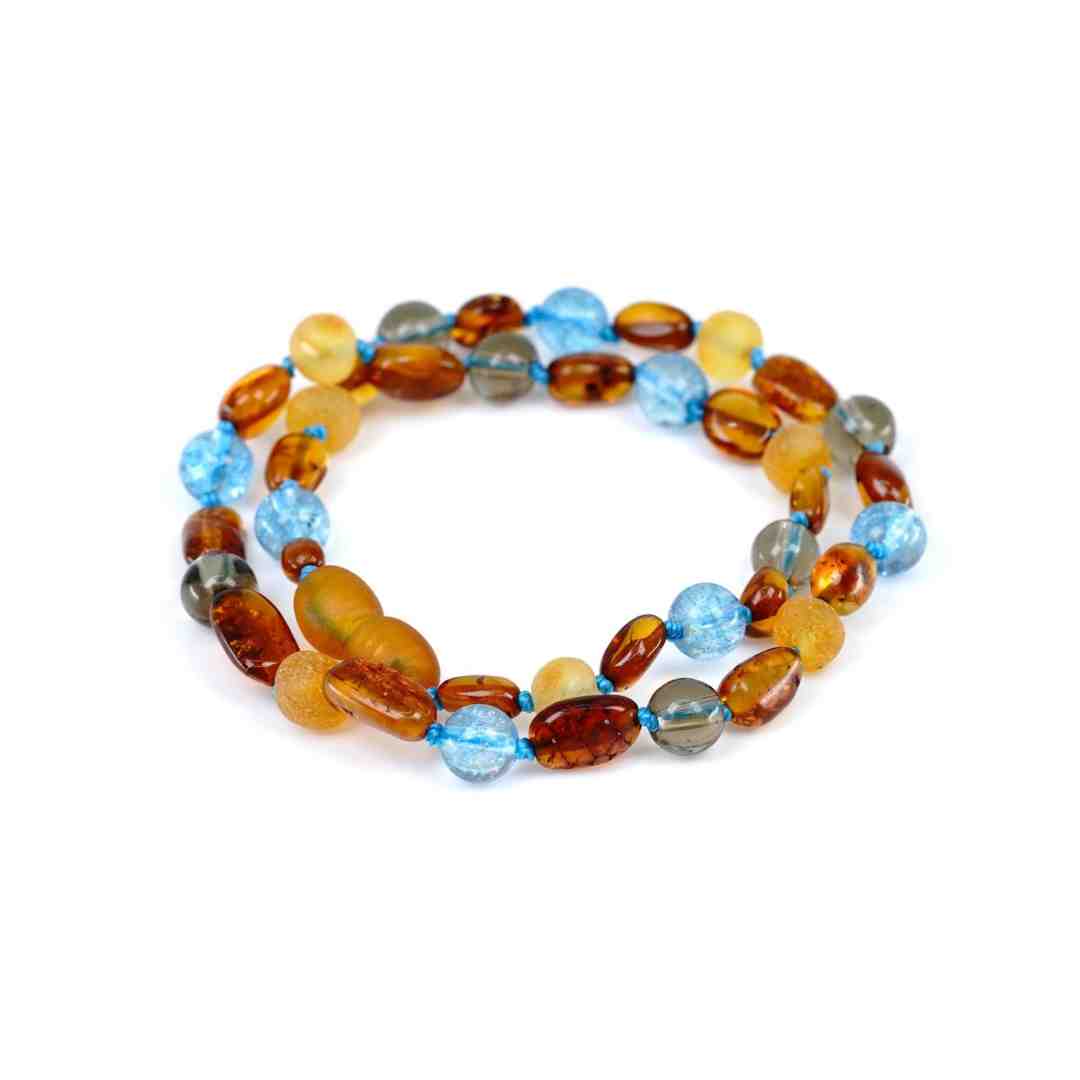
Is an Amber Teething Necklace Safe and Effective for Your Baby?
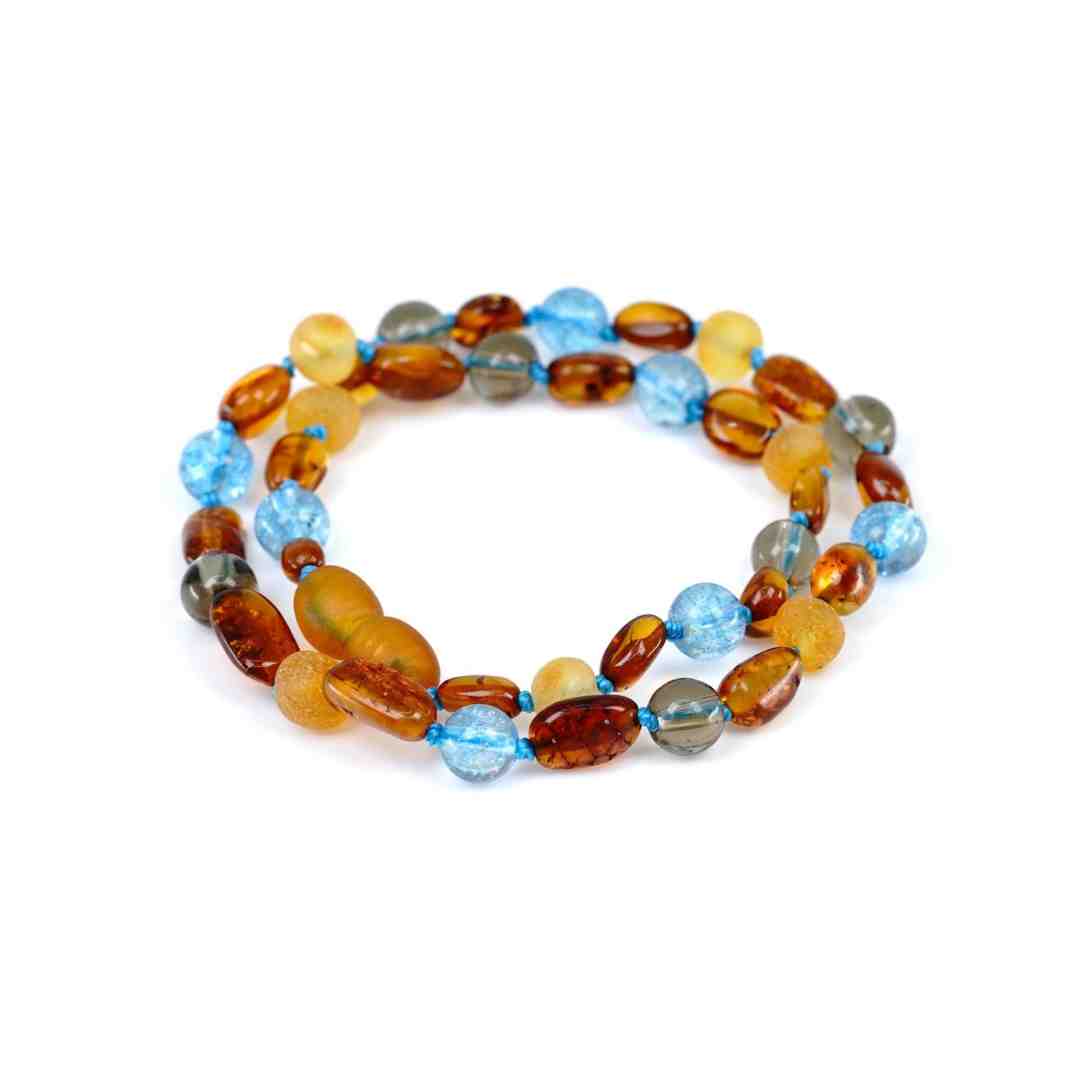
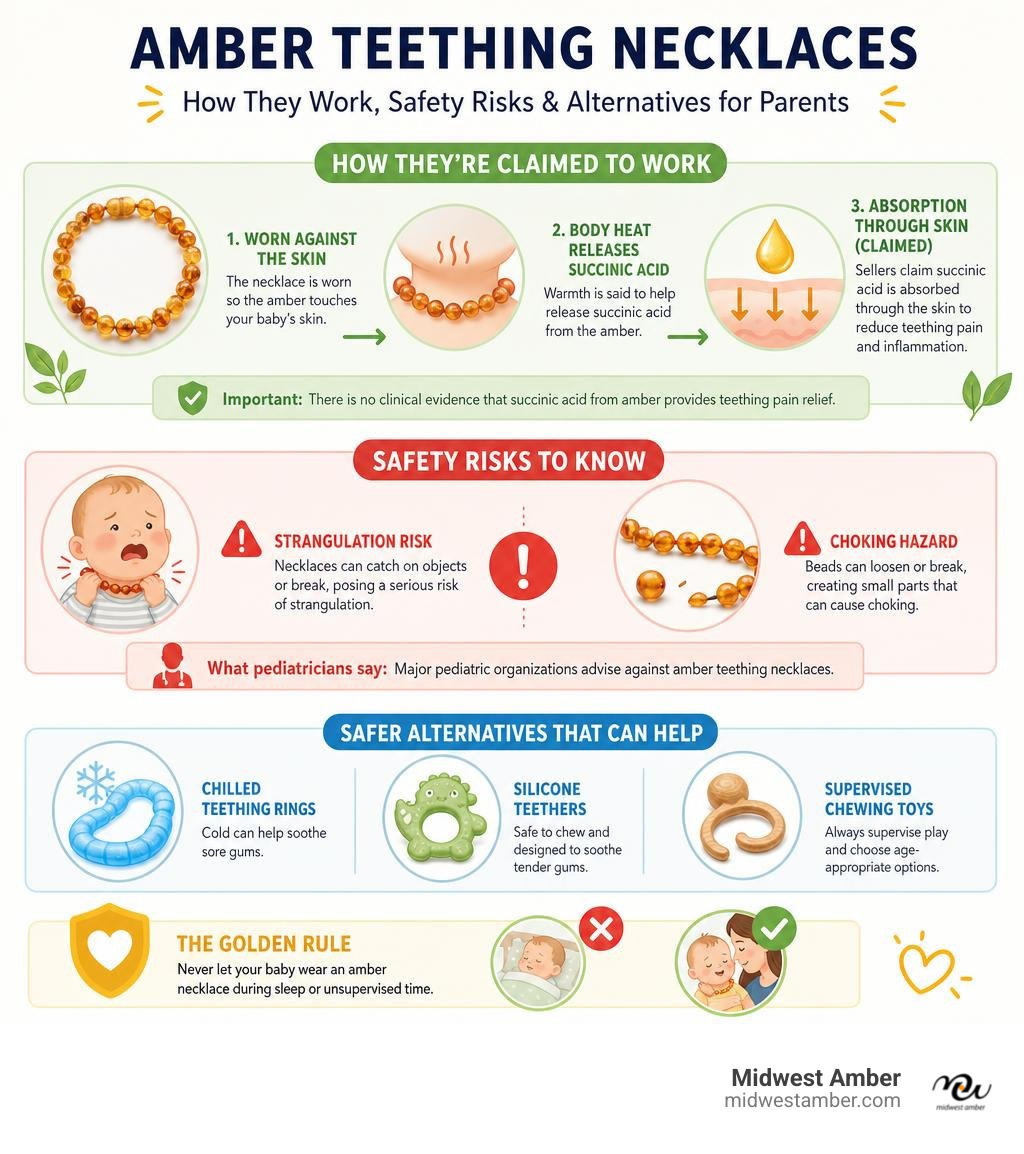
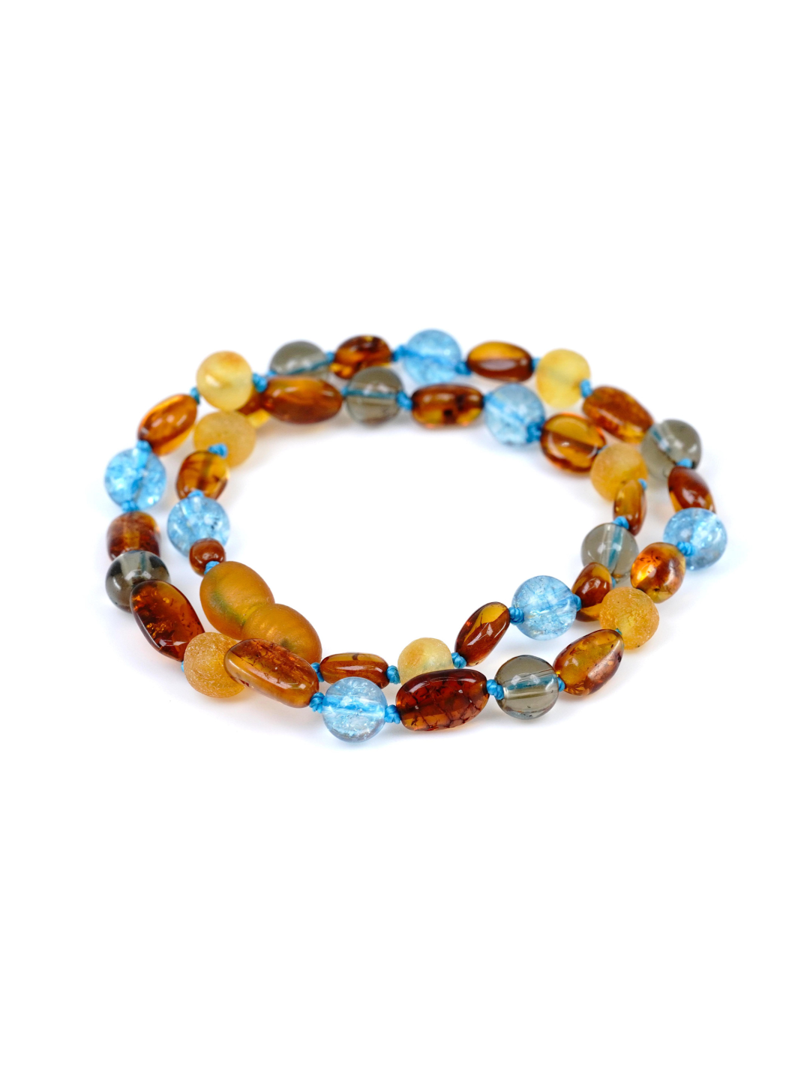
Amber teething necklaces are small beaded necklaces made from genuine Baltic amber, worn by infants against the skin. Sellers claim body heat releases succinic acid from the amber, which is then absorbed through the skin to reduce teething pain and inflammation.
Here's what you need to know at a glance:
| Question | Quick Answer |
|---|---|
| Do they work? | No clinical evidence supports the pain-relief claims |
| Are they safe? | They carry real strangulation and choking risks |
| What do pediatricians say? | Major pediatric organizations advise against them |
| What are safer alternatives? | Chilled teething rings, silicone teethers, supervised chewing toys |
| Can babies wear them unsupervised? | No — never during sleep or unsupervised time |
Many parents swear by them. Medical experts warn against them. That gap is exactly what this guide is designed to help you navigate — clearly and honestly.
Every mother knows the discomfort of a teething baby. The appeal of a natural, drug-free solution is completely understandable. But before placing any necklace on your infant, it's worth understanding both the claimed benefits and the documented risks in full.
I'm Gabriel Ciupek, president and owner of Midwest Amber, Inc., with years of hands-on experience sourcing and working with genuine Baltic amber jewelry — including amber teething necklaces — directly with artisans in Lithuania and Poland. That background gives me a grounded, practical perspective on what these products are, what they aren't, and what every parent should know before buying one.
Learn more about Amber teething necklace:
What is an Amber Teething Necklace and How is it Claimed to Work?
An amber teething necklace is not a modern invention, but rather a contemporary adaptation of an old-world tradition. To understand how these necklaces are claimed to work, we first have to look at what Baltic amber actually is.
Unlike diamonds or emeralds, Baltic amber is not a mineral or a cold, heavy gemstone. It is organic, fossilized tree resin that leaked from ancient conifer (pine) forests in Northern Europe over 45 million years ago. Because of its organic origin, amber is naturally lightweight and warm to the touch, making it incredibly comfortable for a young child to wear against their skin.
The central theory behind the use of Baltic amber for teething centers on a natural, non-toxic compound called succinic acid. Baltic amber is unique because it contains a remarkably high concentration of this compound — typically between 3% and 8% of its total composition. The highest concentration of succinic acid is found in the cortex, which is the very outer layer of the amber bead.
Proponents of the amber teething necklace explain the mechanism of relief through these sequential steps:
- Skin Contact: The child wears the necklace directly against their skin, typically hidden beneath their clothing.
- Body Heat Activation: As the baby’s natural body temperature warms the organic resin, it triggers the release of microscopic amounts of natural oils contained within the amber.
- Transdermal Absorption: These oils, rich in succinic acid, are allegedly absorbed through the baby's skin and enter the bloodstream.
- Natural Analgesia: Once absorbed, succinic acid is claimed to act as a natural anti-inflammatory and analgesic agent, reducing gum swelling, drooling, fever, and overall teething fussiness.
When parents explore these jewelry options, they often choose between a Raw Amber Teething Necklace and a polished version. Raw, unpolished amber is highly sought after in holistic circles because it retains its natural, textured exterior, which many believe allows for easier release of succinic acid compared to beads that have been tumbled and polished to a glossy finish.
If you want to understand how these pieces are constructed, our Handmade Amber Teething Necklace Guide explains the traditional craftsmanship behind these historical items.
The Science Behind Succinic Acid in an Amber Teething Necklace
While the homeopathic explanation of succinic acid absorption sounds appealingly simple, it is crucial to examine what modern scientific research and medical experts say about these claims.
Historically, succinic acid has been recognized for its role in cellular metabolism. In 1886, the pioneering Nobel Prize-winning scientist Robert Koch researched succinic acid and confirmed its positive influence on the human immune system. Today, we know that succinic acid is a natural substance already produced within the human body, acting as a key driver for the citric acid cycle (which helps our cells produce energy).
However, there is a major scientific disconnect when it comes to the transdermal absorption of succinic acid from solid amber beads at normal human body temperature.
Medical critics and safety advocates point out several scientific realities:
- High Release Temperature: Chemical analysis indicates that the active, therapeutic properties of fossilized amber do not readily melt or release from the solid resin unless heated to extreme temperatures — approximately 392 degrees Fahrenheit (200 degrees Celsius). A baby's normal body temperature of 98.6 degrees Fahrenheit is nowhere near hot enough to liquefy or vaporize the resin to release succinic acid.
- Lack of Clinical Evidence: To date, there are zero peer-reviewed clinical studies proving that succinic acid can pass through human skin from a solid piece of jewelry worn against the body.
- The "Cortex" Barrier: While unpolished amber does have more exposed surface area, any potential microscopic oil transfer is highly restricted by the structural stability of the fossilized resin.
For a deeper dive into the science, safety, and history of these claims, parents should read our comprehensive review, Warning: What Every Parent Needs to Know About Amber Teething Necklaces.
Safety Risks and Pediatric Expert Warnings
While many parents share glowing testimonials about how an amber teething necklace transformed their cranky, sleepless infant into a calm, happy baby, pediatric health organizations present a very different, highly cautionary perspective.
The primary concern of pediatricians is not whether the amber works, but the immediate physical dangers the necklace itself poses to an infant. The two most severe safety risks are:
- Strangulation Hazards: Placing any cord, string, or necklace around the neck of an infant or toddler presents a risk of strangulation. If the necklace catches on a crib corner, a playpen latch, a toy, or a furniture edge, it can tighten around the baby's neck. Because infant airways are highly delicate, strangulation can occur silently and within a matter of seconds.
- Choking Hazards: Amber is a fossilized resin with a relatively low Mohs hardness value. If a child manages to pull the necklace into their mouth and chew on it, or if the necklace catches on an object and breaks, the small beads can easily be swallowed or inhaled into the lungs, leading to immediate choking.
Because of these documented physical dangers, major pediatric and regulatory health organizations have issued strict warnings:
- The American Academy of Pediatrics (AAP): The AAP strongly advises parents never to place jewelry of any kind on a baby. They emphasize that the risks of strangulation and choking far outweigh any unproven therapeutic benefits.
- The Food and Drug Administration (FDA): The FDA has released official safety alerts warning parents and caregivers against using amber teething necklaces, citing reports of serious injuries and near-fatal strangulation events.
- Health Canada and European Safety Authorities: These regulatory bodies have placed strict guidelines on children's jewelry, with some regions outright banning the marketing of these products as "teething relief" devices.
To understand the full scope of these warnings and the physical realities of infant jewelry safety, we encourage you to read Beyond the Hype: Unpacking the Risks of Amber Teething Necklaces and explore the critical perspective in Think Amber Teething Necklaces Are Safe? Think Again.
Tragically, these warnings are not just theoretical. Real families have experienced devastating losses due to unsupervised jewelry wear. To understand the gravity of these safety guidelines, read Real Safety Risks of Amber Necklaces, which highlights why absolute vigilance is required.
Key Safety Features of an Amber Teething Necklace
If a family, after weighing the risks and benefits, still decides to use Baltic amber jewelry for their child, they must understand the specific engineering and safety features designed to minimize physical hazards.
Not all amber jewelry is constructed the same way. High-quality children's amber pieces incorporate specific manufacturing safeguards to protect the wearer.
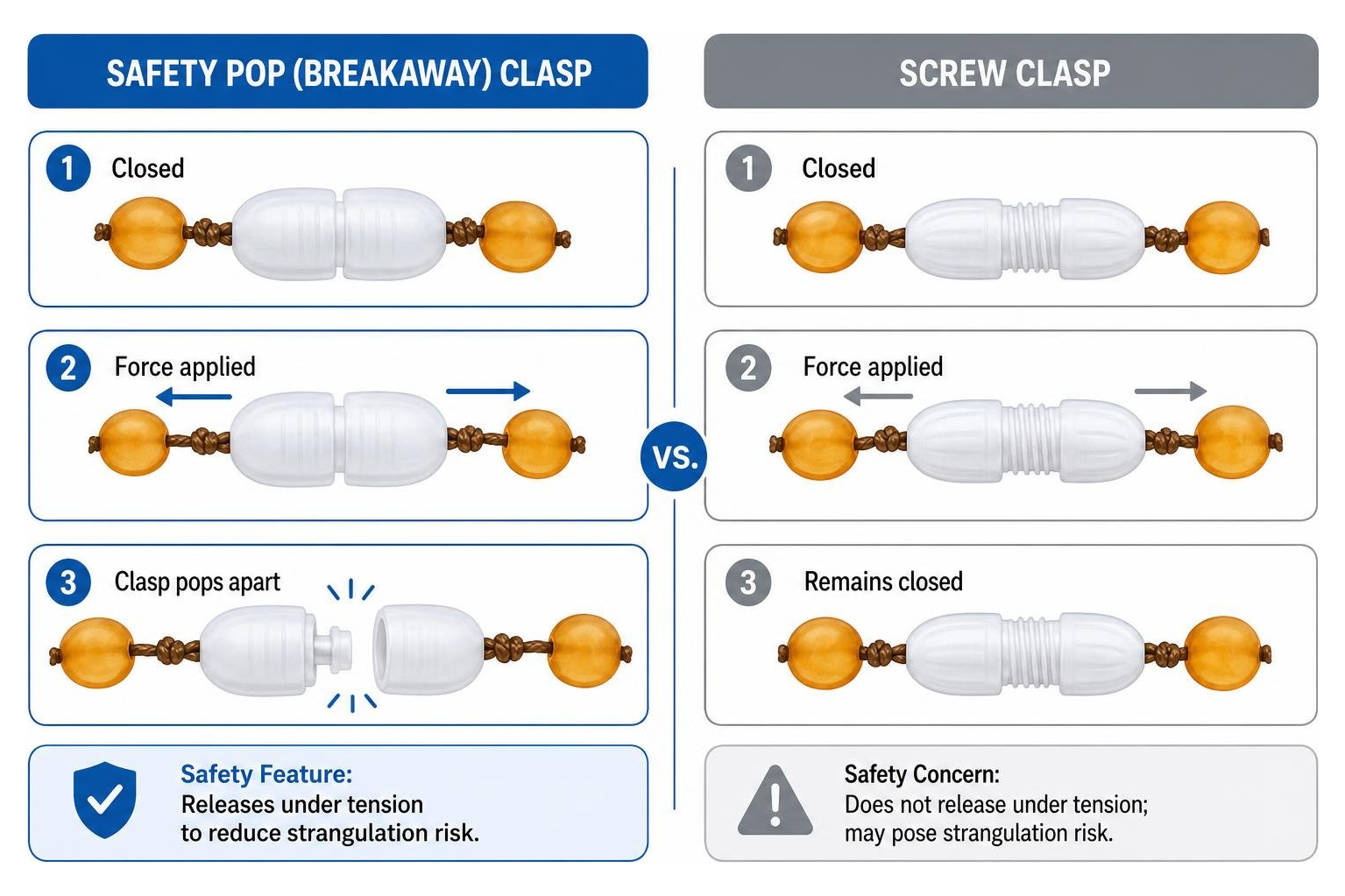
Here are the key safety features to look for:
- Individually Knotted Beads: A high-quality children's necklace is hand-knotted on a strong silk or cotton thread, with a secure, individual safety knot tied between every single bead. This ensures that if the thread does happen to break under extreme pressure, only one single bead will fall off, rather than the entire string scattering and creating a massive choking hazard.
-
Safety Pop Clasps vs. Screw Clasps:
- Safety Pop (Breakaway) Clasps: These are plastic tension-release clasps designed to pull apart instantly when subjected to a specific amount of force (such as a hard yank or if the necklace gets snagged on an object). This breakaway design is widely considered the safest option for infants.
- Screw Clasps: These are plastic barrel clasps that screw tightly together. While they prevent the baby from easily taking the necklace off, they do not have a breakaway safety release mechanism. They require manual unscrewing, which some parents find less safe in emergency snagging situations.
- Smooth, Rounded Beads: Beads should be shaped into smooth "Baroque" or rounded shapes without sharp edges that could irritate or scratch a baby’s delicate skin.
For a comprehensive breakdown of these features and how to evaluate them, refer to our guide on Amber Necklace Safety.
Choosing the Right Amber Jewelry Style for Your Child
For parents who wish to utilize Baltic amber but are uncomfortable with the idea of a necklace around their baby's neck, there are alternative styles available. Many families opt for amber bracelets or anklets as a compromise, believing that keeping the jewelry further from the airway reduces the risk of strangulation.
To help you choose, here is a comparison of the different styles of children's amber jewelry:
| Style | Standard Sizing | Best Suited For | Safety Pros | Safety Cons |
|---|---|---|---|---|
| Necklace | 11" (Newborn to 11 months) 12.5" (5 months to 5 years) |
Daytime wear under direct, active supervision. | Rests flat against the chest, maximizing skin contact. | Highest risk of strangulation if caught on objects. |
| Bracelet | 5.5" (Toddler wrist) | Active toddlers who do not pull at their wrists. | Far away from the neck and airway. | Easy for the child to see, pull on, and place in their mouth to chew. |
| Anklet | 5.5" (Infant ankle) | Infants and babies who wear socks or footed onesies. | Can be tucked safely inside a sock, keeping it completely out of the baby's sight and reach. | Lower skin-to-bead surface contact if covered by thick clothing. |
Many parents find that an anklet worn under a secure sock is the most practical choice for minimizing both choking and strangulation risks.
For more tips on selecting the right piece, read Beyond the Bite: Finding the Perfect Teething Necklace for Your Little One.
How to Properly Supervise and Care for Children's Amber Jewelry
If you choose to use an amber teething necklace or bracelet for your child, proper supervision and physical care of the jewelry are non-negotiable.
Active Supervision and Safe Wear Guidelines
- Never Leave a Child Unattended: A child wearing amber jewelry must be under constant, active visual supervision by an adult.
- Remove During Sleep: Always remove the necklace or bracelet during naps, bedtime, and any unsupervised periods. There are no exceptions to this rule.
- No Chewing Allowed: Amber jewelry is strictly for wearing, not for chewing. Adjust the sizing so that the necklace sits comfortably below the chin but is short enough that the baby cannot pull it up into their mouth.
- The "Ankle Wrap" Hack: During quiet times or supervised rests, some parents choose to wrap a 12.5-inch necklace twice around the baby's ankle and cover it with a secure sock.
For a detailed walkthrough on introducing amber safely to infants, check out the Amber Necklace Newborn Guide.
Physical Care of Baltic Amber
Baltic amber is an organic material, which means it requires gentle handling to maintain its integrity and safety:
- Low Mohs Hardness: Amber has a Mohs hardness rating of only 2.5. This makes it incredibly soft and highly susceptible to scratching, cracking, or fracturing under pressure. Regularly inspect the beads for any signs of physical damage or sharp cracks. Discontinue use immediately if a bead is damaged.
- Avoid Chemicals: Keep the jewelry away from harsh soaps, shampoos, pool chlorine, detergents, sunscreen, and baby lotions. These chemicals will coat the amber, reducing its natural luster, and can actively degrade and weaken the silk or cotton threading over time.
- Remove During Baths: Always take the jewelry off before baths or swimming to preserve both the amber beads and the structural strength of the thread.
Why Retailers Now Use the Term 'Jewelry for Children'
If you browse online jewelry stores or visit local boutiques in the Chicago area — from Arlington Heights to Glenview — you will notice a significant shift in how these products are marketed. Many reputable sellers now refer to these items as "children's jewelry" or "jewelry for children" rather than "teething necklaces."
This change in terminology is primarily driven by strict safety regulations and consumer protection laws:
- EU and Global Safety Standards: In the European Union and other international markets, labeling a product as a "teething" device subjects it to rigorous medical device safety standards. Because there is no clinical evidence backing the physiological claims of teething relief, regulatory bodies have restricted the use of the word "teething" on jewelry packaging.
- Clarifying Product Intent: By labeling these items as decorative children's jewelry, retailers make it clear that the product is meant for supervised wear and adornment, not as a teething toy to be placed in a child's mouth.
To explore this shift in perspective and see how these pieces are appreciated as beautiful, traditional keepsakes, read Beyond Teething: Adorable Necklaces for Infants.
Frequently Asked Questions about Amber Jewelry
Can babies wear amber jewelry while sleeping?
No. Babies should never wear any jewelry while sleeping. Sleeping unsupervised in a crib or bassinet dramatically increases the risk of accidental strangulation or choking if the necklace catches on bedding or breaks during movement.
Some parents choose to use an Amber Teething Necklace and Anklet Set and transition the necklace to an anklet wrapped securely under a footed sleep sack or sock during the night. However, for absolute safety, removing all jewelry before sleep is the best practice.
How do you clean and maintain genuine Baltic amber?
To clean Baltic amber, simply wipe the beads gently with a soft flannel or microfiber cloth dampened with lukewarm water. Do not use commercial jewelry cleaners, steam cleaners, or boiling water.
If the amber has lost its shine, you can restore its natural luster by applying a single drop of clear olive oil to a soft cloth, gently buffing the beads, and then wiping away any excess oil with a clean, dry cloth.
What is the typical price range and guarantee for these products?
In the current 2026 market, genuine children's Baltic amber necklaces typically range in price from $17.50 to $49.50 USD, depending on the size, color, finish (raw vs. polished), and whether the amber is combined with other semi-precious gemstones.
Many online retailers offer a 30-day to 90-day satisfaction guarantee. At Midwest Amber, we back all our handcrafted pieces with certified authenticity, ensuring that you are receiving 100% genuine fossilized resin ethically sourced directly from historic amber-producing regions in Poland and Lithuania.
Conclusion
Deciding whether to use an amber teething necklace is a personal choice that requires balancing a deep respect for historical, holistic traditions with a clear-eyed understanding of physical safety guidelines.
At Midwest Amber, we are deeply passionate about the rich heritage, natural beauty, and incredible history of Baltic amber. For over 20 years, we have worked directly with skilled Polish and Lithuanian artisans to bring genuine, handcrafted Baltic amber jewelry to families throughout the Chicago suburbs — from the quiet neighborhoods of Barrington and Lake Zurich to the bustling streets of downtown Chicago.
Whether you are looking for a beautiful keepsake, a supervised children's accessory, or stunning amber jewelry for yourself, we believe in providing honest education, certified authenticity, and unmatched quality.
If you are ready to explore the timeless beauty of natural amber, we invite you to browse our collection and discover the perfect piece for your family's unique style:
Explore our collection of authentic, handcrafted pieces today: Dangle and Delight: The Best Amber Necklaces for Every Style.

Leave a comment
This site is protected by hCaptcha and the hCaptcha Privacy Policy and Terms of Service apply.