

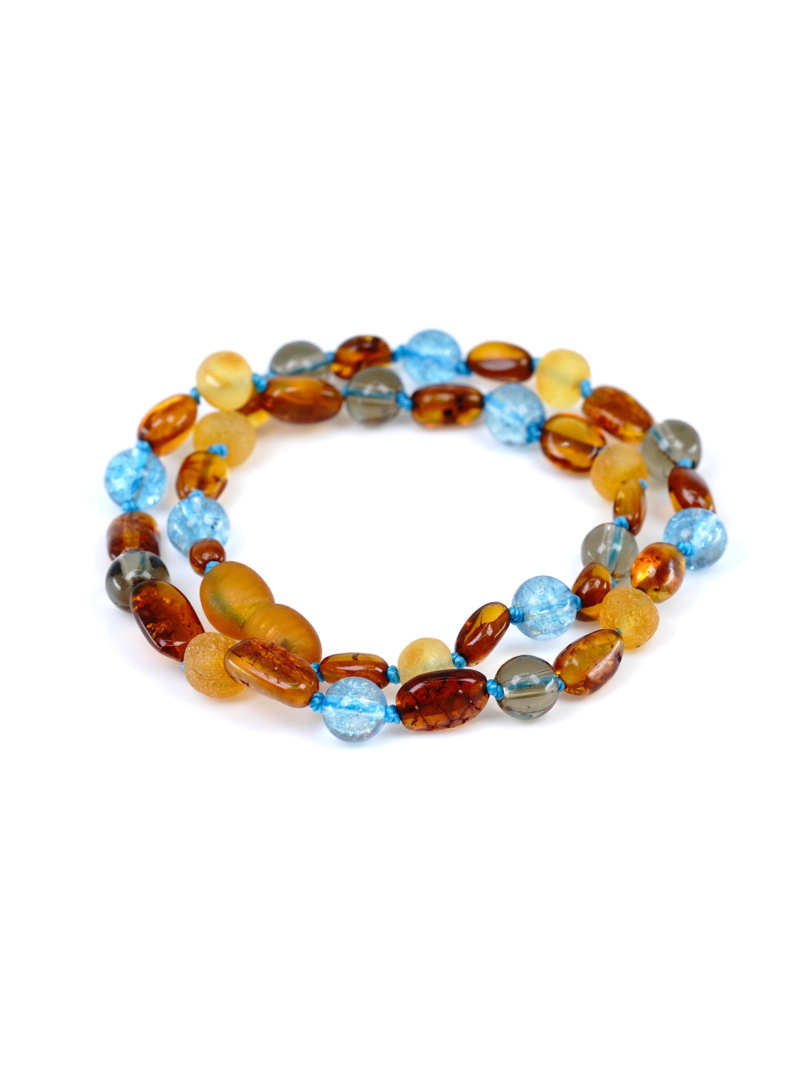
The Truth About Amber Necklaces for Newborns
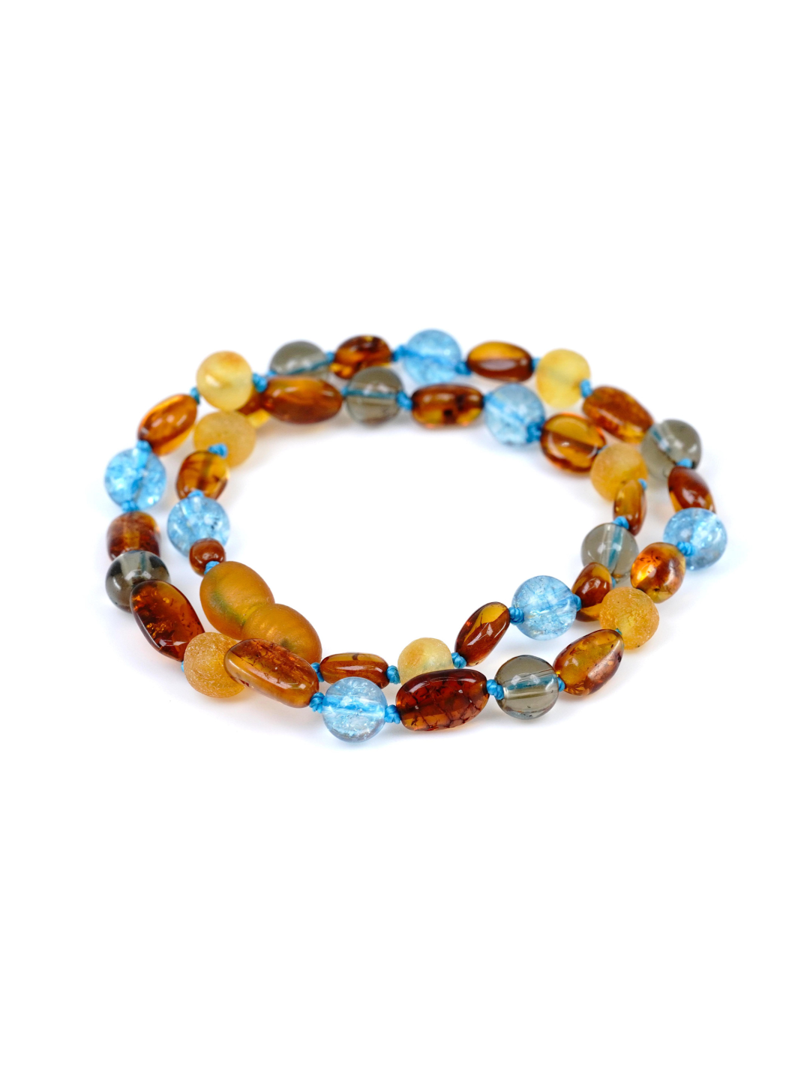
Amber necklace newborn products have become increasingly popular among parents seeking natural solutions for teething discomfort. However, major health authorities including the FDA and American Academy of Pediatrics strongly warn against using any jewelry on infants due to serious strangulation and choking risks.
Key Facts About Amber Necklaces for Newborns:
- Safety Risk: Suffocation is the leading cause of death for children under age 1
- Effectiveness: Succinic acid only releases from amber at 200°C (392°F), far above body temperature
- Medical Consensus: No scientific evidence supports teething pain relief claims
- Recommendation: Never allow newborns to wear necklaces during sleep or unsupervised
At the park, at the store, at day care—wherever babies are found, you might see youngsters wearing amber teething necklaces. Parents are drawn to these golden beads with promises of natural pain relief and centuries of traditional use. The reality is more complex.
The marketed benefits simply don't hold up to scientific scrutiny. Baltic amber sellers claim the fossilized resin releases succinic acid when warmed by skin contact, providing natural pain relief. But research from Texas Children's Hospital shows amber must reach nearly 400°F to release these compounds—impossible through body heat alone.
Even more concerning are the documented dangers. An 18-month-old child died of strangulation after falling asleep wearing an amber necklace. A 7-month-old was hospitalized after choking on broken beads. These aren't isolated incidents—they represent a pattern of preventable tragedies.
This doesn't mean all amber jewelry is dangerous or that parents seeking natural remedies are wrong. It means we need honest, evidence-based information to make informed decisions about our children's safety.
I'm Gabriel Ciupek, President of Midwest Amber with years of experience in authentic Baltic amber jewelry. Throughout my work with amber necklace newborn products and safety concerns, I've learned that education matters more than marketing when it comes to infant wellbeing.
Amber necklace newborn word list:
Understanding the Amber Necklace Newborn Trend
When we talk about an amber necklace newborn trend, we are looking at a practice that has spanned centuries. Amber isn't actually a stone; it is fossilized resin from ancient Scandinavian conifers that lived roughly 44 million years ago. Because it is organic, it feels warm and light against the skin, unlike cold gemstones or glass.
The primary marketing claim is that Baltic amber contains succinic acid, a natural substance that supposedly leaches into the baby's bloodstream to provide analgesic (pain-killing) and anti-inflammatory effects. Retailers often suggest these necklaces can soothe not just teething, but also colic, reflux, and skin irritations. This promise of a "natural" fix is exactly Why Every Mom is Talking About Amber Necklaces today.
Identifying an Authentic Amber Necklace Newborn Product
If you are looking for genuine amber, you must look toward the Baltic Sea region. Authentic Baltic amber is primarily sourced from Poland and Lithuania. Because of the popularity of the amber necklace newborn market, counterfeit products made of plastic, copal (young resin), or glass are common.
To ensure you have the real thing, we recommend a few simple tests:
- The Saltwater Test: Mix one part salt with two parts water. Real amber floats; plastic and glass sink.
- The Static Test: Rub the amber against a cloth for 20-60 seconds. Real amber becomes electrostatically charged and will pick up tiny bits of paper or dust.
- The Scent Test: When heated slightly (by rubbing vigorously), genuine amber should emit a faint, pleasant pine-resin smell.
For those interested in the craftsmanship behind these items, you can explore An Essential Guide to Sterling Silver Amber Necklaces to understand how amber is set for adult wear.
Why Parents Choose an Amber Necklace Newborn
Many parents in our local communities—from Arlington Heights to Schaumburg—prioritize holistic parenting. They want to avoid synthetic chemicals and numbing gels. Amber necklaces offer a beautiful aesthetic appeal and are often seen as a "rite of passage" in certain natural parenting circles. Some parents also believe the beads provide sensory stimulation for babies.
Finding the right look for your child is part of the appeal, as seen in guides like Dangle and Delight: The Best Amber Necklaces for Every Style. However, as experts in the industry, we must balance this aesthetic desire with the hard scientific facts.
Do Amber Teething Necklaces Actually Work?
This is the million-dollar question. While thousands of parents swear by them, the scientific evidence is lacking. The theory relies on the release of succinic acid. However, succinic acid is only released from Baltic amber at very high temperatures—close to 200 degrees Celsius (392 degrees Fahrenheit). Your baby's skin temperature is nowhere near this threshold.
Furthermore, there is no evidence that succinic acid can be absorbed through human skin in quantities large enough to act as a painkiller. Many pediatric experts, including those from Stanford Medicine on teething discomfort, suggest that any perceived benefit may be a placebo effect or simply a coincidence, as teething symptoms naturally wax and wane.
| Amber Marketing Claim | Scientific Fact |
|---|---|
| Releases succinic acid via skin warmth | Requires 392°F (200°C) to release oils |
| Natural pain relief for teething | No clinical evidence of analgesic effect |
| Safe for newborns to wear 24/7 | High risk of strangulation and choking |
| Absorbed through the skin | No proof of skin permeability for succinic acid |
Critical Safety Risks for Infants and Newborns
The risks associated with an amber necklace newborn are not theoretical; they are documented by the FDA and the American Academy of Pediatrics (AAP). The primary dangers are:
- Strangulation: A necklace can catch on a crib corner, a toy, or even the baby’s own arm, cutting off their airway.
- Choking: If the string breaks, the small beads become immediate choking hazards. The FDA reported a case where a 7-month-old baby choked on beads from a wooden teething bracelet and required hospitalization.
- Suffocation: Suffocation remains the leading cause of death for children under the age of 1.
The official FDA warning on teething jewelry is clear: these products should not be used for teething relief. The emotional weight of these risks is best understood through Baby Deacon's Story: The Real Risks of Amber Teething Necklaces, a tragic account of a child who was strangled by a necklace during a nap.
Real-Life Incidents and Case Studies
In 2018, the FDA released an official warning following reports of a 18-month-old child who died of strangulation after falling asleep while wearing an amber teething necklace. There are also numerous reports of "faulty claims" where breakaway clasps—marketed as safety features—failed to release under pressure.
When a bead breaks off, it is the perfect size to block an infant's small airway. This is why we urge parents to read the Warning: What Every Parent Needs to Know About Amber Teething Necklaces before making a purchase for a newborn.
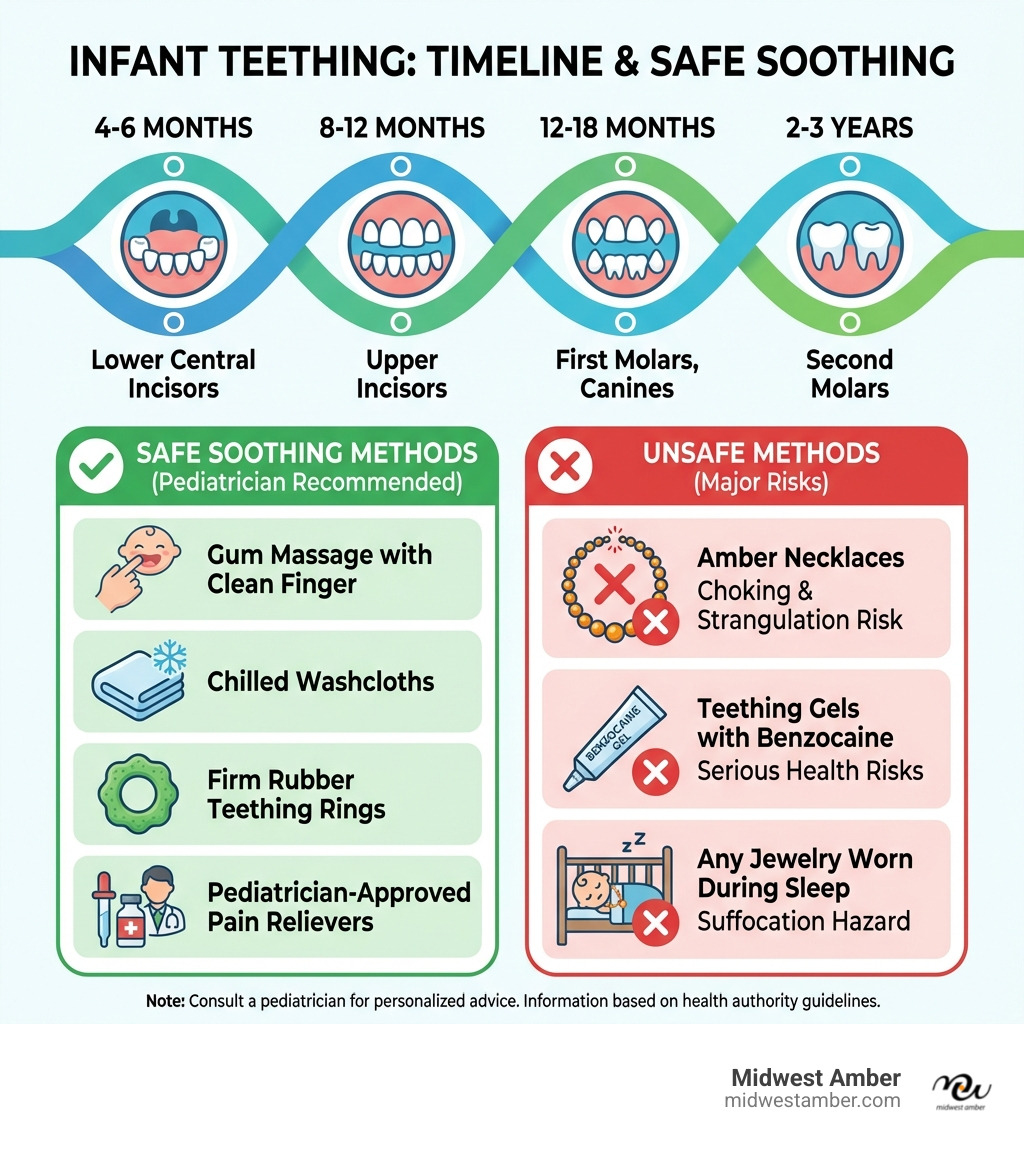
Safe Practices for Soothing Your Baby
If you are dealing with a fussy, drooling newborn, there are proven, safe alternatives to the amber necklace newborn. Health experts recommend:
- Gum Massage: Use a clean finger to gently rub your baby's sore gums. The pressure provides significant relief.
- Chilled Washcloths: A damp washcloth placed in the fridge (not the freezer, as frozen cloth can bruise delicate gums) is a classic, safe remedy.
- Teething Toys: Use firm rubber or plastic teething rings that are BPA-free.
- Consult a Professional: For severe pain, talk to your pediatrician about appropriate doses of acetaminophen or ibuprofen.
The AAP guide on teething necklaces provides a comprehensive list of these safer methods. If you still choose to use a necklace for fashion or sensory purposes, you must be extremely vigilant, as discussed in Beyond the Bite: Finding the Perfect Teething Necklace for Your Little One.
Best Practices for Using an Amber Necklace Newborn Safely
If you decide to use an amber necklace newborn product, you must follow these non-negotiable safety rules:
- Always Supervise: Never leave a baby alone with a necklace.
- Remove for Sleep: Always take the necklace off for naps and nighttime.
- Check the Construction: Ensure the necklace is "double-knotted," meaning there is a knot between every single bead so they won't scatter if the string breaks.
- Consider the Ankle: Many parents choose to wrap the necklace around the baby's ankle under a sock, which reduces the strangulation risk compared to wearing it around the neck.
For more on the debate regarding safety, see Think Amber Teething Necklaces Are Safe? Think Again.
Frequently Asked Questions about Amber Necklaces
Can newborns wear amber necklaces while sleeping?
No. Newborns should never wear any jewelry while sleeping. The risk of strangulation is highest when a child is unattended in a crib or bassinet. The AAP and FDA are unanimous on this: remove all necklaces, bracelets, and bibs before sleep. For a deeper dive into these hazards, read Beyond the Hype: Unpacking the Risks of Amber Teething Necklaces.
Does succinic acid really absorb through the skin?
There is no scientific evidence that succinic acid is absorbed through human skin from amber beads. As noted earlier, the acid is trapped within the fossilized resin and requires extreme heat to be released. The FDA consumer update on teething safety emphasizes that products containing benzocaine or unproven "natural" acids are not recommended for infants.
What should I do if I already bought an amber necklace?
If you've already purchased an amber necklace newborn product, perform a safety inspection immediately. Check the clasp strength and the knots between beads. If you choose to keep it, use it only during supervised waking hours or consider using it as a decorative keepsake rather than a wearable item. You can also explore Beyond the Beads: Unpacking the Truth About Amber Teething Anklets to see if an anklet might be a more comfortable (though still supervised) option for your family.
Conclusion
At Midwest Amber, we take pride in our 20 years of experience providing handcrafted, genuine Baltic amber. We believe in the beauty and history of this ancient resin, but we also believe in informed parenting and putting safety first. Whether you are in Chicago, Naperville, or Elk Grove Village, your child's wellbeing is the top priority.
While an amber necklace newborn product is a traditional choice for many, it must be used with extreme caution and an understanding of the scientific realities. Always prioritize supervised, evidence-based soothing methods for teething. When you are ready to explore authentic, certified amber for yourself or your older children, we invite you to Shop Baltic Amber Collections.

Leave a comment
This site is protected by hCaptcha and the hCaptcha Privacy Policy and Terms of Service apply.