

Is an Amber Necklace Safe? What Every Parent and Jewelry Lover Needs to Know
Amber necklace safety is a topic that matters deeply — and the answer looks very different depending on who is wearing one.
Here is the short version:
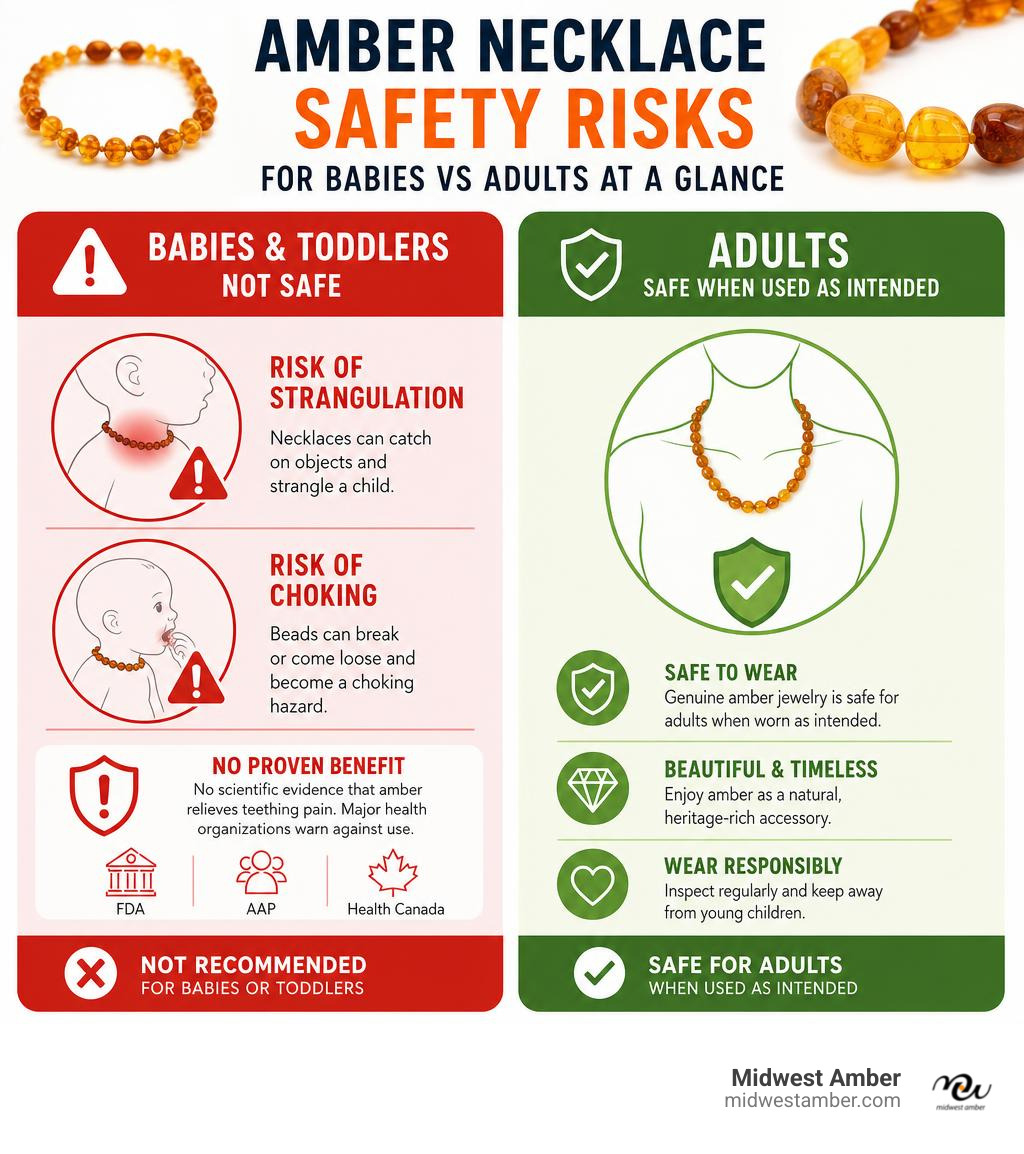
- For babies and toddlers: Amber teething necklaces are not safe. The FDA, American Academy of Pediatrics (AAP), and Health Canada all warn against them due to real risks of strangulation and choking — including at least one documented infant death.
- For adults: Genuine Baltic amber jewelry worn as intended is safe and can be enjoyed responsibly as a beautiful, heritage-rich accessory.
- Do they relieve teething pain? No. There is no scientific evidence that amber releases succinic acid at body temperature or that it reduces teething discomfort in any way.
Scroll through any parenting group or social media feed in May 2026 and you will still see babies wearing small amber bead necklaces, often marketed as a natural remedy for teething pain. The claims sound appealing: no drugs, no side effects, just ancient Baltic resin doing its work. But the medical evidence tells a very different story — and the safety data is alarming enough that major health organizations have issued formal warnings.
At the same time, genuine Baltic amber remains one of the world's most treasured natural materials, with thousands of years of history behind it. The distinction between infant teething jewelry and adult amber jewelry is critical, and that is exactly what this guide unpacks.
I'm Gabriel Ciupek, President of Midwest Amber, with years of hands-on experience sourcing and working with genuine Baltic amber jewelry — which is precisely why amber necklace safety is something I take seriously enough to address directly and honestly. In the sections below, I'll walk you through what the science says, what the risks are, and how adults can continue to enjoy authentic amber responsibly.
Discover more about Amber necklace safety:
Amber necklace safety: the truth for babies, children, and adults
When we evaluate safety risks, we must draw a clear, non-negotiable line between adult fashion and infant wear. Baltic amber is a gorgeous, fossilized organic material, but it was never meant to be placed around the neck of a baby.
At Midwest Amber, our Polish and Lithuanian heritage runs deep. We love the warmth, history, and craftsmanship of genuine Baltic amber, but we love children more. While we celebrate the timeless beauty of handcrafted jewelry for adults, we stand firmly with pediatricians, researchers, and safety advocates: infants should never wear teething jewelry.
What amber teething necklaces are and what manufacturers claim
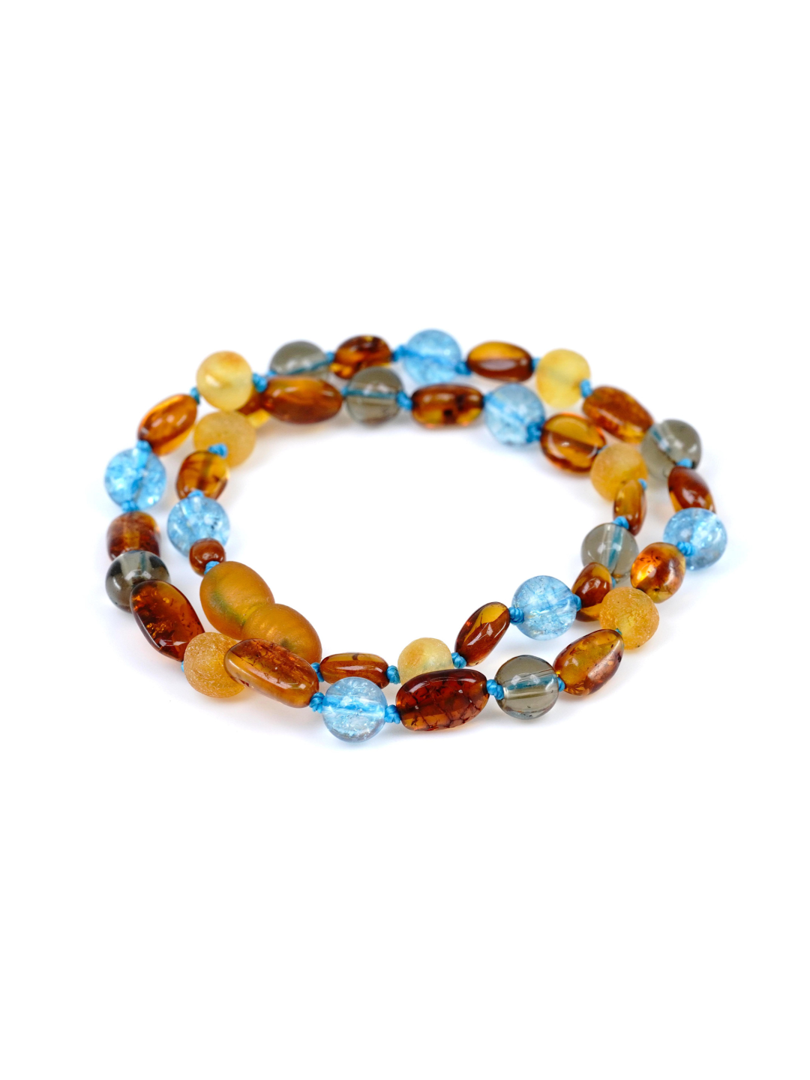
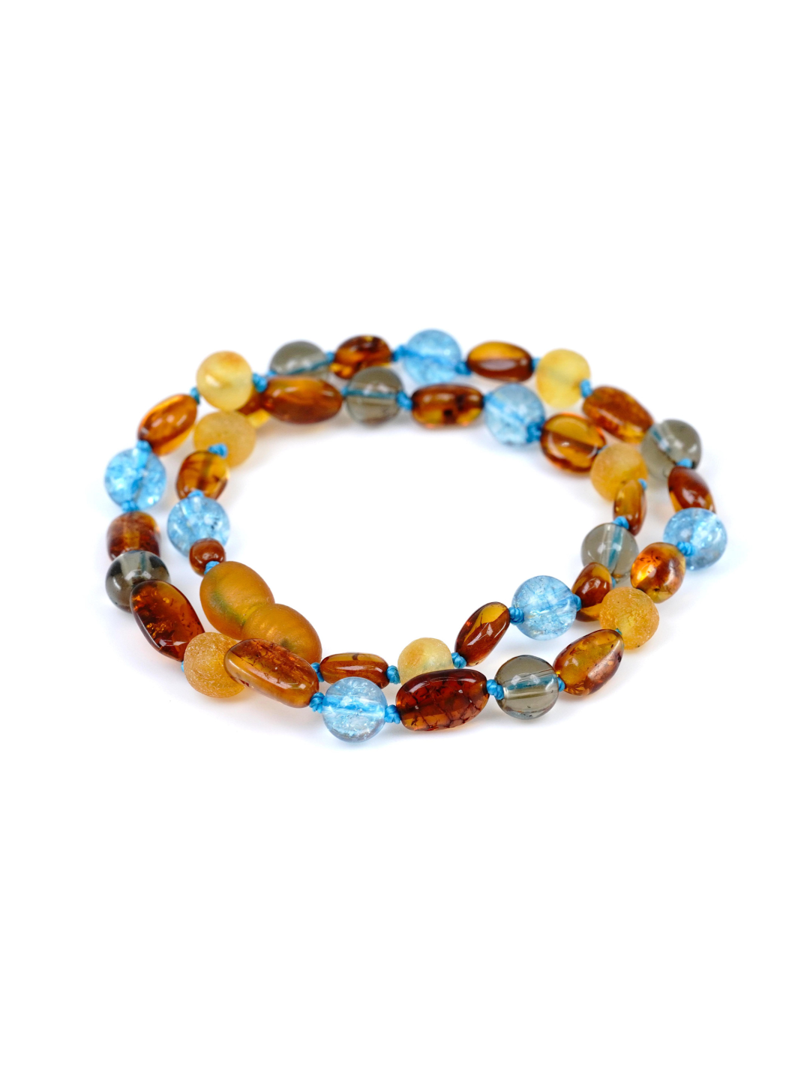
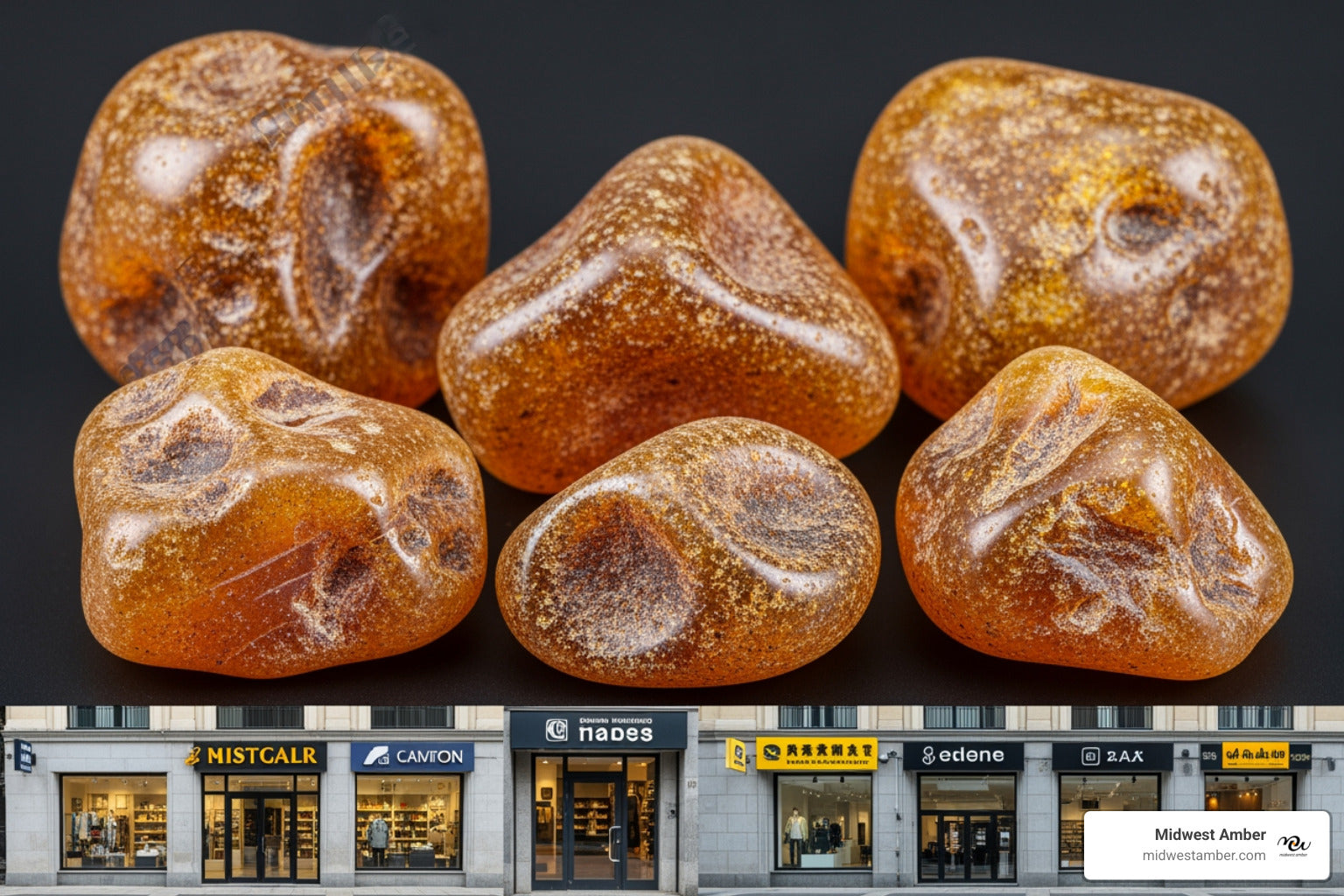
Amber teething necklaces are typically small strands of polished or raw Baltic amber beads, usually sized around 11 to 12 inches to fit snugly around a baby's neck. Baltic amber is not actually a stone, rock, or gem; it is the fossilized resin of ancient trees that grew millions of years ago.
Manufacturers and sellers of these products often claim that when the beads are worn against the skin, the baby's natural body heat warms the amber. This warming, they claim, causes the amber to release trace amounts of an oil containing succinic acid. According to these marketing claims, this acid is absorbed through the skin, acting as a natural analgesic (pain reliever), anti-inflammatory, and anti-fever remedy that curbs drooling and eases the pain of erupting teeth.
Some sellers suggest that if parents are worried about the neck area, they can use an anklet or bracelet instead. However, whether worn as a necklace, anklet, or bracelet, the fundamental marketing premise remains the same: that fossilized resin can act as a transdermal drug delivery system for teething pain. As we will see, this premise is not supported by science.
Why adult amber jewelry is different from infant teething jewelry
So, why is a Baltic amber necklace perfectly safe for an adult but highly dangerous for an infant? It comes down to basic human anatomy, developmental stages, and behavioral patterns.
- Airway Protection: An adult has a fully developed, rigid airway and the physical strength to remove an object that is constricting their neck. An infant's airway is incredibly soft, narrow, and easily compressed. A small amount of tension on a baby's neck can occlude their airway in seconds.
- The Choking Instinct: Babies explore the world with their mouths. Everything goes straight to the tongue and gums. If a necklace breaks, an infant will naturally try to swallow the loose beads. An adult, hopefully, does not have this habit.
- Supervision and Sleep: Adults do not wear jewelry during unsupervised naps or overnight sleep. Infants sleep frequently throughout the day, often in cribs, car seats, or playpens where a necklace can easily snag on a corner post, a toy, or a strap.
For adults, genuine Baltic amber is a safe, stunning way to connect with natural history. Whether you are exploring our Amber Necklace Women Guide 2026 or browsing styles for men in our Amber Necklace Men guide, adult jewelry represents beauty, heritage, and artistic expression — not a medical device for a vulnerable child.
Do amber teething necklaces work? What the science says
As a company dedicated to authentic Baltic amber, we believe in honoring the true qualities of this material. Part of that honor means debunking myths. The claim that amber teething necklaces relieve pain is a modern folk myth that lacks any credible scientific backing.
The succinic acid theory: why the claim does not hold up
The entire marketing framework for amber teething necklaces relies on succinic acid. It is true that Baltic amber naturally contains 3% to 8% succinic acid. In fact, succinic acid was first purified from amber in 1546 by the German chemist Georgius Agricola. It is also true that succinic acid is a naturally occurring compound found in human cells, playing a role in our metabolic processes.
However, the leap from "amber contains succinic acid" to "wearing a necklace cures teething pain" completely falls apart under scientific scrutiny:
- The Temperature Barrier: Baltic amber is incredibly stable. To get Baltic amber to release succinic acid, you have to heat it to approximately 200°C (392°F to 400°F). A baby's normal body temperature is 37°C (98.6°F). Unless your baby has reached a biologically impossible temperature, the amber beads will not release any succinic acid.
- The Skin Barrier: Even if succinic acid could magically evaporate from the fossilized resin at body temperature, there is no evidence that it can penetrate the human skin barrier in therapeutic amounts.
- No Proven Pain Relief: There are no peer-reviewed clinical studies demonstrating that succinic acid, even if applied directly to the skin, has any analgesic or anti-inflammatory effect on teething gums. In fact, on safety data sheets, concentrated succinic acid is actually classified as a skin and eye irritant.
For a deeper dive into the medical community's perspective, you can read the Clinical discussion of amber teething necklace risks, which highlights how these scientific realities are discussed by pediatricians.
Amber necklace safety and scientific evidence for pain relief
If there is no scientific basis for the succinic acid theory, why do so many parents swear that these necklaces work?
The answer lies in two powerful factors: the placebo effect (specifically, placebo-by-proxy, where parents perceive their baby is in less pain because they want the remedy to work) and the natural timeline of teething.
Teething is a self-limiting process. Discomfort typically peaks for just 3 to 4 days before a tooth erupts and 3 days after. If a parent puts a necklace on a baby during a fussy phase, and the baby naturally calms down a couple of days later as the tooth breaks through, the necklace gets the credit.
In research published on the Use of amber teething necklaces in children, investigators found no objective proof of pain relief, emphasizing that parental belief in these necklaces is driven by marketing and cultural trends rather than clinical reality. If you want to understand what amber can realistically do as a beautiful, natural material for adult wear, explore our Amber Necklace Benefits Complete Guide.
Documented risks: strangulation, choking, and broken-bead hazards
While the benefits of amber teething necklaces are non-existent, the risks are tragically real. Pediatricians and emergency room doctors warn that placing any cord, necklace, or band around an infant's neck presents a two-fold hazard: strangulation and choking.
Breakaway clasps, knots, and “safety features”: what testing found
Many manufacturers of teething necklaces try to reassure anxious parents by highlighting "safety features." They claim their necklaces are designed with "breakaway" pop clasps that open under pressure, or screw clasps that are too secure for a baby to undo. They also emphasize that each bead is individually knotted on the strand, so if the string breaks, only one bead will fall off.
While individual knotting does limit the number of loose beads if a cord snaps, scientific testing has shown that these safety clasps provide a false sense of security.
In a landmark PubMed study on amber teething necklace hazards, researchers quantitatively assessed the breakaway force of various teething necklaces sold on the market and compared them to safety standards:
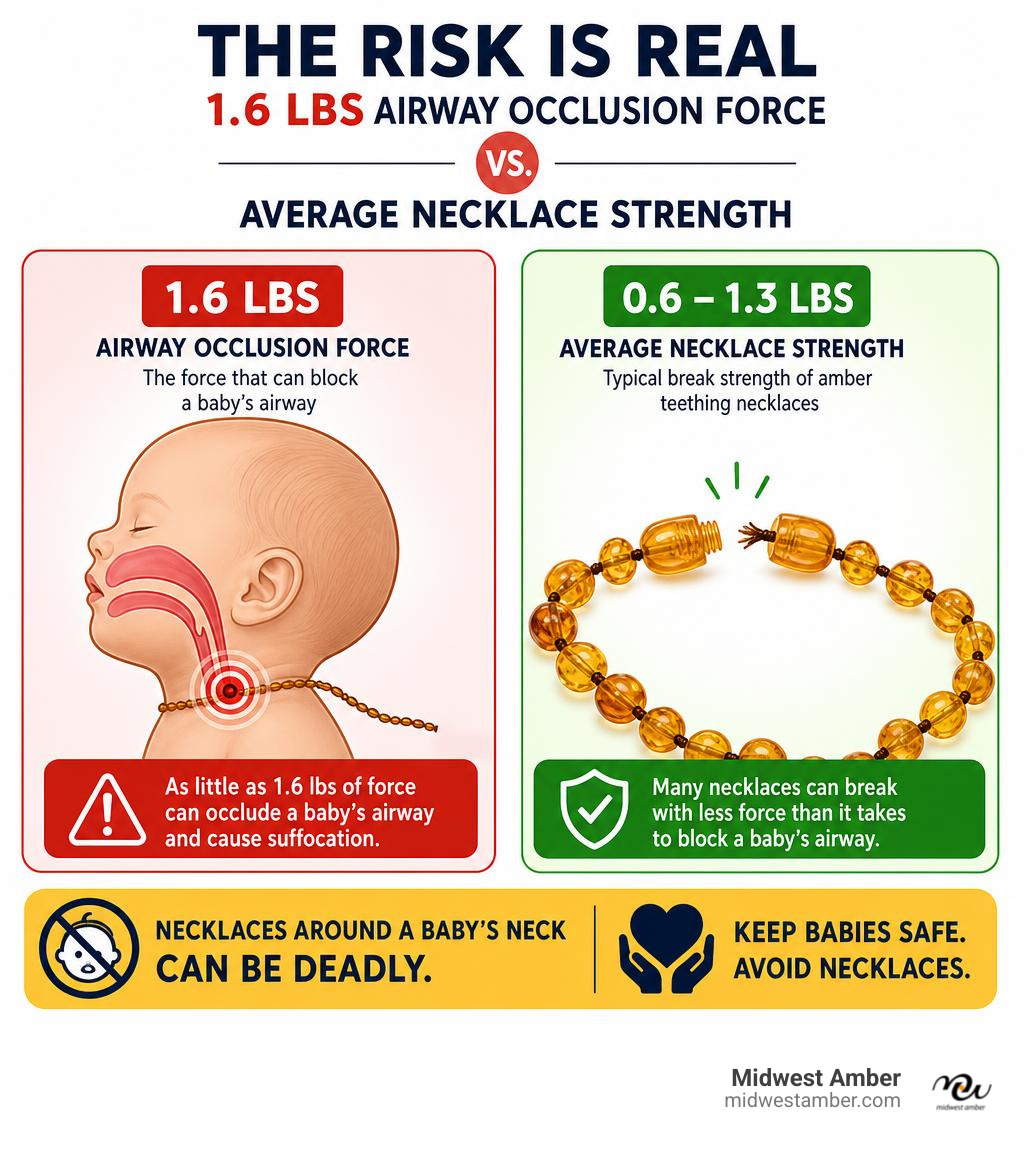
- The ASTM Standard: The ASTM F2923-11 standard for children's jewelry states that a necklace must break or release at a force of 15 pounds to prevent strangulation. In the study, nearly 50% of the tested amber necklaces failed to open under this 15-pound threshold.
- The Airway Occlusion Threshold: Even more alarming, pediatric clinical data shows that it takes a mean force of only 1.6 pounds of tension to occlude a young child's airway. When tested, 80% of the amber teething necklaces failed to open at 1.6 pounds.
This means that even if a clasp eventually pops open under heavy force, it requires far more tension than is needed to completely cut off a baby's breathing. For a comprehensive look at the raw data, you can read the full Research on amber necklace strangulation risk.
Reported injuries and deaths linked to teething jewelry
These statistics are not just theoretical numbers in a lab; they represent real tragedies. The FDA and pediatric hospitals have documented severe injuries and deaths directly linked to these products.
The most prominent tragedy occurred when an 18-month-old toddler was strangled to death by an amber teething necklace during a nap at a daycare facility. The necklace did not break, and the clasp did not release. In other documented cases, infants have suffered nonfatal strangulations, presenting to emergency rooms with petechial rashes (tiny broken blood vessels in the skin of the face and neck) after their necklaces became caught on crib slats or car seat straps.
Furthermore, there are numerous reports of children choking on loose amber beads after successfully pulling on a necklace and snapping the cord.
To read more about these heartbreaking real-world warnings, we encourage parents to review Baby Deacon's Story: The Real Risks of Amber Teething Necklaces and our detailed editorial, Warning: What Every Parent Needs to Know About Amber Teething Necklaces.
What major health organizations recommend—and what to use instead
Because the risks of teething jewelry are so severe and the benefits are unproven, global health authorities are unanimous in their advice.
Current FDA, AAP, and Health Canada guidance
In December 2018, the FDA released an official, urgent safety communication alerting parents, caregivers, and healthcare providers to the extreme risks of teething jewelry. The FDA's warning came after receiving multiple reports of serious injuries, choking incidents, and deaths.
The consensus among major health organizations is clear:
- FDA (Food and Drug Administration): Recommends that parents avoid using any teething jewelry, including necklaces, bracelets, or anklets made of amber, silicone, wood, or marble.
- AAP (American Academy of Pediatrics): Strongly advises against infants wearing any jewelry around their necks or wrists. They emphasize that suffocation is the leading cause of death for children under a year old, and among the top five causes of death for children between the ages of 1 and 4.
- Health Canada: Recommends that children under three years of age should never wear a necklace, string, ribbon, or chain of any kind due to strangulation risks.
If you would like to read more about these institutional warnings, Nationwide Children's Hospital provides an excellent breakdown in their article on the Dangers of Amber Teething Necklaces.
Safer teething remedies pediatricians recommend
If amber necklaces are off the table, how can you help your teething baby? Fortunately, there are several safe, evidence-based, pediatrician-approved alternatives that actually work:
- Chilled Washcloth: Wet a clean washcloth, wring it out, and pop it in the refrigerator (or the freezer for just a few minutes so it doesn't freeze solid). The cold, textured fabric is highly soothing to inflamed gums.
- Firm Rubber or Silicone Teething Toys: Choose solid, single-piece teethers made of food-grade silicone or rubber. Avoid teethers filled with liquid, as they can puncture, and avoid teethers made of porous materials like wood or cheap plastics that cannot be easily sterilized.
- Gum Massage: Wash your hands thoroughly and use a clean finger to gently but firmly massage your baby's swollen gums. The counter-pressure provides instant relief.
- Cold Pacifier: Keep a spare pacifier in the refrigerator to offer a cool chewing surface.
- Over-the-Counter Pain Relief: If your baby is highly distressed and unable to sleep, consult your pediatrician about using infant acetaminophen (Tylenol) or, if they are over six months old, infant ibuprofen (Motrin). Always follow your doctor's exact dosage instructions.
Note: Pediatricians strongly warn against using homeopathic teething tablets (which may contain inconsistent amounts of toxic belladonna) or numbing gels containing benzocaine, which can cause a rare but life-threatening blood disorder called methemoglobinemia.
| Remedy Type | Safety Status | Effectiveness | How It Works |
|---|---|---|---|
| Amber Teething Necklace | Dangerous (High Risk) | Unproven / None | Theoretical transdermal absorption (requires 200°C to release) |
| Chilled Washcloth | Very Safe | High | Cold therapy and counter-pressure on gums |
| Solid Silicone Teether | Very Safe | High | Safe chewing surface; easy to sanitize |
| Gum Massage (Clean Finger) | Very Safe | High | Instant counter-pressure relief |
| Infant Acetaminophen | Safe (with MD guidance) | Very High | Systemic pain relief for severe discomfort |
How to choose and wear genuine Baltic amber jewelry safely beyond teething
Now that we have established that amber has no place around a baby's neck, let's talk about the good news: adults can enjoy Baltic amber jewelry with complete peace of mind!
At Midwest Amber, we handcraft beautiful, genuine Baltic amber jewelry sourced ethically from Poland and Lithuania. For adults, wearing amber is a safe, delightful experience. Amber is warm to the touch, incredibly lightweight, and carries a rich cultural history.

Amber necklace safety for adults and older wearers
Even for adults, practicing basic jewelry care and safety is always a smart idea. Here are some simple guidelines to ensure your amber jewelry remains in pristine condition and is worn safely:
- Remove Before Sleep: Just like any other necklace, it's best to take off your amber jewelry before going to bed to prevent tangling or accidental tugging.
- Keep Away from Toddlers: If you have small children or grandchildren, your adult amber jewelry is made of small parts. When you are not wearing your necklaces, pendants, or bracelets, store them safely out of reach of curious little hands.
- Inspect Your Clasps: Regularly check the clasps on your necklaces and bracelets to make sure they are secure. If you are wearing a delicate pendant, ensure the bail is firmly attached.
- Remove During Active Sports: Because Baltic amber is a natural organic resin, it is relatively soft (ranking around 2.5 on the Mohs hardness scale). To prevent scratches or damage, remove your jewelry before hitting the gym or playing sports. Learn more in our Amber Necklace Care Guide 2026.
Authenticity, craftsmanship, and care considerations
When investing in adult amber jewelry, authenticity and craftsmanship are paramount. To ensure you are getting the real deal, always look for certified authentic Baltic amber. Genuine amber often contains beautiful natural inclusions — tiny bits of ancient plant matter or prehistoric air bubbles trapped inside the resin millions of years ago.
At Midwest Amber, we work directly with experienced Polish and Lithuanian artisans who have spent decades perfecting their craft. We are proud of our heritage, and we back our jewelry with Amber Jewelry Certification so you know you are receiving 100% natural, ethically sourced amber. To learn more about how we protect the environment and support local artisan communities, check out our Amber Jewelry Ethical Sourcing Guide.
Frequently Asked Questions about amber necklaces
We know parents and jewelry lovers have a lot of questions. Here are some quick, direct answers based on scientific evidence and safety guidelines.
Are amber teething necklaces safe for babies?
No. Amber teething necklaces are not safe for babies. Major medical and regulatory bodies, including the FDA, AAP, and Health Canada, strongly advise against allowing infants or toddlers to wear any teething jewelry due to documented risks of strangulation and choking.
Do amber necklaces release succinic acid through skin contact?
No. There is no scientific evidence that Baltic amber can release succinic acid at human body temperature. Succinic acid requires temperatures of around 200°C (392°F) to be released from fossilized resin. Furthermore, there is no proof that succinic acid can be absorbed through the skin or that it provides any pain-relieving effects.
Are amber anklets safer than necklaces for teething?
No. While an anklet or bracelet removes the direct strangulation risk around the neck, it still poses a serious choking hazard. Babies can easily pull anklets off, or the cord can snap, leaving small loose beads that the baby can swallow, choke on, or inhale into their lungs. Pediatricians recommend using non-jewelry teething remedies instead. For a deeper look at this topic, read Beyond the Beads: Unpacking the Truth About Amber Teething Anklets.
Conclusion
When it comes to our children, some risks are simply not worth taking. Teething is a normal, temporary milestone. While it can be incredibly difficult to watch your little one go through discomfort, the safest path is to rely on proven, pediatrician-approved remedies like chilled washcloths, solid silicone teethers, and gentle gum massage.
However, once your children are grown, or if you are looking for a beautiful, meaningful gift for yourself or another adult, genuine Baltic amber jewelry is a magnificent choice. Handcrafted by Polish and Lithuanian artisans, our collection at Midwest Amber celebrates the natural wonder, warmth, and timeless history of authentic fossilized resin.
We invite you to celebrate this beautiful heritage safely. You can explore our exquisite range of handcrafted amber designs, learn about our rich history, or contact us to discuss custom jewelry options. Explore adult amber necklace styles in our online shop today and discover a piece of natural history crafted just for you.


Leave a comment
This site is protected by hCaptcha and the hCaptcha Privacy Policy and Terms of Service apply.