

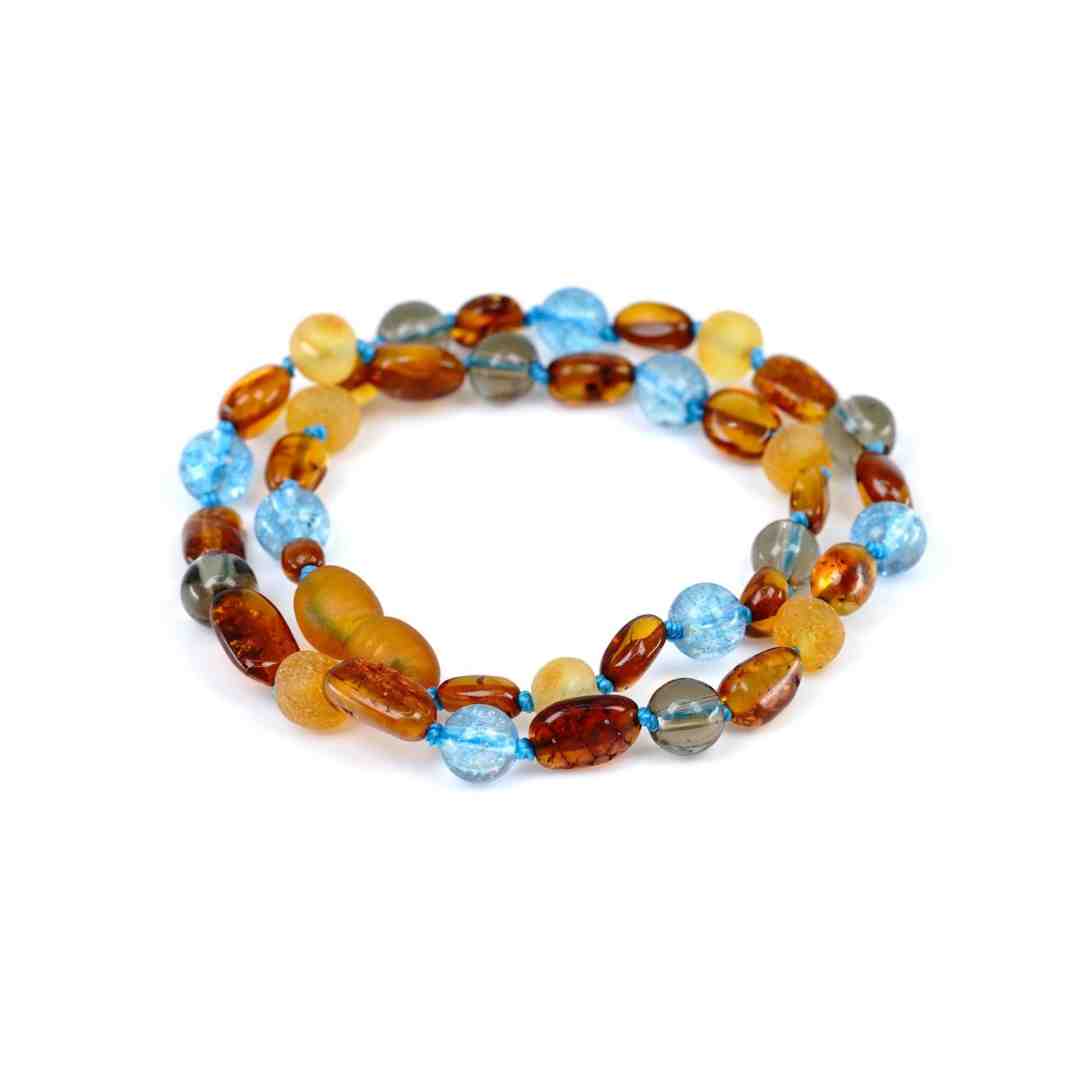
What Parents Are Buying When They Search for a Raw Amber Teething Necklace
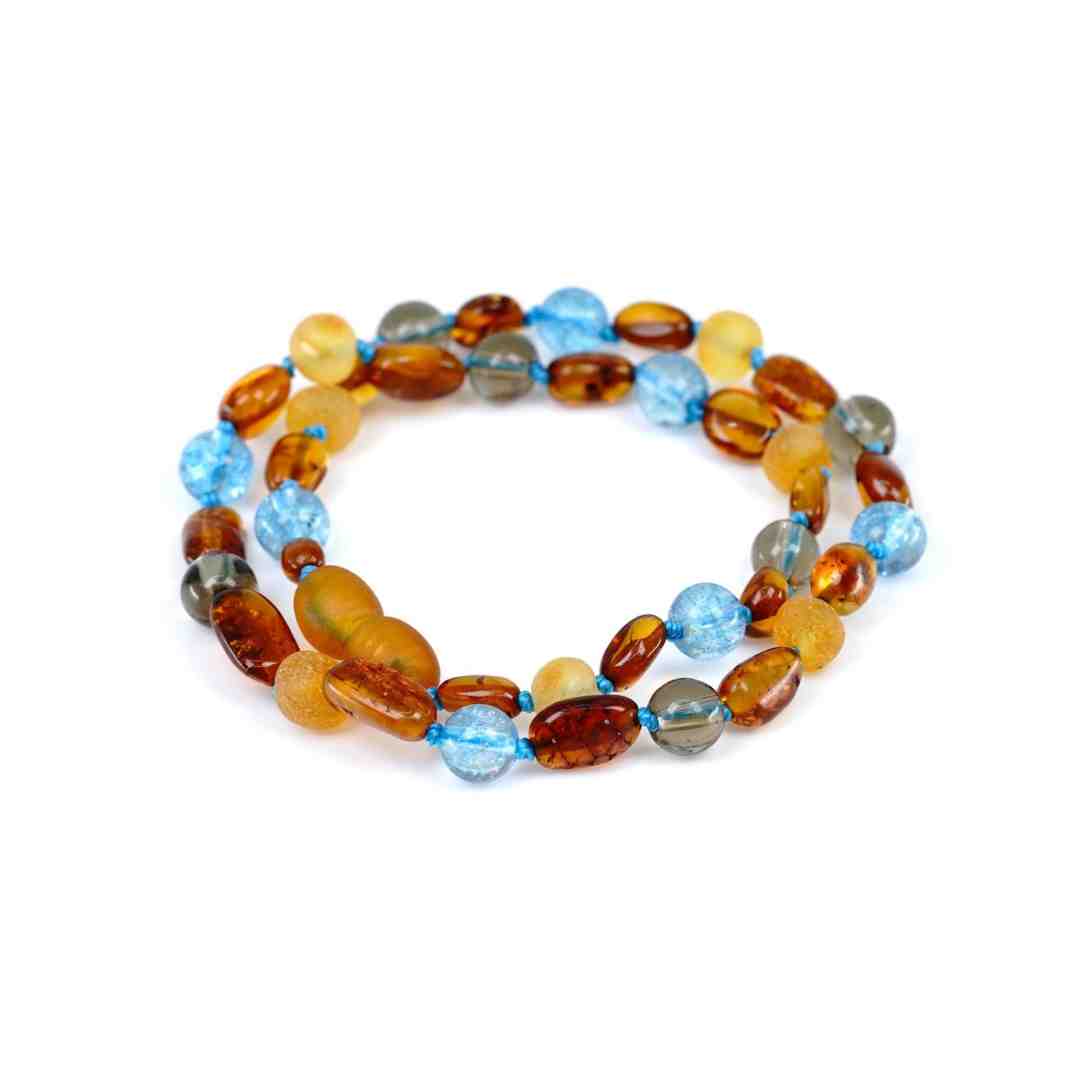
If you're looking to buy a raw amber teething necklace, here's a quick summary of what you need to know before purchasing:
- What it is: A necklace made from unpolished Baltic amber beads, worn against a baby's skin
- The claim: Body heat releases succinic acid from the amber, which is absorbed through the skin to ease teething pain
- The science: Succinic acid requires temperatures near 200°C (392°F) to release — far beyond skin temperature
- The safety risk: Real strangulation and choking incidents have been reported; the AAP and FDA both advise against these necklaces
- What works instead: Cold teething rings, gum massage, and pediatrician-approved pain relievers
Walk through any park or drop-off at daycare, and you'll spot them — tiny amber beads strung around baby necks, golden and glowing. It's a look that feels natural, ancient, and reassuring. Parents are drawn to the idea of a gentle, chemical-free fix for one of early parenthood's most exhausting challenges: teething.
Teething typically begins around 4–7 months and can bring drooling, fussiness, swollen gums, and disrupted sleep. It's no surprise that parents reach for anything that promises relief — especially something that looks as wholesome as a handcrafted amber necklace.
But behind the beautiful beads, there's an important conversation to have — about what these necklaces actually do, and what risks they carry.
I'm Gabriel Ciupek, President and owner of Midwest Amber, Inc., with years of hands-on experience sourcing and crafting genuine Baltic amber jewelry, including the raw amber teething necklace. In this guide, I'll give you the full picture — the history, the science, and the safety — so you can make a truly informed decision.
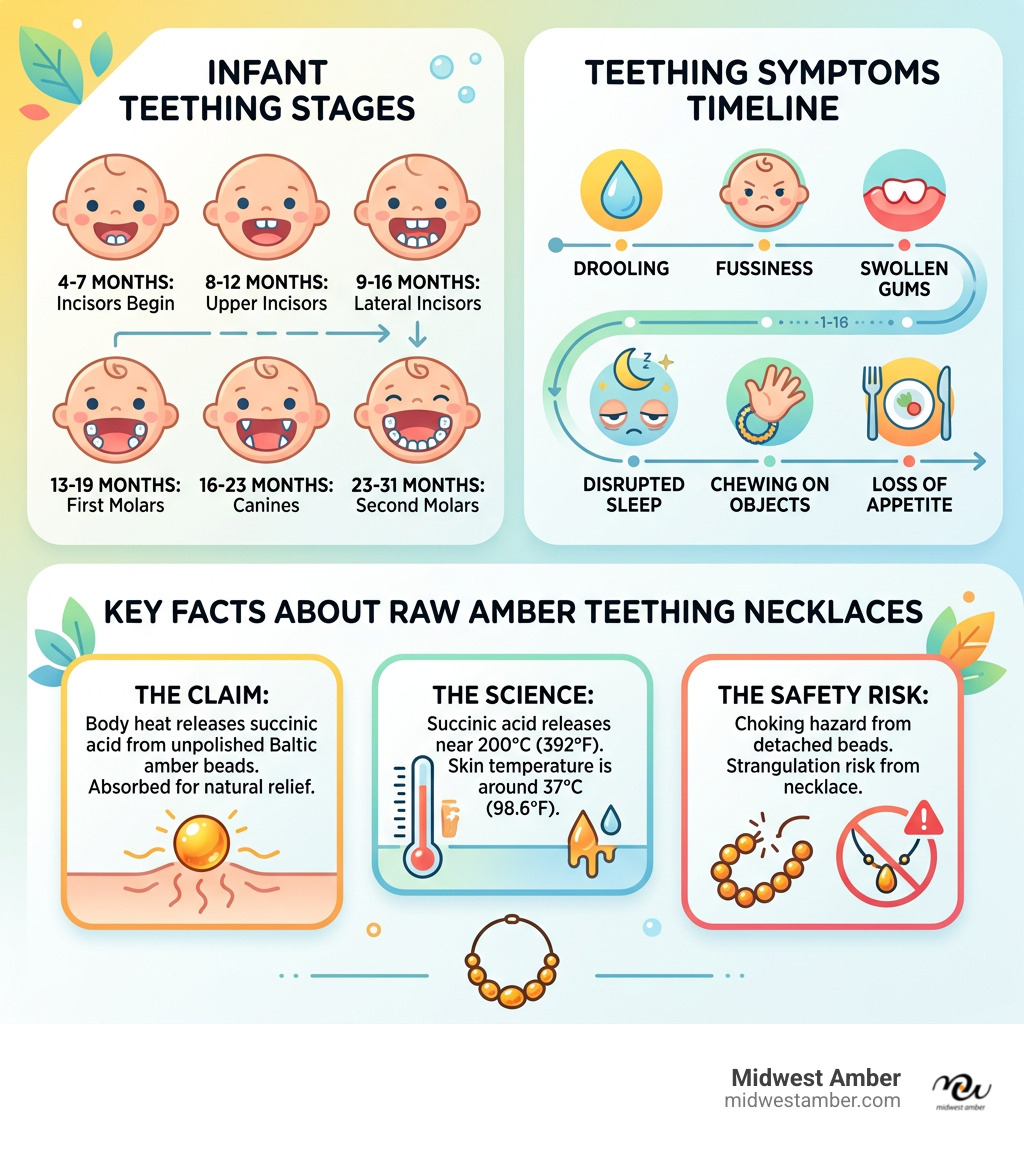
Simple guide to Raw amber teething necklace terms:
What is a Raw Amber Teething Necklace?
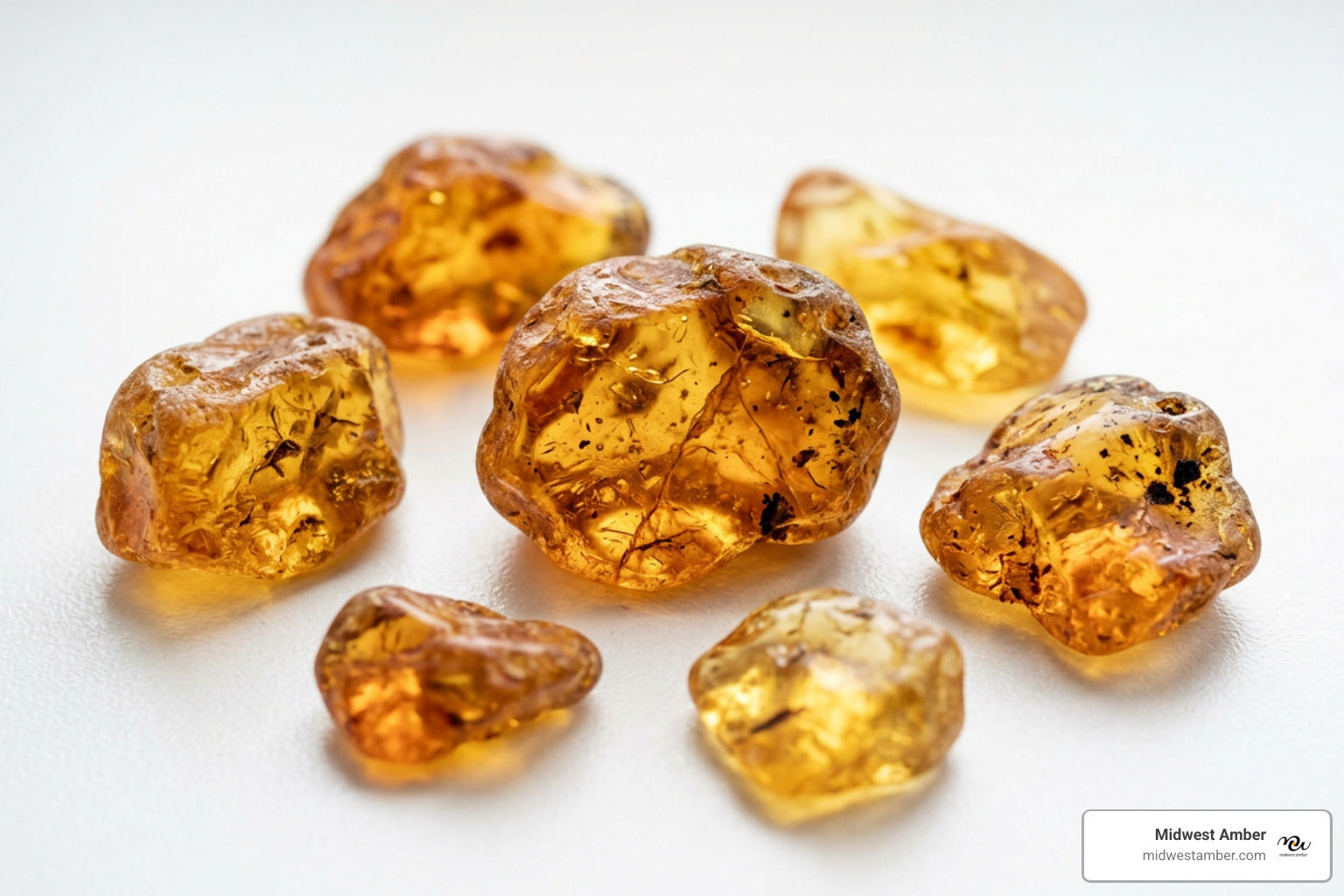
At its core, a raw amber teething necklace is a piece of jewelry handcrafted from Baltic amber. Unlike the shiny, clear beads you might see in high-end adult jewelry, "raw" amber is either unpolished or lightly tumbled, maintaining a matte, organic texture.
Baltic amber is not a stone or a gemstone in the traditional sense; it is fossilized resin from ancient conifer trees that lived over 45 million years ago. Over millennia, this resin underwent a process of polymerization and oxidation, resulting in the warm, lightweight material we see today.
The primary reason these necklaces became a household staple is the presence of succinic acid. Genuine Baltic amber contains approximately 3-8% succinic acid, a substance naturally found in the human body. However, as we explore the Scientific research on teething necklace safety risks, it becomes clear that the "how it works" part of the story is where things get complicated.
The Appeal of a Raw Amber Teething Necklace
Why do so many parents in the Chicago area and beyond choose the raw version? Much of it comes down to the aesthetic. The unpolished beads have an earthy charm that fits perfectly with the "natural parenting" lifestyle.
There is also a deep-rooted history in European folk medicine. For centuries, Baltic amber has been used as a traditional remedy for various ailments. Many sellers claim that raw amber is superior to polished amber because the "pores" of the resin are more open, supposedly allowing for better release of succinic acid. While this makes for a great marketing story, the chemical composition of the amber remains the same whether the surface is shiny or matte.
Myths Surrounding the Raw Amber Teething Necklace
The most common myth is that a baby's body temperature is sufficient to "activate" the amber. The theory suggests that as the beads warm against the skin, they release microscopic amounts of succinic acid, which is then absorbed into the bloodstream to act as a natural analgesic.
Scientific data tells a different story. Research indicates that succinic acid is only released from Baltic amber at extremely high temperatures—specifically, close to 200 degrees Celsius (392 degrees Fahrenheit). A baby’s skin temperature, which hovers around 37°C (98.6°F), is nowhere near hot enough to vaporize or release these oils. Furthermore, there is no clinical evidence to suggest that the skin can absorb succinic acid in this manner, or that it would provide pain relief if it did. For a deeper dive into these misconceptions, read our article on Beyond the Hype: Unpacking the Risks of Amber Teething Necklaces.
The Reality of Safety: Lessons from Baby Deacon
When discussing any baby product, safety must be the absolute priority. While many parents use these necklaces without incident, the risks are not just theoretical—they are documented and devastating.
The most well-known case is that of Baby Deacon. In 2016, 18-month-old Deacon Morin was strangled by his amber teething necklace during a nap at a daycare. The necklace, which was marketed as having a "breakaway" safety clasp, failed to release. This tragic incident sparked a massive wave of advocacy and led to increased scrutiny of these products.
Deacon's mother has since dedicated her life to warning other parents about the hidden dangers of these items. Her story highlights a critical flaw: even "safety" designs can fail. You can read the full account of Baby Deacon's Story: The Real Risks of Amber Teething Necklaces to understand why medical professionals are so concerned.
Understanding the Strangulation Risk
According to the CDC and other health authorities, suffocation is the leading cause of death for children under a year old and remains among the top five causes for children between ages 1 and 4.
A raw amber teething necklace poses a strangulation risk in several ways:
- Caught on Objects: The necklace can snag on a crib corner, a toy, or furniture.
- Twisting: A child can twist the necklace, or it can become tightly wound during sleep.
- Clasp Failure: Many necklaces use screw-on clasps that do not break away under pressure, or "breakaway" clasps that are too sturdy for a child's weight to snap.
The American Academy of Pediatrics (AAP) strongly warns parents against using any jewelry on infants due to these specific hazards. For more on how to navigate these risks, see our Guide to Amber Bracelet Safety.
Choking Hazards and Bead Integrity
Beyond strangulation, there is the risk of choking. Amber is a fossilized resin, which means it can be brittle. If a baby chews on the beads—which they are prone to do during teething—a bead can crack or break off.
While high-quality necklaces are hand-knotted between each bead to prevent them from scattering if the string breaks, the individual beads still represent a significant inhalation and choking hazard. SaferProducts.gov has received numerous reports regarding small parts from teething jewelry. Even if a necklace is "well-made," the inherent nature of small beads around a child who "explores with their mouth" is a dangerous combination.
Medical Consensus vs. Commercial Claims
There is a significant divide between what you see on social media and what you hear in a pediatrician's office. Commercial sellers often highlight the "natural" and "anti-inflammatory" properties of amber, while medical experts focus on the lack of evidence and the presence of danger.
| Feature | Commercial Claim | Medical Fact (AAP/FDA) |
|---|---|---|
| Pain Relief | Succinic acid reduces inflammation. | No evidence it is released or absorbed at body temp. |
| Safety | Breakaway clasps make them safe. | Necklaces have caused strangulation and death. |
| Drooling | Reduces excessive drooling. | Drooling is a natural, healthy part of development. |
| Usage | Traditional remedy used for centuries. | Ancient use does not equal modern safety standards. |
Texas Children's Hospital has been vocal about this issue, noting that for the "healing" properties of amber to even begin to work, the material would need to be heated to nearly 400°F. At that point, you'd have a much bigger problem than teething! To learn more about the medical perspective, check out our post Think Amber Teething Necklaces Are Safe? Think Again.
Why Succinic Acid Fails the Science Test
The "active ingredient" in a raw amber teething necklace is succinic acid. While it is true that Baltic amber contains this compound, the physics of how it gets from the bead into the baby just don't hold up.
As mentioned, the 392 degrees Fahrenheit threshold is the scientific requirement for vaporization. Furthermore, the human skin is an incredible barrier; it doesn't simply soak up chemicals from hard resins just by touching them. Even the FDA's consumer update on teething medicine warns that parents should avoid unproven "natural" remedies that haven't been subjected to rigorous safety testing.
The Stance of Major Health Authorities
The consensus is clear:
- The FDA: Issued an official warning in 2018 after reports of death and serious injuries.
- The AAP: Strongly advises against any teething jewelry, including necklaces, bracelets, or anklets.
- Health Canada: Has similar warnings regarding the risk of strangulation.
Despite the "calming energy" or "immune boosting" claims found on many boutique websites, health authorities prioritize the "do no harm" principle. We explore these official stances further in Unpacking the Truth About Amber Teething Anklets.
Safe Alternatives for Teething Relief (Instead of Amber)
If you decide that the risks of an amber necklace outweigh the benefits, don't worry—there are plenty of safe, effective, and evidence-based ways to soothe your little one's gums.
Non-Medicinal Soothing Techniques
The Mayo Clinic suggests several simple tips for soothing sore gums:
- Cold Items: A refrigerated (not frozen) teething ring or a cold, damp washcloth provides numbing relief. The cold helps constrict blood vessels and reduce inflammation.
- Gum Massage: Use a clean finger to gently but firmly rub your baby's gums. The counter-pressure can be very soothing.
- Rubber Teething Toys: Look for solid, one-piece rubber toys that don't have small parts or liquid centers that could leak.
- Distraction: Sometimes, a new toy, a walk in the stroller, or extra cuddle time is the best medicine for a fussy baby.
When to Consult a Pediatrician
If your baby is particularly miserable, it might be time to talk to a professional.
- Acetaminophen (Tylenol): For babies over 2 months, a doctor may recommend a specific dosage of acetaminophen.
- Ibuprofen (Advil/Motrin): Usually reserved for babies over 6 months.
- Persistent Fever: While teething can cause a slight rise in body temperature, a true fever (over 100.4°F) is usually a sign of something else and should be checked by a doctor.
Always consult your pediatrician before administering any medication to ensure the correct dosage based on your child's weight.
Frequently Asked Questions about Amber Necklaces
Can babies wear amber necklaces while sleeping?
Absolutely not. This is when the highest risk of strangulation occurs. If you choose to use one, it should only be worn while the child is fully awake and under constant, direct adult supervision. However, even with supervision, the risk remains.
Does the color of the amber affect its healing power?
No. Whether the amber is "honey," "cherry," "lemon," or "cognac," the succinic acid content remains relatively consistent (3-8%). The different colors are simply a result of where the amber was mined and how much oxygen or plant matter was trapped in the resin millions of years ago.
Is raw amber more effective than polished amber?
There is no scientific evidence to support this claim. Polishing is a surface treatment. The succinic acid is contained within the resin itself, and since neither version reaches the temperature required for release, the "effectiveness" is identical (which is to say, scientifically unproven for pain relief).
Conclusion
At Midwest Amber, we take immense pride in our handcrafted, genuine Baltic amber jewelry. We love the history of this "Sea Gold" and the way it connects us to the ancient forests of Poland and Lithuania. However, as a family-oriented company with over 20 years of experience, we believe in safety first and informed parenting.
While a raw amber teething necklace is a beautiful piece of craftsmanship, it is essential to understand that it is jewelry, not a medical device. If you are looking for a meaningful gift or a piece of heritage for an older child or adult, amber is a wonderful choice. But for a teething infant, the safest path is to stick with pediatrician-approved methods like cold rings and gum massage.
We want you to enjoy the beauty of amber responsibly. For more information on the history and care of this incredible material, check out The Ultimate Guide to Amber Jewelry. Whether you're in Chicago, Arlington Heights, or anywhere else in the Midwest, we're here to help you find the perfect, safe piece of amber for your family.

Leave a comment
This site is protected by hCaptcha and the hCaptcha Privacy Policy and Terms of Service apply.