

Understanding What Is Egg Yolk Amber: Origins and Definition
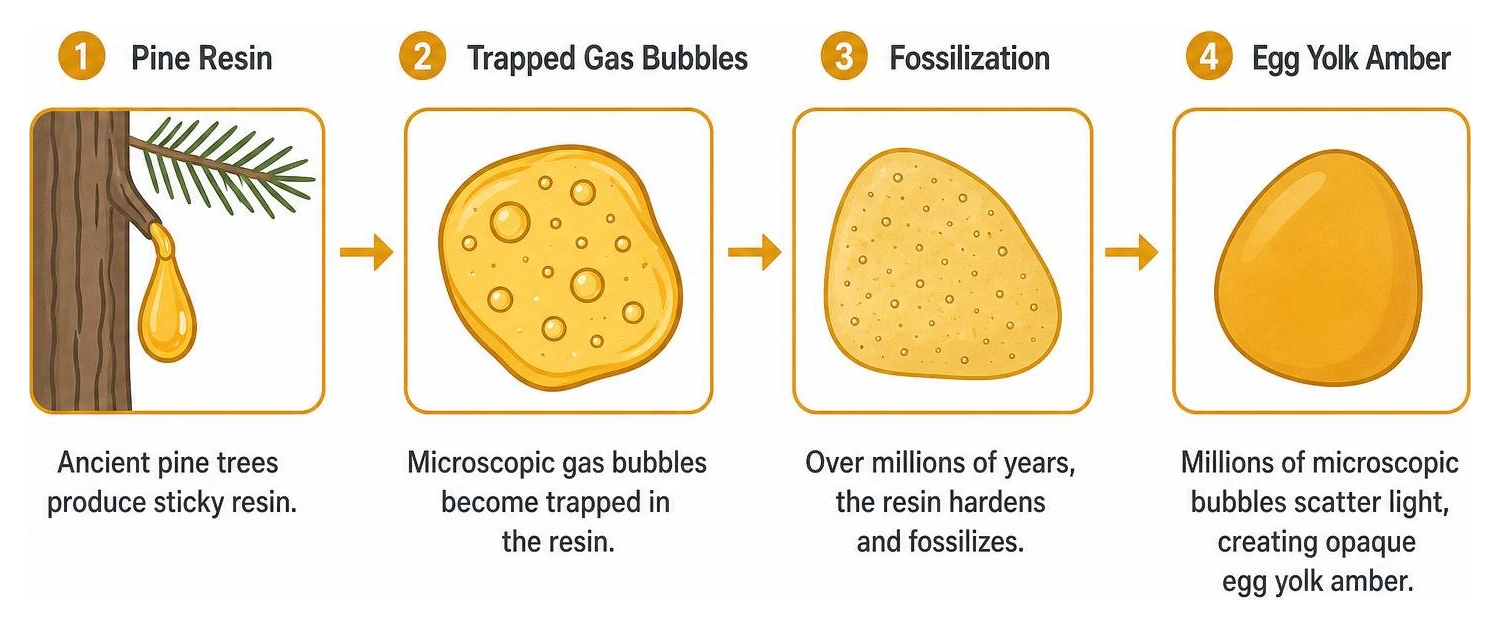
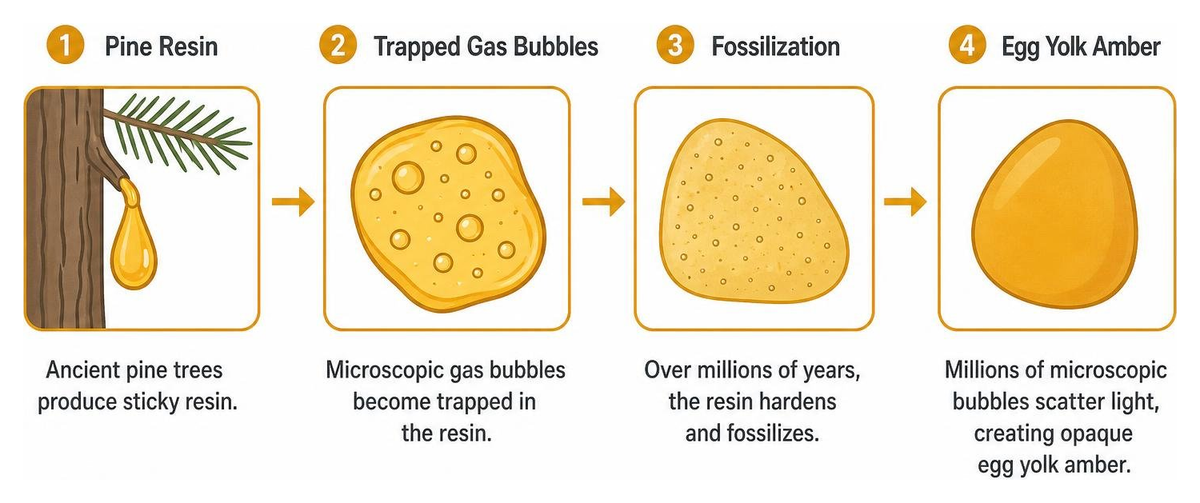
To truly understand what is egg yolk amber, we have to travel back over 45 million years into the geological past. Long before human history began, ancient prehistoric forests flourished across the Baltic region—an area encompassing modern-day Poland and Lithuania. During the Eocene epoch, these prehistoric coniferous trees secreted vast quantities of resin to heal bark wounds, seal split branches, and protect against environmental stress. Over tens of millions of years, as changing landscapes buried these organic secretions under marine sediments, the volatile terpenes evaporated. Through gradual fossilization under sea floor pressure, this ancient organic tree resin hardened into the glowing gemstone we treasure today.
Unlike mineral gemstones like diamonds or sapphires that form underground through volcanic heat or mineral crystallization, natural Baltic amber is an organic gem born from plant life. What sets genuine Baltic amber apart chemically from organic resins found elsewhere is its natural concentration of succinic acid (ranging from 3% to 8%). This trace organic compound has been prized for centuries in traditional Baltic folk remedies and modern holistic wellness practices for its soothing properties.
What Is Egg Yolk Amber and How Is It Formed?
The defining mystery of egg yolk amber lies in its unique, solid-looking appearance. While clear cognac or honey amber allows light to pass directly through it, egg yolk amber is completely opaque to semi-opaque. So, how did nature produce this distinctive, creamy look millions of years ago?
During the fossilization process millions of years ago, microscopic gas bubbles became trapped within the ancient sticky pine resin. As resin exuded from prehistoric conifers under atmospheric heat, volatile compounds vaporized, trapping millions of these tiny air pockets per square millimeter inside the hardening matrix. These micro-bubbles act as tiny light reflectors, scattering incoming light rays in every direction rather than allowing light to pass directly through the gemstone.
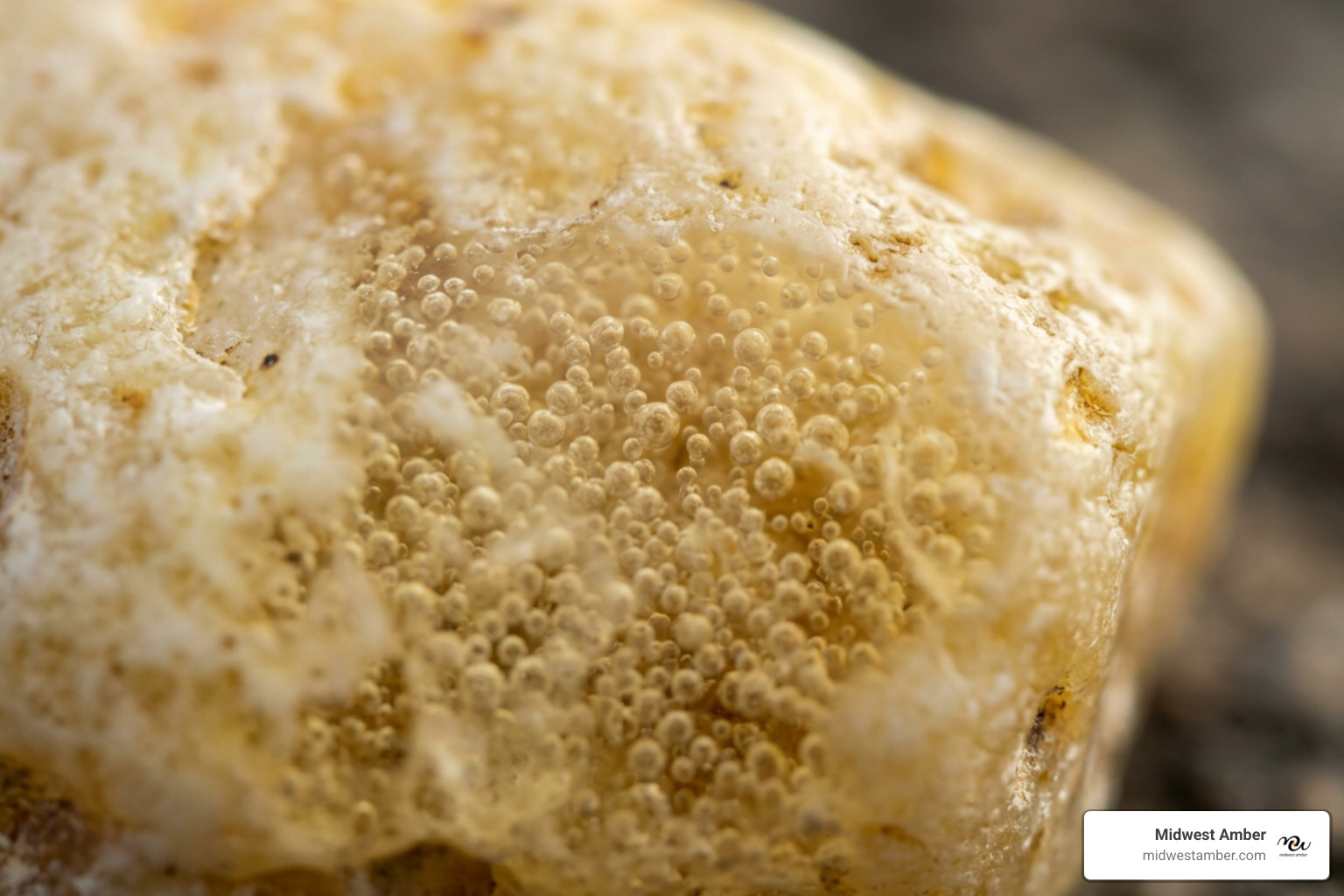
This natural phenomenon turns what would have been translucent resin into a dense, creamy gem with a distinctive texture. To learn more about how different environmental conditions alter amber's appearance, check out our comprehensive amber stone complete guide.
What Is Egg Yolk Amber Compared to Butterscotch Amber?
Buyers exploring Baltic gems often wonder if there is a difference between egg yolk amber and butterscotch amber. In the trade, these two names refer to the exact same natural variety of Baltic amber.
- Egg Yolk Amber: Highlights shades of bright, cheerful yellow, echoing the rich center of a farm-fresh egg.
- Butterscotch Amber: Evokes smooth, warm tones ranging from soft ivory cream to rich, golden caramel.
Both trade terms describe opaque, non-transparent Baltic amber filled with microscopic gas bubbles. Antique collectors and gem enthusiasts use these descriptive terms interchangeably depending on region or depth of shade. If you want to dive deeper into this classic color variety, explore our dedicated breakdown of amber egg yolk characteristics.
Key Characteristics and Identification of Natural Baltic Amber
Understanding what is egg yolk amber involves recognizing its unique physical and optical properties. Genuine Baltic amber has a warm, tactile feel against the skin and an remarkably light weight that makes even massive multi-strand pieces comfortable to wear all day long. Because amber is a natural thermal insulator, it feels warm to the touch immediately, unlike cold mineral gemstones.
Physical Properties and Color Range
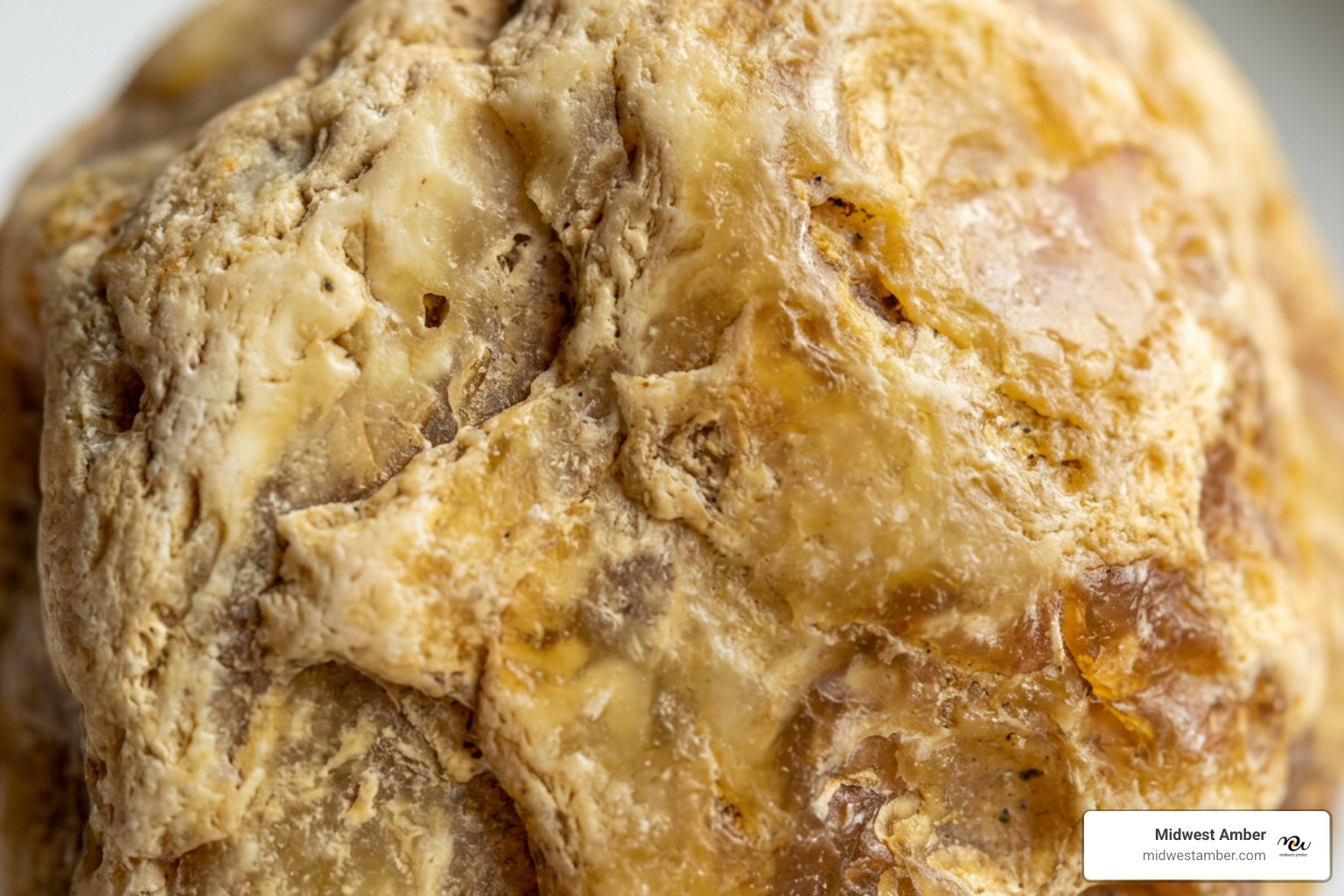
Egg yolk amber features a diverse color spectrum within its opaque category. Depending on the exact oxidation level, local mineral surroundings in the Baltic soil, and trapped gas density during resin flow, natural hues include:
- Soft Lemon Cream: A pale, light yellow with subtle ivory and pastel undertones.
- Classic Egg Yolk: A solid, bright golden-yellow hue echoing fresh yolk.
- Antique Honey-Gold: A deeper, warmer butterscotch amber created as the outer surface oxidizes naturally over decades of light and air exposure.
As opaque amber ages over generations, its surface deepens into rich antique tones. Discover how these warm shades compare to other rare varieties in our helpful article, from raw to red a shoppers guide to every type of amber jewelry.
Identifying Natural Inclusions and Surface Features
When evaluating genuine Baltic amber jewelry, absolute perfection is rarely the goal. Because it originated as natural sticky tree sap millions of years ago, genuine organic amber almost always features subtle internal swirls, slight color variations, botanical fragments, and minor surface fissures.
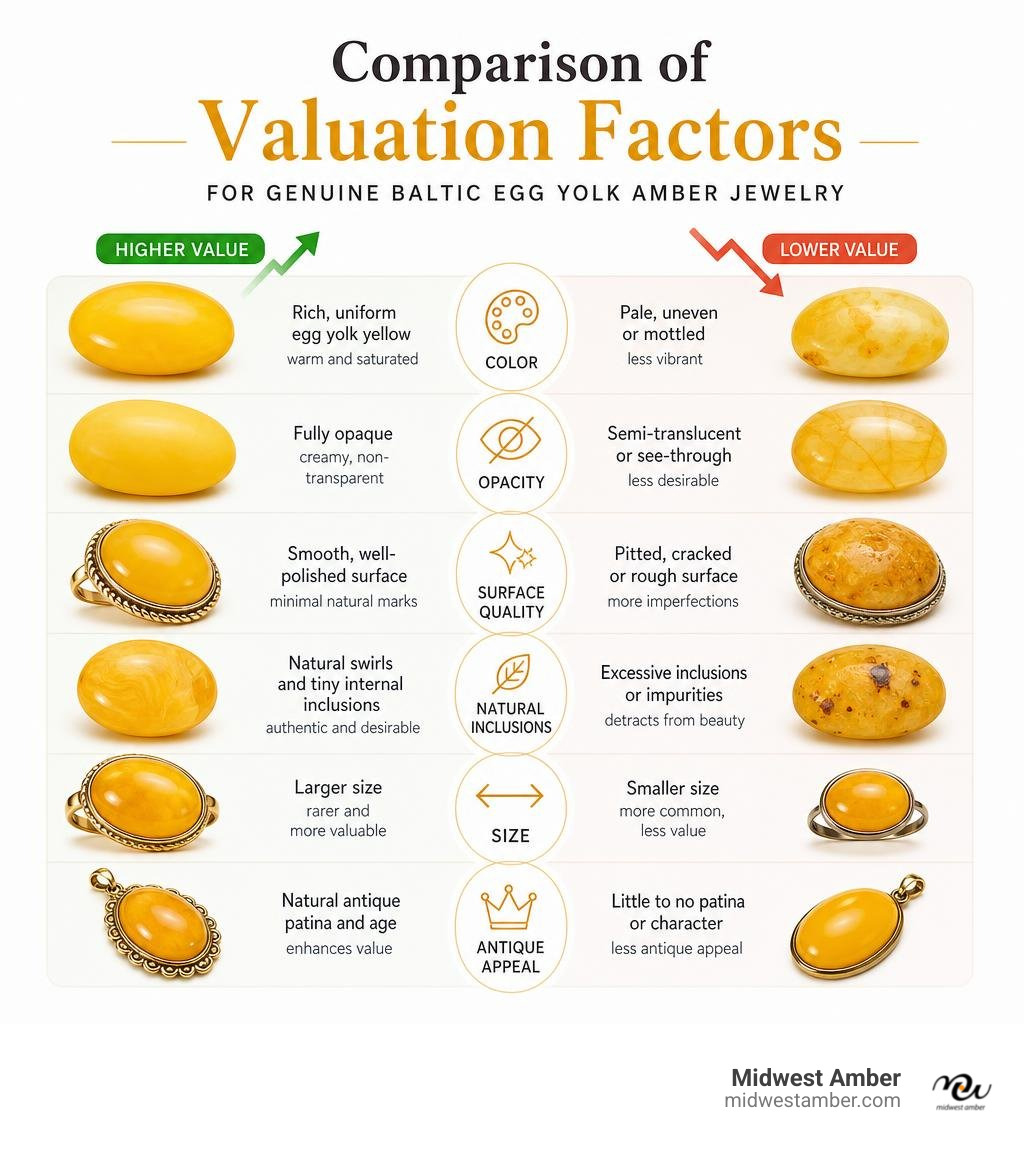
These tiny natural micro-cracks and organic cloud swirls developed over millions of years of geological pressure and natural weathering. Rather than indicating damage or lower quality, these natural surface features serve as reliable indicators of authentic amber. Read our detailed guide on egg yolk amber ultimate guide 2026 to learn more about recognizing authentic Baltic gems.
Value Factors and Styles in Vintage Amber Jewelry
Because natural egg yolk amber is increasingly rare and sought after, high-quality pieces are prized by collectors worldwide. The value of a piece is determined by weight in grams, bead size, color consistency, structural integrity, and artisan craftsmanship.
| Valuation Factor | Secondary Market Resale Value | Insurance Replacement Value | Key Valuation Drivers |
|---|---|---|---|
| Small Nugget Necklaces (20g - 40g) | $50 – $70 | $95 – $125 | Natural nugget shapes, minor inclusions |
| Medium Bead Necklaces (40g - 80g) | $145 – $400 | $300 – $750 | Uniform bead shapes, bright yellow color |
| Large Vintage Statement Pieces (150g+) | $1,500 – $2,282+ | $2,500 – $4,000+ | Large uniform beads, high gram weight, rare antique origin |
Market Valuation and Pricing Dynamics
Total gram weight plays a critical role in establishing amber pricing on the global market. Because massive chunks of rare, unblemished raw opaque resin required to carve large solid beads are exceptionally scarce, heavy bead strands demand a significant premium per gram.
For instance, smaller natural nugget strands might carry a secondary market value around $50 to $70, while an impressive 176-gram vintage egg yolk amber necklace can command prices up to $2,282.00 or higher. Master artisans in traditional amber crafting centers like Gdańsk, Poland, carefully shape raw stones to showcase rich color while retaining maximum weight. For options across every budget, view our selection of real amber for sale.
Popular Jewelry Styles: Necklaces, Beads, and Pendants
Polish and Lithuanian artisans shape raw egg yolk amber into timeless jewelry designs:
- Graduated Bead Necklaces: Featuring carefully matched oval or round beads that increase in size toward the center.
- Statement Pendants: Highlighting a single massive cabochon of opaque butterscotch amber set in sterling silver.
- Handcrafted Earrings & Rings: Framing smaller pieces of creamy yellow amber to create radiant everyday accents.
- Classic Bracelets & Brooches: Showcasing smooth polished beads or elaborate filigree work set with creamy amber.

Find your favorite look by browsing our guides to find your perfect egg yolk amber necklace and discover your ideal egg yolk amber pendant.
Essential Care and Maintenance Guidelines
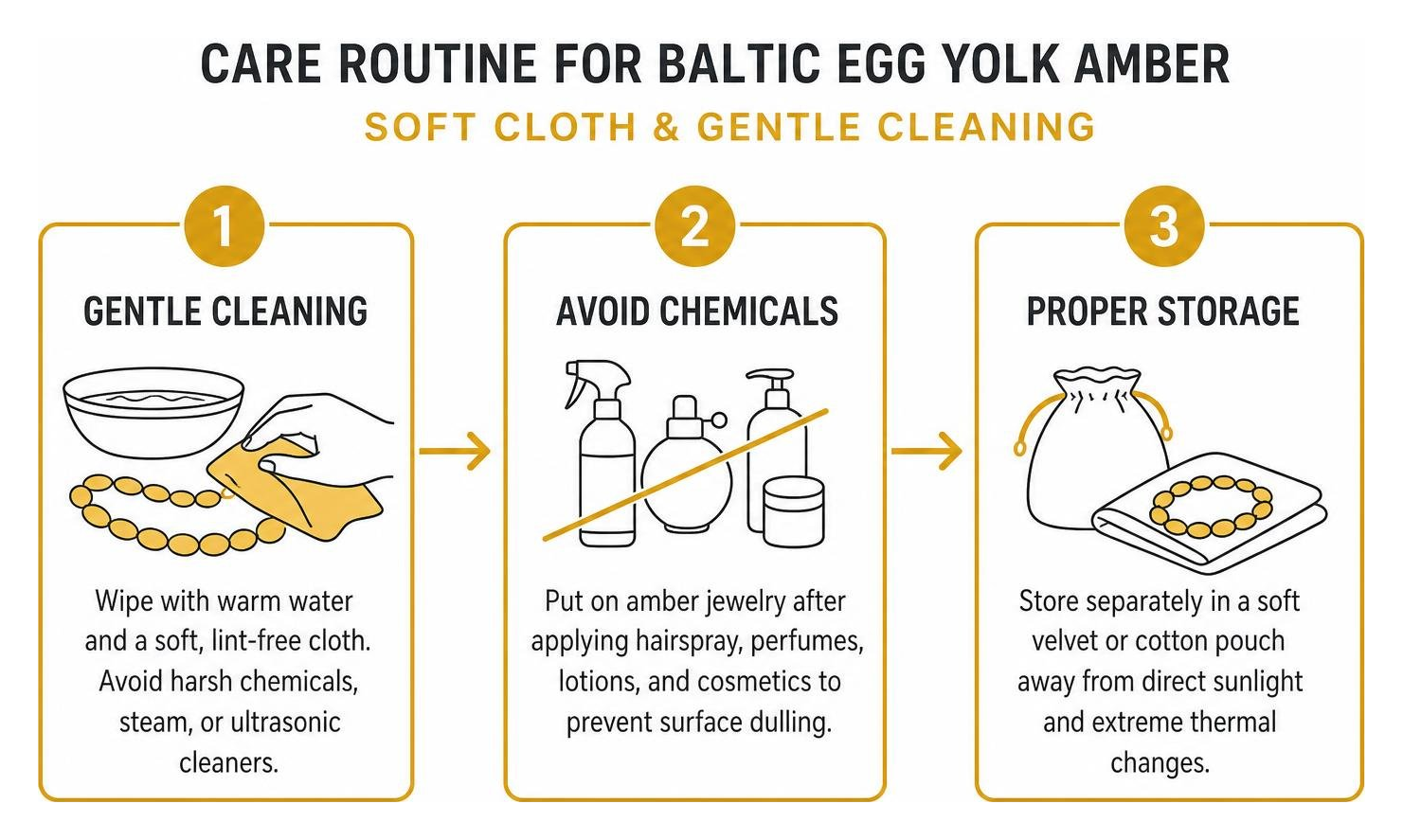
Because Baltic amber is a relatively soft, organic gemstone (rating 2 to 2.5 on the Mohs hardness scale), proper care ensures your genuine Baltic amber jewelry retains its warm glow for generations:
- Gentle Cleaning Routine: Wipe your amber clean using warm water and a soft, damp lint-free cloth. Avoid harsh chemical cleaners, alcohol, steam cleaners, or ultrasonic solutions that could cloud the resin surface.
- Avoid Exposure to Chemicals: Put your amber rings, bracelets, brooches, and necklaces on after applying hairspray, perfumes, lotions, body sprays, and cosmetics to prevent surface dulling.
- Proper Storage Solutions: Store your amber pieces separately in a soft velvet or cotton pouch away from direct sunlight, heating vents, and extreme thermal changes to protect against scratches.
- Luster Restoration: If your amber appears dull after years of wear, restore its soft natural shine by gently rubbing a single drop of organic olive oil across the surface with a soft microfiber cloth, then buffing off any residue.
Frequently Asked Questions About Egg Yolk Amber
Is egg yolk amber the same as butterscotch amber?
Yes, both terms describe the exact same opaque, golden-yellow variety of genuine Baltic amber. Trade professionals use these food-inspired names interchangeably to describe creamy yellow gems.
Why is egg yolk amber opaque rather than clear?
Opacity is caused by millions of microscopic gas bubbles trapped inside the ancient pine resin as it fossilized 45 million years ago. These micro-bubbles scatter light rays, creating a dense, solid visual appearance.
Where does natural egg yolk amber originate?
Genuine egg yolk amber is found along the Baltic coastlines, primarily sourced in Poland and Lithuania. These regions contain the largest known deposits of high-grade prehistoric Baltic pine resin in the world.
Conclusion
Understanding what is egg yolk amber reveals why this rare, opaque Baltic treasure has captivated jewelry lovers for generations. Formed 45 million years ago from prehistoric pine resin, its rich butterscotch tones and natural warmth make every handcrafted piece a wearable work of history.
At Midwest Amber, we draw upon over 20 years of experience to bring you 100% natural, ethically sourced Baltic amber jewelry created by master artisans in Poland and Lithuania. Explore our online store today to find handcrafted rings, necklaces, bracelets, earrings, pendants, and brooches that match your personal style and celebrate authentic Baltic heritage.


Leave a comment
This site is protected by hCaptcha and the hCaptcha Privacy Policy and Terms of Service apply.