


A Gentle Amber Jewelry Polish Restores Shine Without Risk

For genuine Baltic amber jewelry, start with the least abrasive fix: wash it gently with lukewarm water and mild soap, dry it with microfiber, then buff with a clean soft cloth. If a piece has visible scratches, use wet waterproof sandpaper in gradual grits before a light hand-buff and a thin, silicone-free protective finish.
Amber is fossilized tree resin, not a hard mineral. At only 2 to 2.5 on the Mohs scale, it can scratch, cloud, or overheat easily. That is why a careful amber jewelry polish routine matters for handcrafted pendants, rings, bracelets, earrings, and necklaces from Polish and Lithuanian artisans.
In this guide, you will see five practical changes that help restore a clear glow while protecting the natural color, surface, and one-of-a-kind inclusions inside genuine amber.
I am Gabriel Ciupek, President and owner of Midwest Amber, with hands-on experience sourcing and working with authentic Baltic amber jewelry and helping customers care for it properly. I will walk you through an amber jewelry polish approach that respects both the material and the craftsmanship behind each piece.
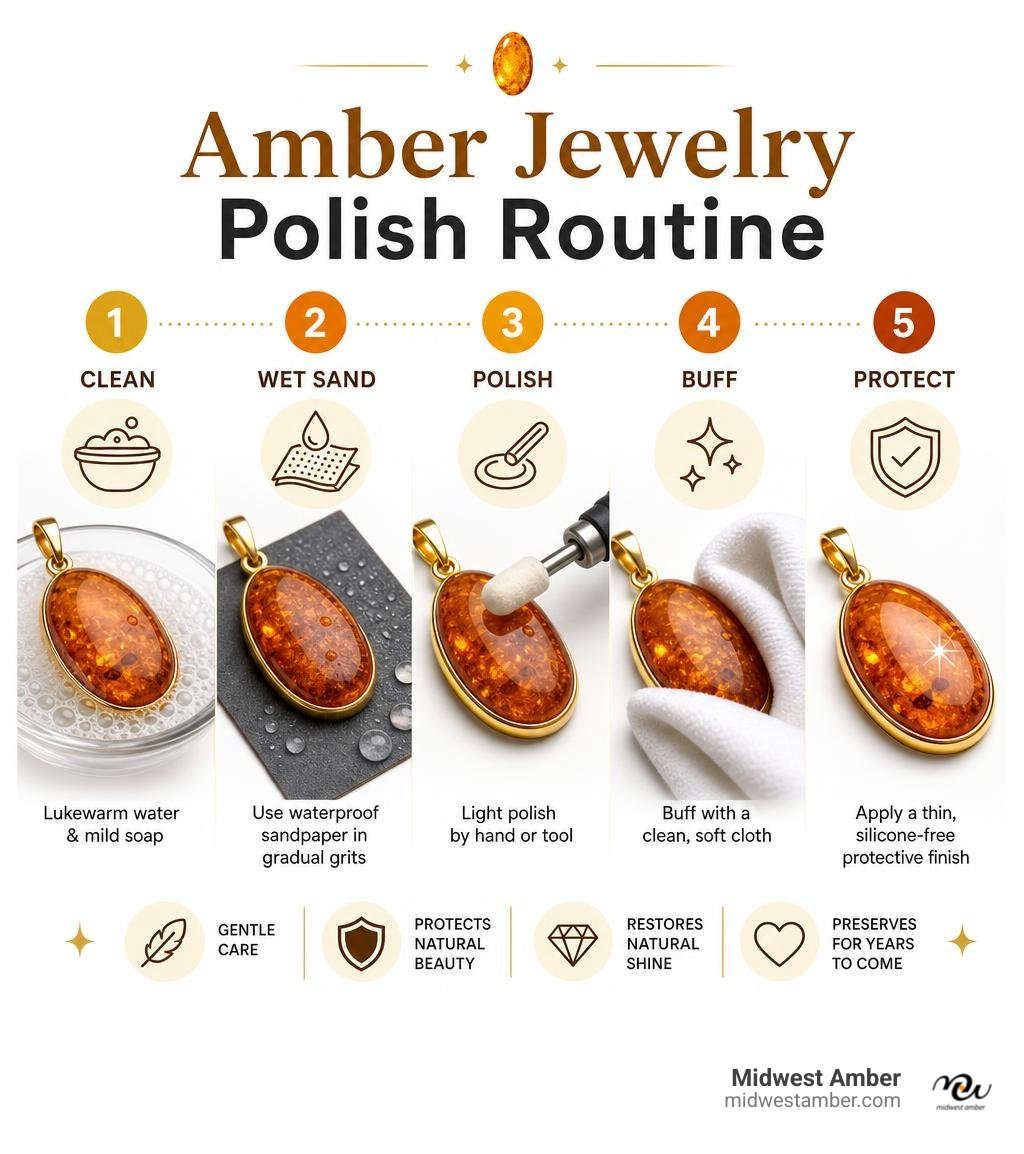
Glossary for amber jewelry polish:
Why Baltic Amber Needs Gentle Care and Specialized Polishing
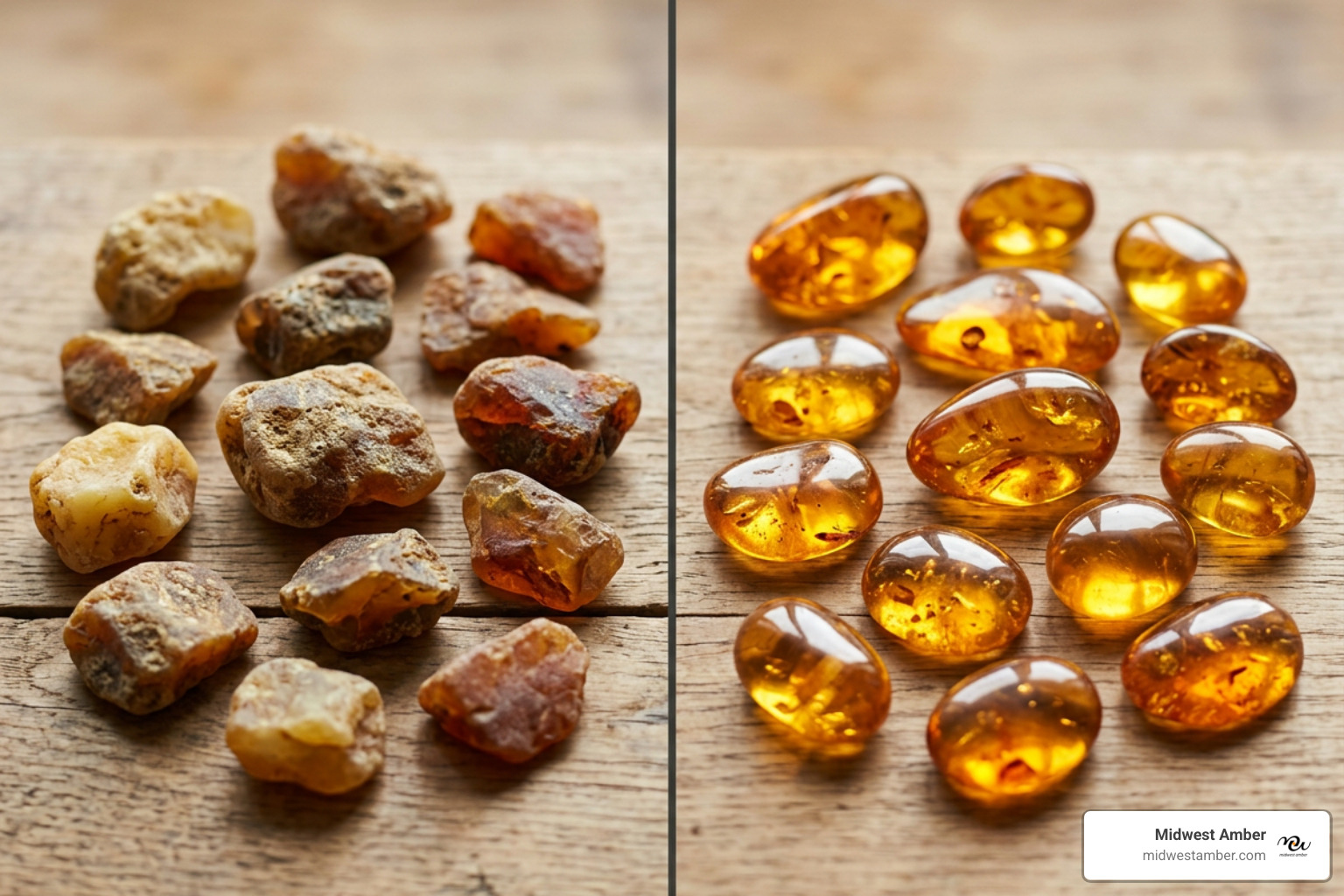
Baltic amber is an organic gemstone created over 40 million years ago from prehistoric tree resin. Because it is an organic material rather than a crystalline mineral like quartz or diamond, its physical properties require a completely different approach to maintenance. On the Mohs hardness scale, Baltic amber sits at a delicate 2 to 2.5. This low rating means everyday items like copper coins, hardened dust particles, and even standard jewelry cleaning cloths can cause micro-scratches if handled without care.
Beyond softness, amber has low toughness and notable thermal sensitivity. High friction generated during aggressive machine buffing quickly heats the surface, leading to micro-cracking, crazing, or permanent cloudiness. Furthermore, the chemical vulnerability of natural resin makes it highly reactive to solvents, perfumes, and synthetic cleaning agents.
When you wear authentic Baltic amber jewelry Poland artisans have shaped by hand, the surface gradually interacts with oxygen and skin oils over time. While natural oxidation deepens amber's rich, warm hues, ambient grime and fine scratches can leave the surface looking dull. Understanding how to apply a proper amber jewelry polish routine ensures you protect the delicate structure while restoring its brilliant, golden transparency.
The 5 Essential Changes for the Perfect Amber Jewelry Polish Routine
Achieving a professional-grade finish at home does not require complex industrial lapidary machines. In fact, heavy power tools often ruin organic gems. The secret lies in making five smart adjustments to your sanding, polishing, and buffing techniques.
| Stage | Common Mistake | Recommended Method | Key Materials |
|---|---|---|---|
| 1. Preparation | Dry wiping with paper towels | Gentle wash with lukewarm water | Mild soap, lint-free microfiber |
| 2. Scratch Removal | Dry, coarse sanding | Progressive wet sanding (220–3000 grit) | Waterproof sandpaper, clean water |
| 3. Polishing | Aggressive chemical compounds | Mild non-gel paste or lapidary oxide | White paste toothpaste or cerium oxide |
| 4. Buffing | Synthetic power wheels | Hand buffing with natural textures | Denim cloth, soft flannel, leather |
| 5. Sealing | Silicone-based sprays or waxes | Natural organic oils or carnauba wax | Pure olive oil, carnauba paste |
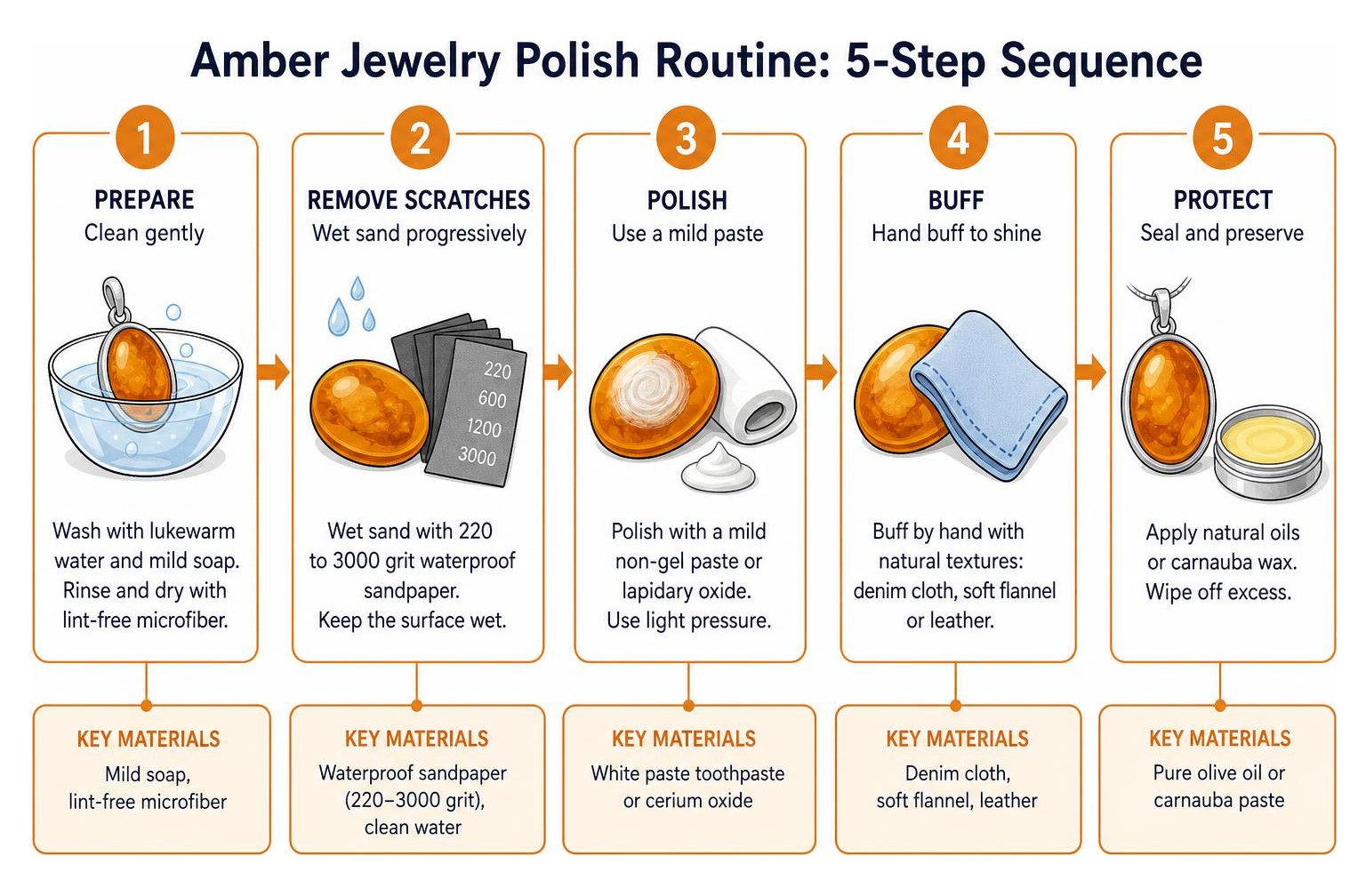
1. Upgrade from Dry Wiping to Safe Pre-Cleaning and Surface Prep
The most common way amber gems get scratched is during routine cleaning. Wiping a dusty piece of amber with a dry cloth or paper towel drags microscopic silica dust across the surface, creating a web of fine hairline scuffs.
Before applying any polish or sandpaper:
- Mix a few drops of mild, pH-neutral dish soap in a bowl of lukewarm water.
- Immerse your jewelry briefly and use your fingertips or an ultra-soft cosmetic brush to lift away oils, sweat, and surface dirt.
- Rinse thoroughly with clean, lukewarm water.
- Pat dry gently with a soft, lint-free microfiber towel.
Never place genuine Baltic amber in ultrasonic cleaners or steam machines. The intense ultrasonic shockwaves can fracture the internal matrix of the resin, while steam heat easily warps or clouds the gem. Similarly, keep rubbing alcohol, acetone, and harsh jewelry dips far away, as these solvents dissolve resin surfaces.
2. Switch to Progressive Wet Sanding for Scratches
If your amber piece has noticeable surface scratches, polishing compounds alone will not level the surface. You must gently sand the area first. However, dry sanding generates friction heat that can scorch the resin and clog your sandpaper.
Switching to progressive wet sanding keeps the surface cool and creates a smooth slurry that refines the gem evenly. A widely recognized patented hand-polishing method confirms that wet sanding with waterproof abrasive sheets provides safe, high-clarity results without industrial machinery.
Follow this progression:
- Initial Leveling (220 to 400 grit): Use wet 220 to 400 grit waterproof sandpaper only for deeper scratches. Sand in light, circular motions, keeping both the paper and the stone wet.
- Intermediate Smoothing (600 to 1000 grit): Transition to wet 600–1000 grit paper to eliminate the marks left by the coarser grit. At 400 to 600 grit, the stone will begin regaining translucency.
- Fine Pre-Polish (2000 to 3000 grit): Finish the sanding stage with ultra-fine 2000 to 3000 grit wet paper. This creates a satin-smooth foundation ready for final gloss polishing.
Remember to change your rinse water between grit levels to avoid dragging coarse abrasive grains into finer sanding stages.
3. Choose the Right Amber Jewelry Polish Compound: Toothpaste vs Lapidary Pastes
Once your amber is sanded smooth, you need a very mild abrasive compound to bring out its optical clarity. You do not need hazardous chemicals; safe, accessible alternatives work wonders on soft resins.
Basic White Paste Toothpaste
Standard, non-gel white paste toothpaste is an outstanding household polishing compound. Basic paste formulations often contain mild abrasives like talc or calcium carbonate that gently buff away micro-abrasions left by 2000-grit sandpaper. Apply a pea-sized amount to a damp cloth and buff firmly for several minutes. Avoid gel toothpastes, as they lack abrasive power and leave a sticky film.
Professional Lapidary Pastes
For an immaculate, glass-like reflection on fine pieces like our handmade in poland sterling silver genuine baltic amber flower ring, dedicated lapidary compounds like cerium oxide or aluminum oxide mixed with water into a thin paste deliver unrivaled shine.
Critical Warning: Never use polishing compounds containing silicone. Silicone creates a temporary artificial shine but eventually reacts with the natural resin, causing permanent surface hazing.
4. Replace Synthetic Buffers with Denim, Flannel, and Leather
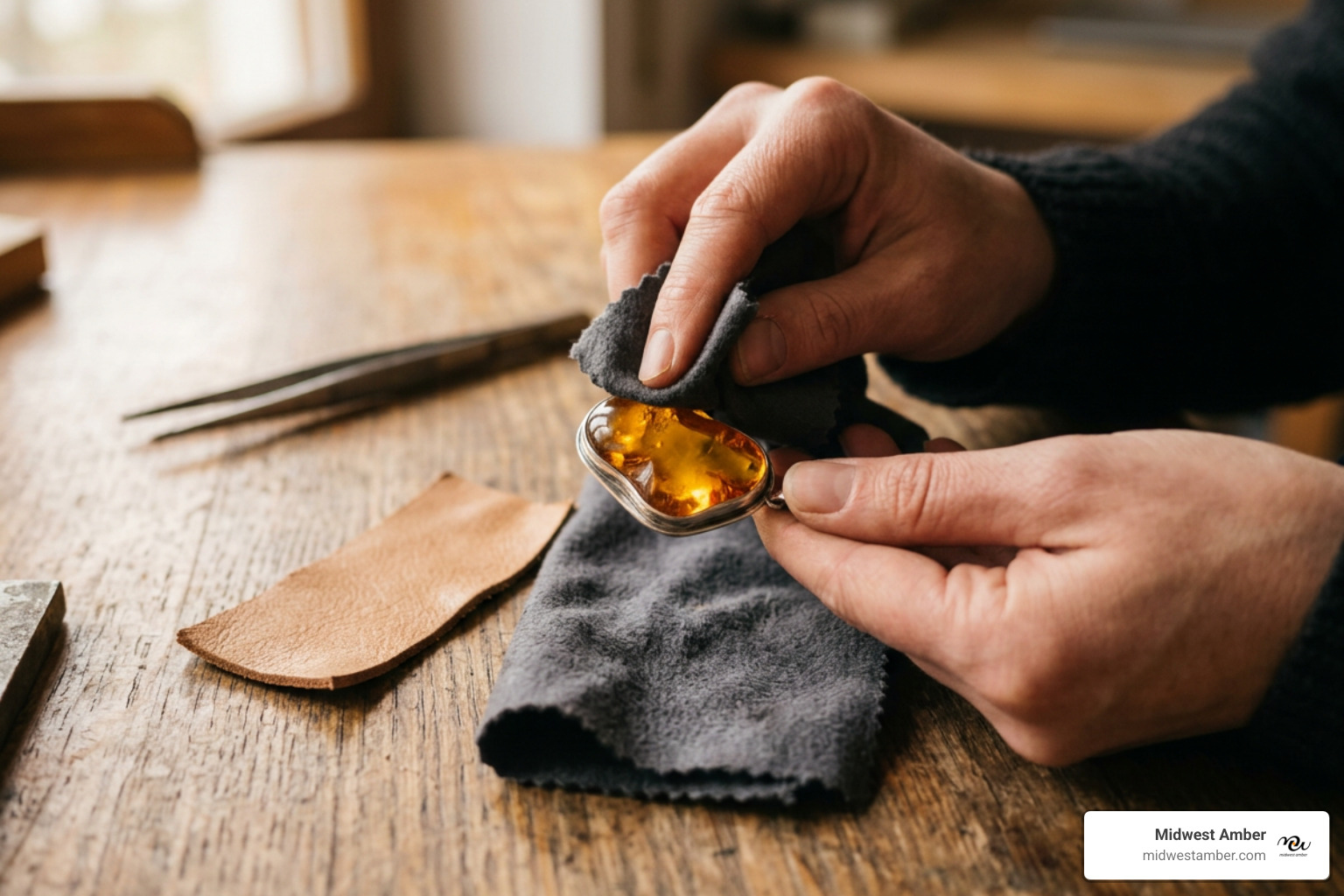
High-speed synthetic rotary wheels generate rapid heat buildup that melts amber within seconds. Hand-buffing using natural textile backings gives you complete control over pressure and temperature.
- Denim Backing: Heavy cotton denim (like a pair of clean jeans) provides just the right amount of firm texture when working your polishing compound across the amber.
- Soft Flannel: Once the compound has done its work, a clean piece of cotton flannel wipes away residue and develops a bright primary luster.
- Natural Leather Buffing: For the final, mirror-like finish, buff the dry amber vigorously across a clean strip of unfinished natural leather or chamois. The gentle friction of pure leather creates an exceptional, silky sheen that highlights the warmth of the amber.
Work in steady, overlapping circular motions, checking your progress under bright light every minute to ensure an even gleam across every facet.
5. Seal and Protect with Amber-Safe Natural Oils and Carnauba Wax
Because Baltic amber is naturally porous at a microscopic level, applying a conditioning sealant after polishing locks in luster and prevents premature oxidation.
- Natural Conditioning Oils: Apply a single drop of high-grade, pure olive oil or pure mineral oil to a microfiber cloth and massage it over the amber. Allow the oil to condition the surface for ten minutes, then buff off every trace of excess oil with a clean cloth. This replenishes moisture and enriches deep honey and butterscotch tones.
- Carnauba Wax Seal: If you prefer a durable barrier that resists fingerprints, apply a minute amount of silicone-free carnauba wax. Gently buff it out using a soft microfiber pad to create a protective, water-resistant seal.
How to Polish Amber Jewelry in Metal Settings and Natural Inclusions
Polishing loose amber cabochons is straightforward, but caring for set jewelry requires extra care to protect both the stone and the precious metal.
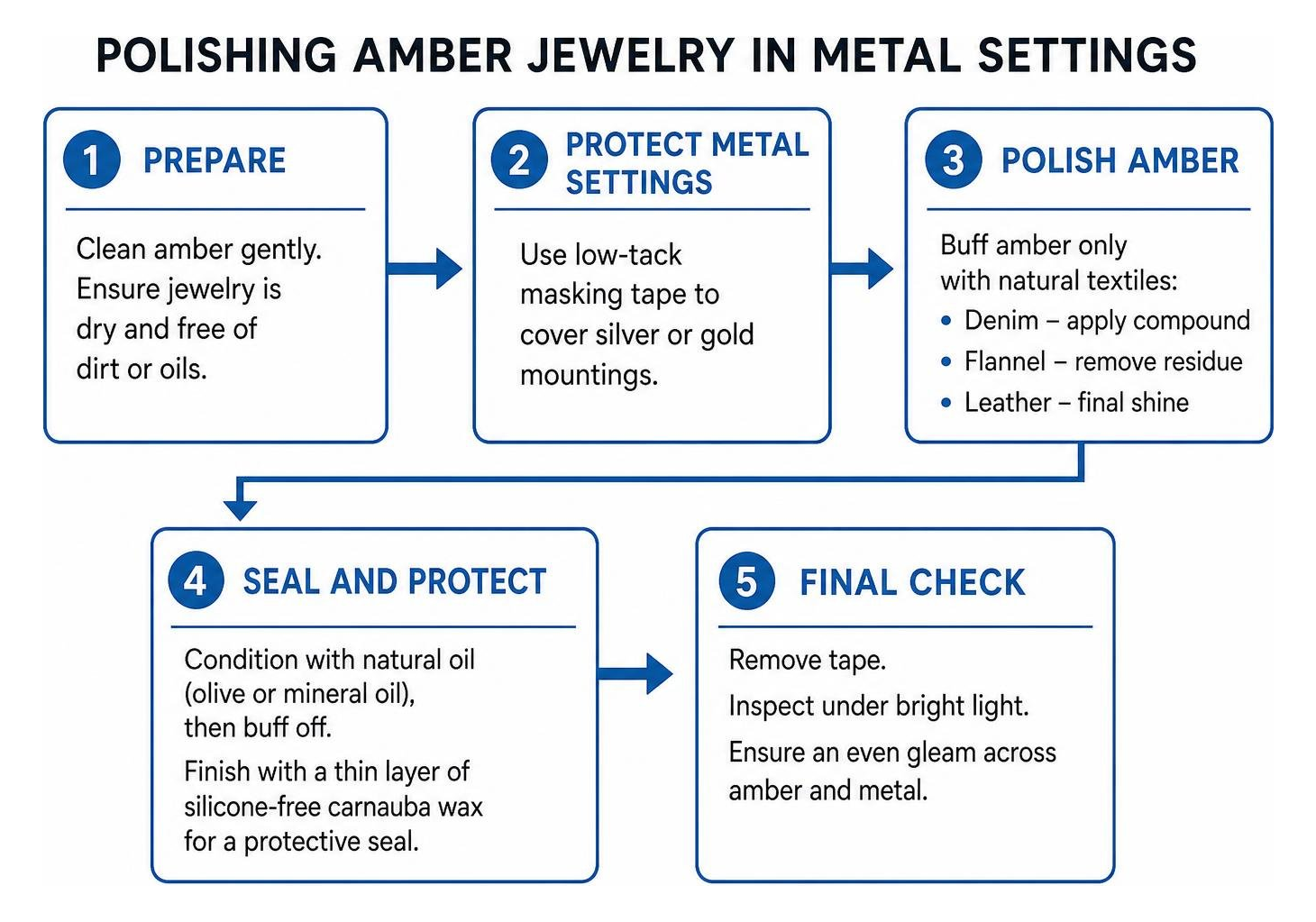
Protecting Sterling Silver and Gold Settings During Polishing
When working with intricate pieces such as our handmade in poland gold plated sterling silver honey baltic amber ombre pendant necklace genuine baltic amber jewelry or handmade in poland butterscotch baltic amber drop earrings two tone sterling silver artistic lever back earrings modern amber jewelry, you must prevent silver polishes from touching the amber and keep abrasive sandpapers from scratching delicate metal bezels.
- Use Low-Tack Masking Tape: Cover the silver or gold mounting with delicate painter's tape while polishing the amber.
- Use Precision Cotton Swabs: For tight spaces around prongs and bezel walls, dip a cotton swab in your polishing compound to target dull spots without touching the metal.
- Clean Metals Separately: Clean tarnished sterling silver using a specialized silver polishing cloth, making sure the treated cloth does not rub aggressively against the amber gem.
Best DIY Amber Jewelry Polish Techniques for Preserving Inclusions
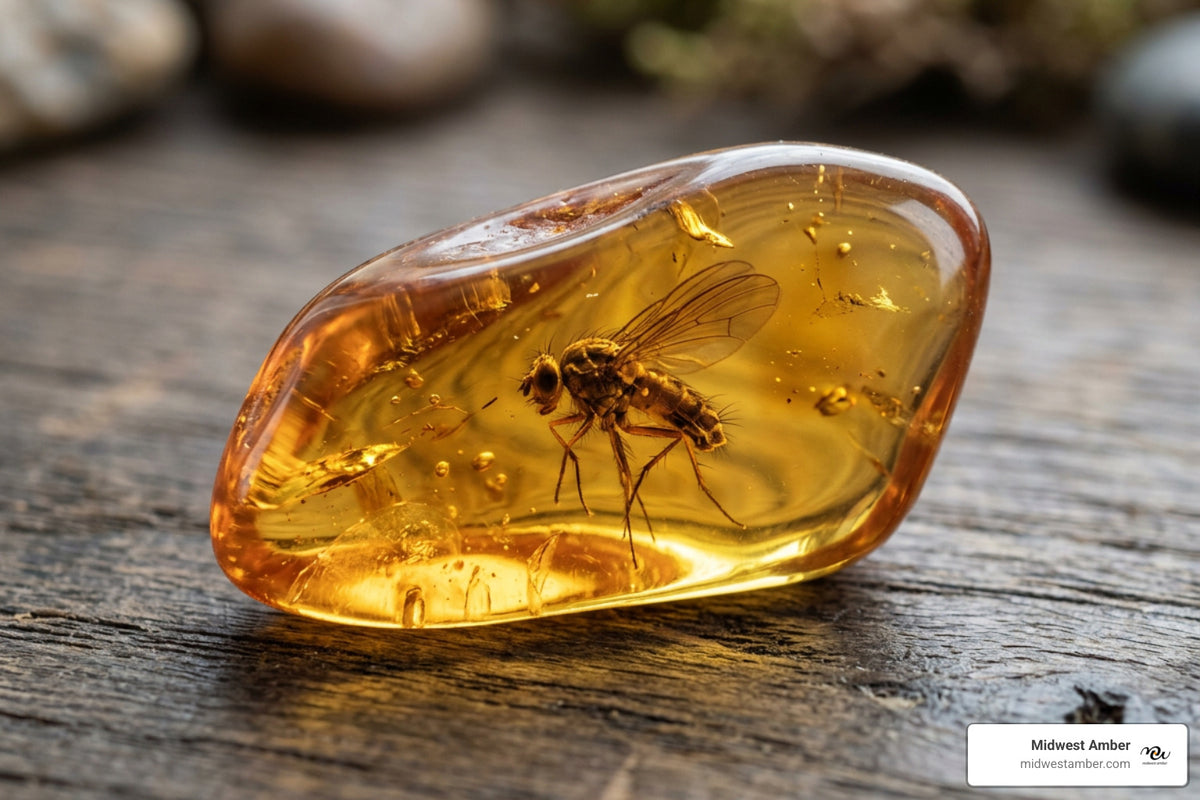
Many authentic Baltic amber stones contain fossilized plant debris, oak trichomes, or ancient insects suspended millions of years ago. When restoring pieces with inclusions near the surface:
- Inspect with Bright Light: Examine the piece under a strong lamp or 10x jeweler's loupe before sanding.
- Avoid Aggressive Coarse Grits: Do not use grits below 600 near visible inclusions to prevent grinding into the prehistoric cavity.
- Create Clear Viewing Windows: Use fine 1000–3000 grit wet sanding and toothpaste buffing to polish a clear "window" over the inclusion, preserving its natural state for generations.
Frequently Asked Questions About Amber Care and Maintenance
Can I use ultrasonic cleaners or alcohol on amber jewelry?
No. Ultrasonic cleaners produce high-frequency vibrations that cause internal fractures in soft organic amber. Rubbing alcohol, perfumes, hand sanitizers, and chemical solvents partially dissolve the resin, leaving a sticky, cloudy surface that requires complete resurfacing. Always clean with mild soapy water.
How often should I polish my amber pendants and rings?
For pieces worn daily, such as rings and bracelets, a gentle buff with a dry microfiber cloth every few weeks keeps skin oils from building up. A full conditioning routine with a drop of olive oil is generally only needed every 6 to 12 months. Sanding should only be done when visible scratches appear.
What should I do if my amber stone is deeply scratched or cracked?
Light to moderate scratches can be completely removed at home using the progressive wet sanding and polishing method outlined above. However, if an amber stone has deep structural cracks extending through the gem, avoid heavy pressure and consult a skilled lapidary or jeweler specializing in Baltic amber restoration.
Conclusion
Genuine Baltic amber connects us directly to the ancient forests of Northern Europe. Each piece of handcrafted jewelry carries millions of years of natural history alongside generations of Polish and Lithuanian artisanal mastery. By replacing abrasive cleaners, harsh chemicals, and high-speed rotary tools with gentle wet sanding, mild polishing pastes, and natural leather buffing, you can maintain the luminous, golden glow of your favorite heirlooms at home.
Explore our collection of authentic, handcrafted rings, necklaces, bracelets, earrings, and pendants, or discover more about the history of fossilized resin in the ultimate guide to amber jewelry. Whether you are caring for a cherished family heirloom or choosing a new piece to treasure, treating your amber with mindful care ensures its radiant beauty shines brightly for decades to come.

Leave a comment
This site is protected by hCaptcha and the hCaptcha Privacy Policy and Terms of Service apply.