

How to Buy Authentic Raw Baltic Amber Stones

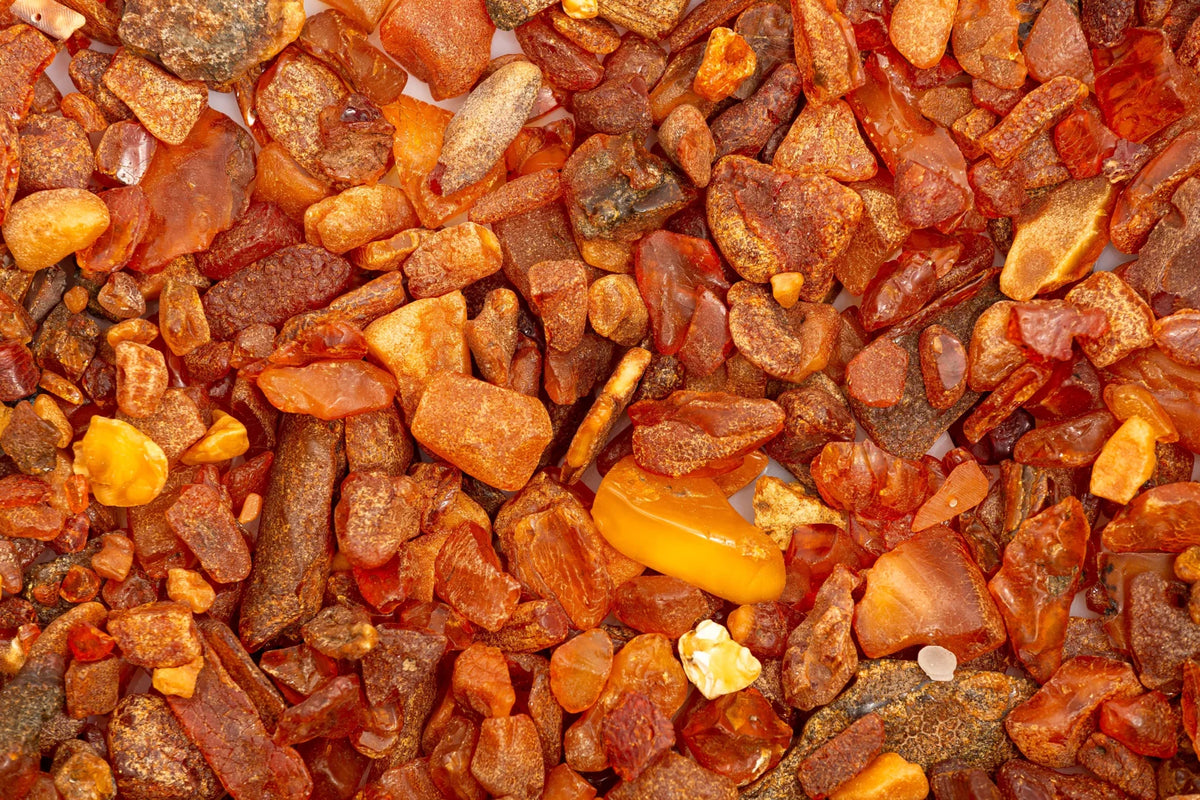
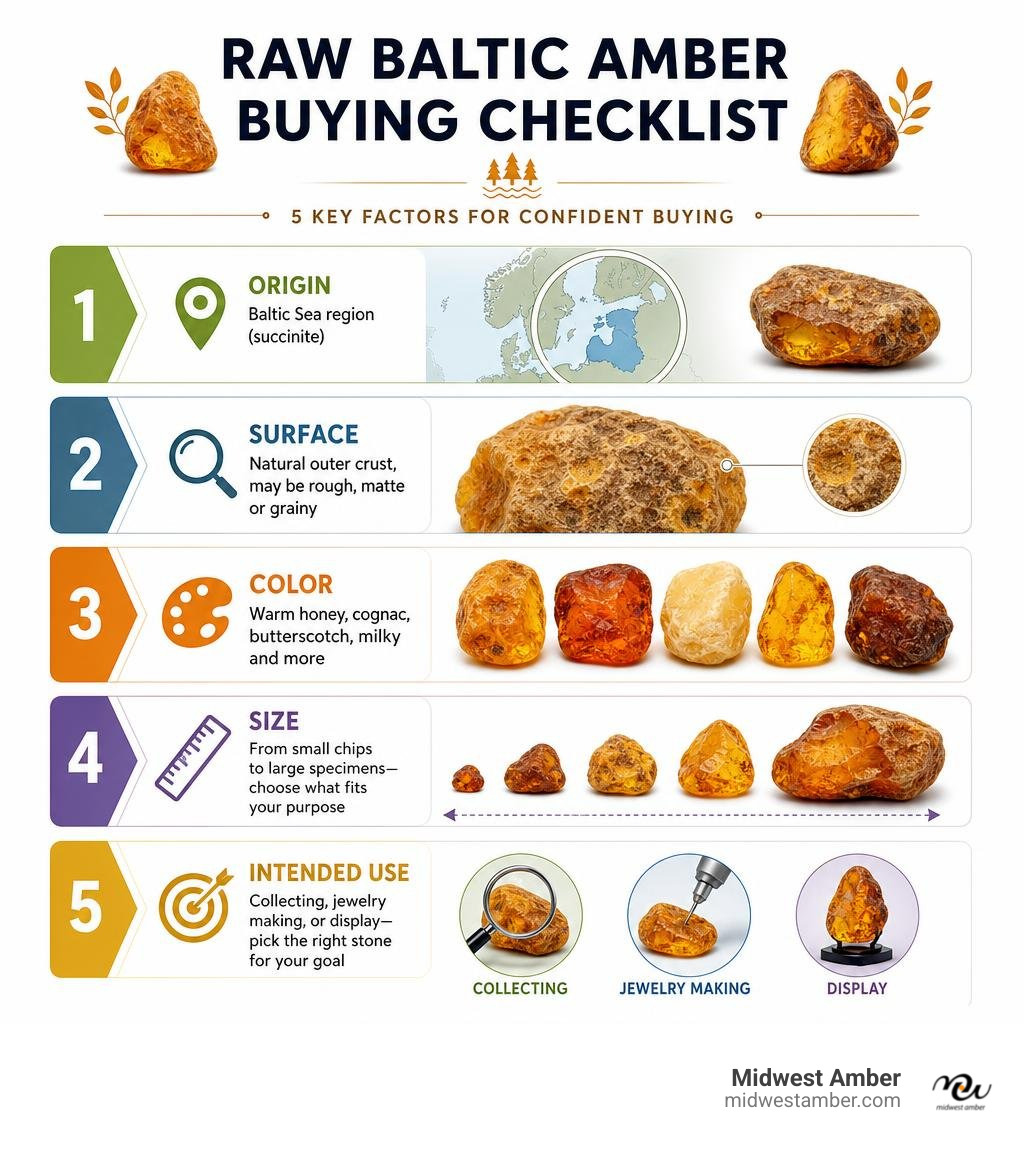
To buy raw Baltic amber stones with confidence, look for unpolished pieces with a natural outer crust, varied organic shapes, and clear origin details from the Baltic Sea region. Choose stones based on your purpose: intact rough chunks for collecting, stable pieces for jewelry making, and larger or unusually colored specimens when visual impact matters most.
Baltic amber, known as succinite, is fossilized tree resin from ancient forests around the Baltic Sea. Its warm honey, cognac, butterscotch, and milky tones make every piece different. Unlike polished amber, raw stones retain their weathered surface and natural texture - a direct link to a forest that existed millions of years ago.
I am Gabriel Ciupek, president and owner of Midwest Amber, with experience in supplier quality, market-based pricing, and helping customers select raw Baltic amber stones that fit their needs. In this guide, I will help you evaluate origin, condition, color, size, and collector appeal before you buy.
Raw baltic amber stones definitions:
What Makes Raw Baltic Amber Stones Unique?
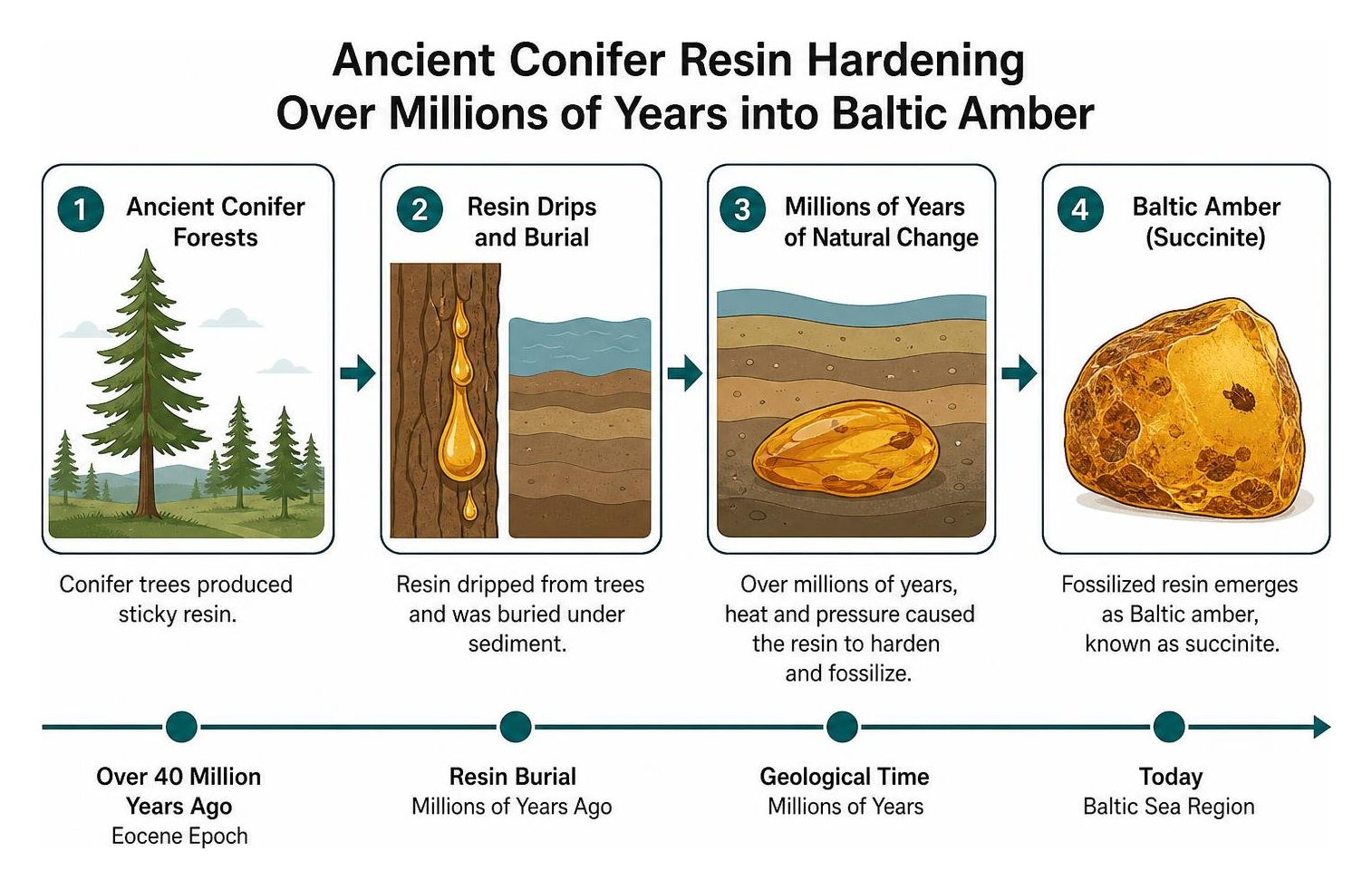
Baltic amber is not a traditional mineral formed in deep underground magma chambers; it is an organic gemstone created from ancient conifer tree resin that hardened over 40 million years during the Eocene epoch. Scientifically classified as succinite due to its rich succinic acid content (ranging between 3% and 8%), genuine raw baltic amber features distinctive physical and chemical attributes that set it apart from modern tree resins.
On the Mohs scale of mineral hardness, Baltic amber registers at a gentle 2 to 2.5, making it relatively soft and warm to the touch compared to cold crystalline gems like quartz or sapphire. Its specific gravity is remarkably low, averaging approximately 1.08 g/cm³ (with a typical range of 1.05 to 1.10 g/cm³). Because 1 gram equals roughly 5 carats, raw amber pieces offer substantial visual volume without feeling heavy.
One of the defining hallmarks of rough amber is its natural weathering crust, often referred to as the "skin" or cortex. This exterior layer developed as the outer surface oxidized over millions of years while buried in sedimentary layers. When you run your fingers over unpolished amber, you experience a tactile matte texture and a subtle, pleasant pine aroma if friction creates gentle warmth.
Natural Characteristics and Origins of Raw Baltic Amber Stones
The vast majority of the world's highest-quality succinite originates in the Baltic Sea basin. Historically and geologically, roughly 70 to 90 percent of global amber yields come from the coastal deposits of Poland, Lithuania, and the Kaliningrad Oblast.
Amber extraction occurs through two primary methods:
- Sea Amber Harvesting: Coastal tides wash nuggets ashore, where skilled foragers use hand nets along the beaches of northern Poland and Lithuania, especially after heavy autumn and winter storms.
- Open-Pit Mining: Heavy machinery gently removes blue earth—a glauconite-rich marine clay layer—where amber deposits have rested since the Eocene epoch.
For centuries, ancient European traders transported rough amber along the famed Amber Road, trading with Mediterranean civilizations who prized the gem for adornment and wellness. To learn more about identifying these natural characteristics, explore our detailed guide on how to identify raw amber.
Distinct Varieties and Colors of Raw Baltic Amber Stones
Natural Baltic amber displays an extraordinary spectrum of hues depending on prehistoric tree species, microscopic air bubbles, organic plant debris, and natural oxidation levels. Uncut raw amber reveals incredible natural variety:
| Amber Color Variety | Visual Appearance | Cause of Coloration | Relative Market Rarity |
|---|---|---|---|
| Yellow & Honey | Golden-yellow, clear to semi-translucent | Classic succinite resin with minimal trapped debris | Very Common (~70%) |
| Butterscotch & Royal White | Opaque creamy white, milky yellow, or custardy tone | Millions of micro-bubbles per mm² deflecting light | Rare (1% - 2%) |
| Cognac & Brown | Deep amber-red, burnt caramel, earthy gold | Natural surface oxidation and long-term weathering | Common (~15%) |
| Black & Earthy | Dark charcoal, deep brown with black speckles | High concentrations of ancient soil, bark, and plant matter | Uncommon (~15%) |
| Greenish Amber | Olive tones, yellowish-green matrix | Suspended decomposed botanical chlorophyll and peat | Rare (~2%) |
| Natural Red ("Dragon Blood") | Deep ruby-amber, crimson highlights | Intense deep-layer oxygenation over millions of years | Extremely Rare (<0.5%) |
Top Collector Specimens and Raw Amber Jewelry Selections
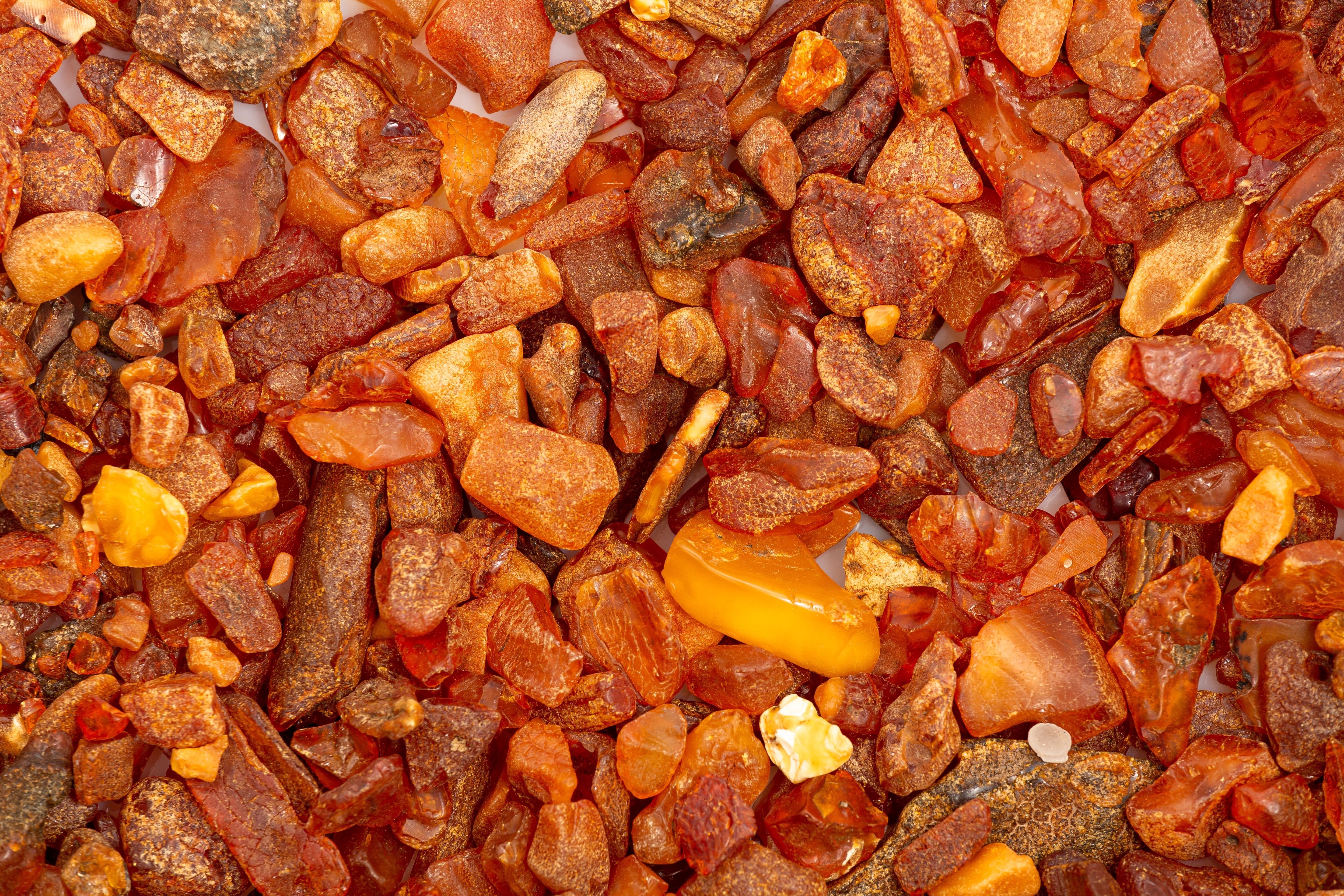
Whether you seek unworked geological treasures or handcrafted wearable art, genuine Baltic amber delivers organic warmth and timeless character. Handcrafted Baltic jewelry preserves the stone's natural contours while ensuring daily wearability.
Museum-Grade Collector Chunks and Rare Botanical Inclusions
For passionate mineral collectors, nothing compares to unworked rough amber that houses trapped snapshots of prehistoric life. Intact genuine baltic amber collector chunks showcase the raw outer cortex alongside translucent windows into the stone's interior.
Paleontologists and collectors deeply treasure our baltic amber fossil collection with insects, featuring ancient gnats, midges, and small arachnids captured mid-motion millions of years ago. Even rarer are preserved botanical treasures such as an ultra rare baltic amber flower inclusion, which highlights delicate prehistoric floral petals perfectly suspended in golden resin. Collectors looking to compare regional resin formations often add a natural colombian amber chunk to their display cases to observe distinct regional resin properties.
Handcrafted Unpolished Statement Necklaces and Bracelets
Wearing raw Baltic amber close to the skin is an ancient European tradition rooted in Baltic heritage. Our artisans in Poland and Lithuania carefully shape rough nuggets, preserving their organic contours while creating comfortable, striking adornments.
- Statement Necklaces: Pieces like the genuine baltic amber statement necklace raw polished and the genuine baltic amber statement necklace large raw polished blend earthy textures with vibrant honey and cognac hues.
- Stretch Bracelets: Everyday accessories such as the raw butterscotch baltic amber stretch bracelet and the genuine baltic amber organic rough polished amber stretch bracelet feature smooth, unpolished nuggets that rest comfortably against the wrist.
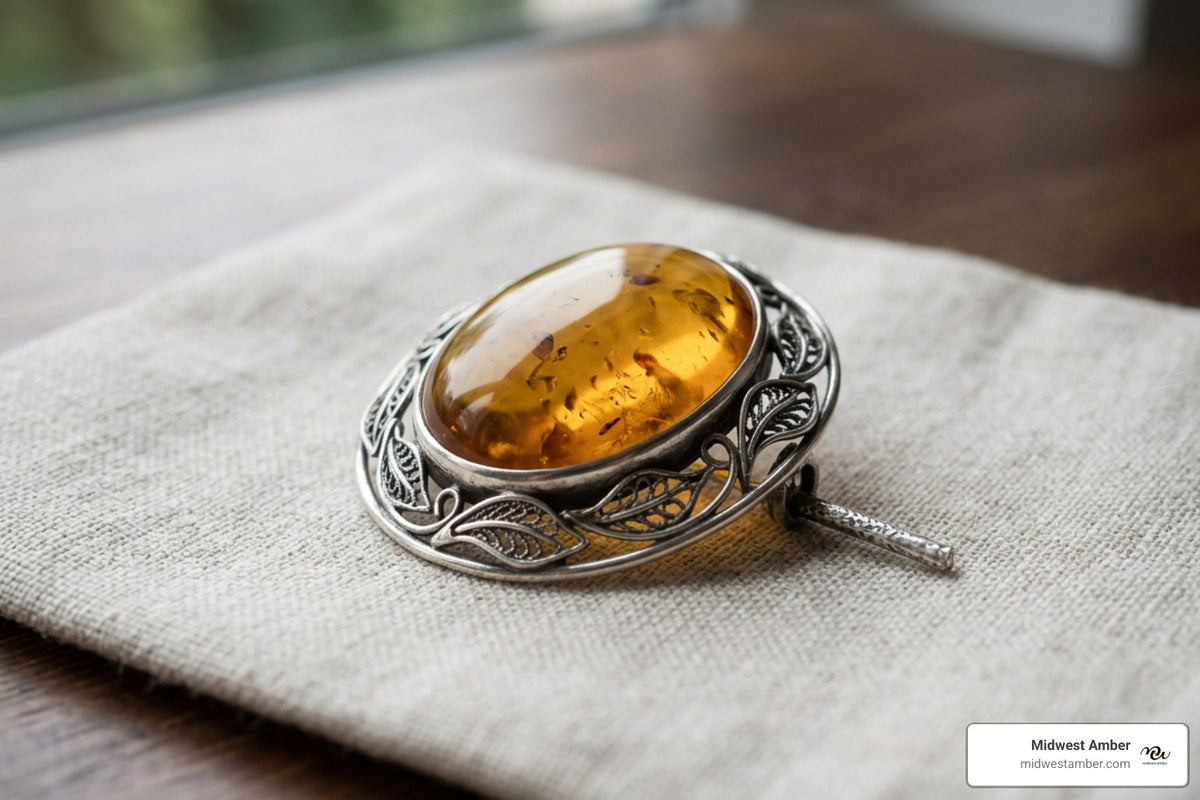
- Pendants and Everyday Wear: A rustic raw amber pendant mounted in fine sterling silver highlights the contrast between refined metalwork and rough organic gemstone beauty.
Uncut Rough Specimens for Jewelry Making and Tinctures
Artisans, holistic practitioners, and hobbyists often seek unshaped stones for lapidary projects or traditional European preparations. Sourcing genuine baltic amber rough stones gives jewelers unshaped raw stock suitable for drilling, shaping into cabochons, or hand-carving into custom earrings, rings, brooches, or bracelets.
Traditional folk heritage in Poland and Lithuania also utilizes high-succinic rough nuggets in holistic routines. Kits like the genuine raw baltic amber for tincture making supply unpolished chips for preparing traditional spirit tinctures. Furthermore, pet lovers utilize the natural electrostatic and aromatic properties of rough beads by choosing a genuine baltic amber natural unpolished dog collar necklace.
Essential Factors for Evaluating and Sourcing Rough Baltic Amber
When acquiring raw Baltic amber, evaluating physical properties ensures you receive authentic, high-grade organic material:
- Carat Weight and Size: Most natural Baltic amber nuggets weigh under 0.5 lbs (0.23 kg). Stones under 10 grams are common, whereas large collector specimens over 100 grams command higher prices per gram due to their rarity.
- Surface Texture and Crust Integrity: High-quality rough amber should feature a genuine weathered oxidation crust rather than artificially abraded surfaces.
- Internal Clarity and Inclusions: Transparent to semi-translucent stones with clean visibility into internal bubbles, plant needles, or fossilized insects hold significant value for scientific and collector markets.
- Specific Gravity and Saltwater Buoyancy: Because Baltic amber has a density of ~1.08 g/cm³, it floats in saturated salt water (density ~1.13 g/cm³) while sinking in plain tap water.
- Electrostatic Reaction: Rubbing rough amber vigorously against natural wool or silk produces a negative static charge that attracts small pieces of paper or lint.
- Scent and Thermal Touch: Natural amber feels pleasantly warm to the skin and releases a faint, soothing pine scent when gently warmed by friction.
Gemological organizations such as the Gemological Institute of America document how these natural physical properties, thermal responses, and unique structural characteristics define authentic organic amber specimens.
Frequently Asked Questions About Baltic Amber
How do you properly clean and store unpolished amber?
To maintain unpolished amber, clean it gently with lukewarm water and a soft microfiber cloth. Avoid soaps, alcohol, ultrasonic cleaners, and harsh household chemicals, which can strip the natural outer crust. After cleaning, let the piece air-dry completely. You can apply a single drop of natural sweet almond oil or olive oil to a soft cloth and buff gently to condition the stone. Always store raw amber pieces in individual soft fabric pouches away from direct sunlight and extreme heat to prevent surface scratching and excessive drying.
What makes Baltic amber float in saturated salt water?
Baltic amber possesses a low specific gravity of approximately 1.05 to 1.10 g/cm³ (averaging 1.08 g/cm³). Fresh tap water has a density of 1.00 g/cm³, causing amber to sink. However, dissolving approximately 1 part non-iodized salt into 2 parts water raises the liquid's density to roughly 1.13 g/cm³. Because the saline solution is denser than genuine Baltic amber, the stone floats naturally to the surface, providing a dependable, non-destructive authenticity test.
How does unpolished amber differ from polished amber?
Unpolished raw Baltic amber retains its natural outer oxidation skin (cortex), created through millions of years of contact with soil, air, and marine sediments. It exhibits an earthy, matte texture and preserves high concentrations of surface succinic acid. In contrast, polished amber undergoes mechanical tumbling or wheel polishing to strip away the weathered crust, revealing high internal clarity, smooth surfaces, and glossy golden brilliance.
Conclusion
Raw Baltic amber connects us directly to the ancient forested landscapes of Northern Europe. At Midwest Amber, we honor the rich heritage of Polish and Lithuanian gemstone artistry by sourcing 100% natural, ethically gathered Baltic amber. With over two decades of dedicated experience, every piece we offer—from museum-grade rough collector specimens to handcrafted rings, necklaces, bracelets, earrings, pendants, and brooches—reflects authentic Old World craftsmanship.
Whether you are expanding a rare fossil collection, designing one-of-a-kind artisan jewelry, or seeking the timeless beauty of unpolished succinite, we invite you to explore our carefully curated creations. Visit Midwest Amber today to buy amber jewelry and discover genuine Baltic treasures made to be cherished for generations.

Leave a comment
This site is protected by hCaptcha and the hCaptcha Privacy Policy and Terms of Service apply.