

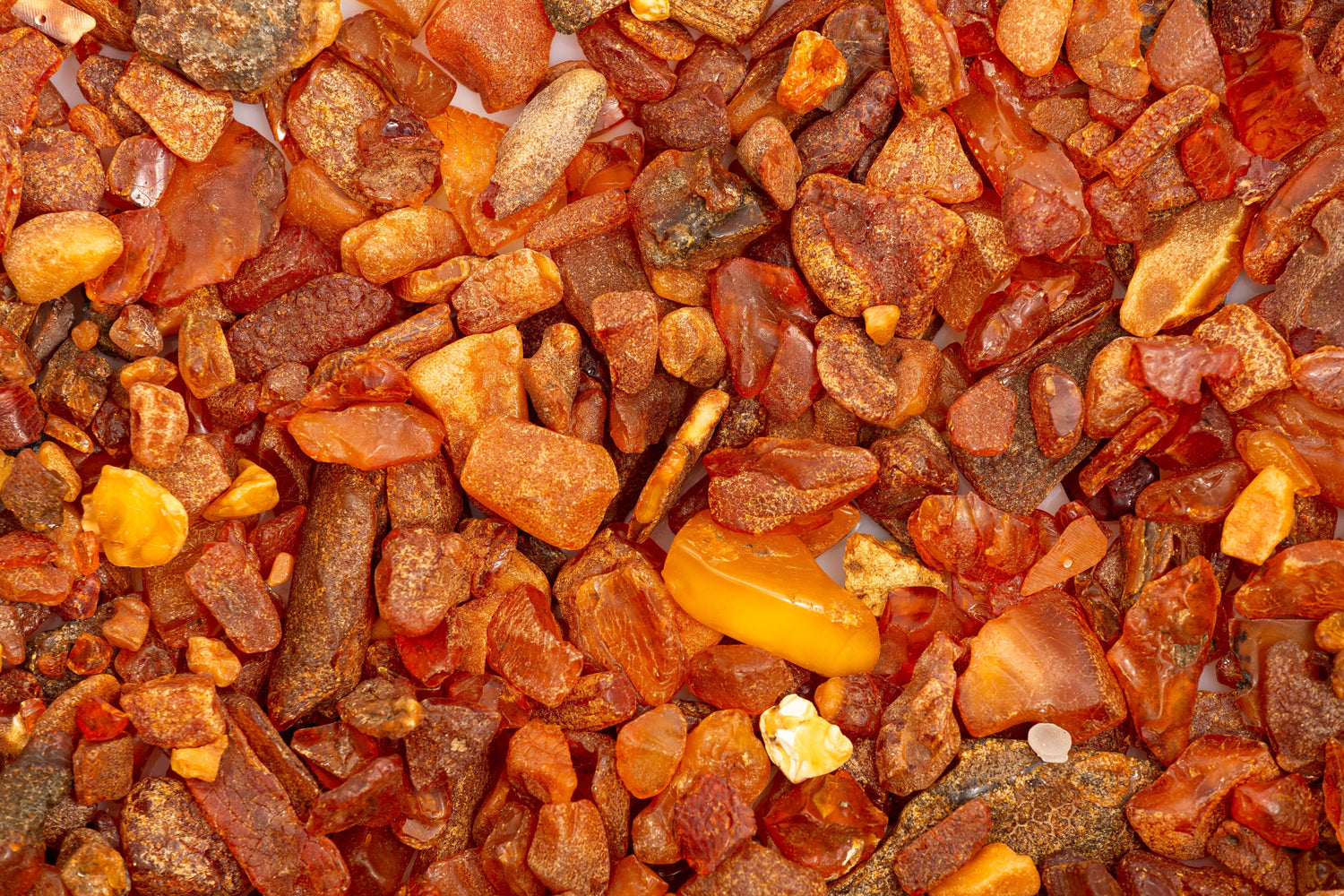
What Is Raw Amber — and Why It Matters for Your Next Project
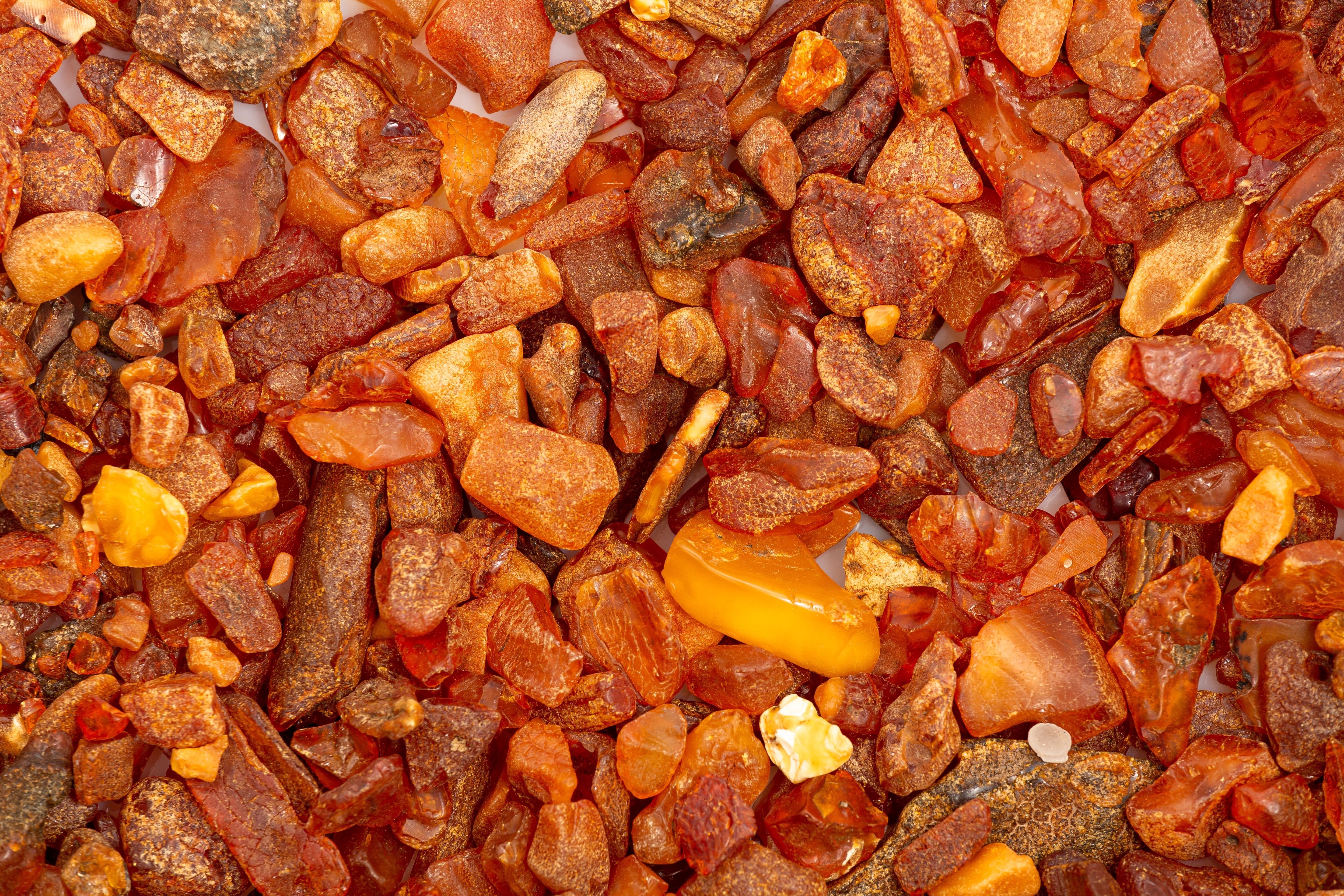
Raw amber is unprocessed, unpolished fossilized tree resin collected directly from the Baltic Sea region — and it is one of nature's most remarkable materials for jewelry making, collecting, and crafts.
Here is a quick overview of what you need to know:
| Topic | Quick Answer |
|---|---|
| What it is | Fossilized tree resin, 40-50 million years old |
| Main source | Baltic region (Poland, Lithuania) — ~90% of world supply |
| Hardness | 2.0-2.5 on the Mohs scale (handle with care) |
| Common colors | Lemon, butterscotch, cognac, cherry, white |
| Best uses | Jewelry making, collecting, lapidary art, display |
| How to test authenticity | Floats in salt water; pine scent when rubbed |
| Value range | $5 to $50,000+ depending on size, color, and inclusions |
Ancient civilizations believed amber to be solidified sunlight or the tears of gods — and once you hold a piece in your hand, that sense of wonder is easy to understand.
Every piece of raw amber is completely unique. No two stones share the same shape, color, or history. That is exactly what makes it so compelling for artisans and collectors who want something genuinely one of a kind.
I'm Gabriel Ciupek, President and owner of Midwest Amber, Inc., with years of hands-on experience sourcing, grading, and working with raw amber directly from Poland and Lithuania. I'll walk you through everything you need to choose the right piece with confidence.
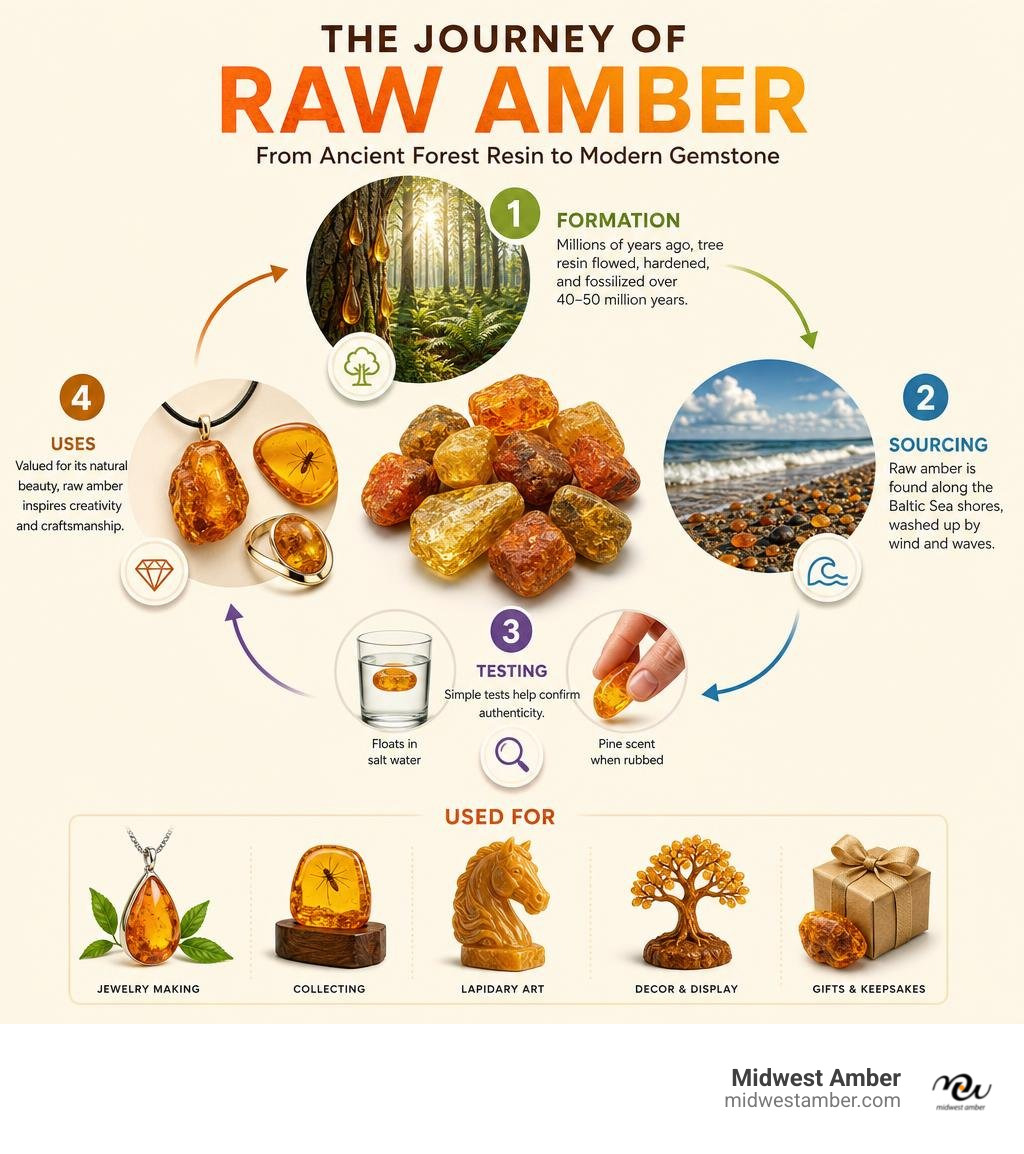
Essential raw amber terms:
Origins, Properties, and Colors of Raw Baltic Amber
To truly appreciate raw amber, we have to take a journey back in time. This is not a mineral gemstone formed deep in the Earth's crust like diamonds or rubies. Instead, amber is organic - it is the fossilized, hardened resin of ancient trees that grew tens of millions of years ago.
When we hold a piece of Raw Baltic Amber, we are holding a physical piece of prehistoric history. Its unique chemical structure and physical properties make it unlike any other material on Earth.
What is Raw Amber?
In its truest sense, raw amber is amber that remains in its natural, unprocessed state. When it is extracted from the earth or gathered from the sea, it is typically covered in a rough, dark, and weathered outer crust often referred to as the "skin" or cortex. This natural crust is formed by oxidation and exposure to the elements over millions of years.
Unlike polished amber, which is smooth, glassy, and completely transparent, a raw stone has an organic, irregular shape and a textured surface. In jewelry and collecting, there is a helpful distinction to keep in mind:
- True Raw Amber: Completely untouched, unpolished, and retaining its natural weathered skin.
- Semi-Polished Amber: Amber that has undergone a light tumbling or single-stage polishing process. This removes the sharpest edges and some of the crust, leaving a smoky, frosted-glass appearance. Many people looking for "raw" jewelry actually prefer semi-polished beads because they are safer and more comfortable to wear against the skin.
- Fully Polished Amber: Amber that has been hand-polished through multiple stages to achieve a perfectly smooth, glassy, and transparent finish.
Understanding these differences is key when choosing between different styles of jewelry. For a deeper dive into how unpolished stones compare to treated varieties, check out From Raw To Red A Shoppers Guide To Every Type Of Amber Jewelry.
Geological Formation and Baltic Uniqueness
The story of Baltic amber begins approximately 40 to 50 million years ago during the Eocene epoch. At this time, Northern Europe was covered in dense, subtropical forests dominated by ancient coniferous trees, most notably Pinus succinifera.
When these trees were damaged by storms, pests, or disease, they exuded massive amounts of sticky resin to seal their wounds. Over millions of years, this resin fell to the forest floor, became buried under layers of sediment, and underwent a process called polymerization. Under specific conditions of temperature, pressure, and time, the volatile organic compounds evaporated, leaving behind the hardened, fossilized resin we call amber.
What makes Baltic amber unique compared to other types (such as Dominican or Burmese amber) is its high concentration of succinic acid. Often referred to scientifically as succinite, Baltic amber contains between 3% and 8% succinic acid. This compound is highly valued in traditional European wellness practices, and Baltic amber accounts for approximately 90% of the world's total amber supply.
Physical Properties and Color Variations
Because raw amber is an organic substance, its physical properties are quite different from mineral gemstones:
- Hardness: It registers between 2.0 and 2.5 on the Mohs hardness scale. This makes it relatively soft - about the same hardness as a fingernail - meaning it can be easily scratched, carved, or shaped, but it must be handled with care.
- Weight: Amber is incredibly lightweight. It has a specific gravity of 1.05 to 1.10, which is only slightly denser than fresh water.
- Warmth: Because it is an organic insulator, amber feels warm to the touch, unlike cold mineral stones.
The colors of raw Baltic amber are incredibly diverse, influenced by the type of debris, air bubbles, and chemical conditions present during its formation:
- Butterscotch & Egg Yolk: Opaque, creamy yellow shades that are highly prized by collectors. These colors are caused by millions of micro-microscopic air bubbles trapped within the resin. You can learn more about these beautiful opaque varieties in our article on Egg Yolk Amber Beads.
- Lemon & Yellow: Light, bright, and semi-translucent shades that capture the light beautifully.
- Cognac & Honey: Warm, rich golden-brown tones that represent the classic "amber" color most people recognize.
- Cherry & Black: Deep red and very dark brown hues that look almost black until held up to a bright light source.
Sourcing and Sizing Genuine Raw Amber
At Midwest Amber, we are deeply committed to ethical sourcing. We work directly with trusted partners in Poland and Lithuania who harvest amber using sustainable, traditional methods. This ensures that every piece we offer is 100% natural and legally obtained.
Sizing and Grading Raw Amber
In the wholesale and lapidary markets, raw amber is carefully sorted and graded by weight. Because larger pieces are significantly rarer than small fragments, the price per gram increases exponentially with the size of the stone.
The table below outlines the standard raw Baltic amber size categories and how they are typically used by artisans and collectors:
| Size Category (Weight) | Common Physical Dimensions | Ideal Crafting & Collecting Uses |
|---|---|---|
| Small Bits (1.1g - 2g) | 10mm to 15mm | Ideal for small gemstone collections, educational kits, or mosaic art. |
| Small Fractions (5 - 10g) | 15mm to 25mm | Perfect for making small tumbled beads, delicate wire-wrapped pendants, and small jewelry components. |
| Medium Stones (10 - 20g) | 25mm to 40mm | The sweet spot for standard jewelry making. Excellent for rings, statement pendants, and custom bead carving. |
| Large Lumps (20 - 50g) | 40mm to 60mm | Highly sought after by lapidary artists for detailed carvings, large statement bracelets, and cabinet display specimens. |
| Collector Grade (50 - 100g+) | 60mm to 100mm+ | Rare, museum-quality pieces. Typically kept in their raw state for display or carved into intricate, high-value sculptures. |
If you are looking to create your own jewelry designs, selecting the right size category is the first step. For more details on sourcing loose components, explore our guide on Amber Beads For Jewelry Making.
Sourcing and Sizing Genuine Raw Amber for Artisans
For local jewelry makers and lapidary artists working in our home service areas across the Chicago suburbs — from the creative communities in Crystal Lake and Barrington to the design studios in Elk Grove Village and Schaumburg — sourcing high-quality raw material is essential.
When artisans select raw stones for carving or cabbing, they look for pieces with minimal internal fractures and a shape that complements their intended design. Because raw Baltic amber is relatively soft, it can be shaped using standard woodworking or lapidary tools, provided the material is kept cool with water to prevent the resin from melting or cracking. For a step-by-step breakdown of how to work with this material, see our comprehensive Amber For Jewelry Making Guide.
Practical Applications and Value Factors
From stunning handcrafted jewelry to fascinating scientific specimens, raw amber serves many purposes. Its organic beauty makes it a favorite for those who appreciate natural, unrefined aesthetics.
Jewelry Making and Collecting
One of the most popular ways to enjoy this material is through unique, handcrafted jewelry. Because raw stones are irregular and textured, they bring an earthy, bohemian character to any piece.
- Nugget Necklaces: Strands of lightly tumbled, nugget-shaped raw beads are incredibly popular. They retain their natural, tactile feel while remaining comfortable to wear, offering beautiful multi-toned options featuring cognac, honey, lemon, and butterscotch.
- Versatile Jewelry Styles: Raw stones are crafted into a wide variety of pieces, including necklaces, bracelets, earrings, pendants, and anklets.
- Men's Jewelry: The rugged, unpolished look of raw stones makes them excellent for masculine designs. Discover how these warm tones are styled in our collection of Raw Yellow Honey Baltic Amber Jewelry For Men.
- Teething Necklaces: In traditional European folklore, raw Baltic amber has long been worn close to the skin. To learn more about this traditional use, read about the Raw Amber Teething Necklace.
- Antique Collecting: For those who appreciate history, vintage and antique amber beads represent a highly collectible category of organic art. Explore these rare finds at Antique Amber Beads For Sale.
Whether you are looking to purchase a finished piece or craft your own, understanding the journey from raw material to wearable art is helpful. You can find more buying tips in our article, From Chains To Chips A Buyers Guide To Amber Jewelry And Gifts.
Pricing and Value Factors
If you are buying raw amber in June 2026, several key factors will influence the price and value of your stones:
- Weight and Size: Because large, intact pieces of amber are rare, the price per gram increases significantly as the stone's weight goes up. A single 100-gram stone is worth far more than one hundred 1-gram pieces.
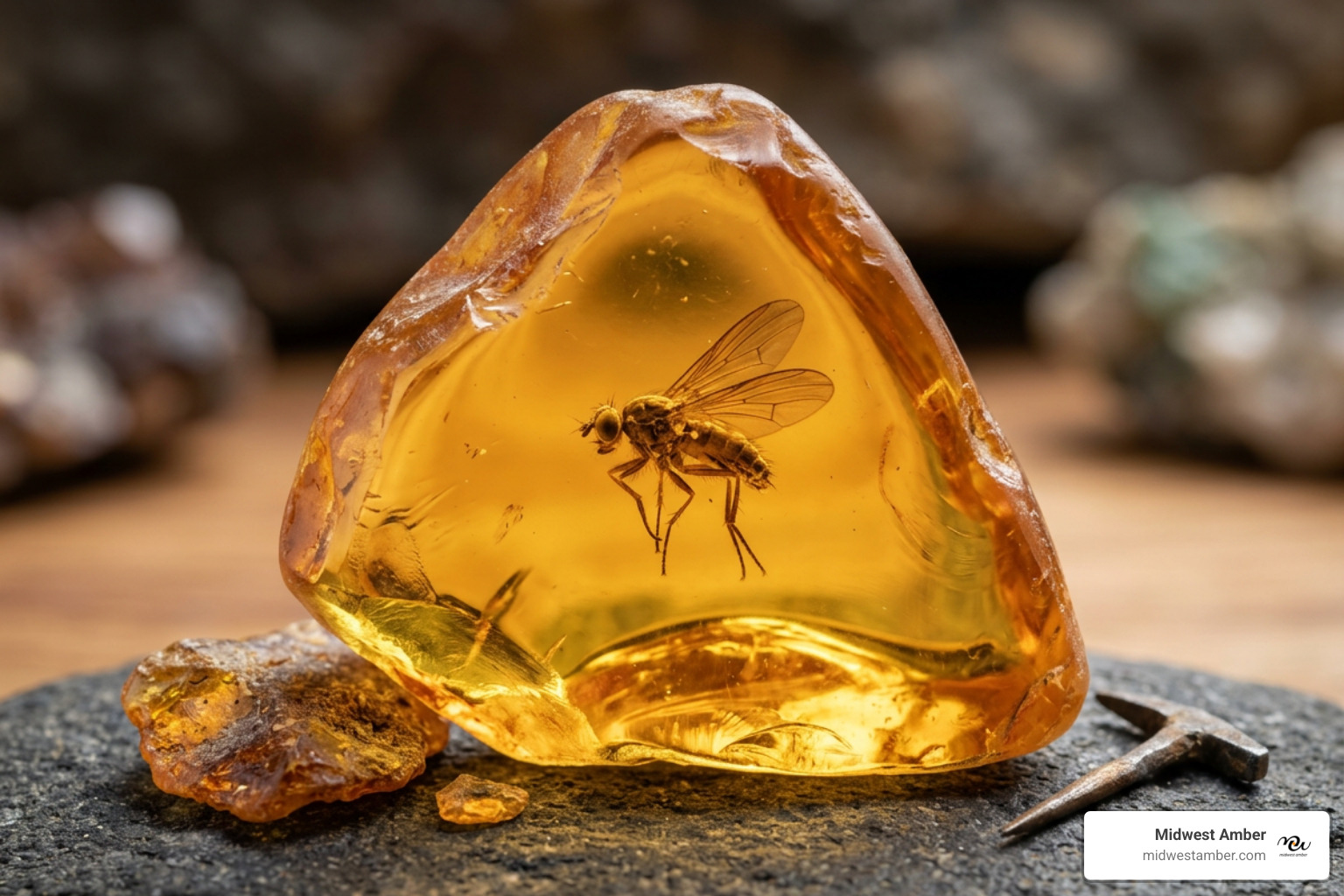
- Inclusions: This is the ultimate value multiplier. Amber that contains well-preserved prehistoric inclusions — such as insects, arachnids, or plant matter — is highly prized by scientists and collectors alike. An inclusion can increase the value of a stone by 100 to 1000 times compared to an identical clear stone.
- Color and Clarity: While transparency is highly valued in polished jewelry, unique opaque colors like "royal white" or "butterscotch" command premium prices in the raw market due to their rarity.
- Origin: Baltic amber (succinite) generally commands a premium over younger resins like copal due to its age, historical significance, and succinic acid content.
Authenticity Testing and Care Guidelines
Because of its popularity and value, the market unfortunately contains many imitations, ranging from modern plastic and glass to young, semi-fossilized resins like copal. Knowing how to test and care for your raw amber is essential to protecting your investment.
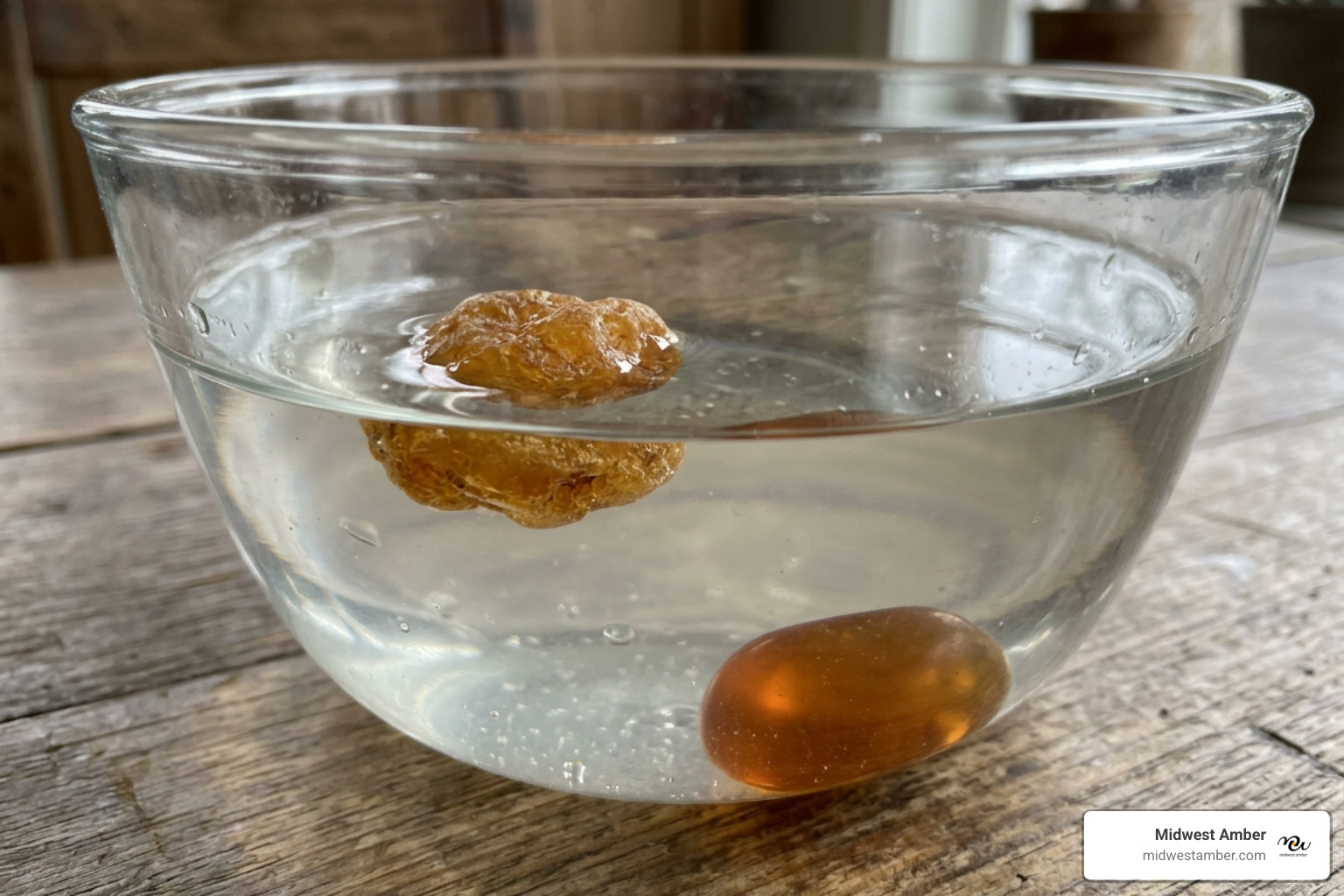
How to Identify Raw Amber
Fortunately, you do not need a fully equipped laboratory to perform initial authenticity tests. Here are several reliable, non-destructive tests you can perform at home:
- The Saltwater Flotation Test: This is one of the easiest and most reliable tests. Because amber is incredibly lightweight, it will float in saltwater but sink in freshwater. Mix one part salt with two parts warm water and stir until completely dissolved. Place your unpolished stone in the water. Genuine amber will float to the top, while most plastics, glass, and synthetic compounds will sink to the bottom.
- The Static Electricity Test: Amber is an excellent electrical insulator. Rub your raw stone vigorously against a piece of wool or silk cloth for 20 to 30 seconds. If the stone is genuine, it will generate a static charge capable of picking up tiny scraps of paper or dust.
- The Scent Test: When rubbed vigorously until warm, or when subjected to a hot needle test on an inconspicuous area, genuine Baltic amber will release a pleasant, natural pine-forest aroma. Synthetic plastics will release an acrid, chemical smell.
For a complete step-by-step guide on verifying your pieces, read our detailed article on How To Identify Raw Amber.
Storing and Cleaning Your Specimens
Because raw amber is relatively soft and chemically sensitive, it requires gentle care to preserve its natural beauty for generations:
- Cleaning: Never use harsh chemical cleaners, solvents, steam, or ultrasonic jewelry cleaners. To clean raw stones, simply rinse them in lukewarm water and use a soft, damp cloth to wipe away surface dust or dirt. If necessary, a tiny drop of mild, natural soap can be used, followed by a thorough rinse.
- Drying: Allow your amber to air-dry completely. Do not use hair dryers or expose it to direct heat sources.
- Storage: Store your raw stones individually in soft cloth bags or padded jewelry boxes. Because amber registers only 2.0-2.5 on the Mohs scale, harder gemstones like quartz, jade, or diamonds can easily scratch its surface if stored together.
- Environment: Keep your amber away from extreme temperatures, high heat, and prolonged exposure to direct sunlight, which can cause the material to dry out, become brittle, or develop deep surface cracks over time.
Conclusion
Whether you are an artisan designing a custom jewelry line in Arlington Heights, a collector in Crystal Lake looking for a rare piece of natural history, or simply someone who appreciates the warm, organic beauty of the Baltic Sea, raw amber offers a unique connection to our planet's ancient past.
At Midwest Amber, we bring over 20 years of experience, a deep passion for our Polish and Lithuanian heritage, and a steadfast commitment to providing 100% natural, ethically sourced Baltic amber. Every piece of jewelry we handcraft is backed by certified authenticity, ensuring you receive only the finest genuine material.
Ready to explore genuine amber? Learn how to protect yourself from imitations by reading our comprehensive guide: real or resin how to tell if your amber jewelry is genuine.

Leave a comment
This site is protected by hCaptcha and the hCaptcha Privacy Policy and Terms of Service apply.