

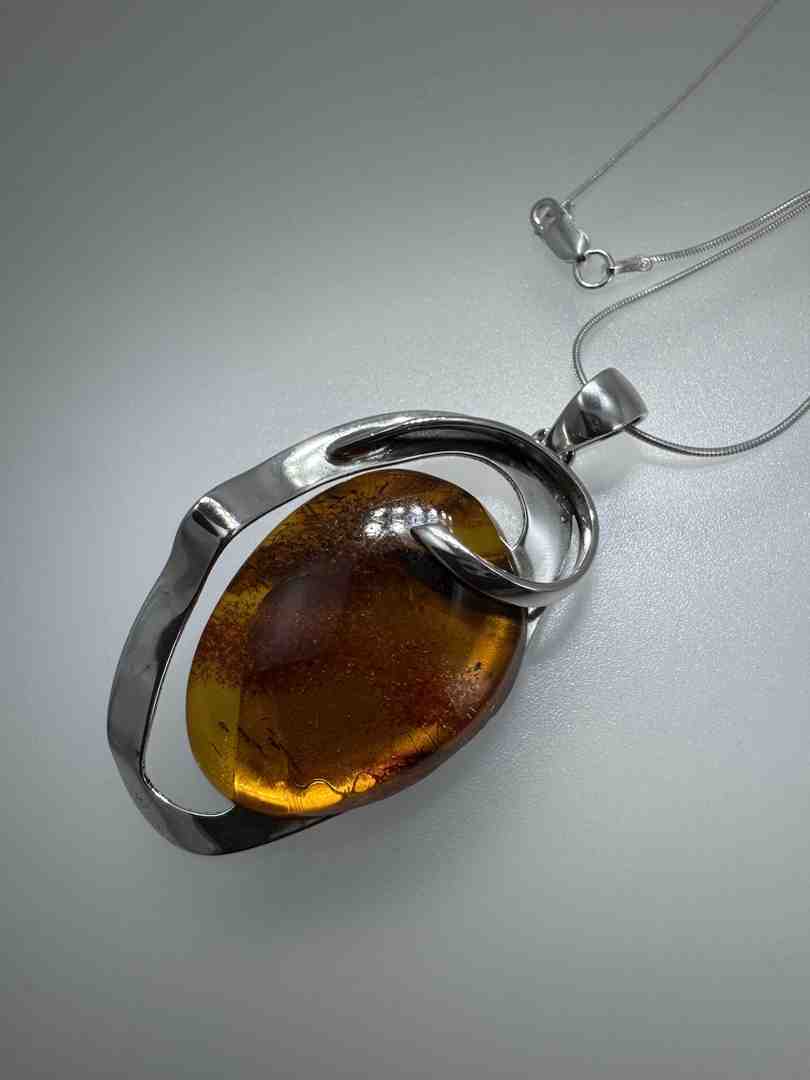
What Is Carved Amber Jewelry — and Why It Stands Apart

Carved amber jewelry represents one of the oldest and most captivating forms of wearable art — genuine Baltic amber, shaped and engraved by hand into pendants, earrings, rings, bracelets, and brooches that carry millions of years of natural history.
Here is a quick overview of what makes it special:
| Feature | What It Means for You |
|---|---|
| Material | Fossilized tree resin, 45+ million years old, sourced from the Baltic region |
| Carving | Hand-engraved or relief-carved by skilled artisans, not mass-produced |
| Uniqueness | No two pieces are identical — natural color, inclusions, and texture vary |
| Common motifs | Roses, animals, fangs, cameos, snakeskin, geometric patterns |
| Colors available | Butterscotch, cognac, cherry, honey, yellow, green, black |
| Price range | Roughly $26–$200+ depending on size, complexity, and setting |
| Heritage | Rooted in Polish and Lithuanian craft traditions spanning generations |
Amber is not a stone or mineral. It is organic — fossilized resin from ancient pine forests. That living origin is exactly what makes carved amber so different from carved gemstones. Every piece holds natural inclusions, warmth to the touch, and a glow that no synthetic material can replicate.
The J. Paul Getty Museum notes that in the ancient world, carved amber objects were "never just jewelry" — they served as talismans, ritual objects, and symbols of social identity. That depth of meaning continues to draw collectors and gift-seekers to carved amber today.
I'm Gabriel Ciupek, President and owner of Midwest Amber, Inc., with years of hands-on experience sourcing, pricing, and presenting carved amber jewelry directly from Polish and Lithuanian artisans. My work puts me in daily contact with the craftspeople and suppliers who keep this centuries-old tradition alive.
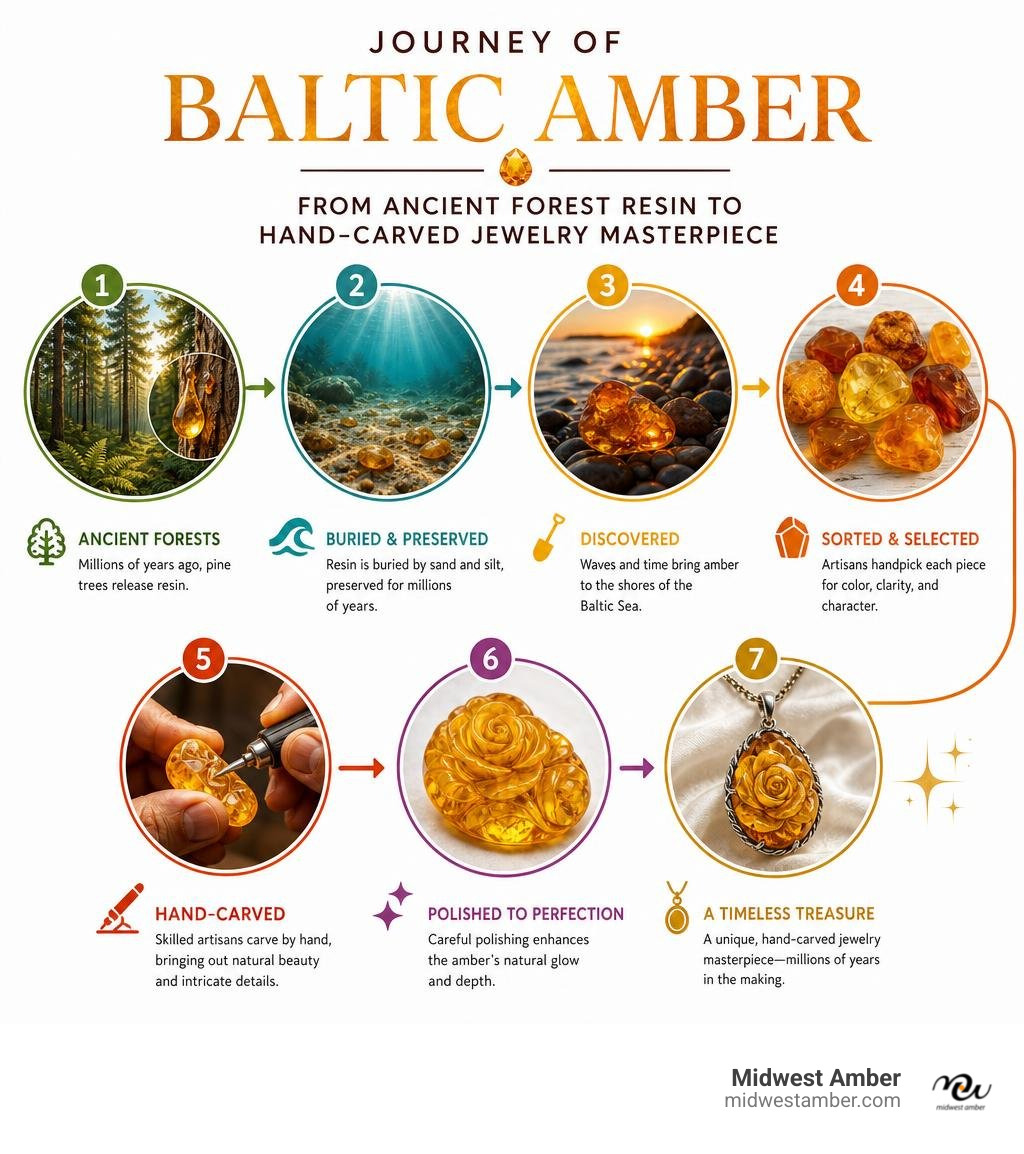
Glossary for carved amber jewelry:
The Unique Appeal of Carved Amber Jewelry
What is it about a hand-carved piece of history that makes us stop and stare? Unlike traditional gemstones that are cold to the touch and require harsh industrial diamond saws to cut, Baltic amber is warm, incredibly lightweight, and yields beautifully to the careful hands of an artisan.
When you wear carved amber jewelry, you are wearing a physical capsule of a forest that breathed over 45 million years ago. Because amber is fossilized tree resin rather than mineralized rock, it possesses a soft, workable hardness (measuring about 2 to 2.5 on the Mohs scale). This physical property allows masters of the craft to achieve incredibly detailed, three-dimensional relief carvings that would be nearly impossible or incredibly brittle in traditional stones.
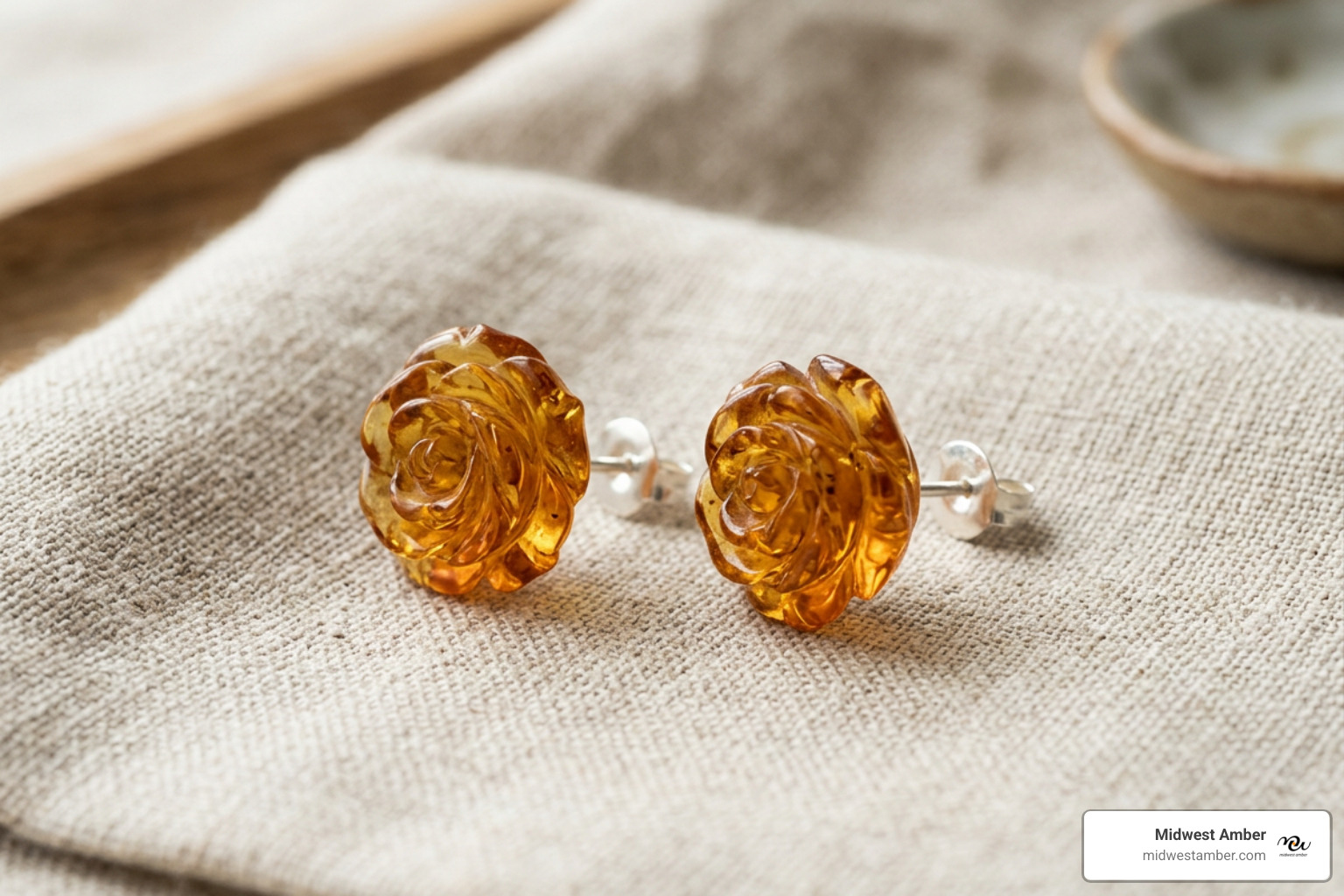
Every curve, leaf, and petal carved into a piece of amber catches the light differently. This interaction creates a glowing, inner fire. The natural warmth of the material means it immediately acclimates to your body temperature when worn, making even large statement necklaces or heavy-looking earrings extraordinarily comfortable for all-day wear. To understand how these physical properties translate into stunning wearable art, you can explore the principles of Amber Jewelry Design.
How Carving Differs from Standard Amber Polishing
When most people picture amber jewelry, they think of smooth, glossy cabochons or perfectly rounded beads. While these classic shapes are beautiful, the process of creating them is largely mechanical. Standard amber polishing involves tumbling raw chunks in specialized machines or using basic sanding wheels to remove the rough outer crust (known as the cortex) and reveal the shiny, translucent interior.
In contrast, hand-carving is an intimate dialogue between the artisan and the individual amber stone. Instead of forcing a uniform shape, the carver must analyze the unique structure of each raw piece. They look for natural flow lines, stress points, and color variations.
Using delicate hand-chisels, fine dental-style drills, and engraving needles, the artisan manually carves away layers of the amber. This process can take the form of high-relief carving (where the design projects prominently from the background) or intaglio (reverse engraving on the back of a clear stone so the image appears suspended inside). The result is a highly tactile surface texture that begs to be touched, transforming a simple organic substance into a masterpiece.
The Role of Natural Inclusions and Color Variations
One of the most exciting aspects of working with Baltic amber is its astonishing array of natural colors and internal features. Unlike synthetic materials that are uniform and flat, natural amber is a chaotic, beautiful canvas. The color palette of Baltic amber includes:
- Butterscotch (Royal White): Creamy, opaque, and highly prized. It often features swirls of white and yellow, resembling rich cream stirred into coffee.
- Cognac: The classic, warm orange-brown hue that most people instantly associate with amber. It is highly translucent and possesses a fiery depth.
- Cherry: A deep, dramatic red that looks almost black in low light but glows with a rich crimson color when held up to the sun.
- Honey: A bright, sunny, golden-yellow color that is wonderfully clear and cheerful.
- Green: A rare, earthy olive-to-forest-green shade, often achieved by heating the amber to enhance its natural organic debris.
When an artisan sets out to carve a piece of amber, these colors dictate the final design. For instance, a piece of butterscotch amber might be carved into a delicate rose, where the natural milky swirls mimic the soft shading of real flower petals.
Furthermore, amber is famous for its inclusions. Tiny prehistoric oak leaf hairs, pine needles, water droplets, and gas bubbles are often trapped inside. A master carver will intentionally position these inclusions so they complement the carved design, perhaps turning a dark organic spot into the center of a carved flower or the eye of a carved animal.
Historical and Cultural Origins of Baltic Amber Carving
The human love affair with carved amber is not a modern trend. In fact, it is one of the oldest decorative traditions in human history. Long before humans figured out how to smelt metals or cut diamonds, they were using flint tools to scrape patterns into soft pieces of amber washed up on the Baltic shorelines.
Archaeological excavations across Europe have uncovered amber amulets dating back to the Neolithic period. These ancient people did not view amber as mere decoration; they recognized its unique electrostatic properties (it attracts dust and hair when rubbed) and its ability to burn like wood, leading them to believe it was concentrated sunlight or a gift from the gods. To understand the deep historical roots of this material, you can read about how it served as Amber Rings: More Than Just Jewelry - A Symbol of Protection and History.
Ancient Talismans and Ritual Objects
In the ancient Mediterranean, Baltic amber was a highly prized luxury item traded along the famous "Amber Road" from the Baltic Sea down to Rome, Greece, and Egypt. The Etruscans and ancient Greeks were particularly fond of carved amber. Because of its scarcity and mysterious warmth, carved amber was heavily associated with protection, healing, and the divine.
According to research published by the J. Paul Getty Museum in Jewelry | Ancient Carved Ambers in the J. Paul Getty Museum , these ancient carved objects were frequently used as protective amulets, funerary offerings, and ritual tools. Women wore carved amber pendants depicting protective deities, animal figures, or stylized solar discs to ward off evil spirits, promote fertility, and ensure safe childbirth.
The physical act of wearing these carved pieces was believed to align the wearer with the natural forces of the cosmos. When placed in graves, these carved treasures were meant to guide the soul safely into the afterlife, keeping the warm light of the sun with them even in the darkness of the tomb.
Polish and Lithuanian Artisanal Heritage
The heart of the amber carving world has always beat along the shores of the Baltic Sea, particularly in Poland and Lithuania. For centuries, cities like Gdańsk in Poland and Palanga in Lithuania have been global epicenters of amber craftsmanship.
During the Golden Age of Amber in the 16th and 17th centuries, guild workshops in Gdańsk produced incredibly complex carved amber items for royal families across Europe, including massive jewelry chests, altarpieces, and the legendary Amber Room. This heritage of hand-carving has been passed down through generations of Polish and Lithuanian families.
Today, contemporary artisans in these regions continue to use traditional hand-carving techniques, combining them with modern design sensibilities. We at Midwest Amber are incredibly proud to partner directly with these generational workshops, bringing their authentic, certified Baltic creations to jewelry lovers throughout our local communities in Illinois—from Chicago and Schaumburg to Long Grove and Lake Zurich.
Popular Motifs and Styles in Amber Carving
The motifs found in carved amber jewelry are deeply tied to nature, folklore, and classical art. Because amber is an organic product of the earth, artisans naturally gravitate toward designs that celebrate the natural world.
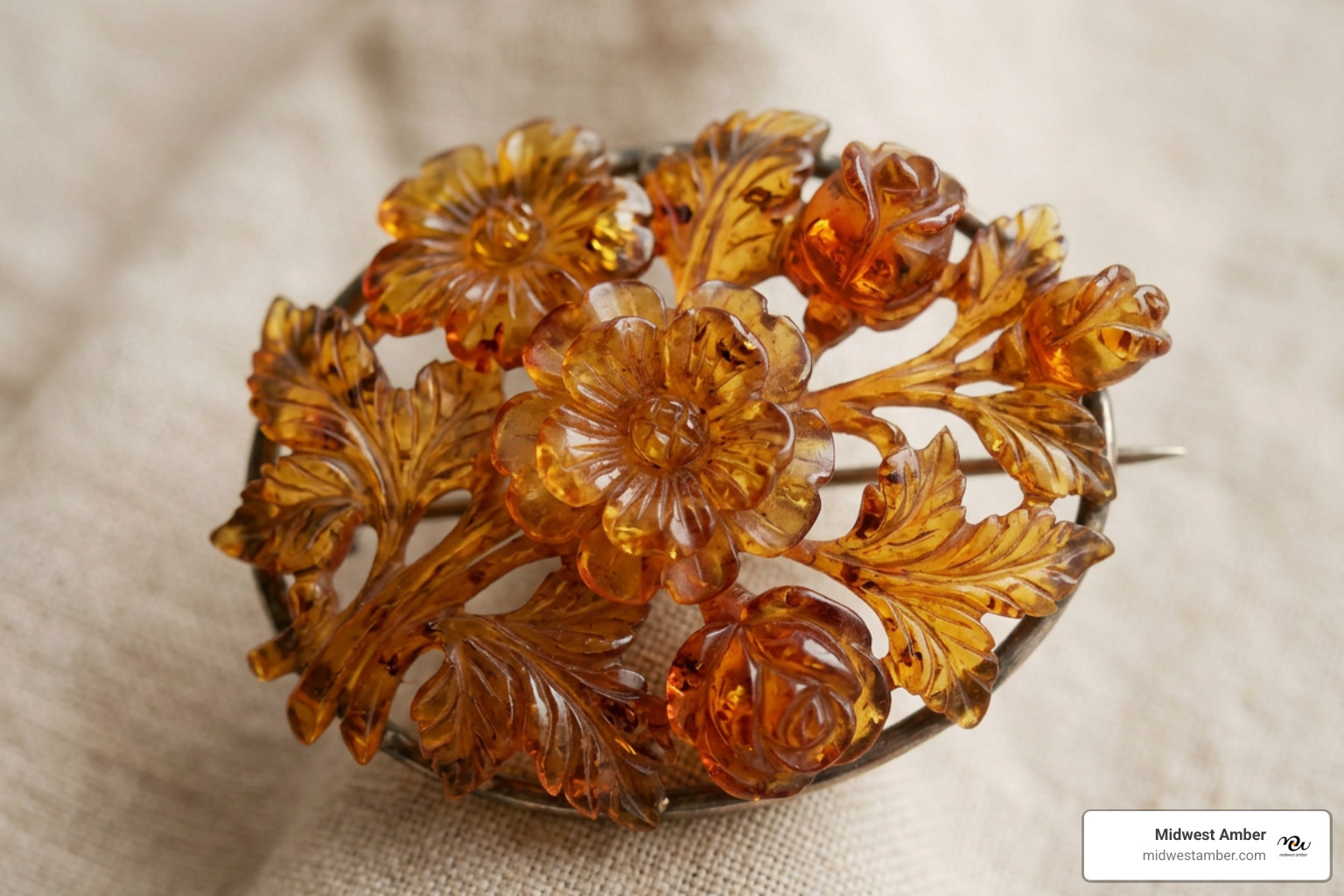
Whether you prefer a bold, dramatic statement piece or a delicate, subtle accessory, there is a carving style to match your personality. Let's explore some of the most popular motifs that have stood the test of time.
Floral Designs and Cameos
Floral motifs are by far the most popular and enduring designs in amber carving. The rose, in particular, is a classic favorite. Artisans carve highly detailed, multi-petaled roses out of single pieces of butterscotch, cognac, or cherry amber. These roses are often set into sterling silver or gold-plated mounts, sometimes accompanied by delicate silver leaves. If you are captivated by these botanical designs, you will love our Amber Flower Earrings Complete Guide.
Another spectacular application of floral carving is the amber cameo. Cameo carving is a traditional technique where an image is carved in relief against a contrasting background.
In amber cameography, the artisan often uses a piece of amber that has distinct color layers—such as a milky yellow layer over a dark cognac layer—to carve a beautiful portrait of a woman or an intricate floral bouquet. The top layer is carved away to reveal the darker, translucent background, creating a stunning, high-contrast miniature sculpture. To learn more about this elegant art form, check out our Amber Cameo Brooch Complete Guide and explore the broader history of these pieces in our guide All About Amber Brooches.
Animal and Symbolic Carvings
For those who prefer their jewelry with a touch of the wild or the whimsical, animal and symbolic carvings offer an incredible variety of options. Traditional Baltic folklore is rich with animal symbolism, and these stories are frequently brought to life in amber. Common animal motifs include:
- Birds: Symbolizing freedom, spirituality, and the connection between heaven and earth.
- Fangs: Carved to resemble wild teeth, symbolizing primal strength, courage, and personal protection.
- Snakeskin Textures: Highly detailed, hand-engraved repeating scale patterns carved directly into the surface of dark or burned amber, creating a dramatic, modern, and tactile look.
If you are drawn to unique, symbolic jewelry, you might find inspiration in the mysterious world of arachnid and insect motifs, which you can read about in our articles on the Amber Spider Brooch and the Insect Amber Brooch.
Furthermore, artisans love to carve whimsical objects that celebrate human creativity, such as miniature musical instruments. You can see a beautiful example of this playful craftsmanship in our feature on the Amber Violin Brooch.
How to Identify and Value Genuine Carved Amber
Because of the high value and popularity of genuine Baltic amber, the market is unfortunately flooded with imitations, synthetics, and cheap plastic replicas. For an untrained buyer, distinguishing between a masterpiece carved by a Polish artisan and a mass-produced plastic piece poured into a mold can be incredibly challenging.
| Material Type | Warmth to Touch | Static Electricity | Saltwater Test | Under UV Light |
|---|---|---|---|---|
| Genuine Baltic Amber | Yes, feels warm instantly | Yes, attracts dust when rubbed | Floats in saturated saltwater | Glows pale yellow, green, or blue |
| Copal (Young Resin) | Warm, but melts/softens easily | Weakly static | Floats in saltwater | Glows, but sticky with alcohol |
| Plastic / Bakelite | Feels cold initially | No static or weak | Sinks quickly | Dull or no glow |
| Glass | Feels very cold | No static | Sinks quickly | No glow |
To ensure you are investing in a real treasure, it is vital to understand both the traditional techniques used to create these pieces and how to verify their authenticity.
Traditional Techniques for Creating Carved Amber Jewelry
True carved amber jewelry is created using manual techniques that require years of training. The process begins with selecting a high-quality, structurally sound piece of raw Baltic amber.
The artisan uses a variety of hand tools, including fine files, scrapers, and specialized engraving drills. Because amber is sensitive to friction heat (which can cause it to crack or discolor), the carver must work slowly, often dipping the amber in water to keep it cool.
Once the main shape is carved, the piece is meticulously sanded with progressively finer grits of paper. Finally, it is polished using a soft buffing wheel and natural polishing compounds, such as beeswax or chalk powder. This hands-on process ensures that every carved line is sharp, clean, and possesses a soft, human touch that molds and machines can never replicate. You can learn more about finding genuine pieces in our guide to real amber for sale.
Verifying Authenticity and Baltic Origin
If you want to test your carved amber at home, there are several simple, non-destructive tests you can perform:
- The Touch Test: Hold the jewelry in your hand. Real amber is an organic material and a poor conductor of heat, so it should feel warm and comfortable almost instantly. Plastic or glass will feel cold to the touch.
- The Static Test: Rub the amber vigorously against a piece of wool or silk for 10 to 15 seconds. Genuine amber will become electrostatically charged and will easily pick up tiny pieces of paper, dust, or hair.
- The Saltwater Test: Mix a solution of 1 part salt to 2 parts water (ensure the salt is fully dissolved). Real, unmounted Baltic amber will float in this dense saltwater, while most plastics and glass will sink like stones. (Note: This test only works for loose amber stones or very lightweight jewelry without heavy metal settings).
- The UV Light Test: If you have access to a UV blacklight, shine it on your amber. Genuine Baltic amber will fluoresce with a pale, milky yellow, green, or blue glow. Synthetics will usually show no fluorescence or will glow a dull purple.
To dive deeper into authentic Baltic amber and discover how to select high-quality pieces, you can read our article on how to Discover Timeless Elegance: The Allure of Amber Rings. By choosing certified, natural Baltic amber, you ensure that your jewelry is not only beautiful but also carries the genuine history and warmth of this ancient organic gemstone.
Frequently Asked Questions About Amber Carving
What are the symbolic meanings of carved amber shapes?
Throughout history, different carved shapes have been associated with specific spiritual and metaphysical properties.
For example, a carved rose is a universal symbol of love, beauty, and eternal youth, making it a highly popular gift for anniversaries and birthdays. A carved fang or tooth is worn as a symbol of primal power, courage, and protection, helping the wearer tap into their inner strength.
Geometric patterns, such as the snakeskin texture, are often worn to represent transformation, rebirth, and prestige. Many people also believe that wearing natural Baltic amber close to the skin releases succinic acid, a natural compound believed to boost immunity, reduce inflammation, and bring a sense of warm, calm energy to the mind and spirit.
Caring for Your Precious Carved Amber Jewelry
Amber is a soft, organic treasure, which means it requires a little extra love and care to keep it looking beautiful for generations. Here are our top tips for maintaining your carved pieces:
- Keep it clean: Use a soft, clean cloth dampened with lukewarm water to gently wipe away skin oils and dust. Never use steam cleaners, ultrasonic cleaners, or harsh chemical jewelry dips.
- Avoid chemicals: Always apply your perfumes, hairsprays, lotions, and makeup before putting on your amber jewelry. The chemicals in these products can dull the polish of the amber and cause it to become cloudy over time.
- Store it safely: Store your carved amber in a soft cloth pouch or a separate compartment in your jewelry box, away from harder metal jewelry (like gold, silver, or diamonds) that could easily scratch its delicate carved surface.
- Keep it out of extreme heat: Do not leave your amber jewelry sitting in direct, intense sunlight (such as on a windowsill or a car dashboard) or near heating vents, as extreme heat can cause the organic material to dry out and develop tiny surface cracks.
What price ranges can buyers expect for carved amber?
The price of carved amber jewelry varies widely based on several factors, including the size of the amber stone, the rarity of its color, the complexity of the hand-carving, and the metal setting used.
Generally, small, delicate hand-carved items like stud earrings or simple pendants set in sterling silver can range from $26 to $65.
Medium-sized pieces, such as detailed floral pendants, cameography brooches, or custom-designed necklaces, typically range from $70 to $200.
For large, collector-grade statement pieces featuring rare butterscotch amber, highly intricate multi-figure carvings, or settings in 14k gold, prices can easily exceed $300 to over $1,000. Because every single hand-carved piece is entirely unique, you are not just buying jewelry—you are investing in a one-of-a-kind piece of natural art.
Conclusion
Carved amber jewelry is far more than a simple fashion accessory. It is a breathtaking marriage of natural history and human artistry, a warm and glowing link to ancient forests that existed millions of years ago. From the sacred protective amulets of the ancient Etruscans to the beautiful floral cameos crafted by modern Polish and Lithuanian masters, these Baltic treasures carry a timeless elegance that never goes out of style.
At Midwest Amber, we have spent over 20 years dedicated to preserving this beautiful heritage. We specialize in sourcing 100% natural, ethically gathered, and certified authentic Baltic amber directly from the most talented artisans in Poland and Lithuania. Whether you are looking for a meaningful gift for a loved one or a unique statement piece to add to your own collection, we invite you to explore our curated selection.
Discover the warmth, history, and unmatched beauty of these hand-carved masterpieces. Explore the Midwest Amber Baltic Amber Collection today and find your own piece of ancient sunshine.

Leave a comment
This site is protected by hCaptcha and the hCaptcha Privacy Policy and Terms of Service apply.