

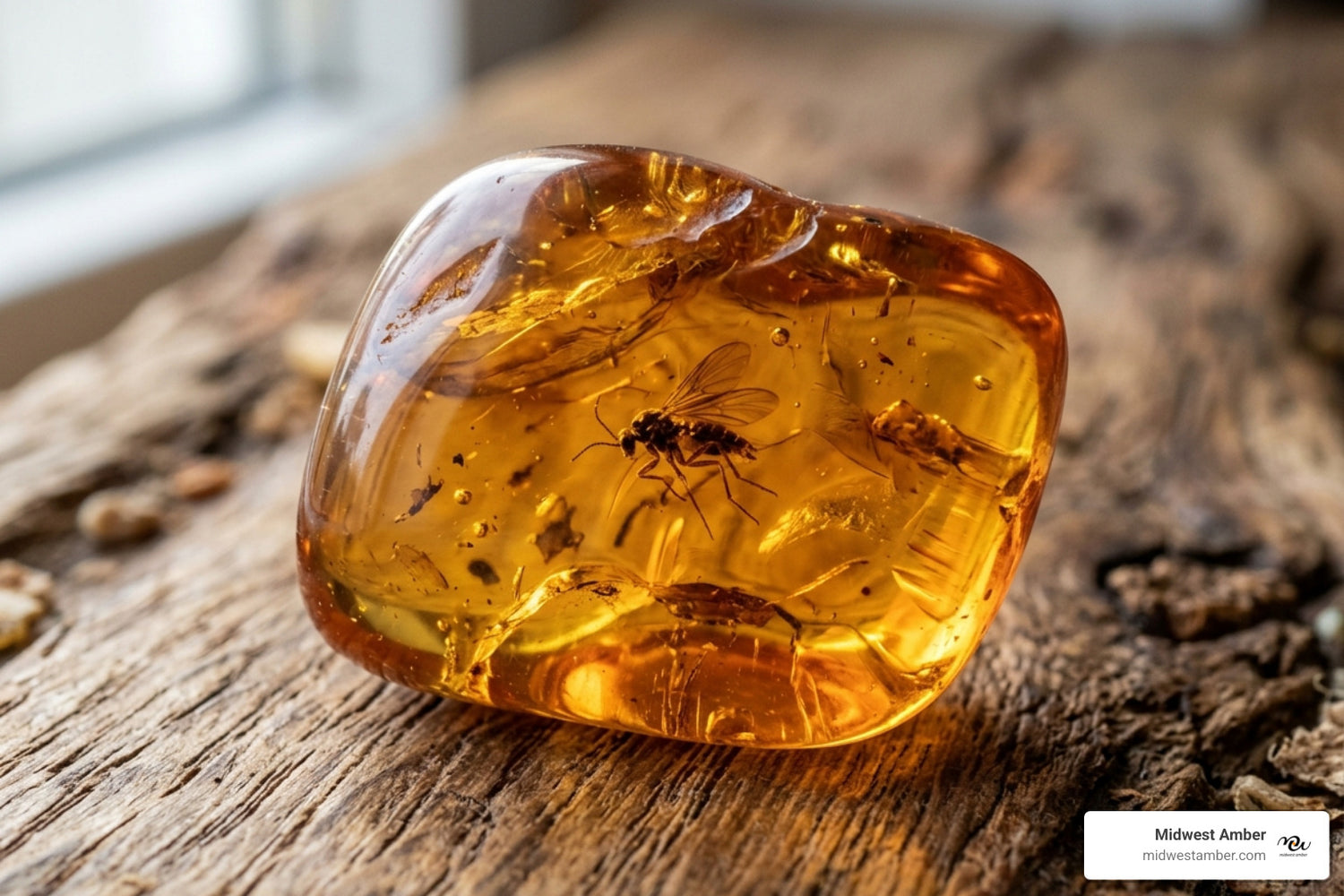
What Amber Really Is — and Whether It Counts as a Precious Stone
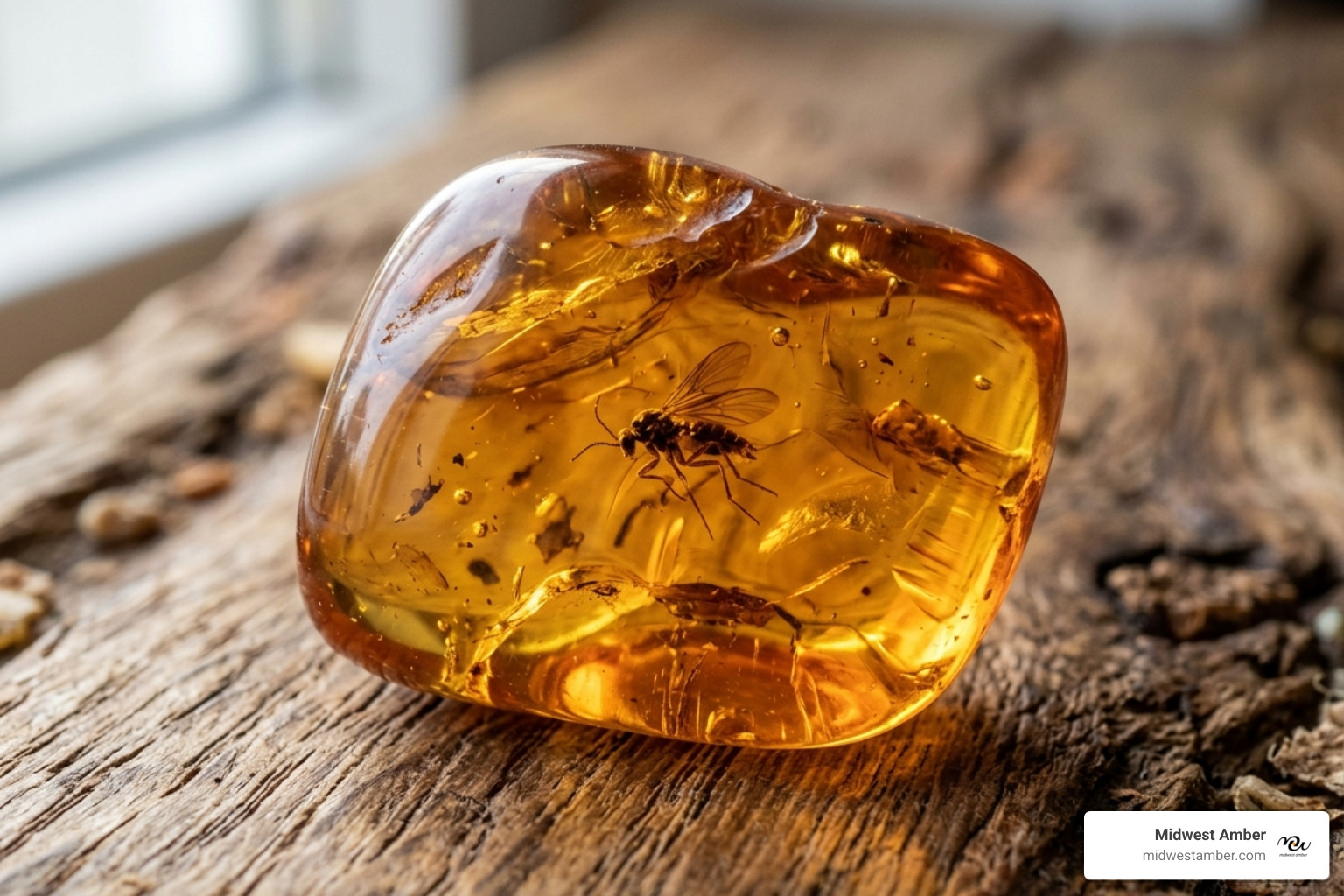
Is amber a precious stone? Not in the traditional sense — but it is a genuine gemstone with remarkable value.
Here's the quick answer:
| Question | Answer |
|---|---|
| Is amber a mineral? | No — it's fossilized tree resin |
| Is amber a crystal? | No — it has no crystalline structure |
| Is amber a gemstone? | Yes — classified as an organic gemstone |
| Is amber precious or semi-precious? | Semi-precious, like turquoise or opal |
| Is amber valuable? | Yes — rare specimens sell for up to $40,000 |
Amber sits in the same special category as pearls and coral — materials born from living things, not formed from minerals inside the earth. That makes it unusual, and honestly, fascinating.
It has been worn, traded, and treasured for over 10,000 years. Ancient Greeks called it elektron — "made by the sun" — because of the warm glow it radiates. And those same ancient forests that produced it left behind something no diamond ever could: a window into prehistoric life, with insects, plants, and even lizards frozen in time for tens of millions of years.
I'm Gabriel Ciupek, President and owner of Midwest Amber, Inc., with years of hands-on experience sourcing and working with genuine Baltic amber — the heart of the is amber a precious stone debate. That background shapes everything we'll cover in this guide.
Must-know is amber a precious stone terms:
What is Amber and How Does it Form?
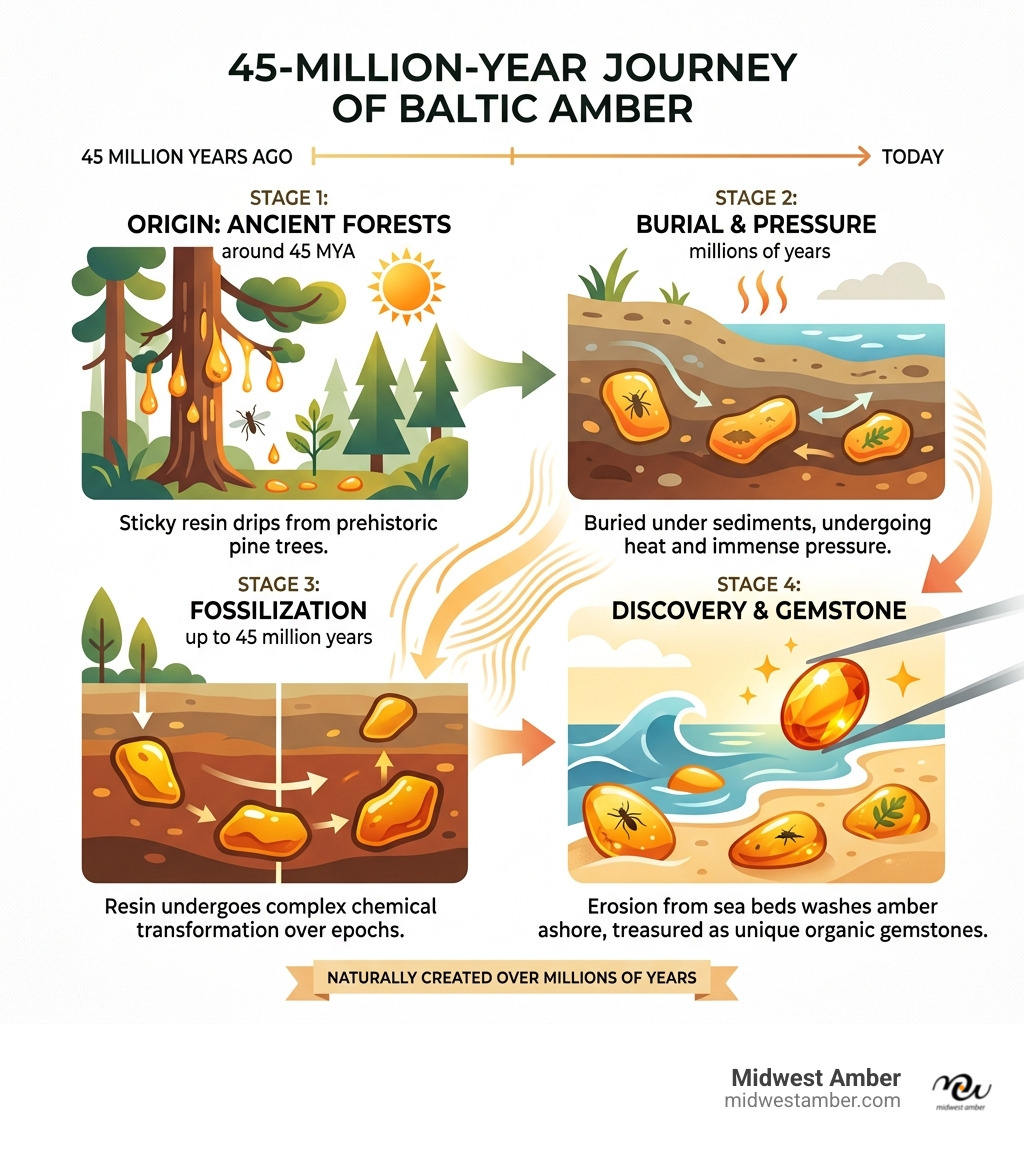
To understand why people ask is amber a precious stone, we first have to look at its birth. Amber isn't "mined" like a rock; it is harvested from the history of our planet.
The story begins roughly 45 million years ago during the Eocene epoch of the Tertiary period. Massive forests of prehistoric conifers, most notably the Pinus succinifera, covered Northern Europe. When these trees were injured by storms, pests, or disease, they bled a thick, sticky substance called resin. This wasn't just "sap" (which carries nutrients); resin was the tree’s immune system, sealing wounds and trapping unwanted invaders.
Over millions of years, this resin underwent a complex chemical process called polymerization. As it became buried under layers of sediment and subjected to heat and pressure, volatile terpenoids evaporated, and the molecules linked together to form a stable, solid material. This transition from fresh resin to "copal" (young resin) and finally to true amber takes millions of years.
According to Britannica, amber is fossilized tree resin that has achieved a stable state through chemical change after burial. It is this incredible journey that makes Natural Amber Stone so distinct. We often describe it as "nature's plastic," but that doesn't do justice to the Unearthing Natural Amber What Makes This Ancient Gem So Special. It is a biological record of a lost world.
Is Amber a Precious Stone or a Gemstone?
In gemology, the question of whether is amber a precious stone often comes down to terminology. Historically, "precious stones" referred to the "Big Four": Diamonds, Rubies, Sapphires, and Emeralds. Everything else was labeled "semi-precious."
While modern gemologists are moving away from these labels because they can be misleading, amber is technically classified as a semi-precious organic gemstone.
Mineral vs. Resin
Most gemstones, like diamonds or quartz, are minerals. They have a specific chemical formula and a crystalline structure. Amber, however, has an amorphous structure—meaning its atoms are arranged randomly, much like glass. It is organic because it originated from living matter.
Amber vs. Traditional Precious Stones
When we compare amber to the stones usually found in engagement rings, the differences are striking. Amber is incredibly light—so light it can float in salt water—whereas diamonds are dense and heavy.
| Feature | Amber | Diamond | Ruby |
|---|---|---|---|
| Origin | Organic (Tree Resin) | Mineral (Carbon) | Mineral (Corundum) |
| Mohs Hardness | 2.0 – 2.5 | 10 | 9 |
| Density | 1.05 – 1.10 (Floats in salt water) | 3.52 | 4.02 |
| Structure | Amorphous | Crystalline | Crystalline |
| Thermal Feel | Warm to the touch | Cold to the touch | Cold to the touch |
As you can see, amber is much softer than a diamond. This is why we always recommend protective settings for amber rings. You can learn more about these physical traits in our Amber Stone Complete Guide. Despite being "semi-precious," its historical and scientific value often rivals that of the "precious" minerals.
Defining the Value: Why is Amber a Precious Stone to Collectors?
If it's not a diamond, why do people pay thousands of dollars for it? For collectors, the answer to is amber a precious stone is a resounding "yes" based on rarity and storytelling.
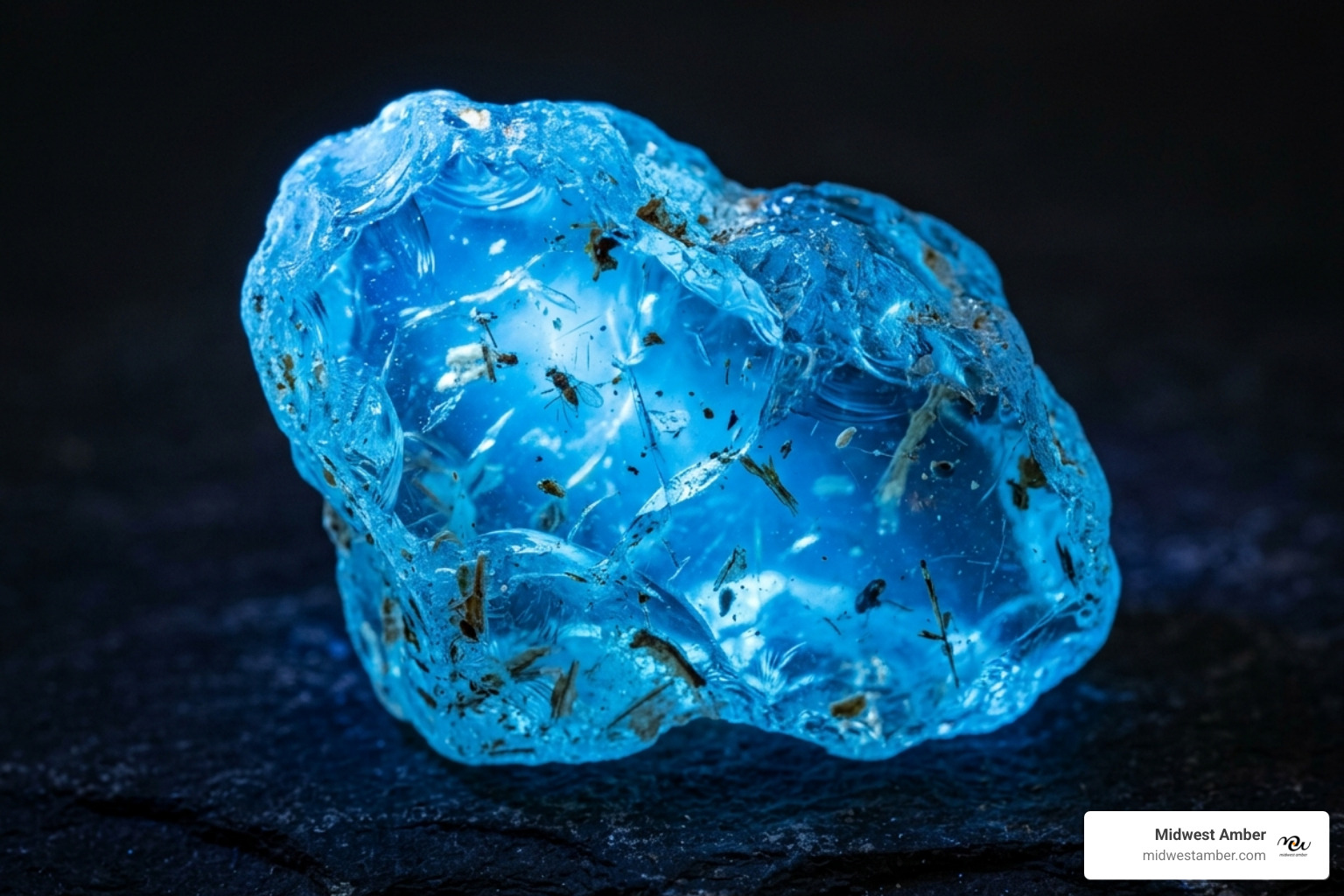
Amber is one of the few materials on Earth that provides a three-dimensional window into the past. While most fossils are impressions in rock, amber "shrink-wraps" its subjects. We have identified 256 different shades of amber, ranging from common honey-yellow to the incredibly rare "Royal White" and even blue.
The Rarity of Inclusions and Colors
The "holy grail" for any amber collector is an inclusion. These are prehistoric hitchhikers—insects, spiders, plant matter, or even tiny vertebrates—that were trapped in the sticky resin millions of years ago. Over 1,000 extinct insect species have been discovered solely because they were preserved in amber.
- Rare Inclusions: While common gnats are affordable, finding a scorpion, a lizard, or a complete flower can skyrocket the price to tens of thousands of dollars.
- Exotic Colors: While we specialize in the golden hues of the Baltic, some regions produce unique variations. You can explore the mysteries of different varieties in our Pink Amber Stone Complete Guide or learn about What Is Black Amber Exploring The Mysteries Of Jet.
The Science of Succinic Acid in Baltic Amber
Not all amber is created equal. Baltic amber, often called the "Gold of the North," is the most prized variety in the world. Why? Because it contains a high concentration (3-8%) of succinic acid.
This acid is a natural substance found in the human body, and for centuries, Baltic amber has been used in folk medicine for its purported immune-supporting and anti-inflammatory properties. In the Middle Ages, it was even used as a fumigant to ward off the plague! This biological "active ingredient" is a major reason why Beyond The Shine Exploring The Essence Of Natural Baltic Amber is so highly valued in European culture.
Identifying Authenticity: Is Your Amber a Precious Stone or a Fake?
Because amber is valuable, the market is unfortunately flooded with fakes made of plastic, glass, or "pressed amber" (small scraps melted together). At Midwest Amber, we pride ourselves on 20 years of experience identifying the real deal.
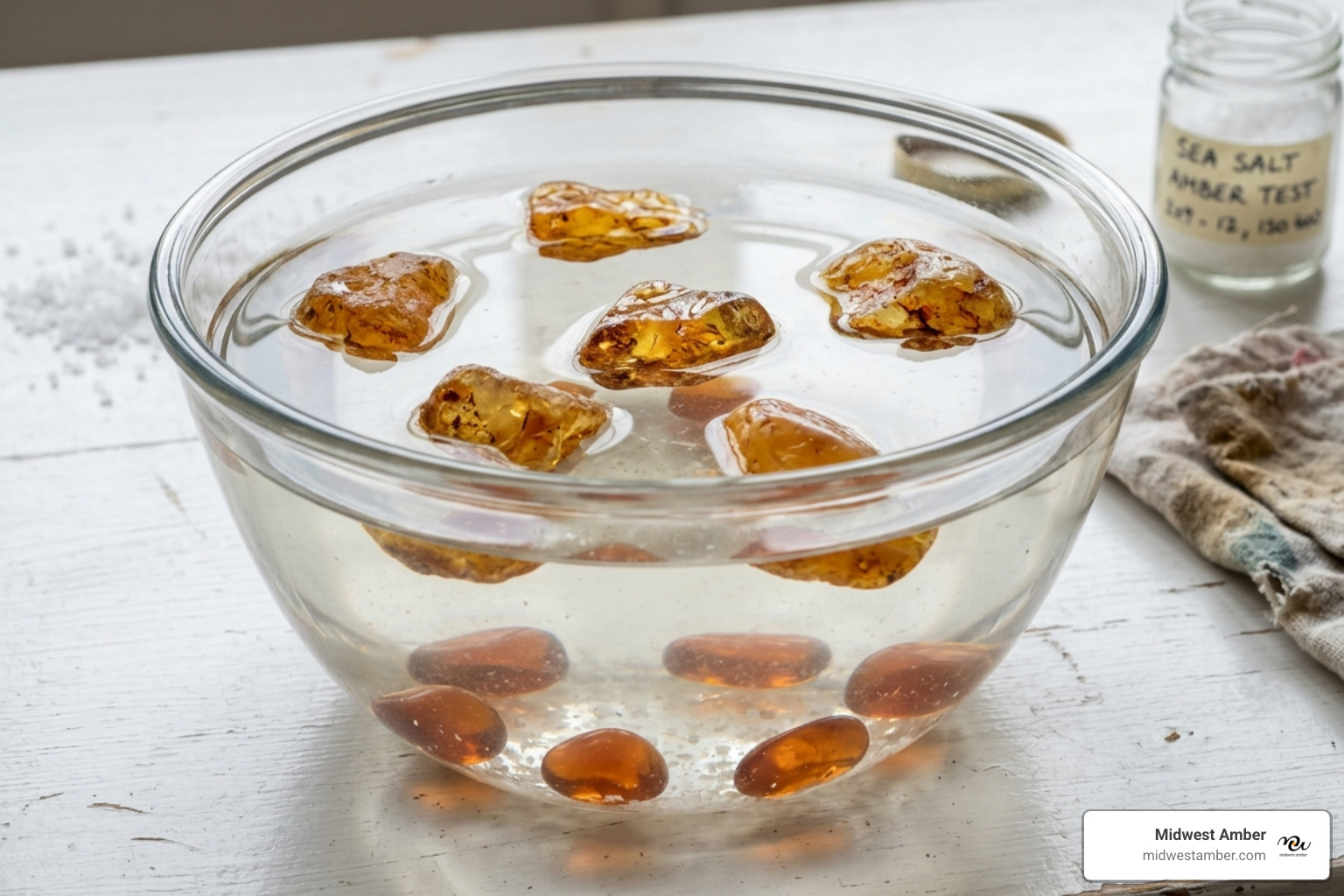
Distinguishing Genuine Baltic Amber from Imitations
How can you tell if your piece is a "precious" heirloom or a cheap imitation? Here are the most reliable tests:
- The Saltwater Test: This is the gold standard. Mix 1 part salt with 3 parts water. Genuine amber has a very low density (1.05-1.10) and will float. Most plastics and glass will sink immediately.
- The Static Test (Elektron): The word "electricity" actually comes from the Greek word for amber, elektron. If you rub genuine amber vigorously against a wool cloth for 20-30 seconds, it will become electrostatically charged and pick up small bits of paper or ash.
- The Scent Test: If you rub amber until it gets warm, or touch it with a hot needle in a discreet spot, it should smell like pine trees or incense. If it smells like burnt plastic or chemicals, it’s a fake.
- The Acetone Test: A drop of nail polish remover (acetone) will make plastic or copal (young resin) sticky. Genuine, millions-of-years-old amber will remain unaffected.
For a deeper dive into these methods, check out The Amber Truth Unlocking The Secrets Of Genuine Stones. Understanding the Meaning Of Amber Stone and the rarity of White Amber Meaning starts with ensuring you have a natural, untreated specimen.
Frequently Asked Questions about Amber Classification
Is amber a mineral or a crystal?
Neither! Amber is an organic solid. It lacks the repeating crystalline lattice found in crystals like quartz or amethyst. Because it was formed from the resin of ancient trees, it is fundamentally different from the inorganic minerals that make up the rest of the gemstone world.
Why is Baltic amber more valuable than other types?
Baltic amber is generally older (around 44-45 million years) and contains much higher levels of succinic acid than Dominican or Mexican amber. Furthermore, the tradition of Polish and Lithuanian craftsmanship is world-renowned. Our artisans have spent centuries perfecting the art of hand-carving and polishing these stones to highlight their natural "inner fire."
How do I care for my amber jewelry?
Because amber has a Mohs hardness of only 2.0 to 2.5, it is very soft. It can be scratched by a fingernail or a stray piece of dust.
- Cleaning: Use only warm water and a soft cloth. Never use ultrasonic cleaners or harsh detergents.
- Storage: Store your amber in a separate soft pouch so it isn't scratched by harder stones like diamonds.
- Chemicals: Keep it away from hairspray, perfume, and alcohol, which can dull the surface. For more maintenance tips, see our Amber Meaning Complete Guide.
Conclusion
So, is amber a precious stone? While the textbooks might call it "semi-precious," anyone who has held a piece of 45-million-year-old Baltic amber knows it feels like something much more significant. It is a literal piece of the prehistoric world, a "living" stone that warms to your touch and carries the scent of ancient pine forests.
At Midwest Amber, we are passionate about sharing this heritage. Based in the Chicago area and serving communities from Arlington Heights to Schaumburg and beyond, we bring over 20 years of expertise to every piece we offer. Our jewelry is handcrafted by skilled Polish and Lithuanian artisans using 100% natural, ethically sourced Baltic amber.
Whether you are looking for a statement pendant, a classic beaded necklace, or a unique pair of earrings, you are buying more than just jewelry—you are buying a piece of Earth's history.
Explore our handcrafted collections in the ultimate guide to amber jewelry and discover why this "time capsule" remains one of the most beloved gemstones in the world.


Leave a comment
This site is protected by hCaptcha and the hCaptcha Privacy Policy and Terms of Service apply.