

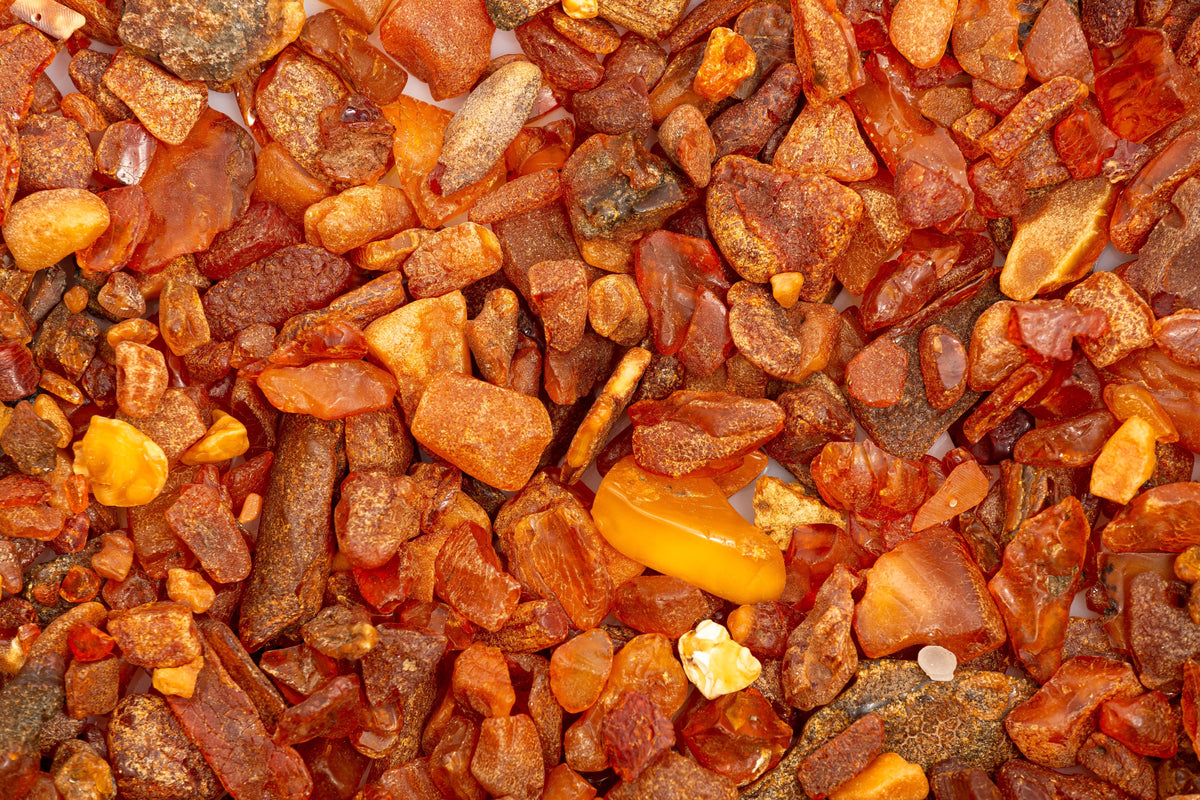
Understanding Raw Amber with Bubble Inclusion
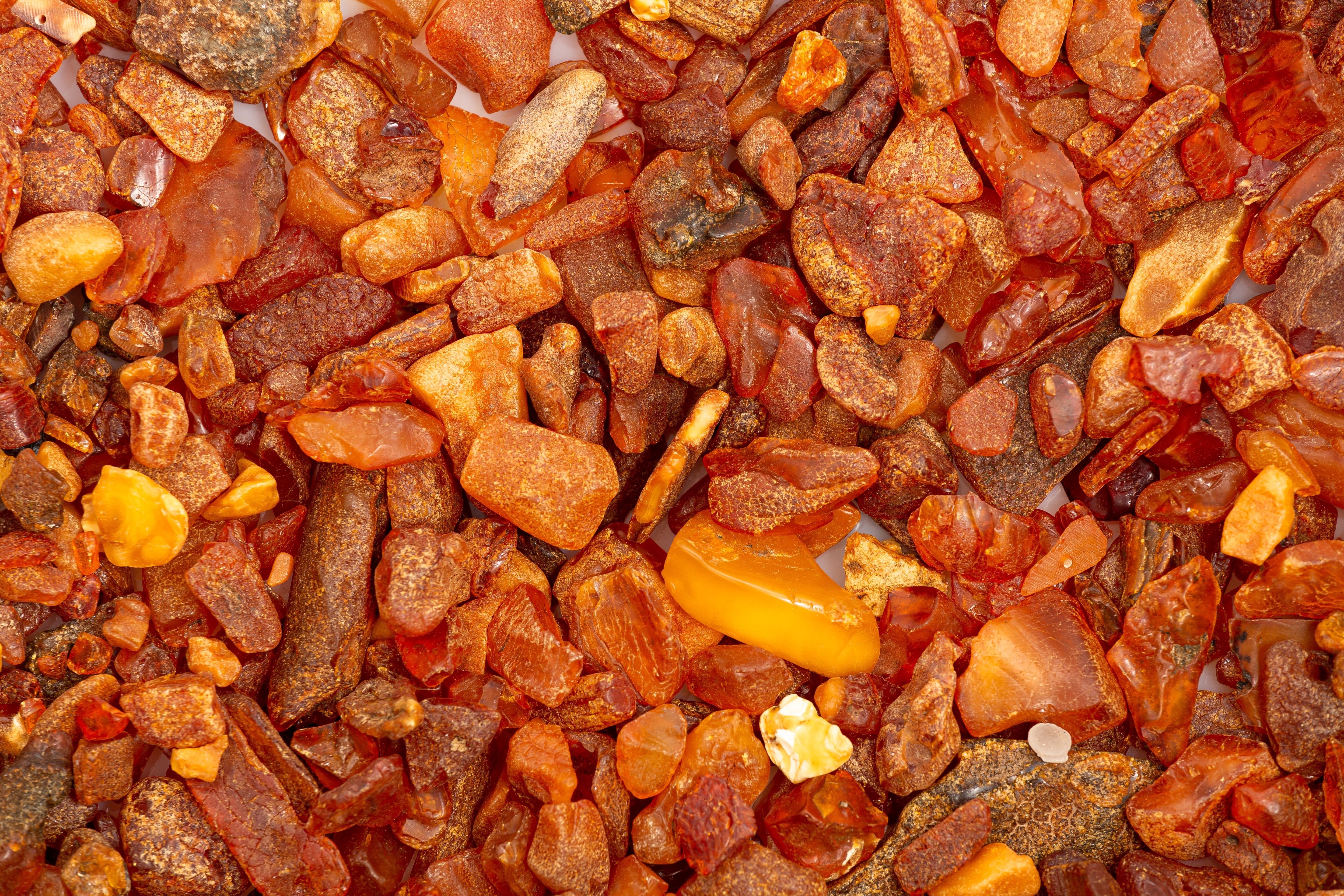
A piece of raw amber with bubble inclusion is an unpolished specimen of genuine fossil resin that holds ancient gas or fluid pockets trapped over 40 million years ago during the Eocene epoch. These natural inclusions create distinctive visual and physical characteristics in rough Baltic amber:
- Microscopic Gas Pockets: Dense clusters—sometimes holding up to 900,000 tiny bubbles per square millimeter—scatter light to create creamy "butterscotch" or white opaque rough amber.
- Enhydro Inclusions: Rare cavities that trap both fluid and prehistoric gas, occasionally allowing a tiny air pocket to move freely within the raw stone.
- Organic Flow Formations: Swirling patterns that reveal how fresh tree resin enveloped forest air and organic detritus before fossilizing.
Collectors and jewelry lovers prize these unpolished pieces for their untouched natural beauty, geological history, and suitability for custom handcrafted pendants, rings, and brooches shaped by traditional Polish and Lithuanian artisans.
I'm Gabriel Ciupek, President of Midwest Amber, where I source, evaluate, and curate authentic Baltic raw amber with bubble inclusion directly from reputable European suppliers. Below, let's explore how these fascinating natural time capsules form and how you can identify top-quality rough specimens for your collection.
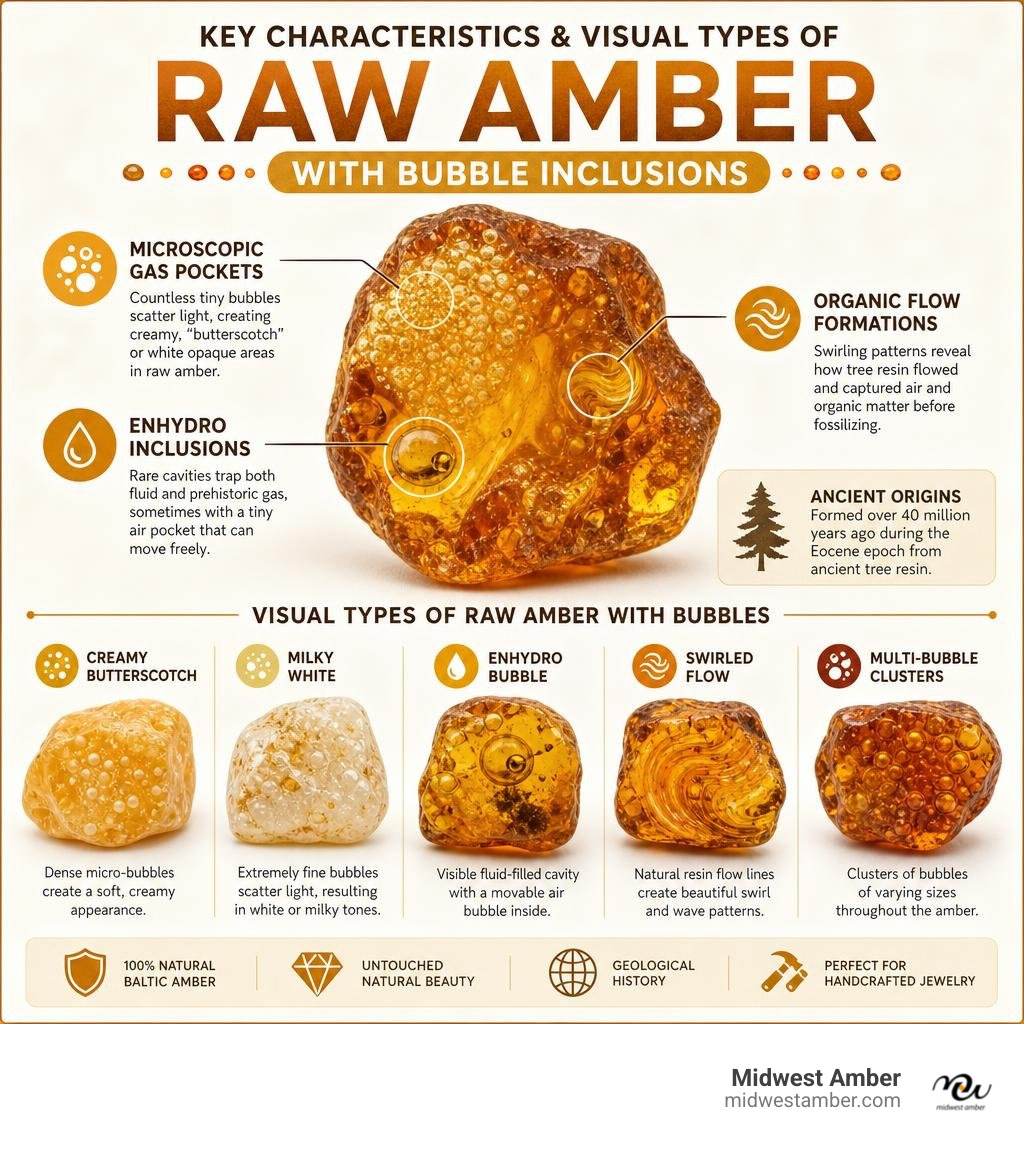
Raw amber with bubble inclusion terms you need:
Types of Raw Amber with Bubble Inclusion and How They Form
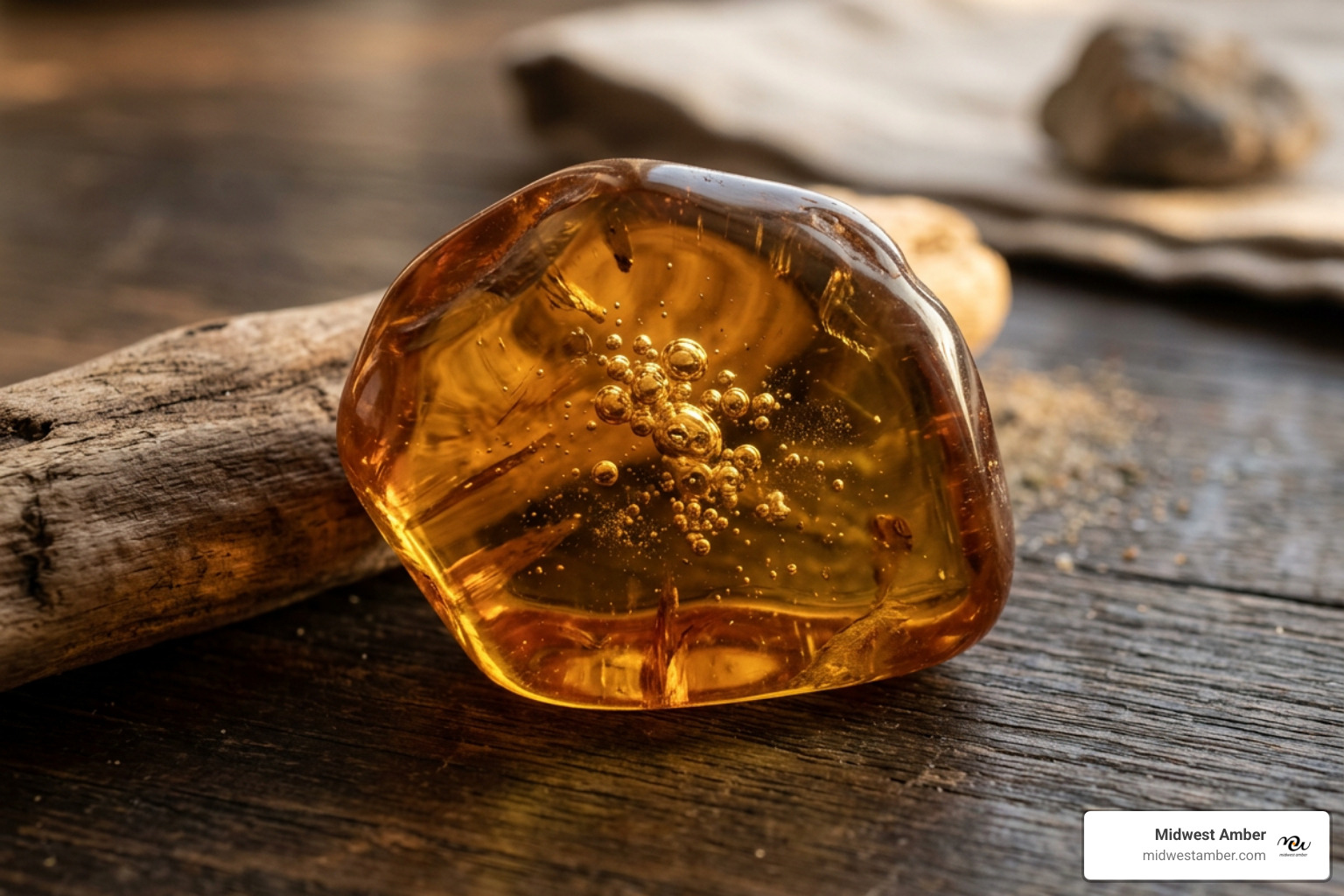
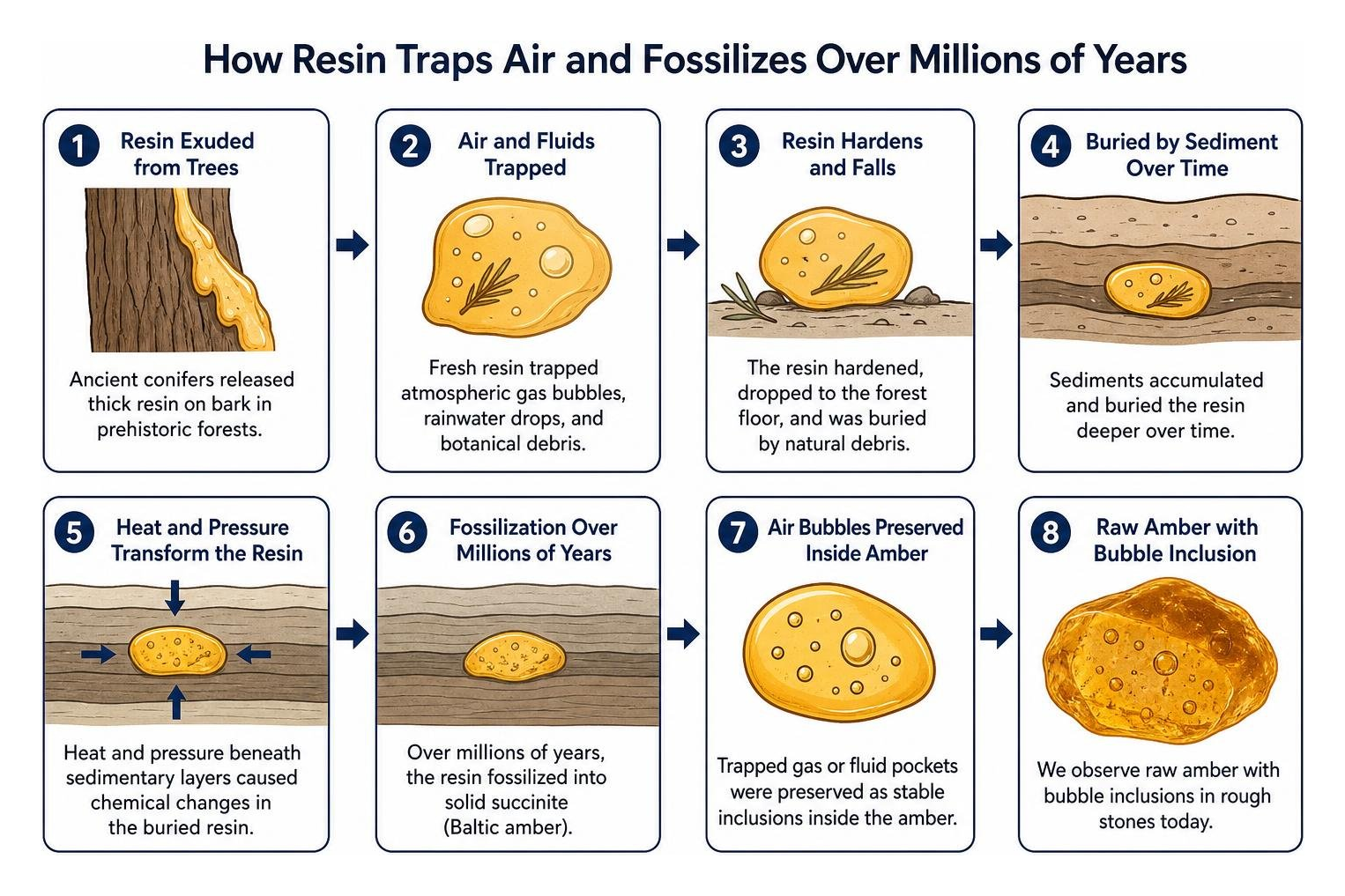
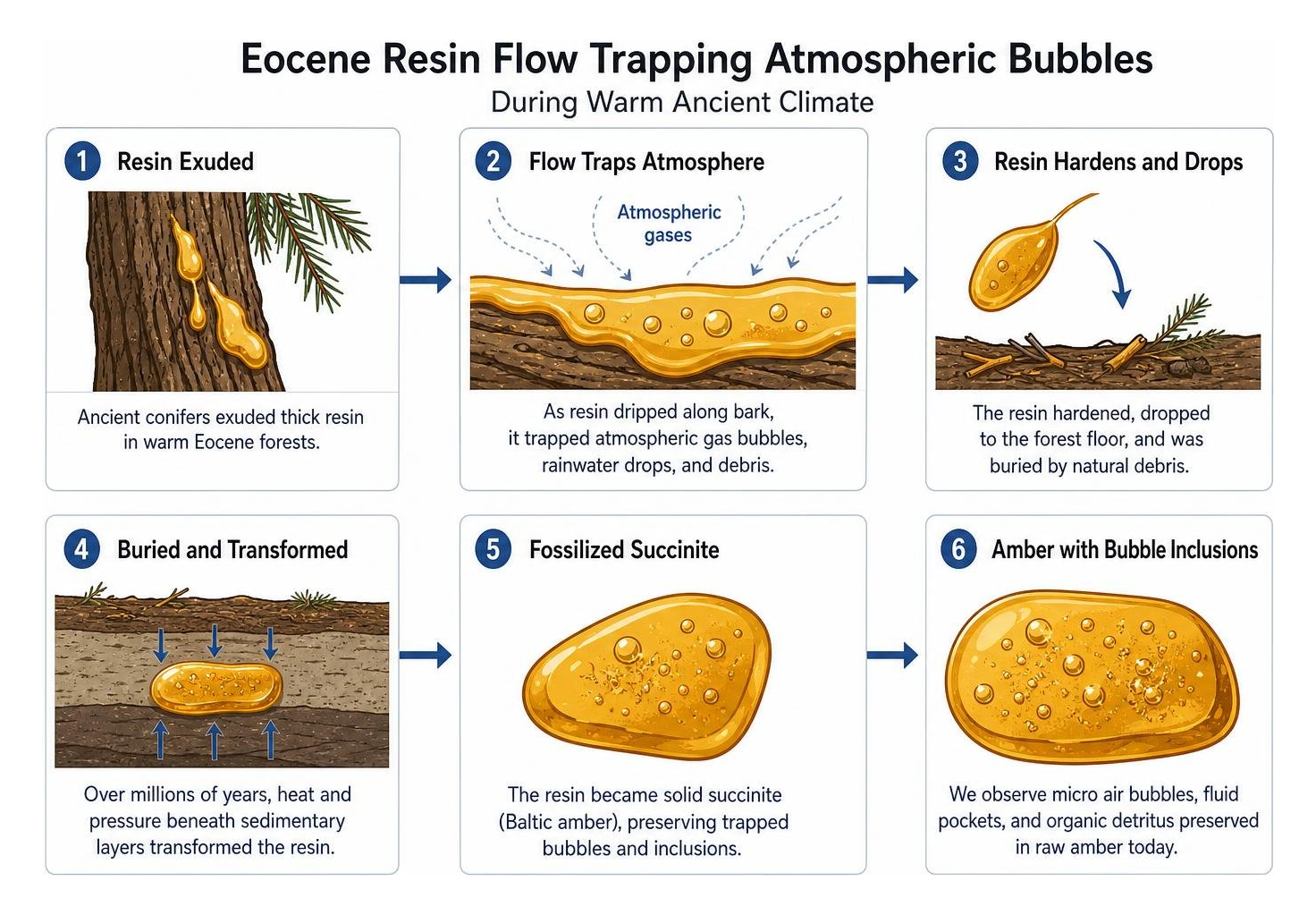
When ancient conifers exuded thick resin millions of years ago in prehistoric forests, they captured elements of their immediate surroundings. As the resin dripped along tree bark, it trapped atmospheric gases, rainwater drops, and botanical debris. These events created distinct types of amber inclusions that we observe in rough amber stones today.
The resin hardened, dropped to the forest floor, and underwent heat and pressure beneath sedimentary layers, transforming into solid succinite (Baltic amber).
| Inclusion Type | Primary Composition | Visual Appearance | Typical Size Range |
|---|---|---|---|
| Micro Air Bubbles | Atmospheric gas (nitrogen, oxygen, CO₂) | Opaque white to hazy butterscotch | 0.001 mm to 0.3 mm |
| Fluid Pockets (Enhydro) | Ancient water and gas bubble | Clear chamber with shifting bubble | 1.0 mm to 5.0 mm |
| Organic Detritus | Decomposed bark, moss, pollen, stellate hairs | Dark specks, platelets, fibrous clouds | Microscopic to 10.0+ mm |
Microscopic Gas Pockets and Butterscotch Cloudiness
The most abundant bubble formations in natural Baltic amber occur as microscopic gas pockets. In some remarkable white opaque specimens, the concentration reaches as many as 900,000 minuscule air bubbles per square millimeter.
When sunlight enters a stone packed with micro-bubbles, the light hits millions of microscopic interfaces between the solid resin matrix and the gas chambers. This diffuses the light in all directions, turning transparent honey resin into rich butterscotch, milky yellow, or pure royal white.
Enhydro Specimens: Raw Amber with Bubble Inclusion Housing Ancient Liquids
Among the rarest occurrences in fossilized resin are enhydro inclusions. These are internal chambers containing trapped prehistoric water paired with a movable gas bubble.
When you tilt an enhydro specimen, the gas bubble moves across the fluid chamber, just like a spirit level. Such dynamic features form when resin envelops raindrops or sap droplets that stay sealed as the amber fossilizes. For mineral collectors, a gemological discussion on unusual Baltic amber inclusions often highlights how organic decomposition or trapped moisture produces these distinct chambers.
Key Geological Origins and What Bubbles Reveal
Understanding the origin of raw Baltic amber connects us directly to the ancient Eocene epoch, roughly 34 to 56 million years ago. Exploring where is Baltic amber found reveals that ancient amber forests spanned vast areas of northern and eastern Europe, centered around the modern Baltic Sea basin.
Distinguishing Baltic Raw Amber with Bubble Inclusion from Other Origins
Different global amber deposits exhibit unique physical properties and inclusion profiles:
- Baltic Amber (Succinite): Dates to 34–56 million years ago (Eocene). It has a specific gravity of 1.04 to 1.10 and contains succinic acid (3–8%). Micro-bubble clouds, oak tree stellate hairs, and tiny pyrite crystal formations in fissures are classic hallmarks of Baltic origin.
- Dominican Amber: Dates to 15–20 million years ago (Miocene). Originating from the extinct legume tree Hymenaea protera, it typically exhibits high clarity, fewer dense micro-bubble clouds, and occasionally displays a natural blue hue under sunlight.
- Burmese Amber (Kachin Amber): Dates to roughly 99 million years ago (Cretaceous). It is noticeably harder and denser, containing extinct Mesozoic plant and animal matter alongside ancient gas voids.
Scientific Importance in Ancient Atmospheric Studies
Trapped air pockets serve as natural time capsules. Paleontologists and geochemists study raw amber containing bubble inclusions to sample prehistoric atmospheres. By gently crushing microscopic chambers in controlled vacuum chambers, researchers analyze early atmospheric oxygen ratios, carbon dioxide concentrations, and ancient plant respiration patterns from tens of millions of years ago.
Top Raw Amber Specimens with Inclusions to Collect
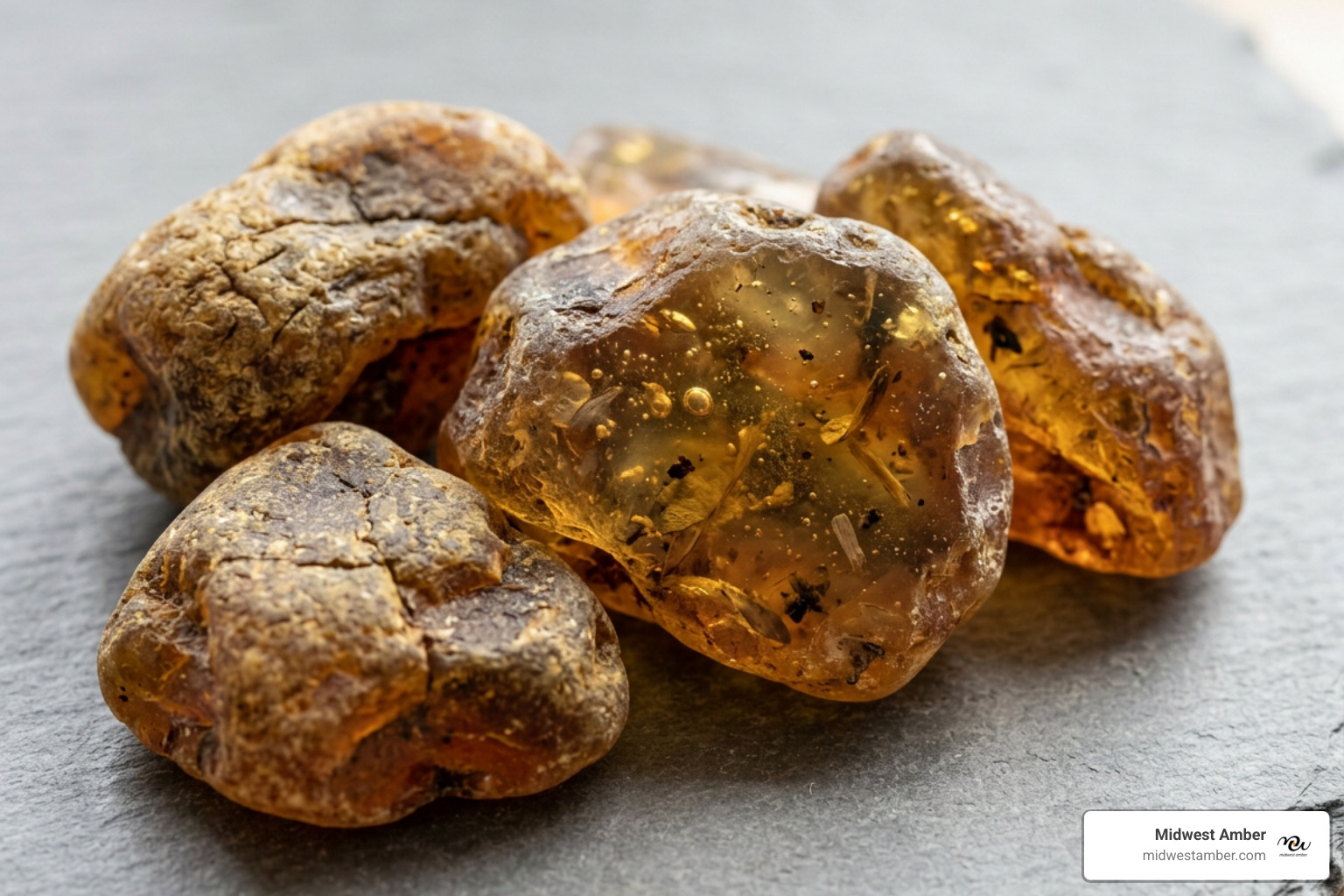
Collecting unpolished raw amber allows you to appreciate the stone exactly as nature preserved it over geological epochs. Here are key specimen styles favored by collectors:
- Rough Crust Chunks with Polished Windows: Natural rough specimens with one or two faces hand-polished by artisans to give a clear view into internal bubble clouds.
- Dense Butterscotch Chunks: Rough stones exhibiting high micro-bubble density, resulting in rich yellow and cream marbling.
- Botanical Inclusion Specimens: Uncut stones pairing bubble clouds with oak stellate hairs, bark flakes, or pine needle fragments.
- Enhydro Collector Pieces: Rare natural stones featuring sealed water-and-gas pockets that display visible bubble movement.
Uncut Baltic Amber Chunks with Micro-Bubbles
Our genuine Baltic amber rough stones display the authentic weathered outer crust formed by tens of millions of years of oxidation. Sourced directly from trusted coastal deposits along the Polish and Lithuanian seashores, these stones highlight natural textures alongside internal honey clarity and micro-bubble clouds.
Museum-Grade Inclusion Collector Specimens
For collectors seeking intricate natural detail, genuine Baltic amber collector chunks provide museum-quality focal points. These larger natural specimens often combine micro-bubble streams with organic plant fibers, moss fragments, and ancient insect traces, celebrating the biodiversity of the prehistoric Baltic forest.
Authenticating and Caring for Raw Bubble-Included Amber
Authenticating raw amber ensures you are adding an authentic geological treasure to your collection. Learning how to identify raw amber through non-destructive methods allows you to inspect rough stones safely.
Non-Destructive Authentication Methods
- Ultraviolet (UV) Fluorescence: Natural Baltic amber fluoresces with a vivid pale blue, greenish, or golden-yellow glow under long-wave black light.
- Saltwater Buoyancy Test: Baltic amber has a low specific gravity (1.04–1.10). In a solution of 1 part salt dissolved into 2 parts lukewarm water, genuine unmounted raw amber floats, while common mineral simulants sink.
- Electrostatic Charge: Rubbing raw amber vigorously against natural silk or wool creates a static charge that attracts small pieces of paper or light lint.
- Magnified Surface Inspection: Under 10x to 30x magnification, authentic bubbles appear spherical, elliptical, or elongated along natural resin flow lines.
Preservation and Display Best Practices
- Avoid Direct Heat and Sunlight: Prolonged exposure to intense sunlight or heat sources accelerates surface oxidation and can dry out delicate internal fluid chambers.
- Maintain Stable Humidity: Store raw specimens at steady room temperatures in a shaded display cabinet or soft pouch.
- Gentle Cleaning Only: Clean rough stones using only lukewarm fresh water and a soft microfiber cloth. Never use alcohol, chemical jewelry cleaners, or ultrasonic cleaners on genuine amber.
Frequently Asked Questions About Raw Amber Inclusions
Can air bubbles in raw amber move?
Yes. In enhydro specimens, an ancient gas bubble sits inside an enclosed fluid cavity. Because the liquid has room to shift, the gas bubble moves within the cavity when you rotate or tilt the specimen.
Why does some raw amber with bubble inclusions float in fresh water?
While standard clear Baltic amber has a specific gravity of 1.04 to 1.10 (sinking in fresh water but floating in saltwater), white opaque amber containing up to 900,000 micro-bubbles per square millimeter has an overall density lower than 1.00. This structural buoyancy allows certain butterscotch and white rough pieces to float in fresh tap water.
How do bubble inclusions affect the value of raw amber?
Microscopic bubble inclusions create coveted butterscotch and white varieties that carry strong collector demand. Larger, individual clear bubbles add visual depth without lowering value, while verified enhydro stones with mobile bubbles represent rare museum-grade collector pieces.
Conclusion
Every piece of raw Baltic amber with natural bubble inclusions offers a tangible connection to prehistoric Earth. Whether as an uncut collector's specimen or shaped into handcrafted rings, necklaces, bracelets, earrings, pendants, and brooches by skilled Polish and Lithuanian artisans, genuine Baltic amber carries timeless beauty.
At Midwest Amber, our passion is curating 100% genuine Baltic amber sourced directly from the Baltic region with certified authenticity. We invite you to explore our handcrafted collections, discover the timeless allure of custom heirloom jewelry, or explore amber jewelry featuring ancient inclusions to find a unique piece of natural history tailored for you.


Leave a comment
This site is protected by hCaptcha and the hCaptcha Privacy Policy and Terms of Service apply.