

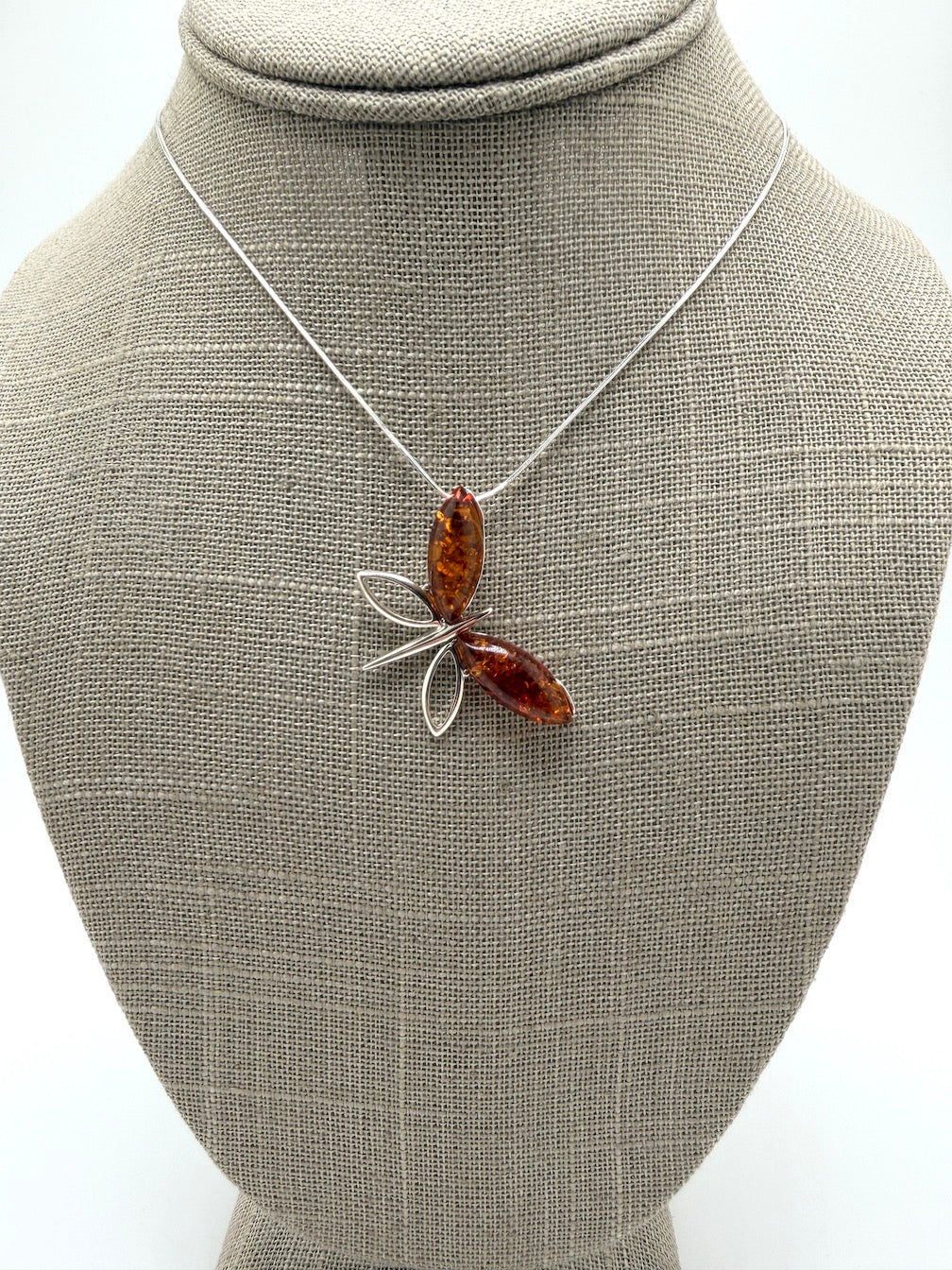
How to Choose an Ethical Baltic Amber Pendant

Look for genuine amber, a clear sourcing story, and careful craftsmanship. Before buying, ask the seller where the amber came from, how it was collected, and who made the pendant. If it is sold as certified Baltic amber, ask to see the documentation and what it verifies. A beautiful stone alone cannot tell you whether a piece was sourced responsibly.
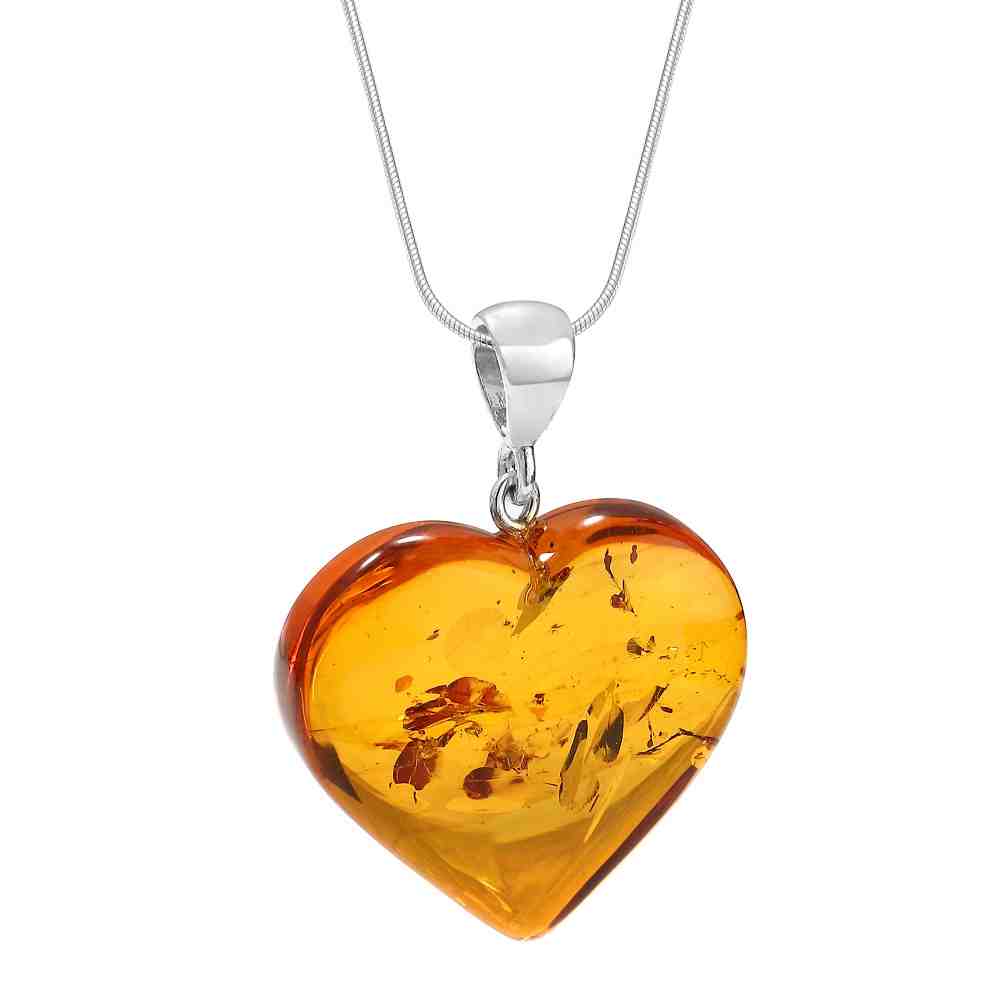
Each amber pendant has its own color and pattern, making it a personal gift with a connection to Baltic heritage. This guide will help you compare finishes and styles while asking better questions about authenticity and sourcing.
I’m Gabriel Ciupek, president and owner of Midwest Amber, where I work with suppliers on quality and contract standards. That experience shapes how I evaluate an ethical Baltic amber pendant, from the stone’s identity to the finished jewelry.
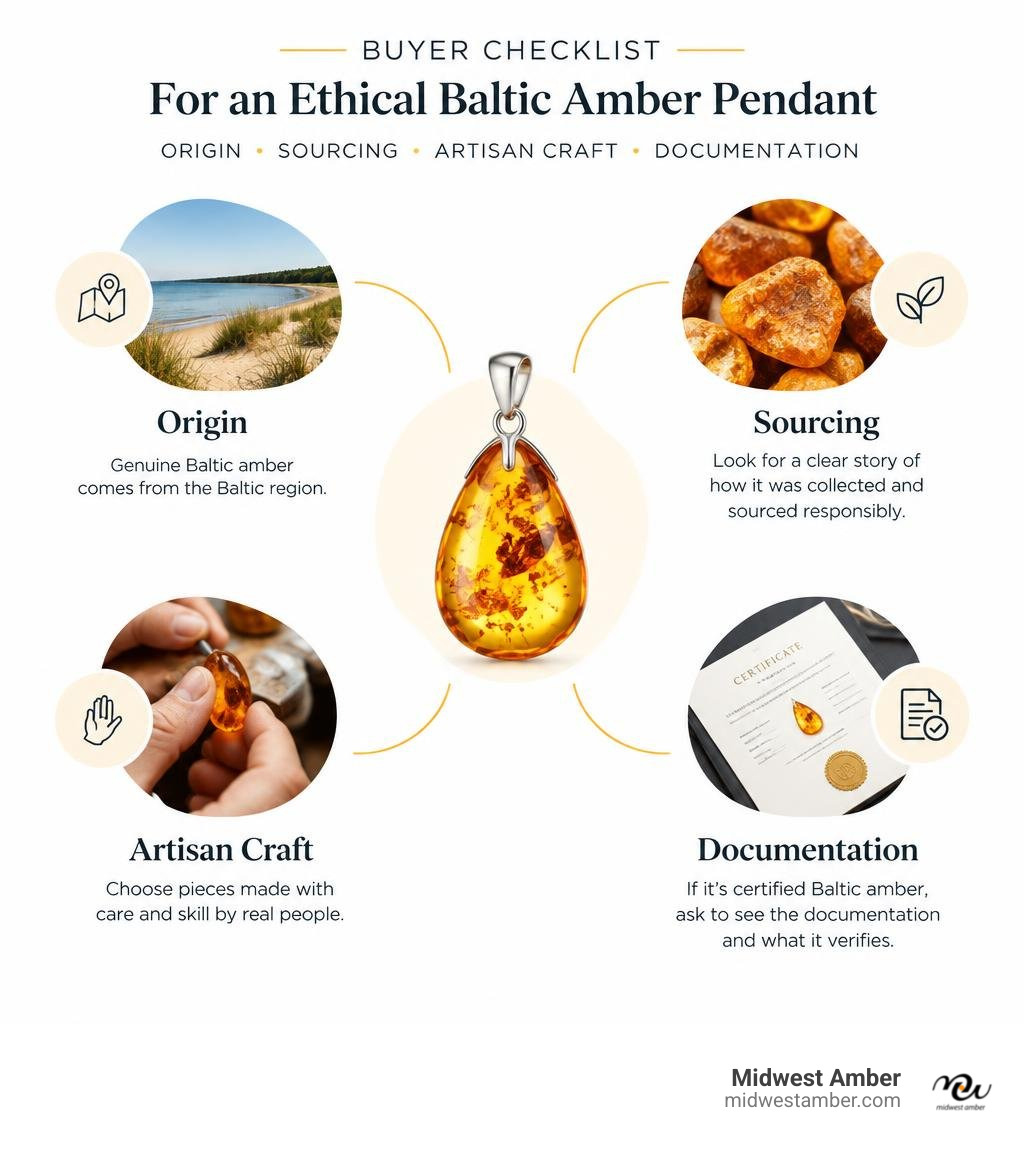
Ethical baltic amber pendant word guide:
Why Choosing an Ethical Baltic Amber Pendant Matters
Baltic amber is an organic gemstone created from 44 to 60 million years of fossilized conifer resin. Approximately 80% of the world's known amber deposits are concentrated within the Baltic Sea region. Because this ancient treasure is finite, understanding how it travels from Baltic shores to your jewelry box is essential.
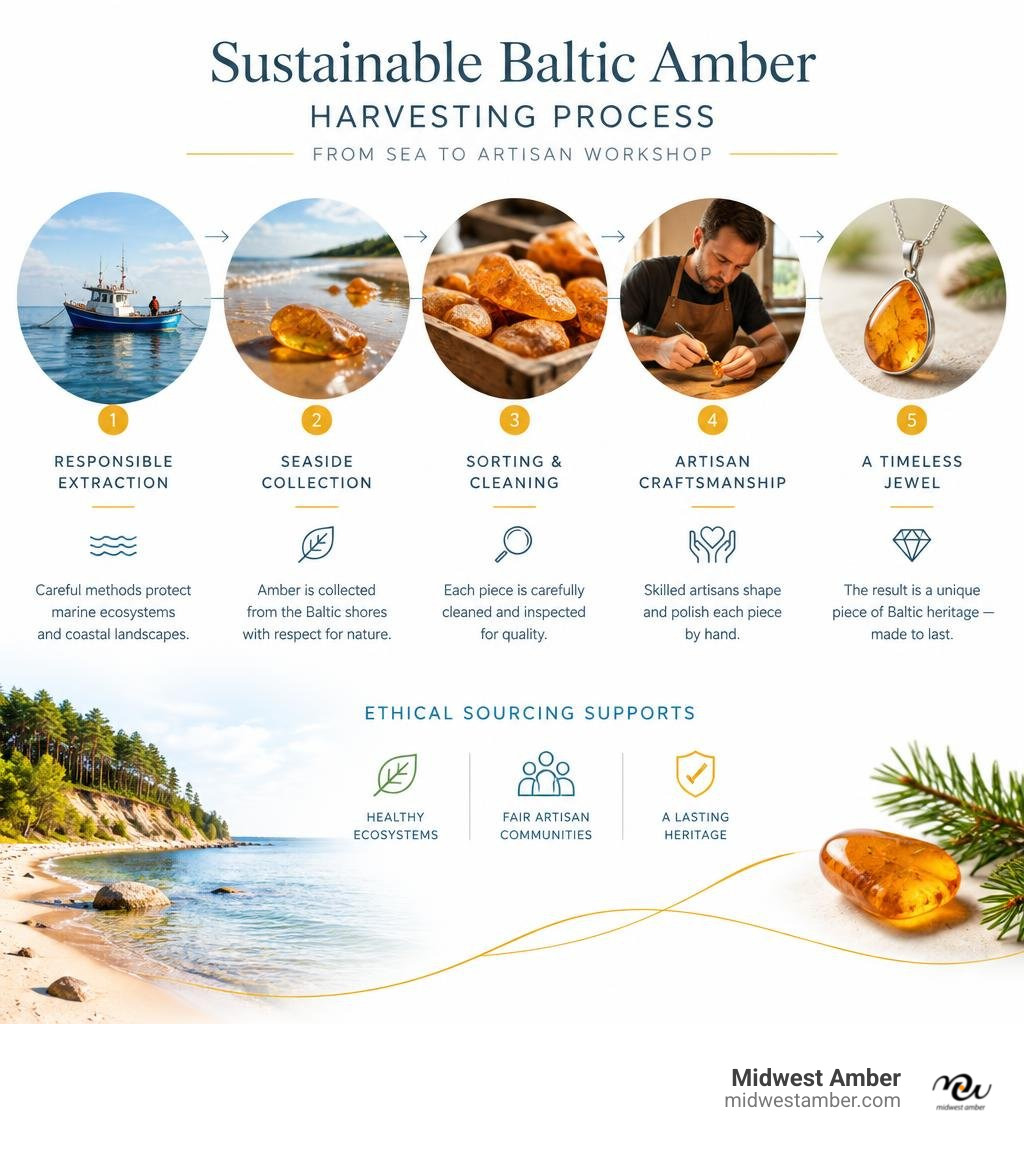
Ethical sourcing begins with a respect for the fragile ecosystems where amber forms and rests. Unregulated extraction can degrade landscapes, strip coastlines, and disrupt local communities. In contrast, responsible purveyors adhere to strict environmental standards and champion fair artisan wages. You can explore these core principles in our amber jewelry ethical sourcing guide to understand the standards behind mindful jewelry production.
When you purchase an ethical piece, you invest in safe mining practices, sustainable seaside collection, and the preservation of multi-generational workshops across Poland and Lithuania. For a comprehensive look at sustainable practices, review our amber jewelry ethical guide.
Sourcing Heritage: Polish and Lithuanian Artisan Craftsmanship
The craft of shaping Baltic amber has flourished along the northern European coast for thousands of years. In ancient Rome during the reign of Emperor Nero, the value of a single small amber statuette exceeded the price of a healthy enslaved worker. Amber was traded along the fabled Amber Road, valued for its warm touch, electrostatic qualities, and beauty.
Today, this rich legacy thrives in small-batch family studios across Poland and Lithuania. Skilled artisans cut, shape, and set each gemstone by hand. This dedication to local European heritage mirrors the precision found in modern independent regional creations, such as Baltic Watches - Vintage Inspired Mechanical Watches.
By working closely with regional creators, we honor this legacy through items like unique ethical amber necklaces and ethical handcrafted amber bracelets. These pieces meet the standards of official regional oversight bodies, including the Lithuanian Assay Office.
Environmental Preservation and Coastal Sea Collecting
One of the most eco-friendly methods of gathering amber is sea harvesting. After heavy seasonal storms stir the Baltic Sea floor, pieces of buoyant fossilized resin detach from underwater strata and wash ashore among seaweed and driftwood.
Local gatherers use traditional hand nets to collect these natural nuggets without heavy machinery or habitat destruction. This low-impact beachcombing method protects marine life and coastal dunes, yielding organic gems that find a home in ethical Lithuanian amber brooches.
Capturing the natural Baltic amber essence through sustainable sea harvesting ensures the coastline remains untouched for future generations.
Signature Styles, Finishes, and Gemstone Rarity
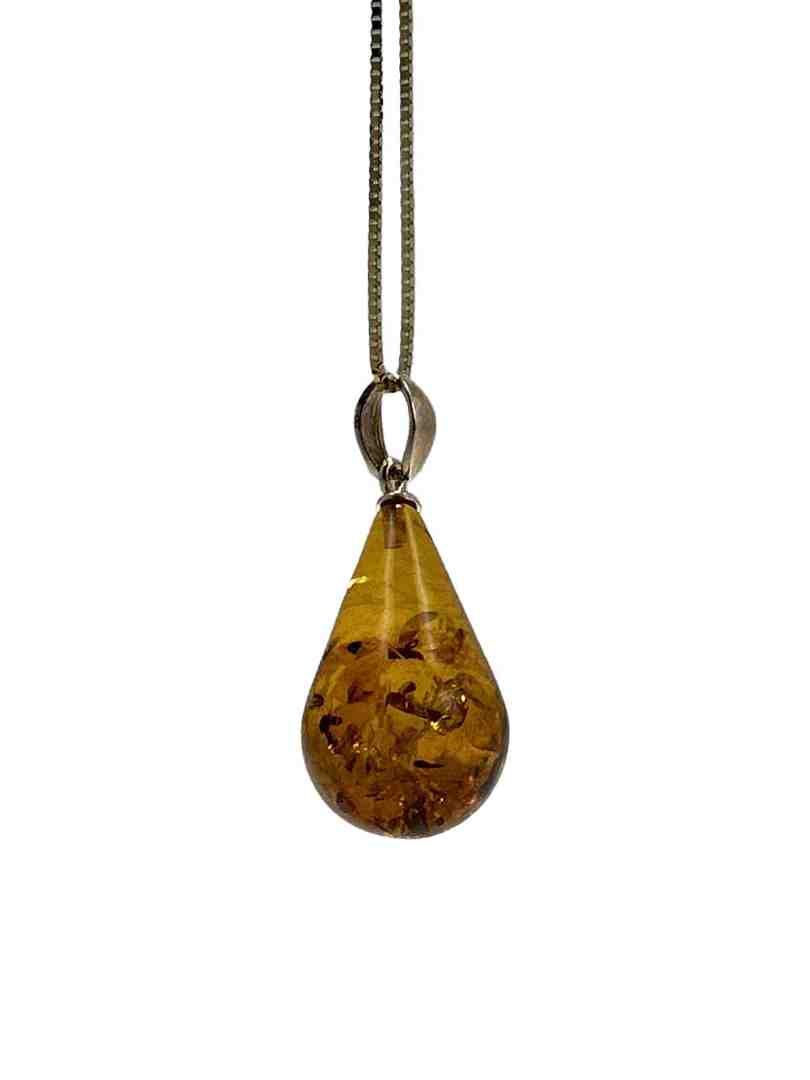
Every natural amber stone tells an individual geological story. Choosing an ethical pendant involves finding a style, setting, and finish that matches your taste and values. Whether you prefer minimalist designs or ornate metalwork, you can find distinctive choices among amber pendants for women and handcrafted sterling silver amber pendants.
Raw vs Polished Stones in an Ethical Baltic Amber Pendant
The tactile finish of amber alters its look and determines how its natural succinic acid interacts with your skin:
- Raw Amber: Completely unpolished, retaining its original textured, matte outer cortex. Because the outer crust holds the highest concentration of succinic acid (between 3% and 8%), raw stones are popular for those seeking organic, earthy textures.
- Burnished Amber: Gently tumbled to soften sharp edges while keeping a soft matte sheen. It offers a smooth surface without the high gloss of fine polishing compounds.
- Polished Amber: Hand-buffed to a high gloss, revealing internal textures, honey-colored light refractions, and organic clarity.
| Finish Type | Surface Texture | Visual Appearance | Succinic Acid Exposure | Best For |
|---|---|---|---|---|
| Raw | Rough, textured, matte | Earthy, rustic, natural crust | Highest (unaltered cortex) | Lovers of organic, untreated gems |
| Burnished | Smooth, satin, semi-matte | Muted glow, soft edges | Moderate | Everyday tactile comfort |
| Polished | Ultra-smooth, brilliant gloss | High clarity, deep transparency | Sealed/Buffed | Classic elegance and light brilliance |
The Rarity Spectrum: Colors and Prehistoric Inclusions
Natural Baltic amber occurs in a spectrum of hues, shaped by resin composition, soil minerals, and trapped microscopic bubbles:
- Yellow Amber (approx. 70%): The classic warm honey tone, though only about 10% of it is truly transparent.
- Black Amber (approx. 15%): Formed when ancient resin mixed with pine bark, forest soil, and debris.
- Greenish Amber (approx. 2%): A rare shade created by decomposed organic plant matter embedded in the resin.
- White Amber (approx. 1-2%): Exceptionally rare, characterized by millions of micro-bubbles that scatter light into an ivory appearance.
- Natural Red Amber (approx. 0.5%): Highly prized, produced through natural oxidation over millions of years.
- Blue Amber (approx. 0.2%): The rarest shade, displaying an azure luminescence under sunlight due to natural aromatic hydrocarbons.
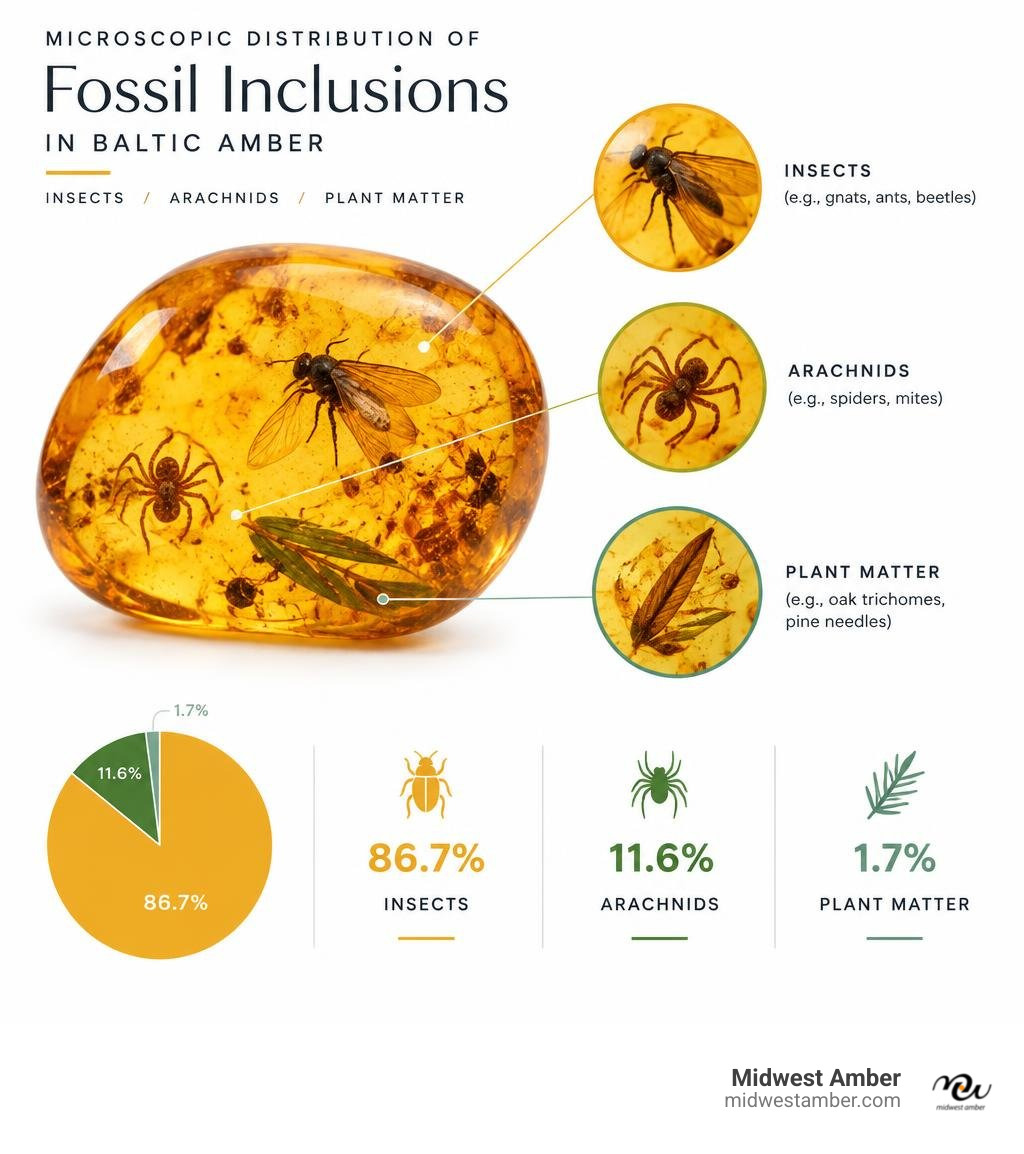
Inclusions offer a direct window into prehistoric ecosystems. When conifer sap flowed 44 million years ago, it trapped tiny organisms. Among fossil inclusions found in Baltic amber, 86.7% are insects (such as gnats, ants, and beetles), 11.6% are arachnids (spiders and mites), and the remainder comprise delicate botanical matter like oak trichomes and pine needles.
To explore these varieties further, browse our complete amber pendant guide.
Authentication: How to Spot Genuine Baltic Amber
Because genuine amber is a sought-after commodity, understanding how to verify your jewelry guarantees you receive authentic material.
A comprehensive certified Baltic amber buyer guide is the best starting point for understanding how third-party certification confirms origin and composition. Selecting certified authentic amber pendants ensures your stone has been evaluated according to proper gemological standards.
Essential Testing Methods and Laboratory Certification
Authenticating Baltic amber can be done through non-destructive tests and professional laboratory assessments:
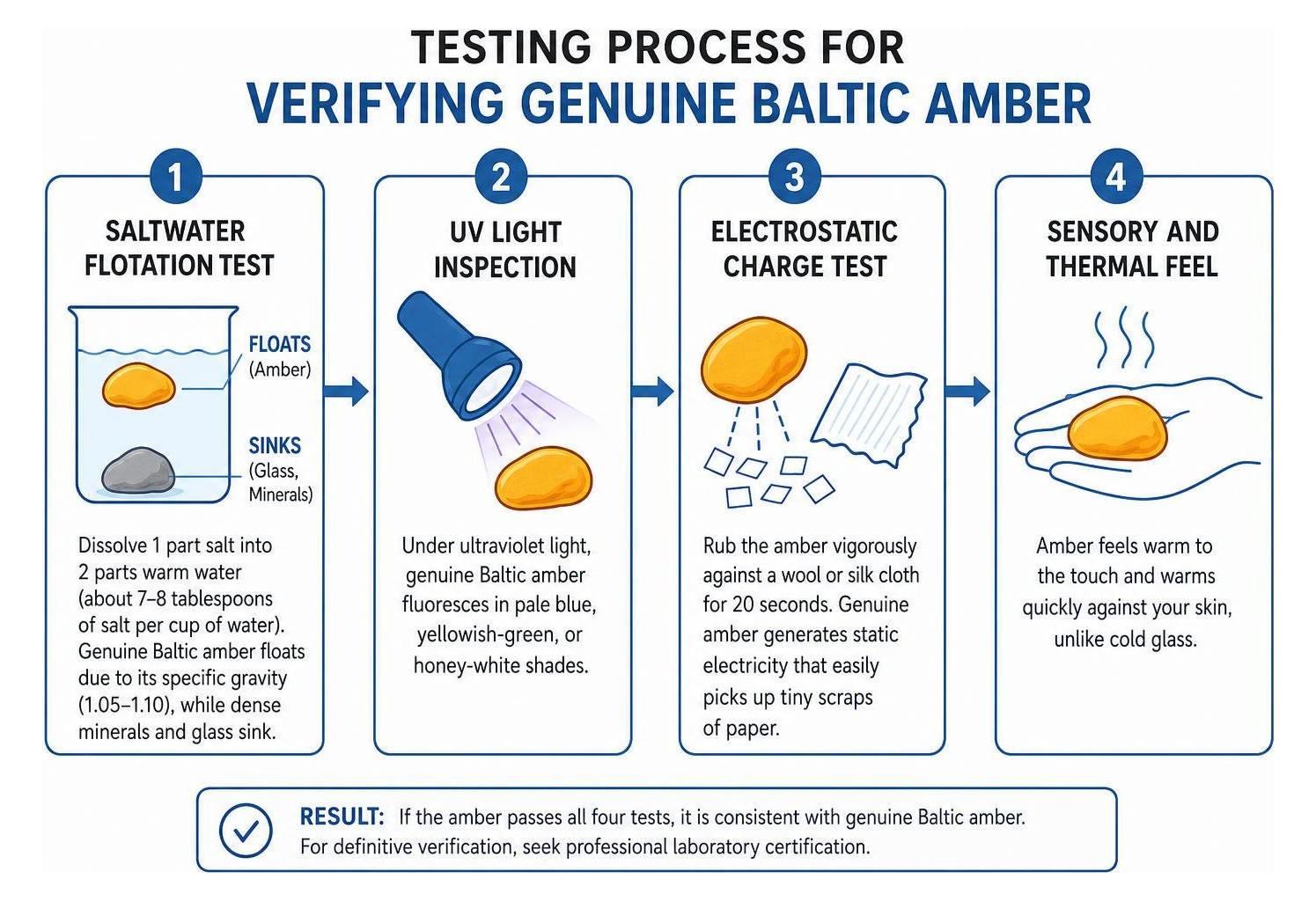
- Saltwater Flotation Test: Dissolve 1 part salt into 2 parts warm water (about 7-8 tablespoons of salt per cup of water). Genuine Baltic amber floats due to its specific gravity (1.05–1.10), while dense minerals and glass sink.
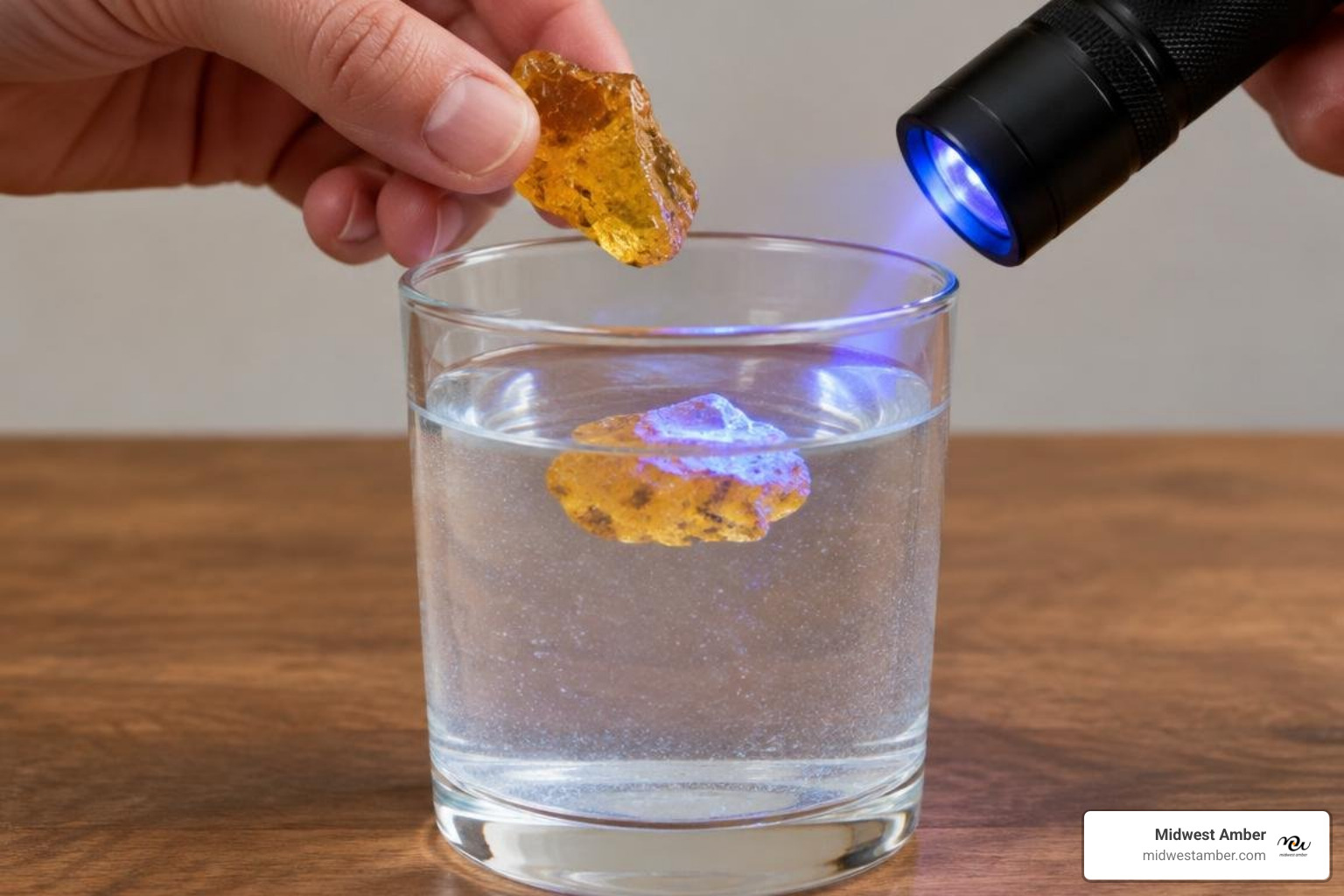
- UV Light Inspection: Under ultraviolet light, genuine Baltic amber fluoresces in pale blue, yellowish-green, or honey-white shades.
- Electrostatic Charge Test: Rub the amber vigorously against a wool or silk cloth for 20 seconds. Genuine amber generates static electricity that easily picks up tiny scraps of paper. (Ancient Greeks named amber elektron because of this exact property!)
- Sensory and Thermal Feel: Amber feels warm to the touch and warms quickly against your skin, unlike cold glass.
A reputable jeweler provides a verifiable certificate of authenticity. When choosing heirloom jewelry, such as certified Baltic amber rings, look for documentation from recognized gemological laboratories or official government assay offices.
Identifying Common Fakes: Copal, Glass, and Resins
Several materials are often mistaken for genuine Baltic amber:
- Young Copal: An immature tree resin that is only thousands (rather than millions) of years old. Copal softens under a single drop of alcohol or acetone, whereas fossilized amber remains unaffected.
- Glass and Quartz: These materials are cold to the touch, heavy, do not float in saltwater, and do not hold an electrostatic charge.
- Non-Fossil Resins: Often lack the distinctive succinic acid content and specific UV fluorescence of Baltic stones.
Understanding how to tell real pieces apart from other materials is simple once you know what to check. You can read more about telling genuine amber apart from resin to protect your collection.
Longevity, Daily Care, and Safety Considerations
Baltic amber requires gentle handling. It has a Mohs hardness rating of only 2 to 2.5, meaning it can be scratched by a copper coin or even a firm fingernail. With proper maintenance, as outlined in our certified amber guide, your pendant will retain its beauty for generations.
Daily Maintenance for Your Ethical Baltic Amber Pendant
Keep your amber pendant clean and protected using these best practices:
- Cleaning: Wipe your pendant with a soft, lint-free microfiber cloth dampened with lukewarm water. Never use harsh chemical cleaners, alcohol, or soaps.
- Conditioning: If your polished amber looks dull, apply a tiny drop of pure olive oil to a soft cloth, buff the surface gently, and wipe away all excess oil.
- Chemical Precautions: Put on your amber jewelry after applying perfumes, hairsprays, lotions, and sunscreens. Chemical residues can strip the surface of the stone.
- Avoid Ultrasonic Cleaners: Never place natural amber in ultrasonic or steam cleaners; the intense vibrations and heat can fracture the organic gemstone.
- Proper Storage: Store your pendant in a dedicated soft fabric pouch away from direct sunlight, radiators, or sharp metal jewelry. In industrial monitoring or laboratory calibration where light and heat impact materials, specialists use tools like the Pendant Temperature/Light 64K Data Logger UA-002-64. At home, keeping your amber away from intense heat and direct sun preserves its natural state.
Safety Standards: Clasps and Gentle Wear
When purchasing amber necklaces or pendants:
- Individual Knotting: Quality jewelry features knots between each bead or setting, preventing stones from scattering if the cord breaks.
- Breakaway Clasps: Pieces designed for active wear should include tension-release safety clasps that pop open under pressure.
- Wear Guidelines: Always remove amber jewelry before sleeping, swimming, or bathing. Amber jewelry is meant to be worn against the skin, never placed in the mouth or chewed.
Frequently Asked Questions About Baltic Amber Pendants
Does the color of Baltic amber affect its succinic acid content?
No. The color variations in Baltic amber stem from mineral exposure, soil deposits, and microscopic light-diffusing air bubbles trapped within the resin. The succinic acid content (3–8%) is determined by its botanical origin and regional fossilization conditions, with the highest concentration found in the outer cortex, regardless of whether the stone is lemon, honey, cherry, or butterscotch.
Can I wear my Baltic amber pendant in water or the shower?
It is best to remove your pendant before showering, bathing, or swimming. While brief exposure to freshwater will not harm the stone, chlorinated pool water, hot water, soaps, and shampoos leave a dulling film and can weaken jewelry cords or silver settings over time.
How does price reflect the quality and ethics of Baltic amber?
The price of an amber pendant reflects several factors: the rarity of its color (such as white or red), the clarity and presence of prehistoric inclusions, stone size, silver craftsmanship, and fair labor practices. Ethically sourced pieces harvested under safe working conditions with official certifications reflect true market value rather than compromised sourcing.
Conclusion
Choosing an ethical Baltic amber pendant connects you to an ancient natural history and supports generations of Polish and Lithuanian artisans. By looking for verified origins, mindful collection methods, and skilled craftsmanship, you acquire jewelry that is both responsible and timeless.
We invite you to explore our handcrafted Baltic amber jewelry collection at Midwest Amber, where every design is backed by over 20 years of experience, direct artisan partnerships, and certified authenticity: https://midwestamber.com/blogs/news/buy-amber-jewelry.

Leave a comment
This site is protected by hCaptcha and the hCaptcha Privacy Policy and Terms of Service apply.