


Why Certified Real Baltic Amber Is Worth Verifying
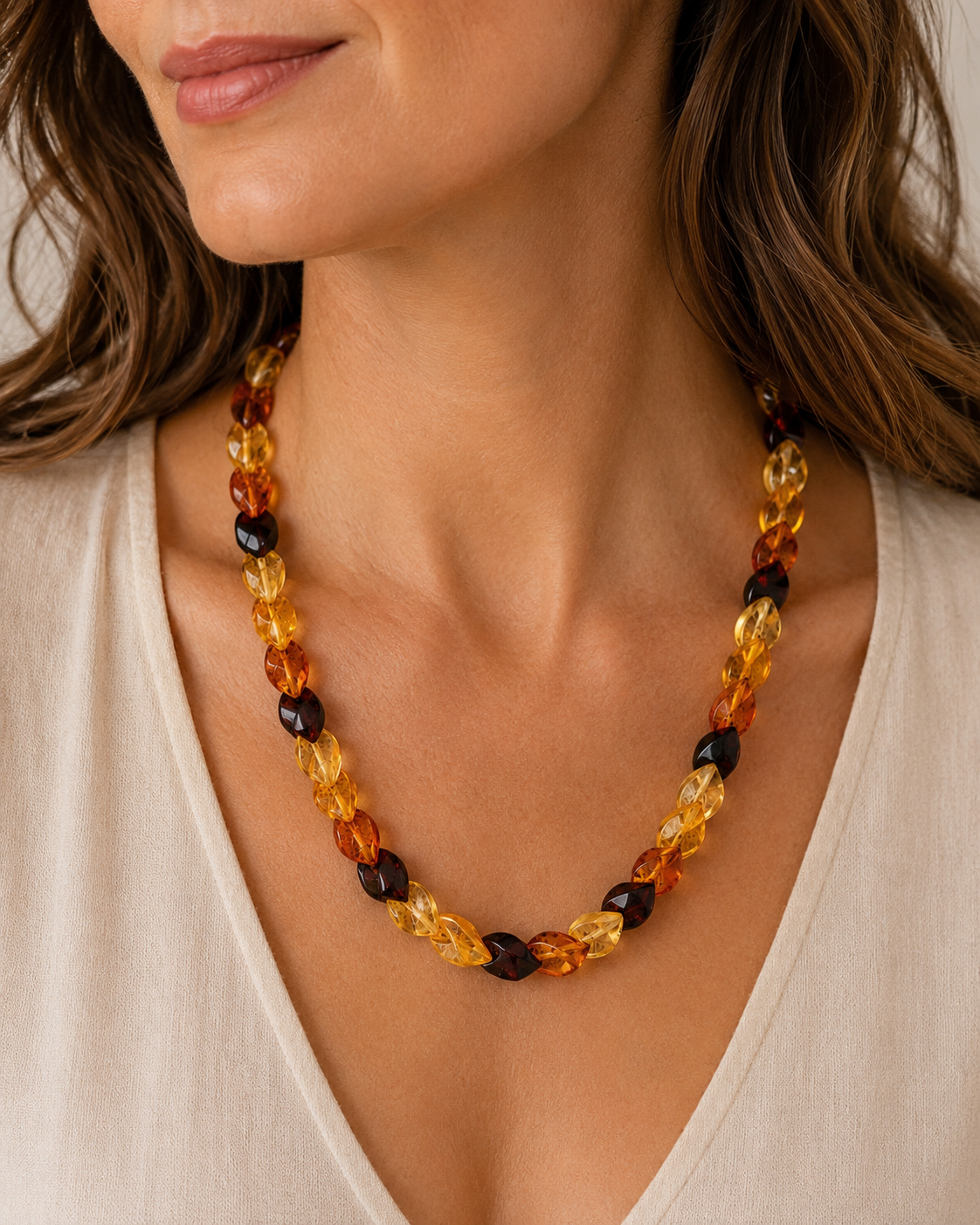
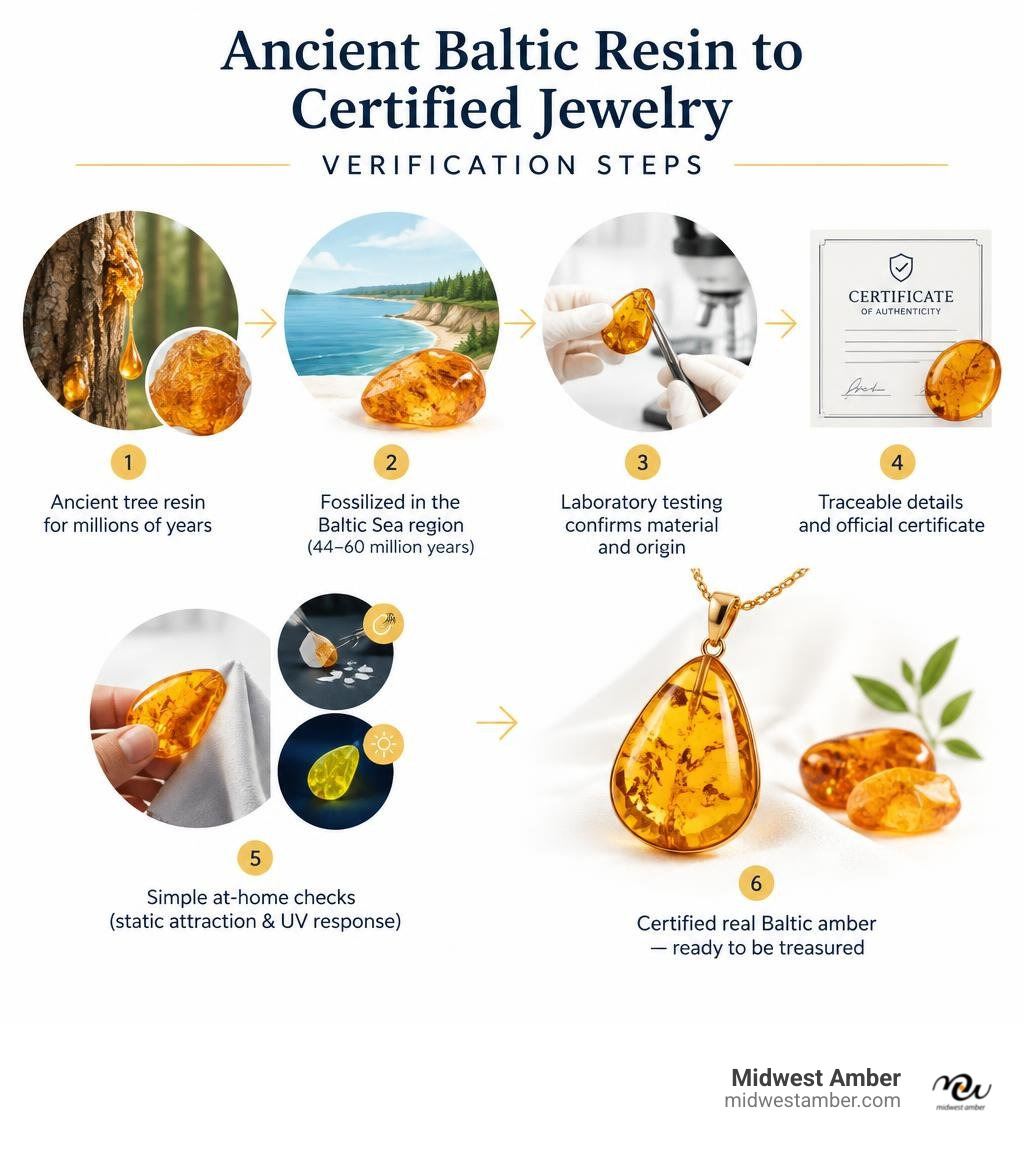
To verify certified real Baltic amber, do not rely on color, price, or a seller's claim alone. Ask for documented origin or an independent certificate, inspect the piece for signs of plastic or young copal resin, and use more than one simple at-home check, such as static attraction and UV response. For valuable Baltic amber jewelry, laboratory testing and clear provenance are the strongest proof.
Baltic amber is fossilized tree resin from the Baltic Sea region, generally dated to about 44 to 60 million years ago. The region holds an estimated 80% of the world's amber deposits. That history makes each genuine amber bead, pendant, ring, or brooch far more than a pretty yellow stone - but it also makes the market an easy target for materials that are not authentic Baltic amber.
Certification helps a buyer understand what has actually been tested. It can support claims about material and origin, but it should come with traceable details rather than a vague paper card. This guide explains what to look for before choosing handcrafted amber from Polish and Lithuanian traditions, whether you are buying a meaningful gift or a piece for your own collection.
I am Gabriel Ciupek, President and owner of Midwest Amber, with hands-on experience sourcing, evaluating, and selling Baltic amber jewelry while working closely with suppliers and customers. I use that experience to help buyers recognize certified real Baltic amber and make confident choices about authentic, handcrafted pieces.
Certified real baltic amber terms to know:
Geological Origins and Uniqueness of Baltic Amber
The 44-Million-Year History of Northern Gold
Baltic amber represents one of nature's most extraordinary organic gemstones. Formed during the Eocene epoch between 44 and 60 million years ago, it began as sticky, defensive resin secreted by ancient conifer forests surrounding what is now the Baltic Sea basin. Over tens of millions of years, heat, pressure, and geological shifts polymerized this resin into hard, resilient succinite.
Today, approximately 80% of the world's known amber deposits are concentrated within the Baltic region, primarily along the coastlines of Poland, Lithuania, and surrounding areas. For millennia, this natural treasure—frequently called "Northern Gold"—traveled along ancient trade routes known as the Amber Road, reaching Mediterranean civilizations. In ancient Rome, the value of a small amber carving could surpass the cost of a healthy servant, prized for both its warm glow and captivating tactile warmth. Discovering authentic Baltic amber jewelry connects modern wearers directly to this prehistoric heritage.
The Rare Spectrum of Amber Colors and Inclusions
While classic honey-yellow shades dominate the landscape, authentic amber presents an astonishing palette created by micro-bubbles, trapped soil, light scattering, and mineral exposure:
- Classic Yellow and Cognac: Comprising about 70% of natural Baltic amber, though only roughly 10% occurs in true optical clarity.
- Black Amber: Accounting for approximately 15% of finds, this dark hue forms from rich inclusions of organic matter, tree bark, and ancient forest floor debris.
- White (Bone/Royal) Amber: Exceptionally rare at 1% to 2% of all deposits, featuring millions of microscopic air bubbles that scatter light into an opaque, creamy appearance.
- Greenish Amber: Making up about 2% of natural pieces, shaded by ancient chlorophyll and plant sediment.
- Natural Red Amber: Extremely scarce, representing only 0.5% of deposits, created through natural surface oxidation over millennia.
- Blue Amber: The ultimate rarity in Baltic stones, occurring in merely 0.2% of specimens when unique micro-structures refract light against a dark background.
Beyond color, Baltic amber serves as a prehistoric time capsule. Prehistoric inclusions trapped within the hardened resin consist primarily of insects (86.7%), arachnids (11.6%), and delicate botanical fragments that offer a clear snapshot of ancient ecosystems.
Succinic Acid Content and Natural Properties
What fundamentally separates true Baltic amber (mineralogically known as succinite) from other fossil resins is its high concentration of succinic acid. Baltic amber contains between 3% and 8% succinic acid by weight, with the densest concentration occurring within the stone's natural outer cortex.
Succinic acid is a naturally occurring compound that plays a central role in the Krebs cycle, the metabolic process by which cells produce energy. Folk traditions have long associated Baltic amber with soothing warmth and well-being. Furthermore, genuine amber possesses distinctive electrostatic properties. When rubbed briskly against natural wool or silk, it develops a negative electrical charge capable of picking up small pieces of paper—a phenomenon that prompted the ancient Greeks to name it elektron, the root of our modern word "electricity."
How to Identify and Verify Certified Real Baltic Amber
Lab Standards for Certified Real Baltic Amber
Visual appearance alone cannot confirm the true geological age of a gem. Verifiable authentication requires formal laboratory testing. Renowned gemological institutions, including the Lithuanian Assay Office and the Gemological Institute of America, apply standardized scientific protocols to evaluate Baltic amber.
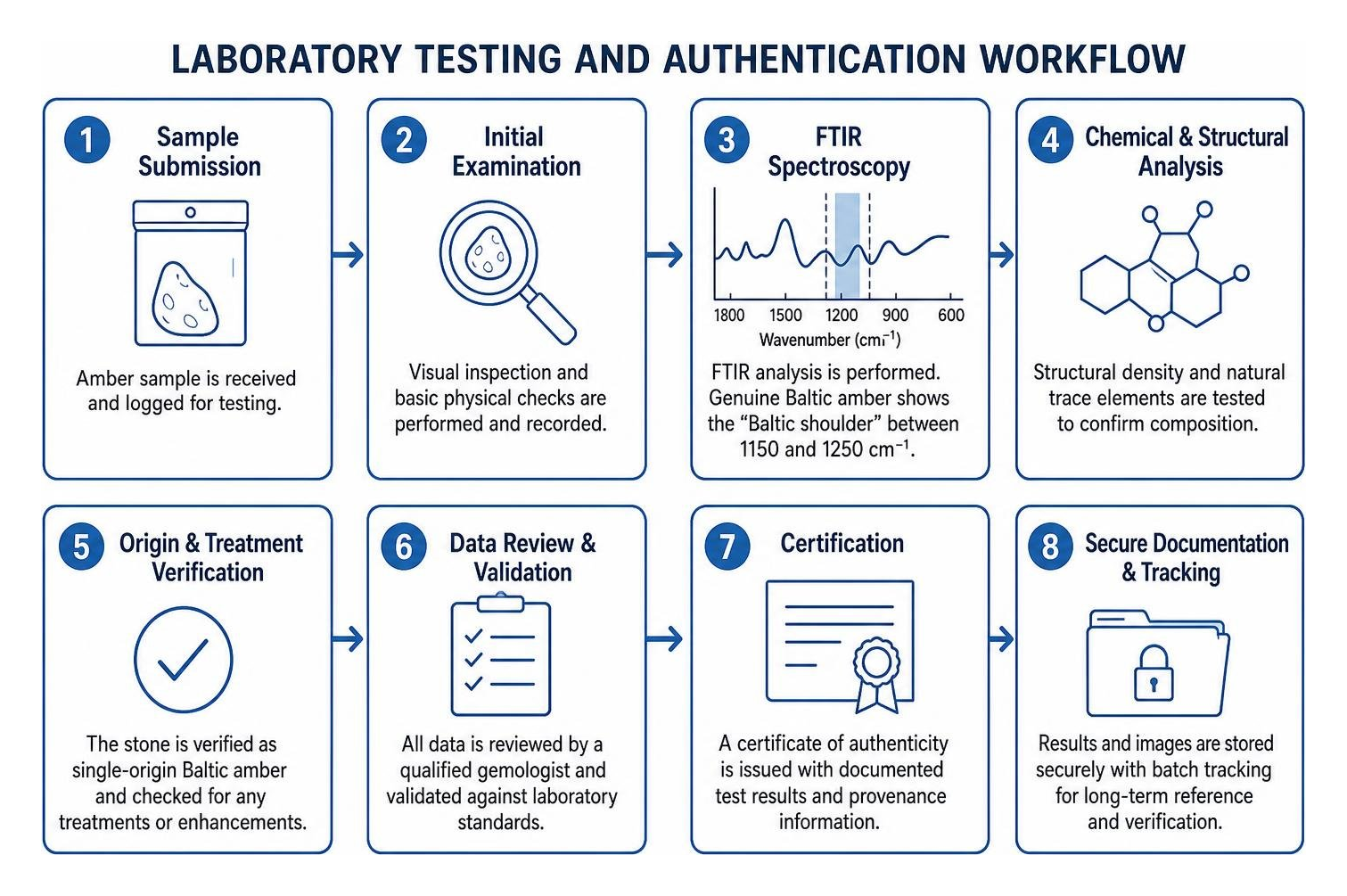
The gold standard for gemstone identification is Fourier-transform infrared spectroscopy (FTIR). Under FTIR analysis, genuine Baltic succinite produces a distinct spectral signature—often called the "Baltic shoulder"—between 1150 and 1250 cm⁻¹. Reputable gemstone labs verify structural density, test for natural trace elements, and confirm whether the stone is single-origin, untreated amber. A formal Baltic amber certificate of authenticity backed by genuine laboratory analysis should provide documented provenance, batch tracking, and rigorous testing data rather than generic marketing claims. For deeper insight into gemological reports, explore our guide to amber jewelry certification.
Reliable At-Home Authentication Tests
While spectroscopy provides definitive laboratory proof, collectors and jewelry enthusiasts can use several reliable physical tests at home to evaluate their pieces:
- The Saturated Saltwater Flotation Test: Genuine Baltic amber possesses a specific gravity between 1.05 and 1.10. Dissolve 1 part non-iodized salt into 2 parts warm water (about 7 to 8 tablespoons of salt per cup of water). Pure, unmounted Baltic amber will float buoyancy at or near the surface, whereas heavy materials like stone or glass sink immediately.
- The Electrostatic Friction Test: Rub the amber piece vigorously against a natural wool or silk cloth for 20 to 30 seconds. Real amber builds an electric charge that attracts fine paper scraps or strands of hair.
- The Pine Aroma Test: When gently warmed through friction or tested along an inconspicuous drilling hole using a heated pin, genuine Baltic amber releases a clean, delicate scent of ancient pine forest.
- Mohs Hardness Evaluation: Baltic amber registers a relatively soft 2.0 to 2.5 on the Mohs hardness scale. It feels warm to the touch rather than cold like glass and cannot be scratched by a soft cloth, yet requires gentle handling.
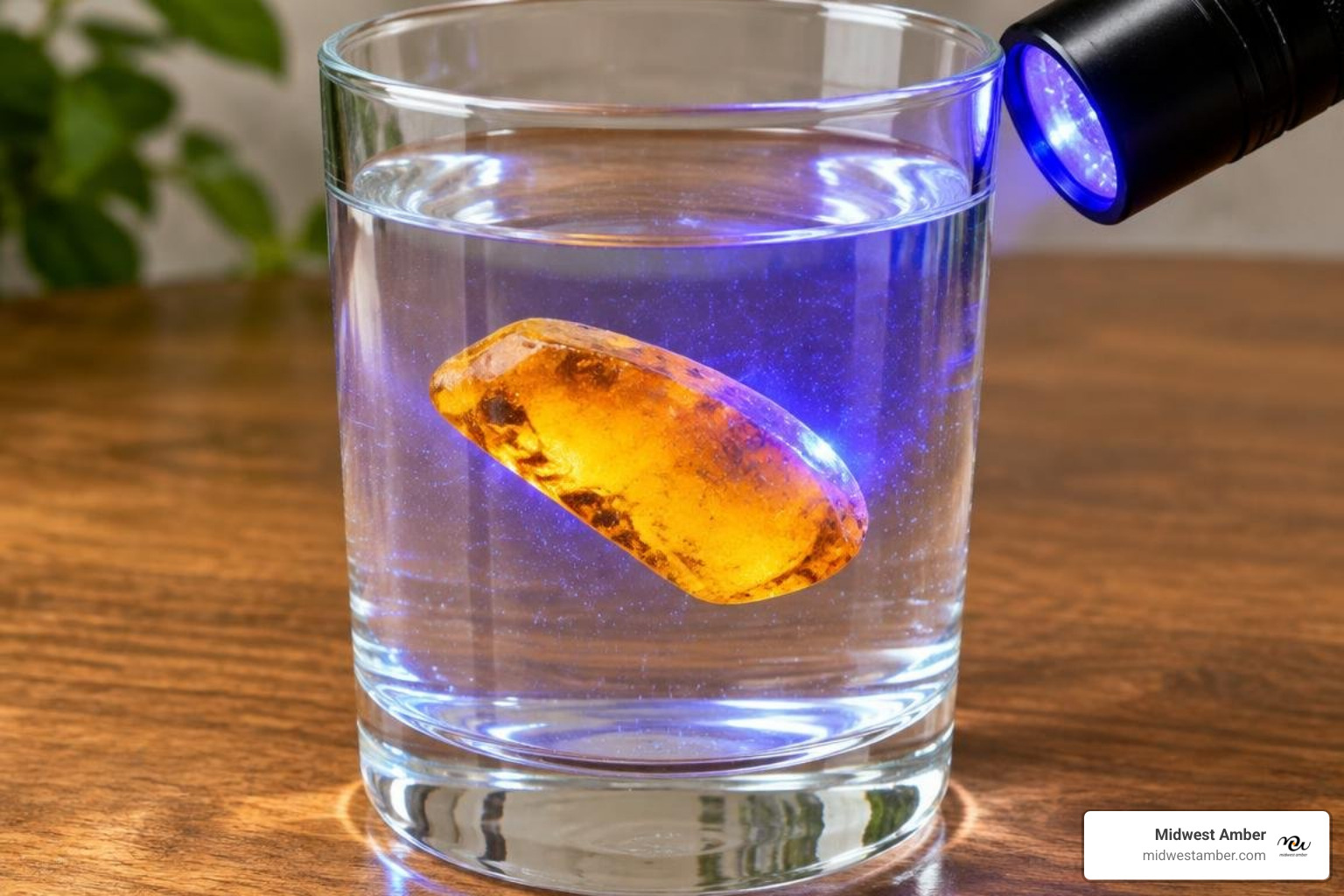
Understanding how to identify raw amber and observing stones under specialized lighting, such as fake amber under UV light, helps ensure your collection consists exclusively of authentic Baltic treasure.
Identifying Natural Resin Provenance
Understanding physical traits helps buyers appreciate what makes genuine Baltic succinite unique when compared to immature tree secretions or non-fossilized natural substances. Young sub-fossilized tree resins, which have not undergone millions of years of complete polymerization, remain chemically distinct. Exploring the physical characteristics of amber vs copal clarifies why true fossilization matters for durability, structural integrity, and succinic acid content.
Natural Baltic amber remains stable, resilient to mild warmth, and chemically inert against everyday contact, holding its structure and delicate pine scent through decades of careful wear. Reviewing comprehensive guidance on real vs fake amber ensures you invest solely in heirloom-grade gems.
Selecting Authentic Amber Jewelry: Finishes and Craftsmanship
Raw, Burnished, and Polished Finishes

Handcrafted Baltic amber jewelry is traditionally prepared in three distinct surface finishes, each celebrating the stone's tactile qualities:
- Raw (Unpolished) Amber: Preserves the natural, matte outer crust (cortex) created during millions of years of fossilization. Raw beads exhibit an earthy texture, rich natural coloration, and the highest concentration of surface succinic acid.
- Burnished Amber: Gently tumbled without chemical glazing, burnished beads possess a soft, satin-smooth finish that feels silky against the skin while maintaining an organic look.
- Polished Amber: Hand-buffed by skilled artisans using fine polishing wheels to reveal radiant optical clarity, internal sun spangles, and luminous honey reflections.
Polish and Lithuanian artisans have refined these carving and polishing techniques across generations. Choosing a handcrafted certified authentic amber pendant showcases the stone's inner brilliance while honoring Old World jewelry traditions.
Amber Jewelry Types and Folk Tradition Usage
From statement rings and intricate brooches to delicate bracelets and necklaces, Baltic amber adapts effortlessly to modern and classic wardrobes. In European folk traditions, wearing amber jewelry close to the body has been cherished for generations as a natural source of grounding energy and comfort.
For traditional necklaces and teething-style jewelry, craftsmanship standards are paramount:
- Individual Safety Knotting: Every single bead must be hand-knotted securely along the cord, ensuring that even if the string breaks, no loose beads scatter.
- Tension-Release Safety Clasps: Secure screw or pop-style safety clasps are engineered to open automatically under measured tension to prevent accidental pulling hazards.
- Proper Sizing and Supervised Wear: Amber jewelry intended for folk wear or young children should rest comfortably against the skin without being loose enough to reach the mouth, and should always be removed during sleep or unattended periods.
Essential Care and Maintenance for Baltic Amber Jewelry
Protecting Your Investment in Certified Real Baltic Amber
Because genuine Baltic amber is an organic gemstone with a gentle Mohs hardness rating of 2.0 to 2.5, proper care ensures your jewelry retains its warmth and brilliance for generations:
- Gentle Cleansing: Clean your amber using only lukewarm water and a soft, lint-free microfiber cloth. Avoid steam cleaners, ultrasonic machines, and harsh household detergents.
- Chemical Avoidance: Always apply hairspray, perfumes, lotions, and sunscreens before putting on your amber jewelry. Chemical solvents can cloud the delicate surface finish over time.
- Safe Storage: Store individual amber pieces in soft velvet pouches or lined jewelry compartments away from direct sunlight, extreme temperature fluctuations, and harder gemstones that might scratch the surface.
- Natural Lustre Restoration: If your polished amber appears dull after years of wear, gently apply a single drop of high-grade olive oil or sweet almond oil with a microfiber cloth, buffing lightly to restore its radiant glow.
Frequently Asked Questions About Baltic Amber
Is more expensive amber inherently higher quality?
Not necessarily. The price of Baltic amber reflects natural rarity, bead size, structural clarity, artistic craftsmanship, and unique prehistoric inclusions rather than pure authenticity. A small, raw cognac bead contains the same natural succinite properties as an expensive, museum-grade white bone amber carving. High prices reflect market scarcity and artisan labor, but provenance documentation remains the only true proof of quality.
Does amber color alter its therapeutic or natural properties?
No. The chemical structure and succinic acid content (3% to 8%) remain consistent across natural color variations, as all Baltic amber originates from the same ancient conifer forests. Color differences arise from micro-bubble density, organic plant sediment, and natural light refraction rather than altered mineral composition. Choose the color and finish that resonates most with your personal style.
Can you wear authentic Baltic amber in the shower or water?
While brief contact with plain fresh water will not harm authentic amber, we strongly recommend removing your jewelry before showering, swimming, or soaking in hot tubs. Tap water contains minerals, and municipal pools contain chlorine and harsh chemicals that degrade jewelry cords and diminish amber's polished surface. Keeping your amber dry preserves its threading and maintains its brilliant luster.
Conclusion
Certified Baltic amber stands as a remarkable bridge between ancient geological history and timeless artistic expression. Sourced from the historic shores of Poland and Lithuania, each handcrafted piece of genuine amber holds a 44-million-year-old story shaped by nature's patient artistry.
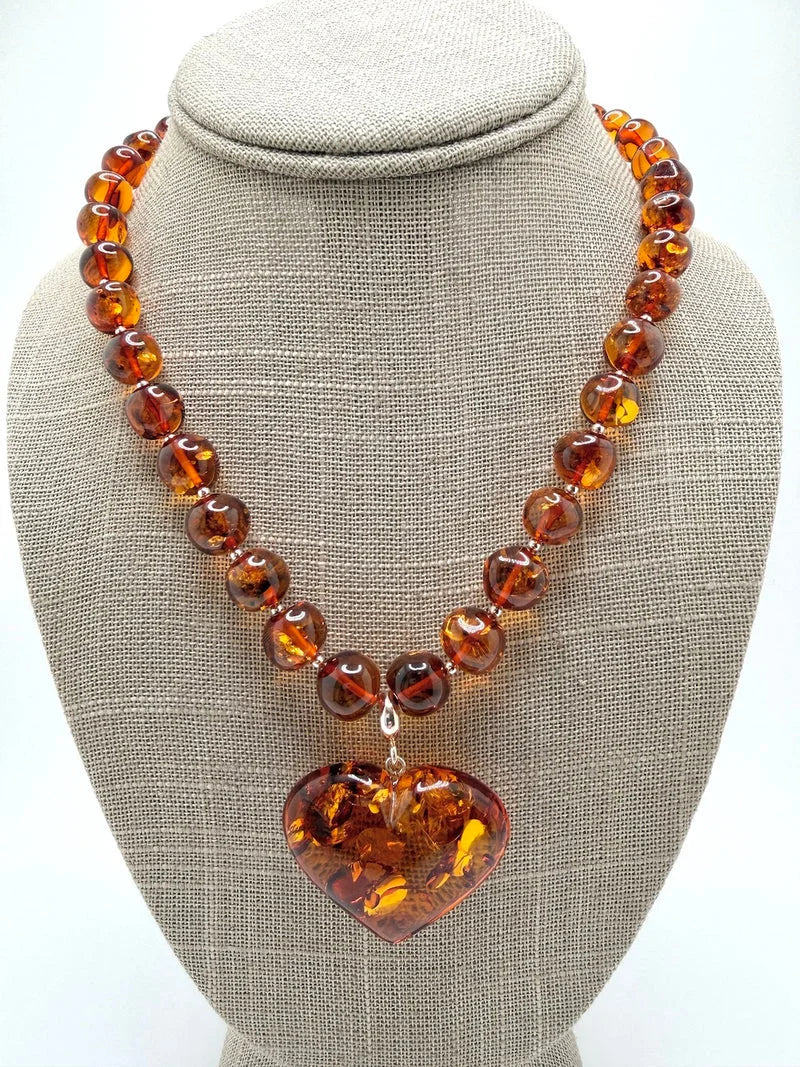
At Midwest Amber, we take immense pride in sharing our heritage and passion for authentic gemstones. With over two decades of experience, we work directly with skilled Polish and Lithuanian artisans to bring you 100% natural, ethically sourced amber jewelry—from classic pendants, earrings, and rings to bracelets and brooches. We invite you to explore our collection of handcrafted Baltic amber jewelry and discover an authentic piece of "Northern Gold" crafted to be treasured for a lifetime.


Leave a comment
This site is protected by hCaptcha and the hCaptcha Privacy Policy and Terms of Service apply.