

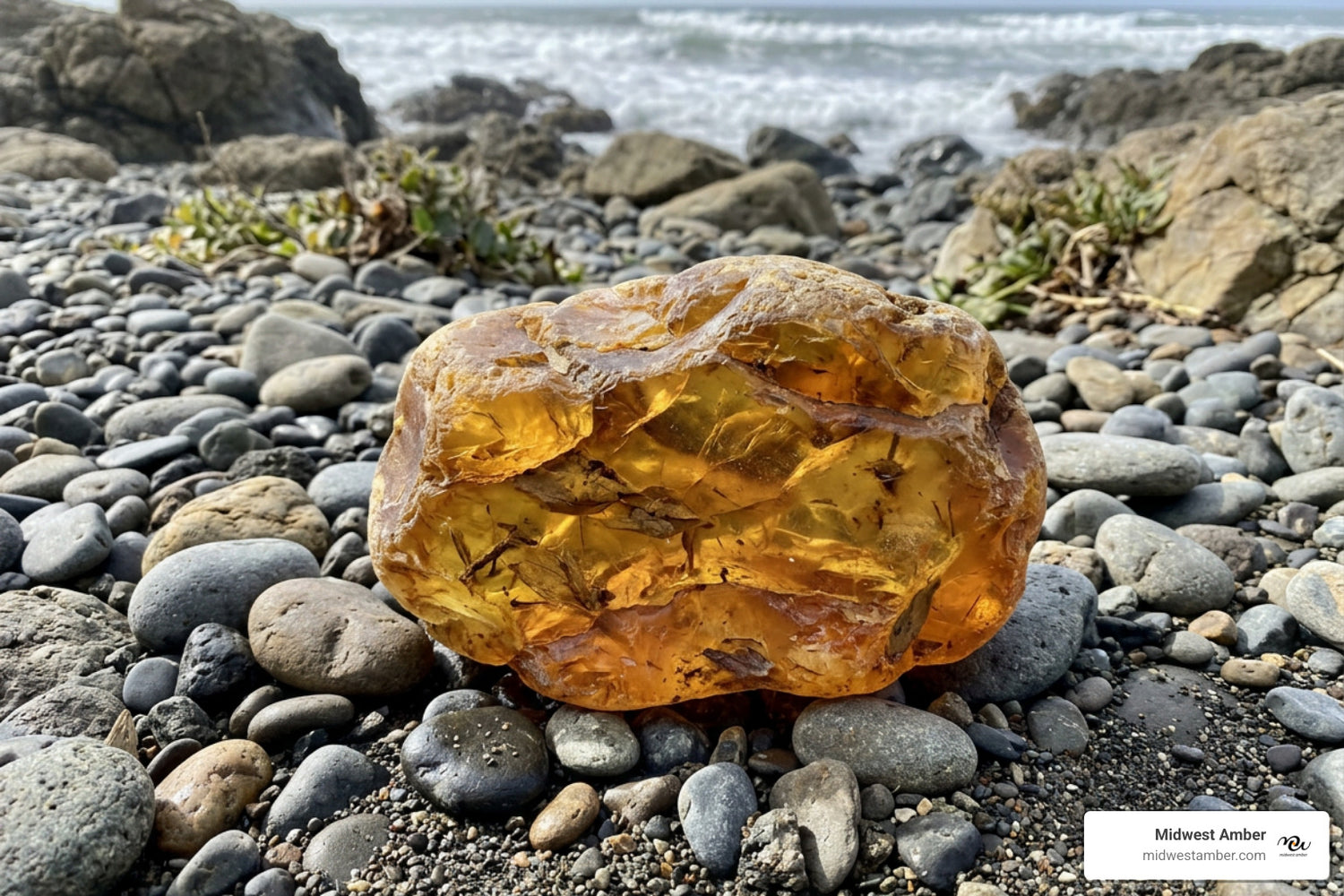
Where Is Amber Found in the World? A Quick Answer
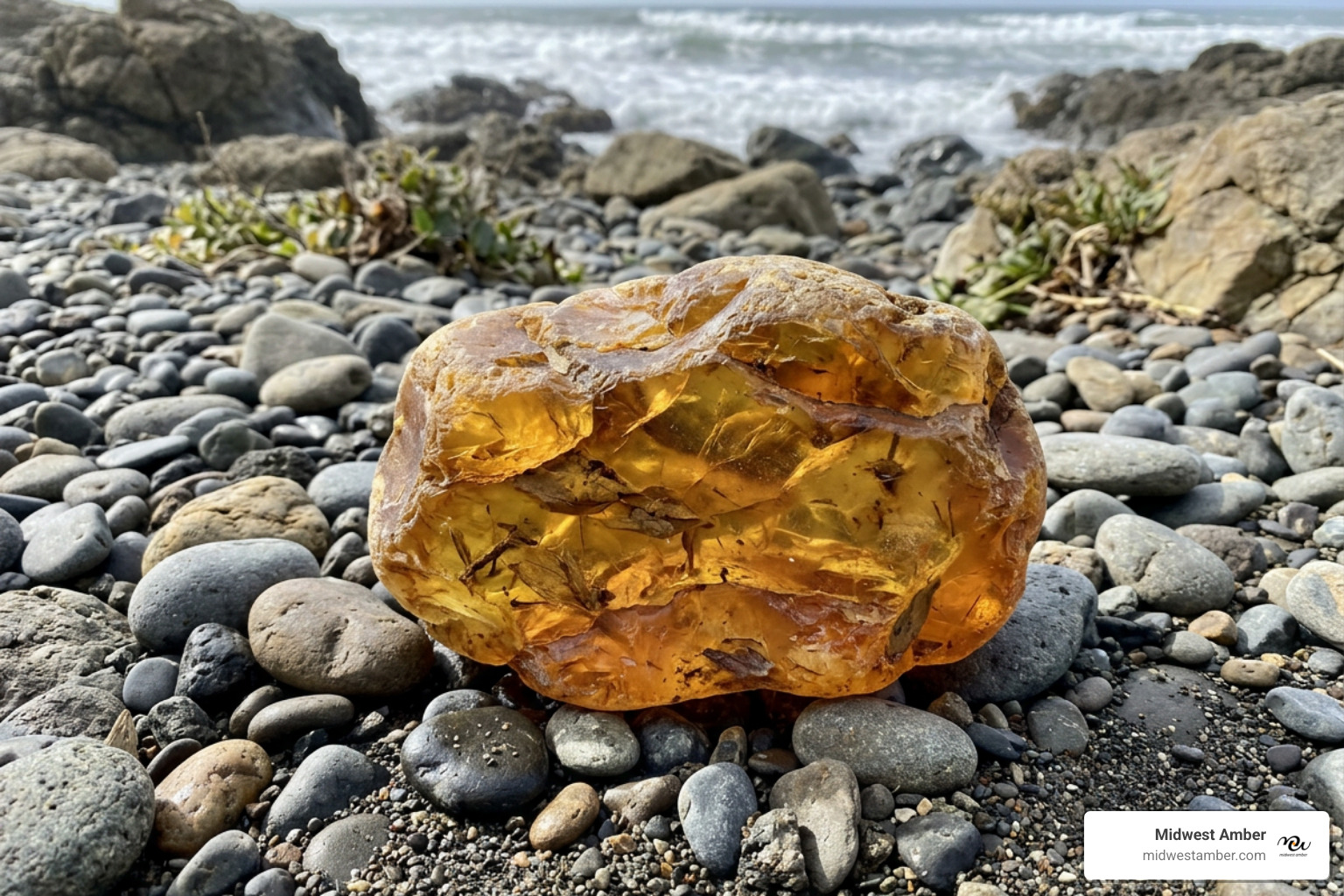
Where is amber found in the world is a question with a surprisingly broad answer — this ancient fossilized resin turns up on nearly every continent, from Arctic Canada to tropical forests near the equator.
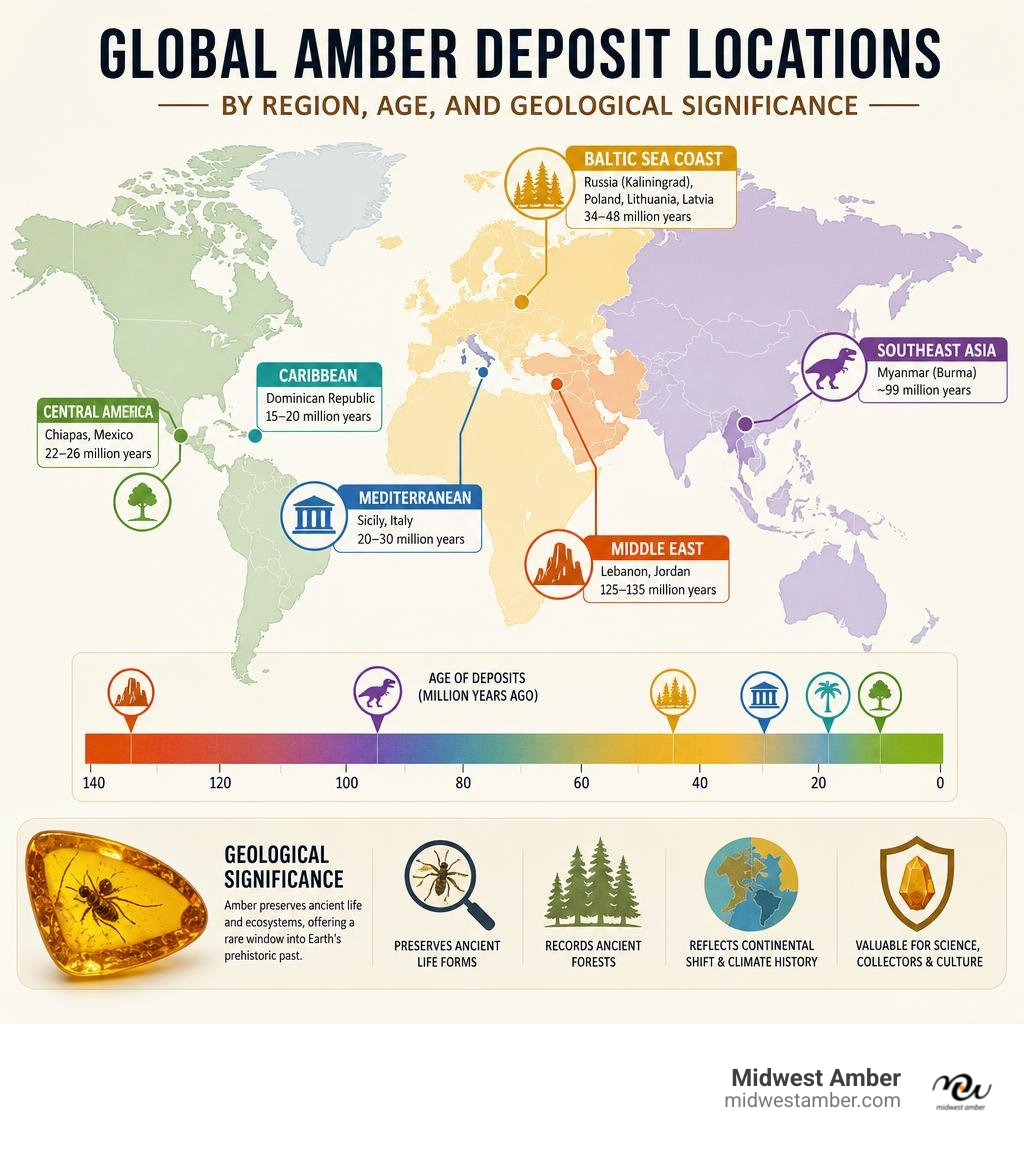
Here are the most significant amber deposits on Earth:
| Region | Country/Area | Approximate Age |
|---|---|---|
| Baltic Sea coast | Russia (Kaliningrad), Poland, Lithuania, Latvia | 34-48 million years |
| Caribbean | Dominican Republic | 15-20 million years |
| Southeast Asia | Myanmar (Burma) | ~99 million years |
| Central America | Chiapas, Mexico | 22-26 million years |
| Mediterranean | Sicily, Italy | 20-30 million years |
| Middle East | Lebanon, Jordan | 125-135 million years |
One region dominates all others. About 90% of the world's commercially extracted amber comes from the Baltic Sea region — particularly Kaliningrad Oblast in Russia, along with Poland and Lithuania.
Baltic amber is also the only variety found in large, jewelry-grade pieces suitable for intricate carvings and fine jewelry. That makes it the undisputed gold standard for collectors, jewelers, and scientists alike.
The story of how amber ends up scattered across the globe — and why some deposits matter far more than others — is rooted in ancient forests, shifting continents, and millions of years of geological change. This guide walks you through all of it.
I'm Gabriel Ciupek, President and owner of Midwest Amber, and my years of sourcing and studying genuine Baltic amber have given me a deep understanding of where amber is found in the world and what separates truly exceptional pieces from the rest. That hands-on experience shapes everything you'll read here.
Where is amber found in the world terms to learn:
What is Amber and How is it Formed?
To truly understand where is amber found in the world, we first have to understand what amber actually is. Contrary to popular belief, amber is not a mineral or a stone. It is fossilized tree resin.
While tree sap is a watery substance that carries nutrients throughout a tree, resin is a thick, sticky substance secreted by certain trees (mostly conifers) as a defense mechanism. When a tree is damaged by wind, boring insects, or lightning, it bleeds resin to seal the wound and protect itself from fungal infections and pests.
The journey from sticky tree resin to a solid, gemstone-grade piece of amber is a process of millions of years. It requires a highly specific sequence of geological events:
- Exudation: The tree secretes a massive amount of sticky resin, which drips down the bark, sometimes trapping insects, plant fragments, and air bubbles along the way.
- Burial: Before the resin can decompose or wash away, it must be buried under anaerobic (oxygen-poor) conditions. This usually occurs when resin falls into riverbeds, lagoons, or shallow coastal seas where it is quickly covered by layers of sand, clay, and sediment.
- Polymerization: Over millions of years, the volatile compounds (called terpenes) inside the resin slowly evaporate. The remaining organic molecules begin to link together, forming a crosslinked network of macromolecules. This process of molecular polymerization turns the soft, sticky resin into a hard, durable material.
- Heat and Pressure: As layers of sediment pile on top, the rising heat and pressure deep within the earth complete the transformation, turning the semi-fossilized resin into true amber.
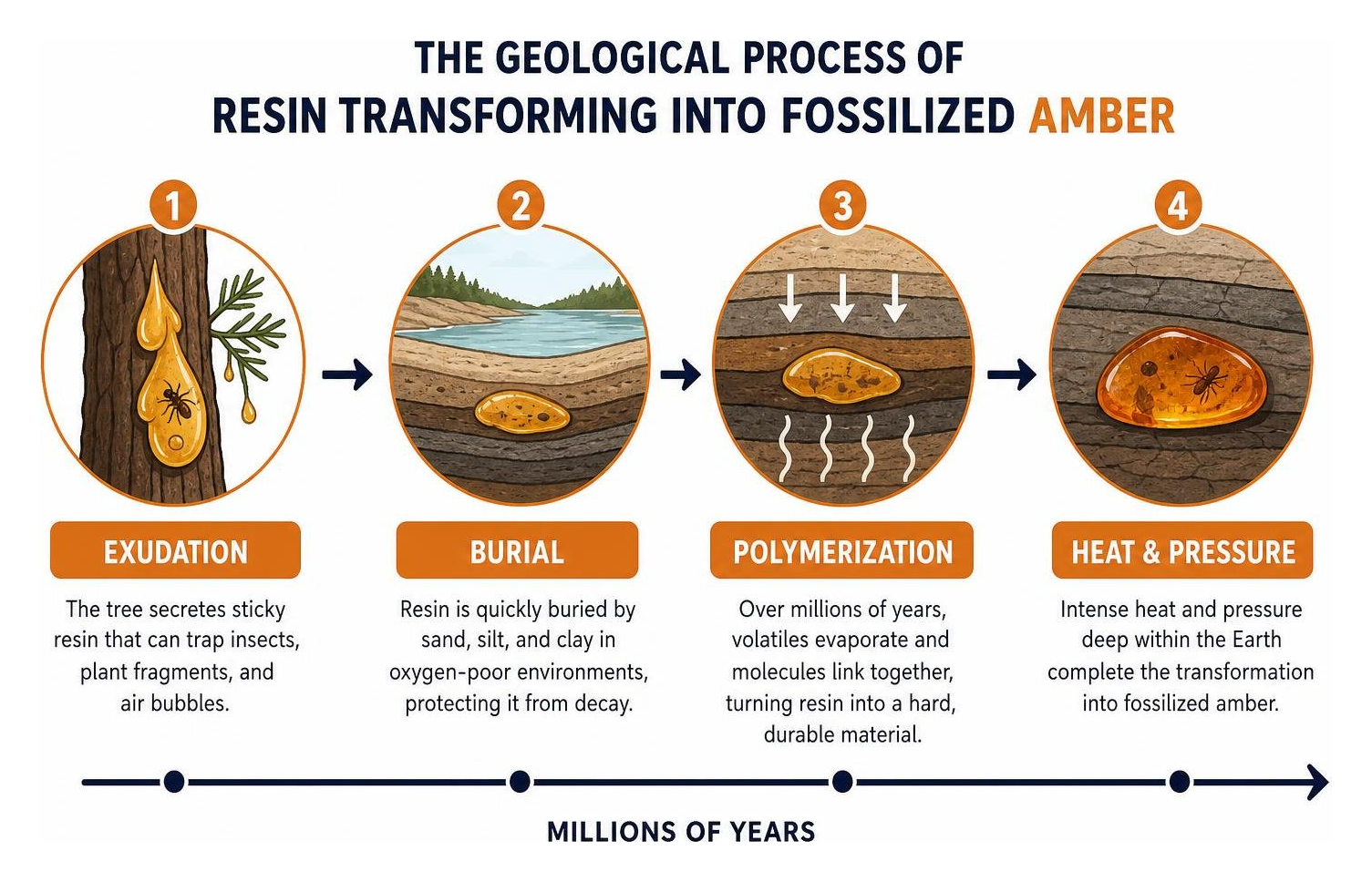
This complex process is beautifully detailed in our guide on Unearthing Natural Amber: What Makes This Ancient Gem So Special.
For a substance to be classified as true Amber , it must have undergone this complete polymerization process over millions of years. If the resin is relatively young—ranging from a few thousand to a few million years old—it is classified as copal. Copal is much softer than amber, has a lower melting point, and will quickly dissolve or become sticky when exposed to solvents like acetone or alcohol.
Furthermore, Baltic amber (technically known as succinite) is unique because it contains a high concentration (3% to 8%) of succinic acid. This natural compound is what gives Baltic amber its renowned therapeutic reputation and distinguishes it chemically from other fossil resins found around the globe.
Where is Amber Found in the World?
While there are more than 150 different types of fossil resins documented across the globe, only a select few are commercially mined or suitable for creating fine jewelry. The distribution of these deposits is a direct map of the Earth’s ancient forests and sedimentary basins.
To help put these global deposits into perspective, let's compare the three most prominent varieties of amber found on the market today:
| Characteristic | Baltic Amber (Succinite) | Dominican Amber | Burmese Amber (Burmite) |
|---|---|---|---|
| Geological Age | 34–48 Million Years (Eocene) | 15–20 Million Years (Miocene) | ~99 Million Years (Cretaceous) |
| Botanical Origin | Conifers (Sciadopityaceae family) | Extinct legume tree (Hymenaea protera) | Extinct tropical conifers |
| Succinic Acid Content | 3% to 8% (High) | None (or trace amounts) | None |
| Primary Colors | Butterscotch, Honey, Cherry, White, Green | Yellow, Orange, Red, Rare Fluorescent Blue | Dark Brown, Red, Golden Yellow |
| Inclusions Type | Mostly small insects, oak leaf hairs, stellar trichomes | Highly diverse tropical insects, lizards, frogs | Ancient Cretaceous insects, feathers, dinosaur remnants |
| Rarity of Inclusions | 1 in 1000 pieces | Highly abundant and clear | Rare but highly scientifically valuable |
The geological conditions required to preserve these deposits are incredibly precise. Most of the world's major amber deposits are found in areas that were once prehistoric river deltas or shallow marine basins. Tectonic activity and subsequent glacial movements during the Pleistocene epoch helped erode these sedimentary layers, redepositing the amber into secondary locations where it is easily accessible today.
If you want to explore the scientific classifications and geological origins of these various locations, you can read more in our comprehensive article on Where is Baltic Amber Found or refer to the scientific breakdown of Sources of amber .
Mapping the Baltic Region: Where is Amber Found in the World's Largest Deposit?
When discussing where is amber found in the world, the Baltic Sea region is the undisputed heartland. It is home to the largest known deposit of amber on Earth, accounting for well over 80% to 90% of the world's extractable supply.
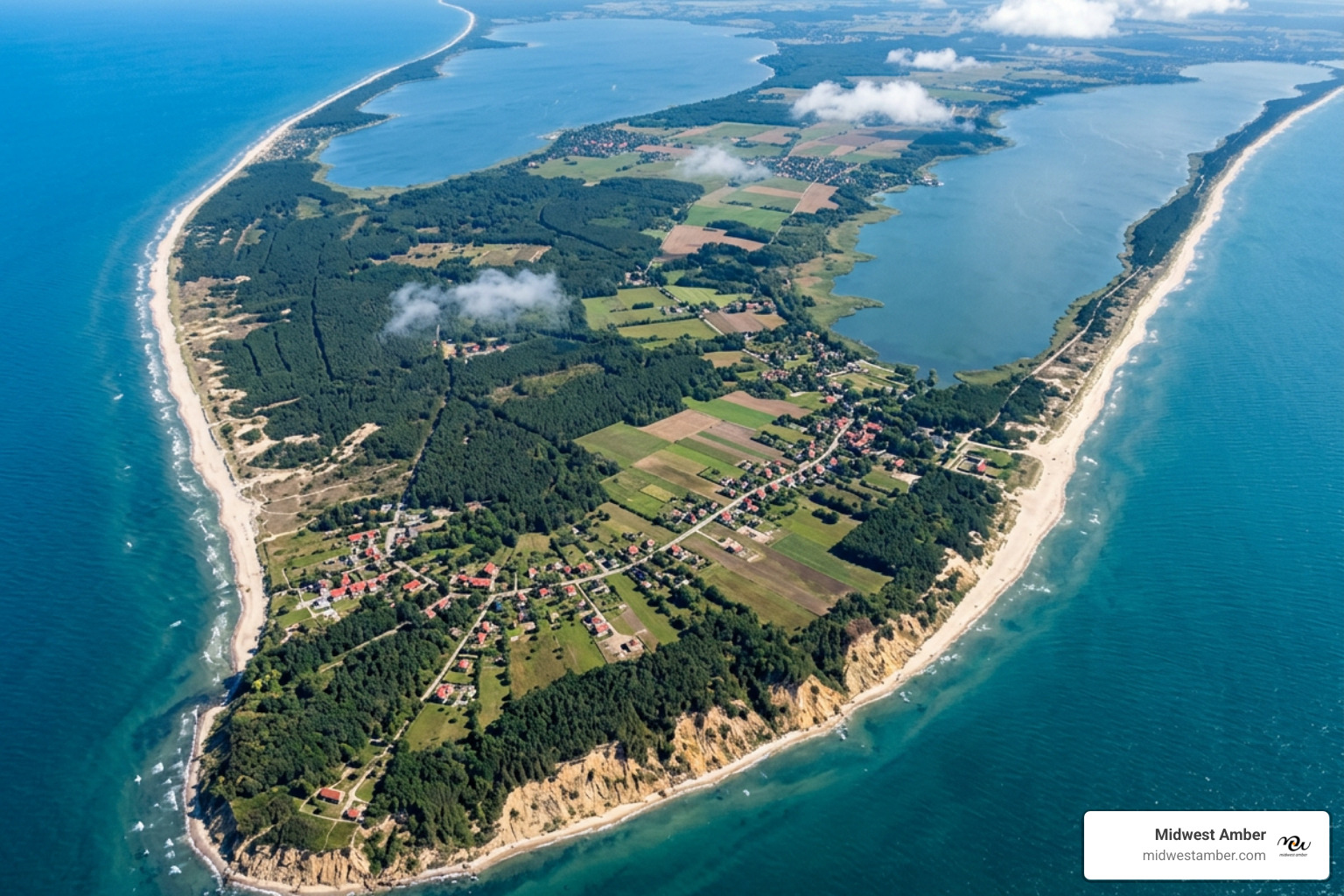
This incredibly rich deposit is centered around the Sambia Peninsula (historically known as the Samland Peninsula) in the Kaliningrad Oblast of Russia, a small territory wedged between Poland and Lithuania. This area is famously known as the Amber Coast . It is estimated that during the first few decades of the twentieth century, up to a million pounds of amber per year was excavated from this single region!
The geological formation containing this massive wealth of amber is the Prussian Formation, specifically a clay-rich, glauconite-bearing layer known as the "Blue Earth" layer. This amber-bearing horizon is typically 1 to 17.5 meters thick and rests about 25 to 40 meters below the surface.
During the Eocene epoch (approximately 34 to 48 million years ago), a massive, dense forest covered Northern Europe. As the climate warmed, these ancient conifers released an unprecedented volume of resin. Rivers flowing through this "Amber Forest" swept the resin deposits south into a massive prehistoric river delta, where they were buried under layers of marine sediment. To dive deeper into this fascinating prehistoric timeline, take a look at our detailed exploration: Where Does Baltic Amber Come From: A Journey to the Eocene Epoch.
Today, Baltic amber is extracted in three primary ways:
- Beachcombing: Strong autumn and winter storms churn up the seabed, releasing buoyant amber from the underwater deposits. It washes ashore along the coastlines of Poland, Lithuania, Latvia, Denmark, and southern Sweden, where locals gather it using hand-nets.
- Hydraulic Dredging: In coastal shallow waters, specialized boats pump water to stir up the seabed, allowing the lightweight amber to float to the surface where it is scooped up.
- Open-Pit Mining: The most industrially significant method. Massive open-pit mines in Yantarny (Kaliningrad) excavate the "Blue Earth" layer, washing away the clay with high-pressure water cannons to reveal the glittering raw amber beneath.
Beyond Europe: Where is Amber Found in the World's Tropical and Ancient Forests?
While the Baltic region is the commercial giant, other parts of the world host highly unique and scientifically fascinating amber deposits.
The Dominican Republic: Clear Resin and Rare Blue Amber
Located in the Caribbean, the Dominican Republic is the world's second-largest source of amber. Unlike Baltic amber, which originated from Eocene conifers, Dominican amber formed from the fossilized resin of Hymenaea protera, an extinct species of tropical legume tree.
Dominican amber is relatively young—dating back 15 to 20 million years to the Miocene epoch—but it is highly celebrated for its incredible transparency and its abundance of fossilized inclusions.
Perhaps the most famous variety from this region is the ultra-rare Dominican Blue Amber. This variety exhibits a striking fluorescent blue glow when exposed to natural sunlight or UV light. This unique optical phenomenon is caused by aromatic hydrocarbon molecules within the amber that absorb ultraviolet light and re-emit it as visible blue light. Only about 100 kilograms of this exquisite material are mined each year.
Myanmar (Burma): A Cretaceous Time Capsule
Burmese amber, or Burmite, is mined primarily in the Kachin State of northern Myanmar. This amber is incredibly old, dating back approximately 99 million years to the mid-Cretaceous period.
Because it formed during the age of the dinosaurs, Burmite is an absolute treasure trove for paleontologists. It has preserved scientific specimens, including ancient arthropods, bird feathers, baby birds, lizard skin, and even the feathered tail of a small theropod dinosaur! You can read more about how these ancient deposits compare globally on the AMBER - different types of amber registry.
Chiapas, Mexico: The Mayan Treasure
Mined in the southern state of Chiapas, Mexican amber is roughly the same age as Dominican amber (20 to 26 million years old) and shares a similar botanical origin from ancient legume trees. It is prized for its warm golden, red, and occasional green hues, with a modest annual production of about 5 tons.
Other Ancient Sources
Fossilized resins have been found in small quantities on almost every continent. For example, extremely old deposits dating back to the Triassic period have been uncovered in the Italian Alps, while the oldest amber ever recorded—dating to the late Carboniferous period, approximately 320 million years ago—was discovered in the United States. You can read the fascinating scientific announcement of this discovery in this report: Researcher uncovers oldest amber ever recorded - SIU News .
Baltic Amber: The Gold Standard of Global Deposits
While other global deposits are highly valued by scientists and collectors, Baltic amber remains the absolute gold standard for the jewelry industry.
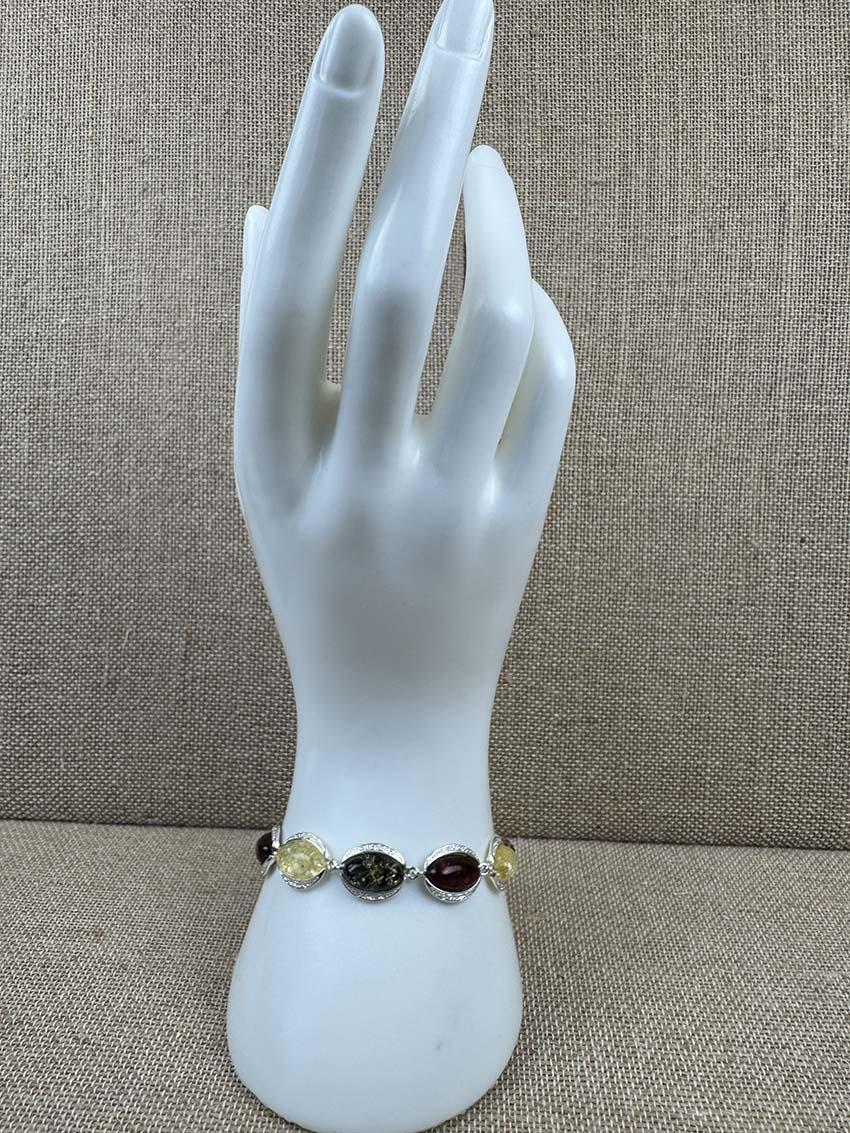
What makes Baltic amber so uniquely suited for fine, heirloom-quality jewelry?
- Structural Integrity: Baltic amber is structurally stable, dense, and far less brittle than Dominican or Burmese amber. This allows skilled artisans to cut, carve, and polish it into exquisite beads, pendants, and intricate sculptures without the material cracking or shattering.
- The Succinic Acid Advantage: True Baltic amber (succinite) is the only fossil resin that contains high concentrations of succinic acid. For centuries, European folk medicine has utilized Baltic amber for its natural soothing properties, which are believed to be activated by the warmth of the skin.
- Unparalleled Color Palette: Baltic amber occurs in more than 250 different natural shades. From creamy butterscotch and royal white to rich honey, fiery cherry, and rare forest green, its variety is unmatched.
- Exquisite Craftsmanship: The tradition of working with Baltic amber is deeply woven into the cultural heritage of Poland and Lithuania. For generations, master artisans along the Baltic coast have perfected the art of handcrafting amber jewelry, passing down techniques that preserve the natural beauty of each unique stone.
At Midwest Amber, we are proud to honor this rich heritage. We specialize in 100% natural, ethically sourced Baltic amber jewelry, handcrafted by experienced Polish and Lithuanian artisans. Each piece we offer is a direct connection to the ancient Eocene forest, bringing a piece of natural history into your daily life. You can learn more about what makes this material so extraordinary in our guides, Beyond the Shine: Exploring the Essence of Natural Baltic Amber and Unveiling the Mysteries of Baltic Amber: A Timeless Treasure.
It is also worth noting that while Baltic amber is abundant, finding pieces with perfectly preserved prehistoric inclusions is incredibly rare. Only about 1 in 1,000 pieces of Baltic amber contains an insect, and of those, only about 10% are preserved well enough to be scientifically identified. This makes inclusion-bearing Baltic amber highly collectible and valuable. For more information on the history and classification of these European deposits, you can explore the Baltic amber - Wikipedia entry.
Frequently Asked Questions about Where Amber is Found
Which country produces the highest quality amber?
Poland and Lithuania, along with the broader Baltic Sea region, produce the highest quality amber for jewelry. Known as Baltic amber or succinite, this variety is highly prized for its structural durability, rich color variations, and high concentration of succinic acid.
Unlike softer resins or copal, genuine Baltic amber holds up beautifully over generations. To make sure you are purchasing a genuine piece of Baltic heritage, check out our guide on The Amber Truth: Unlocking the Secrets of Genuine Stones.
How old is the oldest amber ever discovered?
The oldest amber ever discovered dates back to the late Carboniferous period, approximately 320 million years ago, and was found in the United States.
While this ultra-ancient resin is of massive scientific importance, it is not suitable for jewelry. For historical context on ancient amber sources, you can consult the archives of the Where Is Amber Found? - Getty Museum publication.
Is amber found on every continent?
Yes, amber and fossilized resins have been found on every continent on Earth except for Antarctica.
From the cold expanses of Siberia and northern Canada to the tropical hillsides of the Dominican Republic and Mexico, amber is a global phenomenon. However, the vast majority of these deposits are very small or chemically unstable, leaving the Baltic region as the primary source for jewelry-grade material. Learn more about the global distribution of these stones in our article on the Natural Amber Stone.
Conclusion
From the stormy shores of the Baltic Sea to the tropical hillsides of the Caribbean, the story of where is amber found in the world is a journey across prehistoric eras, ancient climates, and shifting continents. Each piece of amber is a tiny, beautiful time capsule, preserving a moment of Earth's history from millions of years ago.
While amber can be found in various pockets around the globe, nothing matches the beauty, history, and structural integrity of genuine Baltic amber.
At Midwest Amber, we bring the magic of the Baltic coast directly to you. Backed by over 20 years of experience, we specialize in handcrafted, 100% natural Baltic amber jewelry. We work directly with certified Polish and Lithuanian artisans to ensure that every ring, necklace, bracelet, and pendant we offer is ethically sourced and completely authentic.
Whether you are looking for a classic butterscotch statement piece or a delicate honey-colored pendant, we invite you to explore our collection. We proudly serve our local communities across Chicagoland and the surrounding Illinois suburbs—including Arlington Heights, Barrington, Chicago, Schaumburg, Glenview, and beyond—as well as collectors nationwide.
Explore our collection of Real Amber for Sale today, and make sure your treasure is the real deal by reading our guide on how to tell if your amber jewelry is genuine.

Leave a comment
This site is protected by hCaptcha and the hCaptcha Privacy Policy and Terms of Service apply.